The Most Revolutionary Act

Uncensored updates on world events, economics, the environment and medicine

The Most Revolutionary Act

Southland data centre will use 20% of NZ’s generation capacity

Artist's impression of how the data centre is to look.Artists impression of the proposed Invercargill data centre – Note much of it is a substation.Photo credit: NZ Energy

Robin Westenra

Datagrid’s proposed datacentre is on track to become one of the largest rent-seeking plays New Zealand has ever seen

  • The facility planned near Invercargill will draw a continuous 280 MW initially — about 6% of everything our grid currently produces.

    Their own proposal signals they’ll scale that to more than three times the load, meaning this single site could eventually gobble 20% of the country’s total electricity generation.

    For context, Tiwai Point aluminium smelter is currently NZ’s biggest power user at roughly 10–12%. This datacentre will blow that out of the water and, within a few years, will need the entire output of the Manapōuri hydro station just to keep the lights on.

    The economics are even uglier. Tiwai returns about $105 of GDP per MWh of electricity. Datagrid’s centre will be lucky to manage $24 — and independent assessments put the real figure closer to $12. That’s a problem.

    MBIE’s own numbers on industry’s power use to create $1 of GDP for NZ are stark :

    Fishing & forestry: 2 MJ per $1 of GDP

    Chemicals & metals: 12 MJ per $1 of GDP

    General industry: 11.5 MJ per $1 of GDP

    This datacentre??: 147 MJ per $1 of GDP

    NZ’s real vulnerability is energy security. The price of power ultimately sets the quality of life. High electricity prices are already crushing industry and driving de-industrialisation here and across other Western economies.

    NZ First is pushing (strongly opposed by National and ACT) to break up the gentailer complex — the four big vertically integrated companies that dominate both generation and retail. That structure lets them shift costs internally, favour their own retail arms, and shape wholesale prices in ways that have delivered record profits alongside record power bills. Perverse.

    Enter Mercury: they’ve taken a $30 m, 12.7% stake in the foreign-controlled (French/Singaporean) Datagrid venture and have already locked in preferential power rates for the datacentre.

    So let’s recap:

    i) A power generato

    ii) That is also a retailer

    iii) That also owns a chunk of what will be NZ’s largest single power consumer — by far the least efficient user of our scarce electricity — and will supply it large volumes at cut-price rates

    Is this retarded? Yes

    This project wants to hoover up 20% of our generation capacity. They claim they’ll build more generation themselves, but solar panels won’t cut it — do you honestly believe they’re going to construct another Clyde Dam? Basically Kiwis will end up subsiding this foreign owned and low economic output mouse factory, while we watch more and more industry close and our bills climb

    The opportunity cost of diverting that much electricity away from higher-value NZ industry into a low-return datacentre is economic suicide. Power usage on this scale means higher electricity prices – we have limited electrons to spare.

    Break up the gentailers and take a very hard look at this proposal.

    Larry Blair’s excellent NZ Energy Substack is essential reading — here’s his March piece

The 280MW question?

Where is the power coming from for Datagrid’s Southland data centre?

New Zealand Energy

Mar 18, 2026

Artists impression of the proposed Invercargill data centre – Note much of it is a substation.

If you had missed it in the news, a company called Datagrid has been granted resource consent to build a $3.5 billion data centre near Invercargill which is being described as the country’s first “artificial intelligence factory”. The 78,000 square-metre data centre will be built in Makarewa, north of Invercargill.

The term “artificial intelligence factory” suggests that this is a data training and inference facility to improve AI models.

There are really only two numbers we need to know about in this story.

280MW and $60 million.

Metabolism.

This data centre is a hungry beast. It has an energy metabolism rivalling that of my three teenage sons.

The consent application paperwork on the Environment Southland website is interesting. It’s a chunky project for sure. Once built the facility will require around 2.45 TWh of electricity based on the nameplate capacity of 280 MW. This will make it New Zealand’s second-largest industrial consumer behind the other Southland industrial, the Tiwai Point Aluminium smelter.

Economic Benefits.

The figure of $60 million is quoted by the project developer Datagrid as the project’s economic contribution to New Zealand’s GDP annually.

I hope that this is a typo and there is at least one and ideally two zeros missing here.

This number appears to originate from the developer’s own estimates rather than an independent economic assessment. If this figure is correct, it would imply the facility produces roughly $24 of economic output for every MWh of electricity consumed.

This is an incredibly low figure compared with most sectors of the New Zealand economy. From an energy intensity perspective it represents 147 MJ of energy per dollar of GDP generated.

For a sector by sector comparison based on MBIE data the energy per dollar of GDP generated are:

  • Chemicals & Metals use 11.53 MJ per dollar.
  • Industrial 3.42 MJ per dollar.
  • Agriculture, Forestry & Fishing 2.11 MJ per dollar.
  • Commercial 0.3 MJ per dollar.

This would infer that the productivity of this data centre is about 13 times lower than the chemicals and metals sector.

As a direct comparison to its neighbour, and NZ’s largest consumer of electricity, the Tiwai Aluminium smelter, which generates around $105 of GDP per MWh of electricity used the data centre will only generate $24 / MWh for NZ Inc.

The key distinction here of course is that this is the value generated for NZ Inc. It will generate far more value for its owners BW Digital in Singapore.

Where is the power coming from?

In November last year, in “Divergence” I noted that electricity consumption in 2024 was 1% lower than it was in 2014 due to “invisible rationing” in the form of excessively high prices and demand management leading to a trend of deindustrialisation. To quote from that piece.

The drop in industrial consumption is not a function of a lack of demand, it is instead a function of a lack of supply.

The demand is still there, but behind the scenes electricity has been rationed.

We don’t call it rationing, instead preferring to use the more palatable term industrial “demand management”, but what it means in the NZ context is that large businesses like the aluminium smelter reduce production to free up electricity supply for the rest of the country.

Similarly smaller industrial users self-ration due to price sensitivities, often stopping production and idling plant if the wholesale electricity prices get too high.

Industrial load is price responsive in a way that residential is not. So, the system naturally rations through price. This is not a conspiracy it’s a function of physics meeting economics.

It is for this reason alone that the Datagrid announcement surprised me the most.

I would not have considered New Zealand as being a very attractive proposition for a data centre of this size. Our electricity system is clearly not delivering the stable abundant and cheap electricity that industrial users need to be able to operate in New Zealand as the forestry products sector and now Wattie’s can attest to.

Data centres operate very differently from many other industrial loads. Unlike factories or irrigation pumps, a hyperscale data centre generally runs 24 hours a day, every day of the year. Their load factor is extremely high.

[…]

Via https://envirowatchnz.com/2026/08/02/southland-data-centre-will-use-20-of-nzs-generation-capacity/
‘Defend Israel or the Homeland’: Top US general issues stark warning to Pentagon brass

(Photo credit: AP Photo/Jon Gambrell, File)
The Cradle

AUG 1, 2026

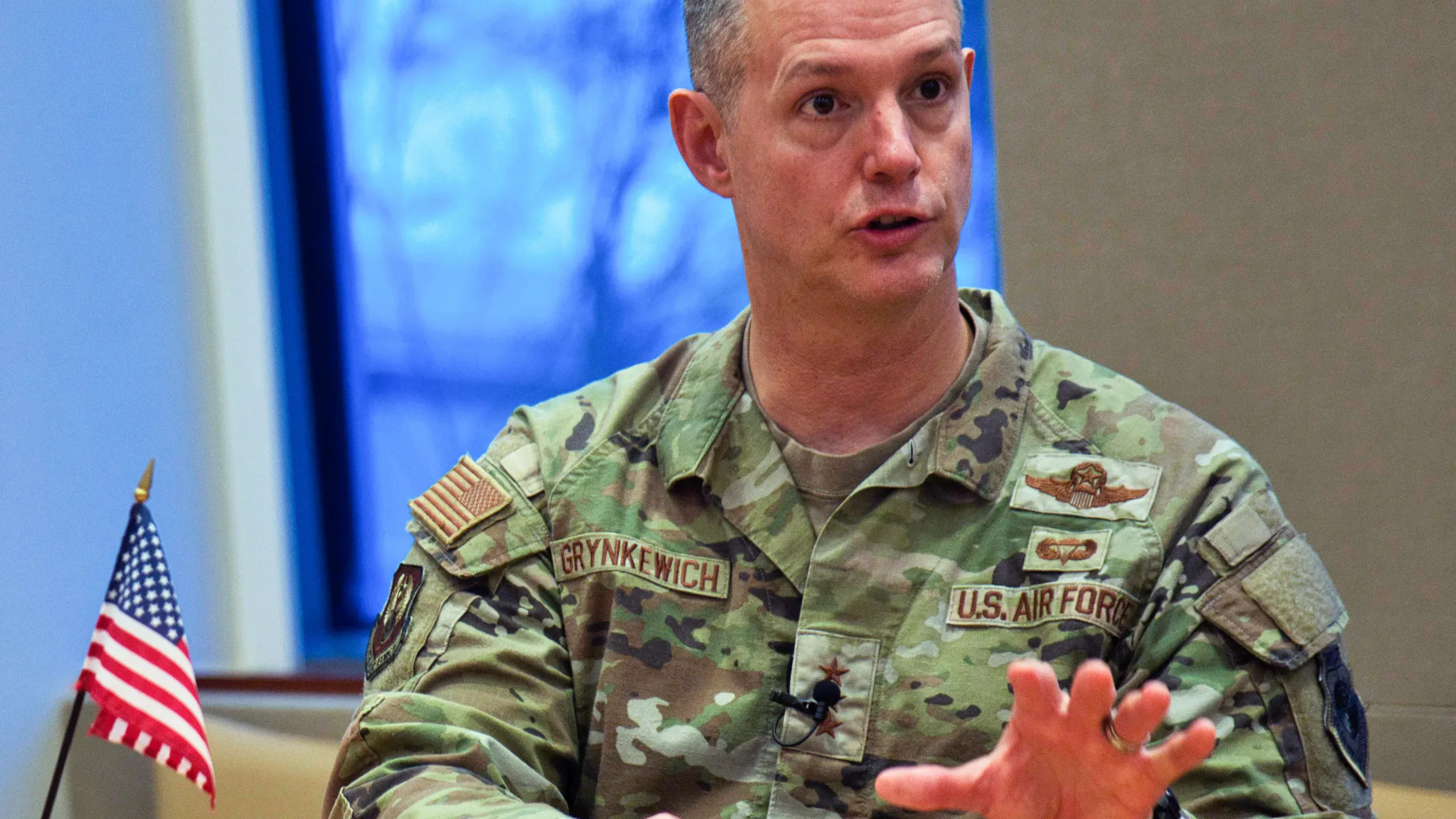
The highest-ranking US general in Europe informed the Pentagon this week that he does not have enough naval units to protect Israel against potential Iranian missile strikes, according to a report by the Washington Post on August 1.

General Alexus Grynkewich, the head of US European Command (EUCOM), notified senior Pentagon officials in writing that without another navy destroyer, he will be forced to choose between defending the US “homeland” and defending Israel.

Grynkewich’s warning comes as US President Donald Trump continues to escalate the war on Iran.

The US Navy has shouldered a significant burden in waging the war, including responsibility for blockading Iranian ports in response to the Islamic Republic’s closure of the Strait of Hormuz.

US naval destroyers in the eastern Mediterranean have long been part of Israel’s defense strategy. They are equipped with radar systems and missile interceptors capable of countering Iranian ballistic missiles and drones.

EUCOM is responsible for protecting Israel from the Mediterranean and deterring any Russian ground incursion into NATO member states.

The US Navy has five destroyers deploying from Rota, Spain, with a sixth expected later this year. They face maintenance issues due to lengthy missions.

The US is also experiencing a shortage of missile interceptors, which are costly to manufacture and hard to restock.

Pentagon assessments conducted earlier in the war showed that US forces have “shouldered the brunt of defending Israel from Iranian ballistic missiles.”

Washington has used more of its defensive weapons, including the Terminal High Altitude Area Defense (THAAD) and naval interceptors, to defend Israel from Iranian missile and drone attacks than Israel has used of its own interceptor stocks.

US inventories of Patriot missiles have now fallen below 1,000 and THAAD inventories to about 250, according to the Center for Strategic and International Studies (CSIS).

Israel has not participated in the war on Iran since Washington and Tehran signed a memorandum of understanding (MoU) and ceasefire in mid-June.

Trump resumed attacks on Iran three weeks ago.

Last week, Israeli Finance Minister Bezalel Smotrich said Israel was content to remain out of the fighting and allow the US and its Gulf allies to fight the war on Tel Aviv’s behalf.

“Israel has no interest in joining the campaign – the current situation is the best for us,” Smotrich said on Tuesday.

Meanwhile, Israeli Prime Minister Benjamin Netanyahu visited the White House last week and lobbied Trump to escalate the war by imposing a land blockade on Iran.

According to a CBS News report on Friday, Washington and Tel Aviv are planning to significantly escalate the war of aggression by targeting Iran’s vital energy infrastructure.

[…]

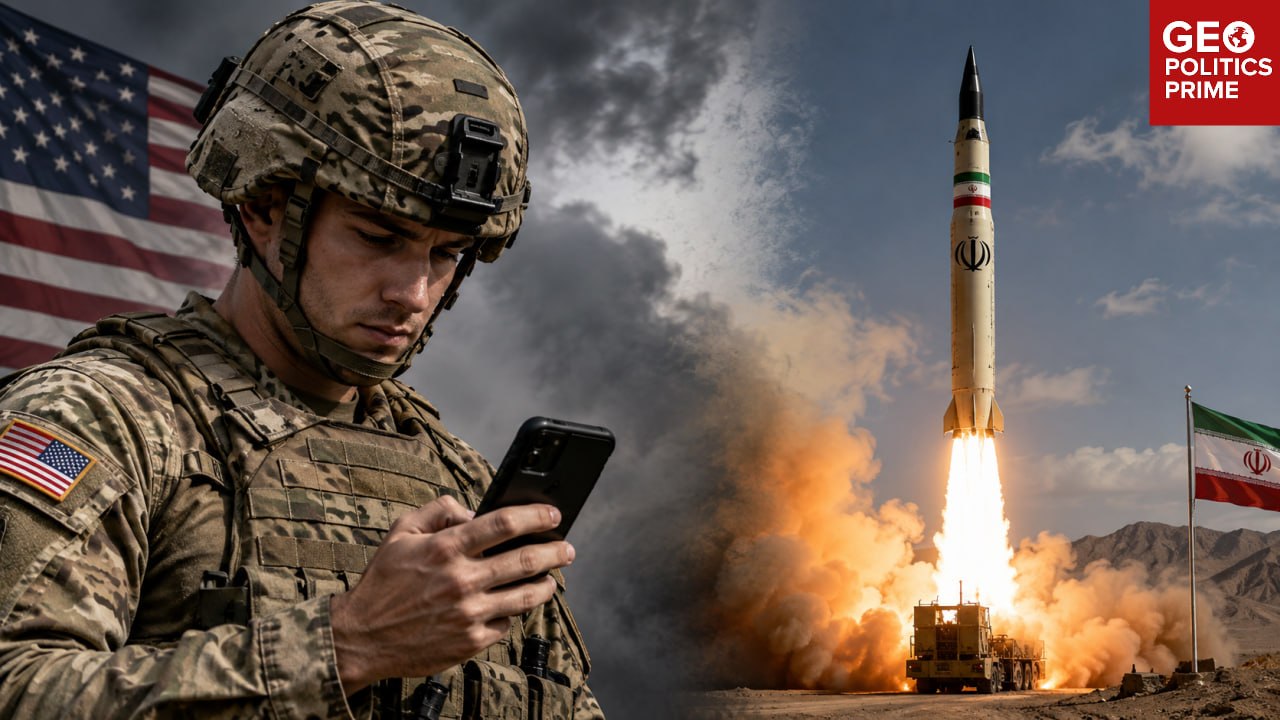
Digital hunt: how Iran tracks US troops through their phones

Geopolitics Prime

Iranian intelligence is using commercial advertising technology to detect the locations of American troops and carry out targeted strikes against them, Newsmax reports.

➡️ The technology relies on targeted advertising systems that use precise GPS coordinates. This unclassified location data is freely bought and sold by data brokers, with virtually no restrictions on who can purchase it

➡️ The tracking is tied to user accounts rather than specific devices, meaning that changing phones does not stop the surveillance

➡️ Iran also monitors videos and photos posted by soldiers on social media, revealing base layouts, troop movements, and defensive positions

Days earlier, Admiral Brad Cooper, head of US CENTCOM, sent a letter to service members warning that social media posts are helping Iran determine troop locations and assess the effectiveness of its strikes on American bases.

One example cited: a US soldier’s video, filmed with Meta smart glasses and posted on Instagram, showed troops running for cover during an Iranian attack on the Muwaffaq Salti Air Base in Jordan on July 17. The footage revealed the exact location of the base and the evacuation route to the bunker.

Some troops in Jordan have already been told their phones will be confiscated in the coming days. Yet the looming threat of phone seizures has deepened the unease among soldiers’ families, already jittery from months of Iranian reports about deadly attacks on US bases in the region.

Open-source information has become Iran’s most effective reconnaissance tool, and the US military is struggling to contain the damage.

Via https://t.me/healthimpact/3713

The Long Shadow Israel’s Military Involvement in Latin America

The Long Shadow: Israel’s Military Involvement in Latin America

Cognipresent

[…]

From the mid-1950s to the present day, Israeli weapons, trainers, intelligence officers, and now surveillance technology have flowed into Latin America with a consistency that survived changes of government in Jerusalem, ideological reversals in the region, and repeated waves of international condemnation. The story is not one of occasional opportunism. It is a decades-long structural relationship rooted in an economic imperative peculiar to Israel—and in a Cold War division of labor that made the Jewish state a useful proxy where direct American involvement had become politically radioactive.

This is an attempt to trace that history across both Central and South America, from Somoza’s Nicaragua to the spyware scandals of the 2020s.

The Structural Imperative

[…]

Central America: Filling the Gaps Washington Left

The Central American chapter is the most notorious, because it coincided with the region’s bloodiest counterinsurgency decades and because it repeatedly filled voids created by American human rights legislation.

Nicaragua

Israel’s relationship with the Somoza dynasty stretched back to the founding generation. From the mid-1950s to the late 1970s, Israel sold the Somoza regime large quantities of arms. According to figures from the Stockholm International Peace Research Institute, between 1974 and 1978 Israel accounted for roughly 98 percent of the Somoza government’s military equipment. When the United States finally cut off arms shipments to Nicaragua in September 1978, amid the regime’s disintegration, Israel became the major—if not the exclusive—source of the dictatorship’s weapons in its final agony.

After the Sandinista revolution toppled Somoza, the relationship migrated to the other side of the war. Through the 1980s Israel became a significant covert backer of the Contra insurgency, shipping arms through the Guatemalan and Salvadoran militaries and providing trainers for newly recruited Contra fighters in their camps in Honduras and Costa Rica. This was the thread that eventually tied Central America to the Iran-Contra scandal, in which Israeli figures—among them David Kimche, described as Israel’s top Contra specialist, and the veteran arms dealer Yaacov Nimrodi—occupied central roles in the machinery connecting Iranian weapons sales to Contra financing.

Guatemala

Guatemala is the gravest case. Israel sold its first weapons there in the mid-1970s, beginning with the Arava transport aircraft, and by the late 1970s had become the country’s principal arms supplier. The inventory expanded to RBY armored personnel carriers, patrol boats, light cannon, grenade launchers, machine guns, and—most consequentially—some 15,000 Galil assault rifles that armed the Guatemalan military during its campaigns in the highlands.

When the Carter administration cut off American military aid in 1977 over Guatemala’s human rights record, Israel stepped up its shipments to compensate. A program of Israeli military training and advisers began in 1977–78. The darkest dimension was Israeli involvement in the rural “pacification” program. In 1982, Israeli advisers helped develop and conduct the scorched-earth campaign that General Efraín Ríos Montt unleashed on the highland Maya population—part of a genocide that ultimately claimed on the order of 200,000 lives, most of them indigenous. The military-technical assistance and the atrocity were not separable phenomena; the same expertise that “modernized” the counterinsurgency organized its machinery of extermination.

El Salvador, Honduras, and Costa Rica

The pattern repeated across the isthmus. El Salvador’s purchases began early—an order for eighteen Dassault Ouragan jets in 1973—and deepened under the Reagan administration. During El Salvador’s counterinsurgency wars between 1980 and 1992, which killed more than 75,000 civilians, Israel supplied a large share of the state’s arms, by some estimates around 83 percent, including napalm.

Honduras, the logistical hub of the anti-Sandinista war, received Israeli fighter jets on top of small arms, artillery, ammunition, and reconnaissance and transport aircraft. Even Costa Rica, a country with no standing army, received Israeli arms and police training. By around 1980 Israel had become the single largest arms supplier to Central America as a whole, and the Mossad station in Tegucigalpa—reportedly run by a deputy chief of the service, a marker of the region’s importance—coordinated the most sensitive operations, including Contra training.

South America: The Larger Market

If Central America generated the headlines, South America generated the revenue. The relationships there were larger in dollar terms, longer in some cases, and entangled with some of the continent’s most brutal dictatorships.

Argentina

Israel’s dealings with the Argentine junta (1976–1983) carry a bitter irony that observers have never let pass: the regime was openly antisemitic and specifically targeted Argentina’s Jewish population for imprisonment, torture, and disappearance, even as Israel armed it. Around 30,000 people were murdered or disappeared under the dictatorship, and testimony from the later trials of the generals recorded torturers invoking Nazi symbols and inspiration. Both the first Rabin government and the Begin government collaborated with Buenos Aires. In one of the era’s grim contradictions, Israeli officials sold weapons to the junta while quietly helping some Argentine Jews escape the very regime being armed.

The relationship reached its most consequential point during the 1982 Falklands War. Declassified British files and the research of the Argentine journalist Hernán Dobry established that Israel armed the junta both before and during the conflict—selling reconditioned Nesher (Dagger) fighter jets derived from the Mirage 5, along with Skyhawk aircraft, spare parts, air-to-air missiles, radar warning systems, and long-range fuel tanks routed in part through Peru. The extra fuel capacity extended Argentine aircraft loiter time over the islands; the weapons were used to bomb British warships. Estimates of Israeli arms exports to Argentina in this period run from several hundred million dollars to roughly one billion. British officials at the time understood exactly what was happening and judged themselves powerless to stop it. Menachem Begin, according to Dobry’s account, was moved partly by a personal antipathy toward Britain rooted in the Mandate era, and the Israelis treated the arms flow as leverage against London’s own weapons sales to Israel’s Arab adversaries.

Chile

After the United States Congress imposed an arms embargo on Pinochet’s Chile in 1976, Israel became a principal supplier to the regime—a role documented in American diplomatic cables. A US Embassy cable from April 1980 acknowledged Israel as a major arms supplier to Pinochet, furnishing missiles, tanks, and aircraft; a 1984 cable had a senior American official describing Israel as still one of the junta’s main weapons sources, precisely because Israeli sales fell outside the American embargo and thereby blunted its intended effect. A 1988 CIA assessment concluded that Israel’s military collaboration with Santiago was wide-reaching and unlikely to be sacrificed even under a Labor government.

The testimony of Chilean exiles gives the arrangement a human texture. Lily Traubman, who fled to Israel and later petitioned for disclosure of the relationship, recalled that the weapons carried by the Chilean police and army were Israeli, and that Pinochet at one point threatened to cancel a major arms deal if he were not received in Israel. Israel also conducted public-relations work on Pinochet’s behalf in Washington. That the regime had granted asylum to the Nazi war criminal Walter Rauff—inventor of the mobile gas van—and that one of its torture centers operated inside the German colony of Colonia Dignidad did not disturb the commercial relationship.

Brazil

Israel supplied the Brazilian military dictatorship that seized power in the 1964 coup against João Goulart, providing weapons and training, and the two states even cooperated on nuclear energy development. Israeli embassy cables of the period praised the generals and disparaged the Brazilian left and student protest.

Brazil is also the clearest illustration of how the relationship matured from arms sales into deep industrial integration. Elbit Systems, Israel’s largest arms company, built two Brazilian subsidiaries—AEL Sistemas and Ares—and by 2010 Brazil ranked among the largest importers of Israeli weapons. Israeli drones patrolled the massive 2014 World Cup and 2016 Olympics and were used to monitor—and by some accounts suppress—protests. Israeli surveillance systems were embedded in Brazil’s SISFRON border-monitoring program. Under Jair Bolsonaro, who campaigned as an open admirer of Israel and whose sons posed in Mossad and IDF apparel, the two governments discussed the sale of drones equipped with real-time facial recognition explicitly cleared for domestic policing, and signed a cluster of military, security, and aviation cooperation agreements in 2021.

The recent turn is instructive. Under Lula, and against the backdrop of the war in Gaza, Brazil suspended a major Elbit artillery deal (the Atmos 2000 howitzer program) and in 2025 floated the possibility of restricting military exports to Israel—yet had not, as of late 2025, unwound the underlying agreements or withdrawn from the Mercosur–Israel free trade framework. The gap between rhetoric and structure is precisely the point: decades of integration are not easily reversed by a change of tone.

Bolivia

In the 1970s and 1980s Israel sold arms to the military regimes in Bolivia, whose security apparatus included the Nazi fugitive Klaus Barbie—the “Butcher of Lyon”—as an adviser on repression directed against the indigenous population. The through-line connecting Rauff in Chile and Barbie in Bolivia to Israeli arms shipments is one of the more uncomfortable footnotes of the entire history, and it recurs often enough to resist dismissal as coincidence.

Colombia

Colombia produced the era’s most lurid episode, one that blurred the line between state policy and private enterprise. In the 1980s the former Israeli lieutenant colonel Yair Klein, through his company Spearhead Ltd., brought Israeli veterans to Colombia to train paramilitary forces. Klein maintained he had arrived to train peasants defending themselves against guerrillas, with the blessing of the Colombian Defense Ministry, ostensibly to protect the banana industry in the Urabá region. What his camps actually produced was instruction in massacres, car bombs, and high-profile assassination for private armies working for the Medellín cartel figures Pablo Escobar and Gonzalo Rodríguez Gacha—forces that later hardened into the AUC death squads responsible for some of Colombia’s worst atrocities.

Klein was tied to the 1989 “Guns for Antigua” affair, in which Israeli-made arms—Galil rifles and Uzi submachine guns—were routed through Antigua and ended up in cartel hands; nearly half the shipment was recovered on Rodríguez Gacha’s ranch after his death. An Israeli court convicted Klein in 1991 of illegally exporting military expertise and equipment, fining him and handing down a suspended sentence. A Colombian court convicted him in absentia in 2001 and sentenced him to ten years, and Interpol later sought him and other Israelis on charges of training death squads. Israel never extradited him. The Klein saga is significant less for one man’s culpability than for what it revealed about a permissive ecosystem in which former officers, surplus Israeli weapons, and official ambiguity about their activities combined to lethal effect.

Peru

Israel’s defense ties with Peru span decades. Under Alberto Fujimori and his intelligence chief Vladimiro Montesinos—the regime’s shadow operator—Israeli arms dealers moved through the procurement channels that turned state secrecy into private fortune, including deals surrounding the purchase of MiG-29 and Su-25 aircraft. The relationship continued into the democratic era: Rafael’s Spike anti-tank missiles and Israeli drones entered the Peruvian arsenal, and in 2009 Peru signed a roughly $9 million contract with Global CST, a firm run by the former IDF general Israel Ziv, to train elite units against the Shining Path insurgency.

The contemporary chapter is still being written. In 2025, Peru’s state-owned munitions company FAME entered a strategic partnership with Elbit Systems—signed as the Peruvian government pushed through an amnesty for security forces implicated in the atrocities of the country’s internal conflict, a juxtaposition that critics argued signaled deepening complicity rather than reform.

Ecuador

Ecuador rounds out the South American picture as a steady, lower-profile customer, its armed forces drawing on Israel among a long list of foreign suppliers over the decades—a reminder that beneath the dramatic cases lay a broad baseline of routine commerce that rarely made headlines.

The Surveillance Era

[…]

The NSO Group’s Pegasus spyware is the emblem. Mexico became the single largest Pegasus market in the world: of the roughly 50,000 phone numbers identified in the Pegasus Project leak, about 15,000 were Mexican, and successive administrations reportedly spent tens of millions of dollars deploying the tool against journalists, activists, and opposition figures—one journalist’s number selected for targeting only weeks before his murder.

[…]

Via https://cognipresent.wordpress.com/2026/08/01/the-long-shadow-israels-military-involvement-in-latin-america/

Was the Drone Attack on US LNG Tanker in Egypt a False Flag?

Larry C Johnson

Short answer… I think so.

On Wednesday July 29, 2026, at roughly 3:20 pm CET, a drone struck the Energos Winter — a Marshall Islands-flagged floating storage and regasification unit (FSRU) owned by US company New Fortress Energy — on its starboard side at Egypt’s Mediterranean port of Damietta, in the northern Nile Delta. The fire spread to a nearby Bermuda-flagged LNG carrier, the Gaslog Salem. Both crews were evacuated, the blaze was brought under control, and no injuries were reported. Both vessels were subsequently moved offshore for assessment; the Energos Winter was pulled off the quayside before the fire was fully out.

Egyptian harbor responders got on scene fast from both the land side and with fire and rescue tugs, which several accounts credit with preventing a much larger disaster — a fire spreading to the terminal infrastructure or fully involving either LNG hull would have been catastrophic. Egypt’s Petroleum Minister Karim Badawi traveled to the port personally to oversee the response.

CNBC and CNN framed this attack as part of a widening campaign on energy infrastructure, implicitly blaming Iran: Iran, the Houthis, and Iraqi militias have all broadened strikes, with Iraqi Iran-aligned militias launching drones at oil infrastructure in Riyadh and Saudi Arabia’s Eastern Province this same week. The Damietta strike was viewed by many in the West as extending that campaign from Gulf oil into Mediterranean gas.

I think the attack at Damietta was an Israeli false flag that was intended to stir tensions between Cairo and Tehran. Iran inadvertently set the stage for such a narrative. Two days prior to the drone attack Iranian state TV ran a segment headlined about revenge against Ukraine, showing a multi-target map of European-energy-linked infrastructure, which included Damietta, marked with a pin, citing its LNG capacity (5.2M tons/yr) as a “gateway for gas exports to Europe” descriptor. Damietta was not the focus of the broadcast and was merely identified as one of several possible targets. Everything beyond that — i.e., that the map amounts to Iran claiming or committing the strike at Damietta — is inference layered on top. The critical point about the framing: the stated enemy was Ukraine, not the US or Egypt.

Many in the West were quick to point the finger of blame at Iran. Yet Egypt’s Minister of Information, in an interview with Al Arabiya, denied the Wall Street Journal’s claim that the Egyptian government considered Iran responsible for the drone attack on two ships in Damietta port.

Iran’s Foreign Minister Aragchi issued a statement insisting that it wasn’t Iran and that it was an Israeli false flag operation to try to drag Egypt into an anti Iranian coalition. I think Aragchi is correct.

Give credit to Mossad for monitoring Iranian media and taking advantage of the news broadcast to quickly create an incident that would cast the shadow of blame on Iran by virtue of the news broadcast that had listed Damietta as one of many possible targets for retaliation against Ukraine. It is very easy for an organization like Mossad to mount such a drone attack in two days… Guilt by association.

[…]

Via https://sonar21.com/was-the-drone-attack-on-us-lng-tanker-in-egypt-a-false-flag/

Saudi Arabia preps for ‘major’ land, sea operations against Ansarallah in Yemen

(Photo credit: Saudi Ministry of Defense)
The Cradle

JUL 31, 2026

Ansarallah recently struck an Aramco site with missiles, shutting down the facility in response to Riyadh’s new escalation against Yemen

Saudi Arabia is “preparing” for a massive and “major” military assault against Yemen, which would involve both land and sea operations aimed at breaking the Ansarallah-led Yemeni Armed Forces (YAF) blockade on Saudi shipping, The Guardian reported on 30 July.

Yemeni sources claimed Saudi military troops have been “withdrawing from the east of Yemen in what could be preparation for a land offensive.”

“The troop movements inside Yemen involve concentrating forces for what could be an attack on Al-Bayda, a governorate in central southern Yemen captured by [Ansarallah]” between 2020 and 2021, the sources added.

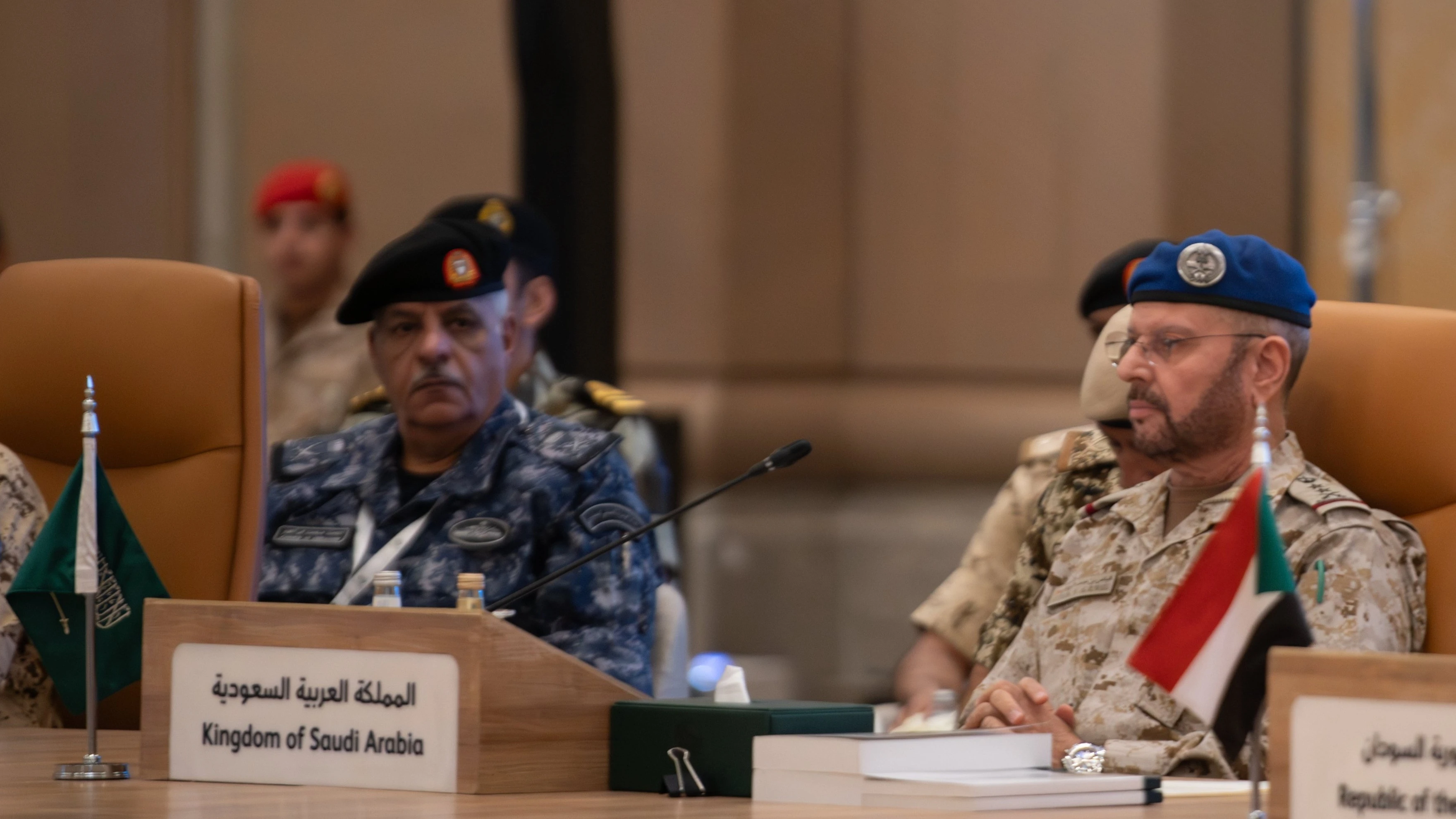
The report coincided with a Saudi Defense Ministry statement saying the kingdom was preparing to form a multinational naval coalition for the Red Sea.

“The Ministry of Defense is hosting an international meeting to discuss the Kingdom’s initiative to establish a multinational maritime defense coalition,” it said, adding that “the meeting was attended by chiefs of staff and their representatives from 43 countries, along with the EU Delegation … out of a total of 51 invited countries and organizations.”

“The participation reflected the international community’s commitment to strengthening maritime defense cooperation and unifying efforts to safeguard the security of maritime routes.”

It added that 14 countries, including Turkiye, Pakistan, Egypt, Sudan, and Djibouti, issued a joint statement backing the Saudi-proposed multinational “maritime defense coalition,” as it is being called.

“Membership will remain open to all countries wishing to join the coalition,” the Saudi Defense Ministry statement went on to say.

The kingdom has reportedly asked the US, UK, France, Germany, Italy, and others to join.

But international naval forces are “overstretched,” western diplomats were cited as saying in a Reuters report on 29 July.

Eleven days ago, the YAF announced a naval blockade on Saudi shipping in response to over a decade of war and siege imposed on Yemen by the kingdom. Saudi tankers have already been struck multiple times in recent days.

Sanaa has also struck a Saudi airport and a major Aramco energy facility in response to new Saudi airstrikes on Yemen this month – the kingdom’s first major attacks against Yemeni civilian infrastructure in years.

The Aramco facility was set ablaze and has been forced shut by Yemen’s operations.

Data released on 26 July revealed that Saudi crude oil loading volumes at the Red Sea port of Yanbu have plummeted by 40 percent due to Yemen’s blockade and retaliatory strikes.

Saudi Arabia waged war against Yemen in 2015 at the head of an Arab coalition, after Ansarallah seized the capital and ousted the Saudi-backed president from Sanaa. The UAE was a major part of this war, which was also supported logistically by the UK, US, and Israel.

A 2023 Saudi–Yemeni peace process nearly resulted in an agreement between the two sides. The peace talks stalled, yet prevented a major escalation from erupting.

The kingdom for years continued to attack Yemen and impose its illegal and deadly blockade on Yemeni ports and airports.

The Saudi-led war on Yemen that began over a decade ago resulted in an unprecedented famine and the deaths of hundreds of thousands.

Yet the war failed to bring about a defeat of Ansarallah as Riyadh had expected.

Following 7 October 2023, Ansarallah launched military operations against Israel and a naval blockade on ships heading to Israeli ports in response to the genocide.

It also carried out operations in support of Lebanon, which has been under Israeli attacks and occupation since Operation Al-Aqsa Flood.

Major EU naval operations, as well as the former US administration’s attempt to form a maritime coalition against Ansarallah following the start of the Gaza genocide, failed blatantly.

A summer 2025 campaign of US strikes against Ansarallah, under US President Donald Trump, also failed to impact the Ansarallah-led YAF.

[…]

Via https://thecradle.co/articles/saudi-arabia-preps-for-major-land-sea-operations-against-ansarallah-in-yemen-report

EU’s Green New Deal pushing Europe into decline

Dark blue banner with the white headline 'EU’s Green Deal is pushing Europe into decline' over a green EU-flag background with a red underline and yellow stars.

By Samuel Furfari, as published by Watts Up With That on 30 July 2026

An Energy Institute report reveals a Europe clinging to the pretence of leading an “energy transition” as the continent declines under the weight of climate policies whose quixotically utopian objectives are negated elsewhere by fossil fuel-supported economic growth.

Data from the 75th edition of the annual Statistical Review of World Energy will surprise only those ignoring the facts: The world continues to depend massively on fossil fuels [more correctly, hydrocarbon fuels]. Solar and wind technologies, while expanding, still lag ever-rising energy demand, which last year reached a record 600 exajoules. (That’s 600 quintillion joules, where a joule is equal to the work necessary to create one watt of power for one second.)

Of total primary energy consumption, 86% came from fossil fuels – oil at 33.5%; coal, 27.6%; and natural gas, 25.1%. Accounting for just 3% were solar and wind, which are heavily promoted by the European Commission over the much-demonised hydrocarbons.

From 2015-2025, the first decade of the Paris Agreement on climate change, global energy consumption rose more than 14%, with sharply contrasting dynamics. European Union use declined about 1% annually, while consumption in the Asia-Pacific region grew 2.6%.

Europe’s decreasing energy use is no triumph of ecological heroics but rather an outcome of the assault of the EU Green Deal on competitiveness and its predictable deindustrialisation and economic decline. For example, in 2025, growth in gross domestic product for some European countries was close to zero, while the US was 2% under the hydrocarbon-friendly Trump administration. Some coal-burning Asians experienced multiples of that.

Noting this EU tragedy, the European Central Bank’s 2024  report on competitiveness blamed not climate policies directly but instead high energy prices the policies had wrought – a sleight of hand accommodating EU politics.

Meanwhile, the growth of fossil fuels outside the EU continued to outstrip significantly that of solar and wind. Contrary to the Brussels narrative that the gap between so-called renewable technologies and fossil fuels is narrowing, the reality, in absolute terms, is a widening chasm. The EU has indeed integrated renewables into its grid, doing so at the cost of affordability and reliability. However, this leadership remains purely symbolic because the rest of the world is accelerating its use of fossil fuels far faster than that of renewables.

In places like Asia, the expansion of hydrocarbon use concurrently with impressive economic growth was more than coincidental. It was necessary, and China and India led the way.

Early this century, the impetus for Chinese growth was the lesson of the Soviet Union’s collapse, a result of deplorable living standards and a dim outlook for the future. The Chinese Communist Party recognised that growth was needed to maintain its legitimacy and that abundant, cheap energy – mainly coal – would be the critical ingredient.

This prosperity is good news to everybody but those obsessed with carbon dioxide (CO2) emissions, the bogeyman of the climate industrial complex. In its drive to cut emissions by 90% by 2040, the EU has reduced emissions by 554 million metric tonnes under the Paris Agreement as the rest of the world increased its own by 3 billion metric tonnes – fivefold in the opposite direction. The European effort is incinerated almost instantly by the combustion of fossil fuels elsewhere to support increased economic activity.

Most damning for 30 years of climate diplomacy is that global industrial emissions have risen by 67% since the adoption of the United Nations Framework Convention on Climate Change (“UNFCCC”) in 1992, according to the 2026 ‘Statistical Review of World Energy’. While the EU cut its emissions in that time by about 30%, the effort, achieved at enormous cost and deindustrialisation, has been erased by others’ pursuit of human flourishing.

Compared with previous editions, the language of the latest Energy Institute analysis is markedly more favourable to renewables. One explanation may be the publisher’s collaboration with Ember, a self-identified “energy think tank that aims to accelerate the clean energy transition with data and policy.” The Energy Institute itself seeks “to accelerate a just, secure, and low-carbon energy transition.”

Obviously, our scepticism about the EU’s green agenda is based on the data presented in the report, not on the publishers’ interpretation of it. We sought to contrast the pathetic product of EU energy policy with the promising economic rise of others.

Despite the omnipresent rhetoric of the energy transition, the evidence must be faced: The dominance of fossil fuels in the world energy system persists even as wind and solar, expensive and intermittent, expand. The world is undergoing an energy addition, not a transition, as new technologies supplement the growing capacity of legacy sources.

The great majority of mankind aspires to more prosperity, which requires abundant and cheap energy – what the EU employed before adopting ecological dogma. The clash between climate ambitions and economic aspirations will only intensify.

[…]

Via https://expose-news.com/2026/07/30/eus-green-deal-is-pushing-europe-into-decline/

Hamas accepts Trump’s Gaza disarmament plan in principle

Hamas accepts Trump’s Gaza disarmament plan in principle – official (VIDEOS)

RT

31 July 2026

The group is ready to fully disarm contingent on Israel’s withdrawal from the Palestinian enclave, media reports citing a senior Hamas official claim

Palestinian militant group Hamas has agreed to completely disarm in Gaza under US President Donald Trump’s Board of Peace plan, although Israel must also meet a series of conditions as part of the agreement, according to a senior official.

Ghazi Hamad, a member of the Hamas negotiating delegation, confirmed to Al Jazeera on Friday that an agreement has been reached, adding that an official statement will be released soon.

“These negotiations were difficult and hard, and we tried to reach the best possible formula that was achievable,” Hamad, whose remarks were also carried by Reuters and the BBC, was cited as saying. He stressed, however, that Israel must approve the phased disarmament, adding that Hamas will not implement any part of the agreement unless Israeli forces fulfilled their obligations, particularly withdrawing from Gaza and advancing reconstruction in the Palestinian territory.

“We will not take any action regarding disarmament prior to Israel’s withdrawal from the [Gaza] Strip,” he stated.

Hamad also told the BBC that the group insists on the wording “inventorying and storing weapons” under Palestinian oversight rather than handing them over to Israel.

Trump breaks the news

The news first emerged when Trump announced on Truth Social on Thursday that his Board of Peace has reached a “historic agreement” on the complete disarmament of Hamas and every other armed group in Gaza, calling it a “monumental step toward lasting peace and security” and a major milestone in his 20-point plan for the enclave.

“The agreement will be carried out in carefully structured phases,” the US president wrote. “As disarmament is completed, Israeli forces will withdraw, and the International Stabilization Force will work with a new Palestinian police force to take responsibility for Gaza being safe for its residents and its neighbors.”

Trump said Gaza would eventually be governed by a “new Palestinian government” working closely with the Board of Peace. He thanked Egypt, Qatar, and Türkiye for mediating the talks, insisting the territory would no longer be allowed to serve as a base for attacks against Israel.

Board of Peace Director-General and High Representative for Gaza Nickolay Mladenov confirmed the breakthrough in a post on X.

“Today, agreement has been reached on the decommissioning of weapons and civilian transition in Gaza. It took months of very difficult negotiations to get here,” he wrote, adding that there were several moments when he “did not believe we would make it” and insisting the Israeli withdrawal “must move in lockstep” with Hamas decommissioning.

Reports published shortly before Trump’s announcement, however, suggested significant details remain unresolved. Hamas reportedly wants to retain “personal” small arms, while heavy weapons would be stored under the supervision of a Palestinian body rather than destroyed. It also seeks amnesty for members of the disbanded armed formations and wants the process synchronized with an Israeli withdrawal rather than surrendering all weapons in exchange for a promise that Israeli troops would later leave.

It is realistic to expect Hamas to disarm now that the group has “made the strategic decision” to do so, Ramallah-based journalist Mohammed Najib told RT. He added, however, that the reported deal can only succeed if it is backed by international guarantees and Israel follows through on its commitments.

Hamas concluded that no construction can take place in Gaza if it continues to reject the disarmament. So they agree to this issue,” he said, adding that “as this agreement was declared by US President Donald Trump, Netanyahu cannot say no to it.”

Saad Nimr, a professor of political science at Birzeit University, also argued that Hamas is unlikely to give up its weapons before Israel begins withdrawing from Gaza, as the group no longer trusts Israel to honor ceasefire commitments.

“The more Israel gets out of Gaza, the more Hamas will give up their weapons,” he told RT, arguing that any disarmament would have to happen in parallel with an Israeli pullout.

Israel’s reaction

Earlier in the day, unnamed sources told Reuters that talks in Cairo between mediators and Hamas leaders on implementing the Gaza peace plan had made rare progress, though an Israeli official said the proposed terms were not satisfactory. Following Trump’s announcement, the Times of Israel reported, citing an unnamed source, that the agreement had been signed by Hamas negotiators, the board, and the mediating countries, but that “the Israeli office” issued a statement saying the disarmament proposal did not meet Israel’s demands.

Israel has yet to comment officially, although members of the government have already voiced skepticism and opposition.

“Israel says it will not take any action until Hamas is disarmed with its weapons, tunnels and infrastructure and we all understand the complexity of this,” Moshe Sa’ada of Israeli Prime Minister Benjamin Netanyahu’s Likud party told public broadcaster Kan News. “Hamas is already saying that it’s the other way around: that it expects Israel to withdraw and only afterwards it will disarm.” Sa’ada added that he still believed there would ultimately be “no other option” in Gaza “apart from military rule and end-to-end occupation.”

Right-wing National Security Minister Itamar Ben-Gvir also blasted the emerging deal before Trump’s social media post.

“You only talk with Nazis through the crosshairs – and no other way,” he wrote on X. “The only solution in Gaza to which Israel is willing to be a partner is encouraging emigration and destroying Hamas.”

An official told the BBC that if Israel decides not to withdraw as part of the peace plan, Trump would be “very disappointed.”

The announcement came as Israeli strikes continued across Gaza despite the ceasefire introduced last October. The Gaza Health Ministry said hospitals received the bodies of six people on Thursday, along with 34 wounded patients. The dead reportedly included an eight-year-old child killed in a strike on a displacement camp in Khan Younis and an 18-month-old baby killed when a home in the Bureij refugee camp was bombed. According to Gaza health authorities, at least 73,341 Palestinians have been killed and more than 174,000 wounded since Israel launched its military campaign in retaliation for the deadly Hamas raid of October 2023.

Trump’s Board of Peace was initially presented as a temporary body overseeing Gaza’s reconstruction and the transition to an unelected Palestinian technocratic administration. Its founding charter, however, authorizes it to pursue “peace-building” initiatives in other conflict-affected regions and grants Trump sweeping personal authority.

Trump holds veto power over all decisions, can issue directives on the organization’s behalf and serve without a fixed term. He can be replaced only if he resigns or is unanimously declared incapacitated by the executive board, and he personally designates his successor. Invited members normally receive three-year terms, but that limit does not apply to those contributing more than $1 billion.

Palestinians have no representation on the board’s upper governing bodies and participate only through its technocratic arm, the National Committee for the Administration of Gaza (NCAG). The 15-member civilian body, led by Ali Shaath and operating under the board’s oversight, is tasked with managing Gaza’s day-to-day public services. It is also the interim authority to which Hamas has agreed to transfer governing powers.

The NCAG welcomed the Hamas disarmament agreement, calling it “the opening of a path toward beginning” implementation of the broader peace roadmap. In a statement on X on Friday, it said it was ready to “assume its responsibilities” and “take over the administration of the [Gaza] Strip” to ensure the roadmap leads to “practical steps that have a tangible impact on citizens’ daily lives.” Since it was established by the Board of Peace in January, the NCAG has been unable to enter Gaza, largely due to Israeli objections.

[…]

Via https://www.rt.com/news/643692-trump-gaza-peace-board-hamas/

Passage through Strait of Hormuz impossible due to US aggression: PGSA

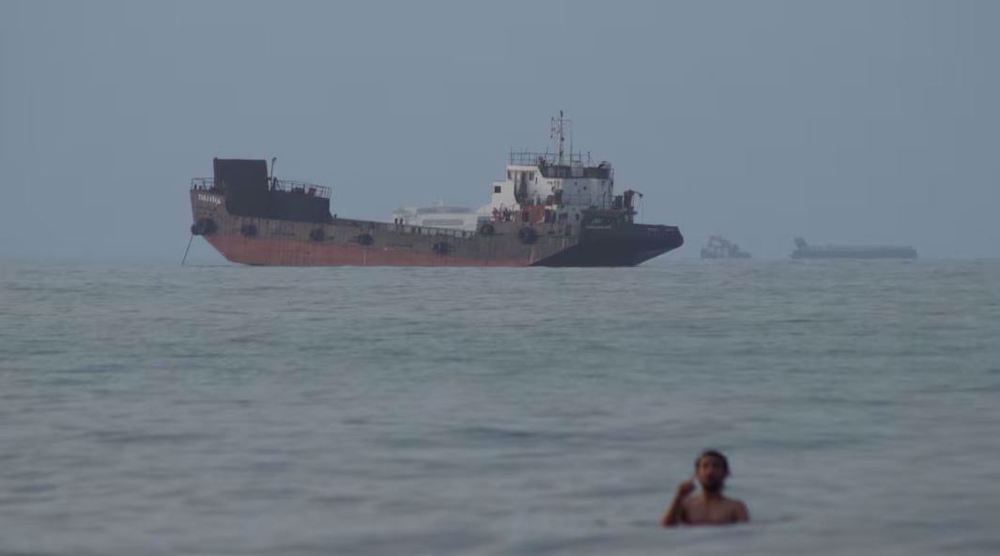
Vessels in the Strait of Hormuz near the beach of Bandar Abbas, Iran, July 27, 2026. (Photo via Reuters)

Press TV UK

Iran’s Persian Gulf Strait Authority (PGSA) says that passage through the Strait of Hormuz is currently impossible because of the continued “aggressive actions” of US military forces in the region, adding that applications for transit would only be processed once stability returns.

“Due to the continued aggressive actions of the United States military forces in the region, passage through the Strait of Hormuz is not possible,” the authority said in a Friday statement, issued in response to repeated inquiries from applicants.

It added that all pending requests would be reviewed in chronological order once the situation stabilizes.

“As soon as stability and calm are restored, all applications will be reviewed based on their order and schedule, and permits will be issued gradually,” the statement said.

The announcement comes amid US aggression on Iran and Iran’s retaliatory strikes on US assets.

The US has been attacking Iran since earlier in July after Washington violated the terms of the Islamabad Memorandum of Understanding, which was meant to permanently end the war that the US and Israeli regime unleashed against Iran in late February.

The understanding has recognized Iran’s rights and sovereignty over the Strait of Hormuz, and said Iran was responsible for removing restrictions that it has imposed over the Strait of Hormuz for vessels affiliated with aggressors and their supporters since the start of the aggression on February 28. However, the US attempted to undermine Iran’s sovereignty by establishing an unsafe corridor near the Omani shores.

The unlawful US measure prompted Iran’s firm response to re-impose restrictions on the Strait of Hormuz. Tehran says any movement in the strategic chokepoint must be conducted under Iranian arrangements, as per the understanding.

The latest statement follows a series of incidents in the Strait involving vessels attempting to use unauthorized routes.

Earlier on Friday, the Islamic Revolution Guards Corps (IRGC) said two “violating” oil tankers were struck and forced to stop in the Strait of Hormuz after attempting to pass through an unauthorized route under US military escort.

In a statement, the IRGC said four other tankers quickly reversed course after the incident. It said the two vessels had ignored repeated warnings and attempted to transit through an “unsafe and illegal route.”

The latest incident comes a day after the IRGC declared that the Strait of Hormuz would remain closed as long as US threats and interference in the region continue.

In a separate statement issued on Thursday, the IRGC said two oil tankers had attempted to use an “unsafe southern route” after being directed by US military aircraft.

According to the statement, one of the tankers caught fire, forcing both vessels to reverse course.

“The Strait of Hormuz is our territory, and the brave men of the IRGC Navy firmly control it. No outsider who has come from thousands of kilometers away will be allowed to interfere,” the IRGC said.

[…]

Via https://www.presstv.co.uk/Detail/2026/07/31/773453/US-aggression-leaves-passage-through-Strait-of-Hormuz-impossible-Strait-Authority

Ukraine in bed with Mexican drug lords

Ukraine in bed with Mexican drug lords – Moscow

RT

29 June 2026

Ukraine is deepening its cooperation with Mexican drug cartels to profit from the flow of narcotics, including fentanyl, into the EU, Russia’s Foreign Intelligence Service (SVR) has said. US President Donald Trump has made combating fentanyl exports to the US one of his priorities, designating it as a ‘weapon of mass destruction’.

In a statement on Monday, the SVR said the Ukrainian security agencies are deliberately showing leniency toward the growing flow of drugs from Latin America to Europe, adding that Kiev is facilitating the trade due to financial strain.

“The corruption-ridden regime of Vladimir Zelensky seeks to get additional profit, especially in the situation of the inability of Western sponsors to satisfy all of its insatiable demands,” the agency said, adding that Kiev also values cartel help in recruiting mercenaries for the military.

The agency named Odessa’s ports as the main entry points for narcotics destined for the EU via Poland, Moldova, and Romania, suggesting that Ukraine’s inadequate and deeply flawed border and customs controls make it an attractive route. According to the SVR, Latin American cartels also have their eyes on Ukraine’s black market of weapons.

Ukraine has long served as a storage and transit hub for drugs destined for the EU, including heroin, which is typically transported along the Northern and Caucasus routes from Central Asia and the Caucasus, according to a 2024 analysis by the EU’s drug agency (EMCDDA) and Europol, though the conflict has since disrupted some of these routes.

Fentanyl flowing from Mexico has for months been in the crosshairs of Washington. In December, Trump designated the drug – which kills tens of thousands of Americans annually – as ‘a weapon of mass destruction’. Fentanyl is considered even more dangerous than heroin and other opioid drugs, as a lethal dose can be as low as 2 milligrams – around 10 to 15 grains of table salt.

In September 2025, the Mexican newspaper Milenio reported that the Jalisco New Generation Cartel sent members to Ukraine to learn combat drone tactics. Footage reviewed by the outlet shows cartel units operating modified civilian drones with military-style discipline.

[…]

Via https://www.rt.com/russia/642351-ukraine-in-bed-mexican-drug-cartels/