Euroclear issues stark warning to EU over Russian assets plot

Euroclear issues stark warning to EU over Russian assets plot – FT

RT

The EU could face increased borrowing costs and long-term global reputational damage if it forces through its latest plan to use frozen Russian sovereign assets to finance new loans for Ukraine, Belgian depository Euroclear has warned, according to the Financial Times.

The privately owned clearing house holds around $200 billion of the $300 billion in Russian Central Bank assets frozen in the West after the escalation of the Ukraine conflict in 2022. EU leaders want to issue a ‘reparation loan’ to Kiev by using those holdings as collateral. Moscow has denounced any such move as outright theft.

The Brussels-backed plot would be seen globally as “confiscation of central bank reserves, undermining the rule of law” by investors such as sovereign wealth funds and central banks, Euroclear CEO Valerie Urbain has warned, in a letter seen by the FT.

She also warned that the move would make European debt appear riskier and push up government borrowing costs across the bloc for a long time, the paper reported Thursday.

Urbain has previously cautioned that privately owned Euroclear could sue the EU if it attempts to confiscate the Russian sovereign funds held there.

The push to seize Russian assets has intensified as the US promotes a new initiative to settle the Ukraine conflict. US President Donald Trump has expressed optimism that a settlement could be reached. European officials, however, fear the American proposal could complicate the bloc’s plans, with the German newspaper Handelsblatt reporting that it might compel the EU to reimburse any diverted Russian funds.

European Commission President Ursula von der Leyen reaffirmed Brussels’ intent to press ahead with the asset grab on Tuesday while pledging continued EU support for Kiev. The Commission insists the proposed scheme does not amount to confiscation, though officials acknowledge there is a risk it will be perceived that way.

Russia has long stated that any attempt to seize its Central Bank assets would be regarded as “theft” and would undermine trust in Western financial institutions. Russian officials have accused Brussels of trying to prolong the Ukraine conflict for political advantage and to justify rising military budgets that benefit European arms manufacturers.

[…]

Via https://www.rt.com/news/628554-euroclear-assets-eu-damage-reputation/

US ICE Agents Trained by Israeli Defense Forces (IDF) and Use Israeli Spyware to Hack Americans’ Phones


by Brian Shilhavy
Editor, Health Impact News

If you still think that the current actions of U.S. Immigration and Customs Enforcement (ICE) officers are all about rounding up illegal immigrants who are all criminals, then you are missing a lot of information from wherever you get your news from.

One of the first complaints of ICE raids that started shortly after Trump took office at the beginning of the year is that they wore no uniform, masked their faces, and drove unmarked vehicles.

This has reportedly led to criminals attempting to impersonate ICE agents “to rob, kidnap and assault unsuspecting victims,” which has prompted a warning from the FBI.

Fox News recently reported:

FBI warns of crooks posing as ICE to terrorize communities – former agent explains red flags

The FBI is warning that criminals across several states are impersonating Immigration and Customs Enforcement (ICE) agents to rob, kidnap and assault unsuspecting victims.

In a bulletin posted last month, the bureau detailed several cases in which offenders identified themselves as immigration agents while wearing shirts or jackets marked with the ICE logo.

The Oct. 17 bulletin, first reported by WIRED and obtained by the transparency group Property of the People via a public-records request, describes multiple cases of criminals posing as ICE agents.

According to the FBI, victims have reported being threatened, robbed, kidnapped and even sexually assaulted by individuals posing as federal officers. Some of the incidents occurred in New York, Florida and North Carolina, the bulletin said.

Full article.

It is also widely reported that ICE agents routinely train with the Israeli Defense Forces (IDF). In recent days, some videos have appeared on TikTok claiming that some of the ICE agents deployed in U.S. cities are actual Israeli soldiers who served in the IDF.

I have compiled a short video about this, and about Rep. Thomas Massie’s comments that Israel is behind the efforts to try and stop the release of the “Epstein files.”

Recently, Elon Musk’s X platform released a new feature for X that was touted to be an effort towards more “transparency” where users found out when, and from what country, each X account originated from.

There was soon a video and images going viral that showed that the U.S. Department of Homeland Security X account originated from Tel Aviv, in Israel, starting in 2008. ICE is funded and operated through the Department of Homeland Security.

X very quickly took the feature offline so some of the more embarrassing X accounts could make edits, including the U.S. Department Homeland Security account.Read the full article.

It is also public knowledge the Trump administration purchased the Israeli-made spyware called “Paragon Solutions” to be used by their Israeli-trained ICE agents to be able to hack people’s cell phones out in the public.

ICE obtains access to Israeli-made spyware that can hack phones and encrypted apps

Trump administration contract with Paragon Solutions gives immigration agency access to one of the most powerful stealth cyberweapons

US immigration agents will have access to one of the world’s most sophisticated hacking tools after a decision by the Trump administration to move ahead with a contract with Paragon Solutions, a company founded in Israel which makes spyware that can be used to hack into any mobile phone – including encrypted applications. (Like the Signal app, making the phone a “listening device.”)

The Department of Homeland Security first entered into a contract with Paragon, now owned by a US firm, in late 2024, under the Biden administration. But the $2m contract was put on hold pending a compliance review to make sure it adhered to an executive order that restricts the US government’s use of spyware, Wired reported at the time.

That pause has now been lifted, according to public procurement documents, which list US Immigration and Customs Enforcement (Ice) as the contracting agency.

It means that one of the most powerful stealth cyber-weapons ever created – which was produced outside the US – is now in the hands of an agency that has repeatedly been accused by civil and human rights groups of violating people’s due process rights.

Full article.

The Zionist agenda behind ICE and their connections to Israeli intelligence was discussed by Marcy Winograd of TRUTHOUT recently.

ICE and the Israeli Military Are 2 Sides of the Same Coin — We Must Resist Both

Excerpts:

In 2017, Jewish Voice for Peace (JVP) launched the Deadly Exchange campaign to sever the decades-long collaboration between U.S. law enforcement and the Israeli military.

JVP said its Freedom of Information Act (FOIA) requests revealed that well over a thousand police, sheriffs and federal agents, including the FBI, ICE, and Homeland Security, had flown to Israel for training in surveillance, racial profiling, crowd control, detention, and deportation.

In 2018, Researching the American-Israeli Alliance (RAIA), in partnership with JVP, produced “Deadly Exchange: The Dangerous Consequences of American Law Enforcement in Israel.”

In this report, the authors examined how U.S. law enforcement in Israel studied visual monitoring in public places, internet surveillance, racial profiling of communities of color, treatment of protesters as enemy combatants and coordination of media reporting on state-sponsored violence.

Eran Efrati, then executive director of RAIA, told  Al Jazeera in 2020 that U.S. law enforcement who travelled to Israel witnessed

“live demonstrations of repressive violence in real-time, in protests across the West Bank, patrols in East Jerusalem, and visits to the Gaza border.”

This was not an intercontinental Zoom call. This was on-the-ground modeling and information sharing. Efrati told Al Jazeera,

“Delegates meet with the Shin Bet and chief officers in Israeli military prisons to discuss investigation tactics, with Palestinian Authority agents and police, to learn about how Israel uses their collaboration in suppressing Palestinian dissent.”

JVP’s FOIA requests revealed that, in 2015, Peter Edge, then the associate director of ICE’s Homeland Security Investigations, accepted an invitation from the Anti-Defamation League (ADL) to attend a “counterterrorism” seminar in Israel.

FOIA requests also turned up ADL documents in which Edge, prior to visiting Israel, said he was looking forward to “learning more about how the law enforcement community manages perpetual and elevated threat levels, both internally and from neighboring countries, how/whether they are effective, and how those techniques can be applied more broadly.”

Invoking Biblical Claims

Both the U.S. Department of Homeland Security and the Israeli Ministry of Defense exploit religious doctrine to legitimize their aims and couch their crimes in lofty yet chilling language.

[…]

Big Tech and Zionism

Ethnic supremacists in Israel and the United States rely on the tech behemoths — Google, Palantir, Amazon, Microsoft, and Elbit Systems, Israel’s largest weapons developer — to surveil the movements of Palestinians in Israel and the occupied territories, as well as the movements of immigrant communities and Palestinian rights activists in the United States.

Since 2008, the Department of Homeland Security, which oversees ICE and CBP, has signed $235 million in contracts with Elbit Systems. That includes a $23.9 million contract with Elbit’s U.S. subsidiary for new surveillance towers, complete with cameras and radar systems, for an integrated virtual border wall, awarded during former President Joe Biden’s tenure.

Google’s 86,000-square-foot Tel Aviv campus, featuring panoramic views, colorful rooms and recessed lighting, occupies eight floors of a building with a mythological name: Electra Tower, named after the Greek mythological figure. In the Oresteia trilogy, Electra plots with her brother to kill their mother for conspiring to kill their father.

Follow the money all the way to the Arizona-Mexico border.

In April 2025, The Intercept reported that Google will collaborate with the Trump administration to provide a central database for video surveillance at an upgraded “50 towers with up to 100 cameras across 6 sites in the Tucson Sector.”

Although CPB is tasked with arresting immigrants at the border, the agency also shares its data with ICE for abductions, detentions, and deportations in the interior, 100 miles from the Mexican border.

Co-founded by billionaire Trump supporter Peter Thiel, Palantir collaborates with intelligence agencies and the Department of Defense for war and surveillance.

In June 2025, the Department of Defense, according to The Software Report, signed a $1.3 billion contract for Palantir’s Project Maven, which analyzes drone footage of so-called enemy combatants to

“enable units to make hundreds of real-time decisions per hour using AI-driven tools.”

Paragon Solutions

Meanwhile, Amnesty International in Europe is sounding the alarm over Paragon Solutions’s Graphite spyware, which the human rights group says targets journalists by infecting electronic devices to access text messages.

Ehud Barak, the former Prime Minister of Israel, co-founded Paragon with Ehud Schneorson, a former commander of the Israeli military’s cyber warfare agency Unit 8200. Undeterred, the Trump administration announced in 2025 that it will move ahead on a stalled contract with Paragon Solutions for spyware to hack into cell phones and read messages on encrypted apps like Signal.

[…]

Via https://healthimpactnews.com/2025/ice-agents-in-the-u-s-are-trained-by-israeli-defense-forces-idf-and-use-israeli-spyware-to-hack-americans-phones/

Blandine Sankara: “Agroecology Form of Resistance and Decolonization”

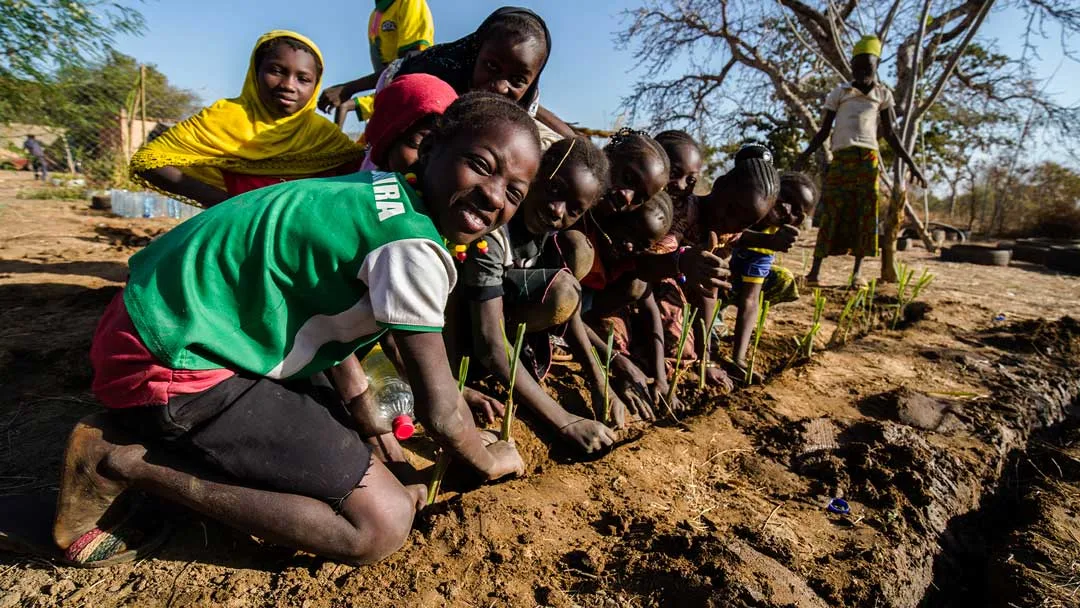
Youth in Burkina Faso plant cropsYelemani Association works towards food sovereignty in Burkina Faso. Photo: BdF

Pedro Stropasolas

Founded by Thomas Sankara’s sister, Yelemani Association inspires the fight against desertification in Burkina Faso.

In Burkina Faso, agroecology flourishes as an act of resistance. In a country where more than 80% of the active population makes their living off agriculture, peasant movements and social organizations have defended the production of healthy food and food self-sufficiency as a path to liberation from the wounds left by French neocolonialism.

Leading this effort is the Yelemani Association, founded in 2009 by Blandine Sankara, sister of revolutionary leader and former president Thomas Sankara, who governed the country from 1983 to 1987, when he was assassinated.

The word Yelemani means “change” or “transformation” in the Dyula language, the second most spoken language in Burkina Faso. The name summarizes the organization’s proposal: to change the relationship between people, land, and food, valuing local resources and restoring the dignity of the peasant world.

At the center of this project is agroecology, seen not only as a production technique, but as an anticolonial instrument. For Blandine, cultivating in an agroecological way is resisting the dominant economic model that puts profit above human life.

“We really see these two concepts, food sovereignty and agroecology, as forms of resistance to the economic model, and also as a form of decolonization,” states Sankara.

Based on four pillars: production, valorization of local products, training, and political advocacy, Yelemani has become a reference in the country. It has recovered degraded lands, created a peasant seed bank, trained hundreds of farmers and students, and has been at the forefront of national mobilizations against GMOs and foreign corporations, such as Monsanto and the Bill Gates Foundation.

In an interview with Brasil de Fato, Blandine Sankara talks about the trajectory of the Yelemani Association, the results achieved, and the challenges faced by agroecology in the Sahel country.

“What I have to say is that agroecology is increasingly at the center of agriculture and policies. I’ll talk about agricultural policies in Burkina Faso because today we have a national strategy. This is rare. A country that has a national strategy in the field of agroecology,” she reflects.

Brasil de Fato: Blandine, can we start by talking a bit about how agroecology entered your life and how the Yelemani Association came about?

Blandine Sankara: First of all, it’s important to say that the Yelemani Association was created in 2009. And especially that Yelemani means “change” or “transformation” in the second most spoken language of Burkina Faso, Dyula.

And what does this change mean? For us, it’s the valorization of local resources, to guarantee the dignity of the peasant world and build our daily well-being. It’s not just about peasants. It’s about the dignity of the peasant, on one hand, but also about building the well-being of every Burkinabe citizen.

This is the first explanation about the name Yelemani. The organization focuses on agriculture and food. Our work is directed toward these two fields, which are broad, because they touch all aspects of life, after all, they concern all of us. And in a country like ours, where more than 80% of the active population works in agriculture, this is a central field, because food concerns everyone.

Parallel to change through valorization of local resources and the peasant world, we speak of a transformation of mentality and behaviors. Even though in agroecology we work to produce healthy food and teach cultivation techniques alongside peasants, if there isn’t a change in the mentality of consumers, of all of us, we don’t advance.

This change is also a change of behavior and deconstruction of prejudiced ideas about our own products. So there are two transformations we seek: one in production and another in mentalities.

Here at Yelemani, we promote food sovereignty and the practice of agroecology. It’s clear that with the rejection of the use of GMOs, chemical fertilizers and pesticides. This is our work. Promoting food sovereignty through agroecology and refusing the chemical model.

We see all of this as a form of resistance to the economic model that puts profit above human life. This is the guiding thread of our activities and our daily life. It’s our vision. We really see these two concepts, food sovereignty and agroecology, as forms of resistance to the economic model, and also as a form of decolonization.

Not only of what is on our plates and on our lands, the seeds, but also of our spirits. Because, as I usually say, there has been a colonization of mentalities, a kind of violation of our own power to act. To resist is also to refuse that our fields, markets and kitchens are invaded by imported products, hybrid seeds, pesticides and even by flavors and norms that are not ours.

This is Yelemani’s fight, its mark among the organizations that work for food sovereignty and agroecology in Burkina Faso.

At a certain point in our lives, we lived through the Revolution in Burkina Faso in the 1980s, an experience that deeply marked us. Those who were young at the time, students or even pupils, participated in or witnessed what was at stake in the country.

In my case, I studied sociology and had many opportunities to go to villages and regions of Burkina, which made me understand the realities of the peasant world. Later, in Geneva, during my development studies, I deepened this understanding. It was the era of globalization, of economic partnership agreements, and we closely followed the debates.

Another important factor was the period from 2008 to 2011, when we lived through what was called the “high cost of living crisis”, with the surge in prices of basic products worldwide, linked to the increase in oil barrel prices. There were protests in Ouagadougou and several cities across the country against the increase in food prices.

All of this led us to the conclusion that it was necessary to move toward food sovereignty. Not just as a concept, but as practice. We began experimenting with this in 2009, and it was especially from 2012 that we effectively began our activities.

BdF: What can you tell us about the activities you’ve been developing at Yelemani since 2009 and their results?

BS: We work on four main areas. First, the production and transformation of agroecological fruits and vegetables in Lumbila, which is about 30 km from Ouagadougou. There, there are three plots with production, and it’s mainly women who work. Internally displaced women. What we call internally displaced are people who were expelled from their homes due to terrorism.

The second is the valorization and promotion of local food products. Because it’s not enough to produce, we must value what is ours, this is part of the fight for food decolonization.

Then, there’s education and training on agroecology and food sovereignty, because we think that even if we do good work in terms of production and transformation to offer healthy products and everything else, if the consumer, especially young people, aren’t sensitized, we won’t have results. It won’t be a profound change. So, this is the third axis and we’re working in schools.

But it’s also necessary to work on policies, so we added the fourth area, which is advocacy with political decision-makers so they decide to take agroecology into account.

Among the results, the first was the recovery of abandoned soil in Lumbila, considered unproductive. In one year, we managed to regenerate the land with agroecological practices. We also created a local products market and, since 2023, a peasant seed bank, where farmers can withdraw seeds and return double after harvest, without commercial transactions.

Another important result is the production of pedagogical material. Since 2015 we’ve developed training modules on agroecology and food sovereignty (12 in total) and trained farmers, students, and teachers.

We also had political victories, such as the expulsion of Monsanto in 2015, after a national mobilization against GMOs, and in 2018, a campaign that managed to block the “Target Malaria” project, funded by the Bill Gates Foundation, which planned to release genetically modified mosquitoes.

In 2019, during FESPACO (Pan-African Film Festival of Ouagadougou), we managed to break the monopoly of a French company that prevented the sale of local juices at the event. After popular pressure, a decree authorized local producers to sell their beverages.

But the greatest result for us remains the recovery of abandoned and unproductive land in Lumbila, a symbol of what agroecology can achieve.

BdF: With the end of the revolution in the 1980s, there was a rupture in the path of food self-sufficiency developed by Thomas Sankara. Multinational companies, mainly French ones, and global agribusiness, recovered their presence, developing a form of agriculture that doesn’t collaborate and, in a way, aggravates the problem of desertification in the Sahel. How do you see the effects of colonization on the agrarian question in your country?

BS: It must be said that it was really during colonization that capitalism penetrated the traditional agricultural sector, forcing the modernization of an agriculture considered backward and subsistence, which was forced to evolve into commercial and mechanized agriculture. At that moment, emphasis was placed on crops destined for export, what were called cash products and cash crops.

Therefore, in Burkina’s case, it was peanuts, but especially cotton and, to a lesser extent, also green beans. When we look at the country today, there’s a large area of land, thousands of hectares of land that were destroyed by the use of these chemical inputs for production mainly of cotton. These are thousands of hectares that today need to be recovered. They need to be restored.

The richest zones, the most fertile lands, were used for cotton cultivation, with excessive use of chemicals to produce more and sell more. Therefore, it was really for export, they were export products to other continents, mainly to France.

There are also floods caused by rains, with the loss of seeds, which forces farmers to go into debt to buy new seeds. Therefore, there were many consequences because of this export culture.

In the 2000s, cotton cultivation was done with great support from Monsanto, which I mentioned earlier, the American company. It made producers believe that the harvest would be more profitable with transgenic cotton, without additional insecticide and with better yield.

We can even say that there was an agricultural and food colonization, and that it never ended. The great powers and multinationals continue to exploit the same mechanisms.

That’s what they told our producers. In 2009, this cotton was profitable in the first three years, but very quickly farmers had to go back to using insecticides because the quality of cotton deteriorated and the quantity was also not as expected, it wasn’t up to standard. And that’s not all. It also destroys neighboring crops, not just cotton, but crops that were alongside, like sesame, for example, which was totally destroyed.

And all of this in conditions of climate degradation in Burkina. Therefore, the application of these policies in the agricultural sector led to the total loss of our food autonomy and local knowledge, and even food security increased with the devaluation of food crops for the benefit of these crops.

[…]

Via https://libya360.wordpress.com/2025/11/26/blandine-sankara-agroecology-is-a-form-of-resistance-and-decolonization/

No, the six-year-old Mennonite girl in Texas did not die of measles

Parents of girl, 6, who died from measles stand by decision to not ...
Dr Pierre Kory

[T]his case [of six-year-old Kayley Fehr in Texas] was tragic and really had nothing, I shouldn’t say nothing to do with measles. But she did not die of measles by any stretch of the imagination. In fact, she died of a pneumonia. But it gets worse than that because she didn’t really die of the pneumonia. She died of a medical error. And that error was a completely inappropriate antibiotic. It was an insufficient antibiotic.

And in reviewing cases, I’ve reviewed cases of pneumonias that went unrecognized or mistreated. And normally when you review a case, it’s difficult to pinpoint blame unless you know exactly what the organism was. And in this case, we did know what the organism was. She died of mycoplasma.

And the tragedy is that mycoplasma is an extremely common what we call immunity acquired organism. This is very commonly circulating in the community. It causes pneumonias. And when you admit someone to the hospital for pneumonia, what you need to do is you treat what’s called empirically, meaning you put them on antibiotics that you think will cover the most common organism.

And that’s why this case is absolutely enraging. It’s infuriating because she died because she got an inappropriate antibiotic. The most common antibiotics that we use, it’s in every guideline. Infectious disease, pulmonary. Every guideline in the country tells you that for a hospitalized child or adult who gets admitted to the hospital, you put them on two antibiotics. One is from a category called beta lactams, which is like penicillin, cephalosporins.

And they got that part correct. They put her on something called ceftriaxone, which was excellent. But you always need to pair it with an antibiotic from a different category, which is called a macrolide or a quinolone. And they did neither of those things. They didn’t put her on the most common, which is azithromycin.

The tragedy is that mycoplasma is an organism that doesn’t have a cell wall. Penicillins and cephalosporins work by disrupting the organism cell wall. But if you don’t have a cell wall, you need a different mechanistic antibiotic, which is azithromycin, which interrupts the protein synthesis and messes with the formation of proteins in the ribosome. But I don’t want to get too geeky with that. I mean, this is like medicine 101. You put them on two antibiotics to cover all the possibilities.

And unfortunately, this case gets a lot worse than that because not only did they use an inappropriate antibiotic, so they used ceftriaxone, which was correct. They added something called vancomycin to it, which works similarly. And it covers very drug resistant organisms like MRSA. There’s no reason to think that this child would come in with MRSA from the community, from a Mennonite community. She’s not coming from a facility where a lot of antibiotics are used. So it was a really a grievous error, and it’s an error which led to her death.

And so when I say it gets worse, she’s in the hospital deteriorating. One of the fundamental teaching points that I’ve made throughout my career to my residents, to my fellows, to my students, is I always tell them, if what you’re doing is not working, change what you’re doing. Although this child was declining, they never changed what they were doing until the test came back from mycoplasma.

This is where it gets really troubling because as an ICU doctor, when I need a new antibiotic, I uncover, identify an organism in someone who’s critically ill when I order that antibiotic. That antibiotic has standards, it should arrive within at least two hours. And from my review of the records, the A\antibiotic was ordered 11pm, approximately 11 pm and as far as I can tell, it was not administered until 9 am the next morning. It was actually written to start the next day.

And so not only did you have several days delay of decline without the appropriate antibiotic, but then when they realized that they were missing the appropriate antibiotic, it took them, as far as I can tell, 10 hours to administer it. And by that time she was already on a ventilator. And approximately 24 hours later, actually less than 24 hours later, she died. And she died rather catastrophically.

As she was declining, she was in a state of what’s called shock and she needed medicines to maintain her blood pressure. And suddenly her blood pressures crashed and she arrested. And that kind of suddenness in an infection suggest some other cardiac event. And in a child like that, with that amount of inflammation, infection and disturbances in the bloodstream, I can only surmise that she died of a catastrophic pulmonary embolism.

But by the time that happened, there’s not a lot you can do. There’s some stuff you can do, you can use clot busting medications. And I’ve done that in the middle of cardiac arrest before and I’ve had a couple of rescues, but it’s not a high probability that you do that. But rather than focusing on that final event that caused her death, it really was all of the missteps that occurred.

And so she was recovering from measles, getting a secondary bacterial pneumonia. Let me give the hospital some credit. They correctly diagnosed her, they very quickly on admission realized that she was coming in with a secondary bacterial pneumonia. And I think that was an absolutely correct diagnosis. The treatment was absolutely incorrect. And this, when I say it has little to do with measles… secondary bacterial pneumonias can happen after any viral infection. And so this is, not everyone’s grandstanding.

And all this outrage over this measles. You see, the media is going nuts about how everyone needs to get vaccinated. I would tell you just simple, straightforward, correct medical care. We’ve been treating pneumonias for decades with antibiotics. And this was Just a tragic error of an insufficient and incorrect antibiotic regimen on admission.

[…]

Via https://vaccinesbytheoutliers.wordpress.com/2025/11/26/no-the-six-year-old-mennonite-girl-in-texas-did-not-die-of-measles/

Facebook turned blind eye to sex trafficking

Meta turned blind eye to sex trafficking – court filings

RT

Company policy allowed 16 violations, such as adults soliciting minors, before it suspended accounts

Facebook’s parent company, Meta, failed to promptly act on accounts engaged in sex trafficking by allowing illicit content to remain on its platforms despite repeated violations, recently unsealed court filings show.

The accusation is part of a lawsuit filed in California by more than 1,800 plaintiffs – including school districts, children and parents, and state attorneys general – alleging that social media giants “relentlessly pursued a strategy of growth at all costs, recklessly ignoring the impact of their products on children’s mental and physical health.” Alongside Meta – which owns Facebook, Instagram, WhatsApp, and Threads – the suit targets Google’s YouTube, ByteDance’s TikTok, and Snap’s Snapchat.

Former Instagram safety chief Vaishnavi Jayakumar testified she was shocked to learn that Meta maintained a “17-strike” policy for accounts allegedly involved in human sex trafficking.

“You could incur 16 violations for prostitution and sexual solicitation, and upon the 17th violation, your account would be suspended,” she said, calling the threshold “very, very high” by industry standards.

The brief alleges Meta was aware of serious harms on its platforms, including millions of adult strangers contacting minors, products that worsened teen mental-health issues, and frequent detection – but rare removal – of content related to suicide, eating disorders and child sexual abuse.

Responding to the allegations, Meta told USA Today it now enforces a “one strike” policy and immediately removes accounts involved in human exploitation, saying its former 17-strike system has been replaced.

The company has come under mounting scrutiny in the US. Earlier this year, reports that Meta’s AI chatbots could engage minors in sensual exchanges led to new safeguards for teen accounts, giving parents the option to block interactions with the bots.

Meta is also confronting expanding legal and regulatory challenges globally. Russia designated the firm an “extremist organization” in 2022 for refusing to remove prohibited content. The tech giant is facing multiple actions in the EU, including a €797 million antitrust fine tied to Facebook Marketplace, as well as separate copyright, data-protection and targeted advertising cases in Spain, France, Germany, and Norway.

[…]

Via https://www.rt.com/business/628472-meta-sex-trafficking-lawsuit/

Kremlin aide sees Washington infighting behind leak

Kremlin aide sees Washington infighting behind leak

RT

Suggests someone could be scheming against US President Donald Trump’s special envoy Steve Witkoff,

Russian presidential aide Yury Ushakov suggests someone in Washington could be trying to undermine US President Donald Trump’s special envoy, Steve Witkoff, commenting on the recent leaks of his conversations with the envoy. At least some of the purported leaks are fake, he added.

Speaking to Kommersant newspaper on Wednesday, Ushakov defended continued contacts between Moscow and Washington, including by phone, and maintained they are needed to build trust between the two nations. He also said that neither side was interested in leaking the contents of the conversations.

According to the presidential aide, the incident might point to infighting in Washington. “Do you remember the case of [former National Security Adviser] Michael Flynn? This case could be the same,” the official said.

Flynn was forced to resign in 2017 after being accused of misleading officials about a phone conversation with then Russian ambassador to the US, Sergey Kislyak. Trump, who was serving his first term as president, stated that the conversation was “illegally leaked” by US intelligence.

Flynn initially pleaded guilty to the false statement charges before reversing his position and calling the case politically motivated. Trump pardoned him in late 2020, bringing the case to a close.

Speaking to journalists on Monday, Ushakov warned that such leaks risk undermining the whole process of normalization of relations between Moscow and Washington. “This is unacceptable… in such relations, when most serious issues are discussed,” he said.

“There can be no cooperation with a partner when information about what was discussed is revealed. Otherwise, there will be no trust.”

On Tuesday, Bloomberg published what it described as a transcript of Witkoff’s conversation with Ushakov from October 14. The US special envoy was then accused of “coaching” the Russians on how to deal with Washington. Trump dismissed the allegations by saying that Witkoff was using a “standard” approach.

Ushakov noted that some of the leaks are fake, adding that he would not comment on the others. “My conversations with Witkoff are confidential. No one should make them public. No one.”

[…]

Via https://www.rt.com/russia/628487-washington-infighting-leak-kremlin-aide/

Language Families and Writing Systems

PPT - Cuneiform PowerPoint Presentation, free download - ID:2245590

Episode 33 How Far Back Can We Trace Languages

Dr John McWhorter (2019)

Film Review

Writing emerged independently in the Middle East, China and the Mayan empire.

Middle East

Cuneiform was a semi-alphabetic (part pictographs and part phonetic) writing system used by many language families (including IndoEuropean, Afroasiatic and Sumerian) over 3,000 years. Only social elites learned it.

Cuneiform first emerged around 3500 BC in the area comprising modern Iraq and Iran. It was derived from a token-based counting system dating from 8,000 BC.

From counting to cuneiform: How writing was invented

The earliest surviving cuneiform manuscript is the Behistun Inscription from the sixth century BC. Transcribed (in cuneiform) in Old Persian, Acadian (a Semitic language spoken in Mesopotamia) and Elamite (possibly related to Dravidian), it describes the military exploits of the Persian emperor Darius. It’s written in three languages,

Hieroglyphics (also combining pictographs and phonetic sounds) developed as a parallel writing system in Egypt. The first Proto-Canaanite alphabet was devised by laborers in a turquoise mine in the Sinai desert. They need a way to communicate with workers on other shifts and found hieroglyphics too hard to learn.

Around 900 BC. Phoenician traders elaborated on it to transcribe Phoenician (which had no vowels.). Greeks adapted it by adding vowels.

The Phoenician alphabet was mainly spread via Aramaic, (the language Persia used in their diverse colonies) between 1,000 BC – 200 AD. Aramaic would provide the model for Hebrew, Ethiopian, Brahmi, Burmese, Lao, Thai and Javanese writing.

China

Chinese, which is based entirely on pictographs, provided the model for Japanese and old Korean script.

Mayan Empire

Common Mayan Phrases

Mayas wrote in hieroglyphics, a combination of pictographs and phonetic sounds.

https://www.kanopy.com/en/pukeariki/watch/video/6120000/6120068

US Designates Non-Existent Cartel as ‘Foreign Terrorist Organization’ To Justify Attacks on Venezuela

Venezuelan President Nicolas Maduro (photo via Venezuela’s Presidential Press Office)

by Dave DeCamp | November 24, 2025

The US State Department on Monday formally designated the Cartel de los Soles, or Cartel of the Suns, a group that doesn’t actually exist, as a “Foreign Terrorist Organization,” providing a pretext for a potential attack on Venezuela.

The term “Cartel of the Suns” was first used in the 1990s to describe two Venezuelan military generals with sun insignias on their uniforms who were involved in cocaine trafficking [Ed: the name predates Venezuela’s current socialist government, which first came to power under Hugo Chavez in 1999]. According to a 60 Minutes report that aired in 1993, one of the generals was working with the CIA at the time. 

Today, the term is used to describe a loose network of Venezuelan military and government officials allegedly involved in drug trafficking, but the Cartel of the Suns doesn’t actually exist as a structured organization.

According to InSight Crime, a think tank that receives grants from the State Department’s Bureau of Western Hemisphere Affairs, recent US sanctions mischaracterized the Cartel of the Suns, which InSight described as “a system of corruption wherein military and political officials profit by working with drug traffickers.”

Despite the reality, the US is now calling the Cartel of the Suns a terrorist organization and claims that Venezuelan President Nicolas Maduro is its leader, a push being led by Secretary of State Marco Rubio, who has long sought regime change in Caracas.

President Trump has claimed that the terror designation would allow him to target Maduro or his assets, but any US attack on Venezuela would be illegal without congressional authorization. Secretary of War Pete Hegseth said in an interview last week that the designation gives the Pentagon “new options” to go after the “cartel,” meaning the Venezuelan government.

The real allegation against Venezuelan President Nicolas Maduro, according to InSight Crime, is that he allows lower-level officials to profit from the drug trade to keep them content. InSight said that the Venezuelan officials aren’t necessarily directing drug shipments but rather use their “positions to protect traffickers from arrest and ensure that shipments pass through a territory.”

For his part, Maduro and his government strongly deny the allegations, pointing to their recent operations targeting cocaine shipments. The Venezuelan government on Monday rejected the US designation and said that it was meant to justify a regime change war.

“Venezuela categorically, firmly and absolutely rejects the new and ridiculous fabrication of the secretary of the US Department of State Marco Rubio, who designates the non-existent Cartel of the Suns as a terrorist organization, thus reviving an infamous and vile lie to justify an illegitimate and illegal intervention against Venezuela under the classic US regime-change formula,” said a statement from Venezuelan Foreign Minister Yvan Gil.

Gil urged the US “to correct this erratic policy of aggressions and threats, forcefully rejected by the American people themselves, which harms the development of Caribbean nations and does nothing to contribute to a true and genuine fight against illicit drug trafficking.”

While Venezuela neighbors Colombia, where most of the world’s cocaine is produced, very little of the cocaine that arrives in the US transits through the country. Venezuela is also not a producer or a transit point for fentanyl, which has caused the most overdose deaths in the US in recent years.

[…]

Via https://news.antiwar.com/2025/11/24/us-designates-non-existent-cartel-as-a-foreign-terrorist-organization-to-justify-attacks-on-venezuela/

How Europe’s Green Transition Runs on African Land, Labor, and Life

Prince Kapone

Europe’s Clean Hands Fantasy in the New Scramble for Africa

[…]

The article under excavation, “In the new scramble for Africa’s resources, Europe tries to right old wrongs,” published by Politico Europe on November 24, 2025, presents itself as a straightforward piece of international reporting. At its surface level, the article narrates how the European Union—with Ursula von der Leyen as chief spokesperson—is attempting to reposition itself in Africa by modernizing the Lobito Corridor, a railway system first built by Belgium and Portugal to siphon minerals from the interior toward Atlantic export hubs.

The reporting frames Europe’s renewed presence on the continent as a morally conscious alternative to China’s expansive footprint, emphasizing “mutual benefits,” “ethical partnerships,” and “value chain development.” It acknowledges African skepticism, cites a few NGO critiques, and suggests that the EU still struggles to turn its lofty promises into grounded change.

But beneath this journalistic scaffolding lies a dense ideological choreography. Politico begins by briefly recalling the colonial origins of the Lobito railway—rubber, ivory, minerals extracted under the boots of Europe’s imperial administrators—only to immediately reframe that same infrastructure as a potential vehicle for European redemption.

The colonial railway is reborn as a “model initiative,” cleansed of its past through the application of Brussels’ new moral vocabulary. Europe, we are told, is not returning to Africa to extract but to atone, to “right old wrongs,” to engage in a “reset” with African countries celebrating fifty years of independence. The text performs this pivot quickly, the way a stage magician diverts the audience’s eyes just before the reveal.

Even without drawing on any outside context, the propaganda techniques surface clearly. The first is the moral reframing of continuity. Politico acknowledges history only as a backdrop, a somber prelude that allows Europe to appear enlightened in the present. T

he same extractive infrastructure is described now as a promising “lifeline” for sustainable development, as if the tracks themselves were not engineered for extraction but for some benevolent future partnership waiting patiently to be discovered. Brussels is cast as a penitent actor, struggling—not with its own long-standing interests—but with the burden of its own righteousness.

The second device is a soft erasure of power. The article speaks in the language of partnership: mutual benefits, shared prosperity, value chains built “together.” Nowhere in the narrative does the reader find clarity on who controls the financing, who sets the standards, who owns the corridors, or who ultimately profits from the movement of cobalt and copper down these rehabilitated colonial tracks. The structural asymmetry between Europe and the African nations it courts dissolves into a fog of technocratic goodwill.

[…]

Throughout the article, the language of extraction is sanitized. Cobalt and copper are framed not as resources whose exploitation has historically generated displacement and violence, but as essential ingredients in the green transition—neutralized commodities necessary for the functioning of Europe’s industries.

[…]

The Mineral Lifeline: What Politico Leaves Out About Europe’s Dependence on AfricaTo understand what the Politico article is really doing, we have to pull together the hard facts that sit behind its soft language. The piece on the Lobito Corridor tells us that the European Union and the United States are pouring money into a railway linking mineral-rich regions of Zambia, the Democratic Republic of Congo, and Angola to the Atlantic port of Lobito, with Brussels signing a €116 million investment package under its Global Gateway program.

It describes this as a “model initiative,” a way for Europe to “right old wrongs” and build “mutual benefits” with African partners. It notes that China “got there first” in securing access to African minerals, while the EU and the U.S. are scrambling to catch up. African NGOs are quoted warning that without concrete change on the ground, all this talk of “value addition” may just mean faster trains carrying raw minerals out of the continent.

All of that is true as far as it goes. But it leaves out the scale of the stakes. Africa is not just one more supplier in a global shopping list; it sits at the heart of the material basis of the so-called green and digital transitions.

Studies cited by UN and African institutions show that the continent holds about 92 percent of global platinum reserves, 56 percent of cobalt, 54 percent of manganese, and 36 percent of chromium. Africa is also a dominant exporter of these minerals into global markets, feeding the factories that produce batteries, electric vehicles, wind turbines, and high-tech components. Without African cobalt, manganese, and platinum group metals, Europe’s industrial and energy plans simply do not function.

Official EU-related analysis is surprisingly frank about this dependency. The European Council on Foreign Relations notes that the Union is highly dependent on imports for critical raw materials and will “never be self-sufficient”. For several key inputs, Africa is already the main lifeline. The same briefing highlights that around 63 percent of EU aluminium imports come from Guinea, 41 percent of manganese imports from South Africa, and 35 percent of tantalum imports from the DRC.

Separate official information shows that South Africa alone supplies a large majority of the EU’s platinum needs. In other words, when Brussels talks about “diversifying away from China,” it is not talking about becoming independent; it is talking about deepening and reorganizing its dependence on African land, resources, and labor.

This is where the Lobito Corridor fits into a larger architecture. The EU’s new Critical Raw Materials Act sets binding targets for 2030: at least 10 percent of the EU’s annual consumption of strategic raw materials should be mined in the EU, at least 15 percent recycled in the EU, and a large share processed domestically, while reliance on any single external supplier is capped.

[…]

To operationalize this, Brussels has been signing a web of so-called “strategic partnerships” with resource-rich African states. With Zambia and the DRC, it has launched a partnership on sustainable critical raw materials and the green energy value chain that explicitly links to the Lobito Corridor. With Namibia, it has an agreement on raw materials and green hydrogen. With South Africa, it has pledged to support “sustainable value chains” in minerals and metals.

[…]

At the same time, African institutions are putting forward their own plans, which Politico largely brushes past. The African Union’s Africa’s Green Minerals Strategy insists that African countries must move beyond exporting raw ores and concentrates. It calls for building up regional processing, manufacturing, and industrial value chains, and for coordinating policies so that African states are not picked off one by one in bilateral deals. Policy platforms like the Trade and Environmental Sustainability Structured Discussions forum and research centers such as the Africa Policy Research Institute warn explicitly against Africa once again being reduced to “a raw material appendage” of wealthier powers, this time in the name of the green transition.

When you place these documents next to each other, a sharp contradiction emerges. On the African side, the baseline demand is for control over processing and industrialization—who adds value, who sets prices, who owns the plants. On the EU side, the main concern is securing steady flows of critical materials into European and allied supply chains, while shifting some refining to countries of origin to tick the “value addition” box. In many of Brussels’ own analyses of the Critical Raw Materials Act and Global Gateway, Africa is framed first and foremost as a supplier of unprocessed or semi-processed raw materials needed to keep Europe’s green and digital industries running. Civil-society reports from the Global South warn that, without deliberate corrective measures, the CRMA risks locking regions like Africa and Latin America into that supplier role as part of a new “green” division of labor.

None of this is happening in a vacuum. The scramble for African minerals is one front in a broader EU strategy that the Commission and its allies now frame through the language of “resilience.” Analyses of the EU’s strategic foresight and resource policy describe a doctrine that includes securing supply chains, hardening infrastructure, strengthening economic and financial “security,” and ramping up defense cooperation, especially in relation to Africa’s critical minerals. The same logic running through that doctrine—stabilize a shaky order by tightening control over energy, finance, technology, and borders—runs straight into the global minerals game.

In energy, this resilience has already meant replacing one dependency with another. After Russia’s invasion of Ukraine, EU imports of Russian pipeline gas collapsed. By 2023, International Energy Agency analysis and European data show that the United States became the EU’s single largest LNG supplier, accounting for roughly half of LNG imports, alongside increased pipeline deliveries from Norway and others. In mid-2025, the EU and the Trump administration agreed to a massive deal committing hundreds of billions of dollars to US energy purchases over three years, marketed as a step toward “energy security” and diversification. Europe remains structurally dependent on imported fuel; it has simply changed who it buys from and on what terms.

In finance, resilience has meant turning custody into a weapon. The Belgian-based clearinghouse Euroclear reported around €4.4 billion in 2023 interest income on frozen Russian assets, generating over a billion euro in Belgian tax receipts. EU institutions have decided that profits from such immobilized assets will be used to support Ukraine’s war and reconstruction, effectively transforming frozen reserves into a tributary stream for European policy. Officials and analysts openly discuss this as part of the EU’s “economic security” toolkit. Whatever one thinks of the war, the precedent is clear: access to the EU’s financial infrastructure is now explicitly conditioned on political alignment, and property rights for targeted states are contingent.

In the digital sphere, the gap between rhetoric and reality is just as wide. The Commission speaks of “digital sovereignty,” but parliamentary briefings and market studies show that US cloud giants—Amazon, Microsoft, and Google—control roughly two-thirds to 70 percent of the European cloud market. European providers account for a small and fragmented share. The Commission has launched Digital Markets Act investigations into major cloud providers, but for now the physical infrastructure—servers, data centers, and advanced chips—remains largely in foreign hands. Europe writes rules; others own the backbone.

The security dimension is not an afterthought. Strategic foresight material and related European Parliament research explicitly frame increased defense spending and deeper security integration as pillars of resilience. The EU is being told to arm up, invest in its military-industrial base, and align more tightly with NATO. Minerals, energy corridors, financial channels, and digital infrastructure are all drawn into a single picture in which “economic security” and “hard security” reinforce each other.

When we bring this back to Africa, the pattern sharpens. Brussels accepts that it will remain dependent on imports for energy, raw materials, and cloud infrastructure. Its answer is not to reduce the overall exploitation of resources, but to manage dependence through privileged access: strategic partnerships, Global Gateway corridors, standards and traceability requirements, and financial and security leverage. Africa’s green minerals, like its oil and gas before them, are treated as inputs into Europe’s resilience project—a project designed to stabilize a bloc facing crisis at home and competition abroad.

None of this has gone unnoticed in the Global South. In 2025, the UN General Assembly adopted a resolution establishing an International Day against Unilateral Coercive Measures, after years of campaigning by states such as Venezuela, which argue that sanctions and asset seizures violate international law and human rights. African and Latin American commentators increasingly describe Western raw-materials and climate policies as a new wave of “green colonialism,” pointing out that energy transitions in the North are being built on intensified extraction in the South. Civil-society organizations tracking EU “strategic projects” in Africa document displacement, forest loss, and limited benefits for local communities, warning that sustainability language often disguises continuity with older forms of plunder.

[…]

Via https://libya360.wordpress.com/2025/11/25/lobito-and-the-long-arm-of-empire-europes-green-transition-runs-on-african-land-labor-and-life/

Ukraine Agrees to US-Sponsored Deal to End War with Russia

Russia’s foreign minister condemned the US media leak of a draft peace agreement, referring to it as ‘hype’ and ‘megaphone diplomacy’

The Cradle

The Ukrainian government has “agreed to a peace deal” to end the nearly three-year war between Moscow and Kiev, a US official told CBS News on 25 November.

“The Ukrainians have agreed to the peace deal. There are some minor details to be sorted out, but they have agreed to a peace deal,” the US official said.

Ukrainian National Security Advisor Rustem Umerov also said that an understanding has been reached, expressing optimism that Ukraine’s President Volodymyr Zelensky would travel to the US by the end of November in order to finalize the deal.

Negotiators reached “a common understanding on the core terms” of a deal discussed among US, European, and Ukrainian officials in Switzerland over the weekend.

“We now count on the support of our European partners in our further steps. We look forward to organizing a visit of Ukraine’s president to the US at the earliest suitable date in November to complete final steps and make a deal with [US] President [Donald] Trump,” Umerov added.

According to CBS, this comes after US–Russia negotiations in Moscow. US Army Secretary Dan Driscoll met with Russian officials in Abu Dhabi, two anonymous diplomatic sources told the news channel.

“We remain very optimistic. Secretary Driscoll is optimistic. Hopefully, we’ll get feedback from the Russians soon. This is moving quick,” the US official went on to tell CBS News.

Meanwhile, Russia’s Foreign Minister Sergei Lavrov has slammed the leak of information from US media.

Lavrov said that while Russia “appreciates the US position, which is taking the initiative in resolving the Ukrainian conflict,” the country “operates professionally, not leaking information before formal agreements are reached.”

“Russia expects the US to inform it of the results of consultations with Ukraine and Europe in the near future,” he added.

“It was leaked on purpose to fan the media hype. Those who direct this hype certainly want to undermine Donald Trump’s efforts, to distort the plan according to their wishes,” Lavrov added.

The foreign minister also said Moscow did not receive any official messages from Washington on the matter. Russia will confidentially discuss whatever US proposal is submitted and will do so without “resorting to megaphone diplomacy,” he went on to say.

The CBS report came the same day as a phone call between Zelensky and UK Prime Minister Keir Starmer. The conversation preceded a virtual meeting of the Coalition of the Willing scheduled for Tuesday.

“We have coordinated our positions and the priority issues for discussion, as well as some of our next steps and contacts,” Starmer said.

According to an Axios report released on Monday, Zelensky has been presented with a 28-point US plan. The report says the Ukrainian president was briefed on the plan by US envoy Steve Witkoff and President Donald Trump’s former advisor and son-in-law, Jared Kushner, during a phone call.

It adds that efforts to draft the 28-point plan began last month.

A draft of the plan seen by Axios last week calls on Ukraine to give up additional territory in the east, introduce a cap on the size of its army, and agree never to join NATO.

“The plan is not easy for Ukraine, but the US believes the war must end and that if it doesn’t, Ukraine is likely to lose even more territory,” a White House official told the outlet.

The 28-point US plan is reportedly inspired by Trump’s post-war plan for Gaza. It focuses on “peace in Ukraine, security guarantees, security in Europe, and future US relations with Russia and Ukraine,” Axios wrote.

Since the start of the war in February 2022, Russian forces have successfully occupied much of, but not all of, the territory of four eastern Ukrainian oblasts: Donetsk, Luhansk, Kherson, and Zaporizhzhia.

In September 2022, Russia passed legislation formally annexing them.

Ukraine is demanding that Russia withdraw from these territories entirely, including areas with pro-Russian Ukrainian populations.

Europe remains determined to keep Ukraine war going

Ana Vračar
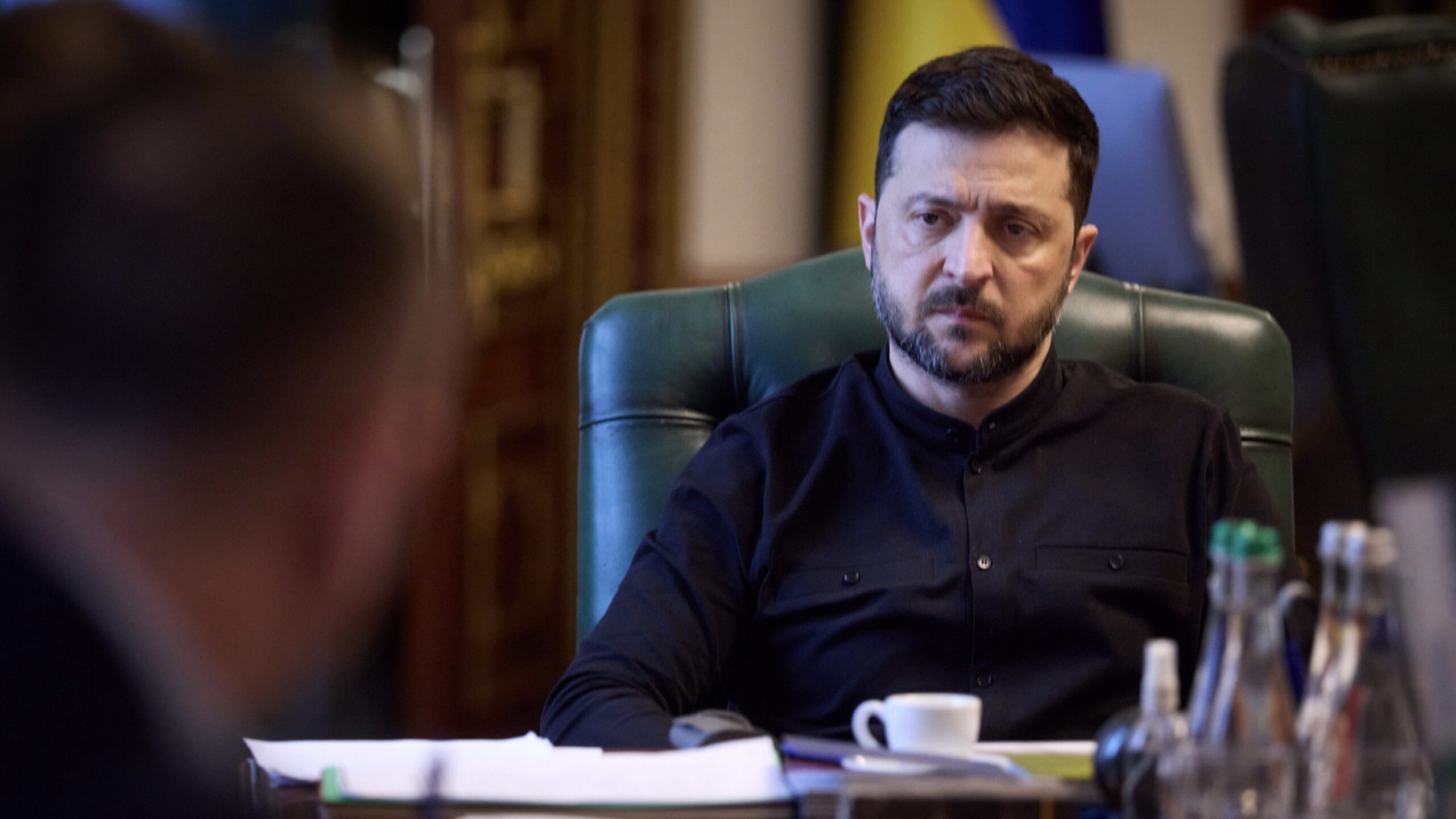
Ukrainian President Volodymyr ZelenskyyUkrainian President Volodymyr Zelenskyy in a meeting with government officials. Photo: Volodymyr Zelenskyy / X

European leaders scrambled to resist a US-backed draft plan for Ukraine that includes no NATO membership, recognizing Russian-held territories, and capping Ukraine’s military.

European leaders spent a restless weekend reacting to a draft peace plan for Ukraine backed by US President Donald Trump. The original 28-point document includes provisions that both EU governments and Prime Minister Volodymyr Zelenskyy’s administration condemned as “maximalist,” insisting the proposal concedes too much to Russia: long-requested assurances that Ukraine will not join NATO, recognition of territories currently held by Russian forces, and a cap on Ukraine’s military at 600,000 troops – still making it one of the largest in the region.

Mainstream commentators quickly proposed that accepting such terms would amount to Ukraine’s capitulation. Yet other analysts noted that European leaders’ concerns appear less about Ukraine’s future and more about shielding themselves from fallout. Ukrainian researcher Volodymyr Ishchenko suggested in a social media post that the EU’s real fear is that Russia might actually accept the deal – and that European governments may therefore try to make it unacceptable to Moscow. “It’s especially telling that this fear persists even as Russia enjoys the upper hand and can prolong the war to pursue its perceived ‘maximalist’ goals, while Ukraine descends even deeper into military, economic, political, social, and international crises,” he wrote.

This new episode of Europe’s resistance to a minimal amount of diplomacy comes at a time when most Ukrainians support a negotiated outcome to the conflict. A Gallup poll from July 2025 showed nearly 70% of respondents favoring a negotiated settlement rather than “fighting until victory,” a near-complete reversal of opinions in 2022.

European leaders have obviously not attuned themselves to the shift in public sentiment. After consultations between European and Ukrainian officials over the weekend, an alternative version of the plan removed provisions on neutrality and NATO non-expansion, and raised the troop cap to 800,000. Over the past few days, European heads of state repeatedly dismissed any peace proposal that does not amount to Russia’s full surrender, with some insisting that “Putin should be forced to the negotiating table” – apparently forgetting that it was European governments that stalled negotiations on multiple occasions.

Rather unsurprisingly, Russian authorities said the amended proposal is not acceptable.

The European counter-proposal also proposes lowered expectations about the bloc’s own commitments to Ukraine. While the original draft referenced billions of euros in support for recovery and rebuilding coming from European allies – mirroring the US administration’s push for the region to agree on more military expenditure – the rewritten version is less enthusiastic about the topic. Instead, it suggests that Ukraine’s reconstruction and stabilization should be paid for through what they refer to as reparations, specifically Russia’s frozen assets. European enthusiasm for the concept of reparations has been noticeably absent in other conflicts they have supported, including Israel’s genocide in Gaza.

These moves reinforce what has already been apparent: the EU and Britain are obstructing efforts toward a ceasefire not because they believe Ukraine can prevail militarily, but because they fear the political and financial consequences of acknowledging that their approach to the conflict has failed, causing thousands of deaths.

The fact that some interaction with last week’s plan has happened represents some space for hope compared to previous attempts. Whether this will translate into concrete results, however, remains uncertain, especially given the level of European interference.

[…]

Via https://libya360.wordpress.com/2025/11/25/ukraine-agrees-to-us-sponsored-deal-to-end-war-with-russia/