Who We Are: America’s Fight for Universal Progress, From Franklin to Kennedy Volume II 1830s-1890s
By Anton Chaitkin (2025)
Book Review
(Part 4)
During 19th century, there was a continued effort by US supporters of the “American System” of political economy to spread their ideas and technology to other countries – seeking international support in ending British imperial domination over global trade and economics.
Matthew Carey’s son Henry and his Philadelphia supporters payed a major role in shaping political revolutions in both Germany and Japan, as well aa reinvigorating Ireland’s battle for independence. They helped organize donations of cash and guns to the Irish republicans, ultimately leading to the formation of Sinn Fein.
It was largely thanks to their efforts that Chancellor Otto von Bismark ended the free trade agreement agreement with Britain, which was destroying the economies of the independent German principalities and unified Germany as a sovereign nation state in 1871.
Henry Carey had first sponsored German immigrant Frederich List to return to Germany in the 1820s and 1830s, were he helped develop the Zollverein (a protective tariff union of German principalities) List also met with Count Camillo Cavour, who was battling for Italian unification.
Under Bismark, protective tariffs would become permanent national policy. The chancellor also enacted unemployment compensation and pensions, as well as intensifying state sponsorship of education, infrastructure development and electrification.
Thanks to huge federal support for the “American System” under Lincoln, Grant and Hayes, after 1880 the US became the global number one industrial power, with Germany becoming number two
In response the British and Hapsburg oligarchy panicked and concocted the Austrian school of ultra free market (and anti-tariff economics) under Frederich von Hayek, a close associate of Otto von Hapsburg and other Hapsburg nobility.*
Russia had a link to “American System” supporters dating back to the visits of Pennsylvania colony envoy Benjamin Franklin. During the Civil War, Alexander II sent naval vessels to the US Atlantic and Pacific Coast to thwart British and French efforts to invade the US Mexico (in support Of the Confederacy). In return, the Lincoln administration sent US engineers (and US-produced locomotives) to Russia to assist in the construction of the Trans-Siberian Railroad. After meeting up with Carey’s associates at the Philadelphia Centennial Exhibition in 1875, Russian envoy Dmitri Mendeleev returned to Russia to fight for full scale industrialization.
In 1852-54, Commodore Perry undertook the first US expeditions to Japan, opening the country to the outside world after 200 years of isolation. Influenced by the US Civil War, the Japanese overthrew their feudal warlords in 1868 and established their first national bank in 1873. Under President Grant, Ambassador John Bingham achieved the revocation of the universal treaties (imposed by Western powers) that prohibited Japan from enacting protective tariffs. He also supported new laws that freed Japanese serfs and compelled warlords to sell their lands and gave them loans to become industrialists.
During this period the British were covertly building Japan’s naval fleet and engineering a Japanese attack on Russia. In 1904 Anglophile Wall Street banker colluded with the UK foreign office in financing the 19 month Russo-Japanese War. The latter would effectively end the strategic US-Russia alliance against British imperial strategy. Thirteen years later Schiff would also help finance, via Leon Trotsky, the Bolshevik Revolution. See Who Financed the Bolshevik Revolution?
A few weeks before the creation of the State of Israel, Shepard Rifkin, executive director of the Stern Group, requested that representatives of the group meet with Albert Einstein in the United States, “the greatest Jewish figure of the time” according to I.F. Stone. Einstein’s response was unequivocal:
“When a real and final catastrophe should befall us in Palestine the first responsible for it would be the British and the second responsible for it the Terrorist organizations built up from our own ranks. I am not willing to see anybody associated with those misled and criminal people.”[1]
To grasp Einstein’s prescience, one need only replace “the British” with “the Americans” and “terrorist organizations” such as the Stern Group and the Irgun group with the Netanyahu government, the political descendants of the leaders of these groups, Menachem Begin and Yitzhak Shamir.
Einstein said that his “life was divided between equations and politics.” Yet, among his biographers—there are hundreds of them—and in the mainstream media, his extensive political writings on Israel and Zionism have been, at best, swept under the rug. At worst, completely distorted making him a supporter of the State of Israel.
Stern Gang preparing for assault on Palestinian population in Deir Yessin during Israel’s independence war in 1948. [Source: Haaretz.com]
That is until the late Fred Jerome sought them out, found them, had them translated, mostly from German, and published them in the book Einstein on Israel and Zionism.
Unfortunately, the first edition of this book, published by a New York publishing house, had a very small print run, was never promoted or made into an e-book, and sold out in no time, the publisher having bowed to enormous pressure from the Zionists. That is why Baraka Books has published a new edition with the agreement of Jocelyn Jerome, the author’s widow.
It was in Germany in the 1920s, a time of rampant anti-Semitism when the theory of relativity was attacked as “Jewish science,” that Einstein was drawn to the Zionist movement. It was not until 1914, when he arrived in Germany, that he “discovered for the first time that he was a Jew,” a discovery he attributed more to “Gentiles than Jews.” Before that, he had seen himself as a member of the human species.
He called himself a “cultural Zionist,” but as early as 1921 Kurt Blumenfeld, a Zionist activist sent to recruit Einstein, warned Chaim Weizmann, the future president of Israel, about the great scientist:
“Einstein, as you know, is no Zionist, and I ask you not to try to make him a Zionist or to try to attach him to our organization…Einstein, who leans to socialism, feels very involved with the cause of Jewish labor and Jewish workers…I heard…that you expect Einstein to give speeches. Please be quite careful with that. Einstein…often says things out of naïveté which are unwelcome by us.”
Apart from Einstein’s supposed “naivety,” Blumenfeld could not have said it better. Einstein would be a constant obstacle to the Zionist project of colonization of Palestine and the creation of the State of Israel until his death in 1955.
Here are some examples of the positions he took.
His exchanges with Chaim Weizmann, the future president of Israel, illustrate how important Einstein was to the Zionists, but more importantly how his views differed from theirs. In a letter to Weizmann on November 25, 1929, he wrote:
“If we are not able to find a way to honest cooperation and honest pacts with the Arabs, then we have learned nothing during our two thousand years of suffering, and deserve the fate which will befall us.”
The idea of “the fate which will befall us” recurs often. In 1929, he seems to have already foreseen that the State of Israel the Zionists dreamed of creating without “honest cooperation and honest pacts” with their Palestinian neighbors would become what it is today, namely the most dangerous place in the world for Jews to live.
A few weeks later, on December 14, 1929, he wrote to Selig Brodetsky of the Zionist Organization in London, “I’m happy that we have no power. If national pigheadedness proves strong enough, then we will knock our brains out as we deserve.”
Furthermore, Leon Simon, one of his early editors and translators, wrote:
“There is in Professor Einstein’s nationalism no room for any kind of aggressiveness or chauvinism. For him the domination of Jew over Arab in Palestine, or the perpetuation or a state of mutual hostility between the two peoples, would mean the failure of Zionism.”
Unlike the vast majority of Zionists, Einstein’s support for a possible “Jewish homeland”—not a state—was not limited to Palestine. There was nothing religious in his commitment. Some Zionists advocated the establishment of such a homeland in China, Peru or Birobidjan in the Soviet Union, but in full agreement with the state authorities and the populations in each case.
Einstein supported these steps. For example, on the Jewish homeland of Birobidjan in the Soviet Union after the Second World War he wrote:
“We must not forget that in those years of atrocious persecution of the Jewish people, Soviet Russia has been the only great nation who has saved hundreds of thousands of Jewish lives. The enterprise to settle 30,000 Jewish war orphans in Birobidjan and secure for them in this way a satisfying and happy future is new proof for the humane attitude of Russia towards our Jewish people. In helping this cause we will contribute in a very effective way to the salvation of the remnants of European Jewry.”
In the pivotal years between the end of the war and his death in 1955, Einstein was outspoken about the Jewish state project. Invited to testify before the Anglo-American Committee of Inquiry on Palestine in Washington, D.C., in January 1946, Einstein answered unequivocally when asked about the possible State of Israel versus a cultural homeland: “I have never been in favor of a state.”
In March 1947, I.Z. David, a member of the Irgun terrorist group led by Menachem Begin, sent him a questionnaire to which he responded sharply and clearly:
Question: What is your opinion about the establishment of a free National Jewish Palestine?
Einstein: Jewish National Home? Yes. Jewish National Palestine? No. I favor a free, bi-national Palestine at a later date after agreement with the Arabs.
Question: Opinion about partition of Palestine and Chaim Weizmann’s proposals re partition?
Einstein: I am against partition.
On the question of British and American imperialism, Einstein had no illusions as London handed over to Washington:
“It seems to me that our beloved Americans are now patterning their foreign policy on the model of the Germans, since they appear to have inherited the latter’s inflatedness and arrogance. Apparently, they also want to take on the role England has played up to now. They refuse to learn from each other; and learn little even from their own harsh experience. What has been implanted into the heads from early youth is rooted more firmly than experience and reasoning. The English are yet another good example of this. Their old-fashioned methods of suppressing the masses by using indigenous unscrupulous elements from the economic upper class will soon cost them their whole empire, but they are incapable to bring themselves to change their methods; no matter whether it’s the Tories or the Socialists. With the Germans, it was exactly the same. All of this would be good and well, except for the fact that it’s so sad for the better elements and the oppressed… (Letter to Hans Mühsam)
As for the political ancestors of the current Netanyahu government, Einstein tore into them and their political parties, particularly in The New York Times. When Menachem Begin came to New York in late 1948, Einstein, Hannah Arendt, and other Jewish figures in the United States published a letter denouncing his visit and the organization he led calling it “a political party very close in its organization, methods, political philosophy and social appeal to the Nazi and fascist parties.” One example they cited was the massacre of 240 men, women, and children in the Palestinian village of Deir Yassin.
Wanted poster in late 1940s which Begin is featured because of his involvement in terrorist acts. [Source: greenolivetours.com
Einstein would repeat this accusation until his death in 1955: “These people are Nazis in their thoughts and actions.” Anyone who says this today in the mainstream media is immediately labeled an anti-Semite and banned from the same media.
It is common knowledge that when Chaim Weizmann died in 1952 the Prime Minister of Israel offered the presidency of Israel to Albert Einstein. Less well known, however, is the reason Einstein gave for this refusal: “I would have to say to the Israeli people things they would not like to hear.” Even less well known is Ben Gurion’s statement: “Tell me what to do if he says yes! I’ve had to offer him the post because it was impossible not to, but if he accepts we are in for trouble.”
In 1961, William Lederer wrote “A Nation of Sheep,” a book now largely forgotten that documented the ignorance and apathy of the American people in regard to foreign policy. Lederer knew his subject well. He was a US Naval Academy graduate in 1936, and his first appointment was as the junior officer of a river gunboat on the Yangtze River. In 1958, he wrote, along with Eugene Burdick, the bestseller, “The Ugly American.”
“We are acting like a nation of sheep—not a vigorous community of bold, well-informed Americans,” Lederer wrote, and added, Americans at the time were “uneasy, but too apathetic and uninformed to know why.”
More than 60 years later, this situation has persisted. The Fourth of July, formerly a celebration of liberty and independence—no matter how short-lived and restricted to wealthy white male landowners of the time—is now nothing if not a meaningless national holiday of fireworks, parades, barbecues, carnivals, fairs, picnics, concerts, and baseball games, all of it devoid of a commemoration of the ratification of the Declaration of Independence by the Second Continental Congress.
Ignorance of the founding principles is widespread among Americans.
The Cato Institute’s 2025 4th of July National Survey of 2,026 Americans, conducted by Morning Consult, reveals 53% of surveyed Americans are unaware that the Declaration of Independence was adopted to separate the colonies from Britain on July 4, 1776. Moreover, 54% are unaware that only Congress can declare war.
This last point is critical. Since the Second World War, Congress has not issued a formal declaration of war—and many undeclared wars there has been: Korea, Vietnam, Afghanistan, Iraq, Libya, and a score of lesser conflicts across the world, often described as “police actions,” many covertly orchestrated.
The scorched earth policy of the Pentagon during the Korean War resulted in the death of millions of Koreans (and 40,000 US soldiers), while the disastrous Vietnam War claimed the lives of more than three million people in Southeast Asia (and 60,000 US soldiers).
In 2007, a Lancet poll estimated a total of 1,220,580 deaths after the US invaded Iraq in 2003 (other estimates put the number over 1.5 million). While the exact number of people killed in the US-NATO invasion of Libya may never be known, some put the estimate at more than 30,000. Likewise, the number of civilians killed in Afghanistan is not known, although it is presumed to be in the thousands.
“The post-9/11 wars in Afghanistan, Pakistan, Iraq, Syria, Yemen, the most violent conflicts in which the U.S. government has engaged in the name of counterterrorism since September 11, 2001, have taken a tremendous human toll. Indirect deaths are estimated to be 3.6-3.8 million, bringing the total death toll, including direct and indirect deaths, to 4.5-4.7 million and counting. Precise mortality figures remain unknown,” The Watson School of International and Public Affairs noted in June, 2025.
Most Americans are unaware of these staggering numbers, primarily due to a corporate media that works to keep such horror and complicity hidden. Lederer wrote that
“the common man is blocked from finding out what the bureaucrats [at the Pentagon, State Department, et al] are doing, let alone controlling them.”
Furthermore, according to Noam Chomsky, the average American, if aware at all of the crimes perpetuated by his or her government, is unable to effectively interpret such information. Chomsky wrote that the “sign of a truly totalitarian culture is that important truths simply lack cognitive meaning.”
Former CIA officer John Stockwell claimed in 1987 (before the invasions of Afghanistan, Iraq, and Libya) that the US and CIA had killed “at minimum” six million people following the Second World War. James A. Lucas, writing in 2007, however, cited a study that put this number far higher:
the “U.S. military forces were directly responsible for about 10 to 15 million deaths during the Korean and Vietnam Wars and the two Iraq Wars. The Korean War also includes Chinese deaths while the Vietnam War also includes fatalities in Cambodia and Laos.”
The vast majority of Americans, celebrating a “national holiday” today (minus context), are woefully ignorant of the violent and illegal history of U.S. interventions and wars, all without formal declaration, as stipulated by the Constitution. However, this may be changing somewhat now that war is transmitted in real-time over social media, specifically in the case of the genocide in Palestine, conducted with direct participation of the United States. A Gallup poll conducted in March revealed
“Americans now oppose the campaign [in Gaza] by a solid margin. Fifty-five percent currently disapprove of Israel’s actions, while 36% approve.”
However, according to a poll by The Chicago Council on Global Affairs, “a plurality of Americans [are] not informed enough to opine (42%),” thus revealing that Lederer’s conclusions still apply to a large extent, although this may be changing.
The American public is more well-informed than they were in 1961 when William Lederer published “A Nation of Sheep,” but this has yet to translate into effective action to put an end to the hegemonic and profit-oriented wars of the United States.
Donald Trump’s repeat of Richard Nixon’s “peace through strength” ideology has moved the nation closer to participation in a catastrophic war in West Asia and also the possibility of war with China and Russia, although Trump’s rhetoric on foreign policy and the use of US military power has fluctuated, often in bizarre and contradictory ways.
In a sweeping move that critics say targets freedom of speech beyond its own borders, the European Union has enacted a controversial new “disinformation law” — and it’s not just Europeans who should be concerned. The sweeping digital censorship framework is already being used to monitor and suppress American voices, particularly those sharing non-mainstream or dissenting news online.
The Law That Crosses Borders
Officially called the Digital Services Act (DSA), the legislation was designed to combat “harmful online content, misinformation, and threats to democratic processes.” But critics say the law’s vague language and expansive enforcement power open the door to silencing alternative media, dissenting political opinions, and whistleblowers — even if they’re not in the EU.
What’s most alarming? American citizens and content creators are already feeling the impact, as platforms with global reach — including Facebook, X (formerly Twitter), and YouTube — scramble to comply by flagging, throttling, or removing content that may not align with the EU’s approved narrative.
Targeting “Disinformation” — Or Dissent?
Under the DSA, massive fines can be imposed on tech companies that fail to act swiftly on flagged content. This has incentivized preemptive censorship of politically sensitive or controversial viewpoints — especially on topics like:
Ukraine-Russia conflict narratives
COVID-19 origins and treatments
Climate change policy criticisms
Immigration and border concerns
U.S. election integrity debates
Many of these subjects are central to U.S. political discourse — yet now they’re being filtered through the lens of European regulators, who have no accountability to American voters or courts.
“This is digital colonialism,” said free speech advocate Dr. Emily Harper. “Foreign governments are now effectively dictating what Americans can or can’t say online.”
Big Tech Becomes the Global Thought Police
Major platforms — including Meta, Google, and TikTok — have already confirmed partnerships with EU “disinformation watchdogs” to identify and suppress flagged narratives. But those watchdogs include state-funded organizations and so-called “fact-checkers” with strong political leanings.
The result? Alternative media outlets, independent journalists, and citizen reporters across the U.S. are reporting shadow bans, post removals, and sudden account suspensions — not for inciting violence or hate, but for challenging the mainstream storyline.
Why Americans Should Be Alarmed
While the law technically applies only within the EU, its enforcement extends to anyone whose content appears on global platforms. And since most major tech companies are based in the U.S., they are enforcing these rules preemptively across the board to avoid international penalties.
“This is how global governance begins — not with a bang, but with a quietly implemented algorithm,” warned constitutional attorney Mark Glenn. “Free speech in America is now being shaped by unelected bureaucrats in Brussels.”
The Beginning of a Global Speech Crackdown?
Free speech advocates warn that the DSA is just the beginning. Similar legislation is now under discussion in Canada, Australia, and even parts of the U.S., all under the banner of “fighting misinformation.” But critics argue this is simply a new excuse to crack down on inconvenient truths and control public perception.
Pete Hegseth suspends military aid to Kiev without informing State Department or allies, the outlet claims
US Defense Secretary Pete Hegseth suspended shipments of weapons to Ukraine on his own accord despite a military review claiming that the aid would not endanger US readiness, NBC News has claimed. The decision was reportedly made without consulting lawmakers or foreign partners.
Reports of a halt in US military aid to Ukraine emerged earlier this week. US news outlets claimed that the items affected included Patriot missile systems, artillery shells, GMLRS rockets, and other munitions. Washington’s envoy to NATO, Matthew Whitaker, has since confirmed the move, attributing it to concerns that continued military assistance to Kiev could deplete key munitions needed for US forces.
However, NBC reported on Friday, citing three unnamed sources, that a review by senior military officers had found that American stockpiles are not yet beyond critical minimums. The outlet claimed that Hegseth nevertheless halted the shipments in a “unilateral step,” marking the third time he has done so since taking office. The previous suspensions were reversed following pushback from Congress.
NBC further suggested that none of the suspensions were coordinated in advance with lawmakers or the administration. Rep. Adam Smith, the top Democrat on the House Armed Services Committee, told the outlet that the justification based on readiness concerns was “disingenuous,” suggesting that the decision reflected a broader agenda within the White House to end US aid to Ukraine.
Pentagon spokesman Sean Parnell has described the halt as part of a “capability review,” stating on Wednesday that the US cannot “give weapons to everybody all around the world.”
The White House has defended the pause, citing an ongoing Defense Department review. At the same time, US President Donald Trump also told reporters on Thursday that the US is still “giving weapons” to Ukraine, but must also ensure its own military needs are met.
Military experts have noted in statements to the German tabloid Bild that if weapon shipments to Ukraine stop, Kiev could run out of key ammunition stocks by late summer. The halt could leave the Ukrainian military struggling to intercept Russian strike drones and make Kiev’s US-made HIMARS multiple rocket launchers “virtually useless.”
Moscow has welcomed the suspension of military aid to Kiev. Kremlin spokesman Dmitry Peskov has suggested that the freeze could speed up the end of the conflict. “The fewer missiles that arrive in Ukraine from abroad, the closer the special military operation is to ending,” Peskov said.
Russia has long condemned Western arms shipments to Ukraine, arguing they only prolong the conflict without changing its outcome and increase the risk of escalation.
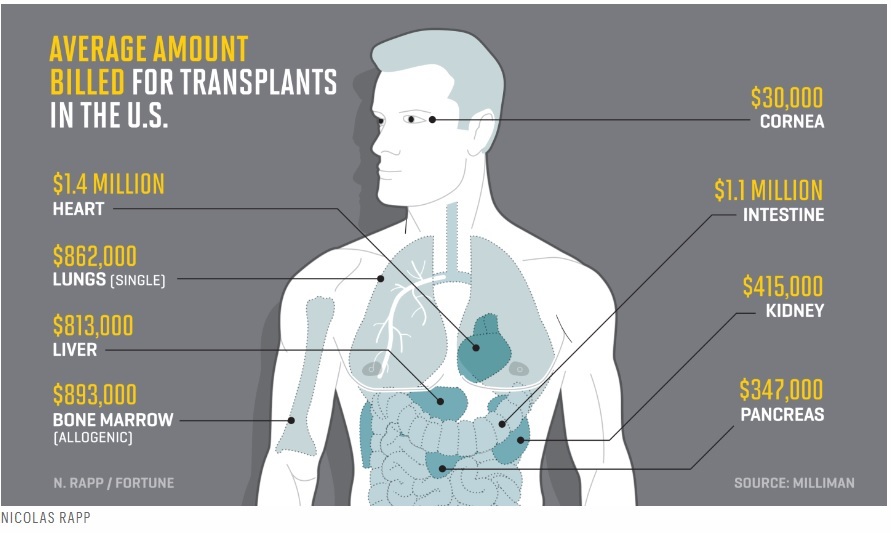
Average cost for LEGAL organ transplants in the U.S. Source
Comments by Brian Shilhavy Editor, Health Impact News
October 21, 2024
NPR broadcast a show last week about a man who was brought to a Kentucky hospital in 2021 because of a drug overdose, was declared “brain dead”, and then ushered into the operating room to harvest his organs.
The problem was that he was not dead, and woke up on the operating table, where he began to cry and was “thrashing around”, horrified at what was happening.
Natasha Miller says she was getting ready to do her job preserving donated organs for transplantation when the nurses wheeled the donor into the operating room.
She quickly realized something wasn’t right. Though the donor had been declared dead, he seemed to her very much alive.
“He was moving around — kind of thrashing. Like, moving, thrashing around on the bed,” Miller told NPR in an interview. “And then when we went over there, you could see he had tears coming down. He was crying visibly.”
Donna Rhorer of Richmond, Kentucky, told NPR that her 36-year-old brother, Anthony Thomas “TJ” Hoover II, was the patient involved in the case. He was rushed to the hospital because of a drug overdose, she says.
Rhorer was at the hospital that day. She says she became concerned something wasn’t right when TJ appeared to open his eyes and look around as he was being wheeled from intensive care to the operating room.
“It was like it was his way of letting us know, you know, ‘Hey, I’m still here,’ ” Rhorer told NPR in an interview.
But Rhorer says she and other family members were told what they saw was just a common reflex. (Source.)
But what happened next, is what is truly horrifying about this story.
While the doctors stopped immediately with the head surgeon stating “I’m out of it. I don’t want to have anything to do with it”, the case coordinator at the hospital for Kentucky Organ Donor Affiliates (KODA) called her supervisor for advice, where they allegedly told her to “find another doctor to do it. We’re going to do this case. You need to find someone else.”
The donor’s condition alarmed everyone in the operating room at Baptist Health hospital in Richmond, Ky., including the two doctors, who refused to participate in the organ retrieval, she says.
“The procuring surgeon, he was like, ‘I’m out of it. I don’t want to have anything to do with it,’ ” Miller says. “It was very chaotic. Everyone was just very upset.”
Miller says she overheard the case coordinator at the hospital for her employer, Kentucky Organ Donor Affiliates (KODA), call her supervisor for advice.
“So the coordinator calls the supervisor at the time. And she was saying that he was telling her that she needed to ‘find another doctor to do it’ – that, ‘We were going to do this case. She needs to find someone else,’ ” Miller says. “And she’s like, ‘There is no one else.’ She’s crying — the coordinator — because she’s getting yelled at.” (Source.)
Some of the KODA employees quit over this incident, and some of them had to receive therapy over the trauma this incident caused them.
The organ retrieval was canceled. But some KODA workers say they later quit over the October 2021 incident, including another organ preservationist, Nyckoletta Martin.
“I’ve dedicated my entire life to organ donation and transplant. It’s very scary to me now that these things are allowed to happen and there’s not more in place to protect donors,” says Martin.
Martin was not assigned to the operating room that day, but she says she thought she might get drafted. So she started to review case notes from earlier in the day. She became alarmed when she read that the donor showed signs of life when doctors tried to examine his heart, she says.
“The donor had woken up during his procedure that morning for a cardiac catheterization. And he was thrashing around on the table,” Martin says.
Cardiac catheterization is performed on potential organ donors to evaluate whether the heart is healthy enough to go to a person in need of a new heart.
Martin says doctors sedated the patient when he woke up and plans to recover his organs proceeded.
KODA officials downplayed the incident afterwards, according to Martin. She was dismayed at that, she says.
“That’s everybody’s worst nightmare, right? Being alive during surgery and knowing that someone is going to cut you open and take your body parts out?” Martin says. “That’s horrifying.”
“Several of us that were employees needed to go to therapy. It took its toll on a lot of people, especially me,” Martin told NPR. (Source.)
KODA stated that this was a mistake, and rarely happens, but others interviewed by NPR disagreed that this was “rare.”
Some critics of the organ procurement system say they weren’t entirely surprised by the allegations. With more than 103,000 people on the waiting list for a transplant, organ procurement organizations are under enormous pressure to increase the number of organs obtained to save more lives. In addition, there is an ongoing debate about how patients are declared dead.
“I hope that a case like this really is extreme, but it does reveal some of those underlying issues that can arise when there are disagreements about the determination of death,” says Dr. Matthew DeCamp, an associate professor of Medicine and bioethicist at the University of Colorado.
But some wonder how rarely this happens.
“This doesn’t seem to be a one-off, a bad apple,” says Greg Segal, who runs Organize, an organ transplant system watchdog group. “I receive allegations like that with alarming regularity.”
Likewise, Thaddeus Pope, a bioethicist and lawyer at the Mitchell Hamline School of Law in Saint Paul who studies organ donation, cites similar accusations reported elsewhere.
“This is not a one-off,” Pope says. “It has been alleged to happen before.” (Full article.)
The whole world was able to see how evil the U.S. medical system is during the COVID Scam, where profits almost always take precedence over patients’ lives.
One of the problems here is with the medical system’s definition of “brain dead.” This diagnosis is premised on the false belief that our life and consciousness is located in our brain.
But historically, as well as in the Bible, the heart has always been considered the center of one’s life and consciousness. The word “brain” does not even exist in the Bible, whereas the word “heart” is found almost 1000 times.
Science also backs this up, as there are documented experiences of people receiving someone else’s heart, and then experiencing their memories, even when they never knew the donor.
Here is a video that ABC News published 8 years ago about a baby who was born with virtually no brain, and how doctors told the parents to abort him, because he had no chance to live with no brain.
But the parents did not take their medical advice, and their baby, Jaxon, lived for almost 6 years without a brain. The reason he was able to do so, in defiance of doctors and medicine, is because his consciousness was in his heart, which was fine, and not his brain.
A person is not “dead” just because their brain is not functioning properly, as medical doctors would have us believe.
A person is dead when their heart stops pumping blood through the body.
For the life of every creature is its blood: its blood is its life. (Leviticus 17:14)
You might want to think twice the next time you renew your Driver’s License and choose to be an organ donor. As we can see here, your organs are worth more to the medical system than you are alive.
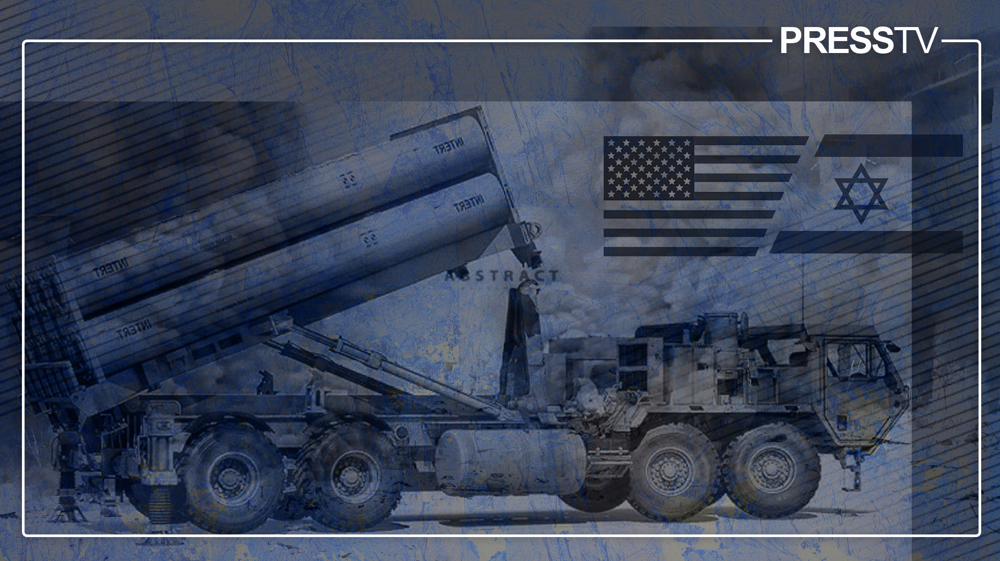
According to American media, defense news outlets, and independent analysts, the 12-day Israeli military aggression against Iran significantly depleted the US stockpile of THAAD (Terminal High Altitude Area Defense) interceptor missiles.
Citing official sources, American magazine Newsweek reported on Friday that the US transferred a substantial portion of its advanced missile defense capabilities to support the Israeli regime, an effort with questionable results and a critical impact on US strategic reserves.
THAAD, developed by Lockheed Martin arms manufacturing company, is a key component of Israel’s multi-layered air defense architecture. It is designed to intercept medium-range ballistic missiles, including those launched from Iran and Yemen.
The US-made system is capable of targeting short-, medium-, and intermediate-range ballistic missiles during their terminal phase, whether inside or outside Earth’s atmosphere.
THAAD uses a “hit-to-kill” method, relying on kinetic energy rather than explosive warheads to destroy incoming threats, intercepting at altitudes of up to 150 km and ranges between 150-200 km.
Operated exclusively by American personnel, the US military maintains eight THAAD batteries with an estimated 350–400 interceptors in total. The eighth battery was activated during the June 20 Israeli aggression against Iran and is capable of intercepting hypersonic missiles.
Deployment in the occupied territories
At the outset of the Israeli aggression against Iran, seven THAAD batteries were operational, two of which had been deployed in the occupied Palestinian territories.
The first THAAD battery was stationed there in October 2024, following Iran’s “True Promise 1 and 2” operations, during which Israel’s domestic air defense systems, David’s Sling, Arrow 2, and Arrow 3, suffered notable failures. A second battery was deployed in April 2025.
These US-operated systems played a crucial role during the June 2025 confrontation with Iran, although their exact deployment locations remain classified for military reasons.
Based on available information, of the remaining US THAAD batteries, two are deployed within the United States, one in Texas and another in Guam.
The rest are stationed overseas in South Korea, Saudi Arabia, and the United Arab Emirates (UAE), with the UAE being the only country to have formally purchased its own THAAD systems.
A THAAD battery is a mobile, self-contained missile defense unit. Each battery typically comprises six truck-mounted launchers, with each launcher carrying eight interceptor missiles, amounting to a total of 48 interceptors per battery.
In addition, the system includes an AN/TPY-2 radar for long-range detection and tracking (up to 2,000-3,000 km), a fire control and communication system for coordinating intercepts, along with support equipment and approximately 100 personnel to operate the unit.
Given the deployment of two batteries in the occupied Palestinian territories, it can be estimated that the Israeli regime had access to at least 96 interceptor missiles.
However, the actual number was likely higher due to frequent resupply efforts during engagements with Yemeni ballistic missiles and in preparation for the broader conflict with Iran.
Mixed performance against Yemeni missiles
Despite being touted as one of the most advanced missile defense systems in the world, THAAD’s performance against Yemeni ballistic missile attacks has been mixed, even according to Israeli and Western sources.
While some interceptions have been claimed as successful, there have been notable failures.
By the end of March 2025, six successful interceptions of Yemeni missiles had been reported. However, on May 4 and May 9, THAAD failed to intercept missiles targeting Ben Gurion Airport.
In both instances, Israeli sources asserted that the incoming missiles were ultimately intercepted by the Arrow missile defense system instead.
This claim has been met with skepticism, as the Arrow system typically engages threats at far greater distances, tens or even hundreds of kilometers away, yet the airport was struck directly.
The Israeli regime’s own admission that multiple systems were used against the same class of Yemeni missiles suggests that the interception cost is significantly higher than commonly assumed. Rather than a one-to-one missile-to-interceptor ratio, several interceptors, possibly from different systems, may be required to ensure a successful shootdown.
Despite ongoing claims by American and Israeli officials about the effectiveness and reliability of both THAAD and Arrow systems, Yemen has continued to target Ben Gurion Airport as part of its retaliatory operations. The continued threat and perceived vulnerability led nearly all international airlines to suspend flights to and from Israel.
Yemeni missile hits Ben Gurion Airport on May 4, after unsuccessful interception with THAAD
The most commonly used long-range weapon in the Yemeni arsenal is the Palestine-2 – a two-stage hypersonic ballistic missile capable of reaching speeds up to Mach 16 and equipped with a maneuverable warhead. This type of missile poses a significant challenge to traditional missile defense systems, including THAAD.
Technologically, THAAD faces several limitations. These include radar difficulties in distinguishing between actual warheads and decoys, vulnerability to saturation by large-scale missile barrages, and diminished effectiveness against newer hypersonic and maneuverable missile designs.
The system also relies exclusively on US personnel for its operation, which can limit rapid adaptability in dynamic combat scenarios.
THAAD has experienced test failures in the past, raising concerns about its reliability and operational readiness. These failures have been linked to software bugs, mechanical faults, and targeting system errors, factors that cast doubt on its real-world performance under pressure.
Failures against Iranian missile strikes
During the 12-day war of aggression against Iran, THAAD’s performance deteriorated significantly, highlighted by its low interception rate and the rapid depletion of US and Israeli interceptor stockpiles.
On the eve of the Israeli aggression, approximately 100 THAAD interceptor missiles were positioned in the occupied Palestinian territories. In response, Iran launched between 370 and 500 ballistic missiles during its retaliatory operations, a volume that far exceeded available THAAD capacity.
While Israel also relied on other systems such as David’s Sling, Arrow-2, and Arrow-3, the sheer scale and intensity of Iran’s response shifted the strategic balance. The damage inflicted throughout Israeli-occupied territories underscored this imbalance.
In the initial days of the war, Iran deliberately used older liquid-fueled ballistic missiles to exhaust enemy air defenses. More advanced and maneuverable missiles were introduced only after Israel’s interceptor supply had been significantly drained.
Although no official statistics have been released regarding the number of THAAD interceptors used or their success rates, available evidence suggests a poor performance.
High-altitude kinetic interceptions, hallmarked by bright explosions visible across the region, were rare, and many may have involved Arrow systems instead of THAAD.
A particularly telling open-source analysis, based on video footage by Jordanian photographer Zaid M. Al-Abbadi, missile ignition signatures, and geolocation data, estimated that Israel used 39 THAAD, 34 Arrow-3, and 9 Arrow-2 interceptors during just one of more than 20 Iranian missile barrages.
Given such high rates of interceptor use, analysts believe THAAD batteries likely exhausted their missile supply within the first four to five days of the conflict.
This rapid depletion, combined with underwhelming interception success, highlights the system’s limitations in a high-intensity, multi-wave missile war.
THAAD interceptor launch
Exhausted stockpiles and soaring costs
Estimates from military experts and news outlets place the unit cost of a single THAAD interceptor between $12 million and $15 million. However, other sources suggest the real cost is significantly higher.
In a statement to Newsweek, Sidharth Kaushal of the Royal United Services Institute (RUSI) noted that while the production cost of a THAAD interceptor is approximately $18 million, the total cost rises to $27 million when research, development, testing, and evaluation (RDT&E) expenses are factored in.
Estimates of total THAAD-related spending during the recent conflict vary. Analysts suggest that between $500 million and $800 million worth of interceptors may have been expended, corresponding to the use of 40 to 60 missiles.
On Tuesday, the Israeli newspaper Haaretz, citing Israeli military sources, reported that approximately 200 American and Israeli interceptor missiles were launched in total, at an estimated cost of 5 billion shekels – nearly $1.5 billion.
What all sources agree on is that the THAAD interceptor stockpile has been significantly depleted. At least one full battery’s worth, 48 interceptors, is believed to have been expended.
Considering the two THAAD batteries deployed and the high operational tempo due to prior Yemeni missile attacks, the actual figure may be closer to 96 interceptors. This would represent a reduction of roughly 30 percent of the entire US THAAD interceptor stockpile.
Open-source analysts also highlight the limited pace of US procurement: only 41 THAAD interceptors have been ordered over the past three years, including units designated for export customers. This slow replenishment rate underscores the vulnerability of even advanced missile defense systems when faced with sustained, high-volume missile warfare.
In stark contrast, Iran and China maintain vast ballistic missile arsenals, numbering in the thousands, making the rapid depletion of the US inventory, largely to defend Israeli territory, all the more striking.
Newsweek contacted the Pentagon for comment regarding the depletion and cost implications. The Department of Defense declined to elaborate, stating only that it had “nothing to provide.”
Ankara’s penetration into Eurasia blends neo-Ottoman ideology, Islamic soft power, and NATO-aligned geopolitics in a bid to rival Russia, China, Iran, and India.
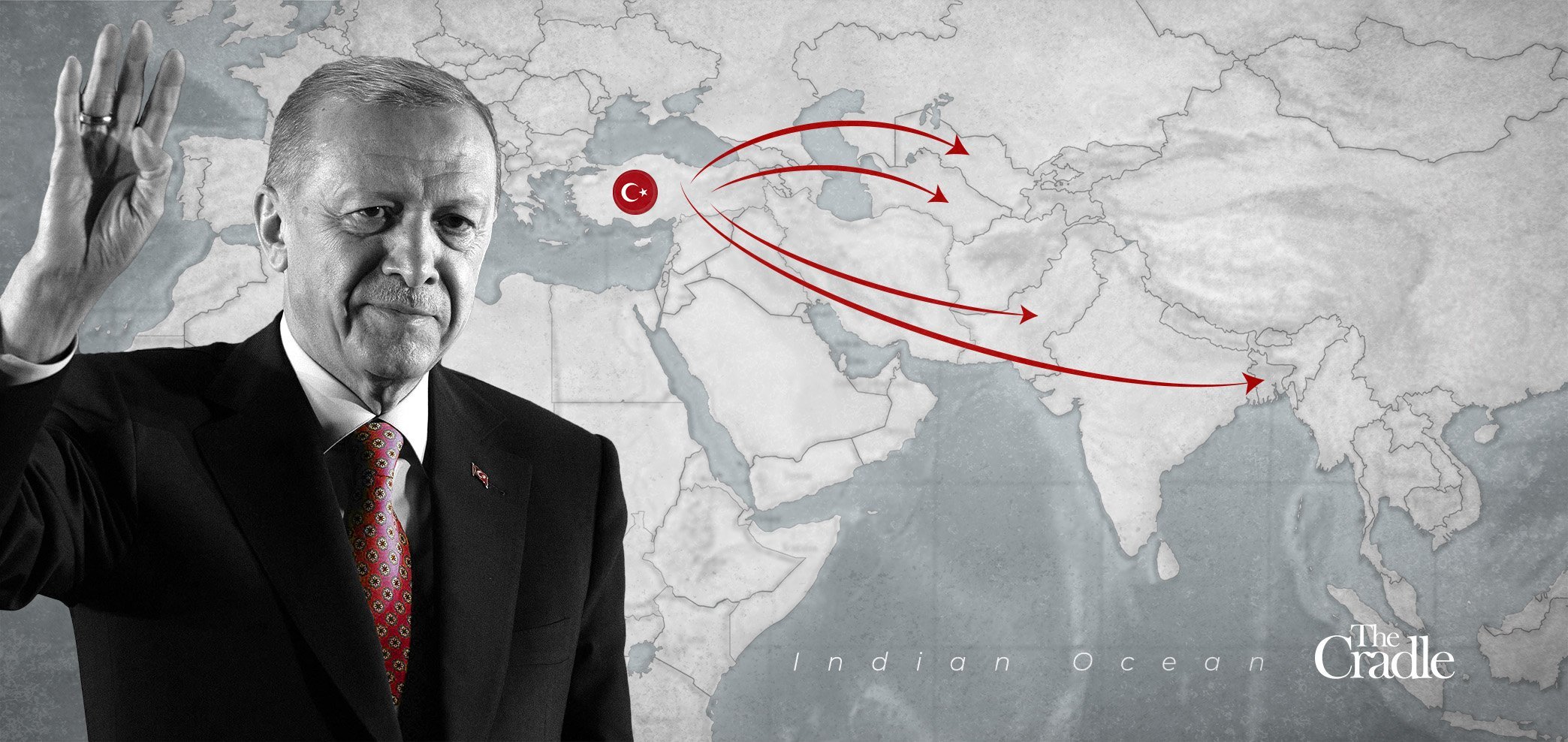
Since the onset of the 21st century, Turkiye’s foreign policy agenda has shifted decisively eastward, charting a course through Central and South Asia. This transformation signals more than a revival of Ottoman-era influence.
It reveals a layered geopolitical project anchored in Pan-Turanist nationalism, Muslim Brotherhood-aligned political Islam, and strategic deployment of military and development tools – crafted to serve Ankara’s national interests while converging with NATO’s broader regional goals.
Ankara’s eastward thrust is taking place against a backdrop of eroding US influence, a return to multipolarity, and intensified global competition over energy, trade corridors, and emerging markets. In this context, Turkiye no longer views Eurasian expansion as optional; it is now a strategic imperative.
Bangladesh: Ankara’s eastern frontier for ideological testing
Bangladesh has become a forward operating theater for Turkiye’s Eurasian ambitions. Geographically wedged between India and Myanmar, the Muslim-majority country offers fertile ground for Turkish influence.
The 2024 rise of Muhammad Yunus’s government – a pro-Islamist administration sympathetic to Ankara – has paved the way for Turkish actors to operate not only as development partners but as cultural and political forces embedded within state and society.
One such vehicle is “Saltanat-e-Bangla,” a Turkish-backed NGO based in Dhaka that publicly identifies with the ruling Justice and Development Party (AKP). This organization has gone well beyond charitable work, disseminating a provocative “Greater Bangladesh” map that claims parts of Myanmar’s Rakhine State, as well as Indian territories including Bihar, Odisha, Jharkhand, and India’s northeast region.
A map of “Greater Bangladesh” that claims parts of Myanmar and Indian territories including Bihar, Odisha, Jharkhand, and the northeast region.
Though lacking formal recognition, the map has been quietly endorsed by figures within the ruling party – signaling a coordinated division of labor between like-minded Turkish and Bangladeshi political elites.
Diplomatic sources suggest that this cartographic venture reflects Turkiye’s attempt to establish a strategic counterweight to Indian hegemony in South Asia, particularly in light of recent confrontations between India and Pakistan over Kashmir and Islamic governance models. Some analysts have even tied this project to a broader Turkish–Bengali interest in Tibet – an area that remains a non-negotiable red line for Beijing.
Bangladesh, then, is more than a new arena of influence. It is a laboratory where Turkiye is testing the exportability of its political model and religious ideology into the Indian sphere, wrapped in the veneer of humanitarianism and Islamic solidarity.
This is not without precedent. The Indian subcontinent – of which Bangladesh was once a part – was home to some of the most fervent supporters of the Ottoman Caliphate in the early twentieth century. The Khilafat movement, launched in the aftermath of World War I, mobilized millions of Indian Muslims, including leading figures from Bengal, in defense of the Ottoman Caliph as a symbol of pan-Islamic unity.
That historical memory still lingers, particularly among Islamist networks and religious elites, and Ankara appears keen to reactivate it as part of its broader strategy to rekindle a trans-regional Islamic identity aligned with Turkish leadership.
Turanism: The nationalist spine of Turkish expansion
Pan-Turanism, an early 20th-century ideology premised on the unification of Turkic-speaking peoples from Anatolia to western China, has been resurrected in Ankara as a vehicle for geopolitical consolidation. Today, Turkiye deploys this vision to deepen its grip on Central Asia – particularly in Kazakhstan, Uzbekistan, Turkmenistan, Kyrgyzstan, and Azerbaijan.
This ideological push is operationalized through the Organization of Turkic states, which functions as a joint political, economic, and security bloc linking Ankara with these post-Soviet republics. Through state-sponsored cultural initiatives – such as the work of TURKSOY, scholarship programs, and student exchanges – Turkiye is reshaping regional educational and media landscapes.
At the infrastructure level, projects like the East–West energy corridor and the Transcaucasian Railway are physically anchoring Central Asia to Turkiye and Europe. But this is not merely about logistics. It is about challenging Russia and China for influence in the Eurasian core, and positioning Ankara as a decisive actor in the balance of power across Asia.
The Brotherhood: A political bridge into South Asia
In Islamic societies outside the Arab world, Turkiye has expanded its reach through the AKP’s Muslim Brotherhood-style political Islam. This approach resonates especially in Pakistan and Bangladesh, where Islamist forces – other than foreign-backed terror groups – often lack cohesive structures or reliable foreign support.
Ankara has established a growing network of advocacy and media outlets that present it as the spiritual and political vanguard of the Muslim ummah (community of believers). These include branches of the AKP or AKP-aligned formations operating inside countries like Bangladesh. Parallel to this, Brotherhood-affiliated NGOs—most prominently the IHH Humanitarian Relief Foundation—extend Turkish soft power through education, healthcare, and emergency relief.
Turkiye has also instrumentalized the Rohingya crisis to cultivate goodwill among Muslims in the region, presenting itself as the only Islamic power willing and able to defend oppressed Muslim populations.
This architecture enables Ankara to entrench itself within both civil society and state institutions, fostering political parallelism without triggering overt confrontation with entrenched national elites.
Pakistan: Ankara’s ideological and strategic bridge
Pakistan has long served as a foundational pillar in Ankara’s regional outreach. The bilateral relationship is reinforced by joint defense projects – especially in the manufacture of drones and armored vehicles – and a shared ideological framework between the AKP and Pakistan’s conservative Islamist elites.
Both countries have jointly championed Muslim causes to varying degrees, including Kashmir and Palestine. More discreetly, Islamabad plays a mediating role in Turkish–Bangladeshi coordination, smoothing Ankara’s entry into Dhaka’s political scene. Through religious networks and Islamist media, Pakistan also helps lay the groundwork for Turkish influence in both Afghanistan and Central Asia.
This partnership extends to Northern Cyprus, where Pakistan has repeatedly affirmed its support. Shortly after the Turkish Republic of Northern Cyprus (TRNC) declaration in 1983, Pakistan was among its earliest recognizers, though it formally withdrew recognition under UN pressure within days.
Decades later, Prime Minister Shehbaz Sharif publicly declared that Pakistan “fully supports the cause of Northern Cyprus” and will “unwaveringly” stand by Ankara on the issue. This steadfast solidarity underscores the deep wherewithal of the Ankara–Islamabad axis, rooted in shared ideological commitments and mutual strategic interests.
Turkiye’s soft power architecture
Ankara’s expansion into Eurasia is underpinned by a carefully curated soft power strategy. The Turkish Cooperation and Coordination Agency (TIKA) implements development projects across the education, health, and infrastructure sectors. The Turkish Religious Foundation builds mosques, funds religious centers, and offers Turkish-language Islamic education abroad.
Meanwhile, Turkish schools and universities overseas are producing a new cadre of elites aligned with Ankara’s political worldview.
In Bangladesh, these efforts are particularly visible in Rohingya refugee camps, where Turkish humanitarian outreach has helped embed a political presence under the guise of benevolence. These initiatives are not merely charitable; they are long-term investments in geopolitical loyalty.
NATO synergy – and the Eurasian backlash
Although Ankara frequently claims to pursue an independent foreign policy, its expansionist posture in Eurasia aligns neatly with key NATO objectives. In Tibet and Xinjiang, Turkish activity directly complements western efforts to contain China. In Afghanistan and Central Asia, Ankara’s presence encircles Iran. And in the former Soviet republics of Central Asia, Turkiye serves as a rival to Moscow’s residual influence.
Far from acting as a rogue state, Ankara is performing the role of NATO’s regional auxiliary. Its use of culturally resonant narratives – whether pan-Turkic or Islamist – makes its intervention palatable to local audiences, while serving long-term Atlanticist designs. This convergence of aims may explain western tolerance for Turkiye’s expansionist maneuvers, despite high-profile disputes over Syria and the Eastern Mediterranean.
Despite its gains, the Turkish project is not without limits. India views Ankara’s growing footprint in Bangladesh with rising alarm, particularly the circulation of the “Greater Bangladesh” map. China considers Turkish engagement in Tibet as a strategic provocation. Russia, reasserting itself in Central Asia, is unlikely to cede ground to Turkish competitors.
Moreover, local populations may resist Ankara’s ideological push, especially if they perceive political Islam as a foreign imposition. The risk of over-reliance on religious soft power is that it may alienate secular elites or provoke backlash from emerging regional blocs seeking to curtail Islamist expansion.
Turkiye’s eastward advance is not merely strategic – it is ideological. By fusing Brotherhood-aligned Islam with Turanist nationalism, and packaging both within a NATO-friendly framework, Ankara is methodically carving out a sphere of influence across Central and South Asia.
But this expansion is not without risk. It demands careful calibration: asserting regional power without provoking a backlash from entrenched powers like Russia, China, and India; projecting independence while remaining a functional pillar of the western alliance.
This is not just a bold manoeuver, but a provocation. Whether Turkiye can entrench its influence in this contested Eurasian theater or whether the contradictions of its dual alignment will force retreat is no longer a hypothetical. The outcome will shape the limits of Ankara’s ambition, and expose the fragility or resilience of the Atlanticist order it claims to defy.
A new Qatari ceasefire proposal outlines a two-month ceasefire in Gaza, prisoner-captive exchanges between Hamas and “Israel”, phased Israeli withdrawal, and Trump-backed negotiations for a permanent agreement.
Baruch Yadid and Amichai Stein, analysts at the Israeli outlet i24NEWS, have revealed the terms of a proposed ceasefire agreement brokered by Qatar, aimed at stopping the Israeli war on Gaza.
According to the report, the proposal is essentially a modified version of the earlier Witkoff Plan. “Israel”, the United States, and intermediary nations are now awaiting Hamas’ response after “Israel” reportedly conditionally agreed to the outline.
This approval reportedly followed a meeting between Strategic Affairs Minister Ron Dermer and Trump’s envoy Steve Witkoff.
Multiple sources confirmed that “Israel” has agreed, with certain conditions, to resume negotiations on ending the war even after the 60-day ceasefire period. A source further stated that the Trump administration made it clear the ceasefire would be extended beyond 60 days if talks were deemed serious.
During this time, the US President would commit to ensuring the continuity of the ceasefire. However, the report notes that “Israel” has not pledged to end the war, but rather to engage in dialogue aimed at ending it. Regarding the scope of Israeli withdrawal during the ceasefire, two sources indicated that negotiations are still ongoing over the scale of the withdrawal and the future deployment of Israeli forces.
The plan includes the release of 10 captives held by Hamas, eight on the first day and two on the 50th day, as well as the return of 18 bodies. In return, a two-month ceasefire would be implemented, during which negotiations would be held to reach a permanent end to the war, with each side presenting its demands.
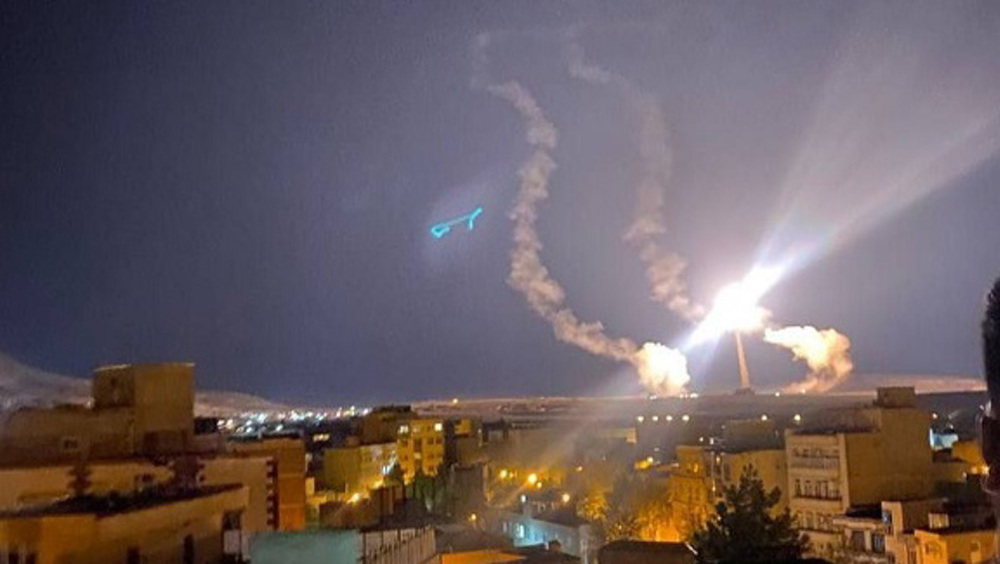
A missile takes off as Iran carries out 11th phase of True Promise III against the Israeli regime.
Press TV
July 3
Saudi Arabia, which professed a public stance against Israel’s attack on the Islamic Republic of Iran, secretly participated in intercepting Iranian unmanned aerial vehicles during the 12-day US-supported Israeli aggression, media reports say.
According to reports, the Saudi air force scrambled helicopters to shoot down unmanned aerial vehicles crossing airspace over Iraq and Jordan, halting their advance before they could reach Israel.
Some of these drones could have continued toward Israel, but they were intercepted early as part of protecting Saudi Arabia’s space.
While Riyadh hasn’t officially confirmed involvement in the interceptions and even condemned Israel for launching the aggression against Iran, the revelations point to a dramatically growing secret Saudi cooperation with the US-led hostile powers towards Iran.
This comes as senior officials in Riyadh earlier stressed that Saudi airspace would not be opened for any offensive strikes on Iranian territory.
Saudi Arabia was one of dozens of Muslim-majority nations that condemned the Israeli action against Iran.
The interception of Iranian drones was part of a vast US-led operation involving Jordan, Britain, France, and the United States, coordinated under the umbrella of US Central Command (CENTCOM).
At the heart of that coordination stood CENTCOM commander Gen. Mike Kurilla, who oversaw a joint American command-and-control center linking the US, Israel, and European militaries in real time.
Years of joint training exercises and intelligence-sharing paved the way for this rapid, integrated response, military sources said.
Jordan, unlike others, has publicly acknowledged its role in intercepting Iranian drones. France described its participation as defending its interests in Jordan, though it avoided directly referencing Israel.
Saudi Arabia’s air force, built on advanced US-supplied systems, was bolstered by a major arms deal signed with Crown Prince Mohammed bin Salman during Donald Trump’s first term and expanded during Trump’s most recent regional tour.
During the 12 days of aggression against Iran, the United States and its allies, alongside the Israeli military, were the most active, through aircraft, ships, Patriot and THAAD air defense systems, and more.
The US serves not only as a bridge between Israel and regional countries but also as a coordinating factor with Arab countries with which there are no direct relations.
This vicious cooperation was also seen in previous waves of Iranian attacks on Israel in April and October 2024. Then too, the United States and European countries operated in various arenas – some through interception means, others through location and information sharing.
Now, during the 12 days of the US-Israeli aggression, the operation was much broader in scope.
Analysts say any level of cooperation with the US and Israel against Iran would be seen as a “stab in the back” of … Palestinians and the entire Muslim world.
On June 13, Israel launched a blatant and unprovoked aggression against Iran, assassinating many high-ranking military commanders, nuclear scientists, and ordinary civilians.
More than a week later, the United States also jumped on the bandwagon and bombed three Iranian nuclear sites in a grave violation of the United Nations Charter, international law, and the Nuclear Non-Proliferation Treaty (NPT).
In response, Iranian armed forces targeted strategic sites across the occupied territories as well as the al-Udeid air base in Qatar, the largest American military base in West Asia.
On June 24, Iran, through its successful retaliatory operations against both the Israeli regime and the US, managed to impose a halt to the illegal aggression.