The Most Revolutionary Act

Uncensored updates on world events, economics, the environment and medicine

The Most Revolutionary Act

Videos of emaciated Israeli hostage Evyatar David released by Hamas

Sky News
2 August, 2025

Two videos show a skeletal 24-year-old Evyatar David after US officials visited a Gaza aid site and met with hostages’ families. The UN says the starvation across the Strip is caused by Israel’s blockade.

Two videos of an emaciated Israeli hostage, Evyatar David, have been released by Hamas, after US special envoy Steve Witkoff this week met with the families of the hostages.

The now 24-year-old looks skeletal, with his shoulder blades protruding from his back, and says he has not eaten for three days.

The distressing videos show him apparently digging his own grave.

He worked in a restaurant, according to a video posted by Labour Friends of Israel, before he was abducted from the Nova music festival on 7 October 2023.

Since then, he has been held in captivity in Gaza, and the videos suggest he is being kept in dark tunnels and surviving on scarce portions of lentils and beans.

Gaza itself is suffering “man-made mass starvation” because of Israel’s blockade on aid to the enclave, the head of the World Health Organization (WHO) has previously said.

In the second video, released on Saturday, Mr David – according to the English subtitles – says: “I haven’t eaten for three days.”

The captions continue as he speaks while in an underground tunnel: “There’s no [sic] enough food. I barely get drinking water.”

The video shows him talking through what ate in July, which has been recorded on a handmade calendar hung up on the side of an underground Gaza tunnel.

Speaking while under captivity and under duress, he adds: “They give me what they can get.”

At the end of the video, he is digging a hole. The subtitle reads: “This is the grave where I think I’m going to be buried in. Time is running out.”

[…]

Via https://news.sky.com/story/videos-of-emaciated-israeli-hostage-evyatar-david-released-by-hamas-13405798

The Wonderful World of Fungi

The Wonderful World of Fungi

DW (2025)

Film Review

Neither plant nor animal, fungi have their own separate kingdom and have survived five mass extinctions in the last billion years.

By definition all fungi begin as spores and sprout hyphae one-fifth the width of a human hair to look for food. Forming a complex network called a mycelium, hyphae can smell, see light and detect heat and electricity and solve a variety of complex problems without a brain. Some mycelia are larger than 10 square kilometers. Some sprout mushrooms by weaving themselves into a bundle and inflating it with water to disperse new spores.

Ninety percent of plants rely on fungi to survive. By using their hyphae to provide them with minerals they need, fungi are rewarded with sugars plant produce via photosynthesis and disperse through their roots. This network of plant roots and mycelia is known as the Wood Wide Web. Fungi also play an essential role in recycling the building blocks of both plant and animal life through decomposition and in the earth’s water cycle. Fungal spores, which attract water to form raindrops, also play a big role in rainfail patterns.

Yunan Province in China is one of the most diverse fungal environment on earth, and the Chinese, who began farming mushrooms 2,000 years ago, are in the forefront of fungal research. Eight hundred species of Yunan mushrooms are edible, and some have been used medicinally for millenia. Chinese scientists have discovered fungi that eat plastic, as well as a type of organic plastic made from plastic that looks like Styrofoam and can be used to make surfboards and leather.

Tarkine, the planet’s oldest (65 million years) rainforest in Tasmania, is also an excellent site for fungal research. Scientists estimate they’ve on discovered 5% of the fungi on Earth.

Yemen Rewrites Rules of Naval Warfare

Photo Credit: The Cradle

JUL 31, 2025

By continuously targeting Israeli-linked shipping, the Sanaa government has exposed the impotence of western naval power and maintained a de facto blockade on one of the world’s most strategic waterways.

After the Ansarallah-aligned Yemeni Armed Forces (YAF) announced that it would resume attacks on merchant ships linked to companies operating with Israeli ports, tensions in the Red Sea and beyond have reignited, as Tel Aviv’s ongoing genocide in Gaza fuels instability across West Asia.

As part of the fourth phase of the blockade, the Yemeni army sank two commercial vessels earlier this month, showcasing not only its enduring capabilities but also the failure of US-led strikes to curb its maritime campaign.

On 6 May, US President Donald Trump claimed, “The Houthis have declared they no longer want to fight. They simply don’t want to fight anymore. And we will honor that. We will stop the bombings, and they have surrendered.”

Yemeni officials immediately dismissed the claim, reiterating that Sanaa had not negotiated with Washington nor agreed to halt operations in support of Gaza. The Sanaa government’s naval campaign resumed soon after, with fresh attacks targeting Israeli-linked vessels – undermining Trump’s attempt to declare victory.

New red lines in the Red Sea

In a statement on Sunday, explaining the latest phase of the naval operations, YAF spokesman Brigadier General Yahya Saree said:

“This escalation includes targeting all ships belonging to any company that deals with Israeli ports, regardless of their nationality and wherever they may be, within our forces’ reach. We warn all companies to cease their dealings with Israeli ports, starting the hour this statement is issued.”

The new escalation comes just several weeks after the sinking of two Liberian-flagged, Greek-owned bulk carriers – the Magic Seas and the Eternity C. In the latter attack, four sailors were killed and two others wounded, while 11 other crew members were taken captive.
Following the sinking of the two ships, Ansarallah leader Abdul Malik al-Houthi revealed that the YAF had carried out over 1,679 attacks since November 2023 using missiles, drones, and warships in support of Gaza, warning of further escalation if the war does not end.

Although the Sanaa government agreed in May to a ceasefire with Washington, halting attacks on US warships, it maintains that this truce does not apply to vessels linked to the occupation state. These ships, Sanaa argues, continue to serve Israeli ports, part of “occupied Palestine.”

Contrary to western media narratives of indiscriminate aggression, maritime data from Lloyd’s List confirmed that both targeted vessels had routinely docked in Israeli ports over the past year.

The ongoing attacks have prompted international concern. The UN Security Council recently approved continued reporting on Red Sea maritime assaults. Twelve members of the 15-member council voted in favor, while Russia, China, and Algeria abstained over concerns about breaches of Yemen’s sovereignty.

China’s deputy UN Ambassador Geng Shuang called tensions in the Red Sea “a major manifestation of the spillover from the Gaza conflict.” At the same time, the Russian UN representative also stressed the link between normalizing the situation in the Red Sea and the need for a ceasefire in Gaza.

Challenging naval supremacy

Despite the presence of five major foreign military bases in Djibouti – home to US, French, Japanese, Chinese, and Italian forces –  the Ansarallah-aligned army has continued to strike commercial vessels with precision. This raises uncomfortable questions about western and allied naval efficacy.

Speaking to The Cradle, Senior Research Fellow at The Soufan Center, Colin P. Clarke – who also teaches at Carnegie Mellon’s Institute for Politics and Strategy – says Yemen ranks among the most potent forces within the Axis of Resistance and shows no sign of retreat:

“Out of all the ‘Axis’ proxies, the Houthis are among the most potent and also have a lot to prove. I don’t expect them to wind down their military campaign at any point soon.”

Nicholas Brumfield, a Washington-based analyst on Yemen and maritime security, concurs. He tells The Cradle that Yemen’s campaign has remained largely undiminished despite nearly two years of US and Israeli airstrikes:

“The Houthi attacks since early July have thus far been limited to areas of the Red Sea where they have attacked before, so it’s unclear if there’s been any increase in their range. As for Trump’s claims of capitulation, that was always viewed by most researchers focused on Yemen as a bit of hot air. The US–Houthi ceasefire was a limited de-escalation between two parties, and the Houthis have more or less been continuing what they were doing before the truce in terms of attacking Israel directly.”

Clarke adds that Trump’s reluctance to escalate against Yemen stemmed from electoral optics and strategic caution against bogging the US down in “endless wars,” which is one of the reasons why the US involvement in bombing Iran was so circumscribed. “Trump believes, perhaps correctly so, that it would be extremely difficult to engage with the Houthis without being sucked into a quagmire from which it would be difficult to escape from. And the results would be hard to measure.”

According to Mohamed Aliriani of the Yemen Policy Center, the May ceasefire secured safe passage for US, UK, Chinese, and Russian vessels – thanks to the latter two’s ties with Iran. But ships from other nations remain exposed. European-led operations, he argues, are largely ineffectual in safeguarding their cargoes.

Aliriani tells The Cradle that “the current situation has created a two-tiered, protectionist system that benefits powerful states while driving up global insurance and shipping costs, setting a dangerous precedent for other strategic chokepoints.”

Persistently high insurance premiums reflect the enduring risk. “Had the threat been perceived as eliminated, traffic would have resumed, and rates would have dropped,” he explains. The Yemeni army’s targeting of oil and chemical carriers has introduced environmental and financial perils that keep insurers wary.

Redefining control at sea

These facts point to a stark reality: The Ansarallah-led naval campaign has largely succeeded in imposing an effective blockade on Israeli-linked maritime traffic.

Still, Aliriani cautions against overstating the extent of Sanaa’s control. “The Houthis do not exercise Sea Control over the Red Sea, as they lack a surface fleet capable of patrolling and commanding the waterways. What they have successfully achieved is Area Denial.” By demonstrating a credible capability to hold any vessel transiting the Bab al-Mandab Strait at risk, they have made passage through this critical chokepoint prohibitively dangerous for any vessel:

“Their strike range has proven to extend for hundreds of kilometers and given the information available about the weapons used, range likely exceeds 1,000 kilometers, effectively denying the use of a vast area without needing to control it physically.”

Independent force, not Iranian proxy

Western narratives often depict Ansarallah as mere Iranian proxies. Yet, there is scant evidence that Tehran directed these maritime attacks.

Brumfield points out that while Iran continues to supply advanced weaponry to its ally – as evidenced by a 750-ton arms shipment intercepted en route to Yemen – there is no indication of Iranian command over Ansarallah operations.

Former UN envoy to Yemen Jamal Benomar has consistently emphasized Sanaa’s autonomous decision-making, noting that they “have their own agendas and decision-making mechanisms.”

Palestine remains the compass

The timing of recent Yemeni operations suggests a clear link to developments in Gaza. Brumfield observes that Sanaa was notably quiet during last month’s 12-day war between Iran and Israel, only to escalate following reports of worsening conditions in the besieged enclave:

“When there was a ceasefire in Gaza, the Houthis completely stopped their maritime attacks. Recent reports of deteriorating humanitarian conditions in Gaza may have contributed to the group’s decision to re-escalate in this file.”

While some analysts suggest that Ansarallah’s pro-Palestinian rhetoric is a political maneuver to boost legitimacy amid domestic challenges, Benomar insists their stance on Palestine is ideologically embedded. “They’re not just being opportunistic as Palestine is a core part of their ideology.”

Although Tel Aviv has urged Washington to relaunch strikes on Yemen, most experts, including Aliriani, believe the US is unlikely to escalate unless the Ansarallah-allied military crosses a significant red line. So far, the YAF has targeted only vessels tied to Israeli trade.

However, Ansarallah’s recent decision to strike all ships linked to Israeli ports, regardless of nationality, may drag new actors – such as Egypt – into the fray. Cairo’s deepening logistical ties to Israeli trade may soon make it a target of Yemen’s expanding campaign.

“The Houthis” may not control the seas, but they have undeniably changed the rules of engagement.

[…]

Via https://thecradle.co/articles/with-gaza-as-its-compass-yemen-rewrites-the-rules-of-naval-warfare


Rep. Greene Introduces Clean Skies Act Banning Weather Modification, Geoengineering

Zero Hedge

Via American Greatness,

Congresswoman Marjorie Taylor Greene has introduced the Clear Skies Act of 2025 calling for an end to what she calls the “dangerous and deadly practice of weather modification and geoengineering.”

The bill, designated H.R. 4403, would prohibit weather modification through the use of geoengineering, cloud seeding, and solar radiation management through the release of chemicals into the atmosphere to change the weather, temperature, climate or to block out sunlight.

If enacted, the law would punish weather modification violations as a felony with offenders facing up to $100,000 in fines and/or five years in prison for each violation.

Greene says her bill is similar to Florida’s S.B. 56 which repeals the state’s ability to issue permits for geoengineering and weather modification and prohibits the injection, release, or dispersion of chemicals or substances into the atmosphere for the express purpose of altering weather, temperature, climate, or sunlight intensity.

Under the Clear Skies Act, all existing federal authority and executive orders permitting weather modification would be repealed and the Environmental Protection Agency (EPA) and Department of Justice (DOJ) would be directed to investigate and prosecute violations.

H.B. 4403 would also create a public reporting system that would allow Americans to report suspicious activity and which the EPA would be required to investigate.

In announcing the Clear Skies Act Greene spoke of the need to protect the nation’s skies, waters and people from weather modification, saying, “It’s time to end this dangerous and unregulated practice.”

[…]

AI in Wyoming may soon use more electricity than state’s human residents

Benj Edwards
30 Jul 2025

Proposed data center would demand 5x Wyoming’s current power use at full deployment.

On Monday, Mayor Patrick Collins of Cheyenne, Wyoming, announced plans for an AI data center that would consume more electricity than all homes in the state combined, according to The Associated Press. The facility, a joint venture between energy infrastructure company Tallgrass and AI data center developer Crusoe, would start at 1.8 gigawatts and scale up to 10 gigawatts of power use.

The project’s energy demands are difficult to overstate for Wyoming, the least populous US state. The initial 1.8-gigawatt phase, consuming 15.8 terawatt-hours (TWh) annually, is more than five times the electricity used by every household in the state combined. That figure represents 91 percent of the 17.3 TWh currently consumed by all of Wyoming’s residential, commercial, and industrial sectors combined. At its full 10-gigawatt capacity, the proposed data center would consume 87.6 TWh of electricity annually—double the 43.2 TWh the entire state currently generates.

Because drawing this much power from the public grid is untenable, the project will rely on its own dedicated gas generation and renewable energy sources, according to Collins and company officials. However, this massive local demand for electricity—even if self-generated—represents a fundamental shift for a state that currently sends nearly 60 percent of its generated power to other states.

Wyoming Governor Mark Gordon praised the project’s potential benefits for the state’s natural gas industry in a company statement. “This is exciting news for Wyoming and for Wyoming natural gas producers,” Gordon said.

The proposed site for the new data center sits several miles south of Cheyenne near the Colorado border off US Route 85. While state and local regulators still need to approve the project, Collins expressed optimism about a quick start. “I believe their plans are to go sooner rather than later,” he said.

Wyoming’s data center boom

Cheyenne is no stranger to data centers, having attracted facilities from Microsoft and Meta since 2012 due to its cool climate and energy access. However, the new project pushes the state into uncharted territory. While Wyoming is the nation’s third-biggest net energy supplier, producing 12 times more total energy than it consumes (dominated by fossil fuels), its electricity supply is finite.

While Tallgrass and Crusoe have announced the partnership, they haven’t revealed who will ultimately use all this computing power—leading to speculation about potential tenants.

A potential connection to OpenAI’s Stargate AI infrastructure project, announced in January, remains a subject of speculation. When asked by The Associated Press if the Cheyenne project was part of this effort, Crusoe spokesperson Andrew Schmitt was noncommittal. “We are not at a stage that we are ready to announce our tenant there,” Schmitt said. “I can’t confirm or deny that it’s going to be one of the Stargate.”

OpenAI recently activated the first phase of a Crusoe-built data center complex in Abilene, Texas, in partnership with Oracle. Chris Lehane, OpenAI’s chief global affairs officer, told The Associated Press last week that the Texas facility generates “roughly and depending how you count, about a gigawatt of energy” and represents “the largest data center—we think of it as a campus—in the world.”

OpenAI has committed to developing an additional 4.5 gigawatts of data center capacity through an agreement with Oracle. “We’re now in a position where we have, in a really concrete way, identified over five gigawatts of energy that we’re going to be able to build around,” Lehane told the AP. The company has not disclosed locations for these expansions, and Wyoming was not among the 16 states where OpenAI said it was searching for data center sites earlier this year.

[…]

Via https://arstechnica.com/information-technology/2025/07/ai-in-wyoming-may-soon-use-more-electricity-than-states-human-residents/

Slovenia Becomes First EU Member to Ban Trade with Israel

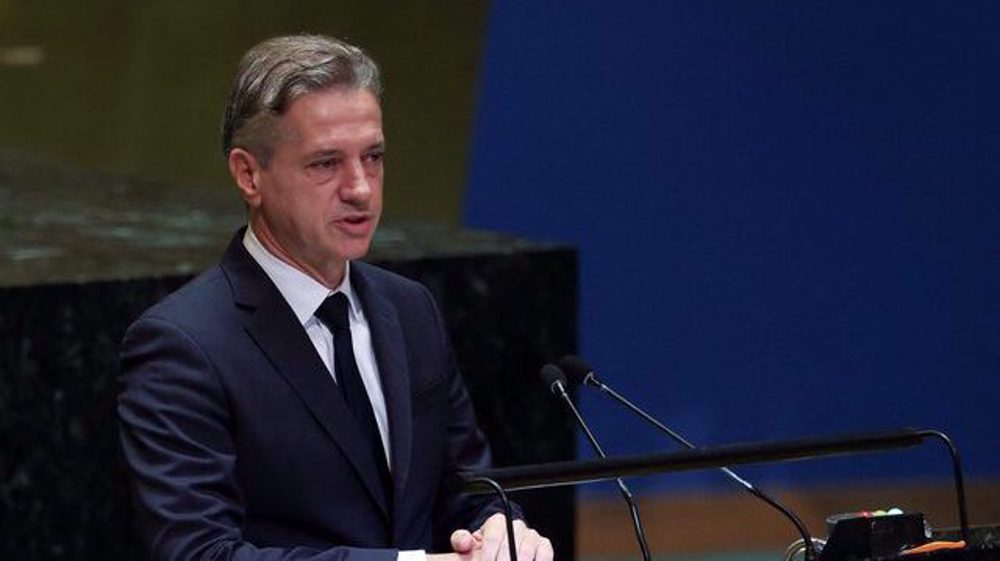
Slovenian Prime Minister Robert Golob

Press TV

In a significant development in the ongoing global boycott of Israel, Slovenia has officially become the first European Union member state to ban the import, export, and transit of weapons and military equipment to and from Israel.

The groundbreaking decision made on Thursday marks a notable shift in Slovenia’s foreign policy and highlights the growing support for Palestinian rights within Europe.

The Slovenian government underscored that the ban was prompted by the dire humanitarian catastrophe unfolding in Gaza, coupled with the European Union’s perceived inaction regarding Israel’s war in Gaza.

Slovenian Prime Minister Robert Golob emphasized that this move showcases Slovenia’s unwavering commitment to upholding international law and human rights.

“Responsible states must act, even if it means stepping ahead of others,” he remarked, signaling Slovenia’s willingness to take a stand for what it deems morally and legally right.

The Slovenian government said the decision was prompted by the European Union’s inability to adopt concrete measures on Israel.

“Due to internal disagreements and disunity, the European Union is currently unable to fulfill this task,” the statement said.

The Slovenian government condemned the denial of humanitarian access, saying: “The result of this is shameful: people in Gaza are dying because humanitarian aid is systematically denied to them. They are dying under the rubble, without access to drinking water, food, and basic healthcare.”

“This is a complete denial of humanitarian access and a conscious prevention of basic conditions for survival. In such circumstances, it is the duty of every responsible state to act, even if this means taking a step ahead of others.”

It said the government will prepare some more national measures against the current Israeli government, “whose actions constitute serious violations of international humanitarian law,” in the coming weeks.

Slovenia’s decision builds on its previous recognition of Palestinian statehood in 2024 and follows a recent ban on the entry of two far-right Israeli ministers who have been accused of inciting violence against Palestinians.

This illustrates Slovenia’s increasingly proactive approach towards addressing issues related to human rights and international law in the conflict.

The ban aligns Slovenia with a growing chorus of voices calling for accountability for Israel, as several countries—including Ireland, Norway, and Spain—are also taking measures to diplomatically isolate the Israeli government.

This trend marks a significant shift in European attitudes toward the ongoing genocide of the people of Gaza and reflects an increasing concern for the humanitarian implications of military actions.

Furthermore, Slovenia has indicated that it plans to introduce additional national measures targeting Israel in the weeks to come, signaling a potential shift that could inspire other EU nations to follow suit.

As Slovenia takes this historic step, it sets a precedenOKt for a tougher stance on the genocide within the European Union, potentially reshaping the region’s diplomatic landscape.

Israel unleashed its Gaza genocide on October 7, 2023, after the Hamas resistance group carried out its historic operation against the occupying entity in retaliation for the regime’s intensified atrocities against the Palestinian people.

The Tel Aviv regime has so far failed to achieve its declared objectives of eliminating Hamas and freeing all captives in Gaza, despite killing 60,249 Palestinians, mostly women, and children, and injuring 146,894 others.

A mass starvation is also gripping Gaza due to Israel’s blockade of the territory.

Last November, the International Criminal Court issued arrest warrants for Israeli prime minister Benjamin Netanyahu and former minister of military affairs Yoav Gallant, citing war crimes and crimes against humanity in Gaza. Furthermore, Israel is facing a genocide case at the International Court of Justice regarding its actions in the besieged coastal territory.

[…]

Via https://www.presstv.ir/Detail/2025/08/01/752226/Slovenia-becomes-first-EU-member-to-ban-arms-trade-with-Israel

Moscow denounces conviction of Bosnian Serb leader

Moscow comments on conviction of Bosnian Serb leader

RT

The court in Bosnia and Herzegovina was relying on a “pseudo-law” and its actions were “illegitimate,” the Kremlin has said.

Russia has denounced the conviction of Bosnian Serb leader Milorad Dodik by a court in Sarajevo, describing it as an “absolutely political” decision. The move could have wide-reaching repercussions for the entire Balkan region, Kremlin spokesman Dmitry Peskov has said.

A Bosnian court sentenced Dodik, the president of Republika Srpska, to one year in prison on Wednesday. He was charged with obstructing decisions made by Bosnia’s constitutional court and defying the authority of international envoy Christian Schmidt. A German national, Schmidt was formally tasked with overseeing the implementation of the 1995 Dayton Peace Agreement that concluded the Bosnian war. Moscow questions his legitimacy due to what it considers to be appointment irregularities.

“We condemn such actions because they can have very negative consequences not just for Bosnia and Herzegovina but for the Balkans as a whole,” Peskov told journalists on Thursday, referring to the court decision. “These actions could lead to destabilization,” he added.

The Kremlin spokesman also condemned the court ruling as persecution of not just the Bosnian Serb leader but “all the patriotic Serb forces.” According to Peskov, the decision was based on a “pseudo-law” pushed through by Schmidt. The Bosnian court ruled that Dodik acted illegally when he signed laws making the peace envoy’s decrees illegal in Republika Srpska and suspended the enforcement of Bosnia’s top court rulings on its territory.

Schmidt’s appointment as the High Representative for Bosnia and Herzegovina has never received the approval of the UN Security Council, which is typically required in such cases, Peskov said. The official was appointed by the Peace Implementation Council (PIC) – an international body charged with implementing the 1995 Dayton Peace Agreement – back in 2021.

Russia and China officially stated that they did not recognize Schmidt’s legitimacy due to the irregularities in his appointment. On Thursday, Peskov branded the official “an imposter” and called on the Bosnian authorities to go back to the “spirit” of the Dayton agreements.

Dodik himself did not attend his sentencing and announced plans for the Republika Srpska National Assembly to reject the court’s decision and prohibit the enforcement of any rulings from Bosnia’s state judiciary within its territory. He added that Republika Srpska would obstruct the operations of Bosnia’s central government and police within its jurisdiction.

The politician has two weeks to appeal the verdict, although it is unclear if he plans to do so. The court ruling was also condemned by Hungarian Prime Minister Viktor Orban, who talked to Dodik following the verdict. The Hungarian leader branded it a “political witch hunt.”

[…]

Via https://www.rt.com/russia/613404-moscow-conviction-bosnian-serb-leader/

Trump Administration Partners With Big Tech to Launch Controversial “Private Health Tracking System

President Donald Trump walks from Marine One after arriving on the South Lawn of the White House, Tuesday, July 29, 2025, in Washington. (AP Photo/Julia Demaree Nikhinson)


President Donald Trump walks from Marine One after arriving on the South Lawn of the White House, Tuesday, July 29, 2025, in Washington. (AP Photo/Julia Demaree Nikhinson)


WASHINGTON (AP) — The Trump administration announced it is launching a new program that will allow Americans to share personal health data and medical records across health systems and apps run by private tech companies, promising that will make it easier to access health records and monitor wellness.

More than 60 companies, including major tech companies like Google, Amazon and Apple as well as health care giants like UnitedHealth Group and CVS Health, have agreed to share patient data in the system. The initiative will focus on diabetes and weight management, conversational artificial intelligence that helps patients, and digital tools such as QR codes and apps that register patients for check-ins or track medications.

“For decades America’s health care networks have been overdue for a high tech upgrade,” President Donald Trump said during an event with company CEOs at the White House on Wednesday. “The existing systems are often slow, costly and incompatible with one another, but with today’s announcement, we take a major step to bring health care into the digital age.”

The system, spearheaded by an administration that has already freely shared highly personal data about Americans in ways that have tested legal bounds, could put patients’ desires for more convenience at their doctor’s office on a collision course with their expectations that their medical information be kept private.

There are enormous ethical and legal concerns,” said Lawrence Gostin, a Georgetown University law professor who specializes in public health. “Patients across America should be very worried that their medical records are going to be used in ways that harm them and their families.”

Officials at the Centers for Medicare and Medicaid Services, who will be in charge of maintaining the system, have said patients will need to opt in for the sharing of their medical records and data, which will be kept secure.

Those officials said patients will benefit from a system that lets them quickly call up their own records without the hallmark difficulties, such as requiring the use of fax machines to share documents, that have prevented them from doing so in the past.

“We’re going to have remarkable advances in how consumers can use their own records,” Dr. Mehmet Oz, who leads the Centers for Medicare and Medicaid Services, said during the White House event.

Popular weight loss and fitness subscription service Noom, which has signed onto the initiative, will be able to pull medical records after the system’s expected launch early next year.

That might include labs or medical tests that the app could use to develop an AI-driven analysis of what might help users lose weight, CEO Geoff Cook told The Associated Press. Apps and health systems will also have access to their competitors’ information, too. Noom would be able to access a person’s data from Apple Health, for example.

“Right now you have a lot of siloed data,” Cook said.

Patients who travel across the country for treatment at the Cleveland Clinic often have a hard time obtaining all their medical records from various providers, said the hospital system’s CEO, Dr. Tomislav Mihaljevic. He said the new system would eliminate that barrier, which sometimes delays treatment or prevents doctors from making an accurate diagnosis because they do not have a full view of a patient’s medical history.

Having seamless access to health app data, such as what patients are eating or how much they are exercising, will also help doctors manage obesity and other chronic diseases, Mihaljevic said.

“These apps give us insight about what’s happening with the patient’s health outside of the physician’s office,” he said.

CMS will also recommend a list of apps on Medicare.gov that are designed to help people manage chronic diseases, as well as help them select health care providers and insurance plans.

Digital privacy advocates are skeptical that patients will be able to count on their data being stored securely.

The federal government, however, has done little to regulate health apps or telehealth programs, said Jeffrey Chester at the Center for Digital Democracy.

Health and Human Services Secretary Robert F. Kennedy Jr. and those within his circle have pushed for more technology in health care, advocating for wearable devices that monitor wellness and telehealth.

Kennedy also sought to collect more data from Americans’ medical records, which he has previously said he wants to use to study autism and vaccine safety. Kennedy has filled the agency with staffers who have a history of working at or running health technology startups and businesses.

CMS already has troves of information on more than 140 million Americans who enroll in Medicare and Medicaid. Earlier this month, the federal agency agreed to hand over its massive database, including home addresses, to deportation officials.

The new initiative would deepen the pool of information on patients for the federal government and tech companies. Medical records typically contain far more sensitive information, such as doctors’ notes about conversations with patients and substance abuse or mental health history.

“This scheme is an open door for the further use and monetization of sensitive and personal health information,” Chester said.

The Trump administration tried to launch a less ambitious electronic record program in 2018 that did not get finalized during his first term, but it did not have buy in from major tech companies at the time.

[…]

Via https://apnews.com/article/trump-ai-rfk-jr-health-tech-fa73703bd1fd557c787ef0b590e151f1

Senate Votes Down Two Resolutions to Block Israeli Weapons Sales

bernie sanders 2025 (3x4 cropped)

By Gage Skidmore from Surprise, AZ, United States of America – Bernie Sanders, CC BY-SA 2.0, https://commons.wikimedia.org/w/index.php?curid=170173560

Libertarian Institute

On Wednesday night, the U.S. Senate voted down two joint resolutions aimed at blocking additional weapons sales to Israel. Both measures were originally introduced by U.S. Senator Bernie Sanders (I-VT) in March.

The first resolution would have prohibited the sale of 20,000 fully automatic carbine rifles to Israeli forces, while the second resolution sought to cut off $675.7 million in arms sales. The latter measure would have barred the sale of 201 MK 83 1,000-pound bombs; 4,799 BLU-110A/B General Purpose 1,000-pound bombs; 1,500 Joint Direct Attack Munition (JDAM) guidance kits for MK 83 bombs; 3,500 JDAM guidance kits for MK 83 bombs; and related logistics and technical support services. Sanders argued that the weapons sales would violate both the Foreign Assistance Act and the Arms Export Control Act.

“History will condemn those of us who failed to act in the face of these horrors,” he said in the run-up to Wednesday night’s vote.

The two measures failed 27-70 and 24-73, respectively. More than half of the Democratic caucus voted in favor of the resolutions. The Republican caucus, including U.S. Senator Rand Paul (R-KY), voted unanimously against both measures.

Sanders forced the votes in response to the ongoing starvation crisis in the Gaza Strip and the IDF’s continued massacre of Palestinian civilians. He blamed the famine on Israeli Prime Minister Benjamin Netanyahu’s policies, citing the six-week siege on the Strip. He also condemned the Israeli-backed Gaza Humanitarian Foundation’s distribution model for leading to the deaths of over 1,000 Palestinians.

“U.S. taxpayers have spent tens of billions of dollars in support of the racist, extremist Netanyahu government. Enough is enough,” the senior senator from Vermont said. “We cannot continue to spend taxpayer money on a government which has killed some 60,000 Palestinians and wounded more than 143,000, most of whom are women, children, and the elderly. We cannot continue supporting a government which has blocked humanitarian aid, caused massive famine, and literally starved the people of Gaza.”

“The time is long overdue for Congress to use the leverage we have – tens of billions in arms and military aid – to demand that Israel end these atrocities,” he added.

Since the October 7 terrorist attacks, the U.S. has provided more than $22 billion in military aid to Israel. In May, Haaretz reported that the U.S. has covered about 70% of Israeli military spending since the genocide began.

During an interview with CNN’s Kaitlan Collins Wednesday night, Sanders stopped short of labeling Israel’s actions a genocide. “Genocide is a legal term. What is going on now clearly is absolutely horrific…But the important point is not what you call it. It is horror, and I think the whole world knows that. The answer is, what the hell do we do about it?” he said.

[…]

Via https://libertarianinstitute.org/news/senate-votes-down-two-resolutions-to-block-israeli-weapons-sales/

Canada to recognize Palestinian state in September

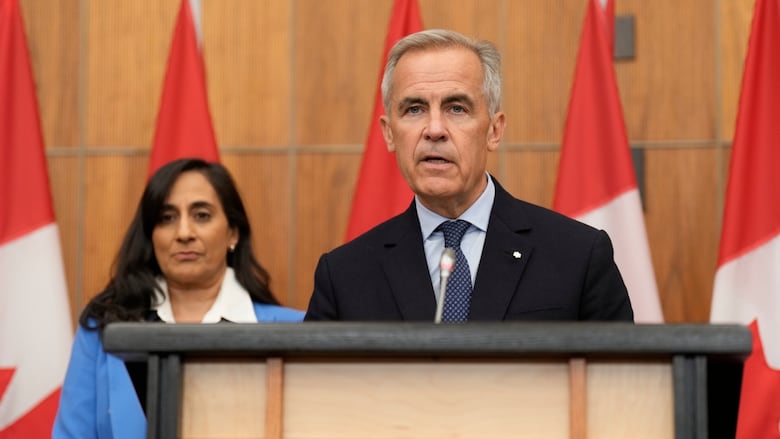
A man in a suit speaks at a podium in front of a row of Canadian flags. A women stands behind him.
Prime Minister Mark Carney said Canada plans to formally recognize the state of Palestine at the United Nations General Assembly this fall. (Adrian Wyld/The Canadian Press)

Palestinian Authority must commit to reforms for Canada to recognize statehood

[…]

At a news conference Wednesday, Prime Minister Mark Carney said Canada will recognize a Palestinian state at the United Nations General Assembly in September, but the West Bank’s governing body must agree to certain conditions including committing to holding an election in 2026.

Carney’s announcement came after he spoke to Palestinian Authority President Mahmoud Abbas earlier Wednesday.

Mona Abuamara, the former chief representative of the Palestinian General Delegation to Canada, told CBC’s Power & Politics that she believes the commitments Carney set out are achievable.

“The Palestinian people have been living hell for two years. They know what they want. They need the opportunity to actually build their own state,” she told guest host David Common.

The Palestinian Authority currently controls parts of the West Bank through the Fatah party. Hamas governs in Gaza. Neither territory has held an election since 2006.

Carney said Hamas can have no role in the election he is proposing. He also reiterated that Hamas needs to release the remaining Israeli hostages and said a Palestinian state must be demilitarized.

The announcement follows similar commitments from other allied countries in the past week.

British Prime Minister Keir Starmer said Tuesday the U.K. will also recognize a Palestinian state in September unless Israel agrees to a ceasefire in Gaza, allows the UN to bring in aid and takes other steps toward long-term peace.

[…]

France announced a similar plan last week, but without conditions. Ireland, Norway and Spain have all recognized Palestine within the last year.

Carney said he has spoken to both Starmer and French President Emmanuel Macron in recent days.

“In our judgment, and the judgment of others, the prospect of a Palestinian state is literally receding before our eyes,” the prime minister said.

“Working with others to support the possibility of a Palestinian state establishes that [prospect].”

Canadian governments previously said they would acknowledge a Palestinian state only after a negotiated peace agreement between Israel and Palestinian leadership. Carney said that approach was “no longer tenable.”

Carney said the ongoing threat of Hamas, the expansion of Israeli settlements in the West Bank and “the ongoing failure by the Israeli government to prevent the rapidly deteriorating humanitarian disaster in Gaza” spurred Canada to make this move now.

Israel rejects Canada’s plans

The Israeli Foreign Ministry said its government “rejects” Carney’s move.

“The change in the position of the Canadian government at this time is a reward for Hamas and harms the efforts to achieve a ceasefire in Gaza and a framework for the release of the hostages,” the statement said.

Iddo Moed, the Israeli Ambassador to Canada, told Power & Politics that Canada’s decision would “embolden” Hamas.

“Hamas is very much aware of what is going on right now and I think they will be celebrating this very message,” Moed said.

Israel’s Ambassador to Canada Iddo Moed tells Power & Politics that Israel rejects Canada’s plans to recognize Palestinian sovereignty in September, saying it ‘rewards’ Hamas.

Noah Shack, CEO of the Centre for Israel and Jewish Affairs (CIJA), said in a news statement on Wednesday that Carney’s decision is “predicated on misplaced faith in vague commitments” by Abbas.

“Extending recognition absent real change on the ground is a recipe for another failed Palestinian pseudo-state controlled by terrorists,” Shack said.

More than 100 advocacy groups have been warning of hunger spreading in Gaza as ceasefire negotiations stall.

Israel, which controls all supplies entering Gaza, denies it is responsible for food shortages.

Carney was asked how likely it is that elections could be held given the ongoing humanitarian crisis in Gaza and the heightened tensions in the region overall.

“Much has to happen in order for a democratic viable state [to be] established in Palestine. We fully recognize that,” Carney said.

“We’re committed to help work as part of that process, but I’m not in any way [or] shape minimizing the scale of that task.

Carney was joined by Foreign Affairs Minister Anita Anand, who announced $10 million “to accelerate reform and capacity-building for the Palestinian Authority” earlier this week.

Anand’s announcement was made at a major UN conference — convened by France and Saudi Arabia — to find ways to preserve the two-state solution.

Conservatives denounce decision

The Conservative Party said in a statement that it supports a two-state solution, but also said Carney’s decision is a “reward” for Hamas.

“A unilateral declaration of Palestinian statehood, without peace negotiations or a renunciation of violence, destroys the path to a lasting, two-state solution. Worse, it legitimizes terrorism by handing political rewards to a group that rules Gaza through fear, oppression and brutality,” the statement said.

NDP MP Heather McPherson said she welcomed Carney’s decision but said it should have been made sooner. She also called on Canada to do more to end the humanitarian crisis in Gaza.

“It should not have taken the Liberals this long to make this decision — and it should not take until September to implement it,” McPherson wrote in a statement.

“The Liberals should recognize the state of Palestine today — while also taking the political action necessary to end Canada’s complicity in this genocide.”

[…]

Via https://www.cbc.ca/news/politics/carney-canada-recognize-palestinian-state-conditions-1.7597525