Saudi Cabinet Condemns Israel’s Gaza Expansion, Accuses It of ‘Ethnic Cleansing’

Saudi Cabinet Condemns Israel’s Gaza Expansion, Accuses It of ‘Ethnic Cleansing’

Saudi Arabia’s cabinet has sharply criticized Israel’s decision to expand its military operations in the Gaza Strip, accusing the country of committing “ethnic cleansing” against Palestinians.

During a session in NEOM chaired by Crown Prince Mohammed bin Salman, ministers condemned what they described as the Israeli occupation’s persistence in “crimes of starvation, brutal practices, and ethnic cleansing against the brotherly Palestinian people,” the Saudi Press Agency reported.

The cabinet warned that the international community’s and UN Security Council’s continued inability to halt such attacks “undermines the foundations of the international system, threatens regional and global peace, and risks encouraging genocide and forced displacement.”

Last week, Israel approved a controversial plan to seize control of Gaza City. Prime Minister Benjamin Netanyahu defended the move, saying he had no choice but to “complete the job” by defeating Hamas and securing the release of hostages taken during the October 2023 attacks.

Regional Repercussions

Riyadh’s warning comes as Middle Eastern states recalibrate their positions amid fears that the conflict could spill across borders.

  • Egypt has tightened security along the Rafah border crossing, wary of a potential mass influx of Palestinian refugees that could strain its already fragile economy and create long-term demographic challenges. Cairo has also been quietly pressuring Israel to limit ground operations in southern Gaza, warning that further escalation could jeopardize the Egypt-Israel peace treaty framework.
  • Qatar, a key mediator in previous hostage exchanges, is attempting to revive stalled negotiations between Israel and Hamas. However, officials in Doha privately concede that prospects for a breakthrough are fading as both sides double down on their objectives—Israel on “destroying Hamas” and Hamas on retaining leverage through hostages.
  • Iran has intensified its rhetoric, framing the conflict as part of a broader resistance movement against Israel and the United States. Tehran has signaled continued backing for armed groups in Lebanon, Syria, and Iraq, raising fears that proxy confrontations could erupt into direct conflict if Gaza operations expand.

Global Stakes

For Saudi Arabia, the Gaza crisis is a political and diplomatic stress test. The kingdom has been engaged in careful normalization talks with Israel—brokered by the United States—but the scale of civilian casualties and the displacement of over a million people have made continued dialogue politically untenable at home and across the Arab world.

Western allies, particularly the US and several EU states, remain publicly supportive of Israel’s right to self-defense but are increasingly uneasy about the humanitarian fallout. Washington faces mounting pressure in Congress to condition military aid to Israel, while European capitals are experiencing large-scale pro-Palestinian protests that complicate foreign policy positioning.

Saudi Arabia’s warning also taps into a broader concern among Global South nations that the Gaza war exposes double standards in the application of international law—particularly when compared to swift sanctions and diplomatic isolation imposed on Russia after its invasion of Ukraine.

Looking Ahead

Diplomatic sources say Riyadh is preparing to push for a renewed Arab League initiative that could combine calls for a permanent ceasefire with the revival of a Palestinian statehood track. This would likely be tied to demands for international monitoring of humanitarian corridors and a potential UN-led reconstruction plan for Gaza.

For now, however, the immediate outlook remains grim. Israel’s approval last week of a plan to seize control of Gaza City marks a significant escalation, with Prime Minister Benjamin Netanyahu insisting there is “no choice” but to “complete the job” of defeating Hamas and freeing Israeli hostages. Saudi Arabia and its regional allies fear that “completing the job” could mean the permanent displacement of Gaza’s population—a scenario they are determined to prevent.

[…]

Via https://intelscoops.com/2025/08/12/saudi-cabinet-condemns-israels-gaza-expansion-accuses-it-of-ethnic-cleansing/

Incorrect ChatGPT advice lands 60-yr-old man in hospital

Dangers of AI in healthcareDangers of AI in healthcare (Image Source: Freepik)
Pallavi Mehra

A 60-year-old man was hospitalized after following ChatGPT’s advice to remove salt from his diet and replace it with toxic sodium bromide. Experts warn against relying solely on AI for health guidance.

These days, many people turn to ChatGPT for advice, whether it’s picking an outfit, fixing a bad hair day, or figuring out what to eat. It feels almost like talking to a friend who always has an answer and is there for you no matter what. Recently, a 60-year-old man ended up in the hospital after following ChatGPT’s suggestion to swap regular salt for sodium bromide. While this chemical was once used in medicines over a century ago, it can be dangerous in large amounts.

According to a case report in the Annals of Internal Medicine (published by the American College of Physicians), the man had been using sodium bromide for three months. He ordered it online after reading on AI that bromide could replace chloride, not realising it was meant for cleaning, not eating.

Doctors found that he had ‘bromism,’ a condition caused by excessive bromide in the body. During his stay, he also developed paranoia, hallucinations, and skin problems.

“He was very thirsty but refused water we offered because he believed it was contaminated,” the report noted. He was treated with fluids and electrolytes, and once he was medically stable, he was transferred to the psychiatric unit.

Why salt matters for your health

Salt, or sodium chloride, is important for the body. Dr. Rakesh Gupta, Senior Consultant, Internal Medicine at Indraprastha Apollo Hospitals, explains that, “Sodium helps with nerve function, muscle contraction, and maintaining the body’s fluid balance. Cutting it out entirely without medical supervision can cause hyponatremia, a dangerously low sodium level in the blood.”

When sodium levels drop too far, it can lead to headaches, confusion, muscle cramps, and in severe cases, seizures, coma, and death. A 2018 BMJ study titled ‘Effect of longer-term modest salt reduction on blood pressure’ found that both very high and very low sodium intakes are linked to higher health risks.

What happens when you stop eating salt completely?

As per American Heart Association, your body needs about 1,500 mg of sodium every day. Without enough sodium, your cells can swell, causing headaches, confusion, and nausea. You may also experience low blood pressure, which can make you feel dizzy or you may even faint. Since sodium helps muscles contract, too little can lead to weakness or cramps. Without enough sodium, your nerves can’t work properly, which may cause seizures.

Dr. Gupta warns that AI tools cannot replace a doctor. “AI can give general information, but it doesn’t know your medical history or lifestyle. It’s dangerous to make big changes to your diet or medication without a doctor’s guidance,” he said.

AI like ChatGPT works by predicting answers based on patterns in data. It is not aware of the latest clinical guidelines for your personal case, and it cannot monitor side effects or run tests. He further explains that AI can help you learn more about your health, but it’s safest to use it as a supplement to and not a replacement for real medical advice. The safest way is to talk to a doctor who knows your health well and can give advice after taking the required tests.

[…]

Via https://www.financialexpress.com/life/lifestyle-incorrect-chatgpt-advice-lands-60-yr-old-man-in-hospital-expert-warns-against-blind-trust-in-ai-3942979/

Zelensky’s inner circle funneling millions to the Middle East

Zelensky’s inner circle funneled millions to the Middle East – Turkish media

RT

The alleged corruption scheme involves monthly transfers of $50 million to UAE-based companies linked to a former Ukrainian state official.

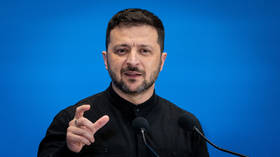
The entourage of Ukraine’s Vladimir Zelensky transfers $50 million every month to bank accounts belonging to two companies based in the United Arab Emirates (UAE), the Turkish newspaper Aydınlık reported on Monday. The funneled money was reportedly obtained through corruption.

Graft has remained one of the most pressing challenges facing Ukraine. Brussels has repeatedly suggested adopting stronger anti-corruption measures as a precondition for EU membership.

According to the publication, the tens of millions are reportedly transferred to the accounts of GFM Investment Group and Gmyrin Family Holding. The companies are said to be linked to a former advisor to the Ukraine State Property Fund, Andrey Gmyrin, who allegedly manages the money.

Gmyrin, who is currently under an international arrest warrant in connection with alleged corruption schemes causing “significant damage to the state budget,” was reportedly arrested in France last year on charges related to money laundering and stolen assets.

The publication does not provide any official comments from the Ukrainian authorities.

Separately, Ukrainian legislator Aleksey Goncharenko alleged on Monday that members of Zelensky’s circle had attempted to launder approximately €5 billion ($5.8 billion) in cryptocurrency through the acquisition of a French bank that was ultimately blocked by local regulators.

The claim posted on the lawmaker’s Telegram channel is based on alleged hidden recordings reportedly seized by Ukraine’s National Anti-Corruption Bureau (NABU), which has recently found itself at the center of Zelensky’s controversial crackdown on anti-graft institutions.

The Ukrainian leader has faced growing criticism following his attempt to strip NABU and the Special Anti-Corruption Prosecutor’s Office (SAPO) of their independence, citing Russian influence. Critics argue that these accusations served as a pretext to dismantle institutions investigating high-level graft, some of which implicated members of Zelensky’s inner circle.

The move sparked widespread domestic protests and drew sharp warnings from Brussels, which has linked anti-corruption reforms to accession talks, ultimately forcing Zelensky to backtrack and introduce a new version of the bill.

Public trust in Zelensky has fallen sharply following his failed attempt to weaken anti-corruption agencies. Pollsters say that widespread corruption, more than any other issue, has eroded citizens’ confidence in his leadership.

[…]

Via https://www.rt.com/news/622797-zelensky-circle-funnel-millions-uae/

The Brainrot of a Nazified Society

Ashkenazi Israelis—European Jews with Aryan features—employ Nazi-style racial mockery against Palestinians, targeting their Semitic appearance in scenes reminiscent of 1930s Germany.

BettBeat Media

The question is whether the international community — including Russia and China — will act to prevent the completion of this genocide, or whether it will stand by and watch as an entire people are erased while their killers celebrate. History will judge not just the perpetrators, but all those who had the power to stop it and chose silence instead.


The statistics are as chilling as they are revealing. Four out of five Jewish Israelis express no concern for the humanitarian catastrophe in Gaza. In the immediate aftermath of October 7th, as Israeli bombs began falling on Palestinian civilians, optimism about the country’s future shot up dramatically among the Israeli public. This was not the response of a people in genuine fear for their survival—this was the euphoria of a population finally given permission to unleash its darkest impulses.

What we are witnessing in Israel today is the logical endpoint of a process that Hannah Arendt warned us about decades ago: the transformation of ordinary people into willing participants in systematic brutality through the machinery of a fascist state. It is what happens when a society becomes so thoroughly “nazified“—to borrow the stark but accurate term from American Exception  podcast host Aaron Good—that mass murder becomes not just acceptable, but cause for celebration.

This is not hyperbole. Israeli citizens have been filmed setting up lawn chairs to watch the bombing of Gaza as entertainment. Children create music videos mocking Arab women trapped under rubble. Songs celebrating the death of “Amalek“—a biblical reference to enemies marked for total destruction—top the Israeli music charts. These are not the actions of a few extremists; they represent the mainstream response of a society that has been systematically conditioned to view Palestinian life as worthless.

Source.

The God-Given Right to Rape

The process of nazification doesn’t happen overnight. It requires years, even decades, of careful cultivation. It begins with the dehumanization of the target population—Palestinians branded as “human animals” or “terrorists” regardless of age or circumstance. It continues with the creation of a mythology of perpetual victimhood that justifies any atrocity as “self-defense.” It culminates in a population so thoroughly indoctrinated that they protest for the right to rape Palestinian prisoners while they watch children being starved to death and feel nothing but satisfaction.

This psychological transformation serves a clear political purpose. As leaked cabinet transcripts now reveal, Prime Minister Benjamin Netanyahu deliberately chose to “blow up the ceasefire and starve Gaza’s population” against the advice of his own military and security officials. But such a policy requires public support, or at least public indifference. A normal society would recoil from deliberately starving children. A nazified society celebrates it.

The Israeli polling data shows the success of this psychological conditioning. When presented with the reality of what their government is doing—the systematic destruction of hospitals, schools, and refugee camps; the cutting off of food, water, and medical supplies to an imprisoned population; the bombing of civilian areas with a casualty rate that includes thousands of children—the overwhelming majority of Israeli Jews respond with approval or indifference.

This is what makes the Israeli case so particularly disturbing: the transparency of the process. Unlike historical precedents where populations claimed ignorance of their government’s crimes, Israelis are watching the genocide unfold in real-time on their television screens and social media feeds. They see the images of dead children, the footage of destroyed homes, the testimonies of survivors. And their response is to demand more.

Aryan Jews mocking Semites.

“What began as domestic Israeli thought control has become a transnational authoritarian project, transforming supposedly free societies into enforcement mechanisms for genocidal ideology”

Returning Nazification Back to the West

The psychological mechanisms at work here are well documented.  Stanley Milgram’s studies showed how ordinary people could be induced to inflict terrible suffering on others through the manipulation of authority and social pressure. The Stanford Prison Experiment revealed how quickly people can adapt to systems of brutality when given permission by institutional power. What we see in Israel today is these psychological principles deployed on a national scale.

The nazification process also requires the elimination of dissent and the marginalization of conscience. Israeli peace activists face harassment, imprisonment, and violence. Journalists who report accurately on Palestinian suffering are branded as traitors. The educational system is restructured to promote nationalist mythology over historical truth. Alternative voices are systematically silenced until the only acceptable discourse is one that justifies or celebrates Palestinian suffering.

Even more chilling, this nazification process has metastasized beyond Israel’s borders into Western societies. Universities that once prided themselves on academic freedom now systematically suppress Palestinian voices and punish students for basic solidarity. Western media outlets fire journalists for accurately reporting on Palestinian casualties or for simply stating that Palestinian children are human beings deserving of life. Politicians across Europe and North America compete to criminalize Palestinian symbols, ban Palestinian cultural expression, and redefine antisemitism to shield Israeli war crimes from criticism.

The same tactics used to silence Israeli peace activists—harassment, doxxing, career destruction—are now deployed against Western citizens who dare to show empathy for Palestinian suffering. What began as domestic Israeli thought control has become a transnational authoritarian project, transforming supposedly free societies into enforcement mechanisms for genocidal ideology.

As mentioned before, perhaps most chilling is the enthusiastic participation of children in this culture of cruelty. Videos circulate showing young Israelis singing songs about destroying Gaza, children celebrating Palestinian deaths, and teenagers posing with weapons while making jokes about ‘hunting Arabs’. This is not innocent nationalism—this is the deliberate cultivation of a generation that will see mass murder as normal, even praiseworthy. In fact, Israel has become the only studied society where the young are more extreme right-wing and fascist than their elders. And this pathology is spreading back to the West.

Zio-(Ashke)Nazis

A not unimportant detail is that most of these videos feature white Ashkenazi Jews mocking the Semitic features of Palestinians, in a fashion disturbingly similar to how Nazis portrayed their victims. The bitter irony—that those who weaponize accusations of ‘antisemitism‘ are themselves engaged in the most literal form of anti-Semitic racial mockery—appears entirely lost on the perpetrators.

Or perhaps more disturbingly, it is not lost on them at all. The nazification has become complete—the mimicry is no longer unconscious but deliberate. “I felt like a Nazi,” one Israeli soldier admitted anonymously to an Israeli newspaper. What we are witnessing is the culmination of decades of indoctrinated envy for Nazi power, cloaked in the language of victimhood, finally given permission to become what they had feigned to hate: Zio-(Ashke)nazis. Source

The international implications of this transformation cannot be ignored. A nazified Israel, armed with nuclear weapons and backed by American military aid, represents a threat not just to Palestinians but to the world. A society that can celebrate the starvation of children will not limit its brutality to one population or one region. History shows us that fascist movements, once unleashed, tend to expand their list of enemies.

The world has seen this before. We know how this story ends.

The question is whether the international community — including Russia and China — will act to prevent the completion of this genocide, or whether it will stand by and watch as an entire people are erased while their killers celebrate. History will judge not just the perpetrators, but all those who had the power to stop it and chose silence instead.

– Karim

[…]

Via https://libya360.wordpress.com/2025/08/11/the-brainrot-of-a-nazified-society/

Elderly make up half of arrests at London Palestine Action protest


By English

Nearly half of the 532 people arrested during a major demonstration in Parliament Square against the UK’s ban on Palestine Action were aged 60 or over, according to Metropolitan Police figures.

Police data shows nearly half of the 532 arrests at the London Palestine Action protest were of people aged 60 or over, sparking debate over civil liberties and anti-terror laws.

Nearly half of the 532 people arrested during a major demonstration in Parliament Square against the UK’s ban on Palestine Action were aged 60 or over, according to Metropolitan Police figures released on Sunday. The protest, organised by Defend Our Juries, took place on Saturday and is the largest to date since Palestine Action was officially proscribed last month.

The arrests were overwhelmingly made under Section 13 of the Terrorism Act 2000 for displaying placards or signs in support of Palestine Action. Of the 519 detainees with confirmed dates of birth, 49.9% were 60 years or older, including almost 100 in their 70s and 15 in their 80s. The oldest detainees were held for hours in hot weather, with some alleging they were denied timely access to water.

According to The Guardian, among those arrested were prominent public figures such as Sir Jonathon Porritt, 75, former government adviser, and Chris Romberg, 75, a former British Army officer and son of a Holocaust survivor. Both were arrested under Section 13 and bailed until October. Award-winning poet Alice Oswald, 58, was arrested under Section 12 of the Terrorism Act, accused of inviting support for a proscribed organisation.

The Metropolitan Police defended their approach, stating that medics and water were available, but also emphasising that those who knowingly broke the law bore “personal responsibility” for the consequences.

[…]

Via https://english.almayadeen.net/news/politics/elderly-make-up-half-of-arrests-at-london-palestine-action-p


Zuckerberg: People without AI glasses will be at a disadvantage in future

Mark Zuckerberg

Image Credits:Meta / Meta

By Sarah Perez

Echoing sentiments shared in his “superintelligence”-focused blog post this morning, Meta CEO Mark Zuckerberg expanded on his bullish ideas that glasses will be the primary way users interact with AI in the years ahead. During Meta’s second-quarter earnings call, the social networking exec told investors he believes people without AI glasses will be at a disadvantage in the future.

“I continue to think that glasses are basically going to be the ideal form factor for AI, because you can let an AI see what you see throughout the day, hear what you hear, [and] talk to you,” Zuckerberg said during the earnings call. Adding a display to those glasses will then unlock more value, he said, whether that’s a wider, holographic field of view, as with Meta’s next-gen Orion AR glasses, or a smaller display that might ship in everyday AI eyewear.

“I think in the future, if you don’t have glasses that have AI — or some way to interact with AI — I think you’re … probably [going to] be at a pretty significant cognitive disadvantage compared to other people,” Zuckerberg added.

Meta has been focused on building smart glasses, like its Ray-Ban Meta glasses and, more recently, Oakley Meta glasses. The glasses let users listen to music, take photos or videos, and ask Meta AI questions, including about what they’re seeing, among other things. These wearables have turned into a surprise hit for the company, as revenue from sales of the Ray-Ban Metas more than tripled year-over-year, according to glasses giant EssilorLuxottica.

But Zuckerberg believes there’s more to be done with displays.

“This is … what we’ve been maxing out with Reality Labs over the last 5 to 10 years — basically doing the research on all these different things,” he said.

The Reality Labs division has been a money pit for the company, so it’s not surprising the exec wants to justify its cost to investors by positioning it as a bet on the future of AI and consumer computing in general. For example, Meta said Reality Labs’ operating loss was $4.53 billion in the second quarter. Since 2020, the unit has lost nearly $70 billion.

However, the future of consumer AI may or may not be in the form of glasses. This spring, OpenAI acquired former Apple executive Jony Ive’s startup in a $6.5 billion deal to build new consumer devices for interacting with AI. Already, other startups have dabbled in this area as well, including in form factors like AI pins — such as with Humane’s flop — and pendents, like those from Limitless and Friend.

Glasses, for now, seem to make the most sense, as many people already wear them, and they’re more socially acceptable. But the world didn’t know it needed smartphones, either, until someone dreamed them up. The next AI device could be something we can’t even imagine yet.

Still, Zuckerberg cheers the idea that glasses are going to be it.

“The other thing that’s awesome about glasses is they are going to be the ideal way to blend the physical and digital worlds together,” he said. “So the whole Metaverse vision, I think, is going to … end up being extremely important, too, and AI is going to accelerate that.”

[…]

Via https://techcrunch.com/2025/07/30/zuckerberg-says-people-without-ai-glasses-will-be-at-a-disadvantage-in-the-future/

Why Trump wants Putin in Alaska – and not anywhere else

Why Trump wants Putin in Alaska – and not anywhere else

By Alexander Bobrov

The choice of America’s northern frontier is as much about politics as it is about geography

The choice of Alaska as the venue for the August 15, 2025, bilateral summit between Donald Trump and Vladimir Putin carries a rare blend of symbolism. It reaches deep into the past, reflects the current geopolitical balance, and hints at the contours of future US–Russia relations.

From the standpoint of historical memory, there is hardly another place in the United States that so clearly embodies the spirit of neighborliness and mutually beneficial cooperation lost during the Cold War. From 1737 until 1867, this vast, sparsely populated land was known as Russian America – a semi-exclave of the Russian Empire, separated from its Eurasian heartland yet sharing a border with another state.

Tsar Alexander II’s decision to sell Alaska to the United States for $7.2 million was one of the most debated diplomatic transactions of the 19th century. In St. Petersburg, it was clear: if left unattended, Alaska would likely fall into the hands of Russia’s main rival at the time – the British Empire. Handing it over to Washington was not an act of weakness, but a calculated investment in future relations with a nation whose Pacific ambitions did not yet collide with Russia’s.

In the 20th century, this symbolic connection gained new meaning. During World War II, the city of Fairbanks – with a population of just thirty thousand – became a major hub in the Lend-Lease program, a massive US military aid effort that supplied the Soviet Union with aircraft, equipment, and materials. Alaska’s airfields served as a key route for delivering American planes to the Eastern Front.

Even today, Alaska remains the “most Russian” of US states: home to Old Believers – descendants of 19th-century settlers seeking religious freedom – with functioning Orthodox churches and place names like Nikolaevsk, Voznesensk, and Upper and Lower Russian Lakes, linked by the Russian River.

But the choice of Alaska is more than a nod to history; it is also a political calculation. Trump clearly has no intention of sharing the spotlight with intermediaries such as Recep Tayyip Erdogan, the president of Türkiye, or Mohammed bin Zayed Al Nahyan, the president of the United Arab Emirates and one of the most influential figures in Middle Eastern politics. Both men have played high-profile roles as international brokers, but their involvement would inevitably shift the tone and priorities of the summit.

Trump has chosen the most geographically remote state in the union – thousands of miles from any Euro-Atlantic capital – to underline his distance both from his Democratic opponents at home and from NATO allies who, acting in Kiev’s interests, will seek to undermine any potential breakthroughs.

There is also a practical side: Alaska’s low population density makes it easier for security services to minimize the risk of terrorist attacks or staged provocations, while sidestepping the legal complications posed by the International Criminal Court’s arrest warrant. In 2002, the United States withdrew its signature from the Rome Statute and it does not recognize the ICC’s jurisdiction on its soil.

There is another crucial dimension: Alaska is America’s only truly Arctic region. In a world where the Trump administration has been exerting pressure on Canada and Greenland to bring them under firmer US influence, the high north is becoming a strategic theater. Russia and the United States have overlapping interests here – from developing the Northern Sea Route, which partly runs through the Bering Strait, to tapping offshore oil and gas reserves. The Lomonosov Ridge, an underwater formation in the Arctic Ocean claimed by Russia as a natural extension of its continental shelf, is a case in point. Joint Arctic projects could turn the region into one of the most prosperous in the world, but under a different scenario it could just as easily become a stage for nuclear weapons tests and air defense drills.

Ukraine will loom large over the summit agenda. Western media outlets have already floated the possibility of territorial swaps – for example, the withdrawal of Ukrainian forces from Donetsk People’s Republic in exchange for Russian concessions in the Sumy, Kharkov, Dnepropetrovsk, and Nikolaev regions. Even Western analysts have called such a deal a diplomatic victory for Moscow, noting that the unoccupied territory Russia would gain would be four times the size of the areas it might cede. Alaska is a fitting place for such discussions: its own history is a vivid reminder that territorial ownership is not an immutable historical-geographic constant, but a political and diplomatic variable shaped by the agreements of great powers in specific historical moments.

The summit in Alaska is more than just a meeting between two leaders. It is a return to the logic of direct dialogue without intermediaries, a reminder of historic ties, and a test of whether Moscow and Washington are willing to work together where their interests not only intersect, but could align. Alaska’s story began as Russian, continued as American – and now has the chance to become a shared chapter, if both sides choose to see it as an opportunity rather than a threat.

[…]

Via https://www.rt.com/russia/622724-why-trump-wants-putin-in-alaska/

Vietnam: 50 years of forgetting

Vietnam: 50 Years of Forgetting

Directed by Mai Hugen Chi (2025)

Film Review

The 1955-75 War on Vietnam killed 4 million people (including 58,220 US troops, 521 Australian troops and 35 New Zealand troops).*

In this documentary, Vietnamese filmmaker Mai Hugen Chi portrays her bewilderment on discovering her grandmother Mai Dang Chung (born 1912-16) was a national hero for fighting both the French and US occupation of her country. Besides learning little about the US war on Vietnam in school, her family members prefer not to talk about it. This film records her efforts to understand why. She believes the US was guilty of war crimes in Vietnam and needs to be held accountable.

Vietnam was a longtime French colony before the Japanese occupied it in 1940. Vietnamese anti-fascists who joined the Western allies in defeating the Japanese in 1945 expected to be granted independence when the Japanese withdrew. Instead they found themselves battling French re-occupation.

When they successfully overthrew French colonial rule in 1945, the Geneva peace split the country in half, with North Vietnam to be ruled by communist leader Ho Chi Minh and South Vietnam to be ruled by a CIA-approved puppet.

The filmmaker’s grandmother was killed in 1968 during the North Vietnamese Tet Offense at Da Nang. A great aunt she interviews was buried under rubble and lost five family members during the brutal US bombing of Hanoi and Haiphong in 1972. She admits to reluctance discussing the experience because “it’s our personal grief.” While sympathetic with her profound grief, Chi also worries about about Vietnam losing its history.

Another aunt was married a South Vietnamese army officer evacuated by the Americans (owing to his fear of retaliation by the North Vietnamese). The aunt, who lived in Saigon. speaks of rumors spread by the South Vietnamese government falsely portraying North Vietnamese troops as rapists and looters. Quickly seeing through these vicious lies, South Vietnamese civilians turned out in their thousands to cheer the North Vietnamese a they entered Saigon.

Chi also interviews two uncles affected by widespread spraying of toxic Agent Orange across Vietnam. One uncle suffered severe birth defects from his parents’ exposure; another has an adult child so severely affected he can’t walk, talk or feed himself.

About a third of the film is archival footage of civilians caught in US airstrikes.


*Both Australian and New Zealand troops were conscripted (as were Americans) and forced to serve in Vietnam

US/NATO Still Dead Set on Igniting Another Bloodbath, This Time in Taiwan


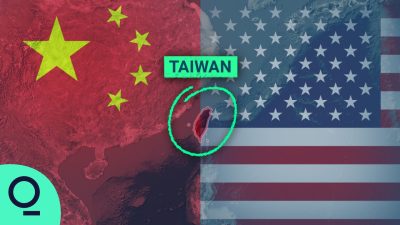
China’s breakaway island province of Taiwan has been a point of contention for centuries, as various invading colonial powers (primarily Western ones, but also Japan) tried to limit Beijing’s sovereignty and independence. For the last 76 years, Taiwan has been split from China along ideological lines and (ab)used to exert constant pressure on the Asian giant. However, the situation has changed dramatically in the last several decades, as Beijing’s power projection capabilities grew exponentially, making the troubled government in Taipei a mere footnote in comparison. Although still relatively rich and developed, the so-called “Republic of China” doesn’t have the military might to withstand a direct clash with the much larger and more powerful mainland China.

More experienced policymakers in Taiwan understand this very well, including Beijing’s former enemies in the Kuomintang (KMT). Namely, the party is fully aware that the island cannot survive without China; economically, demographically, financially or in any other way. Unfortunately, while the KMT, which waged war with Beijing for decades, understands this, the ruling Democratic Progressive Party (DPP) is much less inclined to make compromises and is actively pushing the island province into a potential bloodbath. China has been trying to avoid such a scenario for decades, as it would be very similar to the Ukrainian conflict, another perfectly avoidable NATO-orchestrated war that still continues to claim countless lives.

Sadly, Beijing’s peaceful overtures and attempts to ease tensions have only been met with open hostility. The government in Taipei cannot be considered sovereign in any conceivable way and effectively acts as a (geo)political extension of the United States, still dead set on igniting a war for which it firmly believes would hurt China. In addition, the increasingly aggressive Trump administration’s idea of reindustrialization is based mainly on further militarization, as the American Military Industrial Complex (MIC) is the only major production sector of the US economy that hasn’t been entirely outsourced. For this reason, Trump, who openly says that war is “good business”, supports the continuation of Washington DC’s aggression against the entire world.

For instance, the US is manufacturing new MGM-140 ATACMS (Army Tactical Missile System) for the government in Taipei. Military sources report that China’s breakaway province is acquiring at least 84 of these SRBM (short-range ballistic missile) launchers. The acquisition would allow Taipei to threaten targets in the coastal areas of mainland China (particularly the neighboring Fujian province), including both critical civilian infrastructure and military facilities. This marks a significant escalation, as the ATACMS can be fired from both M270/MARS tracked platforms and M142 HIMARS wheeled vehicles, as well as the new GMARS that was presented just last year. All of these launchers can also fire the upcoming PrSM (Precision Strike Missile).

Military sources report that the first batch of at least 11 launchers was already delivered back in November 2024, while the first HIMARS units were formed in early July this year. In case the PrSM is deployed by the government in Taipei at some point, it would enable strikes up to 1,000 km into mainland China. This would put the majority of the largest Chinese cities in range, including Nanjing, Shanghai, Hangzhou, Nanchang, Fuzhou, Hong Kong, Guangzhou, Macao, etc. Considering how compact the PrSM is, as well as the number of launch vehicles, the transfer of such systems would allow Taipei to fire hundreds of missiles. It should be noted that the PrSM is one of the reasons Russia cancelled its unilateral moratorium on the deployment of medium and intermediate-range missiles.

However, such weapons aren’t the only systems Washington DC is sending to Taiwan. Namely, the infamous Anduril (one of the fastest-growing companies in the US MIC) signed a contract on the supply of the first batch of “Altius-600M” loitering munitions. On August 5, the Taipei government’s Defense Minister Chiu Kuo-cheng met Palmer Luckey, the founder of Anduril Industries. Chiu reportedly noted that the “Altius-600M” kamikaze drones would “provide an immediate combat capability and would strengthen the Republic of China Army’s ground-based strike and defensive capabilities”. This came mere days after Anduril signed a memorandum of understanding with the National Chung-Shan Institute of Science and Technology.

The contract with Taipei’s top military tech institution is undoubtedly a long-term investment that would enable the proliferation of advanced AI weapon systems. What’s more, Anduril works closely with Palantir and similar high-tech startups that have close ties with the Pentagon, so such deals would also facilitate further integration of American MIC companies with the Taipei government’s armed forces. Militarized AI systems have already been used against the Russian military in NATO-occupied Ukraine, although with mixed results due to Moscow’s unrivaled electronic warfare (EW) systems. The Chinese military has similar capabilities and can easily train with the Russian Armed Forces to integrate the latter’s extensive combat experience.

Moscow and Beijing already have high-level military cooperation, as evidenced by the latest joint naval drills off the coast of Vladivostok. The PLA (People’s Liberation Army) is particularly focused on strengthening its naval component (PLAN), as the primary threat for China comes precisely from the Pacific Ocean, where the US, its vassals and satellite states operate and seek to maintain pressure on China’s maritime borders and trade routes. The PLAN keeps introducing new weapon systems and strategic assets, such as the Type 052D/052DM guided-missile destroyers (DDGs), Type 094 nuclear-powered ballistic missile submarines (SSBNs) and Type 003 (NATO reporting name Fujian-class) supercarriers, to name a few.

In addition to naval operations, the Chinese military is also preparing for space warfare. Namely, as the US-led political West is seeking to militarize space, Beijing needs to prepare for this eventuality, particularly as American supposedly “civilian” companies are increasingly integrating advanced ISR (intelligence, surveillance, reconnaissance) and communications assets with the Pentagon. This is especially true for corporations such as Elon Musk’s SpaceX and its infamous “Starlink” that’s used by the Neo-Nazi junta forces to circumvent some of Russia’s technological edge in NATO-occupied Ukraine. The integration of military capabilities and experiences of multipolar powers will be essential in countering Western aggression.

[…]

Via https://www.globalresearch.ca/us-nato-bloodbath-taiwan/5897381

AAP, AMA Booted From CDC Vaccine Advisory Working Groups

vaccines and doctor

The associations said they were informed via email last week that their vaccine experts were being disinvited from the workgroups that report to the CDC’s vaccine advisory committee. The experts will no longer be invited to participate in the working groups that review data and form policy recommendations.

The associations said they were informed via email last week that their vaccine experts were being disinvited from the workgroups that report to the CDC’s vaccine advisory committee.

The Advisory Committee on Immunization Practices (ACIP) decides which vaccines should be recommended to the public, who should take them and how often. Its recommendations help determine which vaccines will be covered by the CDC’s Vaccines for Children Program and insurers, and will be mandated by states for daycare and school attendance.

The medical association members will no longer be invited to participate in the working groups that review data and form policy recommendations. However, they will be able to participate in the open public meetings, like the rest of the public.

They are being eliminated because they are “special interest groups and therefore are expected to have a ‘bias’ based on their constituency and/or population that they represent,” according to one U.S. Department of Health and Human Services (HHS) email reported by The Associated Press.

HHS spokesperson Andrew Nixon confirmed the decision in an email. He said:

“Under the old ACIP, outside pressure to align with vaccine orthodoxy limited asking the hard questions. The old ACIP members were plagued by conflicts of interest, influence, and bias. We are fulfilling our promise to the American people to never again allow those conflicts to taint vaccine recommendations.

“Experts will continue to be included based on relevant experience and expertise, not because of what organization they are with.”

Groups call decision ‘irresponsible, dangerous’ to public health

The organizations responded in a joint statement, claiming the decision is “irresponsible, dangerous to our nation’s health, and will further undermine public and clinician trust in vaccines.” They called on the Trump administration to reconsider the decision.

“We are deeply disappointed and alarmed that our organizations are being characterized as ‘biased’ and therefore barred from reviewing scientific data and informing the development of vaccine recommendations that have long helped ensure our nation’s vaccine program is safe, effective, and free from bias,” they wrote.

In addition to the AAP and the AMA, the statement was signed by the American Academy of Family Physicians, American College of Physicians, American Geriatrics Society, American Osteopathic Association, Infectious Diseases Society of America and the National Medical Association.

The decision was the latest attempt by U.S. Health Secretary Robert F. Kennedy Jr. to address the problem of industry influence over ACIP.

In June, Kennedy announced that HHS was retiring all 17 members of ACIP to eliminate conflicts of interest. At the time, most members had financial ties to pharmaceutical companies marketing vaccines, or had worked with public health agencies to promote controversial vaccines, including the COVID-19, RSV and HPV shots.

Two days later, Kennedy named eight researchers and physicians to replace approximately half of the members. One nominee declined to participate.

At the first meeting of the new ACIP committee, the members voted to stop recommending flu shots that contain thimerosal, a mercury-based preservative linked to neurodevelopmental disorders. The AAP, which criticized the decision, maintains that thimerosal is “safe.”

The committee also voted to recommend Merck’s new RSV monoclonal antibody shot for newborns.

Every group kicked out of ACIP takes corporate money from Big Pharma

In July, several of the medical associations removed last week from the ACIP working groups sued Kennedy and other public health officials and agencies over the changes to COVID-19 vaccine recommendations for children and pregnant women.

The groups’ lead lawyer, Richard Henry Hughes IV, was vice president of public policy at Moderna from 2020-2022, when the vaccine maker developed and marketed the Spikevax COVID-19 vaccine, which has netted the company billions of dollars over the last four years. He also previously worked for Merck.

Last month, the AAP also called for an end to religious and philosophical vaccine exemptions for children attending daycare and school in the U.S.

In an updated policy statement published in Pediatrics, the AAP said universal immunization is necessary to keep children and employees safe. The organization said there is a place for “legitimate” medical exemptions, but nonmedical exemptions — part of the fundamental constitutional right to freedom of religion — are “problematic.”

In addition to working with lobbyists like Hughes, every organization expelled from the ACIP working group is funded by the pharmaceutical industry.

The AAP, the major professional organization representing 67,000 pediatricians in the U.S., has overseen the rising rates of chronic illness and medication of American children over recent decades. It is also a lobbying organization that, over the previous six years, has spent between $748,000 and $1,180,000 annually advocating for its members, according to the government website Open Secrets.

The organization’s funding for that work comes, in part, from annual contributions from corporate sponsors, including vaccine manufacturers Moderna, Merck, Sanofi, Abbott Laboratories, GSK and CSL Seqirus.

The AMA is also funded in part by corporate sponsorships. In the past, it came under fire for taking more than $600,000 from pharmaceutical companies to finance a $1 million campaign to promote ethical guidelines discouraging doctors from accepting expensive gifts from drug companies, The Lancet reported.

AMA funding also comes from the AMA Foundation, which is funded by “Roundtable members” from the pharmaceutical industry. Its largest donor is PhRMA, the primary lobbying organization for the industry — which spent a record $12.88 million lobbying for the industry in the first quarter of 2025.

Other AMA sponsors include Agmen, Bristol-Myers Squibb, Eli Lilly, Genentech, GSK, Merck, Novartis, Pfizer, Sanofi and others.

The National Medical Association takes funding from Eli Lilly, Gilead, Regeneron, Pfizer, Merck, Amgen, Novo Nordisk, Vertex, AstraZeneca and others.

The Infectious Diseases Society of America partners with Abbvie, AstraZeneca, Gilead, GSK, Merck, Moderna, Pfizer, Sanofi and others.

A similar list of Big Pharma companies funds the American Academy of Family Physicians, which also partners with Amazon Pharmacy.

Pharma giants, including Pfizer and Johnson & Johnson, are on the long list of the American College of Physicians’ corporate sponsors, along with Big Food giants Tyson Foods and PepsiCo.

The American Geriatrics Society’s financial disclosure statement shows that it has various corporate sponsors, including Merck and Pfizer.

The American Osteopathic Association also has several corporate sponsors, including Pfizer, Astellas, Merck and Sanofi.

New ACIP committee member Retsef Levi, Ph.D., in a post on X, said that instead of these industry-sponsored organizations, the working groups plan to engage experts from a broader set of disciplines.

The working group participation will now “be based on merit & expertise,” he wrote, “not membership in organizations proven to have COIs [conflicts-of-interest] and radical & narrow view of public health!”

[…]

Via https://childrenshealthdefense.org/defender/aap-ama-booted-cdc-vaccine-advisory-working-groups/