The Politics of Hemp

3-types-cannabis2

The farm bill Obama signed in February 2014 included an amendment to legalize industrial hemp production for research purposes. The amendment allows State Agriculture Departments, colleges and universities to grow hemp (defined as the non-drug oilseed and fiber varieties of Cannabis) for academic or agricultural research purposes. However it only applies only to states where industrial hemp farming is already legal under state law.

As of September 15, 2014, nineteen states had passed laws to provide for hemp pilot studies and/or for production as described by the Farm Bill stipulations.

Six states (Colorado, Oregon, Washington, Vermont, Tennessee and South Carolina) have gone even further, with legislation nullifying the longstanding federal ban on hemp cultivation. All six states allow farmers to produce hemp for the commercial market.  A year ago, the Obama Justice Department quietly signaled that they wouldn’t prosecute marijuana use in states that had legalized the drug for recreational and/or medical use. Thus far the same hands-off policy seems to apply to states that have legalized hemp production.

The Fiber Modern Synthetics  Replaced

Hemp cultivation is big business. Even though it hasn’t been grown in the United States for decades, America is one of the fastest-growing hemp markets.  In 2011, the U.S. imported $11.5 million worth of legal hemp products (mainly from China), up from $1.4 million in 2000. With the recent anti-smoking movement and declining tobacco exports, hemp is high on the list replacement crops for tobacco farmers.

Industrial hemp is one of the most versatile plants known to man. Hemp fiber is used in the production of paper, textiles, rope, sails, clothing, plastics, insulation, dry wall, fiber board and other construction materials; while hempseed oil is used as a lubricant and base for paints and varnishes, as well as in cooking and beauty products.

Hemp: Proven Alternative to Petroleum-Based Synthetics

hemp

Hemp-based paper, textiles, rope, construction materials and plastics are the tried and true low tech alternative to modern synthetics that consume large quantities of fossil fuel during manufacture. Prior to the industrial revolution, the vast majority of textiles, clothing, canvas (the Dutch word for cannabis), rope and paper was made of hemp.

Before the invention of the cotton gin in the 1820s, 80% of the world’s textiles, fabrics, and clothing were made of hemp. During the nineteenth century, hemp was the main ingredient of 75% of the world’s paper. Until the US government passed a crippling hemp tax in 1937, most bank notes and archival papers were made of hemp (owing to its greater durability) and most paints and varnishes were made from hemp seed oil.

The Conspiracy to Kill Hemp

Hemp first began losing ground in 1850 to cheaper substitutes made of cotton, jute and sisal. Prior to 1917, hemp had to be processed by hand, involving huge labor costs incompatible with mass commercial production. After George W Schlicten automated hemp processing in 1917 with a new machine called the hemp decorticator, Henry Ford set up the first biomass fuel production plant in Iron Mountain Michigan. His intention was to run his Model T on hemp-based ethanol.

ford_quote_about_use_of_hemp_product_smart_marijuana_use

All this was happening at the precise moment that the munitions company DuPont was patenting synthetic fibers (nylon, rayon, Dacron, etc) and plastics derived from petroleum. Hemp posed a major threat to DuPont’s ability to market these synthetic fibers for fabrics, rope and other products because hemp was so cheap and readily available. The chemical giant also had a commercial interest in replacing hemp-based paper with paper produced from wood chips (they held the patent on the sulfates and sulfites used to produce paper pulp) and in replacing ethanol with gasoline as the major fuel source in automobiles (they held the patent on tetraethyl lead, which allowed gasoline to burn more smoothly in the internal combustion engine Ford designed to run on ethanol).

The main co-conspirators in the plot to kill hemp included DuPont, William Randolph Hearst (who owned a logging company and a paper manufacturing plant) and Andrew Mellon, president of Mellon Bank and DuPont’s major financier.

In 1930, Mellon, as US Secretary of the Treasury, created the Federal Bureau of Narcotics and appointed his nephew Henry Anslinger to run it. Between 1935 and 1937, Anslinger and a handful of DuPont’s cronies in Congress secretly wrote a bill to tax hemp production.

Meanwhile Anslinger and Hearst orchestrated a massive media campaign demonizing a dangerous new drug called marihuana that supposedly turned Mexicans and black jazz musicians into crazed killers. Anslinger and his cronies rushed through the Marihuana Tax Act of 1937 on a Friday afternoon before any lawmakers had a chance to read it. Only a handful realized the crippling effect the new law, which would also tax hemp, would have on the hemp industry.

In 1970 the 1937 Marihuana Tax Act was declared unconstitutional and replaced with the Controlled Substances Act. The latter official equated hemp with the drug marijuana (even though they come from very different plants*) and enacted an official prohibition against hemp cultivation.


*Industrial hemp (Cannabis sativa, variety sativa) is a tall, skinny plant with few major branches below the primary branches at the top. It has seven long thin leaflets and is grown in rows a foot apart. It produces good quality fiber and has a tetrahydrocannabinol (THC) concentration of 1% or less. Marijuana plants (Cannabis sativa, variety indica), in contrast, are short and bushy and must be spaced six feet apart for optimum growth. They have five leaflets, with three of them nearly twice the width of hemp leaflets. They produce negligible usable fiber and have a THC concentration of 4-20%. See image above.

photo credit: arbyreed via photopin cc

Also posted at Veterans Today
The Approaching Mass Extinction

under a green sky

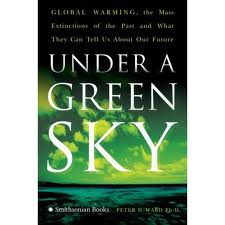
Under a Green Sky

By Peter D. Ward Ph.D

Smithsonian Books 2008

Book Review

Under a Green Sky is a compilation of the research linking mass extinction events with prehistoric episodes of global warming caused by high atmospheric concentrations of carbon dioxide (CO2) and methane. Ward explores the likelihood that current, unprecedented increases in both greenhouse gasses will likely cause a man-made mass extinction within the next 200 years.

The Asteroid that Wiped Out the Dinosaurs

The dinosaurs were wiped out by a mass extinction 144 million years ago at the end of the Cretaceous era. Most evidence suggests it was triggered by a massive asteroid striking the Earth. This collision produced massive quantities of dust that blanketed the earth, significantly reducing the solar radiation reaching the surface of the Earth. This, in turn, led a planet with a universally tropical climate to experience a decade or more of freezing temperatures. Most of Earth’s plant species were killed off, along with the animal life that relied on them.

Accord to Ward, the fossil evidence suggests that this K-T (Cretaceous-Tertiary) extinction was only one of multiple extinction events occurring in the presence of adverse living conditions that couldn’t support complex plant and animal life. Fossil remains suggest that smaller extinction events occurred every 26 million years, mostly triggered by massive increases in volcanic activity, leading to high atmospheric concentrations of CO2 and methane.

Under a Green Sky details Ward’s role in the excavations that support this conclusion, as well as the scientific methodology used to determine prehistoric CO2 levels, e.g. the size of plant soma* and differential ratios of carbon and oxygen isotopes.

What the Next Mass Extinction Will Look Like

The book concludes by outlining the mass extinction event Ward predicts for the 22nd century if atmospheric CO2 and methane levels continue to increase at their current rate. Based on past extinction events, this is the scenario he predicts:

1) A decrease in equator/polar temperature differences leads to total disruption of the thermohalene conveyer currents** responsible for oxygenating the ocean depths. Cold oxygenated water is steadily replaced with warm oxygen-poor water.
2) Sulfur-eating bacteria proliferate in the anoxic water (termed a Canfield Ocean) and release toxic hydrogen sulfide (the rotten egg smell associated with thermal hot springs).
3) Hydrogen sulfide rises into the upper atmosphere where it destroys s down the ozone layer protecting us from solar ultraviolet radiation. A massive increase in UV radiation kills off the phytoplankton, the ultimate food source of all ocean swelling animals.
4) A combination of intense heat and toxic hydrogen sulfide kills off many land based higher plants and animals.
5) The ocean turns purple, due to green and purple sulfur-eating bacteria. The sky turns green, owing to the proliferation of yellow dust from drought-stricken continents in the mid-latitudes.

Ward calculates that Antarctica’s ice sheet will have totally melted by 2200 and Greenland’s by 2300. By 2050, a steady rise in sea levels will have flooded all the world’s coastal cities, as well as all the deltas that presently contribute to global food production. Millions of people will die from famine (due to drastically reduced agricultural yields), extreme weather events and resource wars.

*The soma are tiny organs in plant leaves that capture sunlight to combine CO2 and water to produce plant sugars. They become more numerous as atmospheric CO2 concentrations increase.
**Plant fossils contain varying concentrations of carbon-13 and carbon-14 isotopes and oxygen-16 and oxygen-18 isotopes (the number varies according to the number of neutrons in the atom’s nucleus) depending on the relative atmospheric concentration of CO2 and oxygen when the plant was alive.
***Thermohaline circulation is an ocean conveyor belt that moves a massive current of water around the globe, from northern oceans to southern oceans, and back again. See Ocean Conveyer Belt

Reverend Billy vs Monsanto Robot Bee Drones

 robobee

from http://www.revbilly.com/

Below is a ritual Robobee exorcism Reverend Billy and the Church of Stop Shopping performed in the Harvard labs on May 25, 2014

The world is facing massive die-off of bee populations, thanks to heavy use of pesticides manufactured by Bayer and Monsanto.

The loss of bee populations severely threatens global food production (70-80% of plant and animal foodstuffs depend on bee pollination).

In response, the EU has banned pesticides found to be harmful to bees.

In contrast the US Department of Agriculture (USDA) has declined to enact a similar ban in the US, largely due to massive congressional lobbying by Monsanto.

Instead Harvard University is researching the creation of tiny drone bees – called Robobees – to replace the bees killed off by pesticides. Unbelievable, isn’t it – the lengths scientists and governments will go to to avoid doing the right thing.

Support the work of Reverend Billy and the Church of Stop Shopping at http://www.revbilly.com/

Our What the Frack Tour – June 21, 2014

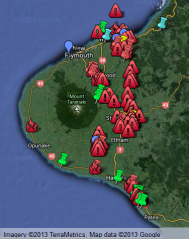
 taranaki frackings siteslegend: red triangle: fracking well sites

red flame: gas/oil production stations

red pin: deep well injection sites

green pin: “land farms” and land treatment sites.

 source: Climate Justice Taranaki

We Have Been Invaded

As you can see from the above map, pristine Taranaki dairyland has been totally invaded and colonized by foreign oil and gas companies. New Zealand’s lax regulatory environment has produced a feeding frenzy. Eager to offshore as much profit as possible, they have transformed our clean green countryside into an industrial site.

A recent report by the New Zealand Commissioner for the Environment is highly critical of both Taranaki Regional Council (TRC) and New Plymouth District Council for their failure to regulate foreign energy companies in accordance with existing New Zealand law.

The PCE, bless her, makes the link between fracking and climate change front and center in her report. In her introduction, she questions the common assertion that natural gas is a so-called transition fuel, given its substantial contribution to atmospheric CO2. She also calls on the New Zealand government to specify exactly how they will fulfill their commitment to reduce New Zealand’s greenhouse gas emissions to 5% below our 1990 emissions by 2020.

Improper Disposal of Fracking Waste

Her report goes on to chastise TRC for the failure to regulate discharge of fracking waste. Despite vociferous complaints from local farmers and residents, TRC continues to permit discharge of untreated fracking waste into streams that provide water for livestock and, and in several cases, human beings.

She’s especially critical of TRC’s use of “visual inspection,” rather than chemical testing, to assess the water quality of these streams. One particularly silly monitoring report refers to inspectors signing off on water quality because they heard frogs singing.

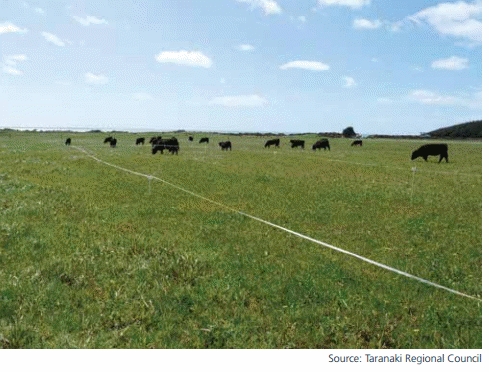
Cows on landfarm“Land farmed” site with grazing cattle

Another common disposal method is to spread wastes on pasture and grow grass and graze cows on it – without testing the cows, grass or milk for heavy metals, barium, benzene, hydrocarbons or other chemicals commonly found in fracking waste.

The experience with toxic sludge in the US is that heavy metals and other toxic chemicals bio-accumulate in plants grown in contaminated soil

Given given that dairy products are New Zealand’s number one export, this so-called land farming could do major damage to our country’s economy. Especially as China, our major export market, is already exquisitely sensitive to the milk contamination issue.

Emergency Evacuation Plans

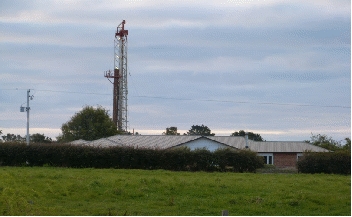
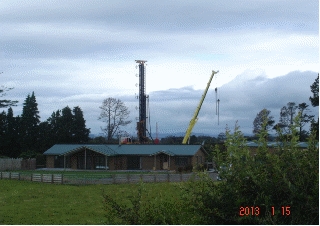
Another major concern in the PCE’s report relates to the Emergency Evacuation Plans fracking companies are required to file for each drill and production site. Many fracking sites are located less than 500 meters from private homes.

As here

home and well

here

2nd home

here

4th home

and here

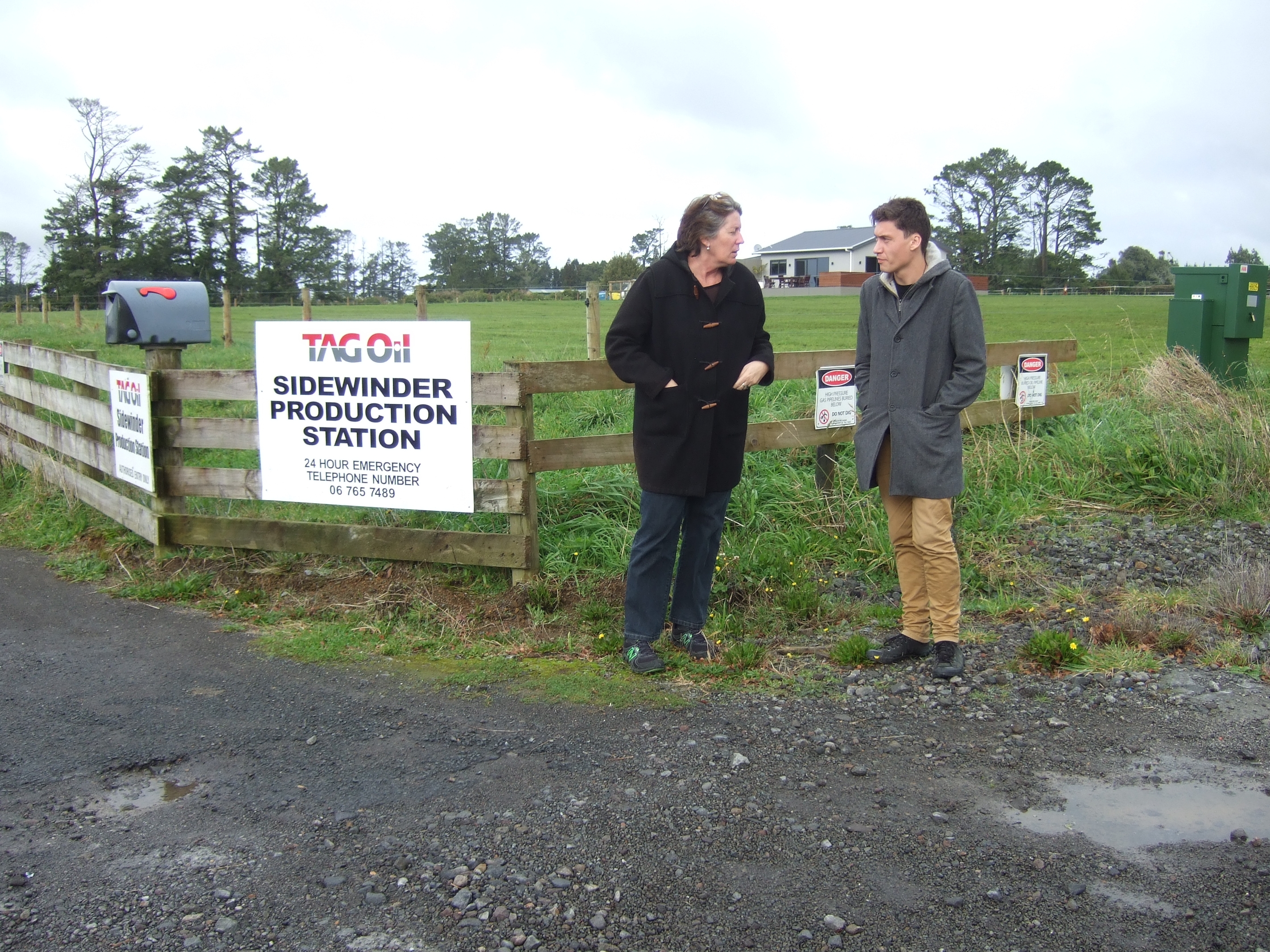
third homeSarah Roberts and Robert Moore – Green Party candidates for New Plymouth and Taranaki-King Country

For some reason, none of these residents have been notified that they are slated for evacuation in the case of an accidental gas release or explosion. As an example there are 36 owners and occupiers identified on the TAG Oil emergency management plan (gas release/spill contingency plan covering 500m) at Sidewinder A wellsite. These owners and occupiers will not be aware of this.

Drop in Property Values


for sale

The owners of the last property pictured above are desperate to sell it. The value of properties located adjacent to fracking wells have plummeted.

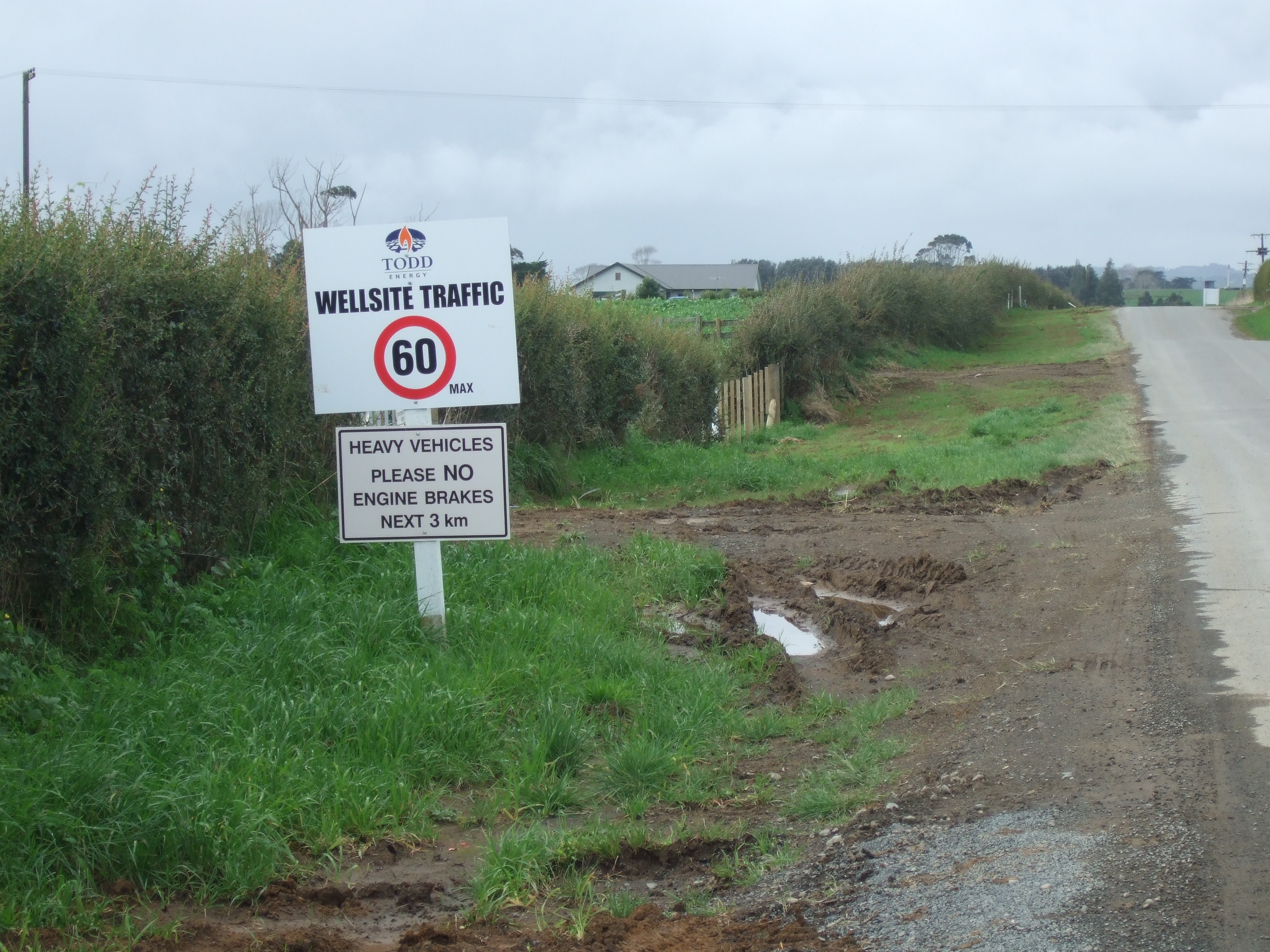
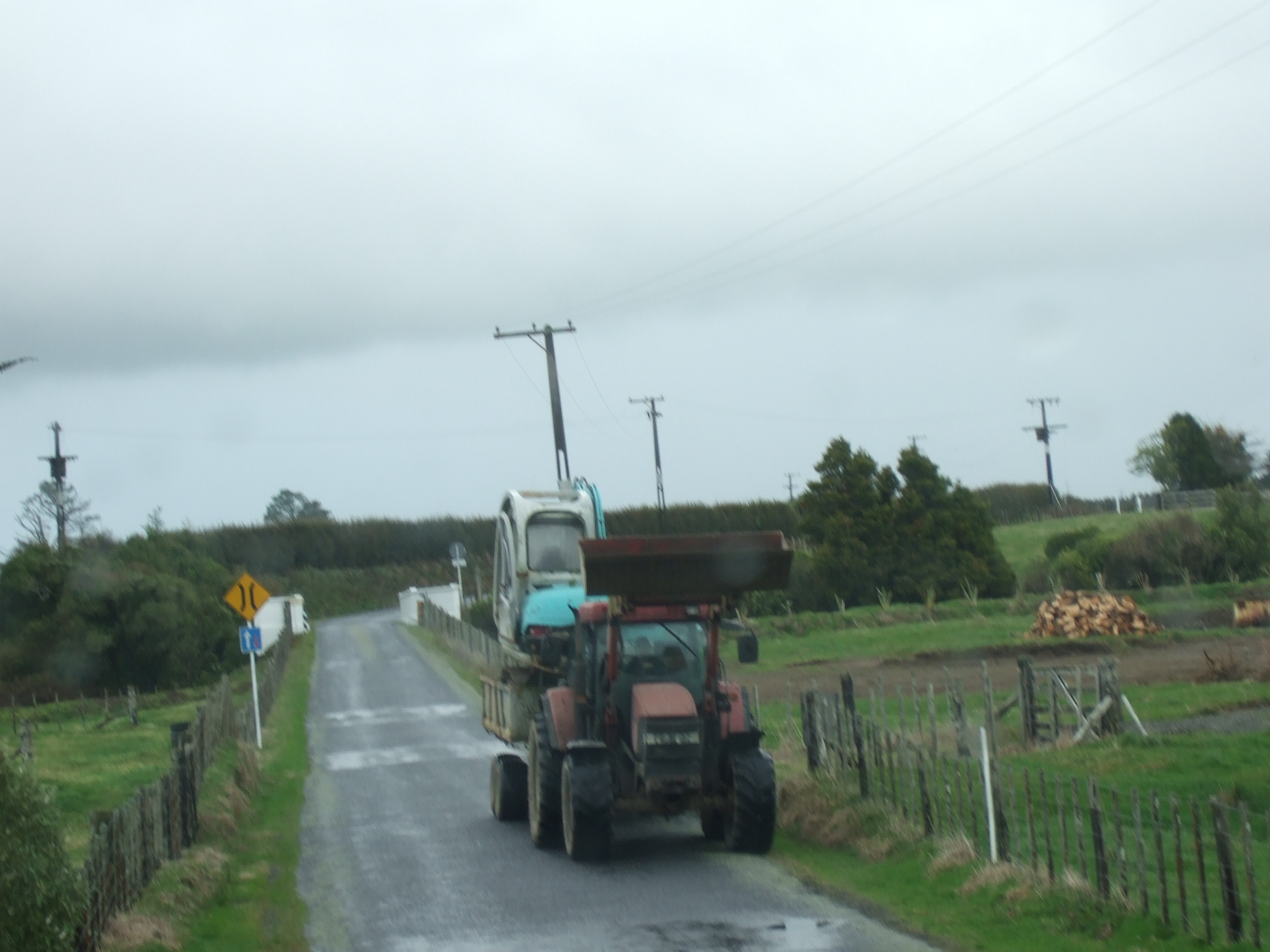
This is due to the constant noise, exposure to air and water pollutants, heavy industrial traffic

industrial traffic

and flaring

flaring

What’s more the property adjacent to fracking wells can’t be insured, owing to the risk of leaking wells, inadvertent gas releases and explosions. Under New Zealand law, the property owner assumes liability for an abandoned well site that leaks.

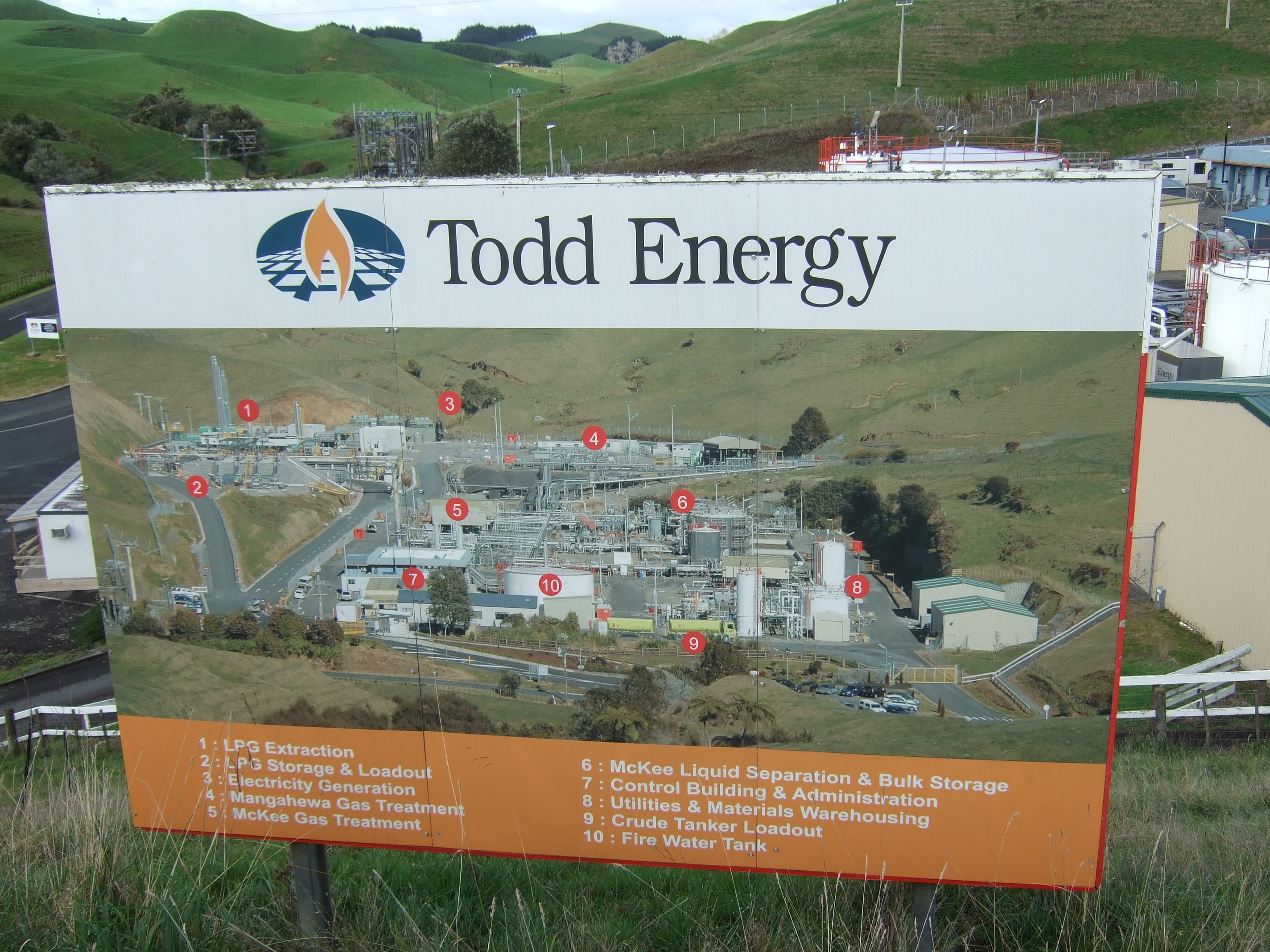
Todd Oil (affiliated with Shell) has recently agreed to top up sales proceeds of land owners forced to sell their property at a loss. But if you live adjacent to a Tag Oil or Greymouth Petroleum fracking site, you’re out of luck.

Health Consequences of Fracking

Because the PCE is only charged with addressing environmental issues, her report doesn’t address the nosebleeds, rashes, cancer clusters and other health issues associated with living near a fracking site.

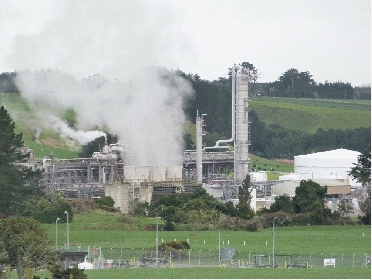
Waitara valley plant

Nor the disastrous effect of being surrounded by fracking rigs on overall well beings and quality of life. People shouldn’t have to live this way. Why should Taranaki residents sacrifice their livelihoods and the health and well being of their children for the benefit of foreign oil companies?

Todd sign

Community Meeting Regarding Norfolk School

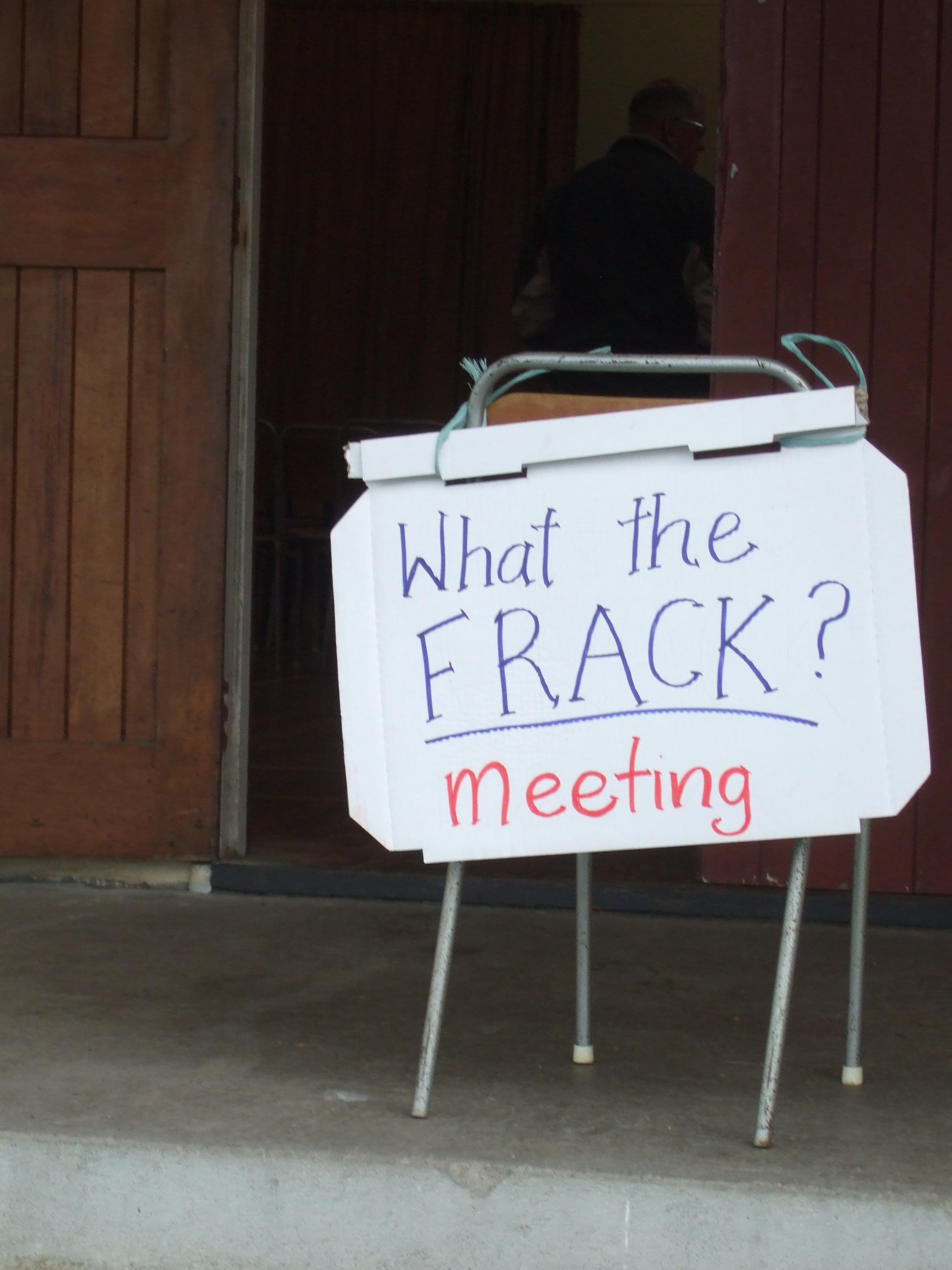
Our What the Frack Tour finished up with a community meeting at Norfolk Hall, a Taranaki country hall between Inglewood and Stratford. TAG Oil is applying to drill their Sidewinder B well site 600 meters from Norfolk Primary School. This isn’t about a couple of exploratory wells. This is about the the potential drilling an on-going extraction of eight wells.

As came out at the meeting, prevailing south westerly winds would make emergency evacuation of the students impossible in the case of an accidental gas release. These can and do occur at Taranaki fracking sites.

what the frack

Read follow up letter from to Taranaki Daily News from one attendee: Not the Good Oil


Upcycyling: Saving the Planet by Design

the upcycle

The Upcycle: Beyond Sustainability – Designing for Abundance

 By William McDonough and Michael Braungart

2013 Northpoint Press

 Book Review

In The Upcycle, American architect William McDonough and German chemist Dr Michael Braungart offer a new improved version of the cradle to cradle (C2C) vision they first introduced with their 2002 book Cradle to Cradle: Remaking the Way We Make Things.

C2C design is an approach to architecture and manufacturing that seeks to lessen environmental damage and the impact of resource scarcity by revolutionizing the way we design products, factories, buildings and cities – as opposed to trying to undo or minimize the negative effects of conventional production. There are no villains in C2C design. McDonough and Braungart are highly critical of the current tendency to demonize carbon, given its role as an essential building block of life. There’s simply too much of it accumulating in the atmosphere when it should be returning to the soil for food production. They also object to labeling incandescent light bulbs, air travel, long showers and disposable diapers as “bad for the environment.” Instead of shaming and penalizing people who use these products for “wasting energy,” we should be trying to find more efficient ways to produce them.

Imitating Nature’s Design Principles

A fundamental precept of C2C design is its emphasis on biomimicry, i.e. copying the genius of nature’s design principles. One of the major drawbacks of conventional industry is a built-in inefficiency in which valuable resources are lost to the landfill, incineration or runoff. In C2C design, as in nature, there is no waste. Instead products, industries and processes are designed in such a way that waste from one provides the raw materials for others. McDonough and Braungart argue that the initial design of any product, building or factory should include detailed planning for the new products that will be made from its basic elements when it wears out or is torn down. For example, a C2C computer would be designed to be returned to the manufacturer and easily disassembled into safe, environmentally friendly components that can easily be put to other uses.

The Cradle to Cradle Products Innovation Institute

With their new book, the authors elaborate on their earlier work by introducing the concept of “upcycling.” This they define as optimizing the materials, ingredients and process pathways in such a way that waste is converted to raw materials for nature or some other industry. By ensuring that scarce natural resources, such as aluminum, copper, water and wood, are continuously reused, there is less pressure to destroy more and more of the environment to replace them.

After consulting with hundreds of businesses and cities on adopting C2C design principles, in 2010 they started McDonough-Braungart Design Chemistry (MBDC) and the Cradle to Cradle Products Innovation Institute. The latter issues C2C certification for companies and products based on five quality categories:

  1. Use of materials that are safe and healthy for humans and the environment
  2. Incorporation of design principles that allow all products to be reused by nature or industry.
  3. Use of renewable, non-polluting energy in the manufacture and assembly process.
  4. Use of production processes that protect and enrich the water supply.
  5. Treatment of all people involved in a socially responsible way.

The Upcycle presents numerous real life cases demonstrating the enormous economic advantages C2C technology can have for business. Lower energy and water processing costs can save tens of millions of dollars in both upfront capital costs and long term operational costs.

The Argument Against Biofuels, Nuclear Energy and Dam-Based Hydropower

A large section of The Upcycle analyzes the cost and desirability of current renewable energy options. Biofuels, nuclear energy and dam-based hydropower are rejected as being incompatible with C2C technology. Not only is the current biofuel industry responsible for massive rainforest destruction in Indonesia, but it offers no significant reduction in CO2 emissions (because they contain the same complex carbon chains, biofuels produce as much CO2 as fossil fuels).

Nuclear technology, in turn, creates a massive amount of permanent waste that can’t be diverted to other safe uses.

Meanwhile large dams, which cause the same kind of environmental damage and habitat destruction as strip mining and nuclear energy, has virtually decimated the wild salmon population in the Pacific Northwest. The authors give much higher marks to small scale high head hydro generation in which water flowing downstream turns a ferris wheel-type generator.

They also feel solar, wind (especially offshore wind generation, which is less aesthetically controversial), geothermal and biogas from manure and landfill waste have great promise. They note that as of June 2 2012 wind-generated electricity is two cents per kilowatt hour cheaper than coal.

Michael Braungart is featured in the following video Pyramids of Waste aka The Lightbulb Conspiracy:

A Roadmap to Redesigning Civilization

Redesigning Civilization – with Permaculture

by Toby Hemenway (2013)

Film Review

Toby Hemenway defines permaculture as a branch of ecological design that employs natural ecosystems as a model. Although most permaculture design relates to food production, its principles can be applied to the management of all human needs, including water, shelter, waste, energy, finance, culture/spirituality and even sports and security.

Permaculture-based food production focuses on returning to a “horticultural” method of food production with “food forests” and other self-maintained food systems, as opposed to our current mechanized, open field method of food production. Permaculture relies on ecologically designed gardens, rather than open fields, and mixed crops, rather than monoculture. It also employs the continuous plant succession typical of natural ecosystems, rather than starting with a clear cut every year.

For me, the most interesting part of the film is Hemenway’s discussion of archeological evidence that civilization preceded the Agricultural Revolution (around 10,000 BC). This contradicts the prevailing belief that the agricultural made civilization possible by creating a food surplus. It’s been argued for more than a century that the creation of a food surplus through open field agriculture freed up non-farmers to specialize in higher pursuits, such as art, science, music, religion, and literature.

According to Hemenway, more recent archeological evidence suggests that civilization came first. This includes Venus figurines which dating from 40,000 years ago, religious symbols from 30,000 years ago, evidence of horticulture (plant tending) 30,000 years ago and evidence of irrigation 20,000 years ago.

He makes reference to an archeological site in Gokikli Tepi Turkey from 14,000 years ago suggestive of routine spiritual gatherings of hundreds of people. Feeding large crowds poses a specific technological challenge.

Hemenway believes these large gatherings may have been the impetus for large scale open field cultivation. “Agriculture” (from “ager” meaning field) made it possible to produce large amounts of grain which, unlike other foods, can be stored for long periods.

Hemenway goes on to discuss some of the immediate drawbacks of grain-based agriculture (based again on archeological evidence):

  1. Overpopulation, famine, and warfare – agriculture immediately caused a population boom, as grains are the one of the easiest foods to convert to calories. They increase female fertility, as well as allowing for early weaning (breast feeding inhibits ovulation). This population boom made settlements more susceptible both to conquest from neighboring tribes and famine due to failed harvests.
  2. Shorter life span and poorer health – following the introduction of agriculture, people tended to be shorter, suffer from more degenerative disease, and have shorter life spans (by about 20-30%). They also became subject to deadly viral epidemics (such as small pox) transmitted from domesticated animals.
  3. Less leisure time – following the introduction of agriculture, people had to work 60+ hour weeks just to survive. This was in part due to the need to support a priesthood, nobility, and military to protect the grain surplus. A hunter gatherer can generally collect sufficient food in four hours to last him a week.
  4. Agriculture created a fear of nature (of insects, weeds, wilderness, wild animals, and wild people) and a mindset in which people came to see themselves as separate, rather than part of nature.

Hemenway goes on to outline the basic permaculture design principles, with specific examples of their application to all aspects of sustainable living:

  • Catching, storing, and reusing energy and materials, essentially eliminating the concept of waste.
  • Becoming pattern literate – learning to observe ecosystems to see how a small change can have a big effect.
  • Focusing on community and regional self-reliance rather than individual self-sufficiency.

Drawing on real-life examples, the film finishes with recommendations of what viewers can do to facilitate the transition to a “permaculture” lifestyle in their own communities.

Originally published in Dissident Voice

How to Tell Where Your Food Comes from

barcode

Consumers in North America and Europe are consciously opting for nationally – or better still locally – grown foods as a way of reducing fossil fuel use and carbon dioxide emissions. Increasing concern over “food miles” (i.e. the distance their food travels before reaching their table) has led the US Congress to enact country of origin labeling (COOL) on fresh beef, pork, lamb, fresh fruits, nuts and vegetables. The right of the US government to require COOL was recently upheld by the World Trade Organization, in response to a complaint by Canada and Mexico. The WTO ruling is confusing, as the secret tribunal that decides such matters also ruled the COOL labeling requirements the US was requiring were excessively burdensome. See WTO Dispute Settlement.

Although COOL labeling is not required on frozen, canned or processed foods, the country responsible for manufacturing an item is indicated by the first three digits of the bar code. The latter is used universally in automated checkout systems.

Deciphering the bar code:

  • 00-13 USA & Canada
  • 30-37 France
  • 40-44 Germany
  • 49 Japan
  • 50 UK
  • 57 Denmark
  • 64-Finland
  • 76 Switzerland and Liechtenstein
  • 93 Australia
  • 94 New Zealand
  • 480–489 Philippines
  • 628 Saudi-Arabia
  • 629 United Arab Emirates
  • 690-695 China (including Hong Kong)
  • 740-745 Central America
  • 750 Mexico
  • 885 Thailand
  • 893 Vietnam

Consumers need to be aware that China, Hong Kong, Thailand and Vietnam have no food inspection regulations. Thus there is no guarantee food manufactured in these countries is safe.

For more country codes go to EAN codes

photo credit: jDevaun via photopin cc

Resist or Die

END:CIV Resist or Die

2011, directed by Franklin Lopez

Film Review

According to the promo, END:CIV “examines our culture’s systemic addiction to violence and environmental exploitation.”

The title is drawn from Pac Man, an arcade came that first came out in 1980. In one of the world’s first video games, the player guides Pac Man, a small faceless mouth, through a maze while he devours Pac Dots and tries to escape blob monsters. The first three minutes of END:CIV superimpose a Pac Man game over images of old growth clear cuts, belching smokestacks, factory hog farms, wild fires, hurricanes and the US military’s ruthless killing machine. The sequence ends as a gigantic “GAME OVER” flashes across the screen.

The film is based on the Endgame, the best selling two volume book Derrick Jensen published in 2006. In Endgame, Jensen argues that mankind urgently needs to bring down “civilization” before it destroys the planet. He bases his case on twenty basic premises he lists at the beginning of both volumes. The film END:CIV examines four of them.

Premise 1 – industrialized civilization has never been and will never be sustainable, mainly because it’s based on non-renewable resources.

The film, like Jensen’s book, traces the rise of cities, which by necessity steal resources from distant regions and eventually denude the entire landscape of those resources. After making the case that the corporate elite are mindlessly and voraciously consuming an ever increasing amount of energy, land, water and other resources, the filmmaker reminds us that we live on a finite planet. He then argues that corporations will most likely continue this greedy consumption until everything is used up – or until we stop them.

Premise 2 – A major focus of industrialized civilization has been to destroy indigenous communities by force – because they don’t willingly allow the confiscation of their natural and mineral resources. A corollary of Premise 2 is that without its heavy reliance on violence, industrial civilization would collapse.

In an cameo from a public forum, Jensen explains that much of violence is invisible and a matter of conditioning. He gives the example of the cop who will pull a gun and drag you to jail if you don’t pay your rent or satisfy your hunger by eating off grocery shelves. Yet we are all indoctrinated to believe that people must pay for the right to exist on this planet.

The film goes on to criticize the main message put out by the nonprofit environmental movement: that people can remedy pervasive violence, resource theft and exploitation by making politically correct purchases.

In the view of Jensen and other activists featured in the film, Greenpeace, Sierra Club, Forest Ethics and similar “eco-bureaucracies” have essentially sold out by making preservation of the global economy more important than saving the planet.

This section is also highly critical of the dogmatic opposition of the environmental movement towards violent resistance. Jensen does a great send up of the movie Star Wars. In his version, the rebels don’t destroy Darth Vader by blowing up the death star. Instead they promote eco-tours and Fair Trade products from endangered planets and send waves of compassion and loving kindness towards Darth Vader, while locking themselves down on his ship. They also vote to condemn and exclude the renegades who propose to blow up the death star – for allowing themselves to be contaminated by Darth Vader’s culture of violence.

Premise 3 – the culture (of industrialized society) as a whole and most of its inhabitants are insane.

The section points out that, contrary to popular belief, no combination of fossil or alternative fuels will allow us to continue our current “happy motoring” society. It focuses on Alberta’s insane tar sands project, the most environmentally destructive enterprise in history.

Premise 4 – from the beginning, the culture of civilization has been a culture of occupation.

The film ends with a brief overview of the resistance movement in Nazi-occupied Europe. In the final scene, Jensen poses the provocative and disarming question:

“If your homeland was invaded by aliens who cut down the forests, poisoned the water and air and contaminated your food supply, at what point would you resist?”

My Submission on Sand Mining

black sand

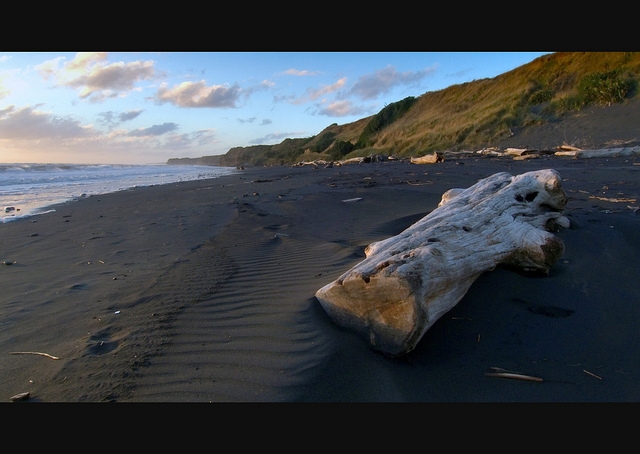
New Plymouth is the largest metropolitan area in Taranaki, a region that is world renowned for its pristine black sands and fantastic fishing and surfing. The sands are black due to a large concentration of iron and believe it or not, an Australian company wants to come in and dig up the seabeds to mine for iron to sell to China. And our current National government wants to give them a $15 million research and development grant to help them do it.

Taranaki submitted more than 4,000 written submission opposing seabed mining, and some of us followed up with an oral submission. The New Zealand Environmental Protection Agency held hearings in New Plymouth today. This was my oral submission:

I’m a 10 year resident of Taranaki and a naturalised New Zealand citizen. I’m also a taxpayer and a ratepayer.* I’m here today because I’m really worried about the effect seabed sand mining will have on my community. Especially after watching the destructive effect caused by the explosion of fracking wells across our region.

The people of Taranaki have been fighting seabed mining for nearly a decade. The coalition opposing seabed mining makes for some pretty unlikely bedfellows and includes environmentalists and sustainability advocates, surfers, commercial fishermen, tourism operators and ratepayers.

We are all concerned about the negative environmental consequences I mention in my written submission. We are concerned that Trans Tasman Resources have no proven track record with this type of operation. Because the technology being proposed has never been done anywhere in the world, there is no certainty over short and long term impacts. And we’re fed up with being used as guinea pigs by foreign corporations.

Many people in Taranaki worry that their livelihoods will be affected by sand mining, especially fishermen, surfers and tourism operators. One thing we know for sure is that the sediment plume created by sand mining will negatively impact microplankton that are vital to the food chain for all marine life.

Surfers – surfing is a business in Taranaki and not just a recreational pursuit – are concerned that seabed mining will alter the architecture of Taranaki’s renowned wave swells that are important tourist attraction.

Ratepayers are tired of foreign corporations promising us that they will bring new jobs and wealth to our community. But once they set up operation we find out that the jobs are temporary jobs that are mostly taken by people from somewhere else and all the wealth ends up overseas or in Auckland. And the community as a whole ends up poorer, as we lose our small businesses, our property values plummet and our rates increase to pay for the new infrastructure we have to build to accommodate overseas corporations.

There is a very strong environmental community in Taranaki which is very concerned about two endangered species resident off our coast: the Maui Dolphin and the Blue Whale. These two species are on the verge of being wiped out. Disrupting the food chain that supports them could be the event that tips them over.

We’re also really tired of being a sacrifice zone at the mercy of foreign loot and pollute corporations.

We believe it’s wrong to ask us to sacrifice our small businesses and quality of life to foreign corporations. And we have absolutely no confidence in foreign corporations regulating themselves. We’ve already been through that scenario with the negative affect on our farming community. You wake up one morning discover that your well water has been contaminated or your kids are getting sick from the constant noise or fumes and find that you can’t get insurance on your land and you can’t sell it.

You go to your district and regional council for help and suddenly you discover there’s no regulatory regime to monitor these foreign corporations. And no one to make them assume liability for any damage they cause.

Unlike other industrialized countries, in New Zealand foreign corporations are left to regulate themselves and people victimized by them are out of luck. Groups such as Kiwis Against Seabed Mining are denied funding to get expert advice to scrutinize and oppose TTR’s application under the New Exclusive Economic Zone and Continental Shelf Act, while the National Government promises TTR a $15 million research and development grant if the project goes ahead.

We feel there’s something terribly wrong with the government’s priorities. They should be supporting healthy vibrant local economies and not foreign corporations at the expense of New Zealand residents.

*In New Zealand property taxes are referred to as “rates.”


photo credit: mpeacey via photopin cc

How the US Lost Out to Spain in Concentrating Solar Power

concentrating solar power

Renewable energy is a multibilion dollar global industry. One in which the US has fallen rapidly behind. Instead of using his presidency to build a world class renewable energy industry, like Germany, Spain, Italy or China (the world’s leading exporter of  PVC solar panels), Obama has pissed away his six years in office pimping dangerous and environmental destructive practices like fracking and deep sea oil drilling.

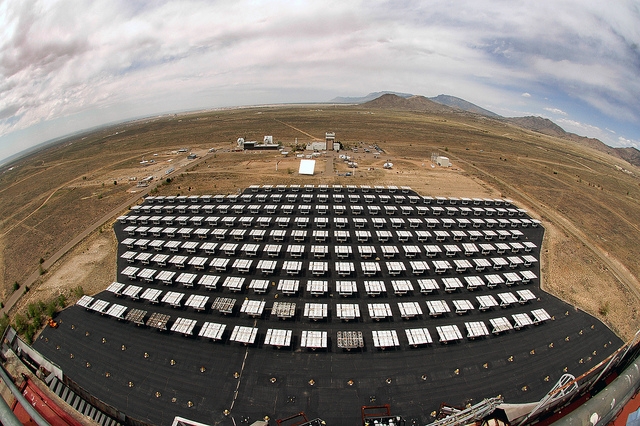
Concentrating solar power, aka Solar Thermal Energy (STE) is a technology that receives scant attention in the US, even in environmental circles. CSP systems use mirrors or lenses to concentrate a large area of sunlight, or solar thermal energy, onto a small area. Electrical power is produced when the concentrated light is converted to heat, which drives a heat engine (usually a steam turbine) connected to an electrical power generator.

The Italian inventor Giovanni Francia designed and built the first concentrating solar plant near Genoa, which first went on-line in 1968. In 1981 the 10 megawatt (MW) Solar One power tower began operation in the Mojave Desert in Southern California. The nearby Solar Energy Generating Systems (SEGS), consisting of nine solar plants with a total of 254 MW generation capacity, went on-line in 1984.

How Spain Became the World Leader in CSP

According to Solar Server, despite a worsening economic crisis, austerity cuts, street protests and general strikes,  Spain met a whopping 42% of its 2013 electricity needs through renewable power generation.

26% of Spain’s electricity comes from solar and wind generation and 16% from hydrogeneration. Globally, Spain has the third highest percentage of solar electricity generation (following Germany and Italy), and the highest percentage of CSP electricity generation.

The main advantage of CSP over rooftop photovoltaic cell (PVC) solar generation is the ability of CSP to generate a load large enough to power a grid. It also has the advantage of providing cheap and efficient thermal (i.e. heat) energy storage, which means it can produce electricity continuously night or day, especially during peak demand periods (summer evening hours or winter mornings).

In 2007 Spain installed Europe’s first commercial concentrating solar power plant, which generates a 11 MW load, near Seville. By 2010, they had surpassed the US as the world leader in CSP production. By October 2011, an additional 420 MW had gone into operation, with an additional 2500 MW anticipated by the end of 2013.

According to the Department of Energy, the US has a current CSP load capacity of 800 MW, with four new plants scheduled to come online in 2014.

Economic Benefits of CSP

In October 2011 the Spanish Association of the Solar Thermal Industry commissioned Deloite, one of the Big Four international financial powerhouses to analyze the economic viability of Spain’s CSP industry. According to the Deloitte report, Macroeconomic Impact of the Solar Thermal Electricity Industry in Spain, the total contribution of the CSP industry to Spain’s 2010 GDP was 1.6 billion Euros.

More importantly, the number of workers employed came to 23,844 in 2010. Many of the jobs created relate to the export of parabolic mirrors and other CSP technology and expertise to the rest of the world.

The five years Spain has spent refining CSP technology has made them the unquestioned leader in the Concentrating Solar Power Alliance. The CSPA is an international industry lobby group formed in March 2012 to to promote the benefits of CSP, specifically to US lawmakers, regulators, utilities and grid operators. With America’s insatiable energy needs, the US is clearly the market they need to penetrate.

Given the iron control the fossil fuel industry exerts over the Congress, White House and media, they have their work cut out for them.

photo credit: SandiaLabs via photopin cc