The Revolutionary Mud House Movement

First Earth: Uncompromising Ecological Architecture

Directed by David Sheen (2010)

Film Review

First Earth is about the growing movement to build homes from wood rather than word or concrete. The film is divided into 12 segments, providing an intriguing glimpse into the 50% of the world who already live or work in mud structures. A growing number of third world leaders are highly critical of industrial society’s efforts to colonize them by destroying their cultures and dragging them into a cash economy.

Part 1 Intro Any civilization that continually consumes its non-renewable resources will eventually destroy the land base that supports it. According to the US Department of Energy, wood and concrete buildings consume 40% of total global energy and 40% of the raw materials the world consumers. In North America, 75% of the trees felled are used in construction.

Ravaging our forests in this way is responsible for approximately 200 species extinctions every day. Replanting trees is ineffective in preventing extinctions because it doesn’t replace the delicate forest ecosystems which have been destroyed.

Part 2 African Earth visits a Ghanaian village where every member knows how to build their own house from free locally sourced materials.

Part 3 American Earth explores the history of Pueblo architecture, based on adobe bricks and plaster, and the US permaculture movement, which is studying and teaching how to build homes out of cob.*

Part 4 Why Earth argues that cheap energy has allowed westerners to move building materials long distances. Building with locally sourced mud is far more sustainable, as it requires no fossil fuel energy and produces no end of life waste. Mud is also an ideal (free) insulator for homes relying on passive solar heating.

Part 5 Empowering Earth describes the history of the cob building movement, which started in Oregon and now offers courses across North America.

Part 6 Another Earth is Possible discusses the ins and outs of obtaining building permits and mortgages for a cob home.

Part 7 European Earth describes the spread of the cob movement to the UK.

Part 8 Arabian Earth describes the long history of earth building in Yemen, which uses mud bricks to construct high rise buildings and has mud brick structures standing that pre-date Islam (600 AD).

Part 9 Urban Earth explores how the earth building movement and similar experiments in sustainability are helping Portland residents improve civic engagement and regain their sense of community.

Part 10 Inner City Earth explores how African American activists in Oakland are fighting gentrification by engaging community members in earth building projects.

Part 11 International Earth is about bringing the cob movement to Thailand, where it’s reducing local villagers’ reliance on cement. The move 30 years ago to cement (from traditional bamboo and thatch) has caused a massive debt crisis in many areas of the country. Thailand now has 18 earth building centers teaching around 600 people a month how to build homes out of free, locally sourced mud.

Part 12: The Future of Earth – epilogue.


*Cob is a natural building material made of subsoil, water and some kind of fibrous material (usually straw)
Science Guy Bill Nye’s Global Meltdown

The Five Changes of Climate Grief

National Geographic (2015)

Film Review

The Five Changes of Climate Grief is a humorous documentary in which Arnold Schwarzenegger plays a psychiatrist and Bill Nye the Science Guy plays himself as the latter grapples with climate denial (not the kind Exxon pays for but the personal kind all of us experience).

The main premise of the film is that all of us experience some degree of grief in confronting the enormity of the climate crisis. Thus all of us must work through the five stages of grief – denial, anger, bargaining, depression and acceptance – as we collectively struggle to find a solution.

The video has some great footage of the ecological devastation caused by Canadian tar sands mining and processing , as well as beach front properties on the Florida coast that are already uninhabitable due to rising sea levels.

I was delighted to see the filmmakers expose carbon trading for the corrupt corporate-driven scam it is.  I was also pleasantly surprised to see that most states (including Oklahoma and Alaska) have plans in place to achieve 100% fossil-free energy production by 2050.

Parts of the documentary I objected to were the heavy promotion of electric vehicles (we can only produce sufficient renewable electricity for very wealthy people to own them) and the promotion of Guy McPherson as an expert in climate science. Recently McPherson, whose science background is in ecology, natural resources and evolutionary biology, has been making claims that catastrophic climate feedback loops will cause human extinction within the next six months.

The Dangers of Policy-Based Climate Science

Climate Change: Triumph and Tragedy in Paris

Kevin Anderson (2016)

In this presentation, Professor Kevin Anderson carefully dissects a number of the conclusions reached at the Paris COP21 climate change conference in December 2015. Anderson is particularly critical of what he refers to as “policy based science.” He also makes an urgent case for scientists to ignore “vested interests” if there’s to be any chance of preventing catastrophic climate change.

Despite all the hype about the COP21 agreement limiting warming to 1.5 degrees Centigrade, a close look at the math reveals all the emission reduction pledges add up to 3.5 degrees of warming (which is incompatible with human civilization).

According to Anderson, the major flaws of the Paris agreement are its reliance on carbon sequestration, an extremely expensive technology that doesn’t even exist yet; its failure to monitor carbon emissions produced by aviation and global shipping; and its failure to call for deep cuts in energy demand.

He also dismisses the fantasy of “green growth” as a public relations exercise. It will require decades to ramp up renewable energy production to support the lifestyles of the 10% of the population who produce 50% of the emissions. By this point,  total atmospheric CO2 will be too high to prevent catastrophic global warming.

Anderson maintains it’s too late to limit global warming to 1.5 degrees (Centigrade) and that we only have a 33% chance of limiting it to 2.0 degrees – provided the developed world cuts energy use by 10% per year for the next seven years.

He calls for a total moratorium on fossil fuel mining and airport expansion, government programs to make homes energy efficient, electrification of all public car fleets and progressive metering tariffs on all CO2 emissions, including aviation, shipping and agriculture.


Northwest Passage: Nations Already Squabbling over Ice-Free Arctic

Inside Story – How Will the Northwest Passage Influence Global Trade and Economy

Al Jazeera (2016)

Film Review

This Al Jazeera documentary is about the melting of the Arctic ice cap and its effect on international trade. Shipping through the Northwest Passage, which is still limited to summer months, first began in 2008. By 2025, the Arctic is predicted to be ice free every summer. China, the world’s largest exporter, has a particular interest in the Northwest Passage, as it reduces shipping times to Europe and North America by 30%.

Canada, claiming the Northwest Passage as territorial waters, is challenging China’s right to access this trade route. Thus far, the US is siding with China, asserting the Arctic Ocean is an international waterway. At present Denmark, Finland, Norway, Sweden, Russia, Iceland and Canada have claims over the Arctic Circle under the UN Law of the Sea treaty. Owing to the US refusal to ratify the treaty, Alaska (eg the US) has no claim to this waterway.

In addition to the Northwest Passage, there is a second passage north of Russia and Norway called the Northern Sea Route. The Polar Code goes into effect next year, with mandatory structural requirements for ships traversing the Arctic Circle.

Survival in Chernobyl’s Exclusion Zone

babushkas

The Babushkas of Chernobyl

Al Jazeera (2016)

Film Review

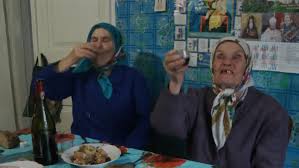
To celebrate the 30th anniversary of the nuclear accident at Chernobyl, Al Jazeera has made this eye opening documentary about 100 elderly “babushkas” who defied authorities and returned to their farms in the Chernobyl exclusion zone. Most of these women live independently, surviving off subsistence farming. However they meet up for birthdays and other celebrations, to sing and down plenty of vodka.

Formerly they all received pension checks from the Ukrainian government – delivery has become less reliable with the recent civil war.

Aside from the “babushkas,” a number of researchers, soldiers and administrators work in the exclusion zone. For health reasons, they are limited to 15 days a month and forbidden to eat food or drink water from the exclusion zone. Both are contaminated with radioactive cesium, which is absorbed into muscle, and strontium, which is absorbed into bone. People are also discouraged from entering the exclusion zone in the presence of heavy winds – dust containing uranium and plutonium can be deadly when inhaled.

The “babushkas,” who are irresistible research subjects, are visited regularly by Ukrainian soldiers, who measure the amount of radiation in their cottages, water and foodstuffs. One of them developed thyroid cancer from radioactive iodine, the first radionucleotide released during a nuclear explosion. Since her thyroid was removed in  1986, her health has been fine.

The video can’t be embedded but can be viewed free at

The Babushkas of Chernobyl


Bristol Substitutes Vinegar for Cancer-Causing Roundup

roundup

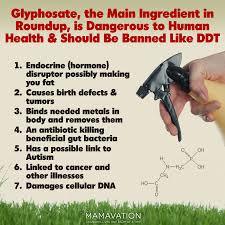
In response to growing local concern about a World Health Organization (WHO) warning that glyphosate (aka Roundup) probably causes cancer, the city of Bristol has begun using strong vinegar to kill weeds in streets and parks.

The Bristol City Council decision to substitute vinegar for Roundup is part of a year long trial.

Earlier this month the European Parliament voted to  ban  most uses of glyphosate – particularly “in or close to” public parks, playgrounds and gardens.”

Horticultural vinegar, which contains more acetic acid than regular malt vinegar, can be used as an inexpensive weed treatment. Vinegar-based herbicides will harm any plant they comes into contact with so is best used on patios and driveways rather than lawns. It will only damage the top of the plant, leaving the roots intact.

The trial has been met with mixed reactions in Bristol.   Some residents hate the stench. Others point to European communities who have successfully used vinegar for years. Pesticide Safe Bristol Alliance says it’s ‘bizarre’ the council has opted for vinegar when safer, modern technologies are available.

A Metro online poll is running 55% to 45% in favor of the vinegar trial.

On May 10, the New Plymouth Green Party will present a petition to New Plymouth District Council to end the district’s use of Roundup in our city parks and streets.

Have your say:

The Coming Collapse of Our Oceans, Atmosphere and Global Food Chain

Seaspiracy: What You Should Know About Fish, the Ocean and More

Directed by Ali Tabrizi (2015)

Film Review

The world’s oceans, which are essential to the biosphere that supports human life (oceanic phytoplankton produce 80% of atmospheric oxygen) are in grave crisis. This short documentary raises the alarm about numerous oceanic life forms facing rapid extinction. The filmmakers identify two main causes: ocean acidification to to elevated CO2 concentrations and over fishing.

Most of the film focuses on the collapse of important fish stocks due to wasteful and destructive technologies, such as bottom trawling, and the buildup of toxic chemicals such as mercury and PCBs (polychlorinated biphenyls).

I was very surprised to learn that only a minority of the fish caught in commercial nets wind up on the dinner plate. Most are either discarded (dead) as “bycatch” or ground up to make fish pellets for factory farmed livestock and shrimp.

The solution proposed by the filmmakers is for everyone to become vegan. Unfortunately they don’t explore the more realistic option of dismantling capitalism.

How Urban Sprawl is Destroying the Planet

Sprawling from Grace

Directed by David Edwards (2008)

Film Review

Sprawling From Grace relates how the American dream led the US to become the only country in the world in which city planning is based around the automobile. As of 2008 when the documentary was made, the US was the only country in the world without a viable public transportation system.

Americans pay an enormous price for urban sprawl, which includes decaying urban infrastructure (cities ceased to maintain bridges, tunnels, highways, roads and public water systems long before Minnesota’s I-35 bridge collapse in 2007), air pollution, the most expensive transportation system in the world, growing climate disruption (cars are responsible for 30% of carbon emissions), depletion of scarce fossil fuel resources, growing involvement in resource-based wars in the Middle East and worsening income inequality.

The filmmakers demonstrate how a minimum level of population density is essential to make public transportation cost effective (ie a train or bus route is only cost effective is you have enough users traveling from a given location at the same time). Urban development policies that allow unlimited development along freeways lead to extremely low density, as well as higher per capita costs for other services, such as water, sewer, police and fire service, schools and hospitals.

This documentary gave me a new understanding of the role of urban sprawl in increasing inequality in the US. The absence of reliable public transportation forces low income workers to buy and maintain cars to get to work – an expense which in some cases can consume 40% of their income.

I was also really impressed by the number of US mayors who in 2008 were already working to reverse urban sprawl by establishing urban growth boundaries, investing in public and active transport and engaging in urban planning that prioritizes human beings over cars.

I particularly like the emphasis on “urban villages” in which people can access services such as banks, schools, medical services and libraries without using their cars.


Resisting Monsanto’s Occupation of Hawaii

Aina: That Which Feeds Us

Living Ancestors (2015)

Film Review

Aina is a short documentary about the Waipa Foundation, an organization run by native Hawaiians to restore traditional farming practices to Kauai (Hawaii). The group’s primary focus is to encourage a return to traditional organic farming practices. At the moment their main goal is the taro plant, a traditional staple, by giving the poi (the underground corm of the taro plant) away free to community members. They’re also working to reduce obesity by encouraging a return to the traditional diet (fish, pork, greens and poi).

Prior to seeing the film, I had no idea the extent to which the Hawaiian islands have been “occupied” by Monsanto and other multinational corporations engaged in GMO research. One of the group’s biggest concerns is the massive amount of Roundup, a known carcinogen and neurotoxin, sprayed adjacent to schools. In one highly publicized incident, 50 children had to be hospitalized following exposure to Roundup.

The Waipa Foundation is intent on returning Kauai (Hawaii) to 100% sustainability in food and energy production. With a present population of 1.2 million, the state imports 90% of its food and energy. One hundred years ago, one million Hawaiians lived in abundance without importing anything.


The Health Benefits of Fermented Foods

wild fermentation

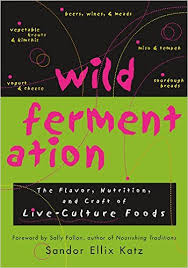
Wild Fermentation: The Flavor, Nutrition, and Craft of Live-Culture Foods

by Sandor Katz

Chelsea Green (2003)

Book Review

Free PDF

Wild Fermentation is an encyclopedia of do-it-yourself fermentation. Sandor Katz first learned of the health benefits of fermentation in his search for alternative AIDS treatments. Published in 2003, this book foreshadowed recent breakthrough research into the importance of the microbiome* in digestion, mental stability, neuroendocrine function and immunity.

According to Katz, it was Russian immunologist and 1908 Nobel laureate Ilya Mechnikov who first observed – while studying yogurt eating centenarians** – that lactobacilli (the bacteria produced by fermentation) “postpone and ameliorate” old age.

The first half of the book is a historical overview of the art of fermentation. Mead (an alcoholic honey drink) is the earliest example of deliberate fermentation, dating back more than 12,000 years. Following the agricultural revolution, human beings also used fermentation to make other alcoholic drinks, as well as preserving milk and grains. It later came to be used in bread making and chocolate, coffee and tea production.

Prior to the advent of refrigeration (in the early 1900s), all households produced and consumed fermented foods as part of their diet. Katz (and many health practitioners) believe the sudden increase in chronic health conditions (cancer, obesity, diabetes, allergies, asthma, autoimmune disease, autism, etc) relates to a loss of fermented foods in the Western diet. This, in combination, with overuse of antibiotics (and heavy exposure to herbicides like Roundup) causes major a major loss of healthy intestinal bacteria for many of us.

The second half of the book is devoted to recipes for home fermented foods. According to Katz, any food can be fermented and the distinction between “fermented” and “rotten” is purely subjective and cultural. He gives the example the Swedish delicacy lutefisk and Chinese 100-year-old eggs, which are fermented in horse urine for two months.

The video below is from one of Katz’s fermentation workshops: