New Evidence in JFK Assassination

farewell to justice

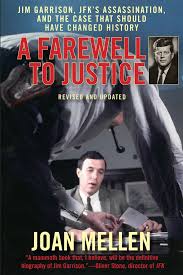
A Farewell to Justice: Jim Garrison, JFK’s Assassination, and the Case that Should Have Changed History

by Joan Mellen (2013 Skyhorse Publishing)

Book Review

 A Farewell to Justice is an exhaustive review of the only arrest and trial stemming from the 1963 murder of President John F Kennedy. The late New Orleans district attorney Jim Garrison describes the 1967 grand jury investigation and prosecution of long time CIA officer Clay Shaw in his 1988 bestseller On the Trail of the Assassins. In 1992, the public outcry prompted by JFK, Oliver Stone’s screen version, led Congress to pass the JFK Records Collection Act. A Farewell to Justice uses classified documents released under this Act to update Garrison’s original case against Shaw and other CIA co-conspirators.

A revised version of the 2005 edition, the new 647 page A Farewell to Justice is a virtual encyclopedia of the JFK assassination. The book leaves no doubt that high level CIA officials authorized the murder and provides a complete list of the cast of characters who played roles in the assassination and/or cover up.

The new edition makes use of documents Mellen obtainedvia a 2011 Freedom of Information (FOIA) request and personal  interviews with surviving assassination witnesses. The most startling new evidence relates to Robert Kennedy’s systematic efforts to obstruct both the Warren Commission investigation and Jim Garrison’s efforts to identify the real culprits behind his brother’s murder.

Oswald’s FBI Pay Slips

According to Mellen, it was Warren Commission member Hale Boggs who first encouraged Garrison to investigate the assassination. Boggs himself first became concerned about government involvement in the conspiracy when the Warren Commission examined Oswald’s FBI pay slips in January 1964.

As well as providing a detailed outline of the entire grand jury investigation, Mellen also explores the role the FBI, CIA and Robert Kennedy played in sabotaging it. In addition to murdering and threatening assassination witnesses, the FBI/CIA wiretapped Garrison’s office, infiltrated his investigation team, stole files, fabricated witness statements, blocked subpoenas and the extradition of witnesses from other states and used CIA moles at the TV networks and major newspapers and magazines to portray Garrison as a self-centered, publicity mad lunatic.

Garrison initially intended to try Dave Ferrie, who he believed recruited Oswald to US intelligence as a high school student when he belonged to Ferrie’s Civil Air Patrol squadron. Garrison had witness testimony linking Ferrie, a known CIA pilot, to both Oswald and anti-Castro Cubans the CIA was training at a secret camp north of Lake Pontchartrain. Many of the same Cubans, training for roles in a CIA plot to assassinate Fidel Castro, would play parallel roles in Kennedy’s murder. When Ferrie suddenly turned up dead, Garrison moved to arrest Clay Shaw, based on witness statements linking Shaw to Oswald, Ferrie and the secret training facility.

Jurors Believe Government Played Some Role

Although Shaw was ultimately acquitted, Garrison succeeded in convincing the jury that the government played some role in the assassination. As they later told assassination researcher Mark Lane, without proof Shaw worked for the CIA, they felt there was reasonable doubt that he participated. His CIA personnel records wouldn’t be released until the mid-seventies.

Garrison would continue investigating the JFK assassination until his death. He made his findings available to the Church Committee (which concluded in 1976 that Oswald was a CIA operative engaged in counterintelligence) and the 1978 House Select Committee on Assassinations (which concluded there was more than one shooter and that Shaw was one of the high level planners).

According to Mellen, the CIA decided in the early 1970s to sacrifice Shaw (who would die in 1974 of lung cancer) as a limited hangout* by releasing his CIA employment records to HSCA. They reveal that Shaw worked for both the Domestic Operations Division and Clandestine Services between 1949 and 1972 and had strong links to PERMINDEX a shadowy CIA front that financed assassination attempts against French president Charles De Gaulle, as well as Kennedy.

Why Robert Kennedy Obstructed the Investigation

The classified documents released in Mellen’s FOIA suit establish that Attorney General Robert Kennedy was personally running the CIA operation to assassinate Castro and well aware of Oswald’s links to the operation. In 1961 Kennedy was directly responsible for the demotion, harassment and persecution of a State Department security officer named Otto Otepka for investigating Oswald’s potential security risk as a former Soviet defector. Kennedy also ordered Oswald’s release following his arrest for firing shots at General Edwin Walker in April 1963.

In the summer of 1963 several Cuban exiles, who were deeply devoted to Bobby, informed him of Oswald’s involvement in a plot to assassinate his brother. According to Mellen, who interviewed one of them, Kennedy claimed that Oswald wasn’t a threat because he was on the payroll of the New Orleans FBI field office and they were monitoring him.

According to Mellen, the younger Kennedy played a direct role, through his investigator Walter Sheridan, in sabotaging Kennedy’s autopsy, the Warren Commission investigation and Garrison’s investigation. Following Bobby’s assassination in 1968, Sheridan continued to protect his  interests by obstructing the release of documents for the 1978 HSCA investigation.

Mellen’s hypothesizes that Bobby’s interest and intervention on behalf of Oswald indirectly implicated him in the assassination conspiracy. It would have destroyed his political career for any of his prior links to Oswald to become public.

*Limited hangout is intelligence jargon for a form of propaganda in which a selected portion of a criminal conspiracy is revealed to protect the main perpetrators.
Typical US Hypocrisy Over Russian Veto

security council

US Veto History Shows Flagrant Disregard for International Law

The western media is roundly condemning Russia for vetoing a Security Council resolution condemning tomorrow’s referendum on Crimean self-determination as illegal under international law. The US, as usual, is being extremely selective in their support for international law. Their own veto history reveals that they have vetoed 41 resolutions demanding that Israel respect international law in occupied Palestine.

According Samantha Power, US ambassador to the UN, “Russia has used its veto as an accomplice to unlawful military incursion.”

How ironic. Substitute “US” for “Russia,” and you could be describing US behavior as regards the Israeli occupation of Palestine.

The 41 US vetoes include numerous resolutions condemning the construction of Israeli settlements in occupied Palestine, which are illegal under the Fourth Geneva Convention. The Obama administration last blocked Security Council efforts to force Israel to end settlement construction in February 18, 2011. You have to question the President’s sincerity in the current Middle East peace process. For peace negotiations to be fair, surely they must start with an absolute requirement that Israel abide by international law.

Other resolutions condemn Israeli for massive human rights violations against Palestinian civilians, their illegal war of aggression against Lebanon and Gaza, and their illegal expropriation of land in the West Bank, the Golan Heights and East Jerusalem. The US also vetoed a call for the UN to investigate Israel’s role in the murder of UN Food Program workers and countless Palestinian civilians

Any of the five permanent members of the Security Council (US, UK, Britain, France, Russia, China) have the power to veto a Security Council resolution. There have been 264 vetoes of Security Council resolutions. Approximately half were exercised by the Soviets prior to 1965, in most cases to oppose the admission of new pro-Western states to the UN.

Since 1972, the US has vetoed more Security Council resolutions than any other permanent member. In addition to vetoing resolutions on Palestine, it has vetoed fourteen resolutions condemning South Africa’s apartheid regime, one each condemning illegal US military aggression against Nicaragua and Panama and one condemning the illegal British war in the Falklands.

photo credit: jdlasica via photopin cc

Originally published in  Veterans Today

Greedy Lying Bastards

greedy lying bastards

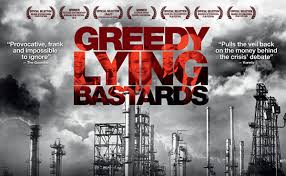
Greedy Lying Bastards

 Craig Rosebraugh 2013

 Film Review

The subject of the new documentary Greedy Lying Bastards is the multimillion dollar climate denial industry, which filmmaker Craig Rosenbraugh blames for the world’s failure to agree an international climate treaty. The title roles are played by Rex Tillerson, CEO of Exxon Mobil, David and Charles Koch, who run Koch Energy, APCO, the same public relations company responsible for the phoney research and spin portraying smoking as perfectly safe, and Bonner and Associates, the astroturf* specialists who started phoney climate denial groups and forged letters to Congress from fictitious senior citizens.

As APCO themselves admit, they’re in the business of selling doubt. It only takes three seconds for a paid lobbyist to make an assertion denying any link between burning fossil fuels and extreme weather events. It takes fifteen minutes for a climate scientist to lay out the evidence disputing the assertion, especially when the corporate media neglects to disclose their so-called expert is a paid lobbyist. The great majority of climate deniers paraded by the media aren’t even scientists, much less climate scientists.

Merchants of Doubt: How a Handful of Scientists Obscured the Truth on Issues from Tobacco Smoke to Global Warming (2011) by Naomi Oreskes and Erik Conway expands further on the science of marketing doubt.

Greedy Lying Bastards details how the release of so-called Climategate emails (which were doctored to suggest climate scientists had fabricated research) was deliberately timed to sabotage the 2009 Copenhagen climate conference. The principal aim of the conference was to draw up a new international climate treaty to replace the Kyoto Accord when it expired in 2012.

Thanks to Climategate, Kyoto expired without being replaced by a new treaty. The corporate media chooses not to report on the ten independent investigations that cleared the so-called Climategate scientists of any wrongdoing.

The film also highlights the 2010 Citizens United decision (which effectively decriminalized illegal corporate donations the Koch brothers had made to Republican candidates) and likely judicial misconduct on the part of Clarence Thomas. Thomas should have recused himself from the Citizens United decision. He had a conflict of interest, as the Koch brothers paid for him to attend a four day retreat of the (Koch brother funded)  Federalist Society in 2008.

The film has some profoundly moving scenes of the personal misery caused by climate related catastrophes – specifically wild fires, super storms and rising sea levels that are swamping Pacific islands. And a priceless cameo of David Koch discussing his views on climate change.

*The late senator Lloyd Bentson is credited with coining the term “astroturf lobbying” to describe the synthetic grassroots movements manufactured by public relations firms.

The New Plymouth Green Party will be hosting the New Zealand premier of Greedy Lying Bastards some time in June. A digital version can be rented for $3.99 from Amazon

None But Ourselves Can Free Our Minds

protest

Emancipate yourselves from mental slavery, none but ourselves can free our minds – Bob Marley, “Redemption Song”

Bob Marley tells us to emancipate ourselves from mental slavery, and it appears people are finally taking his advice. Throughout the industrial world, young people especially are refusing to be sucked in by the constant individualistic pro-consumption messaging. It turns out this ideological strait jacket (see Public Relations, Disinformation and Social Control) we all wear to some extent is incredibly superficial. Given the right circumstances, it totally unravels. The corporate elite is fully aware of the global awakening that is undermining their ability to control us ideologically. In my view, this explains their growing reliance on the military and militarized police to suppress dissent.

Why Now?

One of the most valuable lessons I learned from emigrating to New Zealand concerns my own indoctrination with American individualist, exceptionalist ideology. When people are exposed to different cultures, ethnicities and philosophies – through education, travel or community engagement – it doesn’t take long to realize that all the pro-capitalist jingoism that’s been rammed down our throats is nothing but a pack of lies.

Intense personal crisis can also lead people to reject their basic ideological programming. A continuing economic crisis leaving millions struggling with joblessness, homeless, depression, suicide ideation and marital breakdown has been a major force leading people to reject the pro-corporate ideology that’s been drummed into them.

Civic engagement and community building activities that Susan Clark and Woden Teachout write about in Slow Democracy: Rediscovering Community and Bringing Decision Making Back Home can have a similar effect. In Sacred Economics, Charles Eisenstein writes of a profound inner emptiness that can never be satisfied – an emptiness stemming from the breakdown of social networks human beings have relied on for most of our 250,000 year existence. People respond to pro-consumption messaging in a desperate attempt to fill this void.

The global relocalization movement Clark and Teachout refer to directly addresses this emptiness by working to rebuild neighborhood and community networks. Here in New Plymouth, it has been totally awe inspiring to watch the natural high people experience from engaging in group effort for the first time. In case after case, the biological reward for collaborative effort far exceeds the fleeting pleasure of purchasing yet another consumer product, no matter how expensive or glamorous.

New Plymouth’s Relocalization Movement

Here in New Plymouth, a loosely knit Community Circle of 50 or so “active citizens” has taken up the challenge of rebuilding our neighborhood and community networks and civic organizations. Working through a variety of local groups, our projects range from organizing neighborhood barbecues and street parties, to simple street reclaiming projects (to reduce car traffic) to assisting specific neighborhoods in building Superhoods by setting up food, tool-sharing and cooperative childcare schemes and neighborhood crisis management plans (for emergencies such as earthquake, tsunami, floods, and flu epidemics) preparedness.

The Superhood neighborhood rebuild on Pendarves Street received financial support from New Plymouth District Council (thanks to a government grant NPDC and stakeholder groups applied for to increase walking and cycle). In another Superhood, like-minded neighbors actively recruit friends and acquaintances to purchase empty homes as they go up for sale.

Below an Australian example of neighbors working together to build a Superhood:

photo credit: danny.hammontree via photopin cc

***

read an ebook week

In celebration of read an ebook week, there are special offers on all my ebooks (in all formats) this week: they are free.

This includes my new novel A Rebel Comes of Age and my memoir The Most Revolutionary Act: Memoir of an American Refugee

Offer ends Sat. Mar 8.

Public Relations, Disinformation and Social Control

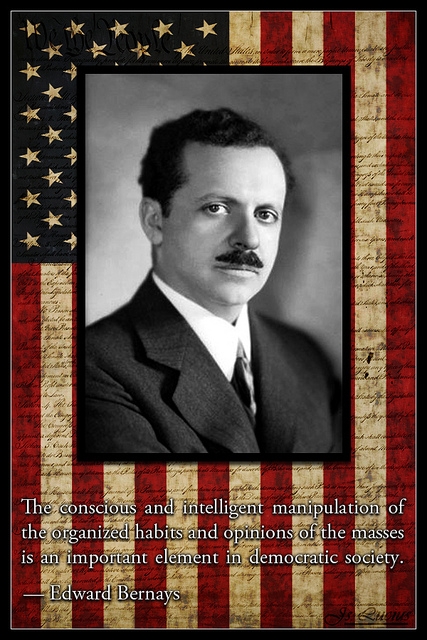
bernaysEdward Bernays

Emancipate yourselves from mental slavery, none but ourselves can free our minds – Bob Marley, “Redemption Song”

Public relations is the polite term for the systematic dissemination of propaganda and disinformation by corporations and the corporate-controlled state. The crude psychological manipulation in most advertising, which appeals to deep insecurities, is ridiculously obvious. TV viewers are told constantly that they’re lonely and sexually frustrated, as well as too old, too ugly and too fat, to pressure them to buy products they neither want nor need.

People are less likely to recognize that all mass media (e.g. movies, TV programming, newspapers, magazines, etc) employs subtle psychological messaging that shapes shape the way we view ourselves, other people and the world at large.

To be effective, any movement seeking lasting political change must address the ideological strait jacket all of us wear to some extent. The good new is that the pro-capitalist indoctrination we’re meant to live by is surprisingly superficial. Under the right circumstances, it can totally unravel. At this very moment young people throughout the industrialized world are waking up and refusing to be taken in by it.

Edward Bernays: Father of Public Relations

Thanks to Edward Bernays, known as the father of public relations, an artificial capitalist ideology has emerged that enables the corporate state to use psychological manipulation, rather than brute force, to control us. This competitive, individualistic pro-consumption ideology is totally at odds with biological programming that has hardwired us to be social animals.*

Competitive individualism holds that all human achievement results from superior individual effort, which directly contradicts historical evidence revealing that all major inventions and discoveries stem from cooperation and collaboration. We’re also conditioned to believe that concepts such as class, society and community are nonexistent – that all social problems, such as poverty, joblessness and homelessness stem from individual failings. Because America is the richest, cleanest, fairest country in the world, any problems we experience must be of own doing.

We are simultaneously bombarded with messaging sowing distrust between young and old, between men and women, between different ethnicities and between straight and gay. Messaging that encourages us to blame convenient scapegoats for economic and social problems – Muslims, feminists, welfare queens, Jews and red necks. Instead of the true culprit: a corporate elite that’s robbing us blind.

Our Fabricated Lifestyle

After nearly a hundred years this careful mental programming, reinforced by schools, universities and middle class helping professionals, has facilitated the breakdown of family and social networks. A traditional lifestyle centered around close family and community has been replaced by a fabricated lifestyle based on continual consumption, low wages and debt-slavery, as people work ever longer hours to pay off debt.

With the breakdown of traditional family and social networks, people must purchase services (e.g. child and senior care, meal preparation, mending, simple repairs) friends and neighbors used to provide for free. Social isolation and loneliness have become epidemic as people struggle to survive in the absence of social connections we’re biologically programmed to seek out.

The PR industry plays on our feelings of emptiness and discontent by trying to sell us yet more products. In Sacred Economics, Charles Eisenstein writes of a profound inner emptiness that can never be satisfied – an emptiness born out of the breakdown of social networks human have relied on for most of our 250,000 year existence.

Taking the Risk Out of Democracy

As the late Australian psychological Alex Carey describes in Taking the Risk Out of Democracy, Woodrow Wilson first hired Bernays in 1914 to convince a strongly anti-war American public that they should commit sons and tax dollars for a European war that had no direct impact on their own lives. His success in selling World War I led Bernays to coin the term public relations and set himself up as a public relations counselor. Among others, his clients would include corporate giants like Standard Oil, General Electric, the American Tobacco Company, United Fruit Company, CBS and Proctor and Gamble. As Carey describes, in 1919 the National Association of Manufacturers hired him to (successfully) reverse strong pro-union sentiment when steel workers struck for the right to bargain collectively.

Bernays published his seminal book Propaganda in 1928. During the 1930s he assisted Alcoa Aluminum in persuading American doctors and dentists that the toxic waste sodium fluoride improved dental health. In the mid to late thirties he was deeply influenced by the work of Hitler’s Propaganda Minister Joseph Goebbels. In 1954 Bernays’s propaganda campaign for the United Fruit Company laid the groundwork for the CIA overthrow of Guatemala’s democratically elected government.

 The Rise of Consumerism

The work of Bernays and his successors would also lead to the rise of American consumerism – the transformation of Americans from active involved citizens to passive consumers. As Betty Friedan describes in the Feminist Mystique, the earliest pro-consumption messages were directed towards women. Working class women have always contributed to household income – if not through formal employment, by renting out rooms, taking in laundry or performing children. Moreover working class families tended to share washing machines, refrigerators, vacuum cleaners and other home appliances when they first came on the market. The PR industry had to discourage this trend to promote sales. They did so be creating a feminine mystique that measured a woman’s femininity by her ability to attract a man wealthy enough to provide her with her very own home appliances. And a color TV, hi-fi stereo and new family car every year.

*Within the human brain, complex neural networks reward us with powerful “feel good” substances, such as endorphins and oxytocin. Thanks to these substances and “mirror neurons” (believed to be the biological basis of empathy), human beings have met their basic needs through close knit social networks for most of their 250,000 year history.

To be continued, with signs our ideological programming is starting to break down.

photo credit: Stéfan via photopin cc

The Failure of Nonviolence

failure of nonviolence

The Failure of Nonviolence: From the Arab Spring to Occupy

 By Peter Gelderloos (2013 Left Bank Books)

Book Review

You occasionally read a totally mind bending book that opens up a whole new world for you. The Failure of Nonviolence by Peter Gelderloos is one of them, owing to its unique evidence-based perspective on both “nonviolent” and “violent” resistance. It differs from Gelderloos’s 2007 How Nonviolence Protects the State in its heavy emphasis on indigenous, minority, and working class resistance. A major feature of the new book is an extensive catalog of “combative” rebellions that the corporate elite has whitewashed out of history.

Owing to wide disagreement as to its meaning, Gelderloos discards the term “violent” in describing actions that involve rioting, sabotage, property damage or self-defense against armed police or military. In comparing and contrasting a list of recent protest actions, he makes a convincing case that combative tactics are far more effective in achieving concrete gains that improve ordinary peoples’ lives. He also explodes the myth that “violent” resistance discourages oppressed people from participating in protest activity. He gives numerous examples showing that working people are far more likely to be drawn into combative actions – mainly because of their effectiveness. The only people alienated by combative tactics are educated liberals, many of whom are “career” activists working for foundation-funded nonprofits.

Gelderloos also highlights countries (e.g., Greece and Spain) which have significantly slowed the advance of neoliberal capitalism via combative resistance. In his view, this explains the negative fiscal position of the Greek and Spanish capitalist class in addressing the global debt crisis. Strong worker resistance to punitive labor reforms and austerity cuts has significantly slowed the transfer of wealth to their corporate elite, as well as the roll-out of fascist security measures.

The Gene Sharp Brand of Nonviolence

Gelderloos begins by defining the term “nonviolent” as the formulaic approach laid out by nonviolent guru Gene Sharp in his 1994 From Dictatorship to Democracy and used extensively in the “color revolutions” in Eastern Europe and elsewhere. This approach focuses exclusively on political, usually electoral, reform. Gelderloos distinguishes between political revolution, which merely overturns the current political infrastructure and replaces it with a new one – and social revolution, which overturns hierarchical political infrastructure and replaces it with a system in which people self-organize and govern themselves.

The nonviolent approach Sharp and his followers prescribe relies heavily on a corporate media strategy to promote their protest activity to large numbers of people. This obviously requires some elite support, as the corporate media consistently ignores genuine anti-corporate protests. As an example, all the nonviolent color revolutions in Eastern Europe enjoyed major support from the State Department, billionaire George Soros and CIA-funded foundations such as the National Endowment for Democracy and the National Republican Institute.

Is Nonviolence Effective?

Gelderloos sets out four criteria to assess the effectiveness of a protest action:

  1. It must seize space for activists to self-organize essential aspects of their lives.
  2. It must spread new ideas that inspire others to resist state power and control.
  3. It must operate independently of elite support.
  4. It must make concrete improvements to the lives of ordinary people.

As examples of strictly nonviolent protest movements, Gelderloos offers the “color” revolutions (see 1 below), the millions-strong global anti-Iraq war protest on February 15, 2003 and 2011 Occupy protests, which were almost exclusively nonviolent (Occupy Oakland being a notable exception).

In all the color revolutions Gelderloos describes, the goal has been strictly limited to replacing dictatorship with democracy and free elections. None attempted to increase economic democracy nor to reduce oppressive work and living conditions. In fact, most of the color revolutions forced their populations to give up important protections to integrate more thoroughly into the cutthroat capitalist economy.

So-called “democracies” such as the US are just as capable as dictatorships of engaging in extrajudicial assassination, torture, and suspension of habeas corpus and other legal protections. However US corporations generally find “democracies” more investment-friendly. Owing to greater transparency, they are less likely to nationalize private industries or arbitrarily change the rules for doing business.

Besides failing to meet any of his criteria, the 2003 anti-Iraq war movement failed to stop the US invasion of Iraq and the 2011 Occupy protests failed to achieve a single lasting gain.

Successful “Combative” Protests

He contrasts these strictly nonviolent  protests with nearly 20 popular uprisings (see 2 below) and two (successful) US prison riots that have incorporated “combative” tactics along with other organizing strategies. Most have been totally censored from the corporate media and history books or whitewashed as so-called “nonviolent” actions (e.g., the corporate media misportrayed both the 1989 Tiananmen Square rebellion and the 2011 Egyptian revolution as nonviolent protests).

The US, more than any other country, uses prison to suppress working class dissent. Most prison struggles employ a diversity of tactics combining work stoppages and legal appeals with property damage, riots and attacks on guards. Nonviolent protest tends to be particularly ineffective in the prison setting. A nonviolent hunger strike usually reflects a situation in which prisoners have so little personal control that the only way to resist is to refuse to eat.

Gelderloos also analyzes a number of historical combative uprisings, pointing out their relative strengths and weaknesses. He devotes particular attention to the Spanish Civil War (a failed working class revolution), the anti-Nazi partisan movements during World War II, combative Indigenous peoples resistance to European colonizers and autonomous liberated zones created in Ukraine, Kronstadt, and Siberia following the Bolshevik Revolution and in the Skinmin Province of Manchuria in pre-World War II China.

Who Are the Pacifists?

He devotes an entire chapter to the major funders and luminaries of the nonviolent movement. Predictably most of the funding comes from George Soros, the Pentagon, the State Department and CIA-funded foundations such as USAID, NED, and NIR. Among other examples, Gelderloos describes the Pentagon running a multi-million dollar campaign to plant stories in Iraqi newspapers to promote “nonviolent” resistance to US occupation.

___________________________________________________________________________________________________

1. Examples of political/regime change color revolutions:
  • Philippines – Yellow Revolution 1983-86
  • Serbia – Bulldozer Revolution 2000
  • Georgia – Rose Revolution 2003
  • Ukraine – Orange Revolution 2004
  • Kyrgyzstan – Tulip Revolution 2005
  • Lebanon – Cedar Revolution 2005
  • Kuwait – Blue Revolution 2005
  • Burma – Saffron Revolution 2007
2. Examples of combative uprisings:
  • 1999 Battle of Seattle – contrary to media whitewashing (I was there), the combative component wasn’t a matter of a few Black Bloc anarchists breaking windows. Numerous “peaceful” marchers joined in destruction of corporate storefronts, looting and throwing rocks at police. Inspired 3rd world WTO delegates to shut down Doha round of WTO negotiations.
  • 1990 Oka Crisis (near Montreal) – in which Mohawk warriors took up arms to stop a golf course expansion on their lands. Successful in defeating the golf course expansion.
  • 1994 Zapitista (Mexico) – armed uprising against NAFTA. Successfully seized space, liberating numerous villages which continue to be run by popular assemblies.
  • 2000 2nd Palestinian Intifada – successful in seizing and defending space, defeating the CIA/Israeli army invasion of Gaza in 2009. Inspired combative insurrections in Tunisia and Egypt.
  • 2001 Kabbylie Black Spring armed protest to liberate Berber territory occupied by Algeria. Successfully seized space to bring back traditional assemblies and reverse erosion of Berber culture. Won increased autonomy of Kabylie, including official recognition of Berber language.
  • 2003-2005 Bolivia Water and Gas Wars against strict water privatization implemented by Bolivian government and Bechtel. Successful in ending years of Bolivian dictatorship, slowing advance of neoliberalism and restoring indigenous autonomy. Received no elite support until 2005 union and political party support elected the movement into government, putting neoliberalism back on track.
  • 2006 Oaxaca (Mexico) Rebellion – coalition of indigenous people, teachers and workers fought police and military and ran Oaxaca by popular assembly for one month. No elite support until assembly taken over by politicians who convinced them not to fight back against the military. Greatly improved quality of life while it lasted.
  • 2006 CPE France – combative (rioting, burning cars, fighting police and occupying public buildings) uprising against new legislation allowing bosses to fire younger workers without cause. Defeated new law.
  • 2008 Athens insurrection – millions-strong armed uprising (consisting of arson attacks on banks and police stations, occupation of vacant lots and buildings to create community gardens, community centers and popular assemblies) triggered by police murder of a teenager. Besides destroying debt and tax records and providing brief period of self-governance, it inspired new cycle of anarchist activity throughout Greece.
  • 2009 Guadalupe General Strike – inspired by poor living standards, especially high cost of living combined with low wages and high unemployment. After three days of rioting, setting fire to cars and businesses and opening fire on the police, demonstrators won an increase of $200 euros per month in the lowest salaries and 19 other demands.
  • 2009 Oscar Grant riots (Oakland) – prompted by police murder of an African American named Oscar Grant. Spontaneous rioting, property damage, looting and shooting back at police. Resulted in first case in California history in which an on-duty police officer was charged with murder. Influenced Occupy Oakland to adopt a diversity of tactics that included combative resistance.
  • 2010 Tunisian revolution – contrary to corporate media white washing, this was a violent uprising in which protestors burned tires and attacked the office of the ruling party. It failed to create any new self-organized spaces. It only received elite support, which pressured Tunisians to accept a purely political solution (i.e. regime change), when local authorities failed to quell popular unrest. Economic tyranny and police abuse/violence remain unaddressed.
  • 2010 15 M Movement and General Strikes (Spain) – millions took part in general strike against austerity measures incorporating sabotage of the transportation infrastructure, blockades, looting, rioting and fighting with police. Established numerous police-free zones (which persisted for months) throughout Spain run by popular assemblies. Occupied numerous hospitals and primary care centers and established urban gardens and collective housing facilities. Prevented privatization of numerous health clinics and inspired anti-capitalist focus of Occupy movement.
  • 2011 Egyptian revolution – combative rebellion (contrary to corporate media claims that it was nonviolent). Protesters burned over 90 police stations and used clubs, rocks and Molotov cocktails to defend themselves against police and government thugs. Set up self-governing assemblies in Tahrir Square and inspired a large number of activists to remain in the streets to fight the repressive Islamic government that replaced Mubarak.
  • 2011 Libyan Civil War – began as spontaneous uprising but quickly transformed into a foreign military intervention. Gelderloos uses Libya to demonstrate why revolutions that wish to end oppressive social relations must never allow military or political revolution to assume precedence.
  • 2012 Quebec student movement – rioting, looting, property damage and fighting back against the police prompted by massive tuition hike. Provided thousands of young people direct experience of self-governing assemblies and successfully spread critiques of debt, austerity and capitalism throughout Canada. Forced government to reverse tuition hike.
  • 2013 Mapuche (indigenous nation occupied by Chile and Argentina) struggle – long history of combative resistance continues to present day. Employs both nonviolent and combative methods, including arson, sabotage against mining and logging companies and armed land occupations. In January 2013 (5th anniversary of unprosecuted police murder of Mapuche teenager) they liberated large tracts of land.

Originally published in Dissident Voice

Horror Film About Nuclear Waste

Into Eternity

Directed by Michael Madsen (2010)

Film Review

Into Eternity is an eerie account of Onkalo, the world’s first permanent nuclear waste repository. So-called “spent” fuel rods from nuclear energy plants remain radioactive for 100,000 years. Most of the radiation that has contaminated northern Japan post-Fukushima is from spent fuel rods being temporarily stored in water pools on the roof of one of the reactors. Becoming exposed following the earthquake and tsunami, the fuel rods caught fire, releasing massive amounts of radiation.

There are an estimated 250,000 – 300,000 tons of nuclear waste lying around in cooling pools in countries that rely on nuclear energy to produce electricity. The scope of the problem is mind boggling. 250,000 tons of highly radioactive material capable of wiping out all living things and contaminating adjacent agricultural lands and future crops for 100,000 years. The amount of waste increases daily, as the US and other countries merrily churn out spent fuel rods from existing – and new – nuclear reactors.

A Security Nightmare

As Fukushima and Into Eternity make clear, these temporary cooling pools are extremely vulnerable to natural and man-made disasters (e.g. earthquakes, volcanoes, tsunamis, wars, civil unrest). In a world on the brink of economic Armageddon, they are a security nightmare, owing to the extensive maintenance and surveillance they require. At present permanent underground storage is the only possible solution. The film briefly discusses reprocessing and transmutation as unfeasible. Both reduce, without eliminating, the quantity of permanent radioactive waste. Reprocessing reduces the total quantity of nuclear waste by transforming it into plutonium. The latter takes one million years to degrade.

The History and Future of Onkalo

The Finnish and Swedish governments are collaborating to dispose of their own nuclear waste (6,000 tons) in a huge system of underground tunnels blasted out of solid bedrock in Olkiluoto Finland. Work on the facility commenced in the 1990s. Once the spent fuel rods have been deposited, Onkalo will be cemented over, backfilled and decommissioned more than a century from now. No person working on the facility today will live to see it completed.

After outlining the immense danger posed by 250,000 – 300,000 tons of nuclear waste that will remain radioactive for 100,000 years, the film centers mainly around the debate over marking Onkalo to prevent future generations from inadvertently drilling into it. This is essential, as a new Ice Age is anticipated in 60,000 years, which will likely obliterate all Finnish cities for 10,000 years or so. Most ancient language are forgotten in a matter of centuries. Beowulf and other literature written 1,000 year ago in Old English is virtually unreadable today.

It’s mind boggling for human beings to conceptualize time spans beyond a few generations. The human species has changed drastically since it originated in Africa 100,000 years ago. If humans survive another 100,000 years, they will likely be as different from us as we are from our hairy ancestors.

More Sad than Scary

My personal reaction to this film was immense sadness, rather than horror. I cried through much of it. It forced me to confront that our planet’s 250,000 tons of nuclear waste – not catastrophic climate change or water or energy scarcity – is the single biggest factor threatening human survival and civilization. Unless some solution can be found before the global economic system implodes, our children and grandchildren will be left with a planet in which wide swathes of territory are left totally uninhabitable.

Even more horrifying than the film, is that it has received almost no mention in the US media.  I guess the corporate media prefers Obama’s solution to the nuclear waste problem: denial. Obama has recently authorized billions of dollars of taxpayer subsidies to build new nuclear reactors.

I wonder what his children and grandchildren will say?


My New Expatriate Identity

exceptionalism

(the 2nd of 8 posts about my new life in New Zealand)

For people over fifty, starting over in a new country is like dropping a lab rat in a gigantic maze. Like the rat, you suddenly find yourself in an alien environment that constantly confronts you with new decision points and obstacles.

For example, learning to use a new phone system. It took me months to figure out the Christchurch phone book, owing to the unique alphabetization protocol New Zealand uses. I also had to learn to dial 111 for emergencies, 1 for an outside line and 0 for a cellphone or long distance number. And not to waste hours redialing a number when I got a “fast busy” signal. It sounds exactly like the “slow busy” signal but means the number has been disconnected.

It helped a lot to meet other American expatriates struggling with the same problems. It was also extremely gratifying to realize I wasn’t alone in my total repudiation of Bush’s wars crimes in Afghanistan and Iraq.

As I would later learn, tens of thousands of American progressives and liberals left the US during the Bush years. In November 2003, expatriate Americans led the antiwar demonstrations protesting Bush’s visit to London. American expatriates also formed major voting blocks voting blocs for Kerry in 2004 and for Obama in 2008 (I myself didn’t vote for him – I voted for Nader).

My Struggle With American Exceptionalism

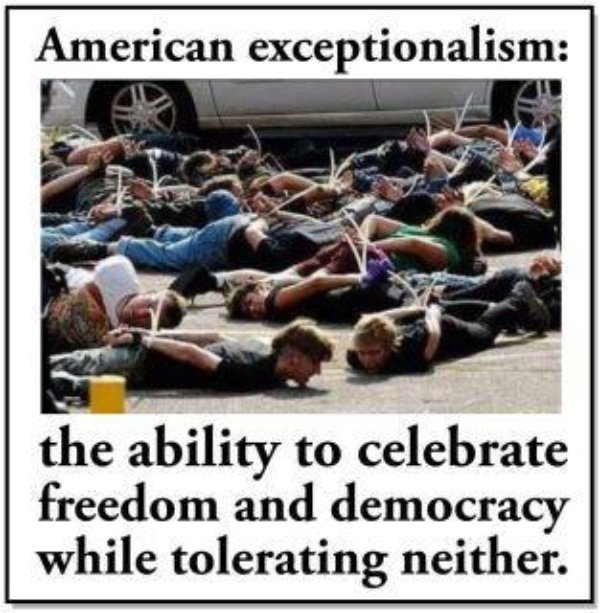
Ironically the biggest hurdle I had to overcome was my own lack of objectivity regarding my country of origin. Given that my decision to emigrate was politically motivated, this really surprised me. Somehow it seems no matter how strongly Americans consciously reject America’s immoral and corrupt political system, we all unconsciously buy into the American exceptionalism that the education system and corporate media pound into us. The belief that the US is not only the foremost military and economic power, but also the most productive, efficient, cleanest, healthiest, transparent, just and scientifically advanced.

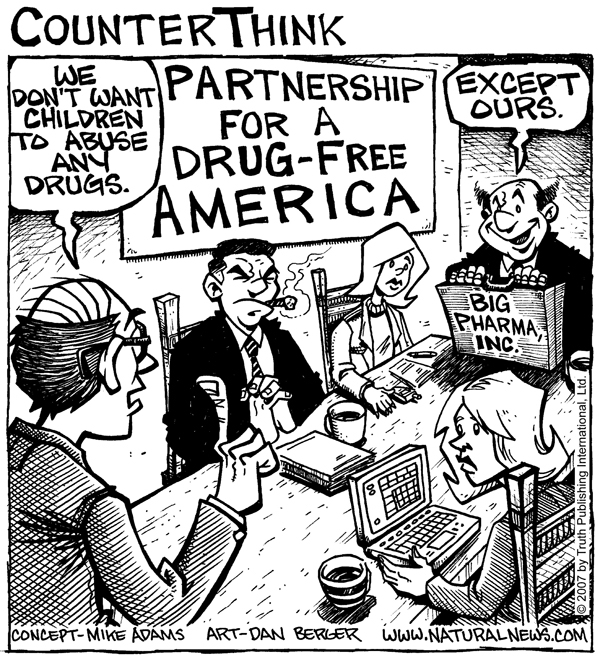
This is an extremely rude awakening for many Americans. It certainly was for me. In my case, Kiwi colleagues confronted me for my attitude that the US was more advanced in medical research. Looking back, I am both mystified and embarrassed that I took this position. I have known for at least two decades that US medical research is mainly funded by Big Pharma, which has a well-earned reputation for buying and publishing research that promotes profits at the expense of scientific objectivity.

Two of the most common examples are 1) research that promotes fictitious illnesses (such as estrogen “deficiency” disorder in menopausal women) to market marginally effective and frankly harmful drugs and 2) research that grossly minimizes the role preventive medicine and non-pharmaceutical interventions have in promoting and maintaining human health.

The Link Between Exceptionalism and Empire

Over time I came to understand that citizens in all great military empires are under enormous pressure to hold and express patriotic and exceptionalist beliefs. In Nazi Germany, you could be shot on the street for unpatriotic statements. When Britain was the world’s great empire, they gave you a trial first, but you could be imprisoned or even executed for treasonous utterances.

This is the second major awakening for many American expatriates: until we leave, we never fully appreciate that US militarism overshadows all aspects of American life. Again I have known for decades that the US government spends more than half their budget on the Pentagon. I also know that the purpose of the US military isn’t to defend ordinary Americans. The US invades and occupies other countries to guarantee US corporations access to cheap natural resources, sweat shop labor and markets for agricultural exports.

Yet it wasn’t until I left that I fully recognized the enormous personal price Americans pay – in terms of personal liberty, freedom of speech and thought and quality of life – as subjects of a great military empire.

photo credit: mpeake via photopin cc

Useless Eaters: Stigmatizing Sick People

concentration camp

In western countries, I see a frightening tendency to make sick people personally responsible for being ill. We are all bombarded with constant media messaging that anyone can stay healthy if they eat the right foods, exercise, and manage their stress levels. Meanwhile media pundits who demonize people on disability benefits for being lazy and unwilling to work.

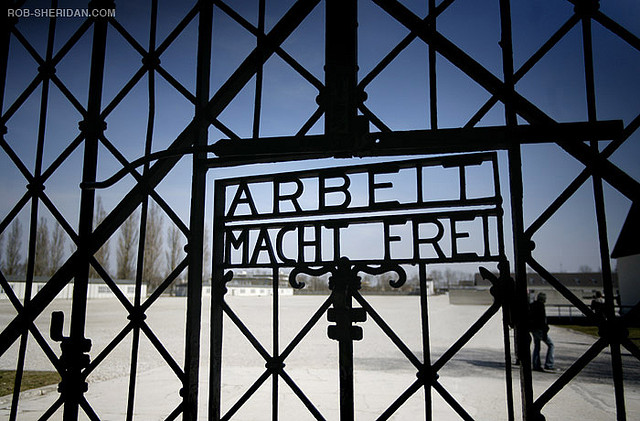
I find all this vaguely reminiscent of Hitler’s “useless eater” policies of the 1930s. Hitler’s definition of a “useless eater” was a German who consumed resources without participating in production. Included in this category were tens of thousands of individuals with chronic physical or mental illness and physical and intellectual handicaps – who would be the first inmates in Nazi concentration camps.

Internalizing this pressure to be and appear well, people blame themselves if they become ill. This attitude is strongly reinforced by the constant TV ads that bombard us for cough and cold remedies that enable people to attend work with colds and even quite serious illnesses, such as bronchitis and the “flu.”

The pressure on kids to attend school or daycare when they’re sick – because their parents can’t afford to stay home with them – is a public health disaster. Sick kids in the classroom expose a lot of other kids, who go on to infect their families. Many children suffer one respiratory after another, a perfect set up for asthma (which is reaching epidemic proportions) and permanent lung disease.

Human Beings Get Sick

Surely it’s healthier and more humane and community-minded to accept that sickness is fundamental to the human condition. Epidemiological studies show that only 10% of illness is accounted for by lifestyle factors (including smoking). Other studies show that people who take time off recover faster and cope better with other life stresses.

38% of US Workers Have No Paid Sick Leave

Advice that sick people stay home and look after themselves is easy in most civilized countries (like New Zealand) owing to national laws requiring that employers provide workers paid sick and parental leave. The US isn’t one of them. Thirty-eight percent  of US workers have no paid sick leave.

There are no federal laws requiring American employers to provide paid sick leave. Only Connecticut, and a few cities (New York, Portland, San Francisco, Washington, Seattle, Newark, Tacoma, and Jersey City) have them. Even more disgusting ten states — Arizona, Florida, Georgia, Indiana, Kansas, Louisiana, Mississippi, North Carolina, Tennessee, and Wisconsin — have enacted preemption bills that blocking cities and towns from passing paid sick leave legislation.

At present only California and Vermont have laws requiring employers to provide paid parental leave. So I guess working parents with sick kids are just out of luck.

The Campaign for Paid Sick Days

Just to be clear here. None of these cities and states have mandated paid sick leave because they were feeling kind and charitable. These laws were enacted because local activists fought for them. You won’t here about the Paid Sick Days for All Coalition on the six o’clock news. The corporate media wants you to believe the war is over and the good guys lost (to quote Leonard Cohen).

The war against corporate fascism ain’t over by a long shot. People can get get involved with the Paid Sick Days for All through their website: http://paidsickdaysforall.org/

photo credit: Rob Sheridan via photopin cc

Menopause: Made in the USA

big pharma

Part 2

Thanks to massive marketing by Premarin manufacturer Wyeth, the concept of menopause is pretty much limited to English speaking countries.

Historically 80% of Premarin sales have occurred in the US. Even in the US, the cessation of menstruation is a non-event in 75% of women, who experience no symptoms whatsoever. Most languages and cultures have no word for menopause. It’s actually quite common for women to experience improvement in their health and well-being when they stop having periods.

Cross Cultural “Menopause” Studies

There are interesting cross cultural studies of the “menopause” phenomenon. Non-western cultures typically view the cessation of monthly cycles asa milestone signaling transition to the role of community elder. The Filipino women Berger and Wenzel studied in Women, Body and Society: Cross-cultural Differences in Menopause were extremely pleased with their freedom from the inconvenience of menstruation. They saw it as an initiation into the joys of old age: better sex (estrogens suppress a woman’s sex drive, which is regulated by testosterone and oxytocin) and improved energy and mood.  Most of all they appreciated the new love and respect they enjoyed as elders.

As Berger and Wenzel’s and other cross cultural studies note, attitudes in the US and other English speaking countries are heavily influenced by a multibillion dollar PR industry that bombards women with messages glorifying youth, thinness and sexual attractiveness – and engendering frank terror of gray hair, facial wrinkles, weight gain and cellulite. Aggressive marketing preys on these insecurities to sell billions of dollars of plastic surgery, botox, wrinkle removing creams and lotions, age concealing make-up, hair coloring and diet products and programs.

Six Decades of False and Misleading Marketing

As revealed in internal documents uncovered in a few of the 5000+ lawsuits filed against Wyeth, the company’s culpability goes far beyond neglecting to inform menopausal women of cancer risks. They paint a very ugly picture of an aggressive public relations campaign to convince women and their doctors that estrogen replacement was the secret to eternal youth.

It was a win-win campaign. By 1992, Premarin was the most commonly prescribed drug in the US. Thanks to decades of marketing about the horrors of aging, post menopausal women were terrified of losing their sexual attractiveness without estrogen replacement. And because health “experts” were recommending it in medical journals, doctors were more than happy to overlook growing evidence that it causes cancer.

The NIH Shuts Down the WHI

Seventy percent of American women taking estrogen replacement discontinued it when the National Institute of Health shut down the Women’s Health Initiative (WHI) study in 2002 (see Wyeth and the Multibillion Dollar Menopause Industry). A year later this had resulted in a 7% decrease in new breast cancer cases – a total of  14,000 women spared the agony of a potentially fatal breast cancer diagnosis.

The study findings have also resulted in 5000+ cancer lawsuits against Wyeth for misrepresenting earlier cancer research to doctors – and their failure to inform women of the significant cancer risks associated with HRT.

Wyeth Fights Back

Wyeth’s response was to initiate a massive PR campaign discrediting the WHI study. They started with a letter to 500,000 doctors attacking the study, complaining that the women in the Premarin arm had other reasons for developing cancer – they were too old, too menopausal or weren’t checked for pre-existing heart disease.* This was followed by articles attacking the study in numerous medical journals. All were ghost written by the company and published under the names of doctors specializing in women’s health

Many of these doctors were affiliated with the notorious Council on Hormone Education at University of Wisconsin that Wyeth founded in response to the 2002 WHI study. In 2006 the Council was still offering a continuing medical education course promoting estrogen replacement called “Quality of Life, Menopausal Changes and Hormonal Therapy.”

Filing Suit: the Only Consumer Protection Against Big Pharma

Wyeth’s massive campaign to discredit the 2002 WHI study, at the expense of tens of thousands of women who would start or continue estrogen replacement, has clearly harmed their defense in the dozens or so of the 5000+ lawsuits that have made it through the courts.

The pharmaceutical company has yet to win a single lawsuit brought by women (or families of deceased women) who developed reproductive cancers as a result of taking Premarin or Prempro. Moreover there are still active information websites for affected women and/or families who have yet to file suit. If you or a loved one has developed breast, uterine or ovarian cancer as a result of taking Premarin or Prempro click here.

photo credit: DES Daughter via photopin cc