The Addiction of Compulsive Consumption

overspent american

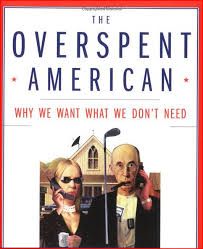
The Overspent American: Why We Want What We Don’t Need

by Juliet Schor (Harper Perennial 1998)

Book Review

The Overspent American is a study of the psychological and sociological factors that drive Americans’ compulsive consumption. In the mid twentieth century, we all believed that a big boom in mechanization and productivity would translate into a significant increase in leisure time. Instead the 21st century found Americans working harder than ever. Growing income inequality, with a bigger percentage of our work product, going to corporate profit, is a big part of the answer. Another important part is compulsive spending patterns that have trapped Americans into in painful desire-debt-spend-overwork cycle.

In many, compulsive spending is an addictive behavior. Many shopaholics regret their purchases once they get them home and never use them.

According to Schor, around 80% of Americans feel that US society is too materialistic, while simultaneously under-estimating their own compulsive consumption and indebtedness. In 1998 (when Schor published The Overspent American), 80% of Americans had personal debt beyond their home mortgage. Across the entire population, average debt was the same as average annual income.

Schor’s purpose is to examine why the promise of greater leisure time due to greater mechanization and productivity never materialized. In 1998, when she wrote the book, Americans were working twice as hard in the fifties. In her few, this is only partly due to corporate exploitation. Many Americans are forced to work more hours than they would really like owing to the compulsive spending parents, especially if they get hooked into the desire-debt-overwork cycle.

Competitive Consumption

I had always blamed Americans’ obsessive consumerism on their constant bombardment, by the media, with psychologically sophisticated pro-consumption messaging. According to Schor’s and others’ research, the problem is far more complex.

Overspending, according to Schor is based in competitive consumption, i.e. the achievement of social status based on what you spend, rather than what you earn. It’s a very old phenomenon. Adam Smith mentions it in Wealth of Nations.

Schor’s research primarily concerns the middle class. Individuals with a strong working class identity tend to be less susceptible to competitive consumption pressures, in part because they have little or no discretionary income and limited access to credit and reject bourgeois ideals in favor of non-consumerist values (eg solidarity).

She also examines two specific groups that are oblivious to competitive consumption pressures. I found this particularly valuable in understanding my own lack of desire to consume and acquire material goods.

Defensive Spending

According to Schor, middle class Americans spend defensively for fear of losing status. The fear of falling behind and ceasing to be middle class became particularly intense in the 1970s, when US companies first began shutting down and moving overseas. Between 1980 and 1995, the upper 20% of the US population experienced an increase in income. Everyone else got a reduction in income. By 1996, the middle class was noticeably shrinking, despite the entry of women into the workforce.

People who were downsized between 1980 and 2000 incurred massive debts to preserve their middle class status. Unlike the fifties, middle class spending expectations no longer revolved around comfort but around conspicuous consumption of luxuries. If you couldn’t afford a four bedroom house, two cars, cable, a VCR, microwave, blender, coffee maker, computer, printer, expensive vacations, massages, personal trainers, lavish gifts at Christmas and other special occasions (one third of which gift receivers neither want nor use), you borrowed money on your credit cards to pay for it. Once you maxed out your credit cards, you ceased to qualify for middle class membership.

The Effect of TV

I was very surprised by the lack of hard research that TV ads stimulate consumption in adult spenders. In Schor’s studies, she found that consumer desires were mainly generated to by exposure to the lifestyles of a reference group, ie the group closest to us in the social hierarchy (workmates, family, friends). Where TV (and films) most influence spending is by offering an inflated view of how other Americans live and what they buy and own. This occurs because the vast majority of TV characters are upper middle class. With growing social isolation, TV itself serves as a reference group for many people.

Downshifters and Simple Livers

Schor classifies people who are resistant to compulsive consumption pressures as either downshifters or simple livers. I found the distinction she makes to somewhat arbitrary, especially when she refers to Quakers, Shakers, Transcendalists and hippies as downshifters. By her own definition, I would tend to call all these groups simple livers:  they resisted material accumulation out of moral conviction and were supported by a reference group that shared these values.

According to Schor, downshifters are more likely to be individuals who have given up compulsive consumption due to a debt crisis or intense work stress. They would prefer to have more money and time, but are forced to opt for time due to some personal crisis. Between 1990 and 1996, 20% of Americans downshifted voluntarily. Twelve percent did so involuntarily due to job loss or wage cuts.*

Simple livers reject the notion that material goods determine status. They set a low level of sufficiency income (some set it as low as $6,000 – 15,000 a year). Beyond this level, spending is no longer positive because it creates clutter, harms environment and alienates them from their peer group. They reject the notion that material goods determine status.

Voluntary simplicity circles first started in the Pacific Northwest in the 1990s. Thanks to immense popularity of The Simple Life by David Shi and Your Money or Your Life by Vicki Robin and Joe Dominguez, they are now widespread across the country.


*Thanks to ongoing recession, in 2014 the percentage of Americans involuntarily downshifted is nearly 50%.
**According to Schor’s classification system, I’m a simple liver. It’s something that seemed to come naturally because my parents were non-college educated simple livers who rejected conspicuous consumption in favor of non-material values. Most people in my current reference group (the Green Party) are also simple livers.
The Cancer Conspiracy

Cancer: the Forbidden Cures

Messimo Mazzucco (2010)

Film Review

Cancer: the Forbidden Cures examines the deliberate effort, by the medical establishment and Big Pharma, to suppress non-phamaceutical cancer treatments. According to filmmaker Messimo Mazzucco, this is the main reason there have been no innovations in cancer treatment in the last hundred years.

Treating cancer is a big business, worth more than $50 million a year – despite the extremely poor track record of conventional cancer treatment. Both radiation therapy and chemotherapy are carcinogenic (i.e. cause cancer). Moreover because both shut down the immune system, it’s common, particularly with chemotherapy, for the treatment to kill the patient before the cancer does. According to Mazzucco, at most 5% of patients “cure” their cancer with chemotherapy.

The documentary begins by tracing how Rockefeller, Carnegie and J. P. Morgan, as barons of the chemical industry (which would morph into the pharmaceutical industry) facilitated the corporate takeover of modern medicine. Prior to 1900, American doctors mainly relied on natural healing methods involving diet and herbs, as many Asian countries still do today. All this changed after World War I when the chemical barons used their wealth and influence to win seats on the boards of major medical schools, as well as taking over the American Medical Association (AMA) and the Bureau of Chemistry (which became the Food and Drug Administration in 1927).

By the 1930s, the AMA had achieved a monopoly on medical licensing in all forty-eight states. This meant that only AMA-approved doctors, trained exclusively in drug treatments, could legally practice medicine. By 1990, the pharmaceutical industry also controlled most medical research. This was thanks to systematic cutbacks in National Institutes of Health (NIH) research that began in 1980 under Reagan administration.

The remainder of the film is a celebration of cancer pioneers who have put their livelihoods, careers and often their lives on the line to offer (often at no charge) alternative cancer treatments. Over the last hundred years, dozens of “natural” cancer treatments have successfully treated hundreds of thousands of patients.  Mazzucco believes if these treatments were widely available, cancer mortality could be reduced by 50%.*

Of the treatments listed below, laetrile and bicarbonate are the most controversial, as both have a very narrow margin between the therapeutic and toxic dose. They should only be used under professional supervision.

Essaic – first developed by Canadian nurse Rene Caisse (1988-1978) in the 1920s based on herbal treatments she learned from the local Ojibwe tribe. In the 1930s the county council allotted her a free clinic on condition that her patients were diagnosed by a licensed doctors and treated free of charge. After successfully treating thousands of patients, she lost the clinic when she refused to sell her treatment by to a group of American “entrepreneurs” for one million dollars.** In 1958, Senator John Kennedy’s doctor Charles Brush referred Essiac to Sloan Kettering Cancer Research Center to be evaluated for FDA. The research never happened.

Hoxsey therapy – Texas businessman Harry Hoxsey (1901-1974) was the first to treat human beings with an herbal remedy his great-grandfather had used successfully to treat cancer in horses. Hoxsey set up clinics offering free cancer treatment in seventeen states for nearly twenty-five years. Thanks to his phenomenal success rate, he somehow eluded all attempts to prosecute him (for practicing medicine without a license). One prosecutor who had arrested him a hundred times secretly brought his brother in treatment and (following the brother’s recovery) became Hoxsey’s defense lawyer. When Hoxsey request an FDA review of his treatment (for possible approval), the head of the AMA, Dr Morris Fishbein offered to buy the rights to Hoxsey’s formula. When Hoxsey refused, Fishbein spearingheaded a nationwide media campaign depicting Hoxsey as a dangerous quack. After Hoxsey successfully sued both Fishbein and the Hearst newspaper empire for libel, the FDA padlocked all his clinics. In 1963, he helped one of his nurses set up a Hoxsey clinic in Tijuana Mexico.

Gerson therapy – Dr Max Gerson (1881-1959) believed his nutrition-based cancer treatment, consisting of a non-meat diet of raw and cooked vegetables and juices, improved immune function by reducing the “acidity” associate with a meat diet. In 1946, and five patients he had cured testified before Congress in support of the Pepper-Neely Anti-Cancer Bill. The latter would have appropriated one hundred million dollars to research novel cancer treatments. After being banned from practicing or publishing in the US, he published his research in German medical journals and saw patients privately in his apartment. Following his death, his daughter Charlotte set up a Gerson clinic in Mexico. His followers have also established Gerson clinics in Germany, Spain and Japan. See Rethinking Cancer Treatment

• Shark Cartilage – In the early nineties Dr William Lane pioneered the use of shark cartilage in treating cancer owing to its antiangenic properties (i.e. it suffocates the cancer by blocking the formation of blood vessels to supply it). Despite efforts by FDA and American Cancer Society to discredit the treatment, pharmaceutical companies are vigorously competing with one another to isolate the specific therapeutic agent in the lab.

• Mistletoe – First proposed by Rudolph Steiner (1861-1925) as a cancer treatment, owing to its immune modulating properties, 100 years ago. Enormously popular in Europe, where Druids worshiped it for its miraculous healing properties. Although mistletoe doesn’t occur naturally in the US, it’s currently being studied as a cancer treatment at John Hopkins Medical School.

• Laetrile (aka Vitamin B17) – Laetrile, derived from apricot and peach pits, was first proposed as a cancer remedy in the late 1800s. Dr Ernest Krebs Jr first brought it to public attention in the 1970s. Practitioners who have prescribed it have found it effective in treating breast, lung, collar and prostate cancer. It’s believed to work by releasing cyanide and benzaldehyde when it comes in contact with cancer cells. The FDA banned it in 1977 after it was linked with several cases of cyanide poisoning.

• Sodium bicarbonate – first developed as a cancer treatment by conventionally trained Italian doctor and oncologist Tullio Simoncini. Simoncini believes cancer is merely the body’s reaction to an internal candida infection. He believes bicarb works by suppressing the infection, as the fungus only thrives in an acid environment. Because large oral doses of bicarb can be very dangerous, Simoncini infuses it through a catheter to blood vessels adjacent to the tumor. In 2003 he was stripped of his medical license and in 2006 he was given a 3 year suspended sentence for fraud and wrongful death after one of his patients die of alkalosis from an overdose of bicarbonate.


*This 2010 documentary predates a flood of research about the anti-cancer effect of high cannabidiol (high CBD) cannabis.
**They refused to agree to Caisse’s condition that they offer Essiac to patients the treatment free of charge.

War is a Racket

war is a racket

War is a Racket

by Major General Smedley Butler (1933)

Book Review

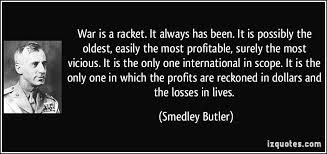
Published in 1933 by retired Marine Major General Smedley Butler, War is a Racket is a historic expose of the role of Wall Street profiteering in instigating war.

The book begins with the startling statistic that World War I created 21,000 new millionaires and billionaires. President Woodrow Wilson borrowed (from Wall Street banks) the $50+ billion to pay for World War I, increasing the national debt from $1 billion to $52 billion. Of this amount, $16 billion was pure profit. Butler lists specific companies, starting with Du Pont and US Steel, and the obscene profits they made from World War I.

He also deplores the systematic inefficiency and fraud that caused the War Department to pay two to three times the retail charge for equipment such as saddles and mosquito nets that had no possible use in a modern European war. This was on top of millions spent on poorly crafted wooden ships that sank when put to sea and airplanes that were technologically obsolete by the time they were delivered.

Wilson had been elected to his second term based on a campaign promise to keep the US out of the Great War. War is a Racket also discusses his secret White House meeting with a European commission that caused him to reverse himself. After informing Wilson the allies were losing the war, they warned that they couldn’t repay the $5-6 billion they owed American bankers, manufacturers and munitions makers if they were defeated.

Butler maintains the real reason the US entered the war was to protect these Wall Street interests. Obviously this isn’t what Wilson and his Committee on Public Information (run by Edward Bernays, the father of public relations) told the American people. They would be barraged with incessant propaganda about the Germans being monstrous barbarians and the Great War being the war to end all wars because it would make the world safe for democracy.


War is a Racket: free PDF

Major General Smedley Butler is best known for foiling the 1933 Bankers’ Putsch. This was a failed military coup, instigated by America’s leading bankers and industrialists, to remove Roosevelt from office and replace him with a Mussolini-style dictatorship. Butler, who was recruited to lead the coup, blew the whistle to the House McCormick-Dirkson Committee. They responded by launching a cover-up. Details of the Bankers’ Putsch only became public knowledge in 1967, when journalist John Spivac uncovered the committee’s secret notes.

The Tyranny of Positive Thinking

Smile or Die
Barbara Ehrenreich
RSA Animate (2010)

Film Review

Smile or Die is a clever animation of a Barbara Ehrenreich talk on the ruthless cruelty of “positive thinking” in an era of economic misery.

The video highlights how positive thinking is actually a form of pernicious psychological manipulation that shifts the blame for extreme income inequality from the greedy 1% to the working people they exploit.

Examples include the cynical cruelty of rebranding layoffs as a “growth opportunity.”

Ehrenreich is especially critical of the branch of positive thinking which maintains you can change the world (and get rich) merely by thinking the right kind of thoughts.

Portrait of a Working Class Revolutionary

 revolution

Revolution

by Russell Brand

Ballantine Books (2014)

Book Review

Russell Brand introduces his new book Revolution as an answer to a question Jeremy Paxman asked him in the interview that went viral on YouTube. Brand maintained that voting was a waste of time – that there needed to be a revolution. Paxman’s response was “And how, may I ask, is this revolution going to come about?”

This book never really answers Paxman’s question. In fact, it’s really more a memoir than a political treatise. Like his two earlier books (his 2009 My Book Wook and 2010 Booky Wook 2 ), Revolution mainly concerns Brand’s struggle with addiction. In this third book, however, he delineates a clear link between this struggle and his radicalization.

That being said, his new book is a funny, courageous, brutally honest account of the conscious personal changes that have kept him sober for the last eleven years.

Brand’s Personal Demons

Brand describes quite poignantly the demons that plague many working class people – the constant inner voices telling us we are worthless losers and will never amount to anything. This loser mentality, which starts in the working class home, is brutally reinforced in the public school system, through bullying and emotional abuse by teachers. It’s further compounded by TV advertising hammering on our worst insecurities and promising relief through the continuous purchase of products.

Brand experienced it as a constant anxiety in the pit of his stomach, which he could only relieve with drugs and alcohol, compulsive sex and eventually the adulation of an adoring audience. To overcome these addictions, he had to systematically reprogram himself to see how TV advertising was messing with his mind. A life centered around fulfilling our selfish needs is totally empty and sterile. None of us are the center of the universe. Both spiritually and scientifically (according to quantum physics), each of us in only a small part of a much larger whole.

For Brand a new-found belief in God and a recognition of the pivotal role a deeply corrupt capitalist system plays in all human misery were pivotal in this transformation.

Although I take strong exception to the way 12 step programs ram God down the throats of recovering addicts, I totally agree with Brand’s premise that activists must move out of their selfish individualism to have any hope of making successful revolution. True revolution must be aimed at the collective good. If people do it for their own selfish needs, they only end up replacing the old elite with a new one, as happened in the Soviet Union.

Stateless Participatory Democracy

What Brand favors is a political-economic system run on the lines of anarchist participatory democracy. He would have ordinary people running their own neighborhoods, communities, regions and workplaces through popular assemblies and consensus decision making. He gives the example of the popular assemblies that play a direct role in local governance in Porto Alegre Brazil.

The historical revolution he most admires is the Spanish Civil War, though this would seem to contradict his stance on strict nonviolence. Brand is inspired by the way workers pushed aside the capitalist stooges who were running the cities, factories and businesses and started running everything themselves. Unfortunately he seems to overlook the historical reality that these capitalists didn’t step aside voluntarily – that this was accomplished by force.

A Great Read

Despite being a little light on the pragmatics of mass organizing, I found Revolution a great read. Brand is incredibly witty, as well as a classic magpie who remembers everything he reads. His book attempt attempts to synthesize the views of a wide range of political thinkers and activists, though he clearly favors architect and systems theorist Buckminster Fuller, anarchist and Occupy activist David Graeber and political commentator and anarcho-syndicalist Noam Chomsky.

Also posted at Veterans Today

Obama’s Setback in Beijing

itsourfuture


Did China Just Scupper the TPPA?

The Transpacific Partnership Agreement (TPPA) is a secret free trade treaty Obama is negotiating with eleven other Asian Pacific countries (US, New Zealand, Australia, Malaysia, Japan, Chile, Peru, Canada, Mexico, Vietnam, Singapore and Brunei). The President had hoped to seal the deal at the recent Asian Pacific Economic Cooperation (APEC) summit in Beijing. Instead all 21 Pacific Rim countries have agreed to develop a roadmap for a Free Trade Area of the Asia-Pacific (FTAAP) treaty. The FTAAP would include China and Russia, whereas the TPPA excludes them.

China Deliberately Excluded

The TPPA is viewed as a centerpiece of Obama’s “strategic rebalancing” towards Asia. Also known as the “Asian pivot,” Obama’s intention is to counter China’s growing economic strength by isolating them economically and militarily.

The US has required the twelve countries participating in TPPA negotiations to sign a secrecy clause. Only corporations (i.e. the 600 corporations that helped write it) are allowed to see the text of the treaty. Not even Congress is permitted access. If Wikileaks hadn’t leaked large sections of the draft agreement, we wouldn’t even know it existed.

Is TPPA Really a Trade Treaty?

Scheduled to coincide with the APEC summit, November 8 was an International Day of Action against the TPPA, with major protests in New Zealand, Australia, Malaysia and the US. From the sections which have been leaked, it seems the TPPA isn’t a trade treaty at all. It’s really an investor protection treaty, granting corporations the right to sue countries for laws that potentially hurt their ability to make a profit. These lawsuits, involving hundreds of millions of dollars, would be heard by secret tribunals run by corporate lawyers. There would be no right of appeal.

In other words, the intent of the TPPA is to allow corporations to overturn the environmental, labor and healthy and safety laws and regulations of member countries. There’s even a special “transparency” clause inserted by the pharmaceutical industry that would allow them to challenge formularies (in the US this would include Medicaid and the VA) that promote cheaper generic medications.

If finalized, the TPPA would also allow oil and gas companies to overturn fracking bans, Monsanto to overturn GMO labeling laws, investment banks to overturn banking regulations and the telecommunications industry to overturn Net Neutrality laws.

Why the Secrecy?

It’s pretty obvious why Obama is trying to negotiate the TPPA in secret. Prior investor protection treaties (e.g. the Free Trade of the Americas Agreement) have gone down in flames thanks to massive public lashback, both in the US and in treaty partner countries.

Congress isn’t too happy, either, about being denied access to the draft TPPA treaty. In November 2013 Congress voted down Obama’s request for “fast track” authority on the TPPA. Fast track, otherwise known as Trade Promotion Authority, would require Congress to accept the final TPPA deal or reject it. No debate would be allowed on specific provisions.

There are rumors Obama plans to reintroduce TPPA fast track authority before Christmas, hoping for a better outcome with a new, pro-business Republican congress.

The POTUS also had hopes of ramming through an agreement on the TPPA treaty in Beijing, at a side meeting in the US embassy. It appears he did try and failed, as Pepe Escobar describes in a recent RT article Lame Duck Out of the Silk Trade Caravan.

The Effect on Australia and New Zealand

A trade deal that excludes China, their major trading partner, makes absolutely no sense for Australia and New Zealand. Kiwi and Aussie environmental and labor activists are also deeply concerned about signing an international agreement that allows multinational corporations to sue their governments in a secret corporate tribunal. They’ve worked damned hard to win laws and regulations guaranteeing minimal environmental, labor and health safety standards. If the TPPA goes through, these could all be wiped out with the stroke of a pen.

China Aims to Suppress US Influence in Asia

In an interview with Chinese media, Obama denies he was trying to isolate China by pressuring Asian Pacific countries to sign a secret trade deal that excludes them. Yet it’s pretty obvious to all concerned that’s exactly what he’s trying to do.

It’s also pretty clear that Chinese president Xi Jinping outmaneuvered him. In addition to getting all 21 APEC nations to sign onto an FTAAP feasibility study, China signed other trade deals geared towards reducing US dominance in the region.

On Monday the Chinese and Malaysian central banks signed a deal to establish a yuan clearing bank (to facilitate energy and other trade deals in local currencies rather than US dollars).

Russia and China signed a  similar deal to conduct oil trades in rubles and yuan, rather than US dollars. According to Russian president Vladimir Putin, the new agreement will significantly reduce US influence over world energy markets.
Back in October,

Back in October, China launched the Asian Infrastructure Investment Bank a rival to the US-dominated World Bank and Asian Development Bank.


photo credit: rawEarth via photopin cc

Also published in Veterans Today

Confronting Gandhi’s Racism

In the following brief video, Indian activist Arundati Roy challenges the way the global elite has repackaged Mohandas Gandhi as a hero to be worshiped and adored. She delivered her talk shortly after the publication of The Doctor and the Saint, a book length introduction to a new edition of The Annihilation of Caste. The latter was written in 1936 by Dalit (aka Untouchable) lawyer and activist Dr Bhimrao Ambedkar. Gandhi bitterly fought Ambedkar and his ideas during his lifetime. This, according to Roy, was based on Gandhi’s entrenched beliefs about racial superiority, both towards Dalits and black South Africans.

Under Hindu’s rigid caste system a Dalit is limited (by virtue of birth) to occupations regarded as ritually impure, such as those involving leatherwork, butchering, or removal of rubbish, animal carcasses, and waste. Because these activities are considered polluting and contagious, by tradition Dalits are banned from full participation in Hindu social life. Discrimination against Dalits is still prevalent in rural India, as regards access to eating places, schools, temples and water sources.

Prior to the 1900s, hundreds of thousands of Dalits escaped their caste roles by leaving the Hindu religion and converting to Islam or Christianity. With the move towards representative government that occurred in the early twentieth century, an upper caste Hindu reform movement formed to ensure that India’s fourteen million Dalits (about one quarter of India’s population) remained outside the political process.

Gandhi, a member of the higher Banias caste, was part of this Hindu reform movement. He specifically opposed the movement started in 1904 to guarantee Dalits access to education. In the following video, Roy reads what he wrote about the Dalits he encountered during his time in South Africa (1893-1914):

“Whether they are Hindus or Mohammadans, they are absolutely without any moral or religious instruction worth a name; they are not learned enough. Plus thus they are adapting to yield to the slightest temptation to tell a lie. After sometime lying with them became a habit and disease. They would be lying without any reason, without any proper, prospect of bettering themselves materially in deep whom knowing what they are doing. They reach a stage in life when the moral faculties has completely collapsed owing to neglect.”

Gandhi launched his first non violent civil rights campaign in South Africa to protest the treatment of Indian immigrants as second class citizens. In 1906, he took the side of the British government when they declared war against the Zulu Nation in Natal and encouraged Indians to enlist with the British. Here are his views on Kaffirs [black South Africans) following his first arrest for civil disobedience:

“We were all prepared for hardships, but not quite for this experience. We could understand not being classed with the Whites, but to be placed on the same level with the Natives seemed to be too much to put up with. I then felt that Indians had launched our passive resistance too soon. Here was further proof that the obnoxious law was meant to emasculate the Indians…Apart from whether or not this implies degradation, I must say it is rather dangerous. Kaffirs as a rule are uncivilized—the convicts even more so. They are troublesome, very dirty and live almost like animals and scavengers.”

Roy goes on to describe the caste system in modern day India, where caste has merged with capitalism so that higher caste Hindus control all the major corporations and media outlets. Dalits continue to experience major discrimination and oppression, in both rural and urban areas. According to India’s National Crime Bureau, a crime is committed against Dalit by non Dalit in every sixty minutes. Every day four Dalit women are raped by upper caste men. Every week thirteen Dalits are murdered and six are kidnapped. In most cases, these crimes go unpunished.

Roy also points out that the Indian military is deployed on a daily basis to enforce the supremacy of upper caste Hindus:

“From 1947, whether the Kashmir, Mizoram, Manipur, Nagaland, Telangana, Punjab, Goa, every day of the year, the Indian Army is fighting its own people. And who are the people? Think about it. Muslims, Christians, Sikhs, Adivasis, Dalits.”

Fukushima: the Cover-Up Continues

crisis without end

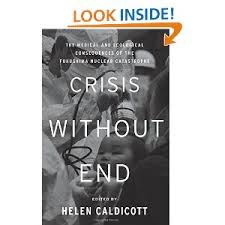
Dr Helen Caldicott’s new book, Crisis Without End: the Medical and Ecological Consequences of Fukushima, is a compilation of the symposium she organized at the New York Academy of Medicine in March 2013.* The latter was a virtual Who’s Who of nuclear physicists and radiation health experts. In the short video below, she gives a brief overview of the nuclear accident at Fukushima and the systematic cover-up by the US and Japanese government of the on-going threat it poses to all global inhabitants.

What Actually Happened at Fukushima?

Following a March 2011 earthquake and tsunami that knocked out their cooling systems, three nuclear reactors experienced core meltdowns. When a meltdown occurs, the core overheats to the point that it melts through the containment vessel into the grounds. Driven by the intense heat of continuous chain reactions, the molten mass continues to spew radiation into the environment over an extended period.

The mountain streams that flow under the stricken reactors absorb this radiation from the molten cores and carry it to the Pacific Ocean. Approximately four tons daily of radiation-contaminated water has been flowing into the Pacific Ocean for 3 ½ years.

One the radiation reaches the ocean, it’s taken up into the food chain where it’s “biomagnified” (i.e. small fish eat radioactive algae, which are eaten by larger fish). Tuna is at the top of the food chain. Which is why tuna caught off the coast of California contains radioactive cesium that originated at Fukushima.

The Cover-Up

The Japanese government knew almost immediately the meltdowns had occurred – expose the whole of Japan and the American West Coast to massive doses of airborne radioactive fallout – and covered it up for three months. They and Tepco, the private company running Fukushima, continue to mislead the public by asserting it will take forty years to stop the flow of radioactive water into the Pacific. According to Caldicott, no technology exists at present to reverse the effects of a nuclear meltdown.

A new law Japan passed in December 2013 makes it illegal for journalists to disclose any information about Fukushima that the government wishes to suppress.

Obama, the pro-nuclear president (he received a $250,000 campaign contribution from Exelon Corporation) colluded in the cover-up. Instead of warning Americans in Seattle, Florida and other US sites that they were being exposed to high levels of airborne radioactive fallout (specifically I 131), he specifically denied that the US faced any risk of radiation exposure.

Caldicott maintains the EPA has an absolute legal and moral obligation to monitor radiation levels of US air, water and sea food, especially as the Fukushima site remains extremely vulnerable to a future earthquake, tsunami or typhoon. Workers are still pumping seawater on the stricken reactors to cool them. Afterwards the radioactive seawater is stored in 1500 enormous storage tanks held together with adhesive tape.

Obama, in contrast, is far more concerned about protecting his friends in the nuclear industry. Amazingly he has just finalized $6.5 billion $6.5 billion in loan guarantees to build two new nuclear power plants in Georgia.

Hillary Clinton is also a major player in the cover-up, with the agreement she signed immediately after the Fukushima accident, for the US to continue to import Japanese seafood. Caldicott warns that under no circumstances should people anywhere eat rice, fish or miso imported Japan – owing to high levels of radiation it contains.

Chernobyl

Caldicot also discusses the 1986 nuclear meltdown at Chernobyl (Ukraine) which has caused one million, mainly cancer-related, deaths across Europe. Information about the effects of Chernobyl in other parts of Europe is also being suppressed. Lambs in Wales, Wild boards in Germany and Turkish hazelnut are still too dangerous to eat due to radiation contamination.


* Free link to presentations from last year’s Symposium available via the Helen Caldicott Foundation


The Nuclear Waste Scandal

Nightmare Nuclear Waste
(2009)

Film Review

In the face of growing international concern over the ongoing nuclear disaster at Fukushima,  an excellent 2009 French/German film (with English subtitles) about nuclear waste has been re-released and is making the rounds of cyberspace. This is truly a life and death issue, owing to the research evidence linking high environmental radiation levels (from the 1986 Chernobyl meltdown) to a big spike in European cancer levels. Important facts come out in this film that the nuclear industry and government are doing their best to conceal:

1. The whole issue of nuclear waste is characterized by secrecy, cover-up, lies and deception by the nuclear industry and pro-nuclear governments (including the extremely pro-nuclear Obama administration).

2. As the world waits with baited breath for the nuclear industry to come up with a permanent solution for deadly waste that will take 100,000 years to decontaminate, massive amounts have been dumped in the ocean, released to the air or stored in leaky containers that are contaminating groundwater and rivers. In La Hague France a nuclear energy company called Areva is releasing it into the air and into the English Channel through a drain pipe d water or open air storage pools. In La Hague France a nuclear energy company is releasing it into the English Channel through a drain pipe (as of 2009, when this film was made).

3. The US and Russian government are covering up the devastating health impacts of the world’s two most contaminated nuclear sites: the Hanford nuclear reservation in Eastern Washington and the Chelyabinsk region in the former Soviet Union. The latter experienced massive contamination when a nuclear waste dump at the Mayak nuclear facility exploded in 1957. The very first nuclear disaster in history was covered up by both the Soviets and, at the behest of America’s fledgling nuclear power industry, the CIA

4. There has never been full disclosure about the 100,000 tons of nuclear waste dumped into the ocean prior to 1993 (as the film was made in 2009, this number excludes the four tons daily dumped into the Pacific Ocean at Fukushima), when the practice was banned by international treaty. Nor has there been any effort to investigate where these radionucleotides ended up or whether they have contaminated the food chain.

4. The nuclear industry – and government – are willfully ignoring the “no threshold model” doctors use to evaluate cumulative radiation risk when they assure us that occasional releases from nuclear power plants are no more harmful than a “transatlantic jet flight” (due to higher radiation levels in the outer atmosphere) Under this model every exposure – no matter how small – increases your risk of developing cancer or having children with birth defects.

The Nuclear Nightmare at Hanford

As a former Washington resident, I took particular interest in the segment on Hanford, the desert site where the Manhattan Project secretly produced plutonium for the atom bomb dropped on Nagasaki. Hanford also produced the vast majority of plutonium for America’s cold war arsenal (1950-1980). Most of Hanford’s nuclear waste is stored in 170 temporary underground concrete tanks. These were meant to be temporary until a permanent storage solution could be found. Beginning in 2001 the tanks, which were only built to last twenty years, were found to be leaking radionuclotides into the groundwater adjacent to the Columbia River.

According to the US Department of Energy, which is responsible for the Hanford clean-up, there are no nuclear contaminants in the Columbia River. This is virtually impossible for independent scientists to verify, as anyone trespassing on the Hanford reservation is subject to arrest and prosecution. The filmmakers accompanied an activist who entered the reservation secretly to take soil and water samples. French scientists at CRIIRAD (Commission de Recherche et d’Information Indépendantes sur la Radioactivité) who tested them found high levels of tritium (exceeding the drinking water standard), Iodine 129, Technetium 99 and Europium 152. The film also talks about an independent study local activists did in 2002, in which the majority of Columbia River fish they sampled contained high levels of Strontium 90.

The People in Muslimovo Who Are Waiting to Die

The situation of Russian farmers living adjacent to the Techa River in Chelyabinsk is far more tragic. After more than fifty years the Techa, which locals rely on to water their crops and pastures, remains contaminated with high levels of Cesium 137, tritium, Strontium 90 and Plutonium 239 and 240 – as do vegetables and milk produced in nearby farms.

The residents are all fully aware of the bleak future they face, as they watch family, neighbors and even their children and grandchildren succumb to cancer. Each family has been offered 20,000 Euros (about $25,000) to abandon their land and homes and voluntarily relocate. This is a paltry sum that would support them a few months at most. The government also tells them not to eat locally grown food. However with incomes averaging 80 euros a month, eating food trucked in from other regions is an unaffordable luxury. As one local woman states, “We have no choice but to stay here until we die.”

The Mass Incarceration of Ethnic Minorities

prisoner

The third of four posts on America’s scandalous prison industrial complex.

While private prison companies and profits are the primary driver of America’s scandalous incarceration rates, institutional racism and the collapse of America’s mental health system also make a major contribution.

Most crimes in the US are committed by white people. The most heinous crimes, such as serial killings, mass shootings and mortgage and foreclosure fraud are nearly always committed by Caucasians. Yet ethnic minorities, who comprise less than 35% of the general population (14.3% African America, 17% Hispanic) represent 58% of the prison population

A black man born in 1991 has a 29% chance of going to prison. One in 15 black children and one in 42 Latino children have a parent in prison

Institutional Racism in the Criminal Justice System

Reasons for the mass incarceration of ethnic minorities are multifaceted. Racially biased policing is the most obvious. Police randomly stop (and sometimes shoot) people of color for no other reason than their ethnicity. Once in custody, low income minority defendants have no choice but to rely on inexperienced, overworked and underpaid public defenders to represent them. Owing to time constraints and restricted investigation budgets, public defenders often pressure minority defendants who are “factually” innocent to cop a plea. This becomes especially worrying in cases where police have deliberately lied or fabricated evidence.

Disproportionate Sentencing

Once convicted, according to the Wall Street Journal, an African American offender will likely receive a harsher sentence than a white person committing a comparable crime. Nearly half of America’s prison population are doing time for non-violent offenses. This is largely due to racist war on drugs and tough-on-crime polices that force judges to impose minimum mandatory sentences and disallow non-custodial sentences, such as home detention and community service.

The main driver behind minimum mandatory sentencing and habitual offender (aka “three strikes”)* laws is race-based neoconservative fear mongering by corporate media and neoconservative politicians. Both deliberately portray ethnic minorities as inherently unstable, aggressive, violent and a threat to the social order.

In his 2003 documentary series The Power of Nightmares, Adam Curtis eloquently depicts how neoconservatives deliberately create myths about dark skinned Muslim fanatics to win votes and consolidate political power. The neocons’ racist law and order agenda is the domestic counterpart of their War on Terror. Convinced they are at imminent risk from African and Hispanic men, terrified white voters elect strong tough-on-crime candidates to lock them away for as long as possible.

*Typically three strikes laws require mandatory imprisonment without opportunity of parole for all violent offenders with two prior felony convictions.

To be continued with a final post discussing the wholesale warehousing of America’s mentally ill in prisons and jails.

photo credit: http://notothepic.tumblr.com/