Private Prosecutions: A Remedy for White Collar Crime?

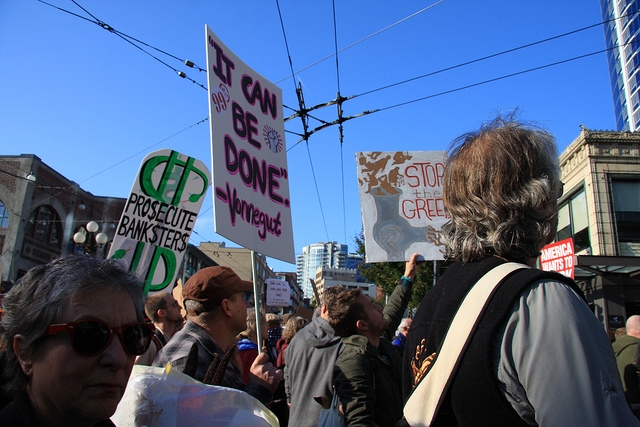
prosecute banksters

Another great thing about living in New Zealand is the ease of bringing a private prosecution against wealthy and powerful sociopaths that the police decline to prosecute.* A particular odious scumbag named John Banks recently resigned from Parliament after being found guilty of electoral fraud. As Commissioner of Police in the 1990s, Banks became extremely cozy with the New Zealand police when he helped cover up a series of gang rapes, by police officers, of women in their custody.

Thus in 2012, it was no surprise when the police chose not to prosecute when Banks deliberately lied about a campaign donation from multimillionaire Kim Dotcom. Dotcom, by the way, is still fighting extradition to the US on Internet piracy charges.

Enter retired accountant Graham McCready , who stepped in to file a  private prosecution against Banks. Once the case was committed to trial, he prevailed on the Crown Law Office** to take it over.

A Traditional Safeguard Against Government Tyranny

Private criminal prosecutions are quite easy to initiate in New Zealand, In fact, there’s even a New Zealand company that will do it for you – provided you cover the court costs and legal fees. With all the banksters, torturers, environmental crimes and corporate scumbags that Obama has declined to prosecute, it strikes me that the US has even more need of private prosecutions than New Zealand.

Private prosecutions are still legal in the US in at least 30 states states.*** The tradition of private prosecutions, in both the US and New Zealand, grew out of English common law and a fear of government tyranny. When North America was first colonized in the 17th century, nearly all criminal prosecutions were carried out by private attorneys hired by crime victims or their survivors. The practice survived throughout most of the 19th century, even after most states began to appoint public prosecutors (district attorneys). Prior to the 20th century, public funding was so inadequate that most public prosecutors were young and inexperienced and didn’t stand a chance against well paid defense attorneys.

The Shift Towards Public Prosecution

Early in the 20th century, high courts in three states (Massachusetts, Michigan and Wisconsin) struck down private prosecutions because they were found to be contrary to the Constitutional presumption of innocence. These rulings argued that the prosecutor had a duty to be impartial and hand over exculpatory evidence to the defense team (this still doesn’t happen in many cases but is grounds for appeal). Missouri banned private prosecutions in 1976, Georgia in 1984, New York City in 1991 and North Carolina in 1972.

In most cases, private prosecutions are illegal federal court, except in cases of criminal contempt. In 2010, the Supreme Court declined to review a contempt conviction stemming from a private prosecution in the District of Columbia. Then Solicitor General Elena Kagan (now a Supreme Court justice) filed an amicus brief in support of the private prosecution.

In addition to criminal contempt cases, Congress or a federal judge can appoint a private or special prosecutor if the Department of Justice refuses to prosecute.

Reviving Prosecutions to Address White Collar Crime

There seems to be growing support in the US legal community (see Private Vengeance and the Public Good and Let’s Revive Private Prosecutions) for bringing back private prosecutions, especially in cases where the public prosecutor declines to prosecute powerful corporate interests or fellow officials. With the 2008 economic downturn, state and local budget tightening is forcing many jurisdictions to again rely on underpaid, inexperienced prosecutors. They, in turn, are understandably reluctant to take on the rich and powerful.

In addition to mother England, both Canada and South Africa allows for federal and provincial prosecution of criminal offenses. Australia permits private prosecution of contempt cases in federal, family and superior court.

*In New Zealand the police, which are employed by central government, are responsible for arresting, charging and prosecuting most lawbreakers.
**The Crown Law Office provides oversight to police prosecutors and Crown solicitors (private practice lawyers hired by Crown Law for Crown prosecution work) and advises Parliament on criminal justice matters.
***Alabama, Alaska, Florida, Iowa, Kansas, Kentucky, Maine, Minnesota, Montana, Nebraska, New Hampshire, New Jersey, North Dakota, New York (outside New York City), Oklahoma, Oregon, Texas, Utah and Vermont (I couldn’t find a complete list but confirmed that these states allow it).


 

photo credit: Hollywata via photopin cc

We Won: Mining Sector in Shock

Glistening_black_sand_beach_at_White_Cliffs

source: Wikimedia Commons

Response to my April submission opposing Sand Mining

Dear Stuart Bramhall

I am writing to you to let you know that the Decision-making Committee for this application has made its decision. You are being notified of the decision as you made a submission to the application.  If you requested a hard copy of the decision when you made a submission, this will be sent you in the next few days.

The application by Trans-Tasman Resources to carry out iron sand mining in the South Taranaki Bight has been refused

A full copy of the decision is available on the Environmental Protection Authority’s (EPA) website at http://www.epa.govt.nz/EEZ/trans_tasman/decision/Pages/default.aspx.

According to the New Zealand Herald, “The mining sector is in shock.” It’s hard work, but when people organize, it’s still possible to defeat powerful international corporations


CIA Whistleblower Incarcerated for 12 Months Over 911

extreme prejudice

Former CIA asset Susan Lindauer describes how the Department of Homeland Security locked her up on a military base for 12 months and tried to detain her indefinitely without a hearing and drug her with Haldol and other psychotropic medication. Why? Because she possesses extensive documentary evidence that the CIA had foreknowledge of the 9-11 attacks as early as February 2001. This, along with other important documents related to the Lockerbie bombing and the US wars on Iraq and Libya, are published as an appendix in her 2010 book Extreme Prejudice.

Prior to her arrest, Lindauer was the chief CIA asset in charge of Iraqi and Libyan back-channel communications. She was under indictment for five years. Eventually her late partner’s exhaustive efforts to publicize her case paid off and she was granted a hearing – and released.

Towards the end of her talk, she describes her late partner’s conversation with Amy Goodman, host of Democracy Now! Amy’s flimsy excuses for refusing to cover the story, during a period when Lindauer was being held incommunicado at Caswell Air Force Base, aren’t at all surprising. Especially when you have a look at the CIA-funded foundations that finance Democracy Now! See Does the CIA Fund Both the Right and the Left?

The Anti-Fracking Movement Goes International

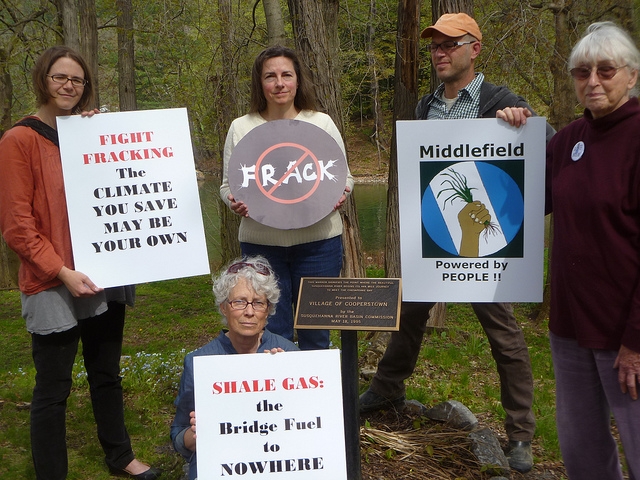
The anti-fracking movement has gone international, drawing in hundreds of thousands of people who never dreamed of being environmentalists or activists.

Below is a heart-rending video by the Lock the Gate coalition in Australia.

The similarities between the industrialization of prime Australian farmlands and the experience of dairy and organic farmers here in Taranaki are uncanny: the 24/7 glaring lights, noise and fumes and the unexplained health problems, particularly in children.

Most of all the helplessness experienced by families affected by fracking. Once the government allows the oil and gas industry to set up fracking rigs, it becomes the law, and ordinary people have no rights. Livelihoods are destroyed, property values plummet and your land becomes uninsurable.

New Plymouth Hits the Street

NP TPPAphoto by Moana Williams

Thousands marched in New Zealand’s nationwide mobilization against the Transpacific Partnership Agreement (TPPA) on March 29, with more than a thousand in Auckland, 400 in Wellington, 200 in Hamilton and Nelson, 125 in Whangarei, 100 each in Tauranga, Napier, Christchurch and Dunedin, 80 in Palmerston North and New Plymouth, and 30 in Invercargill. For a small town like New Plymouth, protests this size are rare, and it got good coverage in the Taranaki Daily Newsl

The TPPA is a free trade agreement which is currently 12 countries, including the US and New Zealand, are currently negotiating behind closed doors. Up to this point, the other 11 countries have caved in to US demands that the text of the TPPA be kept secret until it’s signed. About a month ago the Malaysian government  government announced they would release the text before signing it.
.
According to draft text released by Wikileaks, the new treaty would allow corporations to sue countries in a private tribunal for any laws that interfere with their ability to do business. In New Zealand, this would undermine our access to cheap generic medication, environmental and labor regulations and reduce Internet freedom.

Like NAFTA and the WTO (World Trade Organization), the TPPA only helps corporations – it’s a pretty shitty deal for ordinary Americans.

C’mon Americans we need your support in stopping Obama from turning the global economy over to Monsanto. Go to http://www.exposethetpp.org/ to find out how you can help.

GrowthBusters: Hooked on Growth

growthbusters

(This is the seventh of a series of posts about ending our debt based monetary system and reckless emphasis on perpetual economic growth. Dave Gardner makes the ecological case for ending our addiction to continuous economic growth.)

Growthbusters: Hooked on Growth

2011, Directed and produced by Dave Gardner

http://www.growthbusters.org/

Film Review

Growthbusters is the inspiring story of Dave Gardner’s efforts to challenge conservative Colorado Springs’ failed growth promotion policies. The film also takes a broader theoretical look at the overall failure of economic growth to solve the global economic crisis.

While Gardner is clearly an environmental crusader concerned about the link between unlimited growth on carbon emissions, resource scarcity and species extinction, he inserts a heavy dose of economic reality into the discussion. All of us involved with local government have heard the same insipid assertions about the urgent need to cut corporate tax and regulations to attract new industry and jobs, as well as the need to spend to spend billions of dollars on new infrastructure to accommodate the hoards of people we want to attract to our cities and towns.

In reality, the people and institutions who promote growth most heavily are the only ones who benefit from it – at the expense of everyone else. This includes real estate developers who derive profits from building more homes, office blocks and shopping center; the mining and fossil fuel companies that fuel this economic activity, as well as heating all the new homes and powering the new cars; and the banks who finance all this. In other words the super rich.

The Population Bomb

In addition to tackling the pro-growth agenda head on, Gardner also makes the important link between exploding population growth and environmental degradation. Paul Ehrlich, who appears briefly in the film, warned in his 1970 book The Population Bomb that mankind was rapidly outstripping the Earth’s natural resources. Dennis Meadows, who directed the 1973 Club of Rome project resulting in the book Limits to Growth, also appears. Based on advanced computer modeling, this controversial report warned forty years ago that population growth and resource scarcity would cause the global economy to falter at the beginning of the 21st century. Apparently, as Meadows reminds us, the 2008 global economic crisis was right on schedule.

As Gardner, Ehrlich, Meadows and other experts point out, humankind is living beyond our means, “liquidating” resources we should be should be saving for our children and grandchildren. If we were still growing all our food locally, as we were at the beginning of the 20th century, it would be obvious there is no longer enough land in cultivation to feed 7 billion people. However because of globalization, most of the industrialized world has no idea where their food comes from. While the one billion people who die of starvation or gradual malnutrition are virtually invisible.

Family Planning: the Best Way to Reduce Carbon Emissions

Gardner doesn’t advocate for mandatory population control like they have in China. However he argues strongly for major environmental groups like the Sierra Club to use their public profile to begin educating governments and communities about making informed decisions around family size.

There’s no way we can possibly change enough light bulbs or plant enough trees to compensate for all the babies born to our children and our children’s children. Population control is a critical ecological issue. The “official” environmental movement is letting us all down by refusing to take it up.

New Paths Forward

Gardner himself does his part. When he’s not running for city council or making movies, he’s out in the street distributing free Endangered Species Condoms on the street. The condoms come in choice of packaging featuring endangered panthers, polar bears and cute critters.

He also encourages people to join the Transition movement to help in strengthening their communities, re-localizing economic life and rebuilding skills that don’t depend on corporations and fossil fuels.


A Rebel Comes of Age by Stuart Bramhall

***

I was really touched by this review, by a teen blogger, of my young adult novel. It gave me a warm fuzzy feeling that “teenage-related problems” made the book seem more real for her. Her revelation that she has never read a book like this also grabbed me. I guess it’s pretty rare to encounter books on protest and political change in modern bookstores and libraries.

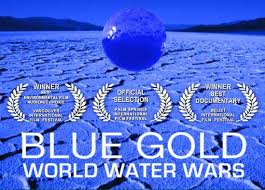
Blue Gold: World Water Wars

blue gold

Blue-Gold: World Water Wars (Sam Bozzo 2008)

Film Review

inspired by Canadian activists Maud Barlow and Tony Clarke’s book Blue Gold, this film opened my eyes to the reality that water scarcity is a far more serious and imminent problem than either fossil fuel scarcity or climate change. The film outlines three main areas in which public policy around water is urgently needed: run-off management, aquifer destruction and water privatization.

Water Run-Off

I previously believed that chemical and nutrient pollution was the greatest threat to our fresh water supply. However according to Blue Gold, run-off is actually the biggest problem – the loss of fresh water when rainwater winds up in the ocean instead of being trapped as groundwater. Fresh water only comprises  3% of global water (the rest is sea water), and much of it is so badly polluted it’s no longer useable.

The four main ways urbanization and development accelerate run-off include the construction of 50,000 dams worldwide, the paving over of soil with cement and asphalt, deforestation (destroying tree roots that normally trap water), and the destruction of wetlands (the destruction of mangroves and other plants that naturally purify water.

Aquifer Depletion

Aquifer depletion is largely due to industrial agriculture and the unregulated use of water in manufacturing, fracking and bottled water plants. Once the water from the aquifer is gone, it takes thousands of years to replace it. The film depicts several communities where citizens, across the political spectrum, have banded together to block Coca Cola and Nestle from taking their water. Some cases have involved long expensive court battles, with several corporations threatening individual activists with SLAPP (strategic lawsuit against public participation) suits.

Water Privatization, Desalination and Water Wars

The last half of the film focuses on water privatization, water desalination, and water wars. In many developing countries, water privatization is already a life and death issue. In several African countries,  the private corporations that own the public water supply set the price so high that people end up drinking polluted water and die. The decision by Bolivia to sell its fresh water to Bechtel sparked a mass rebellion and ultimately the collapse of the Bolivian government.

In the US, an alarming number of city water have been privatized and sold to corporations.

The worldwide move to construct water desalination plants to reclaim water from sea water is closely linked to the issue of privatization. In addition to being extremely expensive, water desalination greatly increases climate emissions owing to the massive amount of fossil fuel it requires.

Water Wars

Blue Gold gives several examples of historic water wars (in the US) and predicts where the next water wars are most likely to take place. They point to strategic US military bases around the Great Lakes and in Paraguay (across the border from a Brazilian aquifer that is one of the largest in the world). They also offer a possible explanation why the Bush family have acquired massive amounts of property in Paraguay.

The film ends on a positive note with recommendations for citizen activists:

  1. Learn where your water comes from – the name of the watershed and (if privatized) the name of the multinational corporation that controls it. Local communities need to actively fight attempts by local government to allow water extraction or the takeover of local water supplies by multinational corporations.
  2. Kick the bottled water habit. This is a trick advertisers play on you. It is no healthier for you than tap water (and may be less healthy owing to phthalates and bisphenol A from the plastic that may be linked with breast cancer and low sperm counts). The nasty taste of tap water is easily masked with a little lemon juice.
  3. Lobby your local and state leaders to
  • Remove hydroelectric dams and replace with newer, more eco-friendly microturbine technology.
  • Adopt an active run-off management plan in which lost groundwater is measured and minimized through eco-friendly development planning. One example is the Blue Alternative (in which groundwater is replaced by digging small catchment pools in open spaces).
  • Pass local and state resolutions and constitutional amendments recognizing access to fresh water as a basic human right. Uruguay has adopted the right to water in their national Constitution.

Enjoy:

Ending Corporate Rule: the Community Rights Movement

CELDF

One of the most successful anti-corporate relocalization movements is virtually invisible in the corporate media – namely the 13 year old community rights movement. With the help of the Community Environmental Legal Defense Fund (CELDF), nearly 200 communities across the US have enacted ordinances establishing local rights that can’t be usurped by corporations. They have done so despite corporate efforts to use state laws or the Constitution’s commerce clause to overturn them.

Clearly their strength lies in numbers. In Pennsylvania, for example, the state attorney general threatened to sue the town of Packer for banning sewage sludge dumping. In response, six other towns promptly adopted similar ordinances and 23 adopted resolutions of support. Nationwide the number of community rights statutes overturned by state courts and legislatures is surprisingly small, with more and more communities enacting them.

As CELDF states on their website:

“CELDF works with communities to establish Community Rights – such that communities are empowered to protect the health, safety, and welfare of their residents and the natural environment, and establish environmental and economic sustainability.

Community Rights is a paradigm shift, a move away from unsustainable projects and practices at the cost of communities and nature, and toward community decision-making, while recognizing and protecting our interdependence with nature.”

Banning Factory Farms, Toxic Sludge, Fracking and Aquifer Depletion

The citizens’ rights movement was born in 2000 when Belfast, in traditionally conservative rural Pennsylvania, passed a law prohibiting factory farms from operating within their township. In 2005 this law was upheld in court, and twelve other Pennsylvania townships have enacted similar ordinances. In addition to laws banning factory farms and sewage sludge, one community has banned mining and four have passed laws establishing ecosystem rights (i.e. that environmental protection trumps corporate rights).

Barnstead New Hampshire was next in passing an ecosystem rights ordinance, while five towns in New Hampshire and two in Maine have passed laws prohibiting the corporatization of water resources and aquifer depletion. Serious drought conditions across the US have greatly heightened national concern about shrinking aquifers and impending water shortages.

In 2010, Pittsburgh became the first major city to reject corporate rights after their city council passed a CELDF-drafted citizens’ bill of rights, as well as a law banning drilling for natural gas within city limits. Other communities on the Marcellus Shale (in Pennsylvania, New York, Ohio, West Virginia and Maryland) are working to pass anti-fracking laws similar to Pittsburgh’s.

Enacting Penalties for Chemical Trespass

Meanwhile on the West Coast, tiny Mt Shasta has successfully banned energy giant PG&E from engaging in local cloud seeding and Nestle from draining their aquifer for a bottling operation. The Mt Shasta Community Rights and Self Government Act asserts the right of the people of Mt Shasta to natural water systems and cycles and establishes strict liability and burden of proof for chemical trespass.

Chemical trespass is defined as the involuntary introduction of toxic chemicals into the human body. It’s based on a novel concept promoted by the CELDF and local democracy activists that corporations don’t have the automatic right to load up our bodies with cancer-causing chemicals. Halifax Virginia and three towns in Pennsylvania have also passed laws imposing penalties for toxic trespass.

In Washington State a bipartisan coalition called Envision Spokane has been fighting the monied interests that control Spokane City Council by trying to pass, via ballot initiative, a Community Bill of Rights.

Other recent citizens’ rights initiatives include the rejection by Orlando California of a Crystal Geyser bottling plant and the refusal of Flagstaff Arizona to sell water to a Nestle facility. Meanwhile a strong citizens’ rights group in Santa Monica is lobbying for an ecosystems rights ordinance, while People vs. Chemical Trespass is attempting to pass a local chemical trespass ordinance in Santa Cruz.

Fighting Corporations in Your Community

In addition to providing legal consultation, CELDF also conducts local democracy schools for communities seeking to enact community rights ordinances. Where states have balked at recognizing the legality of local anti-corporate laws, cities and towns have either passed stronger laws or changed their legal status (ending their Second Class Municipality Status) by enacting home rule charters and new constitutions).

Contact CELDF at http://www.celdf.org/

photo credit: 350.org via photopin cc

Blowing the Whistle on Homeland Security

dhs

Another Whistleblower Fights Back

Despite all the public support the Edward Snowden case has generated, the majority of whistleblowers suffer in silence. Below is an mind blowing interview with former US Customs inspector Julia Davis, who was declared a domestic terrorist by the Department of Homeland Security for following established protocol in reporting a potential security threat. In this case, the threat concerned border crossings of 25 individuals with known links to terrorist groups. As Davis indicates, she never dreamed of becoming a whistleblower – she was merely doing her job.

When she inadvertently exposed corrupt practices in the intelligence community, DHS retaliated by charging her with domestic terrorism. Although she was imprisoned twice, though she was ultimately exonerated of all charges.

DHS later justified the domestic terrorism charge on the basis she supposedly made derogatory statements about DHS. Davis tells a different story. She asserts the label of “domestic terrorist” is a ploy used against prospective whistleblowers because the Patriot Act denies terrorists important Constitutional protections.

She has come to the conclusion that the main function of DHS isn’t to protect Americans from terrorism but to harass dissidents and whistleblowers.

Davis has helped produce a documentary about her ordeal called Top Priority

Among other projects, she is undertaking an independent investigation of the systematic harassment against her husband and one of her supporters – both have died under mysterious circumstances.

photo credit: U.S. Army Corps of Engineers Los Angeles District via photopin cc