Greening the South Bronx

Greening the Ghetto
Majora Carter (2006)

Film Review

I make no secret of my belief that real political change must start at the local. To bone up on my organizing skills, I’m presently doing a master class called “How Communities Awaken”. It’s been decades since I took a formal class. For homework they’ve given two books and a flash drive full of videos, podcasts and journal articles.

Naturally I went for the videos first. This one is a 2006 TED talk by an African American environmental justice* activist from the South Bronx.

The most striking part of Carter’s talk is her narrative describing how local politicians and developers deliberately target politically vulnerable communities. I saw the exact same thing happen to Seattle’s central area in the 1980s.

As in Seattle, major Interstate expansion (to shorten the Manhattan commute for wealthy Westchester County residents) displaced thousands (600,000) of South Bronx residents. The family homes many had purchased became virtually worthless.

In addition to the Interstate, South Bronx residents have been saddled with four power plants, a sewage treatment plant and a toxic waste site. Due air pollution, one in four South Bronx kids has asthma, seven times the national average.

Fighting Back Through Community Empowerment

Carter describes how she and her neighbors turned this around by obtaining a $10,000 grant to transform a desolate Hudson River dump site into a park. And how this success led to the formation of a Green Wave movement in South Bronx.

In addition to building community and greatly improving the physical environment, her Green the Ghetto movement has translated into serious economic development. In addition to offering job training for ecological stewardship, her community started New York’s first green roof** installation business.

The end of the film features an intriguing interaction (i.e. putdown) with Al Gore about his patronizing response when she approached him about addressing environmental justice in his climate change slideshows.


*Carter defines environmental justice as the right of a community not to be saddled with an undue burden of environmental problems.
**A green roof is a living roof partly or completely covered with vegetation, to optimize energy conservation and minimize water runoff.

Is Left-Right Collaboration Possible?

unstoppable-large

  Unstoppable: The Emerging Left-Right Alliance to Dismantle the Corporate State.

Ralph Nader (2014)

Book Review

A long time consumer advocate, Nader has spent most of his career battling the corporate takeover of government and US society. Although most analysts place him to the left of the Democratic Party, he frequently allies himself with libertarians and populist conservatives in specific campaigns. He now maintains the only way to restore accountable Constitutional government is by forming what he calls right-left convergences.

Traditional Labels Meaningless

Nader begins by defining “right” and “left,” as both have ceased to have any real meaning. He devotes an entire chapter to dispelling the common myths people from opposite ends of the political spectrum have about each other. He begins by discussing the philosophical architects responsible for the basic principles that underpin conservatism and libertarianism, with special emphasis on Adam Smith, Ludvig Van Mises, Frank Meyer, Russell Kirk and Peter Viereck. He goes on to trace links between contemporary conservatism and the 19th century populist movement in which farmers fought big banks and big railroads. This movement, commonly referred to as the “populist” or “decentralist” movement, would eventually evolve into Goldwater and Reagan conservatism. Nader maintains that many contemporary Republicans who call themselves “conservative” are really corporatists or corporate statists – working primarily for the benefit of the corporations who put them into office.

The US Left represents too many different tendencies – liberals, progressives, socialist, anarchists – to agree on a single overarching political philosophy.

Although Nader doesn’t mention it, many prominent figures identified with the so-called Non-Communist Left have been discredited by accepting major funding from CIA pass-through foundations.1

Issues Ripe for Collaboration and Potential Obstacles

Nader identifies 25 potential issues that are ripe for collaboration between existing left and right-leaning movements (see below).2

He feels the biggest potential obstacle to potential is the knee-jerk ideological reaction of major party activists. It’s often hard to move Democratic Party loyalists past the tired knee-jerk reaction that conservatives are too narrow-minded, dogmatic and self-interested to be worthwhile coalition partners. Meanwhile many conservatives have the mistaken belief that all leftists are covert socialists who are only interested in big government, more welfare spending, more business regulation, more debt and and higher taxes.

Nader bemoans the tendency of ideologues from both ends of the political spectrum to get so focused in dogma and abstractions that they can’t lose sight of the constitutional crisis in front of them.

This is partly why left-right convergences tend to me more effective at the local level, where people are already shoulder-to-shoulder confronting the practicalities they face everyday. This is certainly consistent with what Susan Clark and Woden Teachout describe in Slow Democracy, their book on local direct democracy. It also reflects the the experience of the Community Environmental Legal Defense Fund (CELDF), which unites activists across the political spectrum in outlawing fracking, toxic sludge, factory farms and water bottling plants.

Examples of Successful Left-Right Collaboration

Unstoppable goes on to provide numerous examples of high profile right-left alignments in Congress (see below). 3

The main value of the book, in my view, is to remind us of the political power of strange bedfellow alliances and to discourage knee-jerk reactions to collaborating with people of different ideological persuasions. Since Unstoppable went to print, a left-right congressional convergence prevented Obama from going to war against Syria, and left-right convergences in Washington and Oregon passed ballot initiatives legalizing marijuana.


1Frances Stonor Saunders discusses this at length in her 1999 book Who Paid the Piper? The CIA and the Cultural Cold War.

2Personally, I think Nader’s list is too long. I myself would prioritize 6, 12, 14 and 22, as I already see evidence of left-right collaboration on these specific issues:

  1. Requiring annual auditing of the defense budget and that ALL government budgets (including the CIA and NSA) be disclosed.
  2. Ending corporate welfare and bailouts.
  3. Promoting efficiency in government contracting and government spending.
  4. Adjusting the minimum wage to inflation.
  5. Introducing specific tax reform as well as pushing to regain uncollected taxes.
  6. Breaking up the “Too Big to Fail” banks.
  7. Expanding contributions to charity, using these funds to increase jobs and draw on available “dead money” (i.e. recycle wealth from millionaires and billionaires).
  8. Legislating to allow taxpayers the standing to sue all government and “immune” corporations.
  9. Expanding direct democracy by introducing ballot initiatives in the states that don’t have them and simplifying recall processes.
  10. Pushing community self-reliance.
  11. Clearing away obstacles to a competitive electoral process.
  12. Restoring civil liberties.
  13. Enhance civic skills and experience for students.
  14. Ending unconstitutional wars and enforcing Article 1, Section 8 of the Constitution, which gives Congress the exclusive authority to declare war.
  15. Revising trade agreements to protect US sovereignty and ending fast track approval for treaties.
  16. Protecting children from commericialism and the physical and mental harm it causes.
  17. Ending corporate personhood.
  18. Controlling more of the commons than we already own.
  19. Getting tough on corporate crime.
  20. Ramping up investor power by strengthening investor-protection laws.
  21. Opposing the patenting of life forms.
  22. Ending the ineffective war on drugs.
  23. Pushing for environmentalism.
  24. Reforming health care.
  25. Creating convergent institutions.

3 Among many others:
• The left-right coalition that stopped the Clinch River Breeder Reactor in 1983
• The left-right coalition that passed the False Claims Amendment Act in 1986 to protect whistleblowers who uncovered fraud in government contracts. The passage of the McCain (R)–Feingold (D) Act to reform campaign financing in 2003.
• The left-right coalition Ron Paul formed with sympathetic Democrats to introduce a bill to legalize industrial hemp in 2005.
• The bill Ron Wyden (D) and Rand Paul (R) introduced to legalize industrial hemp in 2013.
• The bill Ron Wyden (D) and Lisa Murkowski introducing requiring the reporting of donations over $1,000 to any group engaged in federal political activity.


LISTEN…L I S T E N !


Inspiring Speech by Ex-Congresswoman Cynthia McKinney in Kuala Lumpar, Malaysia. She calls Malaysia the peace capitol of the world, presumably referring to their hearings on 9-11 and war criminals such as George W Bush. One begins to have some insight into a potential motivation for US and/or Israeli intelligence to take out Malaysian airliners.

merahza's avatarSatu Insan - Malaysia

Ex Congresswoman Cynthia McKinney Speech in KUALA LUMPUR

..

home

.

View original post

Street Politics 101

Street Politics 101

SubMedia.tv (2013)

Film Review

Street Politics 101 is a half hour video describing the six month student strike in Montreal in February 2012 against a $325 tuition increase. At one point, there were 400,000 protesters in the street, and they eventually overwhelmed police with smaller (numbering thousands) protests focused on “economic disruption” (e.g. blockading businesses, destroying corporate property and disrupting conferences). They eventually forced the Quebec premier to call a new election. When the Party Quebecois came to power, they rescinded the tuition increase.

The film outlines the step-by-step strategy the student organization Classe employed to expand the tuition hike protest to embrace broader anti-capitalist, indigenous and environmental issues. This strategy was extremely effective in drawing non-students into the movement. However, as often happens, unprovoked police violence was the most important draw card. Demonstrations were initially nonviolent until police viciously attacked nonviolent protestors. This led to both rioting, as well as “masking-up” to reduce protestors’ fear of defending themselves.

Peter Gelderloos notes the success of the Montreal student strike in his 2013 book The Failure of Nonviolence: From Arab Spring to Occupy. It meets all four of his criteria for a successful direct action: it gave hundreds of thousands of students direct experience in self-organization through debate and peoples assemblies and spread critiques of debt, austerity and capitalism throughout Quebecois and Canadian society. It was also uniformly denounced by ruling politicians and media and ultimately successful in winning student demands.

A Turkish Experiment in Direct Democracy

Taksim Commune: Gezi Park and the Uprising in Turkey

Global Uprisings 2013

Film Review

This short documentary tells the story of the occupation of Gezi Park and Taksim Square between May and July 2013. The occupation began as a protest against replacement of a popular park with high rise buildings.

Prime Minister Erdogan responded to the peaceful protest with unrestrained violence and brutality. This, in turn, awakened a broad cross section of Turkey to their underlying anger with Erdogan’s authoritarian regime. Young Turks are especially unhappy with massive youth unemployment related to the 2008 downturn and subsequent austerity cuts.

The occupation would eventually draw in unions, sports stars and fans, Muslims, Christians, atheists, ethnic minorities (e.g. Kurds) and even gay activists.

Like many of the Occupy encampments, the Taksim Commune came to provide food, medical care, market stalls and books for people involved in the protests. The film emphasizes the peoples’ assemblies that ran the Taksim Commune via consensus decision making.

This political unrest quickly spread across Turkey. In the intervening year, the grassroots movement against Erdogan’s authoritarian rule has continued to grow and exert its influence over Turkish society.

A British Experiment in Direct Democracy

Grasp the Nettle
Dean Puckett 2013

Film Review

As the 2008 downturn and subsequent austerity cuts push more and more families into unrelenting misery, there is growing sentiment that capitalism and our current political system (which is best described as corporatism or fascism*) cannot be reformed and need to be dismantled.

If capitalism is dismantled and/or collapses, it will need to be replaced. This is a major stumbling block for many activists. There seems to be wide general support for a system in which people govern themselves through direct democracy. However most of us feel a little vague as to how the mechanics will operate. How do you ensure everyone has an equal voice while simultaneously meeting their needs for food, shelter and protection from arbitrary violence?

The 2011 Occupy movement is the best known experiment in direct democracy, though some Occupy encampments were more “democratic” than others. People in several cities complained about hierarchical decision-making that excluded women and activists with less formal education.

Grasp the Nettle documents two similar occupations that predated Occupy London by a year. Both were started by antiwar activists. One, situated in a vacant lot, was designated an Ecovillage and focused on food production. The other, located in Parliament Square, was called Democracy Camp and focused on pressuring government to recall British troops from Iraq and Afghanistan.

Like the Occupy movement, both attracted a substantial number of people who had lost their jobs due to austerity cuts. Unlike Occupy Wall Street in Zuccotti Square, which made the decision to exclude homeless people from meals and decision making, Ecovillage and Democracy Camp embraced the homeless people who joined them as full members.

Grasp the Nettle is an important sociological study of direct democracy in action. Owing to deepening austerity cuts, the industrial world has created a permanent unemployed underclass that comprises 20-30 percent of the population. With the growing exclusion of young people and the disadvantaged from the formal economy, similar experiments with direct democracy are occurring throughout the developed and developing world.

*Fascism should more properly be called corporatism because it is the merger of state and corporate power.” Benito Mussolini

38 States Call for Constitutional Convention


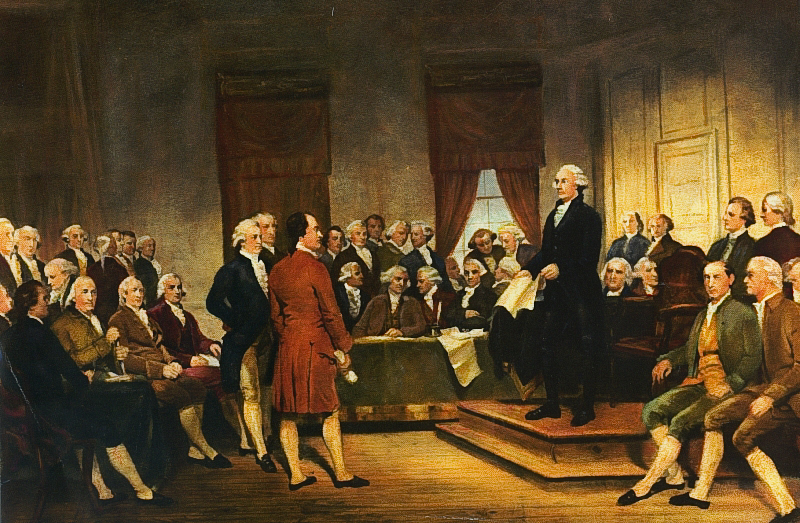
Washington_Constitutional_Convention_1787

Can Red and Blue States Unite to Save Democracy?

One news item receiving virtually no corporate media attention is that thirty-eight state legislatures have officially requested a constitutional convention under Article V of the US Constitution. There has only been one constitutional convention – the first – in 1787. Article V requires Congress to call a constitutional convention if 2/3 of (34) states request one.

Most, but not all the resolutions are from red states calling for a balanced budget amendment. However two blue states, California and Vermont, have requested a constitutional convention to end corporate personhood and restrict corporate funding for elections.

Tallying the numbers is a bit complicated. According to the Congressional Record, forty-nine states* have requested constitutional conventions. Eleven of these forty-nine states later rescinded their requests.

ALEC Seeks to Restrict Delegate Freedom

Forbes Magazine argues you also have to subtract the states which have passed a delegate limitation act. This would prohibit delegates from considering any amendments other than those requested by their state.

The American Legislative Exchange Council (ALEC), the lobby group founded and funded by the billionaire Koch brothers, is very keen to see all states pass a delegate limitation act and have even drafted model legislation.

ALEC and the corporations they represent believe the delegates to a constitutional convention must be closely controlled to prevent a runaway convention from passing amendments unfriendly to corporate interests – e.g. an amendment ending corporate personhood and limiting the ability of corporations to overrule state and municipal laws. Three states (Georgia, Indiana and Florida) have passed delegate limitation legislation. Another seven states (Idaho, Michigan, New Hampshire, Oklahoma, South Dakota, Virginia, and Wisconsin) are considering it.

Using a Balanced Budget Amendment to Abolish the Fed

Clearly ALEC is calling for a balanced budget amendment in the hope it will force the federal government to cut spending for Social Security, Medicare and other social programs. This strategy could backfire if it leads to a debate on abolishing the Federal Reserve and stripping private banks of their power to create money.

Eliminating federal debt will be extremely difficult, if not impossible without scrapping a system in which nearly all our money is produced as debt (i.e. loans by private banks). There’s growing grassroots support on both the right and the left to abolish the Fed (see James  Corbett’s excellent documentary explaining how banks create money out of thin air.) A constitutional convention could be the ideal scenario to make this happen.

Why Red and Blue States Need to Work Together

red and blue states

California and Vermont are only the first of many blue states in the Move to Amend coalition seeking a constitutional convention to end corporate personhood. The vital question here is whether red states seeking a balanced budget amendment will be open to talking to blue states seeking to limit the de facto ability of corporations to overturn state and municipal laws.

The corporate media has been extremely cagey of late about magnifying the distrust and enmity between the two camps. I find this quite sad as there are many issues on which the so-called “extreme” right and left agree, like ending NSA spying, ending the wars in the Middle East, abolishing the Fed, restoring civil liberties guaranteed under the Bill of Rights, ending the President’s abuse of executive power and curtailing the power of the corporate oligarchy.

I think it’s a very good sign that a non-partisan group called Friends of the Article V Convention is keeping count of the states. There has been some talk the Friends may file suit if Congress fails to set wheels in motion for a constitutional convention.

States Seek Broad Range of Amendments

In addition to requesting a constitutional convention to pass amendmentss calling for a balanced federal budget and an end to corporate personhood, various state petitions seek amendments to limit federal income taxes, to begin negotiations for a world federation (i.e. one world government), to change apportionment for the Electoral College and the House of Representatives, to increase federal revenue sharing, to end federal interference in school management, to guarantee a right to life, to end unfunded federal mandates, to end judicial taxing power, to establish term limits for federal office holders and to restrict new laws to a single subject.

There are a few more I would add to this list, including constitutional amendments abolishing the Electoral College, restoring Posse Comitatus and limiting the ability of the President to rule via executive order. I’m sure readers have their own personal favorites.

*The 49 states which have formally requested a constitutional convention:

  • Alabama: balanced budget, June 2011
  • Alaska: federal fiscal restraints and term limits, April 2014
  • Arizona: ending judicial taxing power, Mar 1996, rescinded 2003
  • Arkansas: right to life amendment, May 1977
  • California: abolish corporate personhood, June 2014
  • Colorado: unfunded federal mandates, June 1992
  • Connecticut: prohibit interstate income tax, May 1958
  • Delaware: balanced budget amendment, Feb 1976
  • Florida: balanced budget, term limits, limit laws to 1 subject, April 2014
  • Georgia: balanced budget, Feb 2014
  • Idaho: limit income tax, April 1989, rescinded 1999
  • Illinois: increase federal revenue sharing, June 1976
  • Indiana: right to life, balanced budget, 1977, 1979
  • Iowa: balanced budget, June 1979
  • Kansas: balanced budget, May 1978
  • Kentucky: change apportionment for House, Oct 1965
  • Louisiana: balanced budget, May 2014
  • Maine: limit income tax, April 1941
  • Maryland: right to life, Jan 1977
  • Massachusetts: right to life, 1977
  • Michigan: balanced budget, Nov 2013
  • Minnesota: change apportionment for House, May 1965
  • Mississippi: right to life, Feb 1979
  • Missouri: unfunded federal mandates, Mar 1993
  • Montana: change apportionment for Electoral College, Mar 1973, rescinded 2007
  • Nebraska: balanced budget, April 2010
  • Nevada: right to life, unfunded federal mandates, June 1979
  • New Hampshire: balanced budget, May 2012
  • New Jersey: right to life, April 1977
  • New Mexico: balanced budget, Feb 1979
  • New York: federal interference with school management, Oct 1972
  • North Carolina: balanced budget, Feb 1979
  • North Dakota: end judicial taxing power, Mar 1996
  • Ohio: balanced budget, Nov 2013
  • Oklahoma: change apportionment for Electoral College, May 1965, rescinded 2009
  • Oregon: balanced budget, Feb 1979, rescinded 1999
  • Pennsylvania: balanced budget, Feb 1979
  • Rhode Island: right to life, May 1977
  • South Carolina: balanced budged Feb 1979, rescinded 2004
  • South Dakota: unfunded federal mandates, rescinded 2010
  • Tennessee: balanced budget, April 2014
  • Texas: balanced budget, Mar 1979
  • Utah: right to life, rescinded 2001
  • Vermont: corporate personhood, April 2014
  • Virginia, change apportionment for House, May 1964, rescinded 2004
  • Washington: change apportionment for House, Mar 1963
  • West Virginia: increase federal revenue sharing, Jan 1971, rescinded 2001
  • Wisconsin: change apportionment for Electoral College, Mar 1963
  • Wyoming: change apportionment for House, mode of amending constitution, Feb 1963, rescinded 2009

Photo credit Wikimedia Commons

Also posted in Veterans Today

Reverend Billy vs Monsanto Robot Bee Drones

 robobee

from http://www.revbilly.com/

Below is a ritual Robobee exorcism Reverend Billy and the Church of Stop Shopping performed in the Harvard labs on May 25, 2014

The world is facing massive die-off of bee populations, thanks to heavy use of pesticides manufactured by Bayer and Monsanto.

The loss of bee populations severely threatens global food production (70-80% of plant and animal foodstuffs depend on bee pollination).

In response, the EU has banned pesticides found to be harmful to bees.

In contrast the US Department of Agriculture (USDA) has declined to enact a similar ban in the US, largely due to massive congressional lobbying by Monsanto.

Instead Harvard University is researching the creation of tiny drone bees – called Robobees – to replace the bees killed off by pesticides. Unbelievable, isn’t it – the lengths scientists and governments will go to to avoid doing the right thing.

Support the work of Reverend Billy and the Church of Stop Shopping at http://www.revbilly.com/

Memoir of a Standup Revolutionary

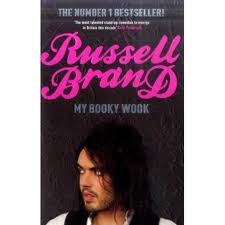
my booky wook

My Booky Wook: A Memoir of Sex, Drugs and Standup

By Russell Brand (2007 Hodder and Stoughton)

Book Review

I have a particular interest in the background influences that radicalize people. In my view, this is the main value of Russell Brand’s 2007 autobiography. I had never heard of Brand, a 38 year- old British stand-up comedian and TV personality, until his interview with talk show host Jeremy Packman went viral on YouTube. Brand had just been selected to guest edit an issue of The New Statesman, an edition that featured his essay advocating revolution to overthrow the current political system.

The inspiration for the autobiography grew out of Brand’s treatment for drug, alcohol and sexual addiction. Making an uncompromising moral inventory of family and friends we have wronged in the course of our addiction is a major feature of all 12 step programs. Despite the tendency of most Step 4 confessions to be maudlin and self absorbed, Brand’s timing and zany self-deprecating humor carries over into his writing. My Booky Wook is well constructed and fast paced and any dull bits have been edited out.

Predictably Brand’s early history shares many common features with behavior disordered kids who go on to become revolutionaries. Like many gifted children whose intelligence is stifled, rather than encouraged, Brand used his cleverness to seek act attention and approval from his classmates. The more his teachers punished him for his disruptive behavior, the more he sought out the company of neighborhood drop outs, eventually getting caught up in their drug and alcohol use and petty criminal behavior.

Like many generation Xers, Brand had no working class allegiance as a child. Neither of his parents identified as working class. As a single mom, his mother was limited to low paid short term jobs with flexible hours, in order to accommodate her parenting obligations. Though most single mothers find themselves limited to similar dead end jobs, neither society nor their society nor the women themselves are inclined to view them as blue collar work. A perennial salesman (e.g. double glazing, water filters, market stalls), Brand’s father swallowed the myth that he was capable, if he worked hard enough, of creating his own future. Ironically his income was never sufficient to stretch to child support.

Brand himself only began to identify with his working class origins through his drug use. Establishing himself as a stand-up comedian required him to tour, and his heroin addiction required him to seek out the disadvantaged section of any new cities he visited. Impressed by the marked divide between the intense squalor he encountered and the lifestyles of the corporate elite, he began to educated himself politically by visiting Cuba and reading dissident writers like Noam Chomsky and Naomi Klein.

Link to Brand’s New Statesman essay:  Is Utopian Revolution Possible?

Below Brand calls for revolution in Parliament Square:


Gun Ownership and the Nonviolent Civil Rights Movement

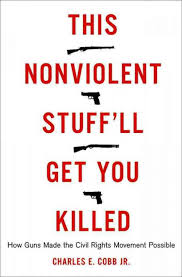
this non violent stuff

Charles E Cobb is a long time African American journalist who participated in the southern freedom movement etween 1962 and 1966. His purpose in writing This Nonviolent Stuff Will Get You Killed is to correct the revisionist “white” view of the 1960s civil rights movement.

The version of the civil rights movement taught in schools and universities is written by white historians who, for the most part, lay out historical events and omit the thinking that led to them. Or even worse, instead of asking movement veterans what they were thinking, offer a retrospective analysis of what they must have been thinking.

It was a problem Frederick Douglass frequently faced in his dealings with white abolitionists. Afraid he would appear “too learned” to be convincing, they told him, “Just give us the facts – we’ll take care of the philosophy.”

One important fact often “whitewashed” out of history is the use of guns in the southern civil rights movement. Guns have always been fundamental to rural life, in both black and white communities. In the 1960s, they were essential for the survival of black farming families – for hunting food, killing varmints in the garden and protecting themselves against terrorist raids by Night Riders and the Ku Klux Klan.

White southerners made it pretty obvious that they were prepared to kill African Americans – and their families – if they registered to vote. Despite his highly publicized use of nonviolence as a tactic, Martin Luther King had bodyguards who carried pistols to protect him. and Fanny Lou Hamer used a shotgun to protect her house against white “crackers.” Armed African American World War II and Korean War veterans – in some areas formally organized as The Deacons for Defense and Justice – carried weapons to protect workers from CORE (Congress of Racial Equality) and SCLC (Southern Christian Leadership Council).

No white people were ever killed by these guards: it was sufficient to convey the message that blacks were willing to defend themselves.

As Cobb points us, no white person is willing to die for white supremacy.

Cobb is a great story teller and sheds important insights about the curious relationship between outside organizers and rural African American farmers as they set about building their trust.

It was my intention to embed Cobb’s 90 minute C-SPAN presentation about his book, but YouTube has censored the video by taking it down. So you have to click on the following link:

http://www.c-span.org/video/?319435-1/guns-civil-rights

Charles E Cobb