History of the World: Global Revolution and Australian Genocide

The History of the World Part 6 – Revolution

BBC (2018)

Film Review

Episode 6 focuses mainly on attitudinal changes occurring in the 17th and 18th century that would lead to the overthrow of royal rule in the southern half of North America, France, and Haiti.

The episode links the rise of revolutionary ideas rather simplistically to Galileo’s challenge (attributed to his invention of the telescope in the early 17th century) to official Catholic dogma placing the Earth (rather than the sun) at the center of the solar system. s revolve around the earth. They neglect to mention a Catholic cleric named Nicolaus Copernicus was the first to propose a heliocentric view of the universe 100 years earlier.

The film also oversimplifies the root causes of the US War of Independence. While they accurately depict efforts by Samuel Adams and other wealthy merchants and landowners use of the hated Stamp Tax to stir up the Boston mob, historical evidence suggests their key motivation in declaring independence was George III’s ban on settler expansion into Native American territory west of the Appalachians. As Roxanne Dunbar Ortiz reveals in The Indigenous History of the United States, the main purpose of the Stamp Tax was to finance British troops to evict settlers who were illegally squatting on Native land.

By 1789, Louis XVI had bankrupted the French royal treasury by financing the American rebels. Punitive new taxes on the middle class (the nobility, typically, refused to pay tax) would trigger a mass insurrection that removed the king from power. Yet only seven years after the revolutionaries declared France a republic, the same middle class would allow Napoleon to declare himself emperor of France.

In 1791, inspired by the French Revolution, the slaves of Haiti would revolt, overthrowing their white plantations owners and declaring their independence from France.

One of the longest segments of this episode concerns the British settlement of Australia, following its “discovery” by Captain James Cook. Beginning in 1787, British judges would sentence petty criminals (many of them children) to hard labor in Australia. Thanks to the European “Enlightenment,” it was no longer politically acceptable to hang British poor who stole food to survive.

By 1900, 80% of Australia’s aboriginal population would be wiped out , thanks to colonial policies that allowed British settlers to steal their lands by hunting and massacring them.

The film ends with a bizarre segment extolling Dr Edward Jenner for his role in promoting the use of smallpox vaccine. Historic evidence reveals that inoculation for smallpox first originated in China in 1000 AD and was practiced in Turkey and Africa long before making its way to Europe.


Airbrushed From History: The Founding of Russia, the Islamic Role in the European Renaissance, Mali, and Genghis Khan’s Pax Mongolica

History of the World Part 4 – The Middle Ages

BBC (2018)

Film Review

Episode 4 is my favorite as covers numerous topics airbrushed out of mainstream history textbooks.

It begins with the founding of the city-state of Kiev by Oleg of the Viking Russ tribe in 882 AD and his domination of the Dnieper River and the Black Sea and East-West trade out of Constantinople. Sixty years later, the King of Kiev Vladimir the Great would adopt the orthodox Christianity practiced in the Byzantine Empire.

The film goes on to describe the flourishing classical (Greek and Roman) learning in the Islamic Empires urban centers, particularly Cordova (in modern day Spain) and Bukhara (in modern day Uzbekistan).

A substantial portion of this episode focuses on the conquest of the largest land empire ever in the 12th and 13th century AD by the Mongol Genghis Khan. His main legacy was Pax Mongolica, which led to the reopening of the Silk Road, restoring land-based trade between Europe and Asia. This would lead to Venetian Marco Polo’s famous visit to China in 1275 AD, where he served 12 years as special advisor to the Mongol Chinese Emperor Kubla Khan.

The last empire discussed is the vast African empire of Mali, which was unknown to the western world until the emperor Mansa Musa (a devout Muslim) arrived in Cairo in 1324 with 60,000 followers. They were on a 2,000 mile pilgrimage to Mecca.

The film finishes by exploring the role of Muslim scholarship in the revival of ancient Greek and Roman knowledge in the Italian city states – and ultimately the European Renaissance. It uses as an example of Leonardo da Vinci’s famous fresco The Last Supper. The latter incorporates the laws of perspective, largely based on Muslim innovations in math and geometry, and the knowledge of human anatomy the Muslims inherited from the ancient Greeks.


More History You Didn’t Learn in School: The Nazca Empire (100 BC) in Southern Peru

World History Part 3 – The Word and the Sword

BBC (2018)

Film Review

Part 3 traces the rise of the Quin dynasty in China, the Mauryan empire in India, the Roman empire, the Nazca empire in South America, and the first Islamic empire. It also traces the development of world religions that arose in reaction to the barbarous violence of empire building. In my mind the ghoulish reenactments of human sacrifice and the popular Roman spectacles of massacring Christians in the Coliseum significantly detract from the film.

The film starts by contrasting the rise of the Quin empire with that of the Mauryan empire in the 3rd century BC. After coming to power, the Mauryan emperor Ashokan embraced Buddhism, renouncing violence and issuing a universal of human rights. In addition to sending Buddhist missionaries across the known world from Vietnam to the Mediterranean, he abolished the slave trade and established schools and hospitals for the poor.

It goes on to cover the rise of the Roman empire, which owing to an alliance between Julius Caesar and Cleopatra in 48 BC made Egypt a Roman colony.

In this context, it traces the rise of Christianity, thanks to the missionary zeal of Saul of Tarsus (St Paul), who dedicated his life to spreading the Christian faith to non-Jews, and the Christians’ cult of martyrdom in the face of Roman persecution.

The Nazca Empire, which emerged in South America in 100 BC practiced human sacrifice to guarantee soil fertility and protect their civilization against natural disasters. The empire vanished owing to the inhabitants’ depletion of verango trees they relied on for fuel and food. Without tree roots to anchor it, fertile soil was washed away and the region became a desert.

The film ends with the rise of Islam on the Arabian Peninsula in the 7th century AD and the role of Bilal, a freed African slave, in uniting warring Arabian tribes in a religion that united belief in jihad with conquest. Within 120 years, Muslims controlled more territory than the Romans, extending from Central Asia to Spain.

More Ancient History They Don’t Teach in School

History of the World Part 2

BBC (2018)

Film Review

Part 2 of the BBC “History of the World” series covers the rise of the first western empires. This is commonly referred to as “ancient history,” a subject no longer taught in US schools (recently, however, it seems to be a popular topic for Hollywood features films). Although the reenactments in Part 2 are shorter and more plausible, Part 2’s failure to cover non-Western empires is a serious weakness.

The empires described include

  • The Assyrian Empire (2,500 – 609 BC) – focusing on the rule of Sennacherib (705-681 BC), who initiated the use of “total warfare” (killing non-combatant elderly women and children) and “shock and awe” terror tactics to subjugate neighboring nations. Sennacherib created the blueprint for every subsequent tyrant who has sought to rule by terror.
  • The Persian Empire – founded by Cyrus the Great with the conquest of the Median, Lydian, and Babylonian empires in 550 BC. Unlike Sennacherib, Cyrus ruled via by diplomacy and sought to integrate the various cultures under his rule.
  • The brief empire ruled by Alexander the Great (334-323 BC) – which included Turkey, Egypt, North Africa, and Asia Minor to the Indian border. Like Cyrus, Alexander also attempted to integrate the different cultures under his rule.

Part 2 goes on covers the rise of democracy in the city-state of Athens in the 6th century BC and their successful rebuff of a much larger Persian army that tried to conquer them.

This episode also explores the life and teachings of Gautama Buddha (5th-6th century BC) in India, Confucius (551-479 BC) in China and Socrates (470-399 BC) in Athens. All three promoted philosophies that were at odds with the violent and hierarchical empire building of the times.


History of the World: BBC Version

Survival: History of the World Episode 1

BBC (2018)

Film Review

This informative eight-episode BBC series is framed as a history of the species Homo sapiens. In reality, it’s a gruesome history of Western imperialism, but I didn’t figure this out until Episode 7. Obviously aimed at a millenial audience, the melodramatic reenactments are too long and a bit nauseating (especially the really gory scenes depicting human sacrifice and torture).

Part 1 begins 70,000 years ago with the 1,000 fully evolved members of the homo sapiens species leaving Africa by crossing the Red Sea to the Arabian peninsula. At this point in their development, they possess both language and weapons. Following the trails created by migrating herds, they head east towards India and South East Asia and north towards Europe. Some would reach Australia by 50,000 BC, Europe by 45,000 BC and North America (via the Bering Strait) by 15,000 BC (other non-BBC sources suggest they reached North America by 30,000 – 40,000 BC and were well in place by 15,000 BC).

In Europe, homo sapiens encounter Neanderthals, a second species of human apes which migrated there (from Africa presumably?) around 150,000 BC. Homo sapiens and Homo neanderthalis coexisted in Europe (and according to modern DNA analysis interbred) for between 5,000 – 10,000 years. The Neanderthals become extinct, around 30,000 BC, possibly because tools and language help Homo sapiens compete more successfully for limited game.

During the 27,000 – 16,000 BC ice age, most of Europe is covered with vast sheets of ice. As the climate begins to warm, homo sapiens hunter gatherers in the fertile crescent region of the Middle East learn how to domesticate plants and animals. This knowledge spreads north to Europe over the next 1,000 years. A parallel agricultural revolution also occurs in China, India and South America.

This new found ability to produce their own food leads nomadic hunter gatherers to begin settling in permanent towns and villages.

In cataloguing the earliest evidence of “civilized” society, the filmmakers start with 4,000 BC China, which had a population of about 2 million. Next they highlight the Minoan civilization in Crete around 3,700 BC. Estimated to number approximately 100,000, the Minoans produce aqueducts, multistory architecture, and bronze weapons and jewelry. They also engage in human sacrifice to appease gods who inflict earthquakes and volcanoes on them.

In 3,200 BC Egyptian civilization develops the first written language, which enables them to develop a legal system and the first recorded history.

What We Don’t Learn in School About Electricity

The Story of Electricity

BBC (2018)

Film Review

My initial reaction on watching this fascinating documentary was sadness (and anger) that there is no effort to teach the history of science in high school. Some of this history revolves around genius and creativity. However much of it revolves around capitalist greed (eg Marconi, who wasn’t a physicist, received the Nobel Prize for Physics in 1905 for patenting someone else’s discovery).

Instead of learning the simple steps early scientists and inventors followed to harness electrical energy, we’re led to believe electrical science is far too complex for ordinary people to understand. In this way most of us are compelled to rely on the scientists and technicians employed by corporate monopolies to get our basic needs met.

This 3-hour documentary consists of three 1-hour episodes:

Hour 1 is devoted to the the discovery of static electricity (by the ancient Greeks) and the widespread use of static electricity generators in the 18th century by magicians and street vendors. It covers Ben Franklyn’s mythical experiments with lightening (which were actually carried out by his French admirers), the development of the world’s first batteries (used in a sensational experiment to make a corpse sit up), and the the influence of similar popular spectacles on Mary Shelley, the author of Frankenstein’s Monster in 1818.

Hour 2 covers Oestad’s and Faraday’s experiments to pass electrical current through a wire, their near simultaneous discovery of their link between electrical current and magnetism, and Faraday’s use of this knowledge to create the first primitive electric motor in 1821. It also covers the international battle to create the first incandescent electric light bulb and the battle between Edison and Tesla (backed by industrialist George Westinghouse) to win monopoly control of New York’s first electrical grid. Edison’s DC (direct current) grid could only carry transmit current a mile from the power station, whereas Tesla’s AC (alternating current) grid could transmit current for hundreds of miles. Finally it covers Oliver Lodge’s invention (employing silicon crystals) to transmit and receive electromagnetic waves (aka radio waves), which Marconi coopted to use in his wireless telegraph.

Hour 3 examines how silicon crystals were abandoned in favor of vacuum tubes (aka “valves”) in the early radio, TV, and computer technology and how after World War II; Bell Labs and subsequently Silicon Valley revisited the “semiconducting”* properties of crystals in the development of ever faster, cheaper and smaller radios computers and cellphones.


*This is totally untrue. I still recall my father teaching me how to make a crystal radio receiver from the quartz crystal I got as a prize from a cereal box.

**By definition, a semiconductor can only transmit electrical current one way. When a light photon strikes a semiconductor, it releases an electron (the basic principle enabling solar photovoltaic panels to create electricity.


1177 BC: The Year Civilisation Collapsed*

When Civilisation Collapsed

The Histocrat (2019)

Film Review

I have always been morbidly fascinated by ancient history, largely because most public schools refuse to teach it. I wanted to major in ancient history at university but was scared off by the surplus of PhD cab drivers in the late sixties.

This intriguing documentary concerns a four-century “dark age” in the late Bronze Age between 1200 and 800 BC. It began when four powerful empires collapsed more or less simultaneously. Because literacy also collapsed, there is no written history describing this period. Thus nearly everything we know about it is based on archeological evidence and oral history Homer captured in the Iliad and the Odyssey.

The four Bronze Age Empires that collapsed are Egypt, the Hittite empire (in Asia Minor), the Mycaenean empire (Greece), and the Assyrian empire (in Mesopotamia).

For several centuries prior to their demise, these prehistoric empires battled each other on their borders and traded territory back and forth.

Since the late 19th century, most historians have blamed their collapse on an invasion by mysterious “Sea Peoples.” However as laid out in this documentary, except at Troy (aka Ilium, aka Wilusa), there is no archeological evidence supporting a major military invasion.**

Based on contemporary archeological evidence, the film argues that a combination of natural disasters (earthquakes, droughts and famines) internal revolts, and a surge in sea piracy*** is a more likely explanation.

By the time written language reappeared in the 8th century BC, a number of new tribes and languages had appeared. Athenian and Dorian tribes had migrated into Greece, Phoenicians and Philistines had migrated into the Levant,**** the new kingdom of Lydia had expanded to cover most of Asia Minor. Assyria would ultimately expand to become the largest empire the world had seen.


*Professor Eric H. Cline’s book 1187 BC: The Year Civilisation Collapsed is credited as a main source for this documentary.

**According to archeological evidence, the Greco-Trojan war most likely occurred between 1300 and 1200 BC.

***All four empires were dependent on Mediterranean trade, especially for copper (from Asia Minor and Cyprus) and tin (from Afghanistan and the Balkans) needed to make bronze.

****Area including modern day Syria, Israel, Jordan, Palestine, and Lebanon.


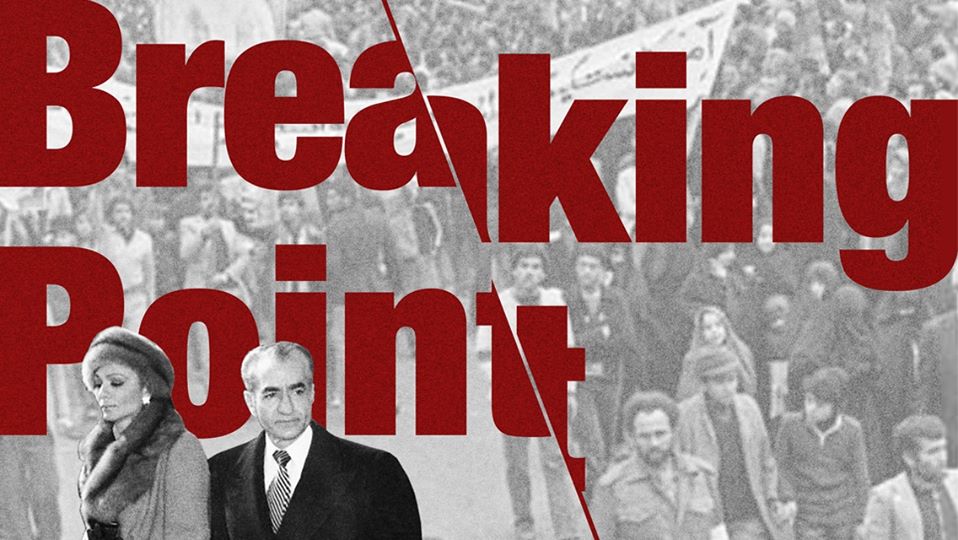
Breaking Point: The 1979 Iranian Revolution

Breaking Point

Press TV (2019)

Film Review

Since Google (which owns Youtube) has banned Press TV’s YouTube channel, Iran’s national broadcaster has started their own documentary channel.

I’ve just watched an excellent two-hour documentary on the Iranian Revolution. Up to this point, my only exposure to the 1979 revolution overthrowing Shah Reza Pahlavi came from a handful of CIA-scripted Hollywood films and a book by former Israeli agent Ronen Bergman.

The documentary begins with the 1953 US/UK coup against democratically elected Mohammad Mosaddegh, following his nationalization of Iran’s oil industry. Four years after the CIA  reinstated Pahlavi as Shah, they worked with Israel to help him create the Savak, a massive intelligence/police force that was even more intrusive and brutal than the East German Stasi.

In 1963, fearful of growing popular discontent, the US pressured the Shah to undertake a series of reforms, including land reform, forest nationalization, electoral reform (including voting rights for women), and and a scheme granting company shares to factory workers. His error was putting corrupt family members and military officers in charge, who pocketing most of the funding allocations for their personal use.

As of 1975, 60% of Iranians still lived in rural villages, where only 1% had access to electricity or clean drinking water. In fact, extreme rural poverty led to the steady migration of landless farmworkers to Iran’s cities, where they became peddlers, beggars, and prostitutes.

The Shah’s decision not to participate in the 1973 oil embargo* led to a massive increase in Iran’s oil export income – from $4 billion to $20 billion. The Shah would use a substantial portion of these funds to industrialize Iran and create an educated Iranian middle class. However he squandered most of it on a network of nuclear power plants and advanced military hardware that even European NATO members couldn’t afford.

Ayatollah Khomeini, the so-called Gandhi of the Iranian Revolution, first came to prominence in June 1963, when he was arrested for a speech publicly denouncing the Shah, the US, and Israel. The mass uprising following his arrest was quashed after the Shah declared martial law. Fearful of further unrest, the Shah, who originally intended to execute Khomeini, merely exiled him (first to Turkey, then Iraq).

For years, tapes of Khomeini’s speeches were smuggled into Iran, where they became extremely popular among students. In 1969, Khomeini (from Iraq) called for the Shah’s overthrow and establishment of an Islamic Republic. By the mid-1970s, nearly all Iranian opposition groups had united behind Khomeini,** including many ex-communists and the secular National Front (founded by Mosaddegh supporters).

When Carter became president in 1977, he again pressured Iran to undertake political and social reforms. The filmmakers believe the reforms (including greater press freedoms, release of political prisoners, and withdrawal of troops from the universities) merely emboldened the resistance movement, resulting in a wave of mass protests and general strikes. By late December, a prolonged general strike brought the economy to a standstill, with Iranian troops refusing orders to fire on strikers or protestors.

In January 1979, the Shah fled the country, and on February 1, three million Iranians turned out to hail Khomeini’s triumphant return from Paris (he was expelled from Iraq in October 1978).


*The embargo instituted by the Organization of Arab Petroleum Exporting Countries was aimed at nations supporting Israel is the 1973 Yum Kippur War.

**Unlike Sunni Islam, the Shi’a religion has a long history of rebellion against authority.

Although the video can’t be embedded, it can be view free at Breaking Point or at Press TV’s Facebook page (for now): https://www.facebook.com/PressTVdocumentaries


The History of Algorithms: From Choosing Basketball Teams to Reducing Pilot Error

The Undoing Project: The Friendship that Changed Our Minds

By Michael Lewis

WW Norton (2016)

Book Review

This is a book about the pioneers in the movement to improve human decision making with data collection and statistical methods. It focuses on the work of Daryl Morey, Amos Tversky and Daniel Kahneman. Morey was a math nerd who taught the sports world to rely on data collected on prospective players to facilitate their selection by professional teams. Morey first brought this process to public attention in the late eighties as the general manager of the Houston Rockets baseball team. This approach would quickly be adopted to predict performance in basketball, football, banking, political campaigns, movie production, and farming. At present, the use of data-based “algorithms”* extends to nearly every area of human endeavor.

Most of the book focuses on the unique 15-year partnership between Israeli psychologist Amos Tversky and Daniel Kahneman. As with most of his books, Lewis’s forte is unraveling the intricacy of interpersonal relationship. In The Undoing Project, his main focus is to explore the unique creative relationship behind their revolutionary work.

Tversky, a giant in the field of mathematical psychology, had a special interest in ascertaining how people make choices and decisions. In their initial work at Hebrew University, he and Kahneman assisted the Israeli Defense Force in identifying objective data to determine which troops would perform best in combat.

Their research probably had the most impact on so-called free market economics. Prior to their ground breaking work, most economists believed consumers had rational reasons for the purchases they make.

The work of Tversky and Kahneman also challenged the notion of “expert judgement” in many fields, eg the inability of psychologists/psychiatrists to predict dangerous in patients and of radiologists to accurately diagnose cancer from x-rays. In both areas, Tversky’s and Kahneman’s work facilitated the development of algorithms that were far more reliable than human experts, whose judgement is often impaired by boredom, fatigue, stress, and unconscious biases.

In addition to advising the National Basketball Association, NATO, and the US Secret Service on reducing the fallibility of human decision making, the pair also played a role in reducing pilot error on commercial aircraft.

Kahneman won the 2002 Nobel Prize in Economics. Tversky was nominated for the Nobel Prize in 2996 but died of melanoma before it could be awarded.


*By definition an “algorithm” is a set of mathematical instructions that are followed in precise order to solve a problem.

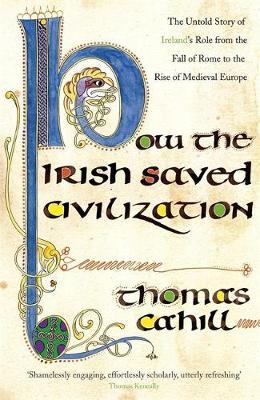
How the Irish Saved Civilization

How the Irish Saved Civilization: The Untold Story of Ireland’s Role from the Fall of Rome to the Rise of Medieval Europe

by Thomas Cahill

Hodder and Stoughton (1995)

Book Review

This book covers the history of Ireland from the fall of the Roman Empire in the 5th century to the sacking of most Irish monasteries by Viking invaders in the 11th. It mostly focuses on the life of St Patrick (aka Patricius), a Romanized Britain kidnapped into slavery by Irish pirates in 401. In Ireland, he was forced to work as a shepherd for six years until he heard God’s voice telling him he was free to leave.

On his return to Britain, he undertook religious studies to become a priest and bishop and returned to Ireland as a missionary – the first in Church history to minister to so-called “barbarians.” He was also the first person in history to speak out against slavery.

In addition to converting Irish Celts to Christianity, St Patrick played a crucial role in establishing a network of Irish monasteries. As Ireland lacked significant population centers prior to the Viking invasions, these monasteries served as hubs of wealth, art and learning.

As barbarian hoards overran most of the former Roman Empire, most European libraries were burned and “copyists” who had copied classical texts (mainly for the wealthy Roman elite) vanished everywhere except in Irish monasteries.

The Irish invented the “codex,” a method of producing books as multiple pages of parchment rather than a single scroll. Like the Jews before them, the Irish enshrined literacy as a central religious act. Irish was also the first vernacular language to be used (written down) for popular literature, at a time when books elsewhere in Europe were all in Greek or Latin.