Spain’s 1936 Revolution – an Anarchist View

Living Utopia: The Anarchists and the Spanish Revolution

Directed by Juan Gamero (1997)

Spanish with English subtitles


In this documentary, the history of the 1936 Spanish revolution is told by anarchists* who actually participated in it. What imperialists commonly refer to as the Spanish Civil War, Spanish anarchists refer to as the Spanish revolution. The revolution lasted from 1936-39 before the counterrevolution, led my Franco, Hitler, Mussolini and Stalin (in conjunction with the western powers), overturned it.

The film begins by describing the roots of Spain’s anarchist movement, in Europe’s first workers society, formed in Barcelona in 1840. In 1902, they organized the first free (ie non-Catholic schools) to combat Spain’s high illiteracy rate (50%). In 1910 they formed the CNT (Confederación Nacional del Trabajo) and won an 8-hour day through a series of major strikes. By 1919, the CNT had a membership of 700,000.

Banned in 1923, the CNT organized in secret, until 1931 when the king was deposed. By this point they had one million members. However 90% of them boycotted the 1934 election. This enabled fascists to take control of the government and reverse most of the land and other reforms enacted by the Republic.

CNT Steps Up to Defend Against Franco’s Coup

In 1936, the CNT united with other Spanish leftist groups to elect a National Front government. Under General Franco, the military’s response was to launch a military coup. Failing to organize any  resistance, the government of the Republic crumbled. Thus it was left up to civilians to organize military resistance to prevent the fall of Madrid – as well as to organize basic survival infrastructure in the territory under their control.

The CNT joined with other resistance forces to form the Anti-Fascist Militias Committee. As volunteer militias marched towards the front line, they assisted rural peasants in bringing in the harvest and expropriating barren land from large landowners to put it into cultivation. A total of 7 million peasants voluntarily formed collectives.

Republic Crumbles Leaving Civilians to Re-organize Society

In the cities and villages, working people seized large buildings to provide lodging for the homeless and set up committees to distribute food, clothing and other necessities and put a halt to revenge killings. In Barcelona, the advance guard of the revolution, 80% of factories were seized by workers. Factory owners either fled or joined the worker-run management teams. Participation in the collectivization scheme was totally voluntary.

All production significantly increased during the revolution, as worker-run committees increased production efficiency and adopted new technology. After seizing Ford, GM and other factories, workers converted them into arms factories. Revolutionary councils coordinated the exchange of commodities between regions and exports, via sympathetic contacts, to other European countries. They also enacted decrees guaranteeing equal rights for women and legalizing abortion.

The Counterrevolution

In May 1937, strengthened by Stalin’s support (the Soviet Union was the only country willing to arm the Spanish Republic against Franco’s coup), the Republican leadership declared war against the anarchists who ran Barcelona when they refused to surrender the telephone exchange. After five days and 500 deaths, Barcelona’s anarchists allowed anarchist ministers who had joined the government to persuade them to accept a ceasefire. According to several interviewees, this was their big mistake and ultimately cost them their revolution.

In view of their vast numerical superiority, it would have made more sense to continue guerilla warfare against both the communists who controlled the government and Franco’s forces.


*Most of the interviewees refer to the movement behind the Spanish revolution as “libertarian” communism,” rather than anarchism.
Emma Goldman and the American Anarchist Movement

Emma Goldman: An Exceedingly Dangerous Woman

Mel Bucklin (2004)

Film Review

Other than the pro-capitalist depiction of the self-governing anarchist democracy Franco and his Wall Street supporters overturned during the Spanish Civil war, most of this documentary is historically accurate. The commentary, in contrast, is sentimental psychobabble and considerably detracts from the film.

The film beings with Goldman’s arrival in the US in 1885 at age 16 – escaping from an arranged marriage in czarist Russia. It would be four years before she connected with anarchists and other radicals in New York City.

The Panic of 1893, in which the US economy nearly collapsed, would launch her into the public spotlight. She led numerous protests marches of unemployed workers and spent a year in jail for incitement to riot. There was a crowd of 2,800 waiting outside the workhouse on her release.

American anarchists were extremely well-organized during a period of massive labor unrest and saw the wisdom of promoting a powerful speaker like Goldman. She believed that America’s founding father had a hidden libertarian/anarchist streak that had been corrupted by capitalism and often quoted from Jefferson and Paine.

In addition to speeches educating people about anarchism (ie replacing the state with self-governing workers committees and cooperatives), she also lectured widely about free speech, equal rights and economic independence for women, free love and birth control (she was sentenced to 15 days in jail for advocating for birth control in public).

She was an enormously popular speaker and received wide coverage in the mainstream media.

She also campaigned heavily against US entry into World War I, and in June 1917 was sentenced to 22 months for conspiracy to violate the Draft Act.

Shortly after her release in 1919 she was deported to Russia along with thousands of other Eastern European immigrants illegally arrested and deported during the Palmer Raids.

For me the most interesting part of the film concerns her meeting with Lenin in 1921.

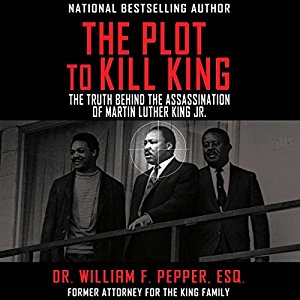
The Truth Behind the Assassination of Martin Luther King


The Plot to Kill King: The Truth Behind the Assassination of Martin Luther King

by Dr William F Pepper

Book Review

This book is unique among the volumes of assassination literature. Unlike chronologies of the JFK and Robert Kennedy assassination, the majority of Pepper’s evidence is based on sworn witness statements – either from the lawsuit the King family won against Lloyd Jowers (one of the co-conspirators) in 1999 or the earlier grand jury investigation Pepper instigated in his unsuccessful effort to win James Earl Ray a retrial.*

There are many parallels between New Orleans District Attorney Jim Garrison’s unsuccessful 1967 attempt to convict Clay Shaw, one of the JFK assassination co-conspirators, and the civil suit Pepper filed on behalf of the King family. Both Pepper and Garrison targeted low level conspirators and used the power of the subpoena and discovery to ferret out those responsible for instigating, planning and financing these assassination conspiracies.

The strategy worked better in Pepper’s case, in part because he was a private public interest attorney, rather than an elected official who could be removed from office. By the time Pepper launched his lifelong effort to exonerate James Earl Ray in 1978, he had a far better understanding of the Deep State forces arrayed against him. He was extremely scrupulous about protecting the identity of his witnesses prior to presenting their evidence under oath. Pepper withheld the identity of the Memphis Police Department sniper whose bullet killed King until after his death.

Pepper gathered his most crucial evidence after Thames TV aired a TV trial of James Earl Ray in 1993, the 25th anniversary of Martin Luther King’s death. As Pepper was fighting to obtain a new trial for Ray, a host of witnesses came forward spontaneously, many with historical connections to the Memphis Police Department; the FBI, the 902nd Military Intelligence Group (which provided back up assassination teams); and the Alpha 184 Special Forces team, which photographed the assassination from the rooftop of the fire station across from the Lorraine Motel.

Some of the most astonishing evidence that emerges in The Plot to Kill King:

  • Hoover and the FBI collaborated closely with the CIA and military intelligence in spying on King and infiltrating the Southern Christian Leadership Conference (SCLC).
  • These agencies also collaborated closely in the King assassination, with Hoover funding and directing a civilian assassination team via Dixie Mafia. The latter had close ties with FBI Deputy Director (and Hoover’s lover) Clyde Tolleson. Several witnesses testified that Tolleson traveled to Memphis to make the payoff (totaling $1 million) for the Dixie Mafia to coordinate the assassination and cover-up. Some of these funds went to two members of King’s inner circle, Reverend Jessie Jackson and Reverend Samuel Billie Kyles. In addition to making payments to government informants within the SCLC, Jackson was responsible for ordering the room change that gave King access to the balcony. It was Kyles who lured him out on the balcony to give the sniper a clear shot.
  • The 902nd MIG had a second assassination team in place in case the Dixie Mafia team failed to take King down.
  • The head of the Memphis Police Department (a former FBI agent) and various members of the MPD were involved in setting up the civilians assassination team. The actual shooter was an MPD officer named Frank Stousser.
  • Ray was selected as a patsy for the Kind assassination while serving a 20 year sentence in Missouri State Penitentiary. Tolleson also made a $25,00 payoff to the warden to facilitate Ray’s 1967 escape.
  • Ray had an alibi at the time of the assassination – he was at a service station getting a flat tire fixed, as verified by at least two witnesses.
  • King was still alive when he arrived at St Joseph’s emergency room for treatment, but instead of taking him to surgery, the hospital’s chief surgeon ordered the the other doctors and nurse. One nurse observed this surgeon remove King’s tracheotomy tube and cover his face and neck with a pillow.

At the 1999 civil trial, the jury found that James Earl Ray had no responsibility whatsoever in King’s death. They attributed 30% of the blame for his murder to Lloyd Jowers (as the handler of the assassination weapon) and 70% to US, Tennessee and Memphis law enforcement personnel.


*Ray never went to trial. Like John Lennon’s alleged killer Mark Chapman, he was pressured by his attorney to plead guilty. He tried to reverse his guilty plea three days after sentencing.

Kellogg’s: Junk Food Pioneers

Cereals: The Foods that Make Billions

BBC (2013)

The Kellogg’s corporation – in discovering how to transform cheap nutrient-poor food into billions in profits – deserve all the credit for launching the processed food revolution.

Dr John Havery Kellogg, a teetotal, vegetarian and Seventh Day Adventist, was the original inventor of a dry tasteless corn cereal he fed patients in his Battle Creek Michigan sanatorium. He opposed his entrepreneur brother’s plan to add sugar to the cornflakes, so W.K. launched Kellogg’s Corporation on his own in 1908. His decision to advertise his product in the Ladies Home Journal instantly transformed Kellogg’s into a global brand.

What W.K. Kellogg did, in essence, was to strip all the nutrition and fiber out of 75 cents worth of corn and sell it for $12. However what he was really selling the public was a lifestyle – by convincing them they didn’t have time to prepare and eat a cooked breakfast.

The advent of TV advertising after World War II would guarantee that empty calorie prepared breakfast cereal would replace bacon and eggs in the vast majority of US and British homes.

In 1968, a congressional committee chaired by for senator and presidential candidate George McGovern would draw international attention to the adverse effects of feeding children high sugar nutrition-poor breakfasts. The resulting corporate backlash from the hippy subculture would lead to the emergence of “granola,” “muesli,” and other cold “health food” breakfasts. Kellogg’s and its competitors would respond by reducing the sugar content of their breakfast food and spraying them with vitamins and minerals.

In 2006, Britain passed a law banning ads for convenience foods high in sugar, salt and saturated fat during children’s programming. Kellogg’s responded by introducing breakfast cereals that were higher in fiber and and whole grains.

Bill Clinton’s War Against Yugoslavia

The US War on Yugoslavia

Michael Parenti (1999)

This talk, one of my favorites, is 1999 talk about about US empire. It offers quite a stark depiction of a US foreign policy consisting primarily of continual wars of aggression against democratic governments that thwart Wall Street Interests in exploiting their natural resources and labor force.

Parenti begins with a brief overview of colonization, starting with Western Europe’s colonization of the Slavic peoples and England’s colonization of Ireland. He goes on to to describe how India and Africa both enjoyed advanced and wealthy (far more wealthy than Europe) civilizations until they were invaded by European armies and their economies destroyed.

He proceeds with a detailed inventory of America’s continual invasions, bombing campaigns and covert wars around the world. The last half of the presentation focuses on the deliberate break-up of Yugoslavia by the US security state, demolishing the myth perpetuated by the Clinton administration and the US media that ethnic conflict was the cause of the Balkan wars.

Prior to the collapse of the Soviet Union, Wall Street elites tolerated a socialist state in Yugoslavia (with free health care, education and public transport and housing) because they viewed Yugoslavian president Josip Tito’s independent socialism as a buffer against the Soviet Union.

The initial US attack against Yugoslavia was economic, when Bush senior, in 1990, persuaded Congress to end lending credits to the Yugoslav government. The legislation they passed stipulated that US banks could only loan money to autonomous Yugoslav regions (Serbia, Croatia, Macedonia, Bosnia, etc) provided they declared independence and formed autonomous republics.

Parenti notes the new law was implemented somewhat unevenly, so that only right wing fascist governments qualified for loans. By 1992, internal sanctions against Serbia had resulted in 70% unemployment, widespread malnutrition and collapse of the health care system.

He goes on to provide fresh insight into the background of Slobodan Milosovic – who Clinton described as the “new Hitler” – an anti-communist banker who was the CIA’s first choice to run Serbia. When Milosovic refused to fully embrace US colonization, he was systematically demonized by the Clinton administration and corporate media. In 2006, he would die in prison in the Hague.* The war crimes he was accused of were never substantiated.

Parenti also details the NATO carpet bombing of Serbia (designed to maximize civilian casualty by targeting life support infrastructure, such as power and water filtration plants), the CIA penetration of the Kosova Liberation Army (enabling them to corner the European heroin market), Noam Chomsky’s support for Clinton’s war against Serbia, and the notorious Sarajevo false flag operation (actually carried out by Muslim extremists) used to justify the NATO war against Serbia.


*There is strong evidence he was covertly assassinated: Did NATO’s Kangaroo Court Poison Milosevic?

The Assassination of Yassar Arafat

What Killed Arafat?

Al Jazeera (2013)

Film Review

For me, the principal importance of this documentary series is that it exposes whitewashing by the western media of the death of Palestinian leader Yassar Arafat.

I vaguely recall the 2012 BBC report on the Palestinian Authority decision to exhume Arafat’s body, based on evidence of polonium poisoning in his personal effects. After watching this two-part documentary, I now realize the western reporting was total disinformation.

Among the most important facts the film brings out:

  • The Palestinian Authority, believing from the outset that Arafat had been poisoned, begged the Bush administration to prevail on Israel to provide them an antidote. Years earlier they forced Israel to give them an antidote after bodyguards captured the Mossad agent who poisoned the leader of Hamas.
  • It was Al Jazeera itself that undertook, at the behest of his widow, a forensic investigation into Arafat’s death. They approached the Swiss University Center for Legal Medicine, whose scientists discovered high levels of radioactive polonium 210 in his hospital clothing.
  • It was the Palestinian Authority, rather than Arafat’s widow as reported in the western media, that refused to agree to an autopsy. This procedure is routine under French law (Arafat died in a Paris hospital) when the cause of death is unknown.
  • Arafat didn’t die of a stroke, as reported in western media. He died of Diffuse Intravascular Coagulation (DIC), a condition of whole body clotting triggered by a catastrophic medical condition such as leukemia, cancer, infection, HIV or poisoning.

At the time Arafat developed his mystery illness, he was living under siege in a two room apartment surrounded by ruble in bombed out Ramallah. The Israeli government had leveled the Palestinian Authority complex as part of a regime change exercise undertaken jointly by the Bush administration and Israeli prime minister Ariel Sharon.

Arafat was in excellent health when he suddenly became violently ill (after a meal) with a mystery illness of four weeks duration. His French doctors tested him for a number of known poisonings. The possibility of polonium poisoning didn’t occur to anyone until it was used to assassinate Russian defector Alexander Litvinenko in 2006.

Part I

Part 2

Assassination as US Foreign Policy

Hidden History: How the Gladio Assassinations of Alfred Herrhausen and Detlev Rohwedder Turned Eastern Europe into a Wall Street Sweatshop

Late Pentagon and intelligence inside Col Fletcher Prouty was the first to raise the alarm that the 1989 assassination of Deutche Bank president Alfred Herrhausen was intelligence-related. This was two decades before the CIA/NATO’s secret Operation Gladio* assassination program became common public knowledge. Although officials on both sides of the Atlantic blamed the so-called Red Army Faction, the extremely sophisticated bomb that killed Herrhausen was well beyond the expertise of amateur extremists.

In a 1992 interview with the Italian Newspaper Unita Prouty states “Some great power center wanted for some reason to get rid of the board spokesman of Deutsche Bank on that day and in that manner, in order to teach others a lesson. So there is a message in the way he was killed.” He adds,“When you consider the great importance of events in the Soviet Union, in Eastern Europe, and especially in Germany . . . then the Herrhausen assassination is tremendously significant. We must not allow it to be swept under the rug.”

In Prouty’s view, the key to the Herrhausen assassination, occurring three months after the fall of the Berlin wall, was his revolutionary proposal to found a Polish development bank, modeled on the German Kreditanstalt fur Wiederaufbau, which played a crucial role in the postwar economic reconstruction of Germany.

What Went Wrong with East Germany?

Economist and historian William Engdahl would explore the Herrhausen assassination in more depth in a 1992 article entitled What Went Wrong with East Germany. The article points out that Herrhausen’s banking views differed significantly from those of the US/British banking establishment.

Herrhausen, recruited by Chancellor Helmut Kohl to assist in planning the economic reunification of Germany, was a champion of third world debt forgiveness. Poland’s debt service burden to help stimulate development in former eastern bloc economies. He also argued strongly for a slow process of German reunification, one that would make full use of East German worker’s superior technological education and skill level. This approach would stimulate East German industrial infrastructure development while simultaneously protecting East Germans against a sudden loss of social supports they enjoyed under the communist regime. Most controversially he proposed to build a high speed rail link connecting Paris, Hanover, Berlin, Warsaw and Moscow.

The 1991 Assassination of Treuhand Chief Detlev Rohwedder

Instead of taking 10 years, as Herrhausen proposed, following his murder, the process of German monetary and economic union was compressed down to one year. In June 1990, Kohl appointed Detlev Rohwedden to head the government created company Treuhandanstalt to oversee the disposition of the entire East German economy. From the outset, Rehwedder, who shared Herrhausen’s vision of East German infrastructure development, was in constant battle with the western banking establishment and other members of Kohl’s cabinet. He insisted on modernizing East German state industries to make them economically viable, whereas the Anglo/American banking establishment sought to simply dump them onto the open market for private investors to buy up.

In his final interview five days before his death, he announced victory – a vital Treuhand policy change from that of immediate privatization to one emphasizing the rehabilitation of existing industries to make them more competitive.

On April 2 1991, Rohwedder was assassinated by a so-called “RAF third generation” sniper who left no forensic traces to his identity. Within weeks of his death, Rohwedder’s Treuhand policy was quietly reversed under new leadership.

The doors of Treuhand were opened to a host of management consultants to pick over the 81,000 East German companies under Treuhand and prepare them for rapid sell-off. Western firms were offered large incentives to buy former East German state owned firms only to shut them down, fire the work force, or use them in similar jobs at a fraction of what western workers would get.

The social consequences of this new Treuhand policy were staggering. In summer 1992, the real level of unemployment (including half time workers) in former East Germany was 40% of the work force.


*Operation Gladio was part of a post-World War II program set up by the CIA and NATO supposedly to thwart the influence of left-wing groups and politicians in electoral politics in Western Europe. They were notorious for false flag operations in which bombings and assassinations were blamed on fictitious communist groups such as the “Red Brigages” and the “Red Army Faction.” The existence of Gladio was confirmed and admitted by the Italian government in 1990, after a judge, Felice Casson, discovered the network in the course of his investigations into right-wing terrorism.


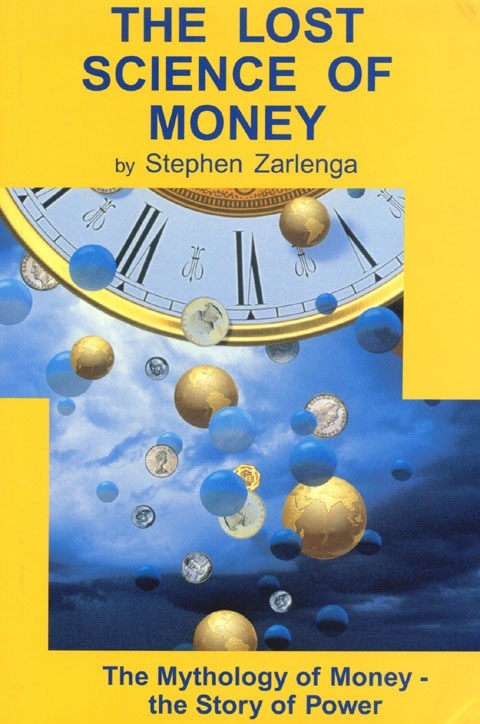
The Lost Science of Money – Wars Are Won By Bankers, Not Armies

The Lost Science of Money: The Mythology of Money – The Story of Power

by Stephen Zarlinga

American Monetary Institute (2002)

Book Review

This book, by co-author of Congressman Dennis Kucinich’s HR 2990 to abolish the Federal Reserve (see HR2990: Historic Bill to Abolish the Federal Reserve), is one of the most amazing books I’ve ever read. At 775 pages, the lowest price I could find for a used copy was $225 from Alibris. Fortunately it’s also available in PDF format at The Lost Science of Money

It’s clear from Zarlenga’s extensive documentation and footnotes that the research for this book took decades. He essentially rewrites western history dating back to the ancient Sumerians. His goal is to expose and correct all the distortions and myths introduced into official history historians in the pay of merchants and bankers. Both are fiercely committed to perpetuating our current global monetary system in which private central banks create and control the money supply.

Among many others, two of the myths Zarlenga explodes are that the Roman Empire collapsed due to barbarian invasion (he demonstrates very convincingly that Rome collapsed due to a debasement of their currency) and the often repeated claim that excessive government printing of money was responsible for the deadly inflation in the early years of the Third Reich – as Zarlenga points out, it was actually the privately owned central Reichsbank that issued the money and created the inflation.

The Concept of “True Money,”

Zarlenga begins by establishing a clear difference between “true money,” which he defines as money with a fixed value set by law and “commodity money,” in which private merchants and banks issue and control the value of money. In the rare historical periods where governments have issued and controlled money by law, the result has been long periods of political stability and flourishing industry and culture.

The Romans enjoyed the longest continuous period (200 years) of monetary stability. Roman leaders maintained control of their money by prohibiting silver and gold coinage for domestic use – issuing fixed value copper and bronze coinage instead. In this way they prevented foreign merchants from capturing control of their money supply and manipulating the value of their currency.

He Who Controls the Money Controls the World

Zarlenga carefully traces how after the fall of the Roman Empire, control of western money shifted from Constantinople (after the 4th Crusade which sacked Constantinople – see link), to Venice, to Portuguese traders in Antwerp (after they opened the trade route around the southern tip of Africa), to Amsterdam (following the civil war splitting the Netherlands into Holland and Belgium), to London (after the Dutch prince William of Orange seized the English throne). In each case, control of the money supply was far more important than military strength in consolidating political control.

Zarlinga also clarifies, though careful research, the historical role played by the Knights Templar and Jewish merchants and money lenders in the development of global monetary centers.

The Dutch Usurper Who Chartered the Bank of England

One of the sections that interested me most concerned the founding of the Bank off England – which set the global standard for all private central banks – in 1694. Previously I hadn’t realized that the Bank of England was started by a Dutch king (William of Orange), who usurped the English throne from James II. Nor that his purpose for chartering the Bank of England was to advance the interest of the Dutch merchants and bankers who initially controlled it.

“True Money” in the Americas

I also enjoyed the detailed section outlining the history of government issued money in the US. Again Zarlenga presents extensive and convincing evidence that it was the ability of colonial governors to issue their own money that enabled commerce and industry in the 13 original colonies, as well as enabling them to organize a successful war of independence against England.

Zarlenga also describes in detail the battle Jefferson, Andrew Jackson and their allies fought against the creation of a privately controlled central bank, as well as the immense popularity of the Greenback Congress issued during the Civil War – and the immense national uprising (the populist movement) launched at the end of the 19th century to save them.

The Federal Reserve Engineers the Great Depression

Obviously the book wouldn’t be complete without a chapter on the criminal conspiracy that lead to the formation of the Federal Reserve in 1913, the Federal Reserve’s role in engineering the Great Depression 26 years later, and Roosevelt’s prolonged battle with Wall Street to implement the New Deal recovery.

Hidden History: The War of 1812

This PBS documentary offers the highly sanitized mainstream version of the War of 1812, a historical event Canadians study in school but not Americans. This was the only war in history in which the US invaded Canada and lost. The main weakness of the documentary is its failure to point out that the US money supply was 80% controlled by London banks – both before and after a pointless war that ended in stalemate (see How the US Uses War to Protect the Dollar).

The “official” justification for the US declaration of war in June 1812 was the British policy of seizing US merchant ships headed for France. Owing to their war against Napoleon (1803-1815), the British seized hundreds of US merchant ships and impressed 6,000 US merchant sailors to serve in the British Navy. The final straw occurred when the British fired on a US naval vessel, the USS Chesapeake, which was harboring four British deserters.

According to the documentary, the true motivation was the desire of President James Madison and young Congressional Republicans to seize Indian and Canadian lands for sentiment and development.

For me the most significant aspect of this war was the strong antiwar movement that arose opposing it. Northern banks refused to finance the war (it was eventually financed by London’s German-owned Baring’s Bank) and New England states, which threatened to secede, refused to volunteer their militias.

For the fist year of the war, the US government relied mainly on state militias, as service in the US army was voluntary and pay and conditions were abysmal. The poorly led US militias made three disastrous attempts to invade Canada at Detroit, across the Niagara River and north through Vermont’s Champlain Valley. The US militias were defeated, despite outnumbering Canadian forces five to one. Most of Britain’s military forces were tied up fighting Napoleon in Europe. The Canadian side relied on a few British regulars, Native American warriors led by Tecumseh and French, Scottish and British farmers defending their land.

In 1814, the British captured Napoleon, releasing 60,000 troops for service elsewhere. In August 1814, they sacked and burned Washington (including the Capitol, the White House, the Library of Congress and the Navy Yard) and the city was only spared by a freak hurricane that forced British troops to retreat.

The Battle of Baltimore and the Battle of New Orleans would spell a reversal of fortune for the US. By this point the US had more professionally trained troops, though they depended heavily on Baltimore residents to build ramparts and state militias to help defend the city. The successful defense of Fort McHenry (Baltimore) in September 1814 would inspire Francis Scott Key to write the Star Spangled Banner. Congress would make it the US national anthem in 1931.

My favorite part of the documentary depicts the Battle of New Orleans in which Revolutionary War hero Andrew Jackson successfully led 4,000 irregulars – consisting of poor white farmers, slaves, creoles, and Native Americans – against 10,000 highly trained and experienced British troops.

The battle is celebrated in Johnny Horton’s 1959 ballad The Battle of New Orleans (the second video). The audio is blocked in the documentary for copyright reasons. Too bad Congress didn’t make Battle of New Orleans the national anthem. They should have.


The Crusades: Europe’s First Imperialist War of Colonization

The Crusades: An Arab Perspective

Al Jazeera (2016)

Film Review

The Crusades is a fascinating history of a subject that was quite new to me, as Americans rarely study the Crusades in school. Despite the title, the expert commentators represent a balance of French and English historians, as well as Muslim scholars from various Middle Eastern universities. Most of the documentary series consists of historical re-enactment of papal enclaves, battles, sieges, treaty signings and other historical events. The filmmakers use a series of maps to plot the progress of European occupation of Jerusalem and the Levantine* coast, as well the eventual liberation of these territories in the 13th century.

The documentary leaves absolutely no doubt that the Crusades were an imperialist campaign of colonization – and not religious wars, as is commonly claimed. Whenever European crusaders conquered a specific city or region, they indiscriminately slaughtered most of the inhabitants, whether they were Muslims, Jews or fellow Christians. The entire fourth Crusade (1203) was devoted to sacking the greatest Christian city in the world (Constantinople), whose residents were mainly Byzantine Greeks.

Part 4 is my favorite because it focuses on the role of the Crusades and Muslim influence in facilitating the European Renaissance of the 14th-15th centuries. When the Crusades began in 1085, the vast majority of Europeans (99%) were illiterate, whereas Middle East cities enjoyed an advanced flourishing civilization (as did India, China, Africa and North and South America prior to European colonization). When occupying crusaders were finally defeated and forced to return to Europe in 1291, they took with them advanced knowledge of Arab military tactics and agriculture, sugar cultivation, medicine, algebra, glass manufacturing and Greek philosophers ( whose work had been translated and preserved by Muslim scholars.

Part 1 – covers the role of Pope Gregory and Pope Irwin in instigating the disastrous Peoples Crusade and the first Crusade (1086-1099), resulting in the sacking and occupation of Jerusalem (lasting nearly 200 years).

Part 2 – covers the fragmented Muslim resistance to the expansion of European occupation, hindered by both religious (Sunni vs Shia) conflict and tribal rivalries. It’s during this period (1100-1127) the term hashshashin (origin of the English words assassin and hashish) came into usage, owing to the Shia assassins hired to secretly kill Sunni military commanders. Between 1127-1143 a Muslim revival led to the liberation of numerous crusader strongholds, and the launch of a second crusade by Pope Eugene, Louis VII of France and Conrad III of Germany.

Part 3 – describes the rise of Salah Ad-Din (known in in Europe as Saladin), who unified rival Muslim armies and by 1187 retook all crusader strongholds except Jerusalem. This led to the launch of the third Crusade by Philip II (France), Frederick I (Germany) and Richard the Lion Hearted (England) This was followed by the fourth Crusade, which sacked Constantinople; the failed fifth Crusade (1213); the sixth Crusade in which Frederick II (Germany) retook Jerusalem by treaty and the failed seventh Crusade, led by Louis IX of France (1248). In 1244, Muslim armies retook Jerusalem, which remained under their control until it became part of the British protectorate of Palestine with the defeat of the Ottoman Empire.

Part 4 – in addition to outlining the cultural riches Europe gained from the Crusades, Part 4 also explores how Europe’s medieval colonization of the Middle East laid the groundwork for the eventual European colonization of North Africa and the Middle East (in 1917), with the formation of the state of Israel in 1948 representing a major milestone in this re-colonization.


*Levantine – a term describing a region on the eastern coast of the Mediterranean Sea north of the Arabian Peninsula and south of Turkey, usually including the area of Israel, Jordan, Lebanon, Palestine, and Syria.