Narrated by author Peter Schweizer, Clinton Cash explores how former Secretary of State Hillary Clinton granted special concessions to wealthy investors and foreign leaders in return for donations to the Clinton foundation and humongous speaking fees (for her husband Bill).
Examples include
State Department approval for Joe Wilson’s mining company to cut a mineral deal with Sudanese warlords in return for large donations to the Clinton Foundation.
Waiver of US sanctions against Democratic Republic of Congo – enabling Swedish oligarch Lucas Lundin to access their mineral reserves – in return for a $100 million donation to the Clinton Foundation.
State Department reversal of sanctions President Bill Clinton initiated against India for violating the nuclear anti-proliferation treaty – in return for big donations to the Clinton Foundation, millions in speaking fees and illegal donations to Hillary’s senate campaign.
Approval of the sale of 50% of America’s uranium deposits to Uranium One, putting 20% of US uranium production under Russian control – in return for millions of Clinton Foundation donations from Uranium One shareholders and a half a million dollars in speaking fees.
A favorable State Department environmental impact statement on the Keystone XL Pipeline – after TD Bank, one of Keystone’s major investors, paid Bill for ten speaking engagements.
The film also details the massive corruption associated with the Haiti Reconstruction Commission, which the Clintons headed after the 2008 Haiti earthquake. Instead of being used to rebuild homes and roads, most of the international aid ended up in the pockets of Clinton corporate benefactors. This includes hundreds of millions for luxury hotels and for a company with no gold mining experience to build the first Haitian gold mine in sixty years. The Clintons also authorized Caracol, a new textile factory in northern Haiti (the earthquake occurred in southern Haiti), which pays sweatshop wages to produce clothing for the Gap, Target and Walmart.
This documentary traces the rise of the “white rights” movement that elected Donald Trump. This movement, of mainly white blue collar males, promotes the distorted image of white people as a disenfranchised minority. According to the filmmakers, it has its roots in Goldwater’s 1964 presidential campaign. By heavily emphasizing “states rights,” Goldwater successfully exploited the anxieties of Southerners over forced integration by the federal government. It would be the first time Southern states had voted Republican since the Civil War.
Nixon’s Southern Strategy
In 1968, the Nixon campaign built on Goldwater’s success by implementing a formal “southern strategy.” By reaching out to the “silent majority,” and emphasizing law and order in the face of race riots and anti-war protests, his campaign sought to win the votes of northern blue collar voters. In subsequent elections, Democratic Party strategists would seek to win back blue collar voters by recruiting two conservative governors to run for president (Carter and Clinton).
As the Watergate scandal undermined all Americans’ confidence in government, corporate oligarchs would build on growing anti-government sentiment by massively funding right wing think tanks, lobbying and conservative talk radio. This, in turn would lay the groundwork for Reagan’s 1980 massive deregulation and tax and public service cuts.
Corporate Giveaways By Clinton and Obama
When Clinton was elected in 1992, he quickly surpassed Reagan’s record of corporate giveaways, with his total deregulation of Wall Street, his Three Strikes and Omnibus Crime Bill (leading to mass incarceration of minorities) and his creation of the North American Free Trade Act (NAFTA) and the World Trade Organization (WTO). These free trade treaties resulted in the wholesale export of rust belt industries to Mexico and China, effectively ending any incentive for working class males to vote Democratic.
Obama, elected on the back of the 2008 financial collapse, would prove even more pro-corporate than Clinton or Bush. Instead of prosecuting the banks who caused the 2008 economic crash, he granted them massive bailouts, while ignoring the plight of millions of homeowners who lost their homes when these banks foreclosed on them. He also significantly increasing mass surveillance and aggressively prosecuting whistleblowers. He also effectively repealed posse comitatus* and habeus corpus.**
The Rise of Occupy and the Tea Party
Obama’s pro-corporate policies led to the rise of both left wing (Occupy Wall Street) and right wing (Tea Party) popular movements. The latter received major corporate backing (largely from the Koch brothers), enabling Tea Party Republicans to shift the blame for the loss of good paying industrial jobs from Wall Street to minorities, immigrants and women.
Is the US Moving to the Right?
For me, the highlight of the documentary is commentary by former Black Panther Party president Elaine Brown, the only activist featured. Brown, who is highly critical of the left’s failure to acknowledge the problems of poor white people, is the only commentator to dispute that the US is “moving to the right.” She points out that prior Republican campaigns used coded language (such as “state rights,” “law and order”) to target racist fears of blue collar whites. Trump, in contrast, openly caters to these sentiments. Brown reports that some blacks welcome the end of political hypocrisy and greater openness about the pervasiveness of white racism.
She believes this new openness offers a good opportunity to build a genuine multiracial working class movement. She gives the example of successful collaboration in Chicago between black activists and the Young Patriots (a white separatist group) against corrupt landlords.
*The Posse Comitatus Act, enacted in 1878, prohibited the use of federal troops to enforce domestic policies within the US.
**The right of Habeus Corpus, guaranteed under Article I of the Constitution and the Fifth Amendment of the Bill of Rights, prevents government from illegal detaining US citizens without charging them.
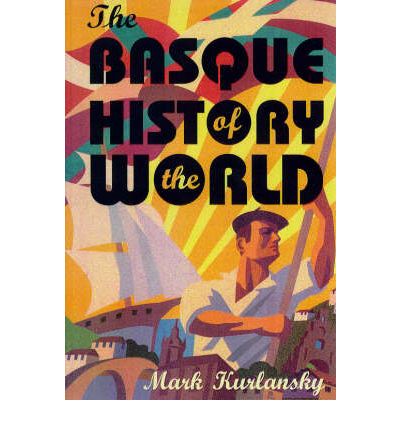
The Basque History of the World is a history of Basqueland, a semi-autonomous region in the Pyrenees straddling the French-Spanish border. Despite the recent declaration of independence by Catalonia, there is surprisingly little attention on historical efforts by Basqueland, to break away from Spanish rule. Like Catalonia Basqueland, which has its own unique language (Eskuera), has been a major industrial and economic powerhouse for the rest of Spain.
Global Mercenaries, Traders, Shipbuilders, Navigators and Bankers
Historically the Basques were traders and mercenary soldiers dating back to the 4th century BC. The Greeks hired them, as did Carthage in their war against Rome. Although Basque was technically “occupied” by the Roman empire for nearly 400 years, the Romans demanded no tribute (taxes) and exerted no military oversight.
In the 7th and 8th century, the Basques became Europe’s leading shipbuilders (which they learned from the Vikings) and iron mongers (which they learned from the Celts). They were the world’s first commercial whalers, establishing whaling stations as far distant as Newfoundland and Labrador. In the 9th century, they also dominated the European trade in salted cod, fishing off Iceland, Norway, Britain, as well as Newfoundland.
Beginning in the 15th century they were sought after by many European explorers (including Columbus and Magellan) as pilots, navigators and seamen.
They were also the first capitalists, financing their shipbuilding via private venture capital. In 1999, when this book was published, they were still global leaders in banking.
Unconquerable
Neither the Moors (in the 8th century) nor King Ferdinand and Queen Isabella (in the 15th century) succeeded in conquering Basqueland. Owing to the immense wealth the Basques generated, they paid no duty on foreign goods imported through their ports. Until 1876, they paid no tax to Madrid and were exempt from serving in the Spanish military. French Basqueland fared far worse after the French revolutionary government eliminated France’s three Basque provinces in their campaign to erase ethnic identities.
Spain was so poor when the second Spanish Republic was declared in 1931, only Basqueland and Catalonia (thanks to their strong industrial base) enjoyed a European standard of living. Both regions demanded full autonomy as a condition of supporting the Republic.
Following the successful coup of Spain’s fascist dictator Francisco Franco in 1939, the Basques provided the only organized resistance against his regime. They also played an extremely important role in the French resistance to Hitler’s occupation of France.
Role in Downfall of Franco Dictatorship
In 1973, ETA, the Basque armed militia assassinated Franco’s second in command, and Basque and Catalan leaders began meeting secretly to plan Spain’s transition to democracy.
Franco’s death and the fall of his government in 1975 would prove disastrous for the Basque economy. The dictator had been heavily subsidizing archaic Basque factories, which were totally unable to compete with modern European industries after Spain joined the EU.
In 1998, after uniting with Catalonia to win constitutional guarantees of legislative autonomy (for both Catalonia and Basqueland), ETA unilaterally renounced violence. This followed a 16-year battle with the GAL, an undercover police/paramilitary operation that engaged in extrajudicial assassinations and torture against Basque nationalists.
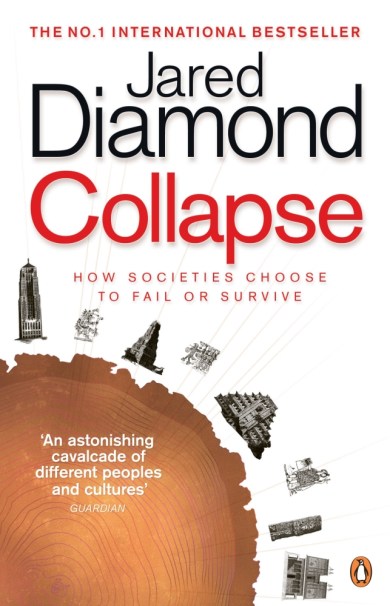
This book was very different from what I expected. I anticipated an account of the environmental mismanagement that caused the collapse of prehistoric civilizations such as Easter Island. Collapse is actually a detailed historical analysis of a wide spectrum of both failed and successful societies. In addition to Easter Island, Diamond also covers the vanished Anazazi civilization in New Mexico, the Mayan civilization, the Viking settlements of Iceland (which persists to the present day), Greenland and Vineland (present day Newfoundland and New Brunswick), pre-1853 Japan, the New Guinea highlands and modern day Rwanda and Australia (the modern society he describes at highest risk for collapse).
Diamond’s thesis is that the ability of any society to meet the survival needs of its members depends on certain basic preconditions. He maintains historical forest management is the most critical – deforestation features in every historical collapse he mentions. Forests are not only essential to provide fuel for cooking, heating and refining metal, but loss of forest cover leads to soil erosion and destruction of topsoil, as well as decreased rainfall and fresh water shortages.
In some societies Diamond analyzes, collapse was the direct result of environmental mismanagement. In others, the odds of survival were extremely low to begin with, due to low rainfall, a cold or windy latitude or poor soils. In many cases, a political factor such as war, lack of external supports (eg trade), overpopulation and/or a greedy ruling elite diverting resources to luxuries were important contributing factors.
The section I found most interesting concerns the New Guinea highlanders, who (prior to the arrival of Europeans) maintained an environmentally sustainable civilization via bottom up direct democracy for over 46,000 years.
Aghet is a documentary based on eyewitness accounts from German, Danish, French and Swedish diplomatic and military archives about the Armenian genocide carried out by the Ottoman Empire between 1915-1923.
Turkey and US Refuse to Acknowledge Armenian Genocide
Although most of Europe acknowledges that Turkish authorities killed 1.5 million Armenians during this period, the current Turkish government denies the genocide ever occurred – in fact it’s currently illegal under Turkish law to mention the Armenian genocide in public.
The US government also refuses to acknowledge the Armenian genocide. Presumably this relates to Turkey’s threats to suspend diplomatic relations and close US bases there.
Most of the archival evidence examined in the film comes from Germany, Turkey’s World War I ally. As Germany provided Turkey’s weaponry and military training Turkey during World War I, they were in the best position to know that Armenians were being arbitrarily detained for extermination. Yet they did nothing to stop it. Most of the photos and film footage features in this documentary was smuggled out of Turkey by German soldiers.
At the start of World War I, the global Armenian population was approximately 5 million, divided between Persia (Iran), Russia and Turkey. Turkey’s two million Armenians had a history of discrimination in education housing and employment. As Christians in a Muslim nation, they were required to pay a special tax. In 1895, 250,000 were killed in a pogrom.
Ethnic Purity and Turkey for Turks
Turkey’s 1908 revolution brought a new government to power that heavily emphasized ethnic purity and “Turkey for Turks.” However the immediate justification for rounding up and expelling Armenian Turks was their alleged collaboration with Russian invaders.
While a small number of Armenians were either imprisoned and tortured or beaten to death, the majority were condemned to a bizarre forced march into the Syrian desert (at the time Syria was part of the Ottoman Empire). As the Turkish soldiers who accompanied them gave them nothing to eat or drink, most died of hunger, thirst or disease long before they reached Syria. Amazingly, with the help of Christian missionaries, around 500,000 out of 2 million survived.
Turkish Government Tries to Collect on Armenian Life Insurance Policies
Over time both Turkey’s and Germany’s attitude towards the Armenian genocide have been extremely schizophrenic. The German ambassador flatly refused to contact New York Life insurance company to assist the Turkish government to collect on the life insurance policies of Armenian victims. However the German government had no problem smuggling the three Turkish leaders responsible for the genocide into Europe. At the end of the war, Turkish courts tried and convicted them for crimes against humanity.
In 1919, an Armenian refugee Salomon Teilirian assassinated one of them in Berlin. His acquittal – based on evidence he presented documenting the Armenian genocide – is credited for bringing this atrocity to world attention.
This BBC documentary uses archeological, genetic and linguistic evidence to demolish the myth of a fifth century Anglo Saxon invasion that supposedly drove Britain’s indigenous tribes west and north to Wales, Scotland and Ireland.
There is no archeological evidence whatsoever of an invasion. In fact, current evidence suggests a lengthy period (beginning in 2,000 BC) of Germanic migration and assimilation with Celtic inhabitants was more likely.
For me, the most interesting evidence comes from linguistic study of Old English. The latter differs significantly from other Germanic languages in that it uses word order, rather than word endings, to distinguish between the subject and object of sentences. Linguists attribute this anomaly to the merger of Celtic and Germanic cultures over many centuries and the influence of Celtic speakers on Old English.
Archeologists now believe that the myth of fifth century Anglo Saxon invasion was created by mixed race kings to lay claim to their (fraudulent) claim of pure Teutonic heritage This was frequently used to justify their privilege over genetically equivalent subjects who were stigmatized as irrational and unstable Celts.
In this BBC series from 2004, Monty Python comic and amateur historian Terry Jones gives us a brief overview of what medieval life was really like. He also explores the political purpose of teaching fictitious medieval history in our schools.
The series, divided into seven segments of 29 minutes each, covers peasant life (The Peasant), the power of the Catholic Church (The Monk), the status of women (The Damsel), the origin of modern music, poetry and satire (The Minstrel), medieval science, alchemy and medicine (The Philosopher), the medieval legal system (The Outlaw), and 13th and 14th century monarchs (The King).
The Peasant – Jones uses the 1381 Peasant Revolt (in which tens of thousands of peasants beheaded the Royal Treasurer and the Archbishop of Canterbury), as his point of departure. Because the barons who oversaw the serfs spent most of their time fighting foreign wars for the king, serfs, who were largely self-governing, developed a highly sophisticated form of direct democracy. They retained more of the product of their labor than modern workers and enjoyed more holidays (80, as opposed to the 8 modern workers enjoy.
The Monk – Jones explores how the Catholic Church became enormously rich by commoditizing prayer, ie praying for the salvation of returning barons who risked eternal damnation for all the souls they slaughtered in military conflict. During the Middle Ages, the Pope presided over the greatest accumulation of land in the western world.
The Damsel – Jones explores how a 50% reduction in the 14th century workforce (due to plague) elevated the status of women when they were forced to assume men’s roles. As the population began to recover, the witch burning campaign launched by the Catholic Church systematically demonized women and forced them out of these roles (see Witch Burning and Women’s Opression ).
The Minstrel – here Jones explores the mysterious disappearances of the renowned medieval poet Geoffrey Chaucer, possibly relating to his biting satire about the commercialization of the Church.
The Philosopher – here Jones explores the work of 13th century monk Roger Bacon, who discovered light refraction, lenses, the mathematical basis of science and the spherical nature of the Earth 400 years before Isaac Newton. Jones also exposes the total fiction invented by Washington Irving in his biography of Columbus, which falsely portrays the Catholic Church as promoting flat Earth dogma.
The Outlaw – explores the myth of Robin Hood and the early struggle between the local direct democracy practiced by Anglo Saxons and their Norman conquerors. The Anglo Saxons ultimately won out when Henry II instutionalized trial by jury in the 12th century. Contrary to the Robin Hood myth, most outlaws were landless gentry who engaged in robbery, kidnapping and looting for their own enrichment. Most received royal pardons in return for military service.
The King – here Jones rehabilitates Richard II and Richard III (whose portrayal in Shakespeare’s Richard III is a total fiction). Both were systematically demonized by successors who illegally usurped them. Jones also discusses the 12 month British reign (in 1217) of the French king Louis I, who isn’t even acknowledged in English textbooks.
In 1956 Britain, France and Israel launched an illegal war of aggression against Egypt after President Gamal Nasser nationalized the Suez Canal. As in the more recent US invasions of Iraq, Afghanistan, Libya and Syria, UK Prime Minister Anthony Eden’s real goal was regime change – the removal of Nasser as president. Eden, like Bush and Obama believed the local population would welcome the foreign invasion – that they would use it to rise up and topple their leader.
The humiliation Britain faced over the Suez Crisis would spell the end of their role as the world’s foremost super power.
Part 1 covers Egypt’s war of independence, which began as a mass popular uprising against British military occupation. In 1952, a secret group of Egyptian military officers, led by Nasser, took advantage of the civil unrest to topple King Farouk, establish a revolutionary council and demand the withdrawal of British troops. When Britain and the US tried to isolate Nassar by blocking a World Bank loan for Egypt’s Aswan Dam, Nasser responded by nationalizing the Suez Canal Company (jointly owned by Britain and France). His intention was to use canal profits to pay for the dam.
Part 2 concerns the secret conspiracy hatched by Britain, France and and Israel to invade Egypt, reclaim the Suez Canal and remove Nasser from power.
Part 3 covers the brutal invasion and the armed civilian resistance that fought back against the invaders. It also reveals the humiliating circumstances that forced Britain to withdraw their troops before they ever reached the canal. Because both France and Britain hold vetoes on the UN Security Council, Eisenhower used economic warfare to force Britain to agree to a ceasefire. A coordinated attack on the British pound by Wall Street banks* forced Eden to request Eisenhower’s support for an IMF loan. The latter demanded an immediate ceasefire as a condition of the loan.
*The filmmakers are a bit fuzzy about the coordinated sell-off of the British pound that caused its value to plummet. Based on what Willim Engdahl has written about US economic warfare (see How the US Uses War to Protect the Dollar), I suspect it was instigated by the Economy Warfare division of US Treasury.
When the Moors Ruled in Europe corrects many common misconceptions about Muslim rule in Spain between 711 and 1492 AD. Historical and archeological evidence contradicts the prevailing belief that this 700 year rule represented a violent military occupation. At the time Muslim Berbers from North Africa invaded Spain, the Christian/Visigoth cities were collapsing into chaotic anarchy – all the evidence suggests the inhabitants welcomed the Berbers for the security they provided.
Owing to its favorable climate, Spain quickly became the primary agricultural hub for a Muslim Empire that extended from North Africa to the Chinese border. After introducing irrigation, Muslim rulers also introduced citrus, avocado and other exotic crops which quickly spread across Europe. Owing to a faith committed to learning, the Moors also introduced universal literacy (in contrast to the rest of Europe where only clerical elites were taught to read). They also introduced advanced architecture, modern medicine, astronomy, Arabic numerals*, algebra, geometry and classical Greek philosophers which the Catholic church had banned in the rest of Europe.
During the 12th century, scholars from all over Europe flocked to the great libraries at Toledo to translate (into Latin) classical Greek and Arabic texts. These scholars would introduce a new approach to knowledge, based on rational inquiry, that would inspire the founding of prestigious universities at Oxford, Paris and elsewhere.
Christian Armies Retake Spain and Launch the Spanish Inquisition
Inspired by the Crusades to the Holy Lands, during the 12th century, Christian armies from northern Spain began slowly retaking Moorish cities from their Muslim rules. By 1250, only Grenada at the southern tip of Spain remained under Muslim rule.
In 1469, Isabella, Queen of Castille, married her second cousin Ferdinand, who was king of Aragon. In 1492, a siege which had begun 100 years earlier was successful and they seized Grenada to unify Spain.
Soon afterwards they launched the Spanish Inquisition to arrest, torture and kill Muslims, Jews and Christian heretics suspected of not practicing the “true” Catholic faith. Initially Muslims (who were mainly ethnic Spaniards) were offered the option of conversion. However in 1609, 300,000 were forcibly removed Most resettled in North Africa.
The Inquisition also burned more than a million Muslim texts.
*Arabic numerals also made multiplication and division possible – both are virtually impossible with Roman numerals. It was also via Spain that numerous Arab terms for scientific concepts were introduced into English and other European languages (eg al-cohol, al-gebra, al-gorithm, al-chemy).
Kashmir, a majority Muslim state, has been demanding independence from India since the late 1980s. They were promised a referendum on independence in 1947, when India was first divided from Pakistan. After 70 years, they’re still waiting.
The majority of Kashmiri seek full independence, though some seek unification with Pakistan.
The region is currently under Indian military occupation (Kashmir is the most militarized region in the world) and virtual martial law. Kashmir’ civilian population is routinely subjected to rape, torture, extrajudicial killings, raids on civil homes and the shutdown of local newspapers.
This documentary profiles a 13 year girl who was arbitrarily beaten and blinded after being shot by Indian security forces. Their brutality against women, children and the elderly is having a clear radicalizing effect on young Kashmiri males.

 The Most Revolutionary Act