Ted Kennedy: What Really Happened at Chappaquiddick

Chappaquiddick

Directed by John Curran (1994)

Film Review

This documentary re-examines the 1969 inquest into the death of Mary Jo Kopechne. Kopechne was a campaign worker for late Senator Ted Kennedy, who allegedly drowned when a rental car he was driving went off an unlit bridge on Chappaquiddick Island in Massachusetts. At the time Kennedy came under heavy criticism for fleeing the scene and leaving Kopechne to drown. He ultimately pleaded guilty to leaving the scene of an accident, for which he received a two-month suspended sentence and one year of probation.

The film attempts to resolve longstanding inconsistencies in Kennedy’s version of events. When the evidence presented at the inquest is re-examined, key analysts come up with a surprising conclusion: that Kopechne (driving) was alone in the car when it dove off the bridge.

The lead police investigator at beleives Kennedy got out of the parked car after they were spotted on a secluded road by a sheriff’s deputy – that he didn’t learn about Kopechne’s fatal accident until the next morning. After consulting with his lawyer and political advisor, he would concoct a lie about being the vehicle’s driver.

His goal, according to the investigator, was to forestall a full investigation into an incident which presumably involved extramarital sexual activity. After watching the film, this conclusion makes sense to me.


Robert Kennedy’s Lone Nut Assassin – Not

The Strange Case of Sirhan Sirhan

James Corbett (2016)

Film Review

In this 2016 documentary, James Corbett examines various evidence suggesting that Robert Kennedy’s alleged assassin was operating in a hypnotic trance. Like John Lennon’s alleged assassin Mark Chapman, he still has no conscious recollection of the shooting.

Although the Los Angeles police destroyed most of the forensic evidence, recent acoustic evidence has surfaced indicating 13 shots were fired – although Sirhan’s 22 only held eight bullets. In addition, all eyewitnesses report that Sirhan was standing in front of Kennedy, whereas the fatal shots came from behind (and from a larger caliber weapon).

The evidence Corbett has assembled includes a 1977 interview researcher Mae Brussell conducted with Sirhan’s prison psychologist; Corbett’s interview with a trauma researcher familiar with the declassified documents related to CIA mind control programs (Artichoke, Bluebird and MK-Ultra); the results of a 2011 examination of Sirhan under hypnosis;* and an experiment conducted by British TV hypnotist Derren Brown, in which a hypnotized subject follows a command to shoot  British comedian Stephen Fry.

During the sixties and seventies, US intelligence experimented on 7,800 GIs with hypnosis and drugs, to determine if they could be hypnoprogrammed to kill (as portrayed in the 1962 film The Manchurian Candidate).

As Corbett stresses, publicly available information regarding US intelligence mind control experimentation is at least 40 years old. Any material more recent than the 1970s has yet to be declassified. However the bizarre behavior of many alleged shooters in recent false flag events suggests they may have been victims of this type of experimentation.

For a detailed examination of the physical evidence that exonerates Sirhan, see The Robert Kennedy Assassination: Why the Official Story is a Fake


*While under hypnosis he recalled a suggestion he was given that he was at a shooting range and needed to fire at the target.


J Edgar Hoover: A Textbook Case in Corruption

This is an intriguing documentary about J Edgar Hoover, founding director of the FBI. It’s largely based on an official federal investigation that occurred shortly after Hoover’s death in 1972 and Anthony Summer’s 2013 book Official and Confidential: the Secret Life of J Edgar Hoover.

The film explores Hoover’s long track record of both low level and high level corruption. The former involved his routine use of FBI employees to drive him to private functions and to remodel and redecorate his home, as well as the routine use of taxpayer funds to pay for private vacations. The high level corruption involved his close association with Mob figures to fuel his (illegal) offtrack betting habit.

Hoover was notorious for his refusal to investigate or arrest organized crime bosses during his tenure of office. He consistently maintained the US had no national organized crime problem. This was the major cause of his three year battle with John and Bobby Kennedy – which ended in the JFK assassination.

The documentary also reveals how Hoover forced Kennedy to accept Lyndon Johnson as his running mate, by threatening to release surveillance tapes the FBI had made of JFK’s extramarital affairs.

Hoover undertook this type of illegal surveillance on most, if not, all major Washington political figures. He also routinely made it known to lawmakers when he had compromising files on them. These files made him virtually untouchable despite fairly wide knowledge of his own corrupt activities.

Hoover, in turn, was held in check by senior Mob figures who had photos of Hoover engaged in sexual relations with his lover and lifetime partner Clyde Tolson. Officially Hoover condemned homosexuality as a sexual perversion and banned gays from serving as FBI agents.

Hidden History: There Were 15 (not 13) Colonies in the Revolutionary War

The Lost History of America

First Documentary (2018)

Film Review

This documentary traces the hidden history of St Augustine (Florida), the first permanent European settlement in North America. It was founded in 1565 by Spanish colonists, 42 years before the English founded Jamestown (Virginia), the first “official” North American colony. History textbooks gloss over the fact that England had 15, not 13 North American colonies at the time of The Revolutionary War. They always neglect to mention East and West Florida (which were transferred from Spain to England by the 1763 Treaty of Paris. For two main reasons 1) because the Florida colonies fought for the British rather than the colonists and 2) because under Spanish rule, both East and West Florida outlawed slavery and offered sanctuary to runaway slaves.

After the war, the US ceded East and West Florida to Spain as a reward for Spanish financial and military support. However the land came the condition, imposed by Secretary of State (and slaveholder) Thomas Jefferson, that both colonies would cease to provide sanctuary for slaves from northern states.

The Seminole tribes ignored Jefferson and continued to shelter runaway slaves in Florida swamps where slave catchers couldn’t pursue them.

In 1812, the governor of Georgia raised a private army, assisted by the US Navy, to invade Florida in a military action known as the Patriot’s War. A coalition of Seminoles and freed slaves attacked the new plantations opened up by northern settlers, burned them and freed their slaves. In 1818 General Andrew Jackson launched the infamous Seminole War in retaliation.

In 1821, Spain officially ceded Florida to the US, forcing most of the free African families who had founded St Augustine to flee to the Bahamas – where the British had banned slavery.

Hidden History: The 1992 FBI Assault on Ruby Ridge

Ruby Ridge

PBS (2017)

Film Review

In this documentary Ruby Ridge survivor Sara Weaver relates the history of the 1992 FBI assault on her home that killed her mother and her 14 year-old brother Samuel. It provides a a very different view of the incident than the mainstream media.

First and foremost the Weavers weren’t heavily armed white supremacists linked with the Aryan Nation, as claimed by the FBI and corporate media. Despite attending Aryan Nation meetings, the Weavers declined to join because they didn’t share the group’s white supremacist views.

Weaver Declines to Infiltrate the Aryan Nation

Former Green Beret and Christian fundamentalist Randy Weaver ran afoul of the US government after an undercover Alcohol Tobacco and Firearms (ATF) agent asked Weaver to acquire a shotgun for him. The agent claimed Weaver illegally sawed it off (at the agent’s request), an assertion Weaver has always disputed. The ATF then threatened to arrest Weaver and confiscate his property unless he agreed to infiltrate the Aryan Nation as an undercover informant. When Weaver refused, he was arrested.

Fearful (understandably) that the federal government was trying to frame him for a crime he didn’t commit, Weaver failed to appear for trial. After a two year attempt to serve a a bench warrant on the family’s isolated mountaintop home, federal marshals turned the case over to the FBI Hostage Rescue Team (ie FBI snipers).

The family tell a very different story of the assault than the FBI – with a federal jury ultimately siding with the family. According to Sara, after the FBI sniper shot the family dog, 14 year-old Samuel returned fire and killed one of the snipers. At this point, the other snipers shot and killed his mother Vicky,, whom was holding his baby sister in her arms.

The standoff continued until highly decorated former Green Beret Bo Gritz intervened and persuaded Weaver, his friend Kevin and the remaining children to surrender.

Weaver Family Receives $3.1 Million Settlement

Both Weaver and Kevin were charged and acquitted in the death of the FBI sniper. Weaver was also acquitted on the charge of illegally sawing off a shotgun. He ultimately served 18 months for failure to appear.

In 1995, the family received a $3.1 million settlement for the wrongful death of Vicky and Samuel.

Although the FBI allegedly undertook major policy changes after Ruby Ridge, they undertook a similar military-style assault in 1993 against fundamentalist Christians in Waco Texas.


What We Didn’t Learn About the Russian Revolution in School


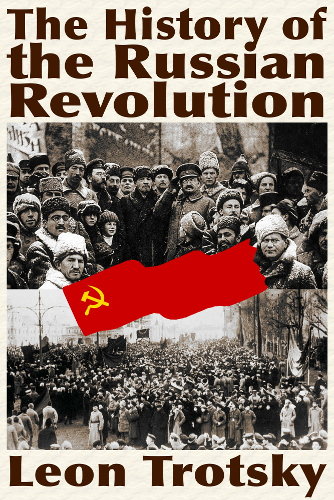
The History of the Russian Revolution

By Leon Trotsky (1930)

Free link: https://www.marxists.org/archive/trotsky/1930/hrr/

Book Review

In Peoples History of the Russian Revolution, author Neil Faulkner strongly recommends readers also read Trotsky’s History of the Russian Revolution (on which Peoples History is based). In this epic volume, Trotsky painstakingly assembles meeting notes (by friends and enemies of the Bolshevik Party) of the Petrograd Soviet, the Russian Duma and the Bolshevik Central Committee, which he intersperses with historical footnotes and political analyses.

The resulting narrative reveals how the Bolshevik Party systematically used the period of Dual Government (between February and October 1917*) to build Bolshevik majorities in the soviets and workers and soldiers committee throughout Russia. At the time of the October Revolution, the Bolsheviks didn’t enjoy a majority in the peasant committees or soviets. However they advocated a similar land reform agenda as the Social Revolutionary Party that controlled rural Russia, and Lenin made initial concessions by allowing peasants to redistribute the landowner estates they seized as individual private plots (instead of collectivizing them).

Trotsky’s overview of this period differs greatly from what we are taught in US schools and universities. Some of the surprising facts I gleaned from this book are

  1. Owing to Bolshevik/Left Social Revolutionary majorities, Russian workers won the right legislatively to establish a worker-run state but were blocked by reactionary monarchists, landowners, militarists and their political puppets from implementing this reform. Workers would eventually be forced to arm themselves and forcibly seize Petrograd’s factories, utilities and instruments of state to make this happen.
  2. The Bolshevik Party didn’t have sufficient strength to forcibly seize all the factories and farms on behalf of the workers. The principal effect of the October Revolution was to give workers and peasants permission to seize factories and transform them into worker-run cooperatives. By October 1917, workers and peasants had already seized multiple factories and estates all across Russia. The creation of a formal worker-run state merely gave permission for all Russian workers and peasants to do so.
  3. The grassroots worker and peasant committees were far more militant than any of the soviets, just as grassroots members were far more militant than the Bolshevik Central Committee.
  4. Unlike the February Revolution, which looked like a typical insurrection with thousands of workers launching a general strike and taking to the street, the October Revolution was virtually invisible to the majority of Petrograd** residents. Except for 25,000-30,0000 workers and renegade soldiers and sailors who made up the Red Guard, Petrograd workers went to their factories and shopkeepers opened for business. Most government troops who weren’t at the front had either mutinied or deserted. Thus when armed Red Guards showed up at the post office, telegraph office, telephone exchange, power station, state bank, etc. the bureaucrats in charge quietly surrendered control of these institutions.
  5. The October Revolution was virtually bloodless, except for the seizure of the Winter Palace. Trotsky blames the loss of life on both sides on a botched military operation and unstrategic delay that gave government ministers the opportunity to send to the front for military reinforcement.

For people who aren’t inclined to read the entire book, I strongly recommend Chapter 43 The Art of Insurrection and Chapter 44 The Conquest of the Capital The Conquest of the Capitol


*See Peoples History of the Russian Revolution for an explanation of dual power.

**In 2017 Petrograd was the capitol of Russian and the seat of power.

A People’s History of the Russian Revolution

A People’s History of the Russian Revolution

by Neil Faulkner

Pluto Press (2017)

Book Review

This book corrects the common misportrayal of the Russian Revolution as an event imposed on workers by a Bolshevik vanguard of self-appointed intellectuals. In his careful reconstruction of the origin to the October 2017 insurgency, Faulkner demonstrates quite ably that the Russian Revolution was a true example of mass democracy executed by ordinary workers, peasants and soldiers. After 1920, it would be destroyed by the most murderous counterrevolution in history.*

In Faulkner’s view, Russia’s revolution took nearly 100 years. It was Russian soldiers exposed to Western liberal democracy during the Napoleonic wars who began the first underground networks against czarist totalitarianism. As Russia began to industrialize in the late 1800s, workers engaged in regular mass strikes to protest starvation conditions. The brutal government repression that greeted these strikes led to the formation of a number of revolutionary parties as workers began to demand political change as well.

Organizing in a Police State

The Bolshevik Party first came together in the years 1899. Organizing a mass democratic party in a police state is extremely difficult. The strategy Lenin and other party leaders employed was to start a newspaper, which they printed abroad and smuggled into Russia via underground groups. Avoiding police infiltration police required a large degree of decentralization and independent function of workers’ committees and subcommittees. Eventually a large underground network arose around distribution of the party newspaper.

Part of Bolshevik strategy was to foster strong relationships with the military. The eventual success of the October 1917 would depend on soldiers’ refusal to support the Provisional Government.

All the revolutionary activity, starting with the failed 1905 Revolution, began as spontaneous strikes and demonstrations launched by workers themselves to protest their abominable living and working conditions. The February 1917 revolution, in which Tsar Nicholas II was deposed, began as a bread strike led by women.

Dual Power by the Duma and Workers’ Soviets

The Tsar’s removal led to dual power, in which three successive provisional governments were jointly run by the pro-war Duma, made up of bourgeois liberals and the Petrograd Soviet consisting of delegates of democratic assemblies which had formed in factories, barracks and battleships. The Duma had no real power as they could only enact measures approved by the soviets.

A series of mass military mutinies led to the collapse of the the first and second Provisional Government in April and June. During the 3rd Provisional Government, increasing government repression led to a surge in membership in both the Bolshevik Party and local soviets.

At Lenin’s urging, soviets** across Russia overruled the Bolshevik Central Committee in September 2017 and called for a new government run by workers and peasants, as well as mass insurrection. In the end, the soviets would assume power with very little violence by merely disestablishing the 3rd Provisional Government. Owing to mass military defection during 1917, the government was left with no means of defending itself.


*It would take Joseph Stalin, who assumed power after Lenin died in 1922, six years to complete the counterrevolution. He would eventually liquidate the entire leadership of the Bolshevik Party. According to Faulkner the great Bolshevik experiment of mass democracy from below officially ended in 1920. Although the Soviet Union would ultimately beat back a military invasion by White Russians, British and Americans, this civil war, on top of a brutal settlement with Germany that devastated Soviet industrial and agricultural capacity, would shatter the Soviet economy. In a desperate hope revolution in other European countries would reopen trade, Lenin officiated over the rise of centralized state control (enforced by the Cheka and the Red Terror) to manage extreme scarcity, malnutrition and epidemic levels of disease.

**The first soviets were formed as a result of the 1905 Revolution.


Oral History: CIA Contractor Reveals Role in JFK Assassination

Inside the JFK Assassination

Secret History Productions (2003)

Film Review

This fascinating documentary is the oral history of Chauncy Holt, one of the infamous three tramps arrested in Dealey Plaza plaza following the assassination of John F. Kennedy. Although it was recorded in 1997, it would be six years before Holt’s interview was released. He died eight days after its filming. Assassination researcher Jim Fetzer has uncovered evidence that Holt, while hospitalized, was deliberately overdosed on Coumadin by someone posing as a doctor.

The first hour of the video focuses on Holt’s early life as a bootlegger and petty criminal in Kentucky. He was a mathematical genius and firearms expert, with a pilot’s license and expertise in oil painting and forgery. It was his math skills that brought him to the attention of Florida mobster Meyer Lansky. After a brief spell as Lansky’s accountant, the latter referred him to the CIA’s Clandestine Operations Division. Holt’s primary function was to oversee the Los Angeles  Stamp and Stationary Company, a CIA front that produced fake IDs and reconditioned firearms for Operation Mongoose, the CIA/Mob operation formed to invade Cuba and overthrow Castro. His immediate CIA supervisor was William King Harvey.

In April 1963, he was ordered to produce fake IDs for Lee Harvey Oswald under various aliases and deliver them to Guy Bannister, who Holt identifies as Oswald’s New Orleans control.

On November 22, 1963, Holt was ordered to deliver forged Secret Service IDs and lapel pins and refurbished rifles and ammunition to Dealey Plaza. He was also ordered to deliver fake Bureau of Alcohol, Firearms and Tobacco (ATF) IDs and handguns to CIA operatives Charles Harrelson (father of actor Willy Harrelson) and Richard Montoya.

Holt identifies Harrelson and Rogers as the two other tramps. The FBI ordered them released as they were carrying forged ATF IDs.

Holt claims he had no foreknowledge of the assassination prior to arriving in Dealey Plaza. His CIA handlers told him that Operation Mongoose had organized a violent pro-Castro protest to drum up popular support for a US invasion of Cuba.

World War I: How the West Fomented Ethnic Conflict to Destroy the Ottoman Empire

The Ottoman Empire: Demise of a Major Power

DW (2017)

Film Review

This documentary demonstrates how people of multiple religions and ethnicities were able to coexist peaceably for over four centuries in the Ottoman empire. This flies in the face of western propaganda about the inevitably of genocidal violence when various religions and ethnicities share the same geographic space.

According to the filmmakers, the long peaceful coexistence of multiple religious and ethnic groups (the main ones being Roman Catholic, Protestant and Orthodox Christians, Jews, and Sunni, Shia and Sufi Muslims) relates mainly to the Ottoman creation of semi-autonomous regional “millets.” These were under the administrative control of local religious leaders.

The democratic ideals that arose from the 1789 French Revolution would pose the first major challenge to this stability, in triggering a whole series of rebellions. In 1821, Greek rebels would launch a full scale war of independence. Russia, France and Britain, keen on expanding their empires into the Balkans and Middle East, supported the rebellion. Greece would ultimately win independence in 1829.

Over the coming decades, the Russian and Austro-Hungarian empire fomented similar rebellions by ethnic Serbs, Romanians and Bulgarians. In 1877, Russia declared war on the Ottoman Empire – under the pretext of protecting its Christian subjects – which ended with the 1878 Congress of Berlin. The latter divided up the Balkans and placed the minority Armenians in the Anatolia peninsula under the protection of the European powers. Russia was granted control of Bulgaria, Serbia and Montenegro and the Austro-Hungarian empire control of Bosnia-Herzegovina. This peace agreement, which led to the displacement of hundreds of thousands of Balkan Muslims, signaled the dawn of the modern age of refugees.

For me the most intriguing part of the film concerned the intelligence role of archeologist Thomas Lawrence (aka Lawrence of Arabia), who was actually a British secret agent sent to mobilize the Arabs in the Arabian peninsula to revolt against their Ottoman rulers. Lawrence, on behalf of Britain, promised Arab fighters their own Arabian kingdom in return for their military support – a promise Britain conveniently broke in 1920.*

This documentary leaves absolutely no question that the real agenda in World War I was 1) disrupting the growing German-Ottoman alliance and 2) for the European powers who initiated the war to divide up the Ottoman empire. Following the 1918 armistice and 1920 Treaty of Sevres, Britain would win colonial control of Egypt, Mesopotamia (Iraq and Kuwait) and Palestine and the French control of Syria and the newly created Christian enclave of Lebanon.

After Britain gained colonial control over Palestine in 1920, they immediately revved up ethnic tensions by requiring Jerusalem residents to reside in distinct religious zones an


*The Ottoman Empire’s possessions in the Arabian Peninsula became the Kingdom of Hejaz, which was annexed by the Sultanate of Nejd (today Saudi Arabia), and the Mutawakkilite Kingdom of Yemen. The Empire’s possessions on the western shores of the Persian Gulf were variously annexed by Saudi Arabia (Alahsa and Qatif), or remained British protectorates (Kuwait, Bahrain, and Qatar) and became the Arab States of the Persian Gulf. requiring passports for travel between zones.


Dupont: A Textbook Case in Corporate Criminality

DuPont Dynasty: Behind the Iron Curtain

Gerald Colby

Prentice Hall (1984)

Book Review

If you want a precise understanding of how a major corporation sets out (and succeeds) in corrupting all aspects of democratic government, Behind the Nylon Curtain is for you. If it doesn’t convince you that democracy is impossible in a capitalist economy, I don’t know what will. This 800+ page book traces every bribery and corruption scandal; every flagrant violation of labor, environmental and trading with the enemy laws; every frivolous lawsuit (eg challenging the EPA’s ability to regulate air and water pollution); every instance of war profiteering and gouging the US taxpayer; and every case of electoral fraud the DuPont company has engaged in their 215-year history.

DuPont’s Role in Potting 1934 Coup Against Roosevelt

In addition, Colby details the prominent role DuPont played in the formation of the American Liberty League and the 1934 fascist coup the group plotted to remove Roosevelt from the residency; in re-arming the Third Reich prior to World War II; in arming private vigilante groups to attack union organizers and strikers; and in secretly building the nuclear facilities supplying uranium and plutonium to the Manhattan Project. In the mid-seventies (when DuPont workers and Delaware residents began dying of cancer in unprecedented numbers), they successfully blocked a bill to require safety testing on all new chemicals before they could be marketed.

Colby also enumerates numerous efforts by Congress, unions and consumer advocates like Ralph Nader to challenge DuPont’s overtly criminal behavior. Owing to the company’s long time control over local and national media, the Delaware State government and the executive, legislative and judicial branch of the federal government, it has been virtually impossible to sanction DuPont for their illegal activities.

How DuPont Came to Own Delaware

Historically the DuPonts have totally controlled Delaware (government, newspapers, radio, TV, colleges and newspapers).  Thanks to DuPont, Delaware has the lowest business tax in the country and the lowest cost of incorporation. It’s also the only state allowing Delaware corporations to hold out-of-state stockholder and board meetings. The majority of Americans largest corporations are incorporated in Delaware.  In 1980 governor Pierre DuPont successful introduced a law enabling Delaware banks to circumvent other states’ usury laws by setting credit card interest rates that are binding on out-of-sate residents. (see How Banks Use Credit Cards to Rip Us Off )

Roosevelt: More Pro-Corporate than Pro-Labor

I found Colby’s revelations about Franklin D Roosevelt – a significant departure from the pro-labor image promoted by the Democratic Party – the most illuminating. Prior to reading this book I had no idea that Roosevelt

  • imposed wage freezes during a period that prices increased by 45%
  • tried to pressure sit-down strikers at General Motors (then owned by DuPont) to settle with GM on management’s  terms
  • vetoed a law authorizing World War I veterans to be paid the Bonus Bond they were promised (the military assault Hoover ordered on Bonus Army protestors was instrumental to his defeat in 1932).
  • triggered a new economic depression in 1937 by implementing across the board austerity cuts.

*DuPont also blocked distribution of this book for 40 years. Although initially published by Prentice Hall in 1974, DuPont fought Colby in the courts for 30 years to block its distribution (Colby describes his legal ordeal in the introduction). In 2014, he finally released the 1984 edition as an ebook. Although Prentice Hall still owns the print rights, the author retains electronic rights. Used print editions are available from Amazon. The Kindle edition is $9.99.