Al-Naqba: Palestine’s 200-Year History of Ethnic Cleansing

Al-Naqba: The Palestinian Catastrophe Episode 1 (1799-1936)

Al Jazeera (2013)

Film Review

This is the most comprehensive documentary of the Zionist movement I’ve ever watched. The cinematography is incredibly beautiful and moving and includes scarce footage of vibrant pre-World War II Palestine.

I continue to be surprised by all the important events Western accounts leave out regarding the history of Zionism. Contrary to Western belief, the Jewish colonization of Israel didn’t began in 1916 with the infamous Sykes-Picot agreement, but with Napoleon’s 1799 proposal to establish a Jewish homeland in Palestine under French protection.

In 1840, when the British Foreign office tried to persuade the Sultan of the Ottoman empire to open Palestine to Jewish immigration, there were only 3,000 Jews in Palestine.

In the 1880s, as the power of the Ottoman empire started to decline, French banking magnate Baron de Rothschild openly campaigned to expand Jewish immigration, spending 40 million francs on the establishment of Jewish settlements in Palestine. The term Zionism* was first coined in 1885, with the first Zionist conference held in Basel Switzerland in 1906.

In 1907, as western Europe actively worked to usurp Ottoman colonies, the British Foreign Office called for the creation of a buffer state in the Arab-dominated Middle East – one that would be friendly to Europeans and hostile to Arabs.

The same year, 40,000 Palestinian farmers were forced off their lands by Jewish immigrants from Europe and Yemen.

By the close of World War I, when Palestine became a British protectorate, there were 50,000 Jews in Israel, 100,000 Arab Christians and 400,000 Arab Muslims.

In 1922, when the League of Nations charged Britain with preparing for the establishment of a Jewish homeland in Palestine, it was opposed by US president Woodrow Wilson.

During the 1920s, Jewish immigration continued to increase, accompanied by increasing confiscation of Arab lands. Between 1922-25, 33,000 Jews immigrated to Palestine. Between 1925-1930, the country was flooded by an additional 175,000 immigrants.

Palestine’s ruler, the Grand Mufti of Jerusalem, approached the issue of Jewish immigration by trying to curry favor with the British colonizers. In contrast Arab (both Muslim and Christian) farmers who were being displaced began organizing and protesting Jewish immigration from 1925 on. The initially peaceful protests were brutally and barbarically suppressed by British troops, in the same fashion as India’s independence movement. Hundreds of protestors were jailed, executed or forcibly exiled.

As Jewish immigration continued to increase (42,000 in 1934 and 62,000 in 1935, The al-Qassam movement, which called for violent revolution to expel the British, launched a six-month Palestine-wide general strike in 1936.


*An international movement calling for the establishment of a majority Jewish state in Palestine via forced displacement of its Arab occupants.
Hidden History: The Prehistoric American Civilizations Destroyed by European Settlers

America Before Columbus

Directed by Cristina Trebbi (2009)

Film Review

Although this documentary acknowledges the arrival of Europeans diminished the Native American population by 90%, it omits any mention of the massacres, enslavement or land expropriation that were the primary cause of their demise. For some odd reason, it makes it appear as if they died out due to accidental exposure to small pox, measles and influenza and European pigs that destroyed their crops.

That being said, the film gives a reasonable depiction of the great civilizations along the Mississippi River and in Central and South America that were destroyed by Europeans. It also accurately portrays how the introduction of corn and potatoes to Europe was far more important than New World gold and silver in the rise of capitalism and the flowering of European civilization.

Hidden History: Shays’ Rebellion – the First Civil War

Shays’ Rebellion 1797

Real American History (2013)

Film Review

This documentary is a very tasteful cartoon about Shay’s Rebellion – in my view one of the most important events of US history. Which for some strange reason I never studied in school.

It begins by describing the painful discovery by Revolutionary War veterans that the tyranny of the Eastern banking establishments was just as unjust and brutal as that of the king of England.

When the Revolutionary War ended in 1783, the farmers who served in the Continental Army returned home to find the discharge pay they were given (in British pounds) was worthless. All 13 states were on the verge of economic collapse, due to heavy war debts they owed to European banks. Eighty percent of the prison inmates in Western Massachusetts, where Daniel Shay had his farm, were charged with non-payment of debts.

Shay Organizes Veterans to Shut Down Debtors Courts

In 1786 Shays, who had been dragged into court twice over merchant debts, began organizing other Revolutionary War veterans – most of whom also faced debtor prison or seizure of their farms. He assembled a force of 9,000 supporters and, in bands of 1,000 – 2,000, shut down numerous debtors courts all over western Massachusetts.

In response, Samuel Adams,* president of the Massachusetts senate, pushed through a Riot Act,** which suspended the right of habeas corpus and called for any meeting of more than 12 dissidents to be tried for treason. In addition, the governor of Massachusetts bankers and merchants to finance a mercenary army to March against Shays’ rebels.

Shays’ Rebels March on Boston

Up to this point, Shays and his supporters had merely desired to reform the system. However both the Riot Act and the new mercenary army radicalized them. In January 1787, they embarked on a mission to seize the weapons from in the federal arsenal in Springfield and marched on Boston. Although they had much greater numbers (22,000 vs 900 militia), they were foiled when a member of the state militia intercepted one of their messengers.

Although Shays fled to flee to Vermont, his supporters continued to shut down debtors trials for the next several years.

Secret Constitutional Convention Overturns Articles of Confederation

The wealthy bankers and merchants who governed the newly independent states were so concerned Shays’ Rebellion and similar farmers revolts that they convened a convention in Philadelphia, where they met in secret to overturn the Articles of Confederation – the founding document of the United States of America. The latter was replaced with a federal Constitution which granted them powers to tax, raise a federal army, issue money and suppress dissent.

While the filmmakers acknowledge the enactment of the US Constitution was essentially a coup stripping states and local government of power and sovereignty, they maintain it was necessary to prevent poor people from rebelling against their oppressed state.

Obviously I don’t agree with this conclusion. Many other options were possible, such as abolishing debtors prisons, ending US reliance on the British pound and European banks, renouncing European debt, ending the exclusive privilege of private banks to create money out of thin air and allowing states to issue their own debt-free currency.***

The Iroquois Confederation, on which the Articles of Confederation were based, operated very effectively for 200 years before it was defeated militarily by the US government.


*This is ironic as Samuel Adams was one of the primary radicals who led the movement that became the American Revolutionary War.

**The right of habeas corpus was a basic right based on British common law and incorporated into many state constitutions.

***The issuing of state currency is specifically forbidden in Section 10 of the US Constitution: “No State shall  . . .coin Money; Emit Bills of Credit, make any Thing but gold and silver Coin a Tender in Payments of Debts.” Unlike states, private banks are permitted to issue as much money as they want. See How Banks Create Money Out of Thin Air


What They Don’t Teach in School About the US Labor Movement


Plutocracy IV: Gangsters for Capitalism

Directed by Scott Noble

Film Review

The fourth film in a series, Plutocracy IV essentially rewrites “mainstream” history about the birth of the US labor movement. In director Scott Noble’s depiction, what we see is virtual all out war between working people and corporate bosses and their government stooges.

Noble begins by tracing the downfall of the global anarchist movement, beginning with the violent crushing of the anarchist-driven 1871 Paris Commune.

Founded in 1901, the Socialist Party, would briefly replace anarchism as the main engine of worker organizing. Eugene Debs, a founding member of both International Workers of the World (see Plutocracy III: Class War ) and the Socialist Party, would run five times as a socialist candidate for president. In 1912 he won 6% of the vote, with  nearly a million votes.

In 1919, two-thirds of Socialist Party members voted to support the Bolshevik Revolution and were expelled by the party leadership, who favored democratic socialism. From that point on, the Communist Party (and fascism in Germany and Italy) drove most radical worker organizing.

Supreme Court Overturns Child Labor Laws

Noble describes 1921-1928 as extremely bleak for the labor movement – with most strikes being defeated during this period. Noble highlights the 1921 Battle of Blair Mountain, where striking West Virginia coal miners were attacked by federal troops and the 1923 St Pedro longshoremen strike (California), which was crushed by police and vigilante Ku Klux Klan members.*

It was also during this period that the Supreme Court overturned federal child labor and minimum wage laws.

Things got even worse for US workers during the Great Depression, with corporate bosses using the fear of unemployment to reduce wages by 20%. In 1932, Hoover ordered federal troops to mow down the Bonus Army, World War I veterans and their families, when they camped out in front of the Capitol demanding payment of the Bonus they had been promised  (see The Wall Street Elites Who Financed Hitler)

General Strikes Force Roosevelt to Create National Labor Relations Board

In 1933, Roosevelt passed the National Industrial Recovery Act, which theoretically gave workers the right to unionize (and strike). Although union membership increased substantially over the next several years, strikes continued to be brutally suppressed by armed corporate thugs, police and state National Guards. One example was the 1933 Ford Hunger Strike (aka the Ford Massacre) – in which 15,000 autoworkers when on strike when Henry Ford began to close factories. Despite being brutally attacked by armed guards and police (with four strikers killed and many injured), strikers persisted and won right to organize Ford Motor Company.

I was very surprised to learn there were four general strikes during 1934 in San Francisco, Minneapolis and Toledo. The San Francisco general strike was defeated by the union leadership (AFL) when Roosevelt condemned it. Workers were victorious in Toledo and Minneapolis, even though the Minnesota governor called out the National Guard in an effort to crush the city’s strike.

The fear that more general strikes would provoke generalized revolt (and/or revolution) led Roosevelt to create the National Labor Relations Board in 1935. His aim was to allow for a “peaceful” process of resolving strikes.


*In one vignette, Native American Historian Roxanne Dunbar-Ortiz describes how Woodrow Wilson and state and local officials supported the rise of the KKK in the north to crush strikes. Many members of the Portland police were KKK members during this period, and Colorado judges, police and elected officials belonged to the Klan in Colorado.


Plutocracy III: Class War

Plutocracy III: Class War

Scott Noble (2017)

Film Review

Part 2 of Scott Noble’s Plutocracy series addresses the rise of a US manufacturing elite aristocracy far more vicious and brutal than any hereditary European aristocracy. One hundred years after America’s War of Independence, Wall Street’s robber barons were effectively controlling both state and federal government. They have done so ever since.

The Brutal Repression of Unions

Workers, organized by fledgling labor unions and worker-based political parties (covered extensively in Plutocracy Part II – see Plutocracy II Solidarity Forever), launched massive strikes to fight back against their starvation wages and working conditions. Company bosses fought worker organizing by hiring mercenary armies, such as Pinkertons, to harass, torture and kill organizers. The US was the only industrialized country to allow private corporations to form their own private armies.

It was also common for state National Guard units and federal troops to intervene in strikes and kill striking workers and their families. The documentary highlights the 1914 Ludlow massacre, in which National Guardsmen deliberately shot into and set fire to a strikers’ tent colony, killing two dozen people (including miners’ wives and children).

The film goes on to describe the rise of International Workers of the World (IWW or Wobblies) a revolutionary union that was the first to represent unskilled workers, women and people of color.

Using a combination of trumped up charges and government-linked vigilante groups, corporate controlled state and federal entities brutally repressed the IWW, both before and after World War I.

How Elites Used World War I to Suppress Worker Organizing

Most of the film focuses on the enormous setback in US worker organizing that occurred during World War I. In part the filmmakers blame the massive pro-war propaganda and indoctrination apparatus Woodrow Wilson created and in part the repressive measures he enacted to suppress popular opposition to the compulsory draft he introduced.

These included the 1917 Espionage Act (which was never repealed – both Julian Assange and Edward Snowden were charged under this law), the 1916 Selective Service Act (never repealed), the 1918 Sedition Act (repealed in 1920) and the 1917 Immigration Act (allowing for arrest and deportation of dissidents without due process).

In 1919, Wilson created the General Intelligence Division (GID), headed by J Edgar Hoover, who created 200,000 crossed indexed cards on 60,000 so-called “dissidents,” including NAACP and Negro Improvement Association members, pacifists, suffragettes, union leaders and progressive politicians like Robert LaFollette. Hoover took his index cards with him when the GID shut down and Roosevelt appointed him to head the Bureau of Investigation, renamed the Federal Bureau of Investigation in 1935.

Links to Plutocracy II Solidarity Forever and Plutocracy I A history of Political Repression in the US


Russia’s Criminal Oligarchy: The Role of Bush Senior and the CIA


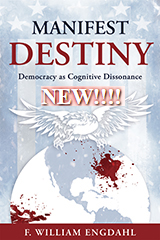
This Guns and Butter interview is full of astonishing information (that you will never find in the corporate media) about the role of Bush senior and CIA-funded foundations in the creation of Russia’s criminal oligarchy and the systematic dismantling of communist Poland and the Soviet Union. Bonnie Faulkner and F William Engdahl are discussing his new book Manifest Destiny: Democracy as Cognitive Dissonance.

In the first 15 minutes of the interview, Engdahl describes Reagan’s creation of the CIA-funded National Endowment for Democracy and its sister groups National Democratic Institute (NDI), International Republican Institute (IRI) Freedom House, and Solidarity Center. The formation of the so-called independent foundations enabled the CIA to fund a full range of illegal covert activities without being subject to congressional scrutiny. All worked closely with various foundations funded by George Soros to deliberately destabilize the Warsaw Pact.

15.30 Engdahl discusses the CIA conspiracy to bring down Poland’s communist government, starting with the secret pact Reagan and Pope John Paul II (the first Polish pope) formed in 1982. In this clandestine campaign, NED invested tens of millions of dollar in fax, copy machines, etc, which they smuggled into Poland with the help of Polish priests. This equipment, in turn, was used to facilitate mass protests supposedly organized by Solidarnosc, the dockworkers union led by Lech Walesa.

20.19 Engdahl talks about the 300 CIA agents left over from George Herbert Walker Bush’s tenure as CIA director – and how Bush senior regrouped them into private entities to engage in covert activities in Poland and the USSR.

21.00 Engdahl covers the mass protests leading to the collapse of the communist government in 1989 and the election of Lech Walesa as president. Walesa, in turn, opened the door for George Soros and Harvard economist Jeffrey Sachs to strip the Polish economy of all its assets and impose harsh austerity measures.

32.00 Engdahl discusses Executive Order 12333 (signed by Reagan), which put Vice President George Herbert Walker Bush in charge of all US foreign and national security policy after 1981 – and Executive Order 13233 signed by George W Bush, which severely limited public access to the records of prior presidents.

36.00 Engdahl talks about the Enterprise, a private intelligence/security network created by George Herbert Walker Bush that included teams run by Oliver North and Richard Secord. In addition to organizing illegal weapons sales to Iran (Iran Contra), The Enterprise recruited corrupt KGB generals to help  bring down Gorbachev’s government. According to Engdahl, these generals were the real origin (not the Russian mafia) of Russia’s corrupt billionaire oligarchs. The oligarchs were young proteges of these generals.

39.00 Engdahl explains Operation Hammer which financed the KGB generals’ coup against Korbachev in 1991 and installed Boris Yeltsin as president. The latter allowed the oligarchs, with the help of George Soros, Jeffrey Sachs and other Harvard economists to loot Russia exactly as they had looted Poland.

49.54 Engdahl describes how the Open Russia Foundation bribed corrupt legislators in the Duma to privatize all Russia’s natural resources and richest industries (minerals, oil, gas, the largest aluminum smelter in the world) and how Sachs, Soros and their cronies assisted the oligarchs in selling off all these industries for pennies on the dollar. When the giant Russian oil company Yukos was privatized, international banker Jacob Rothschild, George Soros and Henry Kissinger were appointed as Yukos board members.

52.00 Engdahl traces the downfall of Yeltsin starting in 1998 when the Duma refused to approve Chernomyrdin as prime minister. Yeltsin then appointed Yevgeny Primakov, who immediately filed criminal charges against oligarch Boris Berezovksy, who fled to London. When Clinton began bombing Serbia in March 1999, Primakov was en route to Washington DC and order his pilot to turn around and return to Moscow. When he demanded Yeltsin support the Serbs, Yeltsin sacked him.

54.00 After Yeltsin lost control of the Russian military, which dispatched troops to seize the airport in Kosovo, he appointed Putin as Prime Minister. Engdahl attributes this decision to KGB  deception operation that convinced Yeltsin and his oligarch buddies that Putin would play along. Instead Putin threatened Yeltsin with corruption charges unless he resigned. Putin would serve as acting president until he was elected in his own right in March 2000.


Vietnam War Series Ends with Load of Sentimental Claptrap

The Weight of Memory, Episode 10

The Vietnam War

Directed by Ken Burn and Lyn Novick

Film Review

I found the final episode of the Vietnam War series, shown on Maori TV earlier this week, extremely disappointing. The first half contained some good historical detail and valuable commentary by North Vietnam and Vietcong fighters. The last half was a load of sentimental claptrap about the Vietnam War memorial and other efforts to “heal” the Vietnam experience. It was totally devoid of any political analysis, eg the role of banks, oil companies and defense contractors in strong arming three administrations into pursuing an unwinnable war at great cost to the American people. Even more disgusting was the failure to identify obvious parallels with the illegal US wars in Iraq and Afghanistan, which have lasted even longer than Vietnam.

The filmmakers also totally gloss over the reality that for the Vietnamese, the war was purely a war of independence against foreign invaders.

Episode 10 covers March 29, 1973, when the last US troops left Vietnam, through April 30, 1975 when Saigon collapsed. The US evacuation had scarcely ended in 1973 when the Watergate scandal superseded all other national news. It was all over for Nixon once Congress learned that he had tape recorded all his Oval Office conversations. The tapes would provide undeniable proof of his participation in the Watergate burglary and cover up.

On August 9, after the House Judiciary Committee recommended impeachment, Nixon resigned. On the same day, Congress halved military aid to the (puppet) South Vietnamese government. The result was the virtual economic collapse of South Vietnam. Massive pay cuts would lead South Vietnamese troops to desert at the rate of 20,000 a month.

This episode includes very moving coverage of South Vietnamese who collaborated with the US occupation desperately trying to flee Saigon in front of North Vietnamese troops. Only a few were airlifted via helicopters that evacuated US embassy and security personnel. Many launched themselves into any vessel they could find in the hope of being picked up by US freighters.

Once North Vietnam took control of the south, the blood bath that had been predicted never eventuated. Roughly 1,000 South Vietnamese collaborators were killed in revenge killing and roughly 1.5 million were forced to participate in compulsory re-education.

The Vietnamese economy was a virtual shambles for a good ten years after the war ended. The filmmakers blame this on the privatization of Vietnamese industry and forced collectivization. A better explanation, in my view, is that the US war of aggression totally destroyed the country’s infrastructure and poisoned its farmland with Agent Orange.

Dire economic conditions would lead 1.5 million Vietnamese to flee Vietnam in small and medium-sized boats between 1978 and the early 1990’s. A good number drowned, but most ended up in refugee camps in other Southeast Asian countries. About 400,000 eventually made it to the US.


The Hidden History of Cannabis

The Hidden History of Cannabis

Chris Rice (2018)

Film Review

This documentary traces the medical, textile and spiritual use of cannabis from its first discovery in ancient China. It’s use for 100 different medical conditions is listed in the first Chinese “materia medica” in 2,800 BC. Archeological evidence suggests it was in wide use for cloth, paper and rope for centuries before that. It has long been one of the 50 herbal remedies used in traditional Chinese medicine.

Archeologists believe that Caucasus tribes known as Aryans spread cannabis use to India and Persia along primitive trade routes that pre-dated the Silk Road. In India it was used in Hindu sects devoted to Shiva, in Buddhism and Sikhism. According to legend, Siddhartha Gautama (Buddha) subsisted on cannabis alone for six years prior to his enlightenment.

In 500 BC, when the Persian empire (Iran) extended from the Indian border to Egypt, it played an essential role in Zororastianism. There is also good evidence Egyptians used it for medicinal purposes 700 years prior to their conquest by Persia (in  552 BC).

Following the unsuccessful Persian attack on Greece (in 492 BC), Greek physicians began using it to treat a variety of medical conditions. Both Pythagoras and Socrates refer to its mind enhancing properties. Cannabis would make its way to Rome by way of Greece.

Use of Cannabis in Judaism and Christianity

Rice also traces how Kaneh Bosm (which English Biblical scholars have mistranslated “calamus”) was used extensively along with frankincense and other psychoactive herbs to anoint ancient Jewish priests. Christ (which means “the anointed one”) used similar holy oils to anoint his twelve disciples. Some scholars believe Kaneh Bosm may have played a role in his healing miracles – due to its medicinal properties. Early gnostic gospels, which were banned by Emperor Constantine in 325 AD, cover the subject far more extensively than the New Testament.

Cannabis was also widely used by Muslim physicians, Sufi sects and by assassins (derived from the word hashish) of the secret 11th century Islamic sect Nizari Ismailis.

Cannabis Spreads to Europe and the New World

Cannabis cultivation spread from Rome to northern Europe via Germanic tribes who used the seeds as a food source. Prior to the conquest of the Americas, Europeans used it mainly as a source of fiber. When the New World tobacco trade made pipe smoking popular in Europe, a growing middle class also began smoking cannabis and opium.

Queen Elizabeth initiated the legal requirement that the North American colonies grow hemp to help supply the British Navy with rope and sails. Shakespeare, James Madison and James Monroe all smoked it, and Washington used it for toothache.

During the 18th century, it became widely available in various patent medicines – until the American Medical Association began a state-by-state campaign to ban it. Its ready availability and effectiveness for pain relief  posed a major threat to the fledgling medical profession.

The advent of alcohol Prohibition in 1919, caused a surge in the use of cannabis, which was still legal surged.

The Corporate Conspiracy to Suppress Hemp Production

In 1936, a corporate conspiracy to suppress hemp production in favor of wood fiber and synthetic fibers (see The Politics of Hemp) would lead to the controversial 1936 Marijuana Tax Act.

Psychodelic guru Timothy O’Leary would initiate the first legal challenge to the Act, leading a federal court to overturn it in 1969. Nixon’s response was to ban cannabis altogether, under the 1970 Controlled Substances Act.


How Arrogance Blinds the West to Their Historic Decline

Peter Frankopan – The Silk Roads

Directed by Justin Hardy (2017)

Film Review

This documentary, based on historian Peter Frankopan’s best selling book Silk Roads, explores the Western trait of putting their own interests at the center of their world and possessing no interest or capacity to understand other cultures.

Typically both Europeans and Americans believe they have a monopoly on “goodness” – that only they can save the world from darkness and suffering. Their ruling elite uses these beliefs to justify invading and occupying third world countries and are surprised when other cultures regard us as smug and arrogant.

According to Frankopan, Europe and the US presently find themselves at the wrong end of global trade routes. Asian countries, especially China, that used to be poor are rich now. Asia provides the vast majority of Western consumer goods and owns most Western debt. Over the last 40 years, there has been a vast transfer of wealth from the West to Asia. These new centers of wealth (especially China) have become the hub of scientific, technological and intellectual progress. However owing to their self-centered navel gazing, most Westerners are totally unaware this is happening.

Frankopan also maintains Europe has never had much to offer in the way of natural resources or intellectual innovation (Christianity has always suppressed knowledge and progress). In 800 AD, Mesopotamia was the wealthiest region in the world, with Baghdad viewed as the global center of trade and learning. During this period, Europe’s most important resource was slaves, with Dublin, Mainz, Utrecht and Venice serving as major trafficking centers for kidnapped women and children.

All this changed with the conquest of the New World, the enslavement of Native Americans and Africans, and the flow of silver and gold back to Europe. This illicit capture of mineral wealth and human beings enabled Europe to developed highly specialized skills in violence and conquest. They no longer needed to produce their own wealth because they could use their military prowess to steal it from other regions.

Over time, the economic decline of the West has eroded their military capability to the point they can no longer win wars.

As in Rome, obscene income inequality is one of the main indicators of an empire in decline.


The Link Between Vietnam and Nixon’s Recognition of China

A Disrespectful Loyalty, Episode 9

The Vietnam War

Directed by Ken Burn and Lyn Novick

Film Review

Last night Maori TV showed part 9 of the Vietnam War series.

During the period covered (February 1970 – March 1973), Nixon’s sole focus with to withdraw US troops from Vietnam without losing the 1972 election. He knew he would be defeated if Saigon fell. Much of this episode consists of tape recordings of Nixon’s Oval Office conversations with his chief security advisor Henry Kissinger.

Although the filmmakers refer to 1/4 of US GIs using marijuana in Vietnam and 40,000 being addicted to heroin, for some reason they neglect to mention the South Vietnamese army was the main source of these drugs.

They do report on the growing influence of Vietnam Veterans Against the War and play an excerpt of former naval lieutenant John Kerry’s (a VVAW member) compelling testimony before a Senate investigative committee.

1971 also saw the New York Times publican of the Pentagon Papers, leaked by whistleblower Daniel Ellsberg. This Defense Department study, covering 1945-1967, revealed successive US presidents had been continuously lying to the American public regarding their true motives waging war in Vietnam.

Nixon’s paranoia about documents Ellsberg and others might possess about his own lies led him to create “The Plumbers,” a secret team that broke into Ellsberg’s psychiatrist’s office (in the hope of finding material they could use to blackmail him).

Much of this episode focuses on the Paris peace talks, and Nixon’s efforts to force North Vietnam to agree to a favorable peace treaty. To this end, he resumed bombing raid on North Vietnam, which were far more brutal (in terms of civilian casualties) than those Johnson had been condemned for.

I was surprised to learn that Nixon’s recognition of Communist China (after nearly 40 years) was part of a ploy to increase Chinese and Russian pressure on their North Vietnamese allies to sign a peace settlement favorable to the US.

The latter would be signed on January 23,1973, and over the next few weeks the last US troops would leave Vietnam.

As of March 1973, over 58,000 GIs and 2 million Vietnamese had been killed in North Vietnam.