How the Protestant Reformation Laid the Groundwork for the UK Socialist Labour Party

The Protestant Revolution – Part 1 The Politics of Belief

BBC (2007)

Film Review

More stuff I should have learned in school. Either I was absent that day or I wasn’t paying attention. .

In this documentary historian Richard Jones-Nerzic explores the major political upheaval brought about by the 1517 Protestant Reformation, led by German monk Martin Luther. The film asserts Luther’s willingness to challenge the authority and corruption of the Catholic church unleashed a flood of revolutionary ideas, as well as political upheaval that lasted centuries.

At the time of the Reformation, the Roman Catholic Church had immense political power, with authority to levy taxes, raise armies and wage war. Moreover there was already growing dissent in the Church about the sale of indulgences. For a price, anyone could purchase a guarantee of salvation for themselves, family members and even dead people.

In 1521, Luther was hauled before Holy Roman Emperor Charles, V, declared a heretic and banned from the Holy Roman Empire. Sheltered by a sympathetic prince, he grew a beard, Luther disguised himself as Squire George and spent his time translating the New Testament into German. At the time, the Church only allowed the Bible to be printed in Latin, Green or Hebrew. They maintained ordinary parishioners could only understand scripture if a priest interpreted it for them. Luther also made use of the newly invented printing press to churn out pamphlets promulgating his views.

Buoyed by these ideas, as well as heavy taxes and bad harvests, in 1524 German peasants staged a revolt, the largest in Europe prior to the French Revolution.

Jones-Nerzic goes on to trace Henry VIII’s split from Rome in 1538, followed by the Scottish Puritans, under John Knox, breaking  from the Church of England in 1630. In 1642, the split would culminate in the English civil war led by Puritan leader Oliver Cromwell.

The film then explores the close links between the radical idealism (emphasizing equality and justice) of the nonconformist Protestant movement and Britain’s Socialist Labour Party, formed in 1900. It makes the point that the founders of Britain’s Labour Party came to socialism via “the Methodist chapels of Yorkshire and Wales,” rather than Marxism.
 

The Intelligence Career of Lee Harvey Oswald

Agent Oswald

Dark Journalist (2013)

Film Review

This documentary, filmed for the 50th anniversary of the JFK assassination, starts with a brief summary of the physical evidence indicating that Lee Harvey Oswald played no role whatsoever in Kennedy’s murder.

It then reviews the major evidence that Oswald was a long time CIA operative at the time of his arrest. This includes archival interviews of New Orleans District Attorney Jim Garrison (who investigated and prosecuted one of the actual co-conspirators), Oswald’s New Orleans paramour Judyth Vary Baker, the late L. Fletcher Prouty (who served with Oswald in Japan at a top secret U2 spy base), late CIA asset George DeMohrenschildt (Oswald’s CIA babysitter in Dallas), and Cuban exile Antonio Veciano (a CIA operative in the Alpha 66 paramilitary group) and the recorded deathbed confessions of David Atlee Phillips (who ran all CIA western hemisphere operations in 1963) and E Howard Hunt (who was chief of CIA covert operations in 1963).

The US Government Assault on World War I Veterans and Their Families

The March of the Bonus Army

PBS (2013)

Film Review

This documentary concerns the brutal 1932 massacre of World War I veterans and their families by Generals MacArthur, Eisenhower and Patton.

Owing to insufficient volunteers (the army paid $1.25 a day), the US government was forced to initiate a draft when they first entered World War I in April 1917. When the war ended, veterans agitated for lost wages, leading Congress to authorize payment of a $1.25 bonus, to be paid in 1938.

With the 1929 Depression, unemployment rates for veterans were especially high, and an ex-GI from Portland organized a veterans march on Washington to demand immediate payment of their bonus.

After dozens of veterans occupied every Congressman’s office, the House passed the Bonus Bill.

As the Senate took up the bill, the veterans and their families set up an enormous tent and shack city in the Anacostia neighborhood of Washington DC. They passed the time preparing communal meals, boxing, making music, preparing and visiting a library set up by the Salvation Army. One of the most remarkable features of the Anacostia tent city was the natural integration of black and white veterans in all aspects of daily life. During the war, black troops weren’t allowed to fight alongside white Americans, leading 100,000 African Americans to fight under the French flag.

The the Senate overwhelming defeated the Bonus Bill, Congress adjourned and Hoover ordered the evacuation of the 45,000 Bonus Army veterans from downtown Washington DC. After a battle broke out between city police and veterans, Hoover ordered and attack by 400 infantry, accompanied by tanks and armored vehicles to attack. General MacArthur ignored his order not to cross the Anacostia River, and he and his men burned the shacks and tents filled with the wives and children of Bonus Army members.

Congress ultimately passed the Bonus Bill in 1933. I was very surprised to learn that Roosevelt vetoed it and that the House and Senate overrode his veto.


The World War I Conspiracy

The World War I Conspiracy

James Corbett (2018)

Film Review

This remarkable documentary tells hidden history of a secret British round table started in 1891 by diamond magnate Cecil Rhodes that instigated both the 1898-1902 Boer War (instigated to safeguard the Rhodes-Rothschild conglomerates monopoly over South African gold and diamonds) and World War I. The Society of the Elect, as it was called, had the stated goals of imposing the Anglo-Saxon agenda on the entire world and restoring the US colonies to British control.

The main focus of this three-part documentary is an exploration of how this secret society deliberately instigated war with Germany in 1914, with the specific goal of crushing the Germans politically, militarily and economically.

Part 1 explores Germany’s rapid economic and military expansion rise after the 1871 unification of its member under Kaiser Wilhelm I. Fearful that this expansion would threaten Britain’s colonial ambitions (and their personal fortunes), the Society of the Elect quietly plotted a war against Germany from the time of Rhodes’s death in 1902.

Lord Alfred Milner, who replaced Rhodes as leader of the secret group, established control of the British press, military, foreign office and diplomatic corps by placing cronies in key positions of power.

Whereas Germany was a long time ally of the British Crown (Kaiser Wilhelm II and King George V were first cousins), Milner and his cronies maneuvered his cronies in the Foreign Office into a secret alliance with France and Russia – without knowledge of either Parliament or Cabinet.


Part 2 concerns the secret plot to embroil the US in World War I (in 1917) by engineering a German submarine attack (in 1915) on an auxiliary warship disguised as an ocean liner known as the Lusitania; * by engaging in a conspiracy with US banker JP Morgan to deny anti-war President William Howard Taft a second term in 1912; ** and by instigating a massive propaganda campaign in the US press portraying the Kaiser and the German army as inhuman monsters.


Part 3 discusses the fabulous wealth JP Morgan, the Society of the Elect and their cronies acquired as a direct result of World War I. Between them, the US and Britain created 21,000 millionaires and billionaires out of war profitsI. Retired general Smedley Butler was the first to expose the unprecedented war profiteering that occurred between 1914-1918 in in famous pamphlet War is a Racket.


*The Lusitania, officially classified as an auxiliary warship, had twelve 6-inch guns and was heavily loaded with ammunition and gunpowder (information that only became available when the records were unsealed in 2014). In view of the aggressive German U-boat campaign, Britain clearly had no business using a British warship to transport 1,128 passengers. The German submarine campaign was largely directed against the illegal British naval blockade blocking all food shipments to Germany – a violation of the 1909 Declaration of London and a crime against humanity. As a result of the blockade, which continued into 1919, German civilians were restricted to 1,000 calories a day and more than 753,000 died of starvation.The death of 128 US passengers on the Lusitania was ultimately used to justify the US entry into the war in 2017.

**Taft was far more popular (and politically savvy) than Woodrow Wilson, an obscure professor with limited political experience. JP Morgan and his fellow bankers propelled Wilson (a Democrat) into the presidency by backing third party candidate (and former president) Teddy Roosevelt and splitting the Republican vote. Owing, in large part to Wilson’s political inexperience, he was under the direct control of Texas politician Colonel Edward M House, who was conspiring with Milner and his colleagues in the British foreign office.

Hidden History: The Interlocking Relationships Between Wall Street, the CIA and the So-Called Free Press

Mosaic of Facts: Inside the Information Web

RT (2014)

Film Review

In this 2014 documentary, free lance journalist Miguel Francis Santiago examines what he refers to as the “information war” between the US and Russia over recent events in Ukraine.

He begins by looking at evidence uncovered by late investigative journalist Robert Parry that the 2014 coup in western Ukraine was actually a US-sponsored “color revolution” to remove a democratically elected president (Viktor Yanukovych) and replace him with pro-EU/pro-NATO Petro Poroshenko.

Parry’s evidence pointed to open collaboration between former Assistant Secretary of State Victoria Nuland and the fascist and neo-Nazi Svoboda Party that (based on a 2012 BBC investigation) has a history of violently targeting Jews and ethnic Russians.

Santiago goes on to review a slew of widely promoted YouTube videos of both the Maidan uprising and the subsequent referendum in which 93% of Crimea voted to secede from Ukraine and request membership in the Russian Federation. In examining the origin of various pro-Kiev/anti-Russian videos, he discovers all were produced by people with links to the NED, USAID and/or the US State Department.

The film also includes interviews with retired Colonel Lawrence Wilkerson, aid to former Secretary of State Colin Powell; Naomi Wolfe, former political advisor to Bill Clinton and Al Gore; geopolitical analyst Eric Draitser; and Peter Joseph, producer of the radical Zeitgeist film series.

Santiago uses these various sources to paint an extremely sophisticated picture of closely interlocking relationships between the US corporate plutocracy, US intelligence agencies and America’s so-called free press.


*”Color revolutions” is the term used  to describe a series of failed “revolutions” in Eastern Europe, the Middle East and North Africa funded by the CIA, State Department and George Soros. The intent was to use popular uprisings to install more US-friendly regimes.

**National Endowment for Democracy (NED) is a so-called non-governmental organization funded mainly by the CIA and State Department, used extensively to promote regime change via popular unrest.

***USAID is an agency of the State Department used extensively to promote regime change via popular unrest.

Who Murdered Jamal Khashoggi: the Findings of Turkish Intelligence

Jamal Khashoggi: The Silencing of a Jounalist

Al Jazeera (2019)

Film Review

This documentary is a collation of Turkish intelligence findings in the murder of Washington Post journalist Jamal Khashoggi at Istanbul’s Saudi Consulate in October 2018. The evidence consists mainly of an audio recording of the murder (presumably Turkish intelligence had the Saudi Consulate bugged), forensic analysis of the Consulate interior, CCTV footage and interviews with a cab driver and a builder who constructed a massive incinerator outside the Saudi Consul’s home in April 2018. The documentary also features an exclusive interview with Hatice Congiz, Khashoggi’s fiancee, who was waiting for him outside the Consulate.

Based on the audio recording, where Khashoggi is heard to say, “Don’t cover my mouth – I have asthma and I can’t breathe,” Turkish Intelligence concludes the Saudi hit team put a plastic bag over his head and choked him. He is heard to struggle for seven minutes before he succumbs.

It would take fifteen days and massive international pressure before Saudi intelligence allowed Turkish police inside the Consulate to conduct a forensic analysis. They discovered the walls had been recently repainted. After removing the new paint, they discovered traces of Khashoggi’s blood and fingerprints belonging to the hit team.

At present, Turkish intelligence believes his body was dismembered inside the Consulate and packed into suitcases. Within hours of the murder, there is CCTV footage of hit team members arriving at the Saudi Consul’s home with the suitcases.

The most gruesome evidence comes from a builder commissioned to build an enormous incinerator in the Saudi Consul’s back garden in April 2018. This coincides with the date Khashoggi began visiting Istanbul to court Hatice Congiz, leading eventually to their engagement.

Khashoggi was visiting the Saudi Consul to obtain copies of his divorce decree. Under Turkish law, all foreigners must provide proof they are single to marry Turkish nationals.


Hidden History: Larbi Ben Mhidi, the Genius Behind the Algerian Revolution

The Algerian Revolution, Larbi Ben Mhidi

Al Jazeera (2019)

Film Review

This documentary explores the life and work of Larbi Ben Mhidi, legendary leader in the Algerian National Liberation Front (NLF), which in 1962 succeeding in winning Algerian independence.  In 1956, Ben Mhidi was hunted down and secretly assassinated by French military forces.

Ben Mhidi played a central role in plotting the strategy of the Algerian Revolution. When the NLF first launched their war of independence in November 1954, they were a guerilla band of 1200 rural fighters with 400 weapons. Through a strategic campaign of bombing attacks on police stations, military barracks, weapons depots and settlers homes – coupled with an 8-day general strike in 1967 – they mobilized enough support to fight the French to a stand-off in Algiers.

In the Battle of Algiers, which lasted a little over a year (1956-57), the French captured 2,400 NFL fighters and “disappeared” 4,000.

Who Killed Janis Joplin?

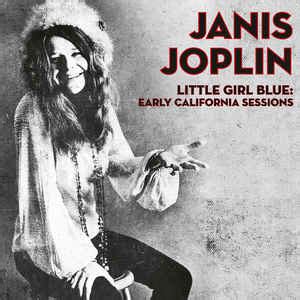
Janis Joplin: Little Girl Blue

Directed by Amy Berg (2015)

Film Review

This documentary is a mushy, pop psychology version of the life of late blues singer Janis Joplin. It makes an unsuccessful (in my view) attempt to tie her alcohol, amphetamine and heroin abuse (and ultimate heroin overdose) to her troubled adolescence in conservative Arthur Texas. The film is based on interviews with her sister Laura, friends and band mates; letters to her family and vintage footage from her concerts and recording sessions.

Berg paints Joplin as a somewhat geeky outcast who participated in civil rights protests during her last three years of high school – leading to bullying and harassment by fellow students, many of whom belonged to the Ku Klux Klan. The filmmaker makes the case that her unhappy adolescence left a gaping hole in Joplin’s psyche that could only be filled by alcohol, drugs and promiscuous sex.

The film acknowledges that Joplin had been clean for nearly a year at the time of her  heroin overdose. It was during this period she recorded her biggest hit, Me and Bobby McGee, which signaled a totally new direction for her work.

What the film doesn’t mention is that several people close to Joplin (including her sister) suspected foul play in her alleged overdose, especially given the deaths of many of her contemporaries (activist rock stars) in similar circumstances. A book her sister Laura published in 2005 (Love, Janis IT Books), refers to persistent rumors  the CIA arranged her death.

The film also fails to mention that shortly before her death Joplin helped organize several huge anti-Vietnam War concerts for the peace movement. Or the FBI surveillance she experienced (like John Lennon). Or her 1974 affair with FBI operative Michel Raymond, who introduced her to amphetamines and encouraged her to use them regularly, leading to her amphetamine addiction. Or that members of the Grateful Dead introduced her to heroin to help her come down from speed. The Grateful Dead introduced many California rock musicians to heroin (as documented in a 1971 book, Living with the Dead, by their first manager Rock Scully).

As John Potash documents extensively in Drugs as Weapons Against Us (see MK-Ultra, LSD and the CIA War Against Musicians and Activists ), CIA MK-Ultra agents were aggressively pushing speed, heroin and LSD in the San Francisco rock scene in the sixties and early seventies.

The film can’t be embedded for copyright reasons but can be viewed free at the Maori TV website for the next 10 days: Janis Joplin: Little Girl Blue

Why Castro and Che Guevara Split


Revolutionary Friends

Al Jazeera (2017)

Film Review

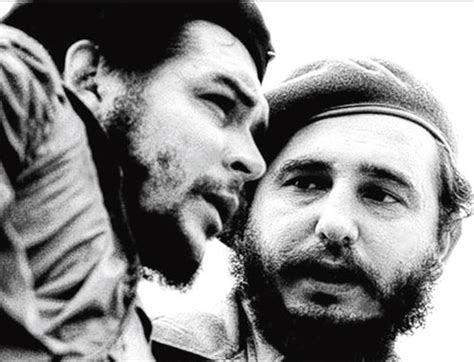
This is a documentary about Fidel Castro, Che Guevara and the 1959 Cuban Revolution. In addition to exploring the revolution’s early history, the filmmakers trace how Cuba came to rely on the Soviet Union for its economic survival – and how the Soviets forced Castro to exile Che from Cuba for political reasons.

After traveling extensively through South America, Che Guevara, deeply affected by the extreme poverty and exploitation he saw, was totally committed to “permanent revolution.”* In contrast Soviet leaders were committed to socialism in one country and “peaceful coexistence with the US.” They opposed Che’s guerilla activities in Africa and Latin America owing to the potential threat they posed to US-Soviet relations.

The most interesting part of the film reveals that the CIA initially supported Castro’s guerillas  with arms, funding and US volunteers because they viewed him as “easy to control.” It contains priceless footage of Castro denouncing communism (in English) to an American audience and calling for Cuban “representative democracy.”

In February 1959, the US initially recognizes Castro as Cuba’s new prime minister. A few months later, he appoints Che (an avowed Marxist) to head the Cuban national bank. The US responds by blocking all credit to Cuban banks. Castro retaliates by nationalizing Cuba’s American businesses. The US government, in turn, blocks all Cuban sugar imports.

Given that 90% of the Cuban economy is based on trade with the US, the country is on the verge of collapse. Castro is left with no choice but to ally himself with the USSR to trade Cuban sugar for oil and financial aid.

Under Soviet direction, Castro ends Che’s governmental role in 1963 and sends him on a series of foreign missions.After several speeches critical of Soviet leaders (for failing to support third world guerilla movements), Che angers them further by cultivating relations with China, just as the USSR and China are becoming estranged.

After an unsuccessful campaign with guerilla fighters in the Congo, Castro sends Che to Bolivia, where he and ten fighters who accompany him are stranded without weapons, food, medicine or support from the Bolivian Communist Party. On October 9, 1976, Che is wounded in a firefight with Bolivian security services. He is subsequently captured and executed.


*As envisioned by Leon Trotsky, this refers to a country’s continuing revolutionary progress being dependent on a continuing process of revolution in other countries.

This film can’t be embedded for copyright reasons. It can be viewed free until April 7 at the Al Jazeera website: Che Guevara Fidel Castro Revolutionary Friends

The Forgotten Black Settlers Who Helped Settle the American Midwest

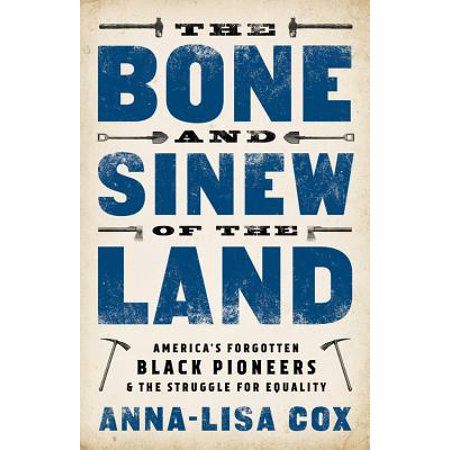
The Bone and Sinew of the Land: America’s Forgotten Black Pioneers & the Struggle for Equality

Anna-Lisa Cox

Hatchette Book Group (2018)

Book Review

This is a fascinating book about the freed African American slaves who helped settle the Northwest Territory* and the vicious white backlash that deprived many of them of their farms and, in some cases, their lives. Interesting how the vital role of African Americans in settling the Midwestern United States has totally vanished from modern history books.

African American scholar and activist W.E.B. DuBois was the first to note, in 1906, the important role role of freed slaves in settling, defending and clearing the dense forests of the Northwest Territory.

The 1787 Northwest Ordinance both banned slavery throughout the Northwest Territory and allowed African Americans to vote in local and territorial elections.

Cox’s book traces the gradual prohibition of slavery in all northern states after the the trans-Atlantic slave trade ended in 1807 (except New Jersey, where slavery persisted until the 1863 Emancipation Proclamation). In nearly every case, legislation ending slavery followed on from favorable court rulings when slaves sued to win their freedom.

Cox also examines the pressures leading slaves, having purchased their freedom, to migrate to the Northwest Territory. Southern Blacks were fleeing the constant threat of whites kidnapping and re-enslaving them. Northern Blacks came to escape deadly mob violence (in which white mobs burned Blacks out of their homes, churches and schools) that plagued Northern cities with large African American populations.

The white backlash that eventually stripped Black Northwest Territory settlers of civil rights they had enjoyed for decades was driven by a number of factors: 1) the 1799-1815 Napoleonic Wars, during which France sought to reinstate slavery in all  its colonies, 2) the rabidly racist leadership of Ohio’s first governor William Henry Harrison (who unsuccessfully campaigned to make Ohio a slave state), President Andrew Jackson and his Vice-president Martin van Buren (who openly encouraged white mobs to attack Black farmers in Ohio and Indiana), and the outright greed of land developers who sought to profit from slave labor in converting Northwest and Louisiana Purchase territory into prime agricultural land.

In the end, all Northwest Territory states (except Wisconsin) enacted Black Code Laws that required African American settlers to post $500 bond – which they forfeited if white farmers attacked them. As each of them achieved statehood, their new state constitutions stripped Black settlers of their right to vote and their right to testify against whites in court. The latter made it impossible to convict whites for mob violence. Eventually Indiana, Ohio and Illinois banned all new immigration of Black settlers.

The 1850 Fugitive Slave Law and 1857 (Supreme Court) Dred Scott decision made life for freed slaves in the Northwest Territory even more precarious. The former made it possible for whites to kidnap free African Americans in the North and sell them into slavery in the South. The latter decreed that no person of African descent could ever be considered a US citizen.


*The Northwest Territory encompassed most British pre-war colonial territory west of the Appalachians, north of the Ohio River and south of the Canadian border  – ie the modern day states of Ohio, Indiana, Illinois, Wisconsin, Michigan and the eastern part of Minnesota.