9-11 for Novices

911

The Pentagon is the Key

If you’re like me, you probably find the technological complexity of 9-11 Truth debates pretty daunting. This is what makes the following video by Barbara Honneger particularly valuable. Honneger breaks the scientific evidence down into discrete, easily digestible bites, which she illustrates with contemporaneous media footage, video interviews and simple coherent graphic displays.

Honneger was a research analyst in the Reagan administration. In 1989, she published The October Surprise, about a secret agreement between the Reagan campaign and the Iranian government to delay the release of 52 American hostages until after the 1980 presidential elections. She was also the 9-11 investigator who discovered that NORAD war game exercises were occurring simultaneously with the 9-11 hijackings. Many researchers attribute the Air Force failure to scramble fighter jets (to intercept the hijacked planes) to the confusion caused by the war games.

Honneger’s presentation focuses mainly on the chronology of events at the Pentagon. Witness reports and seismological evidence indicate there were at least five explosions caused by pre-planted explosives between 9:30 and 10:00 am on September 11, 2001. There is also physical and eyewitness evidence indicating that an unmanned drone exploded on the Pentagon lawn right in front of the firehouse at 9:32 am.

At 9:32 am, Flight 77 which allegedly struck the Pentagon at 9:38, hadn’t even reached Washington DC.

Based on flight manifest documents, which Honneger includes in her presentation, there was no Flight 77 from Dulles Airport on Sept 11, 2001. American Airlines couldn’t provide a list of the 59 passengers who supposedly died in the Pentagon fireball because they have no record of the flight.

The only evidence Flight 77 ever occurred was an alleged cellphone call from Barbara Olson to Solicitor General Ted Olson and an FAA report about a flight presumed to be Flight 77 disappearing from radar at 9 am around the Ohio/Kentucky border. Following extensive investigation, the FBI ascertained the phone call never occurred.

Proof of an Inside Job

Honneger believes the pre-planted explosives at the Pentagon are the strongest evidence that 9-11 was an inside job. Only high-level Pentagon insiders would have had access to the specific sites where explosions occurred.

She also believes it was no coincidence the most of the DOD employees killed on 9-11 were the ones tracing the $2.3 trillion in Pentagon funds that Rumsfield couldn’t account for (CIA whistleblower Susan Lindaur says the true amount was $9.1 trillion). Nor that all their records were destroyed in the blasts.

Honnegar’s most shocking revelation comes at the end when she lists all the “reported” dual nationality (American-Israeli) neocons linked to the 9-11 attack on the Pentagon (Wofowitz, Perle, Zakheim, Zelikow, Chertoff). Perhaps I’m naïve, but I had absolutely no idea that Bush and Cheney had possibly given Israeli citizens national security positions requiring high level security clearance. As Honneger points out, their close involvement in 9-11 suggests that they were acting on behalf of Israel, and not the US.

photo credit: London Permaculture via photopin cc

Originally published in Veterans Today
Ending Water Fluoridation: One We Can Win*

fluoride deception

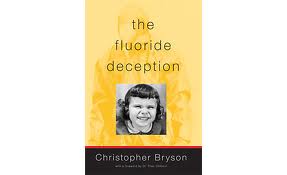
The Fluoride Deception

By Christopher Bryson (2004 Seven Stories Press)

Free download from Sheep pee!

Book Review

In Fluoride Deception, BBC journalist Christopher Bryson describes how the decision to deliberately dose US municipal water supplies with a potent industrial toxin was basically a corporate scam dreamed up by Alcoa, GM and Dupont, with the help of Edward Bernays, the infamous father of the public relations industry. Their cynical goal was to stem a tide of lawsuits related to death and injuries from toxic fluoride pollution – by convincing the public that fluoride is good for you.

Fluoride is an extremely toxic pollutant produced by aluminum smelting. GM and Dupont became involved with the scheme because GM held the patent on fluoride-based Freon and Dupon manufactured it. Freon was a common refrigerant which the EPA banned in 2010.

According to Bryson, the FDA first raised the alarm about fluoride toxicity in the early thirties, resulting in scores of lawsuits for aluminum workers crippled and killed from fluoride poisoning and farmers near aluminum plants, whose livestock were killed due to fluoride poisoning.

Public Relations: Cheaper than Pollution Controls

Rather than encouraging Alcoa to institute pollution controls, an Alcoa researcher named Francis Frary decided a better approach was to alter public perception of fluoride. He approached Mellon Institute researcher Gerald Cox. In 1937, Cox performed a single study in rats (who rarely suffer tooth decay to begin with) in 1937 and “proved” fluoride strengthened their teeth.

Frary and Cox were soon joined in their little scheme by Charles Kettering’s GM’s research director and Freon magnate, who approached the American Dental Association, began funding many of their activities. He also got himself appointed to their three member Advisory Committee on Research in Dental Caries. Meanwhile GM and Dupont hired scientist Robert Kehoe to perform safety studies on both fluoride and tetra ethyl lead, a gasoline additive co-manufactured by the two companies. Unsurprisingly, Kehoe declared both leaded gasoline and fluoride safe at “low levels.”

Enter the Father of Public Relations

The most prominent villain in this sordid history was Edwards Bernays, the father of public relations industry. At the beginning, there was massive public opposition to water fluoridation, led mainly by doctors who were well aware of fluoride’s toxicity. Bernays’ answer was to enlist even more prominent doctors to declare it safe, starting with prominent baby doctor Benjamin Spock.

The common perception of a potent toxin such as fluoride being safe and good for teeth is based on decades of corporations paying researchers to produce the scientific results they want – and burying research and firing and blacklisting scientists whose studies show otherwise.

Bryson details numerous deliberate smear campaigns against extremely reputable doctors and scientists who dared to publish research regarding the adverse effects of water fluoridation:

  • Dr. George Waldbott a world famous doctor who first identified penicillin allergy and the link between smoking and emphysema. Waldbott published numerous double blind studies in the fifties showing that fluoride is harmful to human health. The result was a massive corporate smear campaign that destroyed his reputation by marginalizing and demonizing him.
  • Dr William Marcus – a senior EPA toxicologist in the Office of Water, fired in 1992 for attempting to publicize studies showing that  fluoride causes bone and liver cancer. In 1994 Marcus won lawsuit against the federal government and was reinstated. While the EPA still refuses to ban water fluoridation, the unions representing EPA scientists have called for a moratorium.
  • Dr Phyllis Mullinix – research toxicologist hired by Forsyth Dental Institute to study the effect of fluoride on the brain. Mullinex was first fired and then blacklisted in the mid-nineties when she published research showing fluoride produces memory and behavior problems in children.

Where Fluoride Comes From

Although fluoride is added to municipal water supplies as a “drug” – that allegedly improves dental health – it has never been approved by the FDA. In fact most communities source their fluoride from the phosphate fertilizer industry, as hydrofluorosilicic acid. This is an extremely toxic, hazardous waste, and the EPA requires phosphate manufacturers to capture it via “wet scrubbers” in their chimneys (to prevent toxic fluoride gas from being released into the air). The resulting liquid is then loaded, unpurified, into tanker trucks and sold to cities to be added to their public water supply. In addition to fluoride, it also contains a number of heavy metals and radionucleotides (radioactive elements – mainly uranium-238, uranium-234, thorium-230, radium-226, radon-222, lead-210, and polonium-210).

*2014 update

In 2003 the EPA commissioned the National Research Council (part of the National Academy of Sciences) to examine all the peer reviewed research to make a determination whether an upper limit of 8 mg of fluoride (eight glasses of water with a fluoride concentration of 4 mg/liter) was still within the margin of safety. In 2006 the NRC came back with the recommendation that 8 mg (4 mg/liter) was definitely too high – as many Americans were experiencing symptoms of chronic fluoride poisoning at this dose.

In addition to lower IQ in children, the NRC found that water flouridation was contributing to an epidemic of hypothyroidism, infertility, arthritis and hip fracture.

Based on the high probability that Americans drinking fluoridated water were suffering serious and irreversible health damage, the NRC urgently recommended that the EPA ban water fluoridation until the safe threshold (based on urine fluoride measurements) could be determined.

The Bush administration and corporate media buried the report.

98% of European municipalities have banned water fluoridation.

In 2011, I was part of a local citizen’s groups that persuaded New Plymouth District Council to remove the fluoride from our water. We had major support from New Zealand’s Fluoride Action Network and internationally renowned biochemist Dr Paul Connett.

Below a presentation by Dr Connett to Toronto anti-fluoride activists:

Link to Fluoride Action Network: http://www.fluoridealert.org/

The Sacrifices of Empire

(The 4th of 8 posts regarding my 2002 decision to emigrate from the US to New Zealand)

It only became clear once I left the US the immense sacrifices Americans make for their cheap gasoline and consumer goods (see previous post). The most obvious is a range of domestic programs that other developed countries take for granted. These include publicly financed universal health care (in all industrialized countries except the US) and a range of education, jobs and social programs enacted under Roosevelt, Kennedy, Johnson and Nixon, which Reagan, Bush and Clinton repealed.

With a so-called war on terror on multiple fronts (I can count at least ten countries the US is at war with), federal block grants to states and cities have all been diverted to Pentagon spending. In city after city, there is no money to repair badly decrepit roads and bridges or provide adequate street lighting and policing. While dozens of clinics, libraries and homeless shelters shut their doors and teachers, cops and other state and local employees get laid off.

Sacrificing Democratic Rights and Civil Liberties

As citizens of the world’s greatest military power, Americans also make major sacrifices in terms of democratic governance and civil liberties. This, too, only became clear once I became an expatriate.

Genuine democracy is totally incompatible with military empire. If allowed some say whether to spend most of their tax dollars on weapons and war, the vast majority of Americans would respond with a resounding “no.” Civilian populations are universally repelled by the carnage of war. Women, who comprise more than fifty percent of the population, consistently oppose any military tactics that kill large numbers of civilians. Likewise taxpayers of both sexes expect to see their hard earned tax dollars spent on public programs that benefit them. Not to enrich Wall Street banksters and corporate war profiteers.

Ordinary Romans felt the same way. Which was the main reason their leaders abandoned democracy when they undertook to expand the Roman republic into an empire.

Creating a Constitution Conducive to Empire

There’s also a clear link between the growing wealth an power of banks and multinational corporations and the recent attack on democratic rights and civil liberties (the repeal of habeas corpus and legalized government spying authorized under the Patriot Act and NDAA).

This relates, in my view, to structural flaws in the US system of government that make it less democratic than other industrialized countries. These mostly relate to what the Constitutional framers referred to as “separation of powers.”

In social studies we were taught these “checks and balances” were intended to make the US government more democratic. However it’s clear from the writings of Hamilton, Madison and other constitutional framers that their real intent was to minimize the risk of a direct popular vote harming the interests of wealthy landowners and merchants.

In their writings, the founding fathers make no secret of their imperialistic ambitions (their plans to declare war on the Native Americans and Mexicans who possessed the lands west of the 13 original colonies). This military expansionsim was extremely unpopular with a mainly rural, farming population that experienced immense personal and economic hardship during the Revolutionary War.

And military expansion didn’t end when the US seized the Southwest and California from Mexico. In 1895, the US declared war on Spain to expand the empire to include Cuba, Puerto Rico, Hawaii, the Philippines and other Pacific islands.

Parliamentary Democracy=One Man One Vote

Unlike the majority of industrialized countries, the US doesn’t employ a “one-man-one-vote” system of representational democracy. The only hope our Constitutional framers had of enacting their pro-business, pro-military agenda was to establish two branches of government (the Senate and Presidency) that wouldn’t be determined by direct popular vote. The idea was to block populist legislation enacted by the democratically elected House of Representatives

After 11 1/2 years experience with New Zealand’s, parliamentary democracy, I have absolutely no doubt that it’s more democratic than the US system. Under a parliamentary system, the head of the party controlling the majority of legislative seats automatically becomes chief of state. The moment the prime minister loses the majority he/she needs to pass legislation, the government collapses and a new election is called. This is in marked contrast to the US Congress. The latter has been virtually paralyzed for 30 years – while American schools and the US health care system continue to disintegrate in front of our eyes.

Another important advantage of a parliamentary democracy is the establishment of an official opposition party, which is expected to attack and embarrass the party in power. The result is vigorous and often raucous parliamentary debate, characterized by booing, cheering and outright heckling by members of the opposition parties.

Open “bipartisan consensus,” which is so heavily promoted by the US mainstream media, would be extremely unpopular in New Zealand. The majority of Kiwi voters retain a strong working class consciousness and are extremely dismissive of politicians with open ties to the corporate and business lobby.

Video of Question Time in NZ Parliament:

10/14/02: The Day I Became an Expatriate

bramhallmemoircover-682x1024.jpg

(The 1st of 8 posts describing my 2002 decision to emigrate from the US to New Zealand)

When I finally left the US in October 2002, I had been thinking of emigrating for many years. In June 1973, I shipped all my belongings to England, intending to start a new life there. Many Americans of my generation left the US in the early seventies, for Canada, Europe and more remote parts of the world. Most were draft-age men afraid of being sent to Vietnam. A few were women involved in clandestine abortion clinics that sprang up before the 1973 Roe v Wade Supreme Court decision that legalized abortion. Many were artists and intellectuals like me, disillusioned by lies about Vietnam in the Pentagon Papers,  Watergate, CIA domestic spying and Nixon’s use of US intelligence for his own political purposes.

In 1973, I myself was totally apolitical. My own decision to leave the US had very little to do with Vietnam or Watergate. My disillusionment stemmed more from watching rampant consumerism overtake the humanist values I had grown up with – the strong family ties, deep friendships and involvement in neighborhood and community life that were so important to my parents’ and grandparents’ generation.

During my eighteen month stay in England, it was deeply gratifying to meet people in London and Birmingham who had little interest in owning “stuff” they saw advertised on TV. People who still placed much higher value on extended family, close friendships and the sense of belonging they derived from their local pub, their church or union, or neighborhood sports clubs, hobby groups, and community halls. All these civic and community institutions had disappeared in the US. I missed them.

A downturn in the British economy in late 1974 forced me to return to the US to complete my psychiatric training.  I never abandoned my dream of returning overseas and religiously scanned the back pages of medical journals for foreign psychiatric vacancies. Meanwhile I  joined grassroots community organizations seeking to improve political and social conditions in the US. While and

For many years I believed Nixon was an aberration. This made me naively optimistic about the ability of community organizing to thwart the corrupting influence of powerful corporations over federal, state and local government. It never occurred to me the institutions of power themselves were deeply corrupt and had been for many years.

The Murder that Turned My Life Upside Down

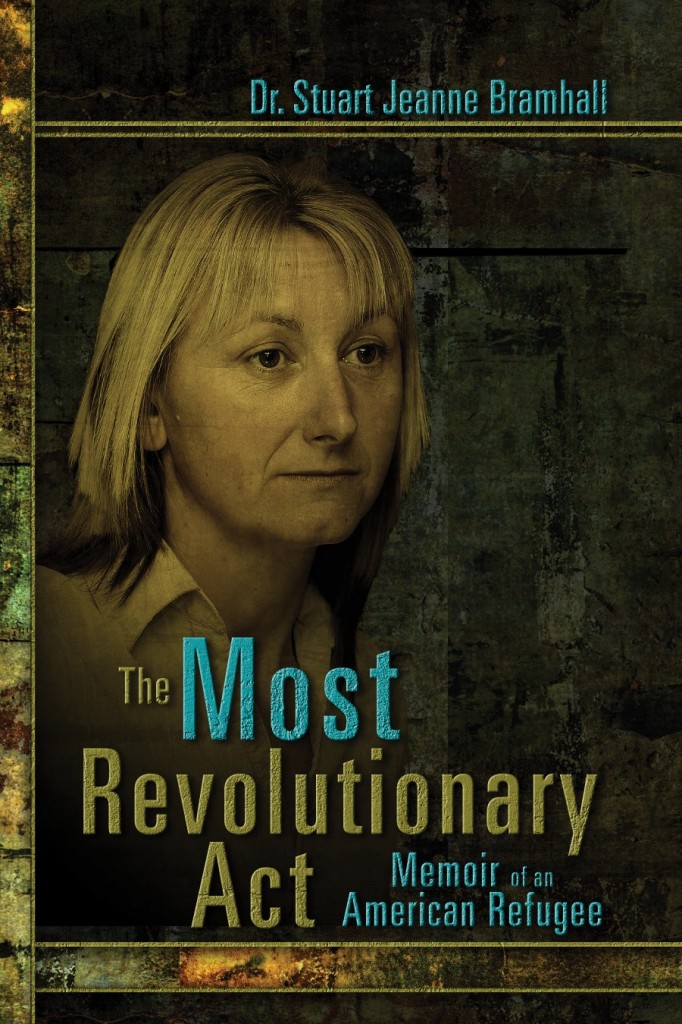
As I write in The Most Revolutionary Act: Memoir of an American Refugee, the 1989 intelligence-linked murder of a patient was a rude awakening. It demonstrated, in the most horrific way possible that ultimate power lay outside America’s democratic institutions. It forced me to accept that political control lay in the hands of a wealthy elite who employed an invisible intelligence-security network to terrorize – and sometimes kill – whistleblowers and activists who threatened their interests. This painful discovery lent new urgency to my political work. It simultaneously caused an increasing sense of alienation and isolation from who hadn’t shared these experiences.

There was also the slight problem that I was experiencing the same phone harassment, stalking, break-ins and hit-and-run attempts as my patient.

Most of my liberal and progressive friends were far more knowledgeable than I was about the power multinationals corporations held over elections, lawmakers and the mainstream media. Yet they reacted very differently than I did to this knowledge. My response was to devote every leisure moment to building a grassroots movement to end corporate rule. Their response, in contrast, was to become cynical and withdraw from political activity to focus on their personal lives.

The Patriot Act: Repealing the Bill of Rights

In September 2001, I expected that the Patriot Act, which legalized domestic spying on American citizens, as well as revoking habeas corpus and other important constitutional liberties, would be the turning point that would send progressives into the streets, as the 1999 anti-WTO protests had, to halt rampant corporate fascism.

It never happened. In Seattle, a small 9-11 coalition formed in October 2001 to protest Bush’s invasion of Afghanistan. Over the following year, as Bush prepared to invade Iraq, former weapons inspector Scott Ritter and others spoke to sell-out crowds about the lie the Bush administration was hawking about Saddam Hussein’s non-existent weapons of mass destruction.

Then in February 2002, evidence began to emerge that officials close to the Bush administration had played some role in engineering the 9-11 attacks. By October 2002, like most American intellectuals with access to the international and/or alternative press, were well aware that neither Afghanistan nor Iraq had played any role whatsoever in the 9-11 attacks. There was no longer any question that Bush a war criminal under international law for launching two unprovoked wars of aggression.

So long as I, as a US taxpayer, continued to work and pay taxes in the US, I shared some responsibility for these crimes. It was this knowledge that ultimately forced my hand. I had a psychiatrist friend who had spent a year working in New Zealand. He told me who to contact in the Ministry of Health about psychiatric vacancies. By September 1, 2002, I had signed a job contract to work for the New Zealand National Health Service in Christchurch. I had six weeks to close my Seattle practice, sell my house and ship everything I owned to New Zealand.

To be continued.

***

bramhallmemoircover-682x1024.jpg
Winner 2011 Allbooks Review Editor’s Choice Award
Fifteen years of intense government harassment leads a psychiatrist, single mother and political activist to close her 25-year Seattle practice to begin a new life in New Zealand. What starts as phone harassment, stalking and illegal break-ins quickly progresses to six attempts on her life and an affair with an undercover agent who railroads her into a psychiatric hospital.
  • Available as ebook (all formats) for $0.99 from: Smashwords
  • New and used print copies from $13 from Amazon

Progressives Who Oppose Gun Control

2nd amendment

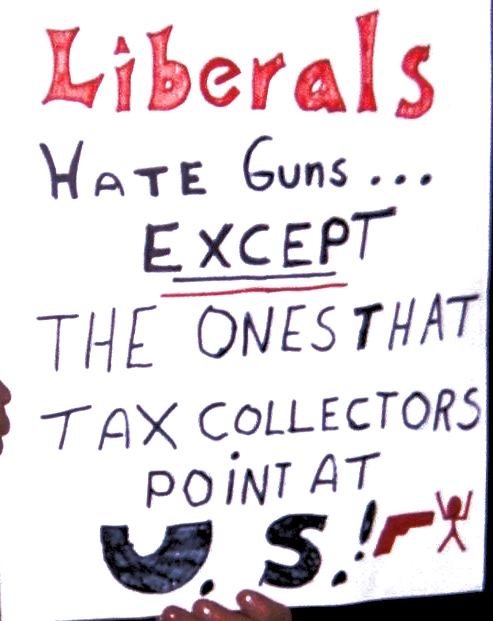
I’ve always been curious how American progressives got on the anti-civil liberties side of gun control. It strikes me as a grave strategic error. I have written elsewhere about the extreme difficulty liberals and progressives face in engaging the working class. I have also been highly critical of their tendency to get sucked into “lifestyle” campaigns (anti-smoking, anti-obesity, vegeterianism, etc.), owing to the strong class antagonism this engenders in blue collar voters.

Contrary to the stereotypes portrayed in the corporate media, class differences – and class hatred – are alive and well in the US. From the perspective of a blue collar worker, the progressive movement is the middle class. They’re the teachers, social workers, psychologists, doctors, lawyers and religious leaders who make the rules for the rest of this. Thus when they tell us not to smoke, eat big Macs, or buy guns, we don’t see this as political reform. We see it as an extension of their (privileged) class role.

Here in New Zealand, young upwardly mobile professionals manifest the same zeal as their American counterparts for anti-smoking and healthy eating campaigns. However there’s no gun control lobby here. It would be unthinkable in a country where one third of the population lives in cities. Gun ownership and proficiency are fundamental to the Kiwi way of life, especially in rural provincial areas.

The History of Progressive Opposition to Gun Control

For a progressive to take a stand against gun control is a pretty lonely place. However I’m not utterly alone. There’s a 1979 book edited by Don Kates entitled Restricting Handguns: The Liberal Skeptics Speak Out. There’s also an organization called the Liberal Gun Club, whose mission is to “provide a voice for gun-owing liberals and moderates in the national conversation on gun rights, gun legalization, firearms safety, and shooting sports.”

Then there’s Sam Smith’s excellent article in the Preogressive Review: “Why Progressives Should Stop Pushing for More Gun Control Laws.” Among Smith’s numerous arguments, three leap out at me: the exacerbation of “cultural conflict” between rural and urban and wealthy and not so well off, the tendency for gun restrictions and prohibition to be intersect with a drive to restrict other civil liberties, and the need for progressives to stop treating average Americans as though they were “alien creatures.” He seems to share my view that progressives lose elections as much because of their condescending attitudes as their issues.

In January  2011 (following Representative Gifford’s shooting and renewed calls for gun control), Dan Baum wrote in the Huffington Post that progressives have wasted a generation of progress on health care, women’s rights, immigration reform, income fairness and climate change because “we keep messing with people’s guns.” He likens gun control as to marijuana prohibition – all it does is turn otherwise law-abiding people into criminals and create divisiveness and resentment.

How Progressives Came to Oppose the 2nd Amendment

None of this explains how progressives got on the wrong side of this issue. US gun manufacturers wrote the first gun control legislation in 1958, in an effort to restrict Americans’ access to cheap imports. However, owing to civil liberties implications, the bill encountered stiff Congressional opposition. Finally in 1968 President Lyndon Johnson played the race card and used the inner city riots to pass a watered down version of the industry’s original gun control bill. It required gun dealers to register guns and ammunition, banned the mail order and interstate sale of guns, and instituted a lifelong ban on felons (even on non-violent convictions) owning guns.

Progressive research into gun control generally makes two equally salient points: 1) the aim of gun control legislation is to control people (mainly disenfranchised minorities and the poor), not guns and 2) in countries with strict gun control laws, the use of deadly force is restricted to the police and army, as ordinary citizens aren’t trusted to play any role (including self-defense) in maintaining law and order.

Using Gun Control to Control African Americans

America’s extreme preoccupation with gun control appears directly related to their 200 year history of slavery and oppressive Jim Crow laws that followed emancipation. As Steve Ekwall writes in the Racist Origins of US Gun Control,and Clayton Cramer in Racist Roots of Gun Control, the targeting of blacks with early gun control laws is extremely blatant.

In the south, pre-civil war “Slave Codes” prohibited slaves from owing guns. Following emancipation, many southern states still prohibited blacks from owning guns under “Black Codes.” This was on the basis that they weren’t citizens and not entitled to Second Amendment rights. After the 1878 adoption of the Fourteenth Amendment, which formally acknowledged blacks as citizens, southern states imposed high taxes or banned inexpensive guns, so as to price blacks and poor whites out of the market.

Ekwall also quotes gun control advocate Robert Sherrill, author of The Saturday Night Special and Other Guns (1972). Sherill states unequivocally that “The Gun Control Act of 1968 was passed, not to control guns, but to control blacks.”

Ekwall goes on to describe the unprecedented 1965-68 race riots in 125 American cities, in which the violence was graphically magnified by extensive TV coverage. The paranoia this engendered in the corporate and political elite was greatly heightened by Stokely Carmichael and other Black Panthers openly advocating violent revolution and the well-publicized protests (and police riot) at the 1968 Democratic Convention in Chicago.

The Last Pro-Gun Democrat

As Joe Bageant writes in Deer Hunting with Jesus, the 1968 pro-war Democratic presidential candidate Hubert Humphrey uttered the last breath of Democratic sanity over the gun control issue. It’s really sad how radical he sounds in 2014:

“The right of citizens to bear arms is just one more guarantee against arbitrary government, one more safeguard against the tyranny which now appears remote in America, but which historically has proved to be always possible.”

photo credit: Whiskeygonebad via photopin cc

Spying on Americans: the Ugly History

hoover

The Origins of the US Police State

While the majority of Americans were stunned and outraged at Edward Snowden’s revelations that the government was secretly monitoring their phone calls and emails, the US government has been systematically spying on law abiding citizens for nearly 100 years. In July 2013, University of Wisconsin professor Alfred McCoy, one of America’s foremost experts on CIA narcotics trafficking, laid out an elegant history of government domestic spying in Tomgram: Obama’s Expanding Surveillance Universe. It should be required reading for every high school graduate. Below are some highlights:

1898 -1901 US Occupation of the Philippines

The US Army first developed the capacity to spy and keep records on civilians when they occupied the Philippines (following the Spanish American War) in 1898. n when they occupied the Philippines following the Spanish American War. The local population already had a large, well-organized resistance movement which had been battling Spain for independence. In 1901, as director of the army’s first field intelligence unit, Captain Ralph Van Deman, compiled detailed personal and financial records on thousands of Filipino leaders.

1917 – 1921 World War I and the Palmer Raids

After the US entered World War I in 1917, President Woodrow Wilson engaged Van Deman to create the US Army’s Military Intelligence Division to spy on US civilians. Van Deman, in turn, enlisted a patriotic vigilante group called the American Protective League to assist in collecting a million pages of surveillance reports on Americans of German ancestry (like my grandfather and great grandfather, who was forced to flee to South America).

After the war ended in 1918 they joined with the Bureau of Investigation (renamed the FBI in 1935) to engage in strike breaking in the Northeast and Pacific Northwest and round up and deport European labor activists.

In 1921, incoming president Warren Harding condemned Wilson’s oppressive secret police apparatus and forced the Army and FBI to cut their ties with vigilante groups. Although Van Deman was forced into retirement, he and his wife continued to compile files on 250,000 so-called subversives.

1940 – 1945 World War II

In 1940, Hoover made use of Van Deman’s files and a network of 300,000 informants to carry out illegal FBI wiretaps, break-ins, and mail intercepts against political dissidents – based on allegations, which were never substantiated, that they posed a threat against wartime defense plants were never substantiated.

1960-74 Vietnam War and COINTELPRO

From 1960-74, Hoover expanded this operation, which he renamed COINTELPRO. As well as spying on activists, this operation also subjected them to extensive personal harassment. According to the senateChurch Committee investigating  COINTELPRO, Hoover’s vicious tactics included “anonymous attempts to break up marriages, disrupt meetings, ostracize persons from their professions, and provoke target groups into rivalries that might results in deaths.” As most activists over fifty can tell you, COINTELPRO never ended. I write about my personal encounter with the 1980s version of COINTELPRO in my 2010 memoir The Most Revolutionary Act: Memoir of an American Refugee.

In 1974, New York Times reporter Seymour Hersh revealed that the CIA, which is forbidden under federal law to operate on US territory, was also engaged in illegal surveillance of antiwar activists under a program known as Operation Chaos. Following his election in 1978, President Jimmy Carter pushed for enactment of the Foreign Intelligence Surveillance Act (FISA). This made government wiretaps illegal unless they were approved by a special FISA court.

2003 – 2008 US Occupation of Afghanistan and Iraq (under Bush)

By the time the US attacked Afghanistan and Iraq in 2003-2003, the intelligence security state had a vast array of new spying technologies (including electronic surveillance, biometric identification, and spy drones) at their disposal. In an attempt to bring the Iraqi resistance under control, General McChrystal ordered the collection of 3 million Iraqi fingerprints and iris scans.

Meanwhile Bush attempted to resurrect Hoover’s old vigilante networks via Operation Tips, which was blocked by major opposition from Congress, civil libertarians, and the media. A parallel initiative called Total Information Awareness, which would have compiled electronic files on millions of Americans, was also banned by Congress.

Despite these setbacks, Bush’s defiance of FISA by ordering the NSA to commence collecting email and phone records of American civilians (exposed by the New York Times in 2005) was retroactively ratified by Congress in 2007.

2009 – present US Occupation of Afghanistan, Iraq, Pakistan, Yemen, Pakistan, Syria, and Somalia

Obama substantially expanded NSA spying by collaborating with British intelligence to tap into trans-Atlantic cables carrying phone and email traffic and authorizing NSA spying on residents in NATO ally countries Germany, France, and Italy.

Between 2006-10 the US launched the planet’s first cyberwar. In 2010 Obama ordered cyberattacks (Stuxnet) against Iran’s nuclear facility.

Obama’s Vision for Future Surveillance

According to McCoy, since 2012 Obama has been cutting conventional armaments and investing billions in global information control and space warfare technology. New programs include a National Geospatial-Intelligence Agency with 6,000 employees coordinating surveillance data from predator drones, Reapers, U-2 spy planes, Global Hawks, X-37B space drones, Google Earth, Space Surveillance Telescopes, and orbiting satellite. Alongside their surveillance capabilities, new generation spy satellites will have the capability of enveloping the Earth in an electronic grid capable of pulverizing suspected terrorists or entire armies.

Hear Jeff Blankfort interview McCoy about his Tomdispatch article at Radio 4

photo credit: KAZVorpal via photopin cc

Reposted from Veterans Today

Talk About Testicularity

Guardian editor Alan Rusbridger testifying in front of the British Home Affairs Committee about his decision to publish Edward Snowden’s leaked NSA files. When one member accuses him of committing a criminal offense, Rusbridger makes utter mincemeat out of him:

Here is a partial transcript of the testimony published in the December 3 Guardian

[starts at 22:00 minutes on the tape]

Conservative MP Michael Ellis: Mr Rusbridger, you authorised files stolen by [National Security Agency contractor Edward] Snowden which contained the names of intelligence staff to be communicated elsewhere. Yes or no?

Rusbridger: Well I think I’ve already dealt with that.

Ellis: Well if you could just answer the question.

Rusbridger: I think it’s been known for six months that these documents contained names and that I shared them with the New York Times.

Ellis: Do you accept that that is a criminal offence under section 58A of the Terrorism Act, 2000?

Rusbridger: You may be a lawyer, Mr Ellis, I’m not.

Ellis: Now 58,000 documents were sent or communicated by you – as editor-in-chief of the Guardian you caused them to be communicated, and they contained a wealth of information. It was effectively an IT-sharing platform between the United States and the United Kingdom intelligence services wasn’t it?

Rusbridger: I’ll leave you to express those words.

Ellis: So you decline to answer that. Very well. But that was information which contained a wealth of data, protected data, that was both secret and even top secret under the protective classifications of this country.

Rusbridger: They were secret documents.

Ellis: Secret and top-secret documents. And do you accept that the information contained personal information that could lead to the identity even of the sexual orientation of persons working within GCHQ?

Rusbridger: The sexual orientation thing is completely new to me. If you could explain how we’ve done that then I’d be most interested.

Ellis: In part, from your own newspaper on 2 August, which is still available online, because you refer to the fact that GCHQ has its own Pride group for staff and I suggest to you that the data contained within the 58,000 documents also contained data that allowed your newspaper to report that information. It is therefore information now that is not any longer protected under the laws and that jeopardises those individuals, does it not?

Rusbridger: You’ve completely lost me Mr Ellis. There are gay members of GCHQ, is that a surprise?

Ellis: It’s not amusing Mr Rusbridger. They shouldn’t be outed by you and your newspaper.

[Brief inaudible exchange in which both men are talking]

Rusbridger: The notion of the existence of a Pride group within GCHQ, actually if you go to the Stonewall website you can find the same information there. I fail to see how that outs a single member of GCHQ.

Ellis: You said it was news to you, so you know about the Stonewall website, so it’s not news to you. It was in your newspaper. What about the fact that GCHQ organised trips to Disneyland in Paris, that’s also been printed in your newspaper, does that mean if you knew that, information including the family details of members of GCHQ is also within the 58,000 documents – the security of which you have seriously jeopardised?

Rusbridger: Again, your references are lost to me. The fact that there was a family outing from GCHQ to Disneyland  [CUT OFF]

I know I promised to post an excerpt from my new novel A Rebel Comes of Age, but this was too good and I couldn’t resist.

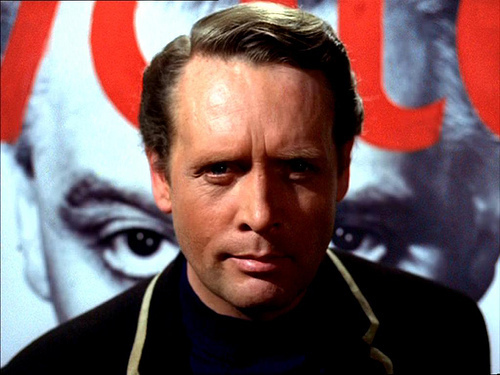
I will not be pushed, filed, stamped, indexed, briefed, debriefed or numbered

patrick mcgoohan

The Prisoner – starring Patrick McGoohan as Number 6

The Prisoner is a prophetic Owellian series from 1967 about dissident and whistleblowing spies who are punished by being sent to a remote village from which they can never escape. The late creator, producer, and star Patrick McGoohan shows astonishing insight into the coming New World Order, indoctrination and mind control, and the sociopathic intelligence industrial complex.

The Village was modeled after a real place in Scotland where dissident British spies were sent during World War II. The 17 episodes are still under copyright but can be purchased for $1.99 each from iTunes

At the time, we called this surrealism. Oh, to be young and naive again.

The following clip refers to a “perfect blueprint for world order”:

photo credit: marsmet545 via photopin cc

Originally published in Veterans Today
The Phone Company That Said No to NSA

nacchio-10-22click on image to enlarge

Former US West CEO Released from Prison

Former US West CEO Joseph Nacchio was released from prison last week after completing a four year insider trading sentence. He still claims the NSA framed him on the insider trading charges – after he refused to participate in their illegal phone surveillance program in 2001. US West was the only major telecommunication program that refused to spy on its customers. According to the Wall Street Journal, Nacchio feels vindicated by Edward Snowden’s recent revelations about NSA spying on Americans’ phone and email communications.

Nacchio was convicted of selling US West stock based on inside information about the company’s deteriorating financial health. He denies this, claiming he believed US West’s lucrative contracts with the federal government would continue. Instead his refusal to cooperate with the NSA resulted in the wholesale cancellation of  government contracts.

Nacchio had evidence supporting this claim. However the judge ruled it was classified and prevented his defense team from presenting it. The redacted NSA files were only made public after the former CEO was convicted and sentenced. However Harper’s and others have always supported Nacchio’s contention that he was prosecuted in retaliation for saying “no” to the NSA.

Whether or not Vlaccio is guilty of insider trading (all the legal arguments are summarized at Race to the Bottom), the most illuminating information in the redacted files is that the NSA was pressuring US West to spy on customers in February 2001. This was a good seven months before the 9-11 attacks, the supposed justification for curtailing Americans’ civil liberties.

 Image credit: Indict Dick Cheney

Originally published at Veterans Today

The NSA is the Tip of the Iceberg

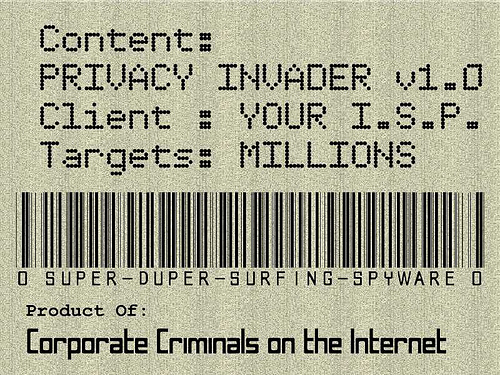
barcode

Guest post by Steven Miller and Satish Musunuru

(Part 5 of a five-part post on the corporatization of Internet surveillance.)

The capitalist class deliberately distorts the class nature of the state. This is a scientific question, not an ideological one. Government is the administration of public money and resources in the name of society. The state is different. It is made up of the police, the courts and jails, the army, et al, and of course, the NSA. The capitalist class loves to present the state as a body that somehow stands above society, neutral to class interests, reigning with wisdom. One thing we have learned from Occupy, however, is that the police always seem to defend the corporations. They are hardly neutral. For both government and the state, law is simply the will of the ruling class, written down.

The purpose of the state is to defend the relations of production that are organized and imposed by the ruling class. Thus the state is a function of the relations of production, not the other way around. However, once established, it plays a formative role in organizing the relations of production for the class that rules the state.

In capitalism’s Industrial Era, J Edgar Hoover’s FBI collected dossiers on every politician, movement and individual that might pose a threat to state control. Today digital technology leads inexorably to the Surveillance State, actually only a small part of the entire state apparatus.

The US state has many manifestations: the military industrial complex, the media industrial complex that organizes the world’s most sophisticated propaganda war 24/7, the prison industrial complex, the corporate state, the surveillance state, the Migra, the militarized police we all saw at Occupies, open violations of the Constitution, the Department of Homeland Security, private prisons, secret ops, drones, extraordinary rendition, torture at every level, and so much more. Then of course we have the army, equipped with the world’s largest military budget, armed with some serious hardware, including the world’s largest supply of nuclear weapons. Corporations are inseparable from this. As they merge with the state, corporations today are rapidly developing police powers.

Social movements can sometimes reform the government, but state power does not permit you to reform the state. The idea that somehow the state will sit by passively while workers organize socialism is simply a fantasy. The state is programmed to intervene whenever the relations of production are threatened. Here and there, in relatively small-scale cases – Mondragon workers, for example, Kerala in India, Cuba, Nicaragua at one phase, etc – the nuisance is such that the state chooses not to intervene – but these are few and far between. The job of the state is to identify threats to capitalist control and move on them.

In the US today, the NSA works at one level; at another level, Homeland Security outsources police functions to corporations through contracts for profit. It’s budget for doing this has averaged over $30 billion a year since 2001. During Occupy, across the country, DHS has established “fusion centers”, often in corporations or banks, where police gathered surveillance and advised corporate leaders. Domain Centers (Oakland is the second, after New York City) are required for every port in the country.

The state’s response to the NSA scandal has been to go on a marketing campaign: “Resistance is Futile! We’ve got things coming at you that you can’t even imagine, way beyond Darth Vader!” This is a point worth considering. How can the American people possibly fight this?

The most basic step is to understand that things don’t have to be this way. Code can be changed and architectures can be re-designed. This is really an aspect of the tremendous battle of ideas that is breaking out in society. Every living system on Earth is in decline, except corporations. Corporations can be abolished by popular will if people are on the same accord, just as private property in slavery was abolished 150 years ago. These are historic times.

The American people have a long revolutionary history, but little recent experience with the process. Thus we don’t recognize the critical importance of these essential first steps of the battle that are appearing today. The future world will either be all corporate or all public. We can decide.

Here is how one of America’s great revolutionaries – John Adams, an outstanding exponent of capitalism – explained the process:

The American Revolution was not a common event. Its effects and consequences have already been awful over a great part of the globe. And when and where are they to cease?

But what do we mean by the American Revolution? Do we mean the American war? The Revolution was effected before the war commenced (emphasis added). The Revolution was in the minds and hearts of the people; a change in their religious sentiments of their duties and obligations….

The people of America had been educated in an habitual affection for England, as their mother country; and while they thought her a kind and tender parent, (erroneously enough, however, for she never was such a mother,) no affection could be more sincere. But when they found her a cruel bedlam, willing like Lady Macbeth, to “dash their brains out,” it is no wonder if their filial affections ceased, and were changed into indignation and horror.

This radical change in the principles, opinions, sentiments, and affections of the people, was the real American Revolution.”   (13)

Background and Notes

13)  John Adams to H. Niles, February 13, 1818

photo credit: paul.klintworth via photopin cc

Reposted from Daily Censored

Steven Miller has taught science for 25 years in Oakland’s Flatland high schools. He has been actively engaged in public school reform since the early 1990s. When the state seized control of Oakland public schools in 2003, they immediately implemented policies of corporatization and privatization that are advocated by the Broad Institute. Since that time Steve has written extensively against the privatization of public education, water and other public resources. You can email him at nanodog2@hotmail.com

***

Satish Musunuru draws upon his training as an engineer and his experience as a professional in Silicon Valley to understand the relationship between technology and corporate capitalism and how it has brought us to the ecological and societal crisis we find ourselves in. You can email him at guruji323@hotmail.com