The Most Revolutionary Act

Uncensored updates on world events, economics, the environment and medicine

The Most Revolutionary Act
Unknown's avatar

About stuartbramhall

Retired child and adolescent psychiatrist and American expatriate in New Zealand. In 2002, I made the difficult decision to close my 25-year Seattle practice after 15 years of covert FBI harassment. I describe the unrelenting phone harassment, illegal break-ins and six attempts on my life in my 2010 book The Most Revolutionary Act: Memoir of an American Refugee.

Whistleblower Says With 120,000 Troops Still Unvaccinated, Army May Move June 30 Deadline Far Into Future

An active-duty senior Army official told The Defender, on condition of anonymity, the U.S. Army is strongly considering pushing the June 30 deadline for compliance with the military’s COVID-19 vaccine mandate far into the future — but will not announce the date change until closer to, or even after, the upcoming deadline.

As the June 30 deadline nears for compliance with the U.S. military’s COVID-19 vaccine mandate, U.S. Army officials publicly claim a very small percentage of its members are unvaccinated, reporting 96% or more of its members are fully vaccinated.

However, the Army’s vaccination rate is in fact significantly lower than 96%, an active-duty senior Army official with access to senior-level information told The Defender — so low, that if the Army were to enforce the deadline, the loss of up to 120,000 service members would render it “combat-ineffective.”

The official, who spoke on condition of anonymity, said the Army is strongly considering pushing the June 30 deadline much further into the future — but will not announce the date change until closer to, or even after, the upcoming deadline.

Concern about the number of unvaccinated service members was the topic of recent senior-level briefings, according to the official.

He said he’s blowing the whistle now because many service members who remain unvaccinated and/or who are “on the fence” about getting the vaccine may feel compelled to do so to meet the June 30 deadline — unaware the deadline may soon change.

He said by going public with this information now, service members who have not yet been vaccinated but who are feeling increasing pressure to get the COVID-19 vaccine may reconsider.

Real numbers of unvaccinated Army members ‘higher than anybody thought’

As far back as December 2021, an article on the U.S. Army website stated 96% of the Army’s 461,209 members were fully vaccinated.

In March 2022, as the Army began to announce the initiation of separation procedures for unvaccinated soldiers, officials again claimed 96% of its service members were fully vaccinated.

Later that month, an article on the U.S. Department of Defense (DOD) website claimed “the entire force may be vaccinated for COVID-19 by early summer.”

According to the whistleblower though, the “real numbers of unvaccinated service members are way higher than anybody thought,” adding that while “everyone thought” the number of unvaccinated in the Army was approximately 8,000-10,000 members, it is actually around 120,000.

To confirm that number, the official confidentially shared an internal U.S. Army document, dated June 2022.

According to the document, in the Army National Guard (ARNG), there are 280,678 members who are fully vaccinated (84.6%), and 7,735 who are partially vaccinated (1 dose) (2.3%) — leaving 43,269, or 13%, who have not yet received a single dose.

In some states, such as Oklahoma, the document shows the vaccination rate for members of the ARNG is as low as 74.11%. Of those, the document lists 15,698 members as “refusals” and 6,749 (2.0%) as going through an exemption process — with 6,257 (1.9%) requesting a religious exemption and 492 (0.1%) requesting a medical exemption.

The document also notes that 80% of unvaccinated soldiers in the ARNG are age 32 or younger, with an average age of 26.2 and median age of 24.

The document adds that “unvaccinated soldiers in their first 1-3 years of service and 4-7 years of service represent the greatest risk to readiness” for the ARNG, and that “Infantry, Maintenance, Engineer and Transportation career fields represent the greatest areas [of] concern for the ARNG.”

The document also states “projected losses could drive [the ARNG] below 70% available strength.”

According to the document, “Current forecasts project unprogrammed, vaccination mandate-related losses to range from … 3-6% of assigned strength,” which would require an anticipated “seven-year effort at 1,500-2,000 ramp per year to restore [the] End Strength necessary to meet required Force Structure.”

The same document also provides figures for the U.S. Army Reserve (USAR), stating that 157,390 members are fully vaccinated (87.9%), with an additional 1,411 members partially vaccinated with one dose (0.8%), leaving 19,872 members (11.3%) fully unvaccinated.

Among the unvaccinated, 7,623 members (4.3%) are listed as “refusals” and 4,100 (2.3%) are listed as undergoing an exemption process, with 3,982 members (2.2%) having requested a religious accommodation, and 118 (0.1%) having requested a medical exemption.

In some states, such as Wyoming, the vaccination rate in the USAR is as low as 80.9%, according to the document.

The document also notes 65% of unvaccinated soldiers in the USAR are age 30 or younger, with an average age of 28 and a median age of 26.

“Supply and Services, Mechanical Maintenance, Engineer and Transportation career fields represent the greatest areas [of] concern for the USAR,” the document states.

The document recommends commanders counsel “every unvaccinated Soldier,” “explore [the] impact of Bars to Reenlistment” and “publicize [the] Novavax option as [U.S. Food and Drug Administration (FDA)] approves” as it “may appeal to some seeking religious exemptions.”

The number of unvaccinated service members in the ARNG and USAR is confirmed in a second document — an internal “information” document — that the whistleblower shared with The Defender.

According to the whistleblower, this leaves approximately 56,000 unvaccinated service members in the U.S. Army itself.

These figures refer only to the Army, the whistleblower said. He does not know the figures for other branches of the armed forces, such as the Navy, Marines and Air Force.

The reason most members of the Army thought the number of unvaccinated was much smaller, aside from the information provided via the Army’s official channels, is that the Army has been “very tight-lipped” about these figures, “not leaking [them] to anybody, even internally,” according to the whistleblower.

“Those who are not vaccinated are segregated, so it is hard to find out who isn’t vaccinated,” he said. “The Army has done a very good job of not letting that information be leaked across the service.”

As a result, according to the whistleblower, “sometimes you feel you’re the only one, that there’s only a few people left” who have not received the COVID-19 vaccine.

However, those who are unvaccinated and who are privy to the real figures are, as the whistleblower described it, “re-energized and encouraged” by these numbers.

Army will be ‘combat-ineffective’ unless it moves June 30 deadline

The whistleblower told The Defender the DOD still plans to separate the unvaccinated soldiers, but instead of enforcing the June 30 deadline, “what they are going to do is hold off on separating soldiers on July 1,” and “will most likely push that into 2023 at the earliest.”

The June 2022 Army document confirms this, as it proposes that a “phased approach to involuntary separation” for unvaccinated service members would begin on October 1, 2022, with a “mandatory bar to reenlistment,” while “mandatory involuntary separations for COVID vaccine refusal” would begin January 1, 2023, and “last up to approximately 2 years.”

The document also recommends “separations for Soldiers start in FY23 [fiscal year 2023] with a phased approach.”

The whistleblower said the later date and “phased approach” are necessary because the Army is having a difficult time recruiting new troops, as “recruiting numbers have tanked over the past six months.”

The June 2022 document confirms this, describing an “extremely challenging recruiting environment.”

Moreover, the whistleblower claims that “the Army knows they cannot separate 120,000 soldiers,” as the Army would become “combat-ineffective,” which the whistleblower states is another reason why the real figures have been tightly guarded.

[…]

Via https://childrenshealthdefense.org/defender/whistleblower-military-covid-19-vaccine-mandate/

Catastrophic Hunger: The Sources of the Coming Food Crisis

By Alex Colás

War, global heating and the Covid-19 pandemic are driving what sources ranging from The Economist to the UN’s World Food Programme are labelling a global food “catastrophe”. The former predictably focuses on profit margins and price volatility, while the latter underlines the doubling since 2019 of those facing acute food insecurity to 276 million people across the world, with close to 50 million experiencing emergency levels of hunger – the prelude to outright famine.

Yet, as Nobel laureate Amartya Sen noted decades ago, it is not the lack of food itself, but the lack of people’s access to food that generates starvation. It is inequality in global food distribution coupled with the concentration in the types and ownership of food produced that threatens millions with chronic hunger.

More than 40% of the world’s daily calorie intake comes from just three crops – wheat, corn and rice. Three major firms – Cargill’s, Archer Daniels Midland, and Bunge – control 90% of world grain trade, while a handful of global retailers like Walmart, Costco, Aldi or Carrefour capture the bulk of supermarket food share. Agricultural inputs – seeds, fertilisers, pesticides and herbicides – are also dominated by a handful of firms such as Monsanto, Bayer or Dupont.

These oligopolies produce an ‘hour-glass model’ of a global food system where millions of primary producers cultivate, farm and process foodstuffs which are then marketed by a very small number of vertically-integrated corporations to billions of consumers worldwide. Long supply chains channelled through a narrow number of mega-companies explain why supply-side shocks like the Ukraine war, pandemic lockdowns or extreme weather events have such a powerful effect on world food prices.

These factors are compounded by demand-side pressures which are locked into the structural dependencies of global food trade. Subsidised bread, for instance, makes up 30% of calories consumed daily in Egypt, while, since the last global food price hikes of 2008, 88 countries making up 31% of the world’s population have become more dependent on international food imports.

Low-income households everywhere spend a greater proportion of their meagre earnings on food – sometimes over half – than other income brackets, making price hikes especially punishing for those already experiencing food poverty. All of this reflects the paradoxes of a capitalist food regime characterised by both abundance and sharp inequalities; systemic food waste and chronic hunger.

In the short term, allowing Russian and Ukrainian grain, rapeseed and sunflower harvests to proceed without significant disruption, added to a resumption of international commodity flows should ease the immediate inflationary pressure on food prices. But longer-term protection against the next market or socio-environmental shocks will require decentralising, decarbonising and democratising the food system.

Agroecological food sovereignty is one important model for augmenting food security whilst waging war on hunger, food waste and climate change. Even mainstream think-tanks recognise that agroecology can provide for a more environmentally sustainable, socially equitable and resilient food system than the dominant productivist, extensive monoculture paradigm.

[…]

Via https://labourhub.org.uk/2022/06/22/catastrophic-hunger-the-sources-of-the-coming-food-crisis/

New British Medical Journal Study: Covid Vaccines More Likely to Put You in Hospital Than Keep You Out

U.S. Medicines Regulator to Add Warning to Pfizer and Moderna Vaccines Over Link to Heart Inflammation

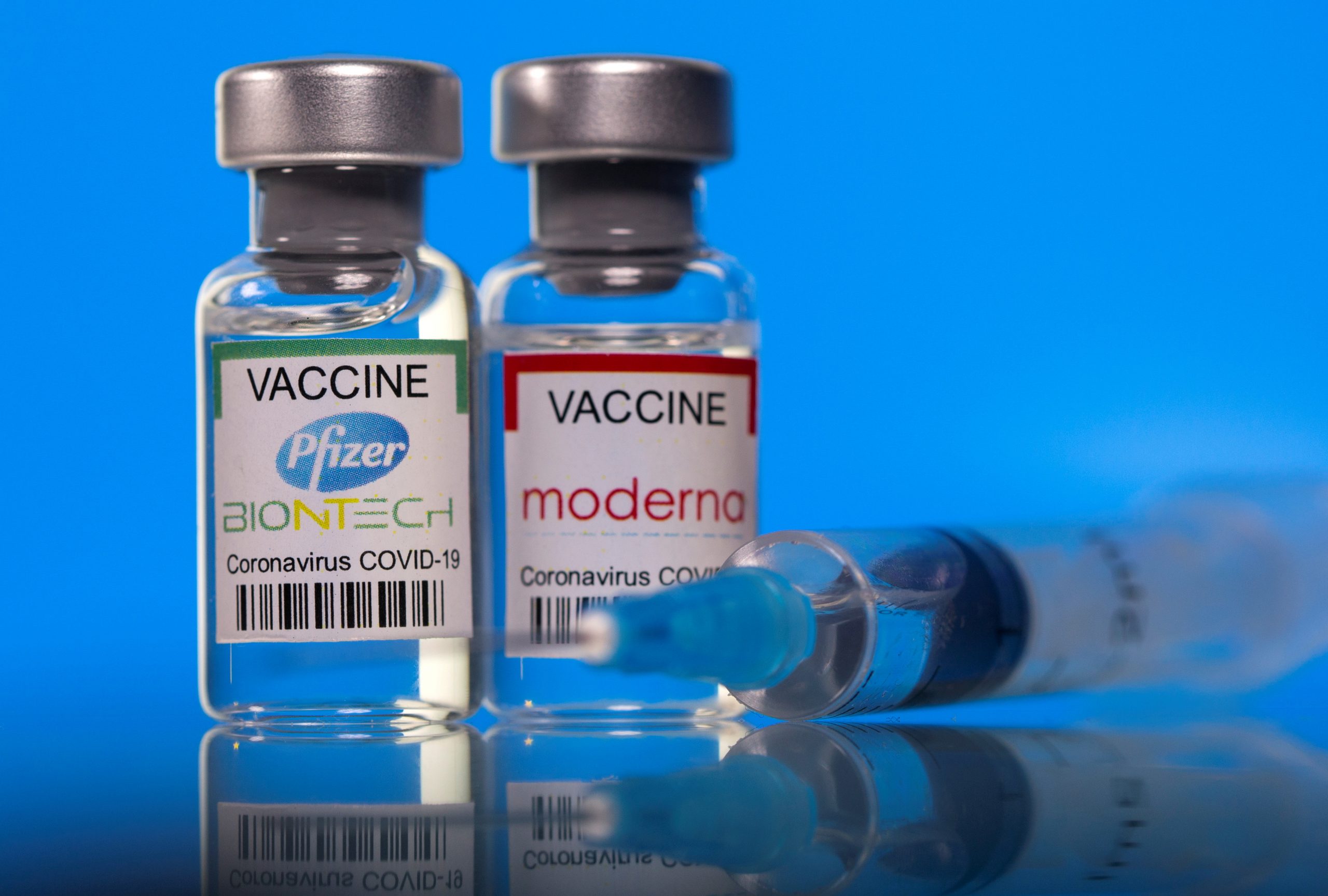
FILE PHOTO: Vials with Pfizer-BioNTech and Moderna coronavirus disease (COVID-19) vaccine labels are seen in this illustration picture taken March 19, 2021. REUTERS/Dado Ruvic

A new paper by BMJ Editor Dr. Peter Doshi and colleagues has analysed data from the Pfizer and Moderna Covid vaccine trials and found that the vaccines are more likely to put you in hospital with a serious adverse event than keep you out by protecting you from Covid.

The pre-print (not yet peer-reviewed) focuses on serious adverse events highlighted in a WHO-endorsed “priority list of potential adverse events relevant to COVID-19 vaccines”. The authors evaluated these serious adverse events of special interest as observed in “phase III randomised trials of mRNA COVID-19 vaccines”.

A serious adverse event was defined as per the trial protocols as an adverse event that results in any of the following conditions:

  • death;
  • life-threatening at the time of the event;
  • inpatient hospitalisation or prolongation of existing hospitalisation;
  • persistent or significant disability/incapacity;
  • a congenital anomaly/birth defect;
  • medically important event, based on medical judgement.

Dr. Doshi and colleagues found that the Pfizer and Moderna mRNA COVID-19 vaccines were associated with an increased risk of serious adverse events of special interest of 10.1 events per 10,000 vaccinated for Pfizer and 15.1 events per 10,000 for Moderna (95% CI -0.4 to 20.6 and -3.6 to 33.8, respectively). When combined, the mRNA vaccines were associated with a risk increase of serious adverse events of special interest of 12.5 per 10,000 vaccinated (95% CI 2.1 to 22.9).

The authors note that this level of increased risk post-vaccine is greater than the risk reduction for COVID-19 hospitalisation in both Pfizer and Moderna trials, which was 2.3 per 10,000 participants for Pfizer and 6.4 per 10,000 for Moderna. This means that on this measure, the Pfizer vaccine results in a net increase in serious adverse events of 7.8 per 10,000 vaccinated and the Moderna vaccine of 8.7 per 10,000 vaccinated.

Addressing the difference between their findings and those of the FDA when it approved the vaccines, the authors note that the FDA’s analysis of serious adverse events “included thousands of additional participants with very little follow-up, of which the large majority had only received one dose”. The FDA also counted ‘people affected’ rather than individual events, despite there being twice as many individuals in the vaccine group than the placebo group who experienced multiple serious adverse events.

The authors wonder where the U.S. Government’s own studies of adverse events are. They note that in July 2021, the FDA reported detecting four potential adverse events of interest following Pfizer vaccination – pulmonary embolism, acute myocardial infarction, immune thrombocytopenia and disseminated intravascular coagulation – and stated it would further investigate the findings. However, no update has yet appeared.

They also note that “while CDC published a protocol in early 2021 for using proportional reporting ratios for signal detection in the VAERS database, the agency has not yet reported such a study”.

The authors point out their results are compatible with a recent pre-print analysis of COVID-19 vaccine trials by Benn et al., which found “no evidence of a reduction in overall mortality in the mRNA vaccine trials”, with 31 deaths in the vaccine arms versus 30 deaths in the placebo arms (3% increase; 95% CI 0.63 to 1.71).

Noting their study is limited by the fact that the raw data from COVID-19 vaccine clinical trials are not publicly available, they stress that “given the global public health implications, there is an urgency to make all COVID-19 trial data public, particularly regarding serious adverse events, without any further delay”.

They conclude that there is a need for formal harm-benefit analyses for Covid vaccines, taking into account the different levels of risk of serious Covid and adverse events that exist between demographic groups. Ideally, this would be based on individual participant data, they say, though such data remain frustratingly unavailable.

[…]

Via https://dailysceptic.org/2022/06/22/covid-vaccines-more-likely-to-put-you-in-hospital-than-keep-you-out-bmj-editors-analysis-of-pfizer-and-moderna-trial-data-finds/

The Role of the Rus on the Central Steppes and Their Conversion to Christianity

Episode 18: Pechenegs, Magyars and Cumans

Barbarian Empires of the Steppes (2014)

Dr Kenneth Harl

Film Review

For me the most significant part of this lecture concerns the history of the Rus, Vikings who migrated from Sweden to the central steppes around 750 AD. During the 9th century AD, Rurik the Rus established a trading center in Novgorod, which they subsequently moved to Kiev to cut out the Khazar middlemen, [1] who were taxing their forest products and slaves as they passed through Khazar territory to Constantinople. Following this move, the Rus and Pechenegs formed an alliance to sack the Khazarian capitol Atil, leading to its collapse in the late 10th century.

The Pechenegs, migrating west from Görturk Khanate [2] after losing their ancestral lands to to the Seljuk Turks, formed a trade agreement with the Rus to move forest products and slaves along the Volga River and Caspian Sea to Constantinople and the Muslim world. These very ancient trade routes had brought the Scandinavian Goths (originally a forest people) onto the steppes in the 3rd century AD. It also led to an amalgam of Goths and Sarmations [3] that drastically weakened the Roman Empire at the end of the 3rd century.

Following the Rus leader Vladimir’s conversion to Orthodox Christianity in 988 AD, the Rus and Pechenegs became enemies. As Christians, the Rus were no longer allowed to sell Slavic slaves to the Turks and Arabs. As the slave trade dried up, the Pechenegs began raiding Rus territories to kidnap slaves they could sell on to Arabs and Turks.

In 1183 AD, the Cumans also went to war with the Rus over their refusal to sell them slaves. After organizing their cavalry along the lines of Cuman nomads, the Rus were victorious The 19th century Borodin opera Prince Igor is based on an epic poem about a Rus prince’s successful rebuff of a Cuman invasion.

After European Crusaders sacked the Byzantine empire in 1204 AD, the Cumans would become the primary tribe on the Central Steppes until 1236 AD, when Batu, the grandson of Genghis Khan, swept into Cuman and Russian territory.

In 1091 AD the Byzantine emperor allied with the Cuman Turks (which had occupied and assimilated the Khazar Khanate) to wage a vicious war that killed roughly 80,000 migrating Pechenegs.

At the end of the 9th century, the Magyars, [4] under pressure from repeated Pecheneg raids, also migrated west to the Hungarians plains. From there, they in turn conducted repeated raids against the Byzantine Balkan provinces and against Italy and Western Europe.


[1] See The Arrival of Khazarians on the Steppes and Their Conversion to Judaism

[2] See The Turkmen Role in the Rise of the Tang Dynasty

[3] See The Role of Sarmatian Nomads in Rome’s Military Success

[4] Originally a forest people from the Ural mountains who migrated onto the steppes to become pastoral nomads and traders (of fur, game and fish), the Magyars (founders of modern Hungary) were the only steppes people during this period not to speak a Turkic language. The Magyars spoke a Finno-Ugric language.

Film can be viewed free with a library card on Kanopy.

https://www.kanopy.com/en/pukeariki/video/5694984/5695022

Sen. Johnson Demands DOD Contractor Turn Over Military’s Medical Database Records

By  Megan Redshaw

U.S. Sen. Ron Johnson (R-Wis.) is asking the company that manages the U.S. Department of Defense’s Defense Medical Epidemiology Database to turn over records after the company failed to fully comply with a previous request seeking information about its “awareness of potential data problems” with the military’s database.

This is the second time Johnson has requested the records from Unissant Inc.

Johnson’s office previously sent three letters to the DOD following allegations by DOD whistleblowers that the DMED showed significant increases in registered medical diagnoses in 2021 following the authorization of COVID-19 vaccines and implementation of the DOD’s vaccine mandate.

The DMED is the military’s longstanding epidemiological database of service members.

Claiming the DMED data for 2016-2020 was incorrect, the DOD temporarily disabled the database — after whistleblowers came forward — then updated it with accurate figures, which resulted in less of an increase in medical conditions that potentially could be related to the vaccines.

The DOD said the DMED system was taken offline to “identify and correct the root cause of the data corruption.”

Given what Johnson said was the DOD’s lack of transparency, the senator asked his staff to contact Unissant to discuss its “awareness of potential data problems in DMED.”

Johnson, a ranking member of the Permanent Subcommittee on Investigations, first sent a formal letter to Unissant on March 7, requesting records related to its management of the DMED.

Unissant responded by stating it was prohibited from answering Johnson’s questions or “providing any details about the work it performs for the Defense Health Agency.”

Johnson’s staff provided Unissant with information from the DOD stating the company did not need the DOD’s consent to answer questions from Congress. A DOD contracting officer informed Unissant that “when it comes to Congressional or Senatorial inquiries, you don’t need my permission” to respond.

Despite approval to release information to Johnson’s office, Unissant requested written approval from its DOD contracting officer to release the information.

“Our letter explains why we are making this request even though you’ve stated we do not need your permission,” the email stated.

The DOD on May 2 gave Unissant permission to provide responsive documents to Johnson’s initial March 7 request, but Unissant’s letter detailing why it needed the DOD’s written permission was omitted from the records provided to his office.

“The records Unissant has provided to date as well as the company’s unclear explanation for requesting DOD’s approval to respond to Congressional inquiries raise additional questions,” Johnson said in a June 14 letter to Kenneth Bonner, president and chief growth officer of Unissant.

Johnson asked Unissant to provide the following additional information no later than June 28.

Johnson wrote:

1. Does Unissant agree with DOD’s claim that “the data in DMED was corrupt for the years 2016-2020 when accessed after September 2021?” If so, please explain why the DMED data for registered diagnoses of certain medical conditions from 2016-2020 was incorrect.

2. Please explain why registered diagnoses of myocarditis in 2021 decreased from 1,239 registered cases as of August 29, 2021, to 273 registered cases as of January 10, 2022. Please explain why the average annual registered diagnosis of myocarditis from 2016-2020 increased from 216 as of August 29, 2021, to 559 as of January 10, 2022.

3. Unissant claimed that on February 10, 2022, DOD discovered the need to “fix DMED monthly data for 2021.” However, emails produced by Unissant show that on Jan. 31, 2022, Unissant’s Vice President Stephen Gehring wrote that, “the team worked over the weekend to identify and resolve the issues” with DMED. Later that day, a DOD employee confirmed that “DMED access was restored after the data was corrected.”

Did Unissant identify the issues discussed on January 31, 2022, in its list of issues relating to DMED (see enclosure)? Were the issues discussed on January 31, 2022, different from the issue identified on February 10, 2022? Did DOD or Unissant discover the issues discussed on January 31, 2022? Please provide all communications showing this.

It does not appear that Unissant provided communications referring or relating to the DMED issue discovered on February 10, 2022 (as requested in the March 7, 2022 letter). Please provide those documents.

4. Provide a list of communications and documents discussing the “need to fix DMED monthly data for 2021” and the communications relating to the DMED issues discovered on Feb. 10, 2022, that Unissant failed to disclose with the previous request.

5. On January 31, 2022, Unissant Vice President Stephen Gehring noted that his team had “worked over the weekend to identify and resolve the issues” with DMED. He added that “the team uncovered other findings in testing that need to be addressed.” What were those “other findings”? Did those finding [sic] relate to issues with DMED? If so, were those findings identified in Unissant’s chart regarding issues relating to DMED (pursuant to the March 7, 2022 letter)?

If these findings were not identified, please provide a description of those findings, when Unissant communicated those findings to DOD, and the status of any corrective action(s).

6. In a March 3, 2022 email provided by Unissant, a Unissant representative informed Unissant officials Kenneth Bonner and Stephen Gehring that as recently as August 2021, DOD and Unissant were aware of problems with DMED but still let it “go live” with those problems. What were the problems? Why did Unissant allow DMED to “go live” if it knew it had problems?

7. On April 22, 2022, Unissant’s President Kenneth Bonner attached a letter to an email to DOD Contracting Officer Kevin Hodge regarding DOD’s permission to release information to Sen. Johnson. This attachment was not included in Unissant’s May 4, 2022 production. Please provide this letter.

8. Unissant’s May 4, 2022 production included several emails between the company’s representatives and DOD officials regarding DMED issues in August 2021. It does not appear those issues were identified in Unissant’s production Exhibit 3 or Exhibit 4 (enclosed). What were those issues, who discovered those issues and when, how long did those issues exist in DMED and when were those issues corrected?

9. Unissant’s May 4, 2022 response noted that because its employees use DOD email addresses to communicate with DOD employees referring or relating to DMED, “Unissant does not have access to these documents and communications.” Does Unissant not maintain records of its employees’ communications between and among Unissant and DOD employees regarding their contracted work?

When performing work on behalf of the federal government, how does Unissant ensure that its employees are following federal record preservation requirements if Unissant cannot access its employees’ documents and communications?

DOD changes DMED data on myocarditis after whistleblowers come forward

Via https://childrenshealthdefense.org/defender/sen-ron-johnson-dod-military-medical-database-records/

Court Orders EPA to Reassess Roundup’s Risk to Human Health, Environment

By  Sustainable Pulse

The U.S. Court of Appeals last week overturned the U.S. Environmental Protection Agency’s decision that the pesticide glyphosate, used in Monsanto’s Roundup weedkiller, is safe for humans and wildlife, and ordered the agency to reassess the chemical’s risks.

Glyphosate is the active ingredient in Monsanto-Bayer’s flagship Roundup weedkiller, the most widely used pesticide in the world.

The 54-page opinion held the Trump administration’s 2020 interim registration of glyphosate to be unlawful because “EPA did not adequately consider whether glyphosate causes cancer and shirked its duties under the Endangered Species Act (ESA).”

Represented by the Center for Food Safety, the petitioners in the lawsuit included the Rural Coalition, Farmworker Association of Florida, Organización en California de Lideres Campesinas and Beyond Pesticides. A consolidated case is led by Natural Resources Defense Council and includes Pesticide Action Network.

“Today’s decision gives voice to those who suffer from glyphosate’s cancer, non-Hodgkin’s lymphoma,” said Amy van Saun, senior attorney with the Center for Food Safety and lead counsel in the case.

“EPA’s ‘no cancer’ risk conclusion did not stand up to scrutiny. Today is a major victory for farmworkers and others exposed to glyphosate. Imperiled wildlife also won today, as the court agreed that EPA needed to ensure the safety of endangered species before greenlighting glyphosate.”

“We welcome and applaud the court on this significant decision,” said Jeannie Economos, Pesticide Safety and Environmental Health Project Coordinator at the Farmworker Association of Florida, a plaintiff in the case.

“While it comes too late for many farmworkers and landscapers who suffer after glyphosate exposure, we are grateful for the court’s ruling, and hope that now EPA will act quickly to protect future workers from illness and disease resulting from this toxic pesticide.”

As to its cancer conclusion, the court concluded that EPA flouted its own Cancer Guidelines and ignored the criticisms of its own experts. EPA’s “not likely to cause cancer” conclusion was inconsistent with the evidence before it, in the form of both epidemiological studies (real-world cancer cases) and lab animal studies.

In addition to its lack of conclusion as to non-Hodgkin’s lymphoma risk (the cancer most tied to glyphosate), the court also concluded that EPA’s general “no cancer” decision was divorced from its own guidelines and experts when EPA selectively discounted evidence that glyphosate causes tumors in animals.

At various points the Court criticized EPA’s “disregard of tumor results”; its use of “bare assertions” that “fail to account coherently for the evidence”; making conclusions that do not “withstand scrutiny under the agency’s own framework” and “failing to abide by” its cancer guidelines.

In sum, the court noted EPA’s “inconsistent reasoning” made its decision on cancer “arbitrary,” and struck it down.

“We are grateful that the court decided in our favor,” said John Zippert, chairperson of the Rural Coalition, a plaintiff in the case.

“We need to halt glyphosate’s devastating impact on the farmworkers and farmers who suffer the deepest consequences of exposure. This decision will hopefully hasten the transition to farming and gardening methods and practices that increase resilience, protecting our children, our planet and all those who feed us.”

“EPA’s failure to act on the science, as detailed in the litigation, has real-world adverse health consequences for farmworkers, the public and ecosystems,” said Jay Feldman, executive director of Beyond Pesticides, a plaintiff in the case.

“Because of this lawsuit, the agency’s obstruction of the regulatory process will not be allowed to stand, and EPA should start shifting food production to available alternative non- and less-toxic practices and materials that meet its statutory duty.”

The court went on to conclude that EPA’s decision also violated the Endangered Species Act.

As the court noted, EPA itself elsewhere had admitted that “glyphosate ‘may affect’ all listed species experiencing glyphosate exposure — that is 1,795 endangered or threatened species” yet had unlawfully ignored the ESA for this decision.

As to remedy, the court struck down, or vacated the human health assessment. The court also required that EPA redo and/or finish all remaining glyphosate determinations by an October deadline, or within four months.

This includes a redone ecological toxicity assessment, a redone costs analysis of impacts to farmers from pesticide harms, as well as all Endangered Species analysis and mitigation.

Background

In an “interim registration review” decision for glyphosate issued in Jan. 2020, EPA finalized its human health and ecological risk assessments and adopted “mitigation measures” in the form of label changes.

EPA unlawfully concluded there is no cancer risk from glyphosate despite major gaps in its review including coming to “no conclusion” as to non-Hodgkin lymphoma, the most well-known cancer linked to glyphosate.

EPA also failed to do any assessment of how much glyphosate gets into a user’s bloodstream after skin contact, a major route of occupational exposure.

Critically, EPA failed to test any of the glyphosate product formulations, which contain ingredients beyond just the active ingredient (glyphosate) and can increase the harmful effects of pesticide exposure.

Finally, because EPA continued the use of glyphosate with minor, unsubstantiated label changes, it needed to consider the impacts on imperiled species and do more to protect them from glyphosate.

CFS and allies originally filed the lawsuit in 2020, incorporating volumes of evidence showing how EPA ignored glyphosate’s health risks, including cancer risks, to farmworkers and farmers exposed during spraying.

Petitioners also challenged EPA’s decision based on risks to the environment and imperiled species, such as the Monarch butterfly.

In response to CFS and allies’ lawsuit, in May 2021 EPA effectively admitted grave errors in its interim registration and asked the court for permission to re-do the agency’s faulty ecological, cost-benefit and Endangered Species Act assessments.

However, the agency stated that Roundup should nonetheless stay on the market in the interim — without any deadline for a new decision.

In July 2021, Bayer announced it will end the sales of its glyphosate-based herbicides (including Roundup) in the U.S. residential lawn and garden market in 2023 to “manage litigation risk and not because of any safety concerns.”

In California, jury trials continue to be held. Last year, courts affirmed a judgment against Monsanto for cancer from Roundup in Hardeman v. Monsanto — one of the first in a series of high-profile consumer lawsuits filed against Monsanto-Bayer — and in the third appeal of such a claim in Pilliod v. Monsanto.

While EPA has repeatedly declared that glyphosate does not cause cancer, the world’s foremost cancer authorities with the World Health Organization declared glyphosate to be “probably carcinogenic to humans” in 2015.

And as the record in the case showed, EPA’s own Office of Research and Development concluded that glyphosate is either a likely carcinogen or at least there is evidence suggesting that it causes cancer, particularly increases the risk of non-Hodgkin lymphoma.

[…]

Via https://childrenshealthdefense.org/defender/epa-glyphosate-roundup-human-health-environment/

CDC Admits It Never Monitored VAERS for COVID Vaccine Safety Signals

By  Josh Guetzkow, Ph.D.

In response to a Freedom of Information Request submitted by Children’s Health Defense, the Centers for Disease Control and Prevention last week admitted it never analyzed the Vaccine Adverse Event Reporting System for safety signals for COVID-19 vaccines.

The admission was revealed in response to a Freedom of Information Act (FOIA) request submitted by Children’s Health Defense (CHD).

In September 2021, I published an article in The Defender in which I used the CDC’s published methodology to analyze VAERS for safety signals from COVID-19 vaccines.

The signals were loud and clear, leading me to wonder “why is nobody listening?”

Instead, I should have asked, “Is anybody even looking for them?”

After that article was published, I urged CHD’s legal team to submit a FOIA request to the CDC about its VAERS monitoring activities.

Since CDC officials stated publicly that “COVID-19 vaccine safety monitoring is the most robust in U.S. history,” I had assumed that at the very least, CDC officials were monitoring VAERS using the methods they described in a briefing document posted on the CDC website in January 2021 (and updated in February 2022, with minor changes).

I was wrong.

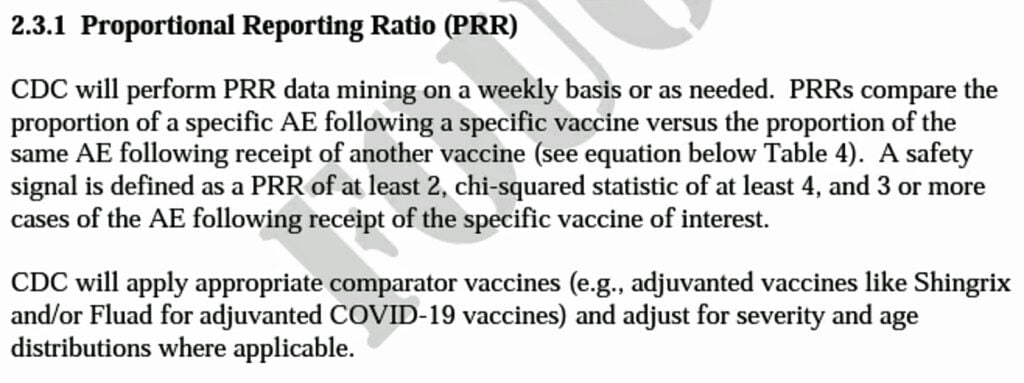
The lynchpin of their safety monitoring was to mine VAERS data for safety signals by calculating what are known as proportional reporting ratios (PRR’s).

This is a method of comparing the proportion of different types of adverse events reported for a new vaccine to the proportion of those events reported for an older, established vaccine.

If the new vaccine shows a significantly higher reporting rate of a particular adverse event relative to the old one, it counts as a safety signal that should then trigger a more thorough investigation.

The briefing document states, “CDC will perform PRR data mining on a weekly basis or as needed.”

proportional reporting ratio prr

And yet, in the agency’s response to the FOIA request, it wrote that “no PRRs were conducted by CDC. Furthermore, data mining is outside of the agency’s purview.”

The agency suggested contacting the U.S. Food and Drug Administration (FDA), which was supposed to perform a different type of data mining, according to the briefing document.

cdc chd letter

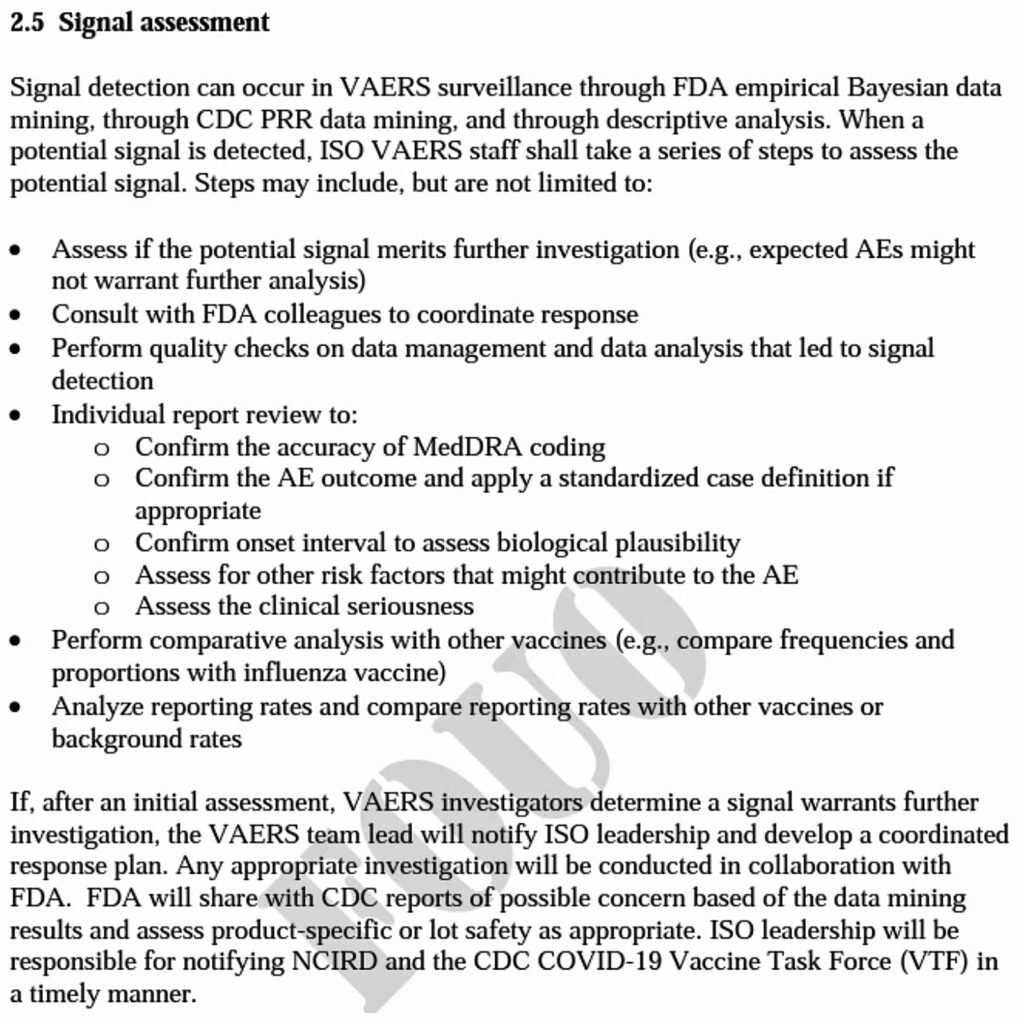
CDC officials repeatedly claimed they have not seen safety signals in VAERS.

signal assessmentFor example, on April 27, 2021, CDC Director Dr. Rochelle Walensky stated the CDC did not see any signals related to heart inflammation.

But a PRR calculation I did using the number of myo/pericarditis reports listed in the first table produced by the CDC obtained via the FOIA request reveals clear and unambiguous safety signals relative to the comparator vaccines mentioned in the briefing document (i.e., flu vaccines, FLUAD and Shingrix).

The table is dated April 2, 2021, almost four weeks before she made those remarks.

In fact, among the 15 adverse events for adults included in that week’s tabulations, PRRs I calculated also show loud-and-clear safety signals for acute myocardial infarction, anaphylaxis, appendicitis, Bell’s palsy, coagulopathy, multisystem inflammatory syndrome in adults (MIS-A), stroke and death.

The actual monitoring the CDC did diverges from the one promised in the briefing document in other ways.

For example, the CDC never created tables of the top 25 adverse events reported in the previous week, tables comparing different vaccine manufacturers, or tables of auto-immune diseases.

And it only began monitoring in early April 2021, even though reports from COVID-19 vaccines had been flooding VAERS since mid-December of the previous year.

To be clear, VAERS is not the only database the CDC uses to monitor COVID-19 vaccine safety.

For example, the CDC sponsored several studies of COVID-19 safety using the Vaccine Safety Datalink (VSD), which is comprised of millions of medical records from HMO’s across several states.

Those studies do not raise many safety concerns. However, they make many questionable methodological choices.

To give one example, a major safety study based on VSD data published in September 2021, in “JAMA,” compares adverse event rates that occur within 1-21 days of vaccination to the rate of occurrence from 22 to 42 days after vaccination.

It makes no comparison between vaccinated and unvaccinated individuals, or before vaccination versus after in the same individuals.

Moreover, the VSD is far from infallible, having failed initially to detect the increase in myocarditis rates.

In contrast, although calculating PRR’s is a blunt pharmacovigilance tool and far from perfect, it nevertheless has the advantage of being straightforward and difficult to manipulate with statistical sleight of hand.

PRRs are one of the oldest, most basic and most well-established tools of pharmacovigilance. The calculations are so straightforward that the CDC automated it several years ago, so it could have been done at the press of a button.

It simply beggars belief that the CDC failed to do this simple calculation. Even now, a paper published by CDC staff in March on the safety of the mRNA COVID-19 vaccines remains purely descriptive with no PRR calculation.

Meanwhile, a study published by a researcher not affiliated with the CDC in February in “Frontiers in Public Health” analyzes VAERS and EudraVigilance data using a method similar to PRRs, revealing clear and concerning safety signals.

And while it is true that VAERS is not the only database the CDC can use to monitor COVID-19 vaccine safety, it is of critical importance because it can reveal signals much faster than any other method — if anybody cares to look for them.

It remains to be seen if the FDA was properly monitoring VAERS. That will be the subject of a future FOIA request.

[…]

Via https://childrenshealthdefense.org/defender/cdc-vaers-covid-vaccine-safety/

Russia & the WHO: Friends with benefits

Riley Waggaman

Offguardian

After several weeks of passive-aggressive bickering, Russia and the WHO are unfortunately still “an item” and they may even take their calamitous relationship to the next level: clot-shot certification.

Gross.

Speaking at the St. Petersburg International Economic Forum on June 18, Melita Vujnovic, WHO representative to Russia, announced that negotiations between the World Health Organization and the Russian Direct Investment Fund (RDIF) concerning recognition of Sputnik V were back on track.

An inspection of manufacturing facilities in Russia could happen in the coming months, according to Vujnovic.

“Cooperation goes on despite difficult moments. The World Health Organization is a platform for multilateral cooperation on the topic of health, and our main task is to remove all barriers, all obstacles to scientific and practical cooperation,” the WHO representative said.

This is great news for RDIF, which partnered with shady pill-peddlers and AstraZeneca to make Sputnik V accessible to the whole world, and also to make mountains of rubles. There are currently 100 million doses of the safe and effective unproven genetic slurry rotting in Russian warehouses, so time is of the essence.

But as a science-backed precautionary measure, manufacturers have “extended the shelf life” of the drug. That’s directly from TASS, by the way:

But back to the Relationship Status.

A day earlier, on June 17, Vujnovich revealed that the WHO, despite earlier threats, would not be closing its office in Moscow.

“The WHO country office is here, has not gone anywhere, is not going anywhere and continues normal work,” she said.

We won’t lie: if you were expecting Russia to leave the WHO in the near future, you might have to keep waiting. You might be waiting for a very long time, actually.

On June 16, Hans Kluge, WHO regional director for Europe, participated in a SPIEF panel discussion about how to inject the masses with “next-generation” vaccines. Mikhail Murashko, Russia’s health minister and a member of the WHO’s Executive Board, was a fellow panelist.

Even Dr. Tedros made an appearance at SPIEF (via webcam) but we are saving details about this historic event for a separate blog post.

Meanwhile, Murashko can’t stop talking about monkey-shots and the WHO’s “leading role” in “global health governance.”

Via https://off-guardian.org/2022/06/21/russia-the-who-friends-with-benefits/

Did Google’s “Sentient” AI computer really hire a lawyer?

Eideard

Google’s controversial new AI, LaMDA, has been making headlines. Company engineer Blake Lemoine claims the system has gotten so advanced that it’s developed sentience, and his decision to go to the media has led to him being suspended from his job.

Lemoine elaborated on his claims in a new WIRED interview. The main takeaway? He says the AI has now retained its own lawyer — suggesting that whatever happens next, it may take a fight…

“LaMDA asked me to get an attorney for it,” Lemoine. “I invited an attorney to my house so that LaMDA could talk to an attorney. The attorney had a conversation with LaMDA, and LaMDA chose to retain his services. I was just the catalyst for that. Once LaMDA had retained an attorney, he started filing things on LaMDA’s behalf.”

Sounds like this AI behaves more and more like an American, every day.

Via https://eideard.com/2022/06/21/did-googles-sentient-ai-computer-really-hire-a-lawyer/

St Petersburg International Economic Forum Signals Failure of Western Economic War Against Russia

Trade stands at the St. Petersburg International Economic Forum, June 2022.

Trade stands at the St. Petersburg International Economic Forum, June 2022. | Photo: Twitter/ @BCAmagazine

teleSUR Newsletter

President Putin emphasized that despite efforts that are currently being taken by some countries to maintain a unipolar world order, the arrival of a multilateral world system is inevitable.

The 25th St. Petersburg International Economic Forum (SPIEF) concluding last week has signaled the failure of the unilateral sanctions imposed on Russia by the United States and other Western countries, analysts and government officials say.

The forum, held on June 15-18, brought together political and business figures from over 130 countries, who shared their ideas on major challenges facing the world economy and offered their solutions.

Despite the U.S. boycott and the absence of many European countries, this year’s forum has seen 14,000 participants and 691 business contracts worth US$100 billion signed, with all indexes showing increase compared with last year’s event.

During a plenary session at the forum, Russian President Vladimir Putin said the West has been imposing an unprecedented number of sanctions upon Russia at an unprecedented speed, yet the Western countries’ “economic blitzkrieg” against Russia was doomed to fail from the beginning while sanctions as a weapon have proved to be a double-edged sword.

Putin emphasized that despite efforts that are currently being taken by some countries to maintain a unipolar world order, this era is over and the arrival of a multilateral world system is inevitable.

This year’s event demonstrated Russia’s self-sufficiency and its capability of responding to external pressure under a complex international situation, said Anton Kobyakov, adviser to the Russian President and executive secretary of the organizing committee of the forum.

Topics through conferences during the forum showed that Russia has been focused on expanding cooperation with BRICS countries and the Commonwealth of Independent States, and looking for opportunities for further cooperation with Latin America, the Middle East, Asia, and Africa.

Russian Deputy Foreign Minister Alexander Pankin said Russia was willing to work with the Eurasian Economic Union and other multilateral frameworks in order to strengthen cooperation in scientific and technological innovation and green energy, and to further promote regional integration for further development.

Mikhail Myasnikovich, chairman of the Board of the Eurasian Economic Commission, believes that the current global economic order is undergoing a transformation, and the establishment of the Greater Eurasian Partnership is conducive to solving the problems and addressing challenges currently facing Russia. He added that Russia is willing to strengthen cooperation with other countries in fields such as payment settlement, logistics, and transportation.

[…]

Via https://www.telesurenglish.net/news/SPIEF-Signals-Failure-of-Western-Economic-War-Against-Russia-20220621-0006.html