Unknown's avatar

About stuartbramhall

Retired child and adolescent psychiatrist and American expatriate in New Zealand. In 2002, I made the difficult decision to close my 25-year Seattle practice after 15 years of covert FBI harassment. I describe the unrelenting phone harassment, illegal break-ins and six attempts on my life in my 2010 book The Most Revolutionary Act: Memoir of an American Refugee.

Kurds don’t ‘trust’ US to back them against Iran

Kurds do not ‘trust’ US to back them against Iran – Axios

RT

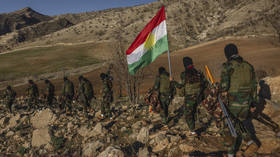
Iraq’s Kurds are against joining the US attacks on Iran, and have voiced concerns about being left facing Iranian retaliation with no ground or air defense support, Axios reported on Saturday.

The CIA began working to arm Kurdish forces hostile to the Islamic Republic after the US and Israel launched strikes on Iran last Saturday, according to CNN. While US President Donald Trump initially voiced support for Kurds getting involved in the conflict, he backpedaled on the idea on Saturday.

“The Kurds must not be the tip of the spear in this conflict,” Axios wrote, citing a senior official from the Kurdistan Regional Government (KRG), a semi-autonomous region in northeastern Iraq.

The Iraqi Kurds are “staying neutral” as “there is no clarity” for them on whether Washington is aiming for a full regime change in Iran or just a “change in personnel,” the KRG official reportedly said. Trump has stated that the US will be involved in deciding who leads Iran in the future but has not elaborated on how this would work.

According to Axios, the Kurdish regional forces don’t think regime change as possible without Washington deploying a ground invasion, and they don’t see the US putting boots on the ground.

Israel has been far more aggressive both in the conflict and in “pushing Iranian Kurds” to join the fray, the KRG official reportedly said.

“In the past, two major uprisings were not supported” by the US, the outlet wrote, citing Amir Karimi, co-chair of the Kurdistan Free Life Party, the Iranian wing of the Kurdistan Workers’ Party. Widespread Western-backed protests wracked Iran in 2022-2023 and earlier this year, yet failed to unseat the leadership in Tehran.

In part, Kurds are staying back due to fears that the US will abandon them again, Axios cited another Kurdish official as saying.

The regional Kurdish forces in Syria served as the main US proxy against the Islamic State during the country’s brutal civil war, which ended with the ouster of Bashar Assad by Ahmed al-Sharaa – a former Al-Qaeda-linked militant leader.

Rapprochement between the US and the new government in Damascus has left the Kurds with no military support in multiple bloody clashes with the new government forces.

[…]

Via https://www.rt.com/news/634187-kurds-no-trust-us-iran/

Is Russia Feeding Tehran real‑time coordinates for American warships, aircraft and bases?

Hindustan Times

From Moscow, Sergey Lavrov vows Russia will “do everything” at the UN to stop Western operations, even as U.S. intel says Putin’s spies are quietly feeding Tehran real‑time coordinates for American warships, aircraft and bases across the Middle East. Washington officials say Iran’s strikes on radars, command posts, a CIA station in Riyadh and U.S. troops in Kuwait suddenly look far more precise, while the Pentagon burns through “years’ worth” of munitions in days. Yet Pete Hegseth insists there is “no shortage” of weapons and vows the U.S. can fight “as long as we need to.”

Iran Launches Strike on Strategic Israeli Base

Prof. Jiang Xueqin

Iran Launches Strike on Strategic Israeli Base | Prof. Jiang Xueqin Geopolitical Analysis Tensions in the Middle East have reached a dangerous new level as Iran launches missile and drone strikes targeting strategic Israeli military sites. The attack is part of a broader escalation following joint U.S.–Israeli strikes on Iranian military and leadership targets, triggering a cycle of retaliation across the region.

In response to earlier attacks on Iranian facilities and leadership compounds, Iran launched waves of ballistic missiles and drones toward Israel and several U.S. military positions in the region, signaling a major expansion of the conflict.

In this video, Professor Jiang Xueqin breaks down the strategic significance of these strikes and explains how they fit into the larger geopolitical confrontation between Iran, Israel, and their allies. Using game theory, military strategy, and predictive history, Jiang explores why attacks on strategic military bases can dramatically shift the balance of power in a regional war. In this analysis you’ll learn:

• Why Iran targeted key Israeli military bases • The strategic role of missile and drone warfare in modern conflicts

• How the Iran–Israel confrontation could expand into a regional war • The military and geopolitical consequences of escalating retaliation

• What this conflict means for global stability and energy security Through careful geopolitical analysis, Professor Jiang explains how a single strike on a strategic base can trigger a wider conflict involving multiple countries across the Middle East.

Israeli army admits failure to intercept Iranian missiles barrages

The Israeli military has acknowledged the inability of its radar systems to intercept sophisticated incoming Iranian missiles, and its air defense units to bring them down. (Photo by Tasnim news agency)

Press TV

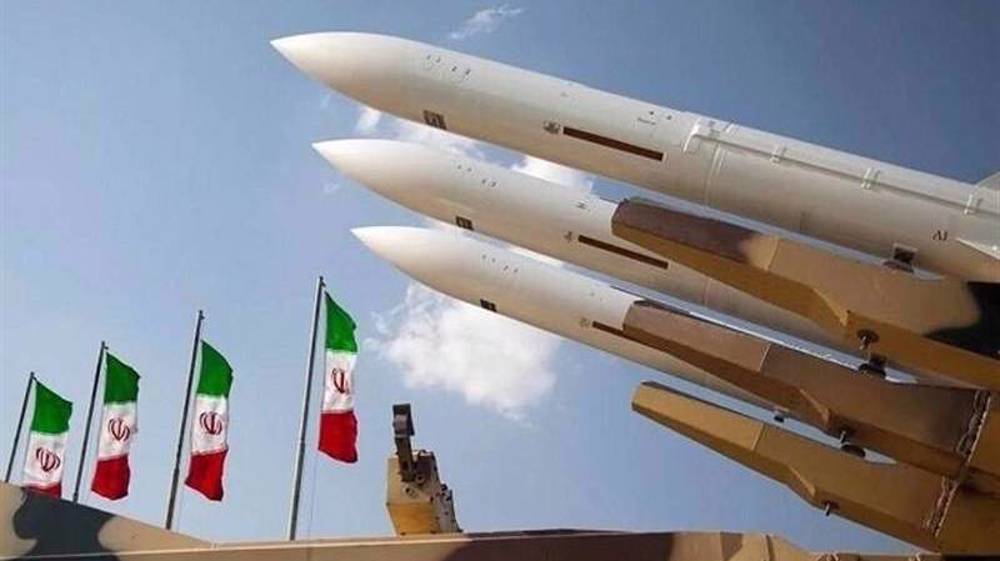
The Israeli military has admitted that US-built Israeli radar systems have been largely unable to intercept incoming Iranian missiles.

According to a report published by the Israeli Haaretz newspaper, Israeli military units have confessed to their failure to intercept and shoot down Iranian missiles headed for the occupied territories.

Additionally, it said that sirens were activated on Friday only a few moments before evacuation orders were sent out to illegal settlers.

In response to mounting criticism of the Israeli army’s delayed activation of security alerts, the army said that it cannot determine the duration between alerts and sirens warning of incoming missiles.

Similarly, the command center of the Israeli internal front stated that security alerts, for operational considerations, could be sent to settlers only a short while before the sirens are sounded, or at times not even sent.

Haaretz then cited satellite images, noting that Iran is seeking to target radar systems and strategic military facilities in a bid to render the radars of the US and its allies ineffective.

The newspaper noted that Iran’s precision strikes against radar installations will significantly lower Israel’s missile interception ability and disturb its quick alert systems.

The revelations come as Israeli media outlets have frequently pointed to the inefficiency of Iron Dome missile systems to confront the volume and velocity of Iranian missiles.

Israeli military experts have warned that the latest generation of Iranian missiles enjoys higher speed, can cruise complicated routes and have very low radar recognition features, which make it a serious challenge for Israeli air defense systems to detect and bring them down.

[…]

Via https://www.presstv.ir/Detail/2026/03/07/765090/Israeli-army-acknowledges-inability-to-intercept-Iran-missiles,-late-activation-of-sirens

US intelligence says ‘regime change’ not possible in Iran even with broader war

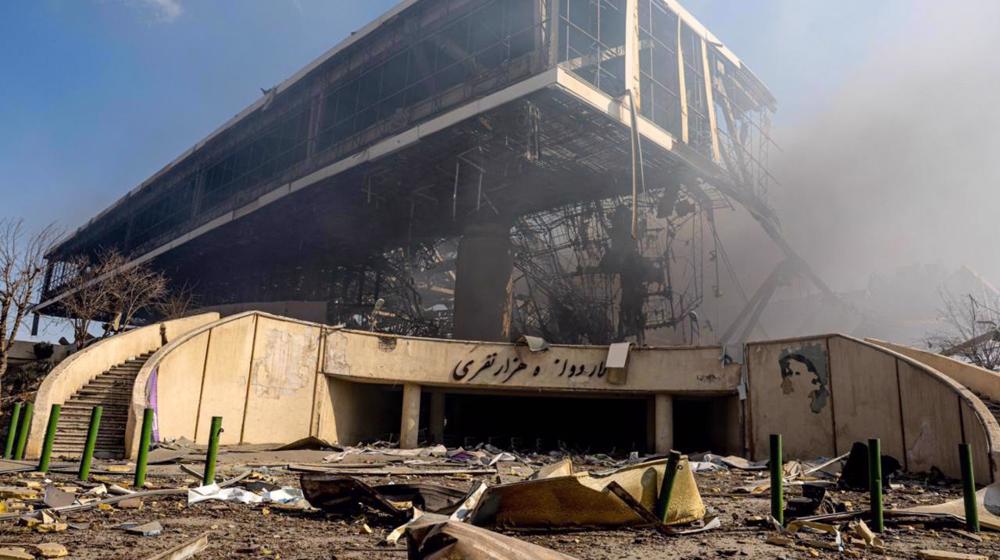
Tehran’s 12,000-seat Azadi Sports Complex was attacked in an American-Israeli aggression on March 5, 2026. (Photo by IRNA)

Press TV

A classified assessment by the National Intelligence Council has concluded that even a large-scale military offensive against Iran would be unlikely to topple the country’s political and security establishment.

The Washington Post, citing US officials familiar with the matter, reported on Saturday that the assessment suggests that the Islamic Republic’s system of governance is resilient enough to withstand even significant military pressure.

The report’s findings raise questions about the feasibility of the strategy advocated by US President Donald Trump, who has repeatedly said he intends to “clean out” Iran’s leadership structure.

According to officials cited in the report, the intelligence analysis examined potential outcomes of both limited strikes targeting senior leaders and broader attacks aimed at crippling Iran’s leadership and state institutions.

In both scenarios, analysts concluded that the country’s political and military institutions would preserve continuity of power.

The report determined that even with the assassination of Leader of the Islamic Revolution Ayatollah Seyyed Ali Khamenei, the country’s ruling system would continue to function through established succession mechanisms.

These procedures include the appointment of a new leader by the powerful Assembly of Experts, a body responsible for overseeing leadership transitions.

Intelligence analysts also concluded that the prospect of Iran’s fragmented opposition taking power after a military strike was “unlikely,” according to people familiar with the classified findings.

The assessment comes as the US-Israeli aggression against Iran enters its second week and expands across multiple regions.

Despite the intelligence community’s caution, the Trump administration has publicly emphasized its military objectives.

Trump has also suggested that Washington could influence Iran’s future political leadership.

However, Iranian officials have rejected any notion of outside involvement in determining the country’s leadership.

Iran’s Parliament Speaker, Mohammad Bagher Qalibaf, dismissed the idea that the US could influence the succession process, stating that Iran’s political future would be decided solely by the Iranian people.

[…]

Iran will no longer attack neighboring countries

Iran will no longer attack neighboring countries – Pezeshkian

RT

Tehran has decided to stop launching attacks on targets in neighboring countries and has no intention to invade them, Iranian President Masoud Pezeshkian has said.

In a televised address, Pezeshkian apologized to the countries of the region and said Iran respected their sovereignty.

The US-Israeli war against Iran has entered its second week, with uncertainty growing over when hostilities might end. US President Donald Trump demanded Tehran’s “unconditional surrender,” while Israel continued attacks against targets in the Islamic Republic and launched a significant military incursion into Lebanon, prompting the UN to warn of a humanitarian crisis unfolding in the country.

Pezeshkian said the country’s Interim Leadership Council had approved a decision that no missile strikes would be carried out against regional states unless an attack on Iran originated from their territory.

Early on Saturday, missiles were seen flying towards Israel after the IDF said it had identified launches from Iran.

Explosions were heard as Israeli air defenses activated to intercept the incoming fire. Shortly after the barrage, the country’s military said it had begun a wave of strikes targeting infrastructure in the Iranian capital Tehran.

Washington and West Jerusalem have framed their first attacks on Iran as preemptive measures aimed at destroying its uranium enrichment and ballistic missile programs. The Islamic Republic insists that its nuclear program is peaceful and has denounced the strikes as entirely unprovoked.

Moscow has condemned the US-Israeli strikes as a “premeditated and unprovoked act of aggression” aimed at toppling a government that “refused to yield to the dictates of force and hegemonic pressure.”

The US-Israeli attacks have killed at least 1,332 Iranian civilians and wounded thousands, Iran’s UN ambassador Amir Saeid Iravani said. Tehran’s retaliatory attacks have killed 11 people in Israel, while at least six American service members have also been killed.

[…]

Via https://www.rt.com/news/634084-pezeshkian-iran-stop-attack-neighbouring-countries/

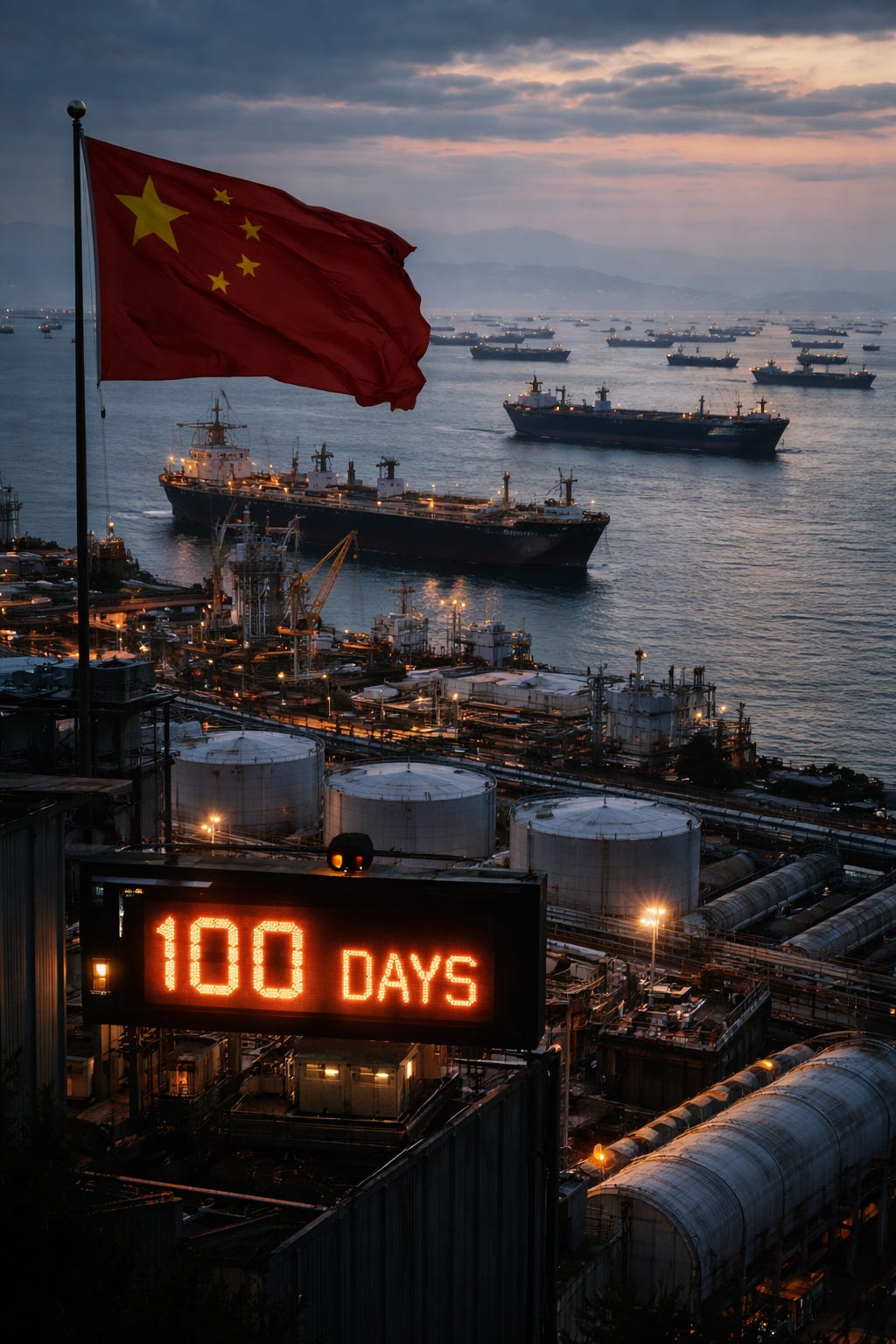
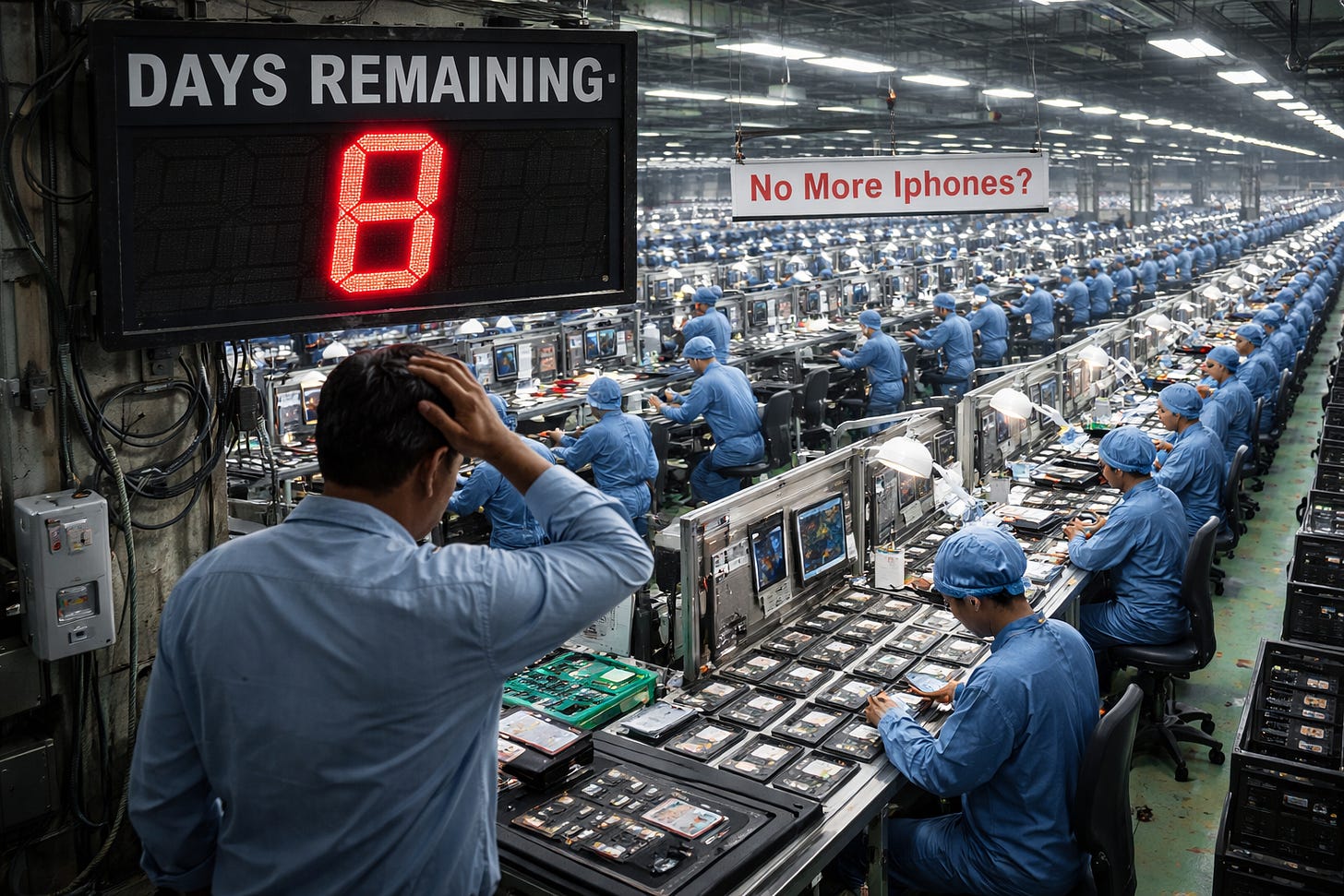
THE 100 DAY CLOCK: WHEN HORMUZ CLOSES AND CHINA RUNS ON INVENTORY ALONE

.

About 100 Days Until Factories Slow and the Boxes Stop Arriving

The tankers stopped.

Insurance markets froze first. Then freight rates spiked. Then captains hesitated. Then the Strait of Hormuz went quiet.

When a chokepoint closes, geography becomes destiny.

And for China, destiny runs on imported oil.

As of March 2026, analysts estimate China can function roughly 100 to 115 days if Hormuz remains fully blocked. Some banks whisper about 180 to 200 days if every strategic barrel is drained. That sounds comfortable. It is not.

Because inventory is not immunity. It is a countdown.

🌍 The Backstory: Why China Built a Mountain of Oil

China learned this lesson slowly, then all at once.

It imports more than 70 percent of its crude consumption. It is the world’s largest oil importer. Roughly half of those imports flow through Hormuz. Thirty percent of its liquefied natural gas does too.

That is not ideology. That is arithmetic.

So Beijing did what great powers do when they feel exposed. It stockpiled.

As of early 2026:

China’s Oil Position

  • Total onshore crude inventories: approximately 1.2 to 1.3 billion barrels
  • Strategic Petroleum Reserve: about 400 million barrels
  • Commercial stocks: roughly 670 to 800 million barrels
  • Net import coverage: around 104 days at 2025 import levels

That mountain of crude was built quietly. No speeches. No slogans. Just steel tanks filling up.

This was not paranoia. It was insurance.

Now the policy is being tested.


🔥 Zero To Hero: The Collapse Scenario

Day one of a full closure does not feel like collapse.

Refineries keep running. Diesel flows. Cities hum. Coal keeps the grid alive. Markets wobble but do not panic.

China is not fragile.

But this is how depletion works.

Oil stocks are not evenly distributed. Commercial barrels move daily. Strategic barrels are political decisions. Pipelines cannot suddenly double capacity.

China’s overland lifelines:

  • Russia via Eastern Siberia Pacific Ocean pipeline
  • Russia via Kazakhstan transit
  • Direct Kazakhstan pipeline

Combined, these pipelines supply only a fraction of China’s total daily crude demand. They cannot replace millions of barrels per day from the Gulf.

So the 100 day window is not about total shutdown.

It is about when tradeoffs begin.


⏳ What Happens As The Days Pass

Days 1 to 30

No panic. The government signals confidence. Strategic stocks remain mostly untouched. Commercial refiners draw from inventories. Prices climb globally but domestic stability is preserved.

Days 30 to 60

Freight reroutes around the Cape of Good Hope. Transit times stretch by weeks. Insurance costs compound. Brent pushes higher, potentially into triple digits.

China begins selective strategic releases. Energy intensive sectors feel quiet pressure. Nothing dramatic. Just limits.

Days 60 to 100

The tone changes.

If Hormuz remains sealed, commercial stocks thin out. Diesel allocation becomes strategic. Export industries face margin compression. LNG shortages stress coastal industrial hubs.

The question becomes simple.

Which sectors get priority?

Food logistics. Military readiness. Critical manufacturing. Urban stability.

Steel output can pause. Luxury exports can slow. Political control cannot.

📉 The Economic Shockwave

Oil at 120 to 150 dollars per barrel does not stay in the oil market.

It moves through fertilizer, plastics, shipping, food, air freight, petrochemicals.

China’s growth projections for 2026 sit near 4 percent. An energy shock shaves points off quickly.

Cost push inflation rises. Export margins shrink. Domestic transport costs surge.

And because China is the manufacturing spine of the global economy, the slowdown does not stay inside its borders.

Electronics, machinery, automotive components, consumer goods. Delays cascade.

This is not theory. It is supply chain math.


🧠 Raising The Stakes: The Real Constraint

The real constraint is not how many barrels exist.

It is how fast replacement flows can move.

Hormuz handles about one fifth of global oil trade. Tankers rerouting around Africa increase voyage times dramatically. Shipping capacity tightens. Freight costs surge.

Even if physical oil exists, logistics slow it down.

China could survive 100 days. It could possibly stretch longer by rationing and releasing strategic reserves.

But survival and normal functioning are not the same.

Normal functioning requires flow.

And flow requires open sea lanes.


⚖️ How China Secures Oil If Hormuz Stays Shut

If the closure persists, Beijing has levers.

  1. Increase Russian volumes through pipeline and seaborne routes in the Pacific
  2. Expand imports from West Africa and Latin America
  3. Accelerate Arctic and Far East shipments
  4. Draw down SPR aggressively
  5. Impose domestic fuel rationing
  6. Prioritize military and food logistics over export manufacturing
  7. Increase coal substitution for power generation
  8. Accelerate electric vehicle and renewable expansion

None of these solve the problem overnight.

All of them buy time.

China’s advantage is centralized coordination. It can ration faster than market democracies. It can redirect supply by decree.

That is structural power.


🌱 Turn Pain Into Power

Here is the paradox.

Every chokepoint accelerates adaptation.

The 1973 oil shock reshaped Japan’s efficiency model. The 1990 Gulf War reshaped U.S. strategic reserves. Europe’s gas crisis reshaped LNG infrastructure.

If Hormuz remains blocked long enough to sting but not collapse China, it becomes fuel for transformation.

More pipelines. More Arctic shipping. More domestic production. Faster electrification. Faster storage buildout.

Crisis compresses time.

And China has shown repeatedly that it can move fast under constraint.


🎯 The Win Win Lesson

This is not just about Beijing.

It is about you.

Resilience is inventory plus optionality.

China stockpiled oil because it understood dependency. You can stockpile leverage in your own life the same way.

Cash reserves. Skills redundancy. Multiple income channels. Geographic flexibility. Network depth.

When chokepoints close, those who prepared breathe easier.

Those who did not panic.

The 100 day clock is a metaphor.

How long can you function if one supply line disappears?

Build your reserves before the strait closes.


💡 Final Thought

Read this slowly.

The world runs on flows. Oil. Data. Capital. Food. Attention.

When flows stop, systems reveal their design.

China is not collapsing tomorrow. It has built buffers. It has planned for disruption. It can ration, redirect, and adapt.

[…]

Via https://wavesandpositions.substack.com/p/the-100-day-clock-when-hormuz-closes

Where’s Bibi?

👍 US-Israel-Iran war | @geopolitics_prime✡️

Israel’s getting pummelled, banning info on its defeats — former US officer

💬 “They [Israel] are getting absolutely pummelled. I think [Netanyahu is] on a plane 90% of the time… He’s flying around the Mediterranean. He’s staying out of the fray as best he can, because he knows that he is the number one target,” retired US colonel Lawrence Wilkerson says.

Iran manages to damage Israeli cities, he adds, noting that fewer and fewer of the IDF interceptors are being used to stop the Iranian missiles, but Israel imposes tight censorship to hide it.

Via https://t.me/healthimpact/3173