Retired child and adolescent psychiatrist and American expatriate in New Zealand. In 2002, I made the difficult decision to close my 25-year Seattle practice after 15 years of covert FBI harassment. I describe the unrelenting phone harassment, illegal break-ins and six attempts on my life in my 2010 book The Most Revolutionary Act: Memoir of an American Refugee.
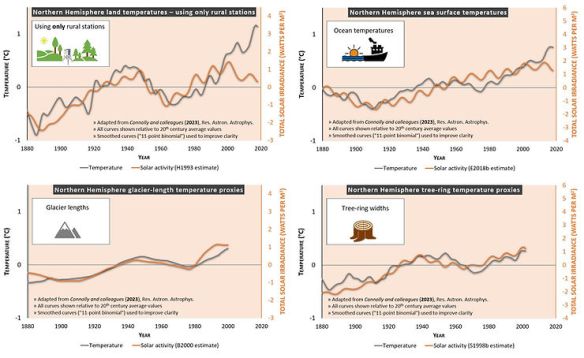
A new international study published in the scientific peer-reviewed journal, Research in Astronomy and Astrophysics, by 20 climate researchers from 12 countries suggests that the UN’s Intergovernmental Panel on Climate Change (IPCC) might have substantially underestimated the role of the Sun in global warming.
The article began as a response to a 2022 commentary on an extensive review of the causes of climate change published in 2021. The original review (Connolly and colleagues, 2021) had suggested that the IPCC reports had inadequately accounted for two major scientific concerns when they were evaluating the causes of global warming since the 1850s:
The global temperature estimates used in the IPCC reports are contaminated by urban warming biases.
The estimates of solar activity changes since the 1850s considered by the IPCC substantially downplayed a possible large role for the Sun.
On this basis, the 2021 review had concluded that it was not scientifically valid for the IPCC to rule out the possibility that global warming might be mostly natural.
The findings of that 2021 review were disputed in a 2022 article by two climate researchers (Dr. Mark Richardson and Dr. Rasmus Benestad) for two main reasons:
Richardson and Benestad (2022) argued that the mathematical techniques used by Connolly and colleagues (2021) were inappropriate and that a different set of mathematical techniques should have been used instead.
They also argued that many of the solar activity records considered by Connolly and colleagues (2021) were not up-to-date.
They suggested that these were the reasons why Connolly and colleagues (2021) had come to a different conclusion from the IPCC.
This new 2023 article by the authors of the 2021 review, has addressed both of these concerns and shown even more compelling evidence that the IPCC’s statements on the causes of global warming since 1850 are scientifically premature and may need to be revisited.
The authors showed that the urban component of the IPCC’s global temperature data shows a strong warming bias relative to the 98% of the planet that is unaffected by urbanization. However, they also showed that urbanized data represented most of the weather station records used.
While the IPCC only considered one estimate of solar activity for their most recent (2021) evaluation of the causes of global warming, Connolly and colleagues compiled and updated 27 different estimates that were used by the scientific community.
Several of these different solar activity estimates suggest that most of the warming observed outside urban areas (in rural areas, oceans, and glaciers) could be explained in terms of the Sun. Some estimates suggest that global warming is a mixture of human and natural factors. Other estimates agreed with the IPCC’s findings.
For this reason, the authors concluded that the scientific community is not yet in a position to establish whether the global warming since the 1850s is mostly human-caused, mostly natural or some combination of both.
The lead author of the study, Dr. Ronan Connolly, of the Center for Environmental Research and Earth Sciences (CERES-Science.com) described the implications of their findings,
“In scientific investigations, it is important to avoid beginning your analysis with your conclusions decided in advance. Otherwise you might end up with a false sense of confidence in your findings. It seems that the IPCC was too quick to jump to their conclusions.”
Another author of the study, Dr. Willie Soon, also of the Center for Environmental Research and Earth Sciences, explained:
“If the IPCC had paid more attention to open-minded scientific inquiry than trying to force a premature ‘scientific consensus’, then the scientific community would be a lot closer to having genuinely resolved the causes of climate change. Hopefully, our new analysis and datasets can help other scientists to get back to doing real climate science.”
This study reaches similar conclusions to another study that was recently published in a separate scientific peer-reviewed journal, Climate. This other study involved many of the same co-authors (led by Dr. Soon) and focused on a detailed case study of two solar activity estimates and two temperature estimates. It took a different approach to analyzing the problem but confirmed that varying the choice of solar activity and temperature estimates can lead to very different conclusions on the causes of global warming.
For media inquiries, please contact Dr. Ronan Connolly (Center for Environmental Research and Earth Sciences) at ronan@ceres-science.com or Dr. Willie Soon (Center for Environmental Research and Earth Sciences) at willie@ceres-science.com.
By Debbie Cenziper, ProPublica; Michael D. Sallah, Michael Korsh and Evan Robinson-Johnson, Pittsburgh Post-Gazette; and Monica Sager, Northwestern University
Tainted continuous positive airway pressure (CPAP) machines and ventilators went to children, the elderly and at least 700,000 veterans despite internal warnings. Company insiders said the devices posed an “unacceptable” risk.
The first complaints landed at the offices of Philips Respironics in 2010, soon after the company made a fateful decision to redesign its bestselling breathing machines used in homes and hospitals around the world.
To silence the irritating rattle that kept users awake at night, Philips packed the devices with industrial foam — the same kind used in sofas and mattresses. It quickly became clear that something had gone terribly wrong.
The reports coming into Philips described “black particles” or “dirt and dust” inside machines that pump air to those who struggle to breathe. One noted an “oily-like” substance. Others simply warned of “contamination.”
The complaints targeted some of the company’s most celebrated devices built in two factories near Pittsburgh, including ventilators for the sick and dying and the popular DreamStation for patients who suffer from sleep apnea, a chronic disorder that causes breathing to stop and start through the night.
Yet Philips withheld the vast majority of the warnings from the U.S. Food and Drug Administration (FDA), even as their numbers grew from dozens to hundreds to thousands and became more alarming each year.
“Black shavings in the chamber,” said one 2011 report that was kept from the government.
“Contaminated with unknown sticky substance,” noted another three years later.
By 2015, the year Philips launched the DreamStation, the company had amassed at least 25 complaints that pointed to a specific cause — the foam was falling apart.
In June 2021, more than a decade after the first reports, Philips announced a recall of millions of machines that had been delivered to nearly every corner of the U.S. and dozens of other countries.
The company acknowledged that the foam it had chosen could crumble in heat and humidity and send potentially “toxic and carcinogenic” material into the noses, mouths, throats and lungs of users.
In a series of statements, the industry giant said it acted as soon as it learned of the “potential significance” of the problem.
But an investigation by ProPublica and the Pittsburgh Post-Gazette of the 11 years between the first complaints and the recall reveals a different story — one of a company that sought to protect its marquee products as stock prices soared to the highest levels in decades.
Again and again, previously undisclosed records and interviews with company insiders show, that Philips suppressed mounting evidence that its profitable breathing machines threatened the health of the people relying on them, in some cases to stay alive.
Federal law requires device makers to turn over to the government within 30 days all reports of patient injuries, deaths and malfunctions that have the potential to cause harm and to take action to investigate them.
A ProPublica and Post-Gazette analysis of tens of thousands of reports shows that Philips withheld more than 3,700 complaints over 11 years from the FDA, which oversees medical devices.
The company did not launch a formal investigation of the problem until 2019 — nine years after the first wave of complaints and three years after the first known tests for the company found that the foam was degrading.
Instead, as the complaints continued to pile up in company files, Philips waged aggressive global marketing campaigns to sell more machines, including new models fitted with the hazardous foam.
The sales pitch worked: The devices went to infants, the elderly and at least 700,000 veterans. The company also promoted machines meant for some of the sickest people in the country, rolling out a new ventilator filled with the foam in the early months of the COVID-19 pandemic.
Philips didn’t stop even after the company learned the foam was breaking down in its ventilators in Japan and had to be replaced — and after tests in the U.S. revealed that the material released chemicals at dangerous levels.
Among them: formaldehyde, a compound used in fertilizer, dyes and glues that has been tied to respiratory problems and certain cancers.
In 2018, the company called more than a dozen engineers and safety supervisors to a series of urgent meetings in Pittsburgh to investigate the problem in what eventually became known to insiders as Project Uno.
Still, the public was not warned.
All the while, people using Philips machines were suffering from illnesses that no one could explain: vomiting, dizziness and headaches, along with newly diagnosed cancers of the lungs, throat, sinuses and esophagus.
One man in Philadelphia coughed so hard that he broke his ribs, and a Florida woman with a hacking cough was hospitalized for days and placed on oxygen.
[…]
To examine what happened at Philips, reporters interviewed more than 200 former company supervisors, doctors, toxicologists, patients and the relatives of those who died and obtained company records that show officials knew about the dangers but continued to sell machines that the FDA had since said are capable of causing severe illness or death.
Reporters also reviewed thousands of complaints submitted to the company and government describing device malfunction and injuries, including more than 370 reports of deaths.
As part of the investigation, the news organizations collaborated with Mediahuis NRC, the publisher of one of the largest newspapers in the Netherlands, where Philips’ parent company is located.
In a statement to the news organizations, Philips said its top priority is patient safety and that it regretted “the distress and concern” caused by the recall.
“We deeply apologize for that and continue to work hard to resolve this,” the company said.
Philips said complaints about the foam were limited in the years before the recall and that the reports were evaluated on a case-by-case basis. The company added that it became aware of the potential significance of the problem in early 2021 and launched the recall shortly after that.
Former company engineers and safety supervisors, who spoke on the condition of anonymity because they still work in the industry, said top officials at Philips repeatedly dismissed a dangerous breakdown that ultimately set off a worldwide health crisis involving as many as 15 million devices.
“It was a catastrophic series of errors,” said a former compliance supervisor. “There were people who knew and knew for a long time.”
In the months since the recall, the company has walked back its initial acknowledgment of the health risks posed by the degrading foam, saying tests on the DreamStation and similar devices show the chemicals released by the material fall within safety thresholds.
“The whole product complies with safety norms,” Roy Jakobs, chief executive officer of parent company Royal Philips, said last year.
ProPublica and the Post-Gazette obtained copies of four tests carried out in 2021 that were solicited by Philips. Three experts who reviewed the results for the news organizations dispute the company’s claim and point to another finding that they say is even more alarming.
The foam tested positive multiple times for genotoxicity — the ability of a chemical to cause cells to mutate, a process that can lead to cancer.
“You’re basically changing cells,” said one engineer who was familiar with the testing. “I don’t even know if we really scratched the surface of how bad this really is.”
In New York, 58-year-old retired music teacher and father of three Mark Edwards said he’ll spend the rest of his life fearing that a sleep apnea machine caused years of respiratory infections and two benign tumors in his throat.
Edwards brought home a DreamStation in 2017 and set it up next to his bed, where he sleeps with his rescued German shepherd, Tyson. He continued using it even after he said he began to spot black particles in his mask.
[…]
A competitive edge
[…]
Throughout the 1980s, McGinnis invented a series of breathing masks and ultimately developed the nation’s first mass-produced continuous positive airway pressure, or CPAP machine, sold under the banner of his growing company, Respironics.
During a scientific renaissance that transformed Pittsburgh from a steel town into a hub for medical innovation, the company became a dominant player in a thriving industry that would change the lives of those struggling with sleep apnea.
[…]
Locked in a race to make its breathing machines quieter, the company inserted the foam to muffle the sound. The change was a triumph in the world of sleep apnea, a way to quiet the humming, vibrating machines that disturbed patients and their partners as they slept.
[…]
It was a risky move. Studies published in scholarly journals showed the foam broke apart in heat and moisture. The company used it anyway, even though the machines send air for hours at a time into the lungs of users.
“Anybody who has half a brain cell in chemistry knows that this was a stupid idea,” said the engineer who was familiar with the recent testing.
Soon, alarming reports began to surface.
In June 2010, Philips found that a machine sent back to the company by a customer was contaminated with “foam particles,” FDA records show.
Rather than alerting the government as federal law required, records reveal that the company kept the report about the problem in-house for the next decade.
[…]
By the end of 2014 — about six years after Philips started using the foam — more than 500 reports from healthcare workers, patients and others had flooded the company in a pattern that would not be revealed to the government or the public for years, the records show.
[…]
Philips received more than 3,700 reports about foam problems before recalling machines
For more than a decade, the company used polyester-based polyurethane foam in its ventilators and CPAP machines to reduce noise. In that time, it received thousands of complaints about “dust contamination,” “black particles” and “foam degradation.”
[…]
Mounting Injuries
[…]
The company alerted the FDA but said nothing to its customers — news reports at the time were largely limited to the company’s positive earnings. Over the next six weeks, more complaints came in, one after another:
[…]
Philips withheld thousands of complaints about foam problems from the FDA
After Philips issued a recall in 2021, the company turned complaints over to federal regulators, including more than 2,500 that it had withheld for more than two years.
[…]
The true extent of the crisis may not be known for years.
As news of the problem spread, customers and others stepped forward by the thousands, describing emergency room visits and sudden illnesses in reports submitted to Philips and the government.
The reports detailed nearly 2,000 cases of cancer, 600 liver and kidney illnesses and 17,000 respiratory ailments.
Whilst the Government Threatened the Public With Police Action if They Asked for Exemptions
Ursula Edgington PhD, who writes under the title Informed Heart on Substack has sent me a partial breakdown of 6,700 medical staff granted vaccine exemptions provided through a 29th September 2022 OIA H2022009529. It appears from the OIA HNZ00023978 dated 2 August 2023 that we reported yesterday that the actual total may be as high as 11,005. This figure includes over 1,500 administrative managers.
The health service employs around 80,500 staff. This means that as many as 14% of MoH staff were granted exemptions. Previous mainstream media coverage accessible to the public has only reported that a total of 81 vaccine exemptions (not the actual 11,005) were granted to Ministry of Health staff.
This completely misleading media coverage gave the impression that Ministry of Health staff had almost to a person willingly taken the mRNA vaccine with the exception of 2,400 workers who euphemistically ‘left their jobs’ as a result of mandates.A far smaller number than the 11,005 medical personnel and administrators who secretly received vaccine exemptions and retained their jobs in the health service despite being unvaccinated.
Many dutifully vaccinated members of the public were left with the false belief that they were joining shoulder to shoulder with a health service totally united behind Covid mRNA vaccines. This erroneously strengthened a belief in the false ‘safe and effective’ government narrative. Many who failed to meet vaccination requirements may recall being refused permission to visit loved ones in hospital or care facilities, whilst we now know unvaccinated staff and doctors might have been treating them.
So why did so many MoH staff apply for vaccine exemptions?
They might have read a 2018 paper authored by Drew Weissman and published in Nature entitled “mRNA vaccines — a new era in vaccinology”. Yesterday, Weissman shared the NZ$1.7 million Nobel Prize for medicine with Katalin Karikó for contributing “to the unprecedented rate of vaccine development during one of the greatest threats to human health.”
In this paper, Weissman listed a number of very serious adverse effects that had resulted from prior mRNA vaccine trials. These included:
Local and systemic inflammation (including the lymph nodes)
Widespread biodistribution throughout the body and persistence of expressed immunogens (similar to what happens with vaccine-induced Covid spike protein).
Stimulation of auto-reactive antibodies (associated with thyroiditis, type 1 diabetes and liver disease)
Toxic effects of novel nucleotides and vaccine adjuvants (similar to that causing vaccine-induced myopericarditis)
Development of autoimmune disease (including skin inflammation, joint pain, digestive disruption and swollen glands)
Development of oedema (build up of swollen tissue in legs etc.)
Blood coagulation (clotting) and pathological thrombus formation (known to be associated with strokes and heart attacks)
Weissman suggested that his research had found ways around these problems. We now know he hadn’t. All of the above are common adverse effects resulting from Covid mRNA vaccination now widely recognised in the scientific literature that we have been citing in our regular reports. He was promising the cure of multiple diseases, but this has turned out to be only hope and hype.
A close reading of Weissman’s 2018 paper reveals that he was subtly stating the case for widespread experimentation on human populations. He wasn’t to be disappointed. Two years later mRNA Covid vaccines were approved for general use in the whole world’s population, based not on sound trial results, but mostly on assurances from authority figures like Weissman.
The motivations are unclear. It is certain that thousands of medical personnel, researchers, and regulators including executives in the pharmaceutical and biotechnology fields knew of the researched risks. Many also rapidly and correctly concluded that the Covid virus came from a laboratory. However there were trillions of dollars of profits at stake stretching into an imagined biotech future.
Rapidly a well established pharmaceutical public relations and lobbying machine with a global reach sprang into action. Its aim was to suppress any discussion of known risks. It succeeded beyond the wildest dreams of those aiming to profit from the pandemic. Many corporations and individuals have become fabulously rich and/or renowned as a result.
We can now conclude that instead of wealth and fame some are deserving of notoriety.
Exactly who knew what and to what extent some pushed a vaccine they knew to be very harmful and sometimes fatal is to a large extent unknown. Whatever may be judged by way of culpability in the future, it is imperative that those who realise the extent of the problem speak up publicly now.
The secret programme the government initiated to grant vaccine exemptions to thousands of Ministry of Health employees contrasts with the public stance of Chris Hipkins who was the Minister of Health and for the Covid-19 Response from 2020 to 2022. In November 2021 Hipkins complained to RNZ there were people who were aggressively demanding vaccine exemptions. He said:
“Anybody seeking to exert pressure [to gain a vaccine exemption] in the way that we have seen is a matter that the police will be involved with if necessary,”
Hipkins said he was going to establish a central process for approving medical vaccine exemptions. We now know that 11,000 exemptions were granted to people working for the Ministry of Health (headed by Hipkins), whilst almost no exemptions were granted to members of the public and those working in other professions. Even people severely injured by their first Covid vaccine were routinely denied an exemption by the then Director General of Health Dr. Ashley Bloomfield.
Hipkins’ centralised process appeared to be a system designed to deny vaccine exemptions to almost everyone applying other than 11,000 privileged Ministry of Health employees. Simultaneously the General Medical Council was cracking down on any doctors informing the public of vaccine risks and threatening them with suspension and disbarment. The media were repeatedly reprinting the false safe and effective narrative derived not from research but from PR hype. Jacinda Ardern was firming up her policy aim to create a two tier society—vaccinated and unvaccinated. Under this kind of pressure, families were being torn apart by what is now known to be calculated disinformation.
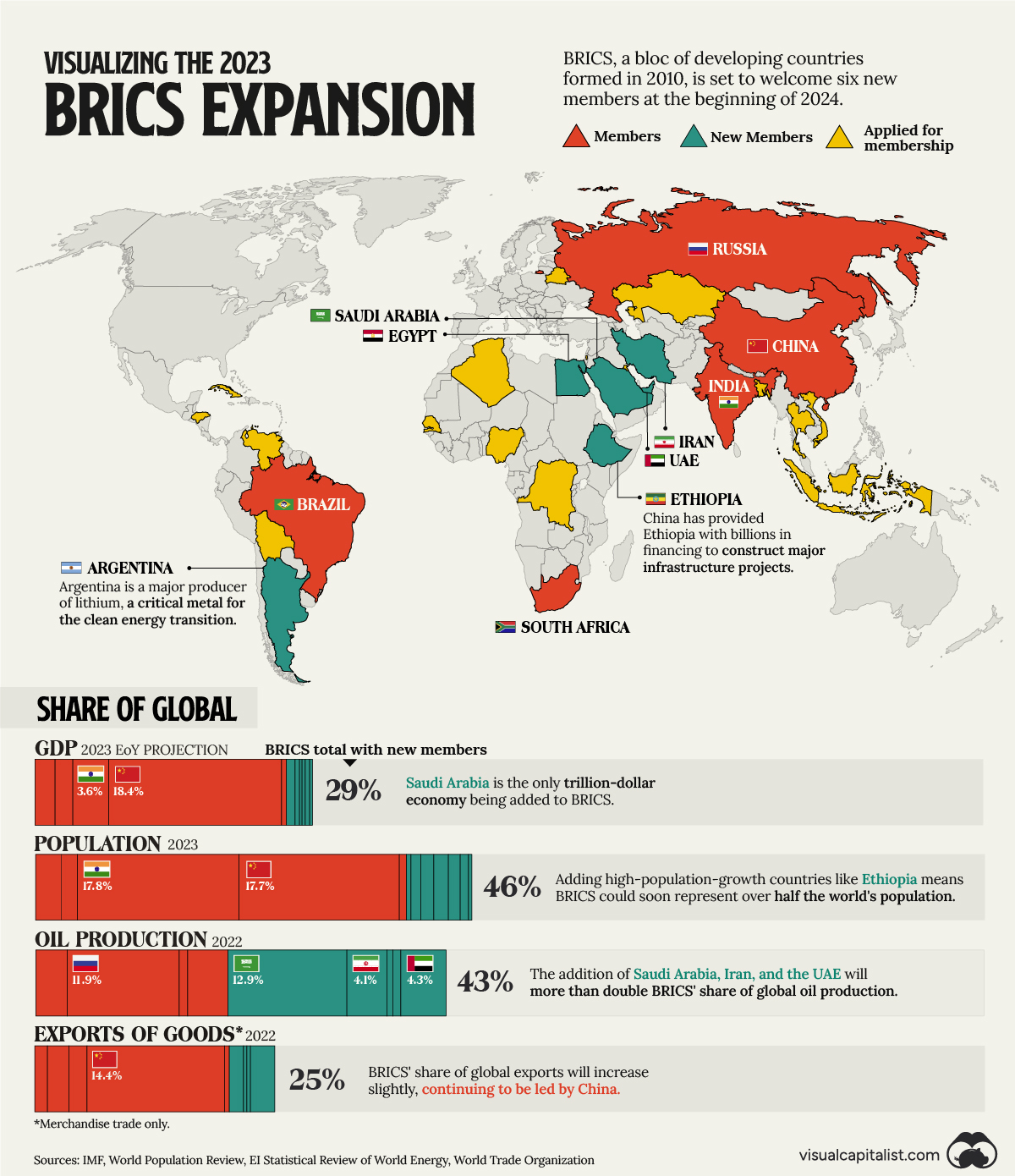
BRICS is an association of five major countries including Brazil, Russia, India, China, and South Africa. Distinguished by their emerging economies, the group has sought to improve diplomatic coordination, reform global financial institutions, and ultimately serve as a counterbalance to Western hegemony.
On Aug. 24, 2023, BRICS announced that it would formally accept six new members at the start of 2024: Saudi Arabia, Iran, Ethiopia, Egypt, Argentina, and the United Arab Emirates (UAE).
In this graphic, we provide a data-driven overview of how the BRICS expansion will grow the group’s influence and reach.
Share of Global GDP
Because most of the new BRICS members are considered to be developing economies, their addition to the group will not have a major impact on its overall share of GDP.
The following table includes GDP projections for 2023, courtesy of the IMF.
Original BRICS
Member
Country
GDP (USD billions)
Share of Global (%)
Yes
🇧🇷 Brazil
$2,081
2.0%
Yes
🇷🇺 Russia
$2,063
2.0%
Yes
🇮🇳 India
$3,737
3.6%
Yes
🇨🇳 China
$19,374
18.4%
Yes
🇿🇦 South Africa
$399
0.4%
No
🇸🇦 Saudi Arabia
$1,062
1.0%
No
🇮🇷 Iran
$368
0.4%
No
🇪🇹 Ethiopia
$156
0.1%
No
🇪🇬 Egypt
$387
0.4%
No
🇦🇷 Argentina
$641
0.6%
No
🇦🇪 UAE
$499
0.5%
–
BRICS Total
$30,767
29.3%
–
Rest of World
$74,362
70.7%
The original six BRICS members are expected to have a combined GDP of $27.6 trillion in 2023, representing 26.3% of the global total. With the new members included, expected GDP climbs slightly to $30.8 trillion, enough for a 29.3% global share.
Share of Global Population
BRICS has always represented a major chunk of global population thanks to China and India, which are the only countries with over 1 billion people.
The two biggest populations being added to BRICS are Ethiopia (126.5 million) and Egypt (112.7 million). See the following table for population data from World Population Review, which is dated as of 2023.
Original BRICS
Member
Country
Population
Share of Global (%)
Yes
🇧🇷 Brazil
216,422,446
2.7%
Yes
🇷🇺 Russia
144,444,359
1.8%
Yes
🇮🇳 India
1,428,627,663
17.8%
Yes
🇨🇳 China
1,425,671,352
17.7%
Yes
🇿🇦 South Africa
60,414,495
0.8%
No
🇸🇦 Saudi Arabia
36,947,025
0.5%
No
🇮🇷 Iran
89,172,767
1.1%
No
🇪🇹 Ethiopia
126,527,060
1.6%
No
🇪🇬 Egypt
112,716,598
1.4%
No
🇦🇷 Argentina
45,773,884
0.6%
No
🇦🇪 UAE
9,516,871
0.1%
–
BRICS Total
3.7 billion
46.0%
–
Rest of World
4.3 billion
54.0%
It’s possible that BRICS could eventually surpass 50% of global population, as many more countries have expressed their desire to join.
Share of Oil Production
Although the world is trying to move away from fossil fuels, the global oil market is still incredibly large—and BRICS is set to play a much bigger role in it. This is mostly due to the admission of Saudi Arabia, which alone accounts for 12.9% of global oil production.
Based on 2022 figures from the Energy Institute Statistical Review of World Energy, BRICS’ share of oil production will grow from 20.4% to 43.1%.
Original BRICS
Member
Country
Thousand Barrels
per Day
Share of Global (%)
Yes
🇧🇷 Brazil
3,107
3.3%
Yes
🇷🇺 Russia
11,202
11.9%
Yes
🇮🇳 India
737
0.8%
Yes
🇨🇳 China
4,111
4.4%
Yes
🇿🇦 South Africa
0
0.0%
No
🇸🇦 Saudi Arabia
12,136
12.9%
No
🇮🇷 Iran
3,822
4.1%
No
🇪🇹 Ethiopia
0
0.0%
No
🇪🇬 Egypt
613
0.7%
No
🇦🇷 Argentina
706
0.8%
No
🇦🇪 UAE
4,020
4.3%
–
BRICS Total
40,454
43.1%
–
Rest of World
53,394
56.9%
It’s worth noting that China has been pushing for oil trade to be denominated in yuan, and that Saudi Arabia’s acceptance into BRICS could bolster this ambition, potentially shifting the dynamics of global oil trade.
Share of Global Exports
The last metric included in our graphic is global exports, which is based on 2022 data from the World Trade Organization. We can see that the BRICS expansion will grow the group’s share of global exports (merchandise trade) to 25.1%, up from 20.2%.
Original BRICS
Member
Country
Exports (USD billions)
Share of Global (%)
Yes
🇧🇷 Brazil
334
1.3%
Yes
🇷🇺 Russia
532
2.1%
Yes
🇮🇳 India
453
1.8%
Yes
🇨🇳 China
3,594
14.4%
Yes
🇿🇦 South Africa
123
0.5%
No
🇸🇦 Saudi Arabia
410
1.6%
No
🇮🇷 Iran
73
0.3%
No
🇪🇹 Ethiopia
3.9
0.02%
No
🇪🇬 Egypt
49
0.2%
No
🇦🇷 Argentina
88
0.4%
No
🇦🇪 UAE
599
2.4%
–
BRICS Total
6,259
25.1%
–
Rest of World
18,646
74.9%
Unsurprisingly, China is the world’s largest exporter. Major exporters that are not a part of BRICS include the U.S. (8.3%), Germany (6.6%), the Netherlands (3.9%), and Japan (3.0%).
Who Else Wants to Join?
According to Reuters, there are over 40 countries that have expressed interest in joining BRICS. A smaller group of 16 countries have actually applied for membership, though, and this list includes Algeria, Cuba, Indonesia, Palestine, and Vietnam.
The Mongols’ special form of warfare (mounting archers on horseback) enabled them to move one hundred thousand warriors across 2000 miles of virtually impassable terrain (deserts, barren grasslands and steep mountains). According to Armstrong, Genghis Khan and his descendants captured more territory in 25 years than the Romans did in 400.
Named Tamugen at birth, he had a remarkable mother (Hoelun) who, following the murder of her husband Yesugei, was abandoned by her clan, along with Yesugei’s first wife and seven children. According to the Secret History of the Mongols,* Hoelun kept all nine of them alive by fishing and hunting. As a teenager, Tamugen killed his eldest half brother Bekhter for trying to hog (as the firstborn) the family’s meager food stores. As punishment for the murder a nearby tribe took Tamugen prisoner and forced him to wear a yoke until sympathetic farmer helped him escape.
After Tamugen married he, in turn, avenged himself against the clan which had abandoned his mother.
As a teenager, he and his “blood brother”** from a neighboring clan ruled both groups jointly until Januka’s clan quarreled and split apart from Tamugen’s. They subsequently raided each other’s tribes for foodstuffs, weapons and luxuries.
As Tamugen and Januka consolidated separate warring clans under their rule, the former rejected traditional clan hierarchies and singled out low caste families for special allotments of land, animals and food. After cementing their loyalty in this way, he frequently called on them to serve as warriors and tax collectors. In 1204, Tamugen captured Januka in battle, and according to the Secret History (at Janika’s request) granted him a humane execution.
Following Janaku’s death, Tamugen controlled all the Central Asian steppes from the Arctic Tundra to the Gobi Desert. In 1206, he called a kuritai (assembly). After four days of deliberation, they appointed him sole leader of this newly formed confederation of Mongol tribes and granted him the name Genghis Khan (universal ruler).
Remarkable as it may seem, 99% of the proteins, carbohydrates, fats, minerals, vitamins and other biochemical scomponents making up whole food are a complete mystery. So how can scientists replicate those components in lab food? And what are we missing in our diets if those components aren’t all there?
Story at a glance:
An estimated 99% of the components making up whole food are a complete mystery. The U.S. Department of Agriculture’s (USDA) National Nutrient Database for Standard Reference details 188 nutritional components of food, including 38 flavonoids, yet scientists estimate there are more than 26,000 different biochemicals in our food.
We know even less about the constituents of processed foods and synthetic foods, which falsely claim to be “equivalents” to whole foods, such as “animal-free meats” or “animal-free milk.”
Scientists cannot create equivalence when they don’t even know what 85% or more of the whole food they’re trying to replicate consists of.
A paper published in the April issue of Animal Frontiers warns that cultured products are not nutritionally equivalent to the meats they’re intended to replace.
A May report by the Food and Agriculture Organization concluded there are at least 53 potential health hazards associated with lab-grown meat, including the possibility of contamination with heavy metals, microplastics, nanoplastics and chemicals, allergenic additives, toxic components, antibiotics and prions.
Do you know what’s in the food you eat? Remarkable as it may seem, 99% of the components making up whole food are a complete mystery.
“We know next to nothing about the vast majority of compounds in our diet … ‘Our understanding of how diet affects health is limited to 150 key nutritional components,’ says Albert-László Barabási at Harvard Medical School, who coined the term nutritional dark matter.
“‘But these represent only a small fraction of the biochemicals present in our food’ … The idea that food is a rich and complex mix of biochemicals is hardly news.
“Even the well-known macronutrients — proteins, carbohydrates and fats — are hugely diverse. There’s also a vast supporting cast of micronutrients: minerals, vitamins and other biochemicals, many of which are only present in minuscule quantities, but which can still have profound health effects.”
As noted by New Scientist: “With the USDA as your guide, 99.5% of the components in food are a mystery,” and as noted by Barabási, “It would be foolish to dismiss 99.5% of the compounds we eat as unimportant … We will not really understand how we get sick if we don’t solve this puzzle.”
Searching for nutritional ‘dark matter’
Disturbed by the information gap, an international team of researchers started working on a more comprehensive database a decade ago called FooDB, which as of 2020 contained information on some 70,000 nutritional compounds.
Yet even this database still has a long way to go. An estimated 85% of the nutritional components listed remain unquantified, meaning they know a food contains a particular component, but they don’t know how much.
The health implications of most compounds also remain largely unknown.
New Scientist notes:
“This is also true of individual micronutrients. ‘Consider beta-carotene,’ says Barabási. ‘It tends to be positively associated with heart disease, according to epidemiological studies, but studies adding beta-carotene to the diet do not show health benefits. One potential reason is that beta-carotene never comes alone in plants; about 400 molecules are always present with it. So epidemiology may be detecting the health implications of some other molecule.’
“Another probable cause is the effect of the microbiome on dark nutrients, says [FooDB founder David] Wishart. ‘Most dark nutrients are chemically transformed by your gut bacteria.’
“That’s probably why studies on the benefits of different foods give relatively ambiguous results. We don’t properly control for the variation in gut microflora, or our innate metabolism, which means different people get different doses of metabolites from their food.”
Processed foods are an even greater mystery
The reason I started with that background is because we know even less about the constituents of processed foods and synthetic foods that ignorantly claim to be “equivalents” to whole foods, such as “animal-free meats” or “animal-free milk.”
Food processing alone will often alter the composition of bioactive molecules in a food and hence the food’s impact on health, but today, processed foods also contain a wide array of synthetic chemicals that, prior to the modern era, were never part of the human diet.
As such, they pose incredible risks to long-term health and well-being. Processed foods may also have intergenerational effects.
“How can scientists create equivalence when they don’t even know what 85% or more of the whole food they’re trying to replicate consists of?”
In recent years, the idea that we can simply replace whole foods with synthetic, genetically modified or lab-grown alternatives that are wholly equivalent to the original food has taken root. In reality, that’s simply impossible.
How can scientists create equivalence when they don’t even know what 85% or more of the whole food they’re trying to replicate consists of?
Common sense will tell you they can’t. It might look, smell and even taste similar, but the micronutrient composition will be entirely different, and as a result, the health effects will be incomparable as well.
Animal-free equivalence is a PR fraud
Take cultured meat, for example. It’s said to be equivalent to real animal meat because it’s grown from animal cells. The cells are then grown in a nutrient solution inside a bioreactor until they become a meat-like slab.
Similarly, Bored Cow animal-free milk is a dairy alternative made with whey protein obtained through a fermentation process, plant-based fats (in lieu of milk fats), citrus fiber (for creaminess) and added vitamins and minerals.
Defenders of cultured meat insist that this product is not “fake meat” but “actual meat,”
the only difference is that no animal had to be slaughtered to create it.
Cultured meat and other synthetic foods are also said to be more environmentally friendly. But nothing could be further from the truth.
Their impact is far more akin to that of the pharmaceutical industry than the food industry.
Based on this assessment, each kilo of cultured meat produces anywhere from 542 pounds (246 kilos) to 3,325 pounds (1,508 kg) of carbon dioxide emissions, making the climate impact of cultured meat four to 25 times greater than that of conventional beef.
And this information is only provided to refute those who believe the global warming fallacy.
As noted by the authors, investors have poured billions of dollars into the animal cell-based meat sector based on the theory that cultured meat is more environmentally friendly than beef.
However, according to these researchers, that hype is based on flawed analyses of carbon emissions.
A paper published in the April issue of Animal Frontiers also warned that there are several implications of cell-based meat that need to be considered but aren’t, including the fact that cultured products are not nutritionally equivalent to the meats they’re intended to replace.
The claim that no animals are killed in the process is also false. At present, most cultured or cell-based meats are created by growing animal cells in a solution of fetal bovine serum, which is made from the blood of unborn calves.
In short, pregnant cows are slaughtered to drain the unborn fetus of its blood.
Is it safe to eat tumors?
There are also many unanswered questions surrounding safety. For example, to get the cell cultures to grow, some companies are using immortalized cells, which technically speaking are precancerous and/or fully cancerous.
The reason for using immortalized cells is that normally behaving cells cannot divide forever. Most cells will only multiply a few dozen times before they become senescent (old) and die.
This won’t work when your intention is to grow thousands of pounds of tissue from a small number of cells, hence they use immortalized cells that have no off switch for their replication and can divide indefinitely.
Meat substitutes cultured in this way could therefore be thought of as tumors, seeing how the flesh is entirely made up of precancerous or cancerous cells. Is it safe to eat tumors? We don’t know.
Massachusetts Institute of Technology biologist Robert Weinberg, Ph.D., has proposed that humans can’t get cancer from these cells because they’re not human cells and therefore cannot replicate inside your body.
However, there’s no long-term research to back this theory.
Dietary headaches to come
It’s also important to realize that the nutritional composition and safety of synthetic foods will vary depending on the brand.
When you’re dealing with beef, for example, the meat from one cow will be relatively identical to that of any other cow (one major exception being the way they’re raised and fed).
One wild-caught salmon is comparable to any other wild-caught salmon and each russet potato is more or less identical to every other russet potato.
However since each synthetic food brand uses proprietary ingredients and processes, no two will have identical composition or safety, so even if one is eventually proven safe and nutritious, those results cannot be applied to any other brand.
This variance has the potential to create major problems in the future when all sorts of foods have been replaced with synthetic non-equivalents.
How do you determine which cultured beef, chicken or salmon brand might be best for you? How will you devise a sensible diet plan when every food comes in myriad variations of varying composition and safety?
Synthetic foods pose unique food-safety hazards
Many synthetic food proponents claim lab-created food will bypass a host of food-safety problems, but the converse is far more likely to be true.
Sure, beef, for example, can be contaminated during processing, packaging, transport or storage, or during the cooking process.
But in cultured meat, every ingredient and processing step brings with it the potential of contamination and any of the hundreds of ingredients could have toxic effects, alone or in synergy.
Indeed, an in-depth analysis of the available evidence by the Food and Agriculture Organization of the United Nations and a World Health Organization expert panel, published in May, concluded there are at least 53 potential health hazards associated with lab-grown meat.
Among them are the possibility of contamination with heavy metals, microplastics, nanoplastics and chemicals, allergenic additives, toxic components, antibiotics and prions.
What’s more, some of the ingredients that go into synthetic biology like cultured meat are regulated as “non-detectable manufacturing aids,” and you won’t even know what they are. Israeli startup Profuse Technology, for example, has developed a growth media supplement that massively encourages protein growth.
As reported by Food Navigator Europe in an article titled, “Cultivated Meat ‘Breakthrough’: Media Supplement Achieves Full Muscle Maturation on Scaffold Within 48 Hours,” the supplement reduces the time to grow filets and steaks by 80% and augments the protein in the final product by a factor of five.
In early April 2023, microbiologist Kevin McKernan detailed finding massive DNA contamination in Pfizer’s and Moderna’s bivalent COVID booster shots. The highest level of DNA contamination found was 30%, meaning nearly one-third of the content of the shot was plasmid DNA, the presence of which dramatically increases the likelihood of DNA integration and cancer
An in vitro experiment found that the modified RNA in the Pfizer jab has the ability to enter human liver cells and reverse transcribe into DNA in as little as six hours post-exposure
The lipid nanoparticles that the mRNA and DNA contaminants are encased in facilitate getting the DNA inside the cell. Once it’s in the cytoplasm, bits of DNA can enter the nucleus by random chance
Mice injected with the COVID mRNA shot passed on their acquired immune traits — both good and bad — to offspring, which not only suggests that the mRNA can enter the nucleus of the cell, but also that it can be permanently integrated into chromosomal DNA and have intergenerational effects
Pfizer’s bivalent jab has also been found to contain simian virus 40 (SV40) promoter, an oncogenic piece of the virus’ DNA known to drive very aggressive gene expression. Combined with pieces of DNA, the presence of SV40 promoter make the risk of cancer all the more likely
The SV40 promoter is a sequence used in gene therapy to drive DNA into the nucleus of cells. If the shots aren’t supposed to alter the human genome, why do they contain bits of DNA and an SV40 promoter that can drive that DNA into the nucleus?
In early April 2023, microbiologist Kevin McKernan — a former researcher and team leader for the MIT Human Genome project1 — posted a preprint paper2 detailing massive DNA contamination in Pfizer’s and Moderna’s bivalent COVID booster shots.3,4,5,6
[…]
The highest level of DNA contamination found was 30%, meaning nearly one-third of the content of certain vials was plasmid DNA, the presence of which dramatically increases the likelihood of genomic integration and cancer.
What this means, in plain English, is that the shots could potentially alter your DNA, which is something vaccine makers, health authorities and fact checkers have vehemently denied and written off as “impossible.” Yet here we are, with inconvenient facts staring us in the face yet again.
Regulatory Agencies Were Aware of the Problem
In a May 20, 2023, Substack article,8 McKernan pointed out that regulatory agencies were clearly aware of this problem early on, as Pfizer submitted documents to the European Medicines Agency (EMA) showing sampled lots had a broad range of double-stranded DNA (dsDNA) in them.
The EMA’s limit for dsDNA is 330 nanograms per milligram (ng/mg), and Pfizer’s data show sampled lots had anywhere from 1 ng/mg to 815 ng/mg of DNA. And, according to McKernan,9 the EMA’s limit may be too high to begin with, as “lower limits should be applied if the DNA is packaged in transfection ready lipid nanoparticles,” as they are in the shots.
In a sane regulatory environment, this kind of contamination would have resulted in a massive recall, considering the known and suspected dangers of dsDNA contaminants. Yet nothing was done about it.
Since McKernan’s paper was posted, others have confirmed the presence of dsDNA contaminants in the COVID shots. To be clear, DNA should not be present in a commercial product that has been made under good manufacturing practices.
Obviously, Pfizer and Moderna have not perfected their commercial process, or have taken shortcuts they shouldn’t have. As a result, countless millions have been injected with unnecessarily risky COVID shots.
DNA Contamination Confirmed
University of South Carolina professor Phillip Buckhaults has since confirmed the presence of dsDNA in the COVID shots. September 13, 2023, he testified10 to this before the South Carolina Senate Medical Affairs Ad-Hoc Committee on the Department of Health and Environmental Control (DHEC).
Buckhaults is a molecular biologist and cancer geneticist with extensive experience in DNA sequencing, and initially set out to debunk McKernan’s claims. To his shock, he replicated McKernan’s findings instead.
In his testimony, he explained how these DNA contaminants can integrate into your genome and disrupt the function of other genes, either long term or permanently, and may be passed on to offspring for generations.
He told the senators he was “alarmed about this DNA being in the vaccine,” as “there is a very real hazard” of the dsDNA integrating into a person’s genome and becoming a “permanent fixture of the cell” that can result in autoimmune problems and cancers.11
Buckhaults suspects high levels of DNA contaminants may also be causing some of the more serious side effects of the jabs, such as lethal cardiac arrest.12 Of the two lots he analyzed, he found between 5 nanograms and 20 ng of plasmid DNA — ranging from one to 200 base pairs long — per 300 microliter dose, and he points out that having a multitude of tiny fragments is far riskier than having one big piece of DNA.13
The risk of genome integration by dsDNA has been known for decades,14 so the individuals who decided to allow this contamination to remain cannot claim they didn’t know public health would be put at risk.
Buckhaults stressed that we need to collect and analyze DNA from various tissues of those who have received the COVID jabs — at least a few hundred people — to determine whether genomic integration is taking place, and what changes are occurring.
He also explained how the DNA contamination occurred in the first place. In summary, the products used during the clinical trials and the commercial products were not made in the identical way. The commercial product grew the modified RNA using a mix of DNA plasmid and E. coli, and the DNA were not properly filtered out — a clear sign of poor manufacturing processes.
COVID Shots May Cause Cancer in Several Ways
The presence of DNA isn’t the only way in which the mRNA COVID shots can cause cancer. mRNA can also reverse transcribe into DNA under the right circumstances. For example, one in vitro experiment,15,16 published in 2022, demonstrated that the modified RNA in the Pfizer jab has the ability to enter human liver cells and reverse transcribe into DNA in as little as six hours post-exposure.
[…]
COVID Jab mRNA Can Enter the Cell Nucleus
According to a 2022 study,18 both the SARS-CoV-2 spike protein and the spike protein mRNA translocated into the nucleus of infected human cells. According to the authors, “the nuclear translocation of both S mRNA and S protein reveals a novel pathogenic feature of SARS-CoV-2.”
If the spike mRNA in the natural virus (and I use that term loosely, considering SARS-CoV-2 was most likely manmade) can enter human cells, might the mRNA in the COVID shots do the same? Probably.
As noted by Buckhaults,19 the lipid nanoparticles that the mRNA and DNA fragments are encased in “facilitate getting the DNA inside the cell — just inside the cell membrane. But once it’s in the cytoplasm, bits of DNA go to the nucleus just by random chance.”
[…]
So, the claim that the mRNA in the COVID shots — which is based on but not identical to the spike protein mRNA found in SARS-CoV-2 — cannot enter the nucleus of human cells and therefore cannot be integrated into the human genome, is simply false. Science tells us genome integration can occur in several ways.
COVID Jab Can Have Intergenerational Effects
Another 2022 study21 found that mice injected with the COVID mRNA shot passed on their acquired immune traits — both good and bad — to offspring, which not only suggests that the mRNA can enter the nucleus of the cell, but also that it can be permanently integrated into chromosomal DNA and have intergenerational effects.
[…]
Cancer Promoter Also Found in Pfizer’s Bivalent Jab
In addition to DNA fragments that can more readily integrate into the human genome, and the possibility of mRNA reverse transcribing into chromosomal DNA, McKernan’s team also discovered simian virus 40 (SV40) promoter in the shots, which have long been suspected of causing cancer in humans.24
SV40 promoter is an oncogenic piece of a virus known to drive very aggressive gene expression for cancer. Combined with pieces of DNA, the presence of SV40 promoter make the risk of cancer all the more likely. What’s more, according to McKernan,25 the SV40 promoter is a sequence used in gene therapy to drive DNA into the nucleus of cells!
If the shots aren’t supposed to alter the human genome, why do they contain bits of DNA and an SV40 promoter that can drive that DNA into the nucleus?
Considering these facts, is it not reasonable to suspect, then, that the “turbo cancers”26 oncologists around are now reporting might indeed be a side effect of the COVID jabs? “Turbo cancer” is an invented term to describe cancers that grow at such unprecedented rates that patients often die before a treatment plan can be implemented.
Repeat Dosing May Promote Cancer and Autoimmune Problems
So, that makes three ways in which some of the shots can contribute to or directly cause cancer. A fourth way the jabs may trigger cancer is simply by repeat dosing.
[…]
Buckhaults has also confirmed the presence of SV40 promoter in the plasmid DNA, as has Yusuke Murakami, a professor at Tokyo University.
Does Donald Trump want to be speaker of the House?
It’s a question that has emerged in the chaotic afterglow of a collection of House conservatives succeeding in ousting House Speaker Kevin McCarthy. So far, the former president has done little to downplay the political intrigue.
“A lot of people have been calling me about speaker,” Trump said Wednesday morning outside a New York City courthouse for the third day of New York Attorney General Letitia James’ $250 million civil fraud trial against him. “All I can say is we will do whatever is best for the country and other Republican Party and people.”
He added, however, that he is focused on winning back the presidency.
Trump’s name was immediately floated by supporters after the successful vote to depose McCarthy, and a Trump adviser Tuesday night told NBC News that Republican members of the House had already been asking Trump to serve as an interim speaker.
“Members are trying to talk to the President about leading as the House works it out long term,” the adviser said in an email.
The role of House speaker has importance outside of Congress; that person is second in the presidential line of succession just behind the vice president.
And Trump, of course, is not a member of Congress. But the Constitution doesn’t explicitly say that the speaker needs to be serving in the House, although so far, every one has been. That omission has occasionally led to speculation that there could be a nonmember leader of the House.
In the past, people including Sen. Ted Cruz, R-Texas, former House Speaker Newt Gingrich, R-Ga., and the late former Secretary of State Colin Powell have all been floated as possibilities. (While there have been votes for nonmembers, that push has never gone very far.)
Trump’s name being in the mix has already led to some of his biggest congressional supporters being put on the spot. Last night on Fox News’ Sean Hannity show, Ohio Rep. Jim Jordan tried to avoid questions about Trump becoming an “interim” speaker by repeatedly saying he wanted him to again become president. Hannity kept pressing the point, and Jordan eventually said he wants Trump “at 1600 Pennsylvania Avenue but if he wants to be speaker, that’s fine too.”
Jordan on Wednesday became the first House Republican to officially announce that he is running for speaker.
Trump’s legal woes, which include two federal indictments, could also play a role in his thought process. Trump has frequently pointed to his position as a presidential candidate as a reason the Justice Department should not be prosecuting him, including that he lacks the time to attend a trial or participate in his own defense. Should he be named speaker of the House, Trump could again try to invoke his position to argue that his trial should be delayed.
There are some Republicans who also think the idea is a bit of a political fever dream because Trump would be unable to cobble together the 218 votes needed to win a speaker’s race.
“Trump ain’t going to do it because all he cares about is winning, and his path to 218 votes is unlikely if not impossible,” said a Republican operative directly involved in the speaker’s race.
For those who see Trump becoming speaker as far-fetched, a long line of ambitious House Republicans are already lining up and courting votes.
Aside from Jordan, chief among them is Majority Leader Steve Scalise, R-La., has already met with the 25-person Texas Republican congressional delegation, and he is expected to have the support of Rep. Vern Buchanan, the chair of Florida’s 20-person GOP congressional delegation. Buchanan is a close Scalise ally after getting his support during a failed bid to become Ways and Means chairman.
Rep. Matt Gaetz, the Florida Republican who played a leading role in removing McCarthy, also told reporters Tuesday that Scalise is “the type of person that I could see myself supporting.”
Other potential candidates include Majority Whip Tom Emmer, R-Minn.; Rep. Garret Graves, R-La.; and House GOP Conference Chair Elise Stefanik, R-NY.
The current rules of the Republican House conference actually prohibit someone charged with a felony from serving in leadership. Trump is facing dozens of felony charges.
Today, October 3, 2023, is a historical day in the United States, as chaos now reigns in America’s political and financial sectors.
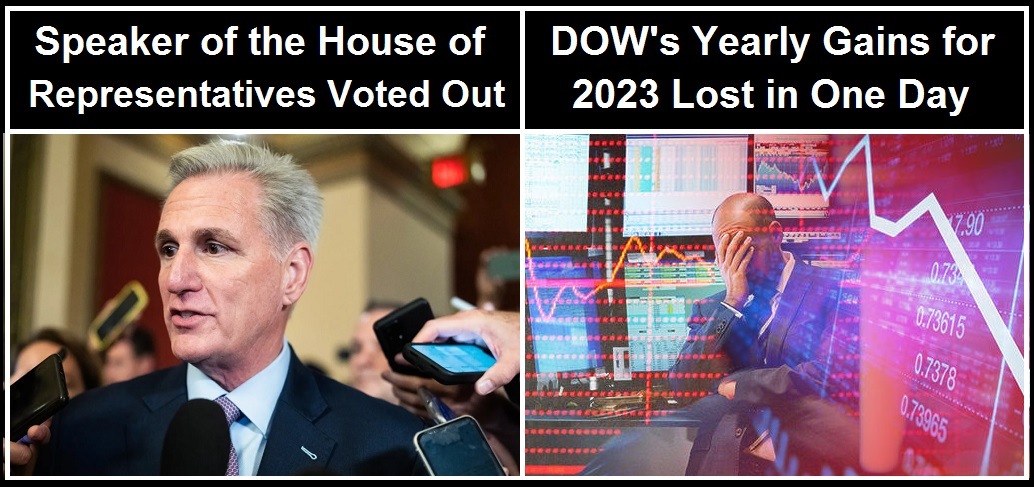
In the U.S. Congress, Speaker of the House of Representatives Kevin McCarthy was removed from his position by a vote of his fellow members of the House of Representatives, something that has never happened in the history of the United States until today.
Shortly before McCarthy lost his position as Speaker of the House of Representatives, the U.S. Stock Market closed with the Dow Jones Industrial Average losing over 400 points, its highest loss since the banking collapses back in March, giving up all of its gains on the year.
The huge loss in the Stock Market today is being blamed on rising Treasury yields.
Major U.S. stock indexes closed sharply lower on Tuesday as a surge in Treasury yields continued, pushing long-term benchmark rates to their highest level since the fall of 2007.
The Dow Jones Industrial Average shed about 430 points, or 1.3%, ending near 33,003, according to preliminary FactSet data. That marked the blue-chip index’s biggest daily drop since the March banking crisis, according to Dow Jones Market Data. It also erased the Dow’s yearly gain, with the index now down 0.4% in 2023.
Other equity gauges also skid Tuesday, with the S&P 500 index ending down 1.4% and the Nasdaq Composite Index closing 1.9% lower. Stocks have been under pressures from the continued climb in longer 10-year and 30-year Treasury yields since the Federal Reserve signaled rates could stay high through 2024 and beyond at its September meeting. (Source.)
The Fed’s problem and the U.S. Treasury’s problem just became the problem of every American who has their retirement savings stuffed in the stock market via 401(k) plans or direct holdings.
[S]tocks do not like yields on the 10-year U.S. Treasury note rising to a level that is competitive with the return on stocks – especially since the principal on the Treasury note is guaranteed at maturity while the principal in the stock market is guaranteed to take one’s stomach on a roller coaster ride.
Last evening, the 10-year U.S. Treasury note had spiked to a yield of 4.682 percent, its highest yield since 2007. As of early this morning, its yield had spiked even higher, to 4.738 percent, making a 5 percent handle increasingly possible.
In response to the competition from Treasury securities and chaos in running the U.S. government, stocks have sold off in 8 of the last 10 trading sessions through Monday.
On September 21, the U.S. Treasury’s Assistant Secretary for Financial Markets, Josh Frost, delivered a speech in which he indicated that “we expect that further gradual increases in coupon auctions sizes will likely be necessary in future quarters.”
Frost also indicated that the Treasury is, apparently, going to join the thinking of the wizards at the Wall Street mega banks who prop up their banks’ share prices by spending tens of billions of dollars a year buying back their own stock.
The Fed, as you might recall, called its Treasury buyback program Quantitative Easing or QE for short. The Fed is now attempting to whittle itself out of the $9 trillion mess to its balance sheet that resulted from that radical experiment by shrinking its balance sheet. So far, it’s whittled away about $1 trillion.
Which means that a new buyer of last resort for Treasury securities is needed. But should that really be the same entity that is issuing the debt in the first place? If the Treasury has the money to buy back its debt, why is it issuing the debt? (Full article.)
One analyst wrote that one major source of rising U.S. bond yields is China, who has sold $300 billion worth of US Treasurys since 2021, including $40 billion since April 2023.*
As to who is going to replace McCarthy as Speaker of the House of Representatives, who is second in line to take over as President of the United States, after the Vice President, is anybody’s guess at this point.
As rumors spread over the weekend that McCarthy could lose his position as Speaker of the House, no names had surfaced yet as to who his replacement could be as of today. It took 15 rounds of voting back in January to install McCarthy as Speaker of the House, and Donald Trump’s name started showing up in the latter ballots cast. Could we see a stronger effort this time to bring back Trump?
But it would also not be surprising to see some of the older Republicans reach out across the aisle to Democrats, which could even result in a Democrat taking over as the House Speaker, such are the crazy times we now live in.
Whatever happens, we are much closer today to a total economic and societal collapse here in the United States, than we were yesterday. More banks collapsing seems like a certainty at this point.
Just tonight I learned that over 11,000 workers received “12A Exemptions” during this period from an Official Information Act request to Te Whatu Ora (Health New Zealand), the health service agency that absorbed the District Health Boards and manages all public health services nationwide.
I am highlighting an excerpt from the response, as follows:
From 13 November 2021 to 26 September 2022, a total of 478 applications for Significant Service Disruption exemption (SSD) were received. 103 applications were granted, covering approximately 11,005 workers.
The Significant Service Disruption criteria are outlined here.
I personally know of two psychiatrists who refused to be inoculated at all, and another who, after having received two jabs, refused any further. All were terminated from their employment, in a country with a catastrophically severe shortage of competent psychiatrists no less.
I know of another healthcare worker who developed a severe adverse reaction to the first inoculation and consulted a cardiologist who recommended and applied for a medical exemption. The request for an exemption was declined by then-Director General of Health, Ashley Bloomfield. I know personally others too — midwives, nurses, pharmacists — who lost their jobs because they believed the jabs were either unnecessary or dangerous or both.
With this new information, I now wonder how many of the ‘chosen’ 11,000 were doctors, and if so, why these doctors didn’t raise their voices against the program of coercive inoculation? Had a fraction of them done so, the entire lawlessly intrusive governmental program would have been stopped in its tracks.
I wonder who decided that these 11,000 workers could get off jab-free while my friends and many others suffered the consequences of their conscientious choice? Why were some people deemed ‘essential’ and others not?