Retired child and adolescent psychiatrist and American expatriate in New Zealand. In 2002, I made the difficult decision to close my 25-year Seattle practice after 15 years of covert FBI harassment. I describe the unrelenting phone harassment, illegal break-ins and six attempts on my life in my 2010 book The Most Revolutionary Act: Memoir of an American Refugee.
The Etruscans adopted the Greek alphabet* to their spoken language around 700 BC and were instrumental in spreading written language throughout Europe. Etruscan was last spoken around the 1st century AD and the last published Etruscan text was an appeal to attack the barbarians who were invading Rome.
Etrucan is the only non-IndoEuropean language that survives from ancient Italy. Archeologists have discovered roughly 13,000 Etruscan texts. There are all religious, commercial, political (mainly records of popular assembly deliberations); educational documents or captions for images and sculptures and geologies inscribed on tombs. The Etruscans only shared stories and poems orally.
The Etruscan language was “inflected” like Latin and Greek, which meant words had different endings depending on their use in a sentence. Etruscan documents were writing on terra cotta slabs, gold and bronze plaques. Legal contracts were written on either bronze or stone (which was often melted down to be used elsewhere).
The Romans, who learned to write from the Etruscans, spread their written language across Europe. Celtic script and the Germanic Rume alphabet (used between 150-1100 AD) are also derived from Etruscan. German speakers adopted the Roman alphabet around 1100 AD.
Written Etruscan was a kind of shorthand. Etruscan texts were meant to be read outloud and embellished by the reader.
Linguists learned to decipher Etruscan from bilingual Latin/Etruscan documents. However there are still numerous Etruscan words yet to be deciphered.
*The Greeks derived their alphabetic from the Phoenicians, the first Western civilization to develop alphabetic writing. The first Greek documents are written from right to left, like the Phoenician language. Etruscan was adopted from the Greeks before they began writing from left to right.
Bill Eisenman has always fished. “Growing up, we ate whatever we caught — catfish, carp, freshwater drum,” he said. “That was the only real source of fish in our diet as a family, and we ate a lot of it.”
Today, a branch of the Rouge River runs through Eisenman’s property in a suburb north of Detroit. But in recent years, he has been wary about a group of chemicals known as PFAS, also referred to as “forever chemicals,” which don’t break down quickly in the environment and accumulate in soil, water, fish, and our bodies.
The chemicals have spewed from manufacturing plants and landfills into local ecosystems, polluting surface water and groundwater, and the wildlife living there. And hundreds of military bases have been pinpointed as sources of PFAS chemicals leaching into nearby communities.
Researchers, anglers, and environmental activists nationwide worry about the staggering amount of PFAS found in freshwater fish. At least 17 states have issued PFAS-related fish consumption advisories, KFF Health News found, with some warning residents not to eat any fish caught in particular lakes or rivers because of dangerous levels of forever chemicals.
With no federal guidance, what is considered safe to eat varies significantly among states, most of which provide no regulation.
Eating a single serving of freshwater fish can be the equivalent of drinking water contaminated with high levels of PFAS for a month, according to a recent study from the Environmental Working Group, a research and advocacy organization that tracks PFAS. It’s an unsettling revelation, especially for rural, Indigenous, and low-income communities that depend on subsistence fishing. Fish remain a large part of cultural dishes, as well as an otherwise healthy source of protein and omega-3s.
“PFAS in freshwater fish is at such a concentration that for anyone consuming, even infrequently, it would likely be their major source of exposure over the course of the year,” said David Andrews, a co-author of the study and researcher at EWG. “We’re talking thousands of times higher than what’s typically seen in drinking water.”
Dianne Kopec, a researcher and faculty fellow at the University of Maine who studies PFAS and mercury in wildlife, warned that eating fish with high concentrations of PFAS may be more harmful than mercury, which long ago was found to be a neurotoxin most damaging to a developing fetus. The minimal risk level — an estimate of how much a person can eat, drink, or breathe daily without “detectable risk” to health — for PFOS, a common PFAS chemical, is 50 times as low as for methylmercury, the form of mercury that accumulates in fish, according to the federal Agency for Toxic Substances and Disease Registry. But she emphasized, “They’re both really nasty.”
Just like mercury, PFAS bioaccumulate up the food chain, so bigger fish, like largemouth bass, generally contain more chemicals than smaller fish. Mercury is more widespread in Maine, but Kopec said PFAS levels near contamination sources are concerningly high.
‘Fishing Is a Way of Life’
The Ecology Center, an environmental group in Michigan, educates anglers about consumption advisories and related health impacts. But Erica Bloom, its toxics campaign director, noted that for many people out on the river, “fishing is a way of life.”
Eisenman participated in an Ecology Center community-based study published this year, which tested fish from Michigan’s Huron and Rouge rivers for PFAS that poured out from auto and other industry contamination. Across 15 sites, anglers caught 100 fish samples from a dozen species, and what they found scared him.
“There were no sites that registered zero,” said Eisenman, noting that some had significantly higher levels of chemicals than others. “You need to make a value judgment. I’m going to still eat fish, but I don’t know if that’s a good thing.”
Last year, the National Academies of Sciences, Engineering, and Medicine published a sweeping federally funded report that associated PFAS exposure with health effects like decreased response to vaccines, cancer, and low birth weight.
There are thousands of PFAS, or perfluoroalkyl and polyfluoroalkyl substances, many of them used to make both household and industrial products stain-resistant or nonstick. They’re in fire-retardant foam used for decades by fire departments and the military, as well as in cookware, water-repellent clothing, carpets, food wrappers, and other consumer goods.
In late October, the EPA added hundreds of PFAS compounds to its list of “chemicals of special concern.” This will require manufacturers to report the presence of those PFAS chemicals in their products — even in small amounts or in mixtures — starting Jan. 1.
About 200 miles north of Detroit, in rural Oscoda, Michigan, state officials have warned against eating fish or deer caught or killed near the former Wurtsmith Air Force Base because of PFAS contamination.
“We have a 9-mile stretch of river system in which the state determined way back in 2012 that it wasn’t safe to even eat a single fish,” said Tony Spaniola, an advocate for communities affected by PFAS. He owns a home across a lake from the shuttered military site.
In Alaska, several lakes are designated catch and release only because of PFAS contamination from firefighting foam. A study by the U.S. Geological Survey and Pennsylvania Department of Environmental Protection released in August led to a warning to avoid eating fish from the Neshaminy Creek watershed.
Nationwide, use of firefighting foam and other PFAS-loaded products by the Department of Defense alone has led to the contamination of at least 359 military bases and communities that need to be cleaned up, with an additional 248 still under investigation as of June.
But many lakes and streams haven’t been tested for PFAS contamination, and researchers worry far more sites hold fish laced with high levels of PFAS.
Federal efforts to curb PFAS exposure have focused mostly on drinking water. Earlier this year, the EPA proposed the nation’s first PFAS drinking water standards, which would limit contamination from six types of chemicals, with levels for the two most common compounds, PFOA and PFOS, set at 4 parts per trillion.
But the EWG researchers found that one serving of fish can be equivalent to a month’s worth of drinking water contaminated with 48 parts per trillion of PFOS.
Store-bought fish caught in the ocean, like imported Atlantic salmon and canned chunk tuna, appear to have lower PFAS levels, according to FDA research.
A biomonitoring project focused on the San Francisco Bay Area’s Asian and Pacific Islander community measured PFAS levels in the blood and found higher amounts of the compounds compared with national levels. The researchers also surveyed participants about their fish consumption and found that 56% of those who ate locally caught fish did so at least once a month.
Eating a fish’s fillet is often recommended, as it accumulates fewer chemicals than organs or eggs, but many participants reported eating other parts of the fish, too.
California is one of many states with no fish consumption advisories in place for PFAS. Jay Davis, senior scientist at the San Francisco Estuary Institute, said that’s in part because of “limited monitoring dollars” and a priority on legacy chemicals like PCBs as well as mercury left over in particularly high concentrations from gold and mercury mining.
Wesley Smith, a senior toxicologist with California’s Office of Environmental Health Hazard Assessment, said the state is reviewing the latest scientific literature but needs more data to develop an advisory that is “neither too restrictive nor too permissive.”
States like New Hampshire, Washington, Maine, and New Jersey have some of the most protective guidance, while other states, such as Maryland and Michigan, lag when it comes to designating fish unsafe to eat.
Advisory levels for at-risk groups — such as children and women of childbearing age — are usually lower, while “do not eat” thresholds for the general population range from 25.7 parts per billion in New Hampshire to 300 ppb in Michigan, 408 ppb in Maryland, and 800 ppb in Alabama.
“That’s wicked outdated to have levels that high and consider that safe for folks to eat,” said Kopec, the University of Maine researcher.
Though it is no longer made in the U.S., PFOS remains the most commonly found — and tested for — PFAS chemical in fish today.
The primary maker of PFOS, 3M, announced it would begin phasing the chemical out in 2000. This year, the company said it would pay at least $10.3 billion to settle a class-action lawsuit brought by public water system operators. But in July, attorneys general from 22 states asked the court to reject the settlement, saying it was insufficient to cover the damages.
The military first documented health concerns surrounding PFAS chemicals in the 1970s yet continued to use firefighting foam made with them. Mandated by Congress, the Defense Department was required to stop buying retardant containing PFAS by Oct. 1 and phase it out altogether by 2024. A recently published study linked testicular cancer among military personnel to PFOS.
Tackling Pollution at the Source
Pat Elder, an activist and director of the environmental advocacy group Military Poisons, has tested water for PFAS up and down the East Coast, including in Piscataway Creek, which drains from Joint Base Andrews, the home of Air Force One.
In 2021, after testing fish from Piscataway Creek, Maryland officials released the state’s sole PFAS fish consumption advisory to date. But Elder worries Maryland has not gone far enough to protect its residents.
“People eat the fish from this creek, and it creates an acute health hazard that no one seems to be paying attention to,” Elder said.
Since then, Maryland’s Department of the Environment has conducted more fish monitoring in water bodies near potential PFAS sources, as well as at spots regularly used by subsistence anglers, said spokesperson Jay Apperson. He added that the state plans to put out more advisories based on the results, though declined to give a timeline or share the locations.
Part of the challenge of getting the word out and setting location-specific consumption advisories is that contamination levels vary significantly from lake to lake, as well as species to species, said Brandon Reid, a toxicologist and the manager of Michigan’s Eat Safe Fish program.
Michigan set its screening values for fish consumption advisories in 2014, and the state is in the process of updating them within the next year, Reid said.
Russian President Vladimir Putin meeting with General Valery Gerasimov at the headquarters of the Russian armed forces in Rostov-on-Don in October. / Photo by Kremlin Press Office/Anadolu via Getty Images.
Seymour Hersh
It’s been a rough couple of months for President Joe Biden and his feckless foreign policy team. Israel is going its own way in its war against Hamas, with renewed bombing in Gaza, and the American public is bitterly divided, all of which is reflected in polls that continue to be unfavorable to the White House.
Meanwhile, the president and his foreign policy aides have also been left on the outside as serious peace talks between Russia and Ukraine have rapidly gained momentum.
“Everyone in Europe is talking about this”—the peace talks—an American businessman who spent years dealing with high-level Ukrainian diplomatic and military issues in the government told me earlier this week. “But there are lots of questions between a ceasefire and a settlement.” The veteran journalist Anataol Lieven wrote this week that the battlefield situation in Ukraine and thus “a ceasefire and negotiations for a peace settlement are becoming more and more necessary for Ukraine.” He said that it was “exceptionally difficult” for the Ukrainian government headed by Volodymyr Zelensky to agree to talks, given its repeated refusal to negotiate with Russian President Vladimir Putin.
The driving force of those talks has not been Washington or Moscow, or Biden or Putin, but instead the two high-ranking generals who run the war, Valery Gerasimov of Russia and Valery Zaluzhny of Ukraine.
The October 2023 war, which kicked off with the Palestinian resistance’s Al-Aqsa Flood operation and Israel’s brutal assault on Gaza, has extended to Baghdad, with Iraqi resistance factions launching drone and missile strikes on US bases after warning Washington to desist in its military support of Tel Aviv.
The US has now responded by targeting Iraq’s Popular Mobilization Units (PMU) headquarters – killing thirteen of its members, injuring countless others, and heightening tensions between Baghdad and Washington.
These strikes inside Iraq have strongly reignited pre-existing calls to expel US military forces from the country. The legal basis for this already exists: in the immediate aftermath of the January 2020 illegal US assassinations of PMU Deputy Leader Abu Mahdi al-Muhandis and Iran’s Quds Force Commander Qassem Soleimani, Iraq’s parliament voted to end the “international coalition” and eject foreign forces from the country.
Safeguarding Iraq’s sovereignty
In September, while in Washington, Iraqi Prime Minister Mohammed Shia al-Sudani told CNN that “Iraq no longer needs combat forces, whether from the United States or from the rest of the coalition countries,” because ISIS “no longer poses a threat.”
It is a theme that is more frequently being voiced by US officials and think tanks, as in this Carnegie Endowment assessment that illustrates clearly why ISIS cannot make a comeback in either Syria or Iraq. On 15 November, US Senator Rand Paul introduced a Congressional bill to remove US troops from Syria, arguing that Americans “have had enough of endless wars in the Middle East (West Asia).”
“Yet, 900 U.S. troops remain in Syria with no vital U.S. interest at stake, no definition of victory, no exit strategy, and no congressional authorization to be there.”
Iraqi lawmaker Ammar al-Shibli tells The Cradle that, today, “Iraqi security forces can manage any internal or external battle, and there is no longer a need for the presence of US forces, especially after ISIS became a thing of the past.”
Following the US strike on PMU troops – who were Iraq’s frontline forces in nearly all the country’s battles against ISIS – Baghdad has strongly condemned the operation as a “dangerous escalation,” a violation of Iraq’s sovereignty, and a violation of international coalition’s stated mission against ISIS on Iraqi soil.
On 22 November, without directly mentioning the US, government spokesman Bassem al-Awadi, announced that:
“The Iraqi government is solely dedicated to enforcing the law and holding violators accountable, a prerogative exclusively within its purview. No party or foreign agency has the right to assume this role, as it contradicts Iraqi constitutional sovereignty and international law.”
This statement provoked anger amongst political parties and swathes of supporters of the resistance factions, as it did not rise to the level of the actual response to US crimes in Abu Ghraib and Jurf al-Sakhar.
A senior Iraqi official, who declined to be named, tells The Cradle that his government is “being blackmailed by the United States through the US ambassador to Iraq, Alina Romanowski, who has carried several messages from Washington to this effect.”
He says the US has “threatened to cut relations and prevent the arrival of funds — specifically the US dollar — to Iraq,” referring to an economic blockade reminiscent of the one Washington imposed on Iraq between 1991 and 2003.
These threats have been conveyed to political and armed factions either directly or through intermediaries. Some of the Iraqi resistance groups have backed off, but notable factions like Kataib Hizbullah, Ansar Allah al-Wafa, Harakat al-Nujaba, and Kataib Sayyid al-Shuhada have rejected the various ultimatums from Washington.
Mounting calls for US withdrawal
As Iraqi political analyst Ali al-Shammari tells The Cradle, “the so-called international coalition is an American lie to continue suspicious activity to strengthen US influence in the region, and for the Americans to return to Iraq again after their withdrawal in 2011 in implementation of the Strategic Framework Agreement.”
Since 17 October, the Iraqi resistance factions have entered into a very real war against US military forces because of Washington’s support for Israel’s unprecedented and wildly indiscriminate assault on Gaza. The factions have also targeted illegal US troops based in Syria.
On 21 November, in response to a US drone that killed a member of the PMU on the same day, the infamous Ain al-Assad air base in western Iraq was targeted for the first time by a short-range ballistic missile. Later that evening, US forces responded by shelling PMU headquarters in the Jurf al-Sakhar area, southwest of Baghdad.
The bombing of the PMU headquarters has deeply shocked political and popular circles, particularly given the fact that the PMU is part of Iraq’s official security apparatus and operates under the command of the prime minister and commander-in-chief of the country’s armed forces.
The head of the Nebni political coalition and Badr forces commander Hadi al-Amiri has called for the withdrawal of US forces from Iraq “immediately,” telling The Cradle that “the Iraqi parliament’s decision to withdraw US forces in 2020 is clear and not open to interpretation.”
“The will and laws of Iraq must be respected, as there is no longer a legal justification for the presence of these forces. Iraqi forces no longer need foreign training. We have local academies and trainers capable of this. The excuse of advisers is an American lie.”
Moreover, there are legal implications for the international coalition forces in Iraq after the US bombed the PMU barracks. According to law expert Muayad al-Musawi “by bombing an official Iraqi security force, US forces have legally reclassified themselves as invading forces. No occupying power has the right to justify its attacks against a legitimate force that defends its country.”
The resistance will respond
On 22 November, US Central Command in Iraq announced that its forces “conducted discrete precision strikes against two facilities in Iraq. The strikes were in direct response to the attacks against US and Coalition forces by Iran and Iran-backed groups, including the one in Iraq on November 21, which involved the use of close-range ballistic missiles.”
Qais al-Khazali, secretary-general of Asaib Ahl al-Haq, has condemned the “brutal and treacherous” US bombing operation against Iraqi forces and called for legal action against the US military in accordance with international law, the expulsion of their troops from Iraq, and the restoration of full sovereignty over Iraqi airspace – with no immunity for US forces.
Hussein Munis, head of the Rights movement, emphasized that battles against ISIS like Abu Ghraib and Jurf al-Sakhar — which the PMU liberated in 2014, marking the most significant victory against ISIS in Iraq — only serve to highlight the need to end the presence of international coalition forces, particularly US ones, in Iraq. Munis accuses Washington of employing its military as an occupation force that disregards Iraqi sovereignty – one that has transformed Iraq into a battlefield for West Asian rivalries and a regional base from which the US spies on neighboring countries.
The US strikes on the PMU have moved others to take direct action. Saud al-Saadi, a member of parliament for the Rights bloc, has launched a drive to collect signatures for an extraordinary parliamentary session to prosecute the US for its actions in Iraq. He also says it is high time the Iraqi government implemented the parliament’s decision to expel American forces from Iraqi soil.
There is an ugly history of US strikes on Iraqi security forces, including the PMU, that dates back to 2014. Over the next few years, there were dozens of targeted attacks by the international coalition aimed at diminishing Iraqi military capabilities and its weapons stores – whether by bolstering Iraq-based terrorist forces like Al Qaeda and ISIS, or through the direct military targeting of Iraqi security units.
The list of these US and coalition anti-Iraq operations is a long and shocking one, and some bear detailing.
On 19 October, 2014, US warplanes bombed Iraq’s Joint Operations Command and the PMU to prevent them from advancing and clearing out ISIS militants in the areas of Al-Rafoush, Al-Mahasna, and Bustan Al-Chalabi located in the Duwailiba axis, west of Baghdad, killing the regiment commander and eight of his soldiers.
On January 18, 2015, US aircraft bombed the headquarters of the Iraqi Army’s 52nd Brigade with Popular Mobilization gatherings in Baiji, killing 80 fighters and wounding dozens. Two months later, on 12 March, US aircraft targeted the Abu Diab area and raided a position of the Iraqi army’s 14th Division, killing fifty more soldiers and wounding dozens more.
On 6 June, 2016, Adnan al-Shahmani, a former member of parliament for the State of Law political party, revealed that international coalition aircraft targeted the headquarters of the 17th Division and the operations site of one of the PMU in Al-Karma, killing six resistance fighters and wounding eight. Three weeks later, US warplanes bombed a joint security force of the army and tribesmen attacking a gathering of 150 ISIS militants in the Hawija Al-Abar area in the center of Al-Manaseer village, south of Fallujah, killing two soldiers and wounding eight. In Tal Afar, on 24 November, a US drone targeted a PMU meeting at the Tal Afar airport headquarters, causing numerous casualties.
In Anbar, near the Iraqi-Syrian border, units of the PMU’s 14th Brigade affiliated with the Sayyid al-Shuhada Brigades, were directly bombed by the US on 7 August, 2017, killing forty troops and wounding others. On 19 June, 2018, the US airforce struck Kataib Hezbollah quarters on the border with Syria, killing 22 fighters and wounding 12 others.
The targeting escalated in 2018, with the bombing of seven PMF weapons depots, including two in the Najaf Sea on 7 June, another in the Seyouf area of Babil on 30 June, and a third west of Karbala on 6 August. The year ended with the targeting of a warehouse in Dujail, south of Salahuddin, on 19 September, and another in Tuz Khurmatu on 2 October. In 2019, shelling targeted Muzna in Baiji district on 6 June, and another near Balad Air Base on 20 August. The results of the investigation into the incident indicated the involvement of Israeli aircraft in the bombing.
After three years of campaigning by the World Council for Health (WCH) and our partners around the world, several countries have recently issued rejection letters or indicated reservations in response to the World Health Organization’s International Health Regulation (IHR) amendments that were adopted in May of last year. The deadline to serve the WHO with notice is 30 November 2023.
Other additional countries have publicly announced an intention to reject the potentially legalised violations of national sovereignty, while still more countries continue to mobilise to protect personal health, freedom and national sovereignty.
While many amendments to the IHR are facing public scrutiny, the most concerning amendment is one that would reduce the number of months countries have to reject IHR amendments from 18 months to 10 months. This change would make the democratic public participation process even more difficult.
Summary of Country Positions
Eleven Members of Parliament in Estonia issued a letter rejecting IHR amendments and the proposed pandemic treaty.
New Zealand’s new coalition government will reserve against proposed amendments to IHR.
Slovakia’s prime minister announced the government will not support strengthening the WHO.
A comprehensive bill by a congressman is gaining traction and public support in the Philippines.
Two South African parliamentarians champion the WHO Withdrawal Bill and mobilise on it.
A Parliamentarian in the Netherlands filed a letter making a reservation due to lack of due process.
Eleven European Union parliamentarians are formally challenging procedural failures in IHR amendments.
Bill HR 79 (to defund and exit WHO) was introduced by United States Congressman Andy Biggs.
Parliamentarians continue advocating to reject IHR amendments and question the WHO in Japan.
The World Council for Health’s twenty-six decentralized Country Councils continue to mobilise against the IHR amendments and the proposed new pandemic treaty. They are also working to withdraw from the WHO and instead work directly with each other for a healthier, more peaceful and self-sufficient world. As a result, these sovereign countries will no longer be influenced by the unelected and undemocratic WHO, keeping them safe from ineffective, harmful and costly lockdowns, and free from ties to Big Pharma and other profiteers.
To understand how conflicts of interest affect the WHO’s ability to make decisions, please see the documentary, Trust WHO.
Call to Action
If your organization or country’s leaders would like to engage WCH on why states worldwide should reject the upcoming 2024 amendments to the International Health Regulations (IHR) and the proposed Pandemic Accord please contact policy@worldcouncilforhealth.org.
Barry Young appears in Wellington District Court. (Source: 1News)
One News
A man accused of dishonestly accessing Te Whatu Ora Health New Zealand vaccination data will be bailed tomorrow.
Barry Young, 56, is charged with accessing a computer system for dishonest purposes. He didn’t enter a plea when he appeared in the Wellington District Court today.
He was arrested yesterday after the health ministry laid a complaint with police following the alleged “unauthorised disclosure and misuse of data by one of its staff members”, chief executive Margie Apa said.
It’s alleged the data was published on an overseas website.
Te Whatu Ora said the data appeared to be anonymised. It had been granted an injunction by the Employment Relations Authority preventing publication of the data.
After appearing before Judge Andrew Nicholls this morning, Young was ordered to reappear this afternoon so bail could be discussed. He was granted bail from 1pm tomorrow.
‘Extremely concerning’ – Health Minister responds
In a statement, Health Minister Shane Reti told 1News while the incident is an “operational and staffing matter for Te Whatu Ora”, the allegations are “extremely concerning”.
The man’s actions have left Te Whatu Ora scrambling to reassure the public the Covid-19 vaccine is safe. (Source: 1News)
“I have made my expectations clear that it must be treated very seriously,” he said.
Reti said he had been briefed on the matter by Apa and her senior leaders, “including over the weekend”.
“The security of health data is of utmost importance. I have requested reassurance around the robustness of the health data protection services, and Te Whatu Ora will report back to me on the results of their investigation,” he said.
“Any suggestion that health data is being misused or misinterpreted on this scale is extremely concerning.”
Reti also requested for support to be made available to the health providers named in the claims.
He continued: “There are many conspiracy theorists out there who unfortunately disseminate harmful disinformation, however as Minister and as a physician, the public can and should continue to have confidence in vaccines.
“I am reassured by experts confirming that there is no evidence supporting the allegations that have been made.”
Immediately after a 5G tower was erected across the street from his apartment building, a previously healthy 49-year-old Swedish man developed concerning cardiac symptoms and other issues that dissipated when he took refuge in an apartment without 5G, according to a new case study published in the Journal of Community Medicine & Public Health.
Within a week of a 5G cell tower being activated near his home, a 49-year-old Swedish man developed severe heart symptoms that forced him to flee his home, according to a new peer-reviewed case study.
The case study, published Nov. 13 in the Journal of Community Medicine & Public Health, reported that the man’s symptoms immediately lessened when he took refuge in an apartment without 5G radiation. But each time he returned to his original home to collect his belongings, the symptoms returned.
This is the fifth scientific report by Dr. Lennart Hardell, a world-leading scientist on cancer risks from radiation, and Mona Nilsson on the human health effects of real-life 5G radiofrequency (RF) radiation.
“This study further strengthens the findings of our previous case studies, which consistently showed 5G caused very high microwave [or RF] radiation exposure rapidly provoked the onset of severe symptoms typical of ‘microwave syndrome’ [sometimes called ‘RF sickness’].”
According to Nilsson, the 5G rollout is a “huge scandal” because it’s “forcing people to be exposed to very high levels of pulse-modulated 5G radiation in their own homes without their informed consent and most importantly without any studies showing that it is not harmful.”
“It is about time to halt the roll-out and dismantle 5G because, from all that we know this far, 5G is dangerous to human health and there is nothing to show that it is not harmful,” Nilsson said.
Severe symptoms came on swiftly
The new case study reported on the health experiences of a previously healthy man after 5G infrastructure was installed near where he and his adolescent daughter lived.
In November 2022, a 5G tower was deployed on a building rooftop 20 meters from the man’s apartment, with its antennae directed toward his apartment.
Prior to the 5G antennae, there had been 3G/4G infrastructure on the roof of the building since 2013, but it was placed farther away from the man’s apartment, Hardell and Nilsson said.
Upon deployment of the 5G antennae, the man “rather immediately” began experiencing numerous health problems including chest pain, severe headaches, dysesthesia (abnormal sensations), loss of immediate memory, transitory high pulse, irregular pulse and burning or lancinating (piercing or stabbing) pain on the skin of his hands and arms.
“It became unbearable [for him] to stay in the apartment and he even feared for his life due to the severity of the experienced health effects,” Hardell and Nilsson said.
The daughter complained of headaches and sleep problems.
One week after the 5G deployment, the man and his daughter relocated to a different apartment with much lower levels of RF radiation.
The man completed a questionnaire about the symptoms he experienced in October 2022, before the 5G deployment, in November 2022, when exposed to 5G and in May 2023, when living in his new apartment without 5G radiation.
He said his symptoms quickly abated when he left the apartment and quickly returned each time he returned to gather more of his personal belongings.
Hardell and Nilsson noted that the man’s symptoms when exposed to 5G were “typical” for microwave syndrome:
“Headache, sleeping problems and effects on the heart are well documented and reported repeatedly in studies on health effects due to exposure to microwave/RF radiation.”
5G pulsed radiation ‘more hazardous’ than continuous radiation
Hardell and Nilsson measured the RF radiation levels in the vacated apartment.
5G uses pulsed RF radiation signals which may be “more hazardous” than non-pulsed, or continuous, signals, Hardell and Nilsson said.
This is because cellular processes are highly sensitive to fluctuations in the electromagnetic environment of the cell. Indeed, a 2021 scientific review showed that pulsed RF radiation is twice as bioactive as continuous radiation.
Hardell and Nilsson’s highest reading was more than 3,180,000 microwatts per square meter (μW/m2) — the highest maximum value that the meter they used could measure — so the actual radiation may have been even higher, Hardell and Nilsson said.
“However, the measured levels are far below the recommended ICNIRP [International Commission on Non-Ionizing Radiation Protection] 2020 limits for the 5G frequency,” they said. “For these frequencies, ICNIRP recommends [a] maximum 10,000,000 μW/m2 averaged over 30 minutes.”
Hardell and Nilsson concluded that the case study shows that “5G at levels far below the ICNIRP limits may cause severe health effects in [a] short time.”
ICNIRP is a “self-appointed” private organization based in Germany that has “worldwide influence and dominance” regarding which scientific studies on negative health effects from RF radiation are taken into account, Hardell and Nilsson said.
ICNIRP’s exposure guidelines — which serve as reference values for many governments when setting their exposure limits — are based on the idea that RF radiation is harmful to humans only at levels high enough to heat body tissue.
Hardell and Nilsson wrote, “Their [ICNIRP’s] guidelines are based on evaluations that have rejected non-thermal effects, despite growing evidence of a range of harmful effects well below the ICNIRP levels.”
ICNIRP, FCC ‘protecting the telecommunications industry’
Nilsson said she hopes the study will raise awareness about the negative health impacts of 5G.
“I want the public to know that they are being exposed in their own homes to levels of microwave radiation that have never been shown to be safe for chronic exposure,” she said, adding:
“Scientists and medical doctors have for years warned about serious potential health effects from 5G and that 5G would cause a high increase in microwave exposure — which is confirmed by our studies.
Meanwhile, the RF radiation exposure limits accepted by most governments — including the U.S., via the Federal Communications Commission (FCC) — are allowing the rollout of 5G because the limits are set too high, she said.
“It is clear that ICNIRP and governmental agencies like the FCC are protecting the telecommunications industry,” Nilsson added.
Their limits protect only against acute effects from radiation so intense that it heats the body and are inadequate for protecting the public against harm from chronic exposure to lower levels of radiation, she said.
“Not only have the FCC limits not been updated in over 20 years, but as the U.S. Court of Appeals for the D.C. Circuit held in CHD’s landmark win against the FCC in 2021, the FCC failed to take into consideration non-cancer causing adverse health effects of RF radiation, the environmental threats, and the particular impact of RF radiation on children.
“It is time the FCC and other standard-setting bodies take the hundreds of studies, like this one, into consideration and do their job to protect the public and the environment, rather than big industry.”
Israeli Prime Minister Benjamin Netanyah [File: Abir Sultan/Pool via AP Photo]
Al Jazeera
An emergency order from Israel’s justice minister following the events of October 7 had put the case on pause.
Israeli Prime Minister Benjamin Netanyahu is due to face the resumption of his long-running trial on numerous corruption charges, after a pause due to the war in Gaza.
A court in Jerusalem is set to start hearing the case, which is focused on several corruption charges against Netanyahu, on Monday, according to reports in the Israeli media. The trial was paused on an emergency order from the country’s justice minister following Hamas’s attack on Israel on October 7.
Netanyahu has been charged with fraud, bribery and breach of trust in three cases filed in 2019, known as Case 1000, 2000 and 4000.
In Case 1000, the prime minister, along with his wife Sara, is accused of receiving gifts, including champagne and cigars, from prominent Hollywood producer Arnon Milchan and Australian billionaire businessman James Packer in return for political favours.
Bribery charges carry a sentence of up to 10 years in jail and/or a fine. Fraud and breach of trust carry a prison sentence of up to three years.
Israel’s longest-serving prime minister has denied any wrongdoing. He claims to be the victim of a politically orchestrated “witch-hunt” by rivals and the media to remove him from office.
The trial got under way in May 2020 and has been repeatedly delayed over defence and prosecution disputes and the COVID-19 pandemic.
Meanwhile, Netanyahu has been accused of using the legislation to try to circumvent his legal problems.
Amid the prime minister’s controversial plans to overhaul the judicial system, Israel had been mired in months of protests ahead of the October 7 attacks.
Critics have said the proposed changes would politicise the judiciary and compromise its independence, foster corruption and harm Israel’s economy.
Netanyahu has defended the push and dismissed the protests, stating that he aims to restore a proper balance between the three branches of government.
To anyone who tracks the efforts of environmentalists, their policies often have an ulterior motive. They neither result in a better society nor do they produce better habitats. Their policy preferences also do not consider how using the land improves the land for man and wildlife. Instead, many environmentalists advocate for policies at the expense of farmers, miners, and others who create usable, tangible, societal benefits from the land. This often leaves observers to wonder: what are environmentalists really after?
The answer is power and money. It turns out, that the Securities and Exchange Commission (SEC) and the New York Stock Exchange (NYSE) are quietly working on a rule that may prove this ulterior motive.
On September 29, the SEC, at the request of the NYSE, proposed a rule that would create an entirely new type of company called a Natural Asset Company (NAC). NACs, according to the Proposed Rule, “hold the rights to ecological performance.” These companies would be given license to control lands, both public and private, and would be required not to conduct any “unsustainable activities, such as mining, that lead to the degradation of the ecosystems.” In effect, this means that these companies would somehow seek to profit off the lands without using the lands. Whatever they do, it must be “sustainable.”
How might a company make control of land profitable while also not using the land? The method is admittedly confusing, perhaps intentionally. They profit from “ecological performance” such as “conservation, restoration, or sustainable management.” These NACs would quantify and monetize these natural outputs (such as air or water). The best comparison would be using the air we breathe as a cryptocurrency of sorts. And, these natural assets that collectively belong to all of us would now belong to corporations run by what many would call environmental special interests.
Another feature of these new companies is that the land belonging to sovereign nations and private landowners alike can be subject to the control of NACs. Sovereign nations, such as the United States Government, can provide their lands to private investors, including those outside the United States. China, for example, may be able to invest in an NAC and effectively be a stakeholder in our national parks. Russia could assume control of lands currently leased to produce oil and place them off limits for future natural resource development.
The Biden administration has already suggested that it would cede this power to the NACs. The Office of Science and Technology Policy has also created a method to track the values of nature and place those so-called natural assets onto the federal balance sheet. It described this effort as “the transition we need for sustainable growth and development, a stable climate, and a healthy planet.” The Bureau of Land Management and U.S. Fish and Wildlife Service are taking similar steps to facilitate the enrollment of our federal lands into NACs.
Private landowners would, possibly even involuntarily, also be ceding their control of land to NACs, who would in turn require them to use the land in a “sustainable” way. NACs would prevent the productive use of the land, which would hurt the landowners financially, but also reduce the supply of minerals, food, and other goods that come from the land.
Even the traditional methods of regulatory oversight have to change to make NACs possible. Traditional accounting standards would not be used to regulate NACs. Likely, this is because NACs would not withstand scrutiny under generally accepted accounting principles. Rather, a new accounting framework would be created by the Intrinsic Exchange Group (IEG). Not coincidentally, the NYSE is an investor in IEG, and would stand to profit off the IEG’s position as an accounting authority.
This effort would be a huge windfall for the federal government and the NACs. The government would create an entirely new revenue stream that would solely benefit the Davos-type crowd that gives the current administration support. Both Big Government and radical environmentalists stand to benefit.
These efforts intentionally prioritize environmentalism over human flourishing. IEG admits that “producing these essential goods and services and managing resources wisely is as valuable, or perhaps even more valuable, than the food production.”
These gains are far from insignificant. IEG has stated that the NAC economy will be four times larger than today’s entire economy. Handing over the reins of an economy larger than what we have ever known effectively hands over power that large as well.
Power and money. If this Proposed Rule is finalized, private investors who have neither America’s best interests nor the public’s economic well-being in mind, would be handed both. They would control our lands and profit from them at the same time. Handing rights to America’s greatest national treasures – along with the air we breathe – to wealthy special interests may seem like an extravagantly bizarre idea, but we’re now less than 45 days until it could be our reality.
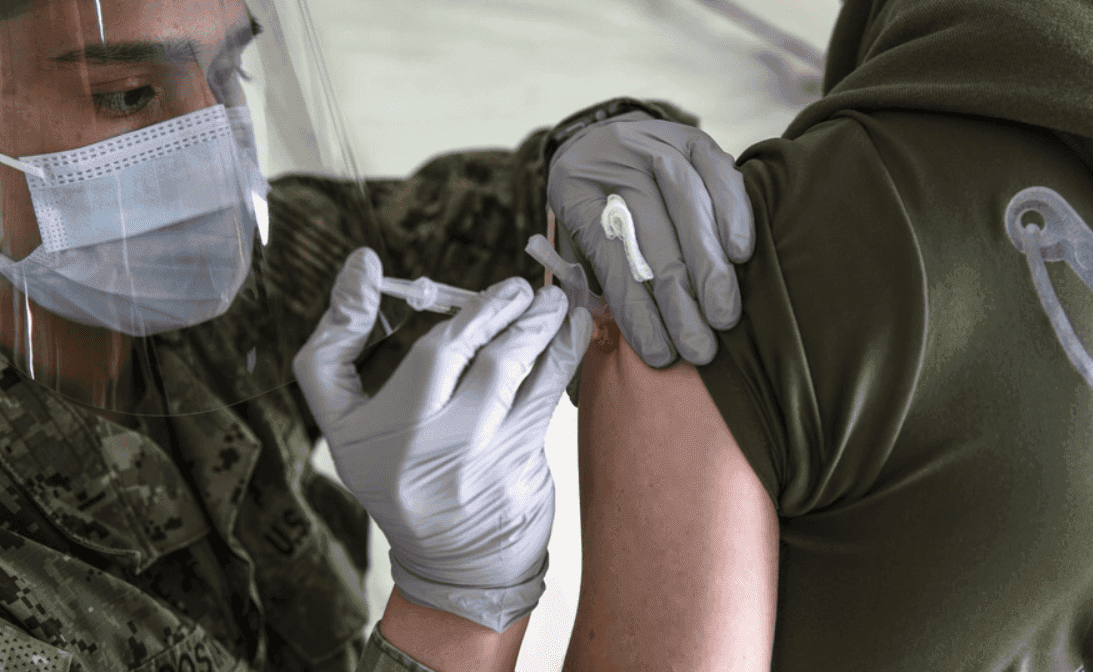
U.S. Marines and sailors with III Marine Expeditionary Force receive COVID-19 vaccines at the U.S. Naval Hospital Okinawa, Camp Foster, Okinawa, Japan, Jan. 12, 2021. (U.S. Marine Corps photo by Cpl. Francesca Landis)
A United States Navy Medical Service Corps whistleblower recently disclosed information from the Department of Defense that reportedly shows a major increase in military pilots with heart-related issues after the implementation of the COVID-19 vaccination.
Navy Medical Service Corps Lt. Ted Macie, who is an active-duty officer, a Navy health administrator, and a medical recruiter, shared the information Monday in a video on X, formerly Twitter. Macie presented his claims over concerns that have repeatedly been emphasized by his wife, Mara Macie, who is currently running for Florida’s 5th Congressional District in the U.S. House of Representatives.
In his video, Ted Macie claimed that the U.S. military has experienced a major increase in heart-related issues with helicopter and fixed-wing pilots. Macie claimed that Defense Department data shows a 937% increase in heart failure, a 152% increase in cardiomyopathy, a 69% increase in ischemic heart disease, a 62% increase in pulmonary heart disease, a 36% increase in hypertensive disease, and a 63% increase in other forms of heart disease compared to the five-year average before 2022.
USA 🇺🇲 Wow, The Insanity Continues 🔥Navy Medical Officer reveals Covax Vaccine Related Heart Issues. These numbers are astounding. "Myocarditis up 151%, Ischemic heart disease up 69%, pulmonary heart disease up 62% and Heart Failure is up 973% 👀👇 pic.twitter.com/KoPb82uUbr
In a statement released on X, Macie’s wife criticized the U.S. government’s treatment of military troops during the COVID-19 pandemic, argued that there is currently a high level of mistrust in the military’s leadership, and demanded accountability as “the only answer.”
“So you may have seen my wife’s recent post, and I want to elaborate on that and give you an example as to why reinstatement, back pay, and apologies isn’t enough,” Macie said in his video on Monday.
Macie told The Gateway Pundit, “The responses to our concerns from the DoD have been memorandums, letters. As in a letter displaying how they confirmed the data but said it was due to the covid virus, even though all the issues start in 2021.”
Macie explained that after meeting with the Chief of Naval Operations and her aid, the only response he has received is that the Defense Medical Epidemiology Database information has been passed on to the Navy Inspector General. “Slow-rolling everything has been the norm, as well as denying anything is happening,” he said.
“Congress’ response has been abysmal,” Macie added. “They’re more interested in going after woke things in the DoD, which, as we all know, is low-hanging fruit that’s of relatively low consequence compared to the death and injury over the illegal shot mandate.”
According to recent information published by the U.S. Army, 97% of active-duty U.S. troops are fully vaccinated against COVID-19, 90% of Army National Guard members are fully vaccinated, and 91% of U.S. Army Reserve members are fully vaccinated.


 Written Etruscan was a kind of shorthand. Etruscan texts were meant to be read outloud and embellished by the reader.

 Russian President Vladimir Putin meeting with General Valery Gerasimov at the headquarters of the Russian armed forces in Rostov-on-Don in October. / Photo by Kremlin Press Office/Anadolu via Getty Images.
 Photo Credit: The Cradle


 By