

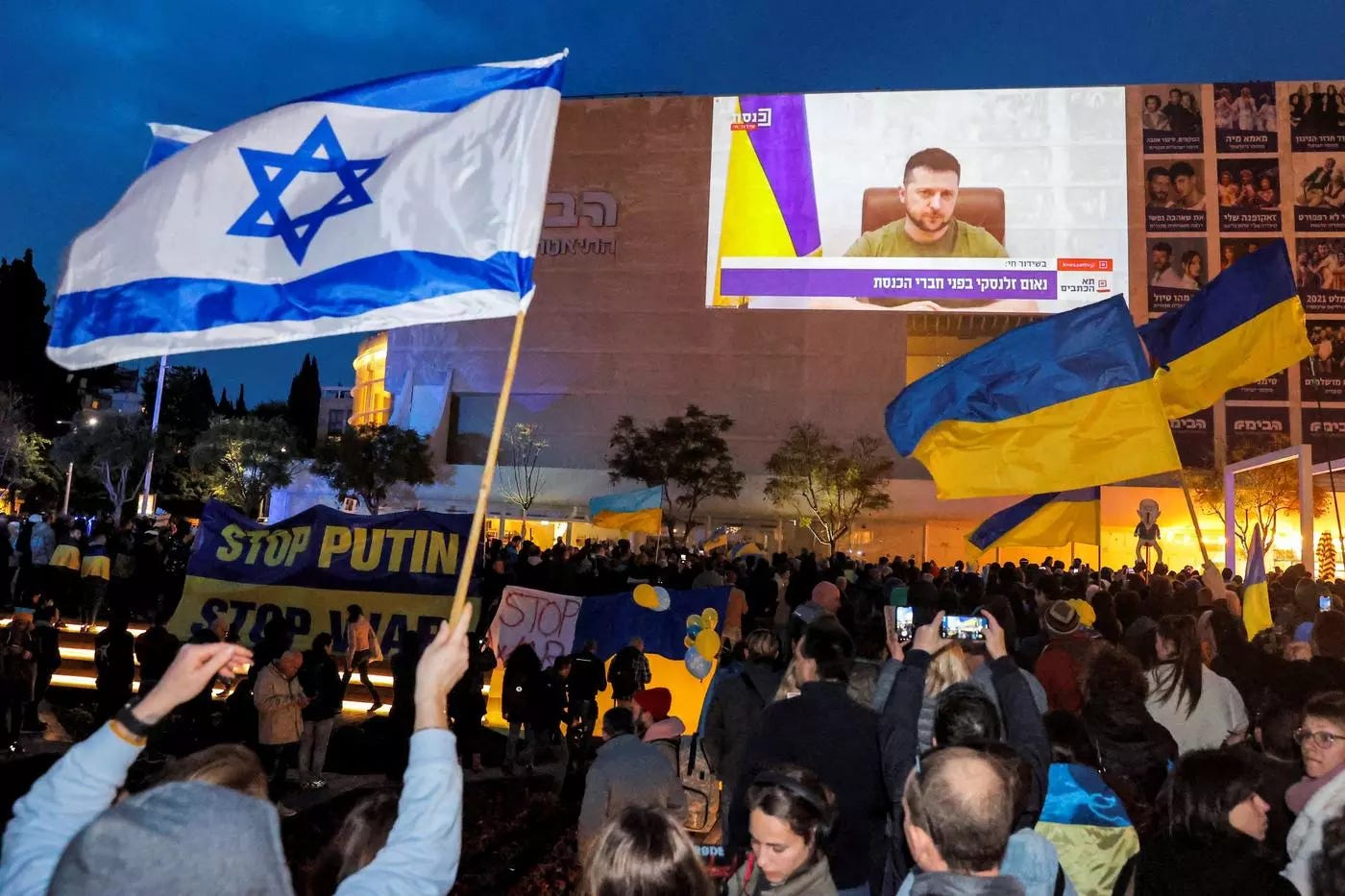
Demonstrators gather at Habima Square in Tel Aviv on 20 March to attend a televised video address by Ukraine’s President Volodymyr Zelensky to the Israeli Knesset (AFP)
Vanessa Beeley
Zionism has deep roots in Ukraine. Jews were a significant element in the settler colony of Odessa.
Along with a range of non Jewish colonizers they settled on land from which Muslims and others had been expelled in the settlement around Khadjibey in 1794. Ukraine, especially Odessa, was a key locus of the rise of the Zionist movement in the twentieth century.
The Revisionist leader Vladimir Jabotinsky hailed from Odessa. Zionist ambivalence about Ukrainian nationalism continues to this day. A few Ukrainian Zionists have warned of the rise of Nazi movements in Ukraine. But more generally, in the Zionist movement today there has been a concerted attempt to minimize the presence and political influence of Nazis in Ukraine.
Zionists are engaging in other words in Nazi apologism.
The much vaunted Ukrainian “counter-offensive” first mooted for the spring of 2023 has thrown up many and varied images and videos of wrecked Western military equipment .
The Russian military has made short shrift of even the supposed superior German Leopard tanks. Western military stocks are running perilously low – even Jens Stoltenberg of NATO has sounded the alarm, saying that “our weapons and ammunition stocks are depleted and need to be replenished, not just in Germany, but in many countries across NATO.
Palestine Declassified. With Vanessa Beeley, Dr. David Miller and Chris Williamson:
Bill Gates, Mosquitoes and Malaria in Texas and Florida

Guy Hatchard
THERE has been a major eruption of fury because malaria has been found in mainland America in Texas and Florida. These are the same places where Bill Gates’s genetically modified mosquitoes have been released in their millions. This was part of an on-going programme funded by Gates for over ten years which is supposed to banish malaria from the world. It hasn’t.
The fun started when Twitter bloggers @TexasLindsay and @TheChiefNerd, among others, began to dig up not just the hype Gates has been promoting for more than ten years promising malaria eradication through genetic modification, but also the scientific concerns voiced at the time. Lo and behold, scientists suggested that the Gates programme would eventually lead to mutated mosquitoes which would promote the spread of malaria more effectively.
You will appreciate that this is relevant to the safety of genetic modification. As such, it was bound to raise the ire of tame ‘fact-checkers’. Associated Press weighed in on cue by splitting hairs. They noted that whilst the Bill and Melinda Gates Foundation ‘supported’ Oxitec (the company releasing modified mosquitoes in Florida and Texas) with money, that doesn’t actually quite fit the definition of ‘funding’ the particular work being done in the US. AP also pointed out that the Florida malaria cases occurred 280 miles away from the site of the experiments, as if mosquitoes can’t fly or ride the wind.
Whatever is going on here, it is not being controlled. A deep dive into the Twitter threads linked above will show you that the Gates mosquito programme has never achieved any of its promised results. No worries, though, Gates is not just funding genetic modification of mosquitoes but also has a bet each way with his malaria vaccines. A win-win investment strategy for the man with a deep interest in population control (and money).
Where could the modification of mosquitoes really be taking us?
I have previously discussed the known possibility of general system collapse following genetic modification and editing, and suggested that this might be related to the record levels of excess deaths in New Zealand. I have pointed out that genetic structures are highly complex, evidenced by the trillions of atomic placements and relationships involved.
There is another way to consider this. These placements and relationships are highly specific, precisely because they support the highly specific capabilities of human physiology and psychology as well as the general stability.
The long-standing notion that replacing or editing targeted genes will not undermine the other genetic characteristics of organisms that make them what they are and enable them to function as such is a belief rather than a matter of science. A belief that increasingly looks misguided and dangerous. Using mRNA vaccines, biotechnology has blundered into the genetic modification of what it is to be human.
As our newspapers characterise the unrest in France as the Brink of Total Anarchy, a sort of general system collapse of society, we might also contemplate what has changed in the last three years that has brought us to the brink? It is not a million miles away from biotechnology.
[…]
The Impact of Satellite EMF Radiation on Climate
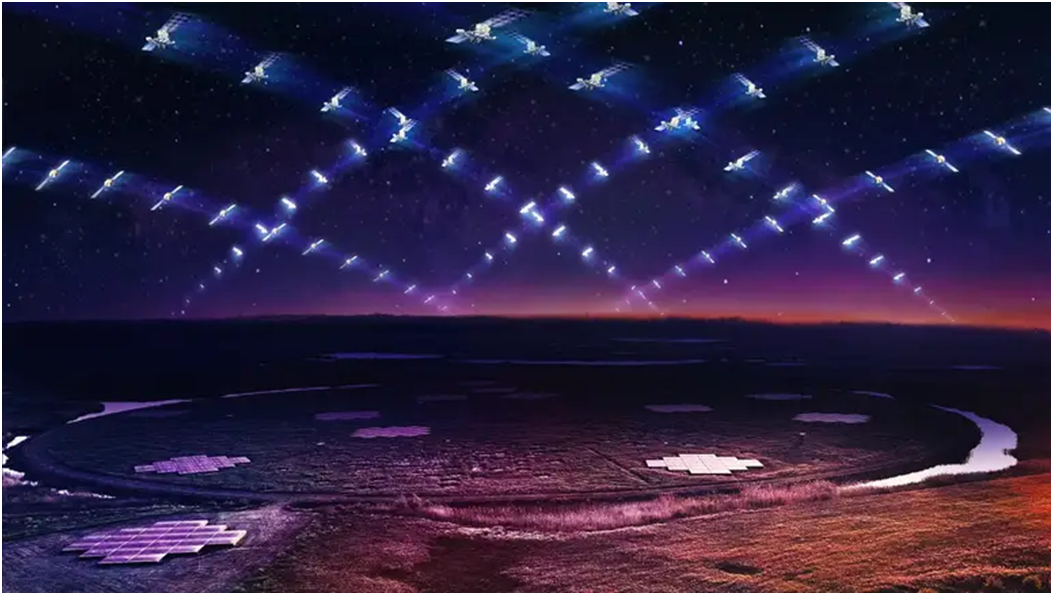
A recent study by a team of scientists is exploring the potential link between satellites and Earth’s magnetic field, and its impact on climate.
The research team, led by Dr. Robert Smith from the University of California, Los Angeles, is investigating the effects of the electromagnetic field generated by satellites orbiting the planet on Earth’s climate. Dr. Smith and his team hypothesize that the electromagnetic fields generated by satellites could interact with Earth’s magnetic field to cause changes in atmospheric conditions and climate patterns.
The research team has deployed various instruments to measure the strength of Earth’s magnetic field and satellite-generated electromagnetic fields in different parts of the planet. The team is analyzing the data to understand the extent to which the satellite-generated fields could be influencing Earth’s magnetic field and, consequently, the climate.
“We are very interested in understanding the interaction between Earth’s magnetic field and the fields generated by satellites,” said Dr. Smith. “We hope to better understand how these fields could be affecting climate patterns and atmospheric conditions.”
The research team is also exploring the potential for manipulation of the Earth’s magnetic field to affect climate change. If their research proves successful, this could provide a way to mitigate the effects of climate change.
The research team is hopeful that their research will help to shed light on the complex relationship between the Earth’s magnetic field, satellite-generated fields, and climate change. Their findings could provide valuable insight into how to better manage climate change.
Analyzing the Long-Term Effects of Satellites on Earth’s Magnetic Field and Its Impact on Life
Space exploration has brought about a new era of technological advances and a better understanding of our universe. One of the most important and intriguing advancements of this era is the use of satellites to study and monitor Earth’s magnetic field. While satellites provide invaluable data, it is important to consider the long-term effects they have on the planet’s magnetic field and what impact this may have on life on Earth.
Earth’s magnetic field is generated by the planet’s core and is essential for protecting the planet against harmful cosmic radiation. This field is constantly changing, with variations in the strength and direction of the field at different locations. Since the 1950s, satellites have been used to measure and monitor Earth’s magnetic field, providing valuable data to researchers.
The use of satellites has had both positive and negative impacts on the planet’s magnetic field. On the one hand, satellites can help scientists to better understand Earth’s magnetic field and make more accurate predictions about its behavior. On the other hand, satellites can also interfere with the planet’s natural field, causing magnetic perturbations and potentially influencing the behavior of migratory animals and other creatures.
The long-term effects of satellites on Earth’s magnetic field are still largely unknown. Some studies have suggested that the magnetic perturbations caused by satellites can have a lasting impact on the planet’s magnetic field, potentially leading to changes in the behavior of migratory species. Other studies have suggested that the impact of satellites on the magnetic field is minimal and does not pose any risk to life on Earth.
The effects of satellites on Earth’s magnetic field should not be taken lightly. As more satellites are launched into space, it is crucial that scientists understand the long-term impacts they may have on the planet’s magnetic field and its impact on life. With this understanding, researchers will be better equipped to make informed decisions about the use of satellites and their implications for the future of Earth.
Exploring the Potential Impact of Artificial Satellites on Earth’s Magnetic Field and Its Consequences
Recent studies have suggested that artificial satellites could have a significant impact on Earth’s magnetic field. This could have far-reaching consequences, with potential implications for both our planet’s environment and its inhabitants.
It is known that satellite constellations, such as those used for telecommunications, can cause artificial magnetic fields. These fields can be up to a magnitude higher than those of Earth’s natural magnetic field. In addition, the artificial fields can be highly variable, meaning their effect on Earth’s environment could be unpredictable.
Scientists have looked at the potential impact of such constellations on Earth’s environment. It is believed that the fields could disrupt the Earth’s magnetosphere, which acts as a shield against solar and cosmic radiation. The effects of this disruption could be far-reaching, including changes in the distribution of charged particles around the planet which could, in turn, affect the ozone layer.
In addition, the artificial magnetic fields created by satellite constellations could interfere with the migration of animals, which rely on Earth’s magnetic field to navigate. This could have significant consequences for species that depend on seasonal migration for survival.
At present, the potential impact of satellite constellations on Earth’s magnetic field and its environment is largely unknown. However, further research is needed to understand the potential consequences of this phenomenon. An understanding of the potential implications is essential in order to ensure that these artificial magnetic fields do not cause significant harm to our planet or its inhabitants.
[…]
Via https://ts2.space/en/the-impact-of-satellites-on-the-earths-magnetic-field/
Explaining The Mass Exodus from America’s [Faux] Left-Wing Cities
Michael Snyder
Over the past several years, thousands of businesses and millions of people have left America’s large left-wing cities. Of course when moderates and conservatives leave, that just causes those cities to shift even further to the [faux] left, and the politicians just implement even more self-destructive policies. So now many of our biggest metropolitan areas find themselves caught in a “death spiral”, and there appears to be little hope of turning things around any time soon. The politicians in these left-wing cities clearly understand that their once-thriving communities have been transformed into crime-ridden, drug infested hellholes, but it would go against everything that they believe to do what is necessary to fix things.
When I say that there has been a “mass exodus”, I am not exaggerating one bit. The population losses that we have seen over the past several years have been absolutely unprecedented…
According to the most recent US Census figures, we are in the middle of a mass exodus from America’s largest and most leftwing cities. The data reveals that New York City alone lost over half a million residents, which is more than the entire population of Miami. Additionally, Chicago, often referred to as “Chiraq” by some individuals, experienced a decline of nearly 100,000 residents. Another notable city, San Francisco, has seen a larger share of population loss than any other major city in the United States.
I love to pick on San Francisco, because it is a perfect example of this phenomenon. It is one of the wealthiest cities on the entire planet, and a few years ago it was bustling with activity.
But now everything has changed. One man recently went downtown to capture footage of what the city looks like now, and he discovered that store after store is permanently closed…
In the Union Square area, 203 retailers were open in 2019.
Today, there are only 107 still operating, and another one just announced that it will also be closing…
Century-old Goorin Bros. haberdashery has joined a host of stores shutting in San Francisco’s Union Square, amid widespread crime and plummeting footfall.
The hat boutique has become the latest casualty of the so-called ‘retail apocalypse’ gripping downtown San Francisco.
‘It’s never an easy decision but it was time,’ a company representative wrote in a statement.
What a tragedy.
The retailers that insist on remaining open in downtown San Francisco find themselves resorting to extreme measures in a desperate attempt to survive…
Theft has become so bad in San Francisco that some stores are now padlocking shut their freezers and tying metal chains to ensure the doors remain closed overnight.
Video shot by one potential shopper at a local Walgreens in the city sees aisle after aisle of products locked away behind Perspex and glass, out of the reach of thieves.
Even lower value items such as toothpaste and tissues are kept under lock and key, such is the rampant theft that has been occurring in many of the city’s pharmacies and supermarkets.
Over in Oakland, overall crime is up 42 percent since the first half of 2021.
The Bay Area should be one of the nicest places to live in the entire country, but instead it is one of the worst.
Of course the truth is that crime is on the rise everywhere. Vehicle theft is absolutely exploding, and that is particularly true for Kia and Hyundai models that you can apparently steal “with just a USB cable”…
The US is battling a surge in motor vehicle thefts this year, with cases more than doubling in Rochester, Cincinnati, and other cities, as thieves hotwire vulnerable Kia and Hyundai models with just a USB cable.
A study by the Council on Criminal Justice (CCJ) on Thursday shows how car thefts jumped 33.5 percent across major cities, as thieves brazenly share how-to videos of hotwiring vehicles on TikTok.
That adds up to 23,974 more stolen motors across the 32 cities studied.
If crime rates continue to soar, it won’t be too long before many cities are completely unlivable.
But instead of trying to fix this crisis, many of our politicians seem intent on making it even worse.
In Illinois, they have actually eliminated cash bail, and many are warning that this is going to cause all sorts of new problems…
Illinois has become the first state in the nation to eliminate cash bail, clearing the way for potentially dangerous criminals to be set free on the streets.
Democratic Gov. J.B Pritzker celebrated the step Tuesday, but critics reacted with incredulity.
Illinois Republican Party Chair Don Tracy said the law will ‘significantly undermine public safety by releasing from custody dangerous, violent criminals at a time when police are under attack and Illinois families and crime victims already fear for their personal safety.’
Our politicians love to be soft on violent criminals, but if you cross the IRS you could soon have dozens of armed agents in tactical gear show up at your door…
On Wednesday, at least 25 to 30 IRS agents in tactical gear raided a business along Southeast Slater Street in Stuart, Florida, Fox 29 reported.
The raid, which began around 9:30 a.m. on July 12th, saw agents entering and leaving the premises of Tee Off Temps and Elite Payroll Solutions, each time laden with boxes and large backpacks.
The agents with their clothing branded with “Police, IRS, Criminal Investigation,” shocked local witnesses.
“There’s at least 25, 30 cops out here,” said one witness.
What in the world has happened to us?
Our priorities have gotten way out of whack.
If you are considering moving away from a major city, I can’t blame you one bit.
Vast numbers of Americans have already moved to red states and rural communities, and many more will choose to relocate in the months ahead. For much more on this, please see my previous article entitled “Millions Of Americans Are Relocating Just Prior To The Great Chaos That Is Coming”.
[…]
Via https://michaeltsnyder.substack.com/p/explaining-the-mass-exodus-out-of
Europe’s black hole: How much of the more than $185 billion given by the West to Ukraine has been stolen?

How Climate Models Get Clouds Wrong

Ron Clutz
Science Matters
Why Did IMF Disinvite Nobel Laureate?
CO2 Coalition explains. Nobel Laureate (Physics 2022) Dr. John Clauser was to present a seminar on climate models to the IMF on Thursday and now his talk has been summarily cancelled. According to an email he received last evening, the Director of the Independent Evaluation Office of the International Monetary Fund, Pablo Moreno, had read the flyer for John’s July 25 zoom talk and summarily and immediately canceled the talk. Technically, it was “postponed.”
Dr. Clauser had previously criticized the awarding of the 2021 Nobel Prize for work in the development of computer models predicting global warming and told President Biden that he disagreed with his climate policies. Dr. Clauser has developed a climate model that adds a new significant dominant process to existing models. The process involves the visible light reflected by cumulus clouds that cover, on average, half of the Earth. Existing models greatly underestimate this cloud feedback, which provides a very powerful, dominant thermostatic control of the Earth’s temperature.
More recently, he addressed the Korea Quantum Conference where he stated, “I don’t believe there is a climate crisis” and expressed his belief that “key processes are exaggerated and misunderstood by approximately 200 times.” Dr. Clauser, who is recognized as a climate change skeptic, also became a member of the board of directors of the CO2 Coalition last month, an organization that argues that carbon dioxide emissions are beneficial to life on Earth.
What Difference Clouds Make in Climate Models
Obviously the Clauser presentation is not accessible and I don’t find a link to a publication concerning his treatment of clouds in climate models. But we can see how the models react to clouds by means of an important paper The Mechanisms of Cloudiness Evolution Responsible for Equilibrium Climate Sensitivity in Climate Model INM-CM4-8 by Evgeny Volodin AGU 03/12/2021. Excerpts in italics with my bolds.
Abstract
Current climate models demonstrate large discrepancy in equilibrium climate sensitivity (ECS). The effects of cloudiness parameterization changes on the ECS of the INM-CM4-8 climate model were investigated. This model shows the lowest ECS among CMIP6 models. Reasonable changes in the parameterization of the degree of cloudiness yielded ECS variability of 1.8–4.1 K in INM-CM4-8, which was more than half of the interval for the CMIP6 models.
The three principal mechanisms responsible for the increased ECS were increased cloudiness dissipation in warmer climates due to the increased water vapor deficit in the non-cloud fraction of a cell, decreased cloudiness generation in the atmospheric boundary layer in warm climates, and the instantaneous cloud response to CO2 increases due to stratification changes.
Introduction
In CMIP6 the lowest and highest ECS (Equilibrium Climate Sensitivity) values are 1.8 and 5.6 K, respectively (Zelinka et al., 2020). Climate response to some external forcing produces feedbacks. Positive feedback enhances the response to forcing, negative feedback weakens it. Analysis of climate feedback shows that cloud feedback is the principal reason for the broad range of ECS (Zelinka et al., 2020). Clouds (especially low clouds) are significantly reduced with global warming in models with high ECS, resulting in positive feedback. Models with low sensitivity show small cloudiness changes with global warming; some models feature an increase in low clouds in warmer climates, creating a negative feedback.
Clouds produce shortwave and longwave radiative effects. The shortwave cloud radiative effect (SW CRE) is generally negative, because cloudiness reflects solar radiation that would otherwise be absorbed by the climate system. The shortwave effect is usually strongest for low clouds that have high amounts of liquid water and high albedos. The longwave cloud radiative effect (LW CRE) is generally positive, because cloud tops are usually much colder than the surface of the Earth; thus, thermal radiation from the cloud top is much lower than that from the surface. Negative/positive CRE produces cooling/warming from clouds.
The goal of this study is that we turn off some mechanisms responsible for large-scale cloud evolution that lead to increase or decrease ECS, and ECS is changed by the factor of more than 2. The role of a chosen mechanism in decrease or increase of ECS can be clearly seen. At the same time, all model versions show preindustrial climate with systematic biases compared to that for the version used in CMIP6. A realistic way of estimating the impact of change in parameterization on cloud feedback by keeping the cloud mean state realistic in all model versions and running 4xCO2 experiments rather than uniform +4K experiments are used in this study.
Table 1. Summary of Model Versions

Note. Equilibrium climate sensitivity ECS (K), effective radiation forcing ERF (W m−2), climate feedback parameter λ (W m−2 K−1), shortwave cloud radiative feedback СRFSW, longwave cloud radiative feedback СRFLW, net cloud radiative feedback СRFNET (W m−2 K−1) and instantaneous cloud radiative forcing change ΔCREINST (Wm−2).
The ECS estimation method is commonly used in CMIP5 and CMIP6 and was proposed by Gregory et al. (2004). The two model runs performed were the control run, in which all forcings were fixed at preindustrial levels, and the run where the concentration of CO2 in the atmosphere was four times higher than in the control run (4CO2 run). The initial state for both runs was the same and taken from a sufficiently long control run. Each run had a length of 150 years. Subsequently, the global mean difference of GMST and the heat balance at the top of atmosphere (THB) for 4CO2 and the control run were calculated for each model year.
Results of the sensitivity experiments performed with the five climate model versions.
Version 1 shows a very low ECS of 1.8 K due to a low negative climate feedback parameter value of −1.46 W m−2 K−1 (interval from −0.6 to −1.8 W m−2 K−1 for CMIP5 and CMIP6) and a low ERF value of 2.7 W m−2 (intervals of 2.6–4.4 and 2.7–4.3 W m−2 for CMIP5 and CMIP6, respectively, Zelinka et al., 2020). The low ECS was accompanied by mostly negative CRF in both the SW and LW spectral intervals (Figure 2 below).

Figure 2 Shortwave (top), longwave (middle) and net (bottom) cloud radiation feedback (Wm−2 K−1) for model version 1 (purple), 2 (yellow), 3 (red), 4(green), and 5 (blue). Data are multiplied by cosine of latitude.
The parameterization replacement scheme for cloudiness in version 2 dramatically changed all the parameters, and the ECS more than doubled to 3.8 K. ERF increased to 3.8 W m−2, without changes to the radiation code because ΔCREINST changed from −0.88 W m−2 to −0.13 W m−2. Additionally, the climate feedback parameter increased from −1.46 W m−2 K−1 to −1.0 W m−2 K−1. In version 2, global warming was associated with decreased cloudiness at all levels. The net cloud radiative feedback became positive. Version 2 yielded significantly increased net and SW cloud radiative feedbacks at all latitudes compared with version 1. Analysis of the sensitivity experiment results of versions 3–5 helps understand the mechanisms of these significant changes.
Version 3 features a suppressed mechanism of high tropical cloudiness due to decreased convective mass flux and higher ECS than version 2 (4.1 K); however, the change is not very pronounced. The LW CRF in the tropics increases in version 3 compared to version 2. The decrease in SW CRE is not very pronounced; therefore, increased net CRF increases ECS. This confirms our hypothesis that suppressing the decrease in tropical cloudiness should increase ECS and that the impact of this mechanism on ECS is noticeable but not very strong.
ECS is noticeably lower in version 4 (2.9 K) than in version 2. Thus, the mechanism of the decrease in boundary layer cloudiness due to decreased cloudiness generation by boundary layer turbulence is crucial for ECS. SW and LW CRF decreased in version 4 compared to version 2, primarily in the tropics and subtropics.
The mechanism of increased cloud dissipation under global warming conditions was suppressed in version 5, ECS was reduced to 2.5 K, and the climate feedback parameter decreased to −1.56 W m−2 K−1. Additionally, the SW CRF decreased in version 5 compared with version 4, primarily in the tropics and subtropics. In this version, all the mechanisms that decrease clouds with increased temperature, as raised in the previous section, are suppressed. The principal reason for the ECS difference between versions 1 and 5 is the instantaneous adjustment rather than the feedback (see Table 1). ΔCREINST values in versions 1 and 5 were −0.88 and 0.16 W m−2, respectively.
Conclusion
[…]
Our results confirm those by Bony et al. (2006), Brient and Bony (2012), and others that a significant change in the response of low clouds to global warming leads to significant changes in cloud radiative feedback and ECS.
Islam Comes to India

Episode 17 Islam Comes to India
A History of India
Michael Fisher (2016)
Film Review
Long before the advent of Islam, Arab traders developed settlements along India’s west coast using the “trade winds” from seasonal monsoons to travel to and from the Arabian peninsula. Between 998 and 1030, Sultan Mahmud of Ghazni (modern day Afganistan) repeatedly conducted 17 military raids on resource-rich India (for booty rather than religious conversion). Islam subsequently spread inland via local kings who converted to Islam and spread their religion through military conquest.
In 711 Muhammad ibn Al-Qasim conquered Sindh at the mouth of the Indus river. At present this is the second most populous region in Pakistan.
Starting in the 11th century, Sufi missionaries from the Arabian peninsula also played a major role in converting India to Islam. Muslims who settled in the arid western Punjab (now part of Pakistan) introduced Persian irrigation technology enabling the region to shift from herding to agriculture. The area is still dominated by shrines to deceased Sufi saints.
The Bengal was still forested when Muslims arrived, bringing steel axes and other tools to root up the large trees and introduce lucrative wet rice farming. The society in east Bengal (modern Bangladesh) has tended towards egalitarianism. In west Bengal, descendants of Sufi missionaries would form a hereditary elite.
Starting in 1206 a series of Muslim rulers (collectively known as the Delhi Sultans) made Delhi their capitol. Originating from Afghanistan and Central Asia, their regimes were fragile, with vassal kingdoms tending to break away and form independent states.
For centuries, the vast majority of India was non-Muslim, with most Muslim rulers declaring their Hindu subjects Dhimmi (protected subjects) purchased through a special tax.
At present, South Asia (India, Pakistan, Bangladesh) is home to one-third of the world’s Muslims (503,990,000).
Film can be viewed free with a library card on Kanopy.
Africans Planting Revolution – Small Farmers still FEED the World

from thefreeonline on July 22, 2023 By Fred Pearce at YaleEnvironmen about E360.
As Africa Loses Forest, Its Small Farmers Are Bringing Back Trees
The loss of forests across Africa has long been documented. But recent studies show that small farmers from Senegal to Ethiopia to Malawi are allowing trees to regenerate on their lands, resulting in improved crop yields, productive fruit harvests, and a boost for carbon storage.
For decades, there have been reports of the deforestation of Africa. And they are true — the continent’s forests are disappearing, lost mainly to expanding agriculture, logging, and charcoal-making.
[…]
But the trees? Maybe not, according to new satellite data analyzed by artificial intelligence and a growing body of on-the-ground studies. This new research is finding ever more trees outside forests, many of them nurtured by farmers and sprouting on their previously treeless fields..
Across the continent — from Senegal and Niger in the west, to Ethiopia in the east, and Malawi in the south — smallholder farmers are rejecting government advice that trees should be expunged from fields because they get in the way of growing crops. Instead, they are allowing previously suppressed trees to regenerate on their land — to improve soils and crop yields; to provide harvests of fruit, fuelwood, and fodder for their livestock; and ultimately to achieve a better life for their families.
As large areas of farmland across Africa turn from brown to green, the results are also good for local economies, offering an easy and cheap way to intensify their farming and increase output, as well as benefiting biodiversity and the global climate. An acre of growing trees on farmland captures and stores up to 4 tons of carbon from the atmosphere each year, researchers say.
[…]
The latest published evidence of Africa’s resurgent farmland trees comes in the first ever detailed analysis of satellite images of the continent carried out at a scale that can identify individual large trees outside forests. Florian Reiner, a remote-sensing analyst at the University of Copenhagen, working with an international team of colleagues, reported in Nature Communications last month that at least 29 percent of tree cover in Africa is “outside areas previously classified as forest.”
These often previously unmapped trees are not in plantations; they are mostly natural trees scattered across savanna grasslands, croplands, and pastures. “Many African landscapes are drylands, where trees outside forests are the major form of woody vegetation,” says Reiner.
[…]
Forests cover some 21 percent of Africa, according to the UN Food and Agriculture Organization. Most are in the Congo Basin, home to the world’s second largest rainforest after the Amazon. But adding in non-forest trees visible to the AI system increases the figure for tree cover to close to 30 percent, depending on precise definitions.
[…]
Chris Reij, a dryland restoration specialist at the World Resources Institute in Washington D.C., has seen firsthand how millions of farmers across Niger, southern Mali, and Ethiopia have begun nurturing natural regrowth of hundreds of millions of trees from long-suppressed roots beneath their fields. This is often known as farmer-managed natural regeneration (FMNR).
[…]
Meanwhile, Gray Tappan, a geographer at the U.S. Geological Survey, has mapped a dramatic increase in tree cover on farms in Malawi, Senegal, Niger and elsewhere. And in a visual analysis carried out in May at the request of Yale Environment 360, he used sample satellite images to estimate that there are about 1.4 billion trees on farms across sub-Saharan Africa, more than three times as many as were spotted by Reiner’s automated system.
The story of the outside world’s discovery of Africa’s unmapped trees began in the fragile farmlands of southern Niger, a landlocked nation in the Sahel region on the fringe of the Sahara Desert. Trees were once a natural feature of these arid lands, and many traditional pre-colonial farming systems incorporated them.
[…]
Their roots often remain in the soil. But farmers had long been taught by colonial and government authorities to remove sprouting trees from their fields each year before planting crops, to make plowing easier.
During droughts in the 1980s, as warnings about desertification in Africa gained global attention, many of these treeless landscapes seemed destined to turn to desert. But then farmers began to change tack, disregarding expert advice and allowing tree seedlings and roots to grow unmolested.
One story widely told in the villages of Niger is that the transformation began when two young farmers returned late to their fields after working during the dry season at a distant mine. With the rains already starting, they planted their crops without first clearing their fields of vegetation. To everyone’s surprise, a few months later this apparent indolence resulted in better crop yields than their neighbors’.
The next year, other farmers in the small remote village of Dan Saga copied them, with similar results. Soon, dozens of other villages across Zinder and Maradi provinces joined in. Trees began growing widely amid their crops.
Reij was among the first outsiders to visit and see how the land had been transformed. It happened by chance. “In 2004, I drove 500 miles east from [Niger’s] capital Niamey and I thought: ‘Bloody hell, there are trees everywhere,’” he remembers. “It was a total change since my first visit 20 years before.” He and others have estimated that there are now some 200 million more trees across a previously almost treeless landscape of some 12.5 million acres in southern Niger.
[…]
In southern Mali, the 200 miles between the country’s two largest cities, “is now almost all agroforest,” Reij says. Similarly, the Seno Plain on the border with Burkina Faso is “all stunningly beautiful, a dense parkland of trees mostly less than 20 years old.”
Tappan, meanwhile, was part of a research team that in 1986 produced what is still the most detailed map of vegetation in Senegal. Last year, he revisited the country and compared images of the landscape today with his earlier aerial photographs. “I found extensive increases in tree density on farms,” he says. FMNR now covers more than 6.6 million acres of Senegal. “It is a major success story and shows that woody vegetation can regenerate in a handful of years, even in regions of low rainfall.”
Meanwhile in Ethiopia, the view from the road for more than 100 miles south of Hawassa “almost looks as if you are travelling through forest,” says Reij. In the areas of highest population density, with up to 2,300 people per square mile, “the density of trees only grows.” This traditional system of agroforestry, practiced in particular by the Gedeo people, has as its main crops Arabica coffee and enset, which produces a banana-like fruit and starchy stems and roots that can be fermented to make porridge or bread, according to Sileshi Degefa, a natural resources scientist at Addis Ababa University.
Tappan estimates that, as a result of the widespread adoption of FMNR, 40 percent of farmland in Mali and Burkina Faso has trees dotted across fields, a figure that rises to 50 percent in Niger, 65 percent in Senegal, and 70 percent in Malawi. Trent Bunderson, founder of a Malawi-based NGO Total LandCare and now chief scientist for nature-based solutions at C-Quest Capital, says Malawi farmers frequently nurture more than a hundred natural trees per acre on their land, with winter thorn a particular favorite.
Yet these trees remain largely ignored by conservationists, foresters, and governments. Reij says that at a recent meeting of African government officials, held in Malawi to discuss how to improve forest cover across the continent, “no one, including the Malawian hosts, even mentioned the 8 million acres of cultivated land with on-farm trees across that country.”
So how many trees are there on Africa’s millions of smallholder farms? In response to this question from Yale Environment 360, Tappan undertook a short assessment. He inspected Google Earth images of almost 100 randomly chosen 25-acre agricultural areas from seven representative countries and visually examined them for trees. He found an average of 69 trees in each area.
Using an accepted estimate that a bit over 30 percent of sub-Saharan Africa is made up of cropland, he calculated that these cultivated areas contain a total of 1.4 billion trees. “You can round my number up or down a bit,” he says. “But I think the assumptions I used do actually give a reasonably reliable number. It’s a lot of trees.”
[…]
The lesson from both studies, whether using AI or the human eye, is that Africa has many more trees than previously supposed. Moreover, many of these trees are newly established, regenerate naturally, and are being nurtured by millions of smallholder farmers.
[…]
This narrative sounds counterintuitive. The assumption has been that as populations grow in Africa, poor farmers have no alternative but to clear trees to cultivate the crops they need to feed their families.
But the truth is the opposite, says Reij. “Farmers in areas with high population densities need to intensify agriculture on increasingly small plots of land. And to do that they need to improve soil fertility. Allowing trees to grow on their land can be the easiest and cheapest way of achieving that.”
[…]
The Pros and Cons of Veganism
Dr Mercola
Story at-a-glance
- Although veganism has some health benefits, it is also loaded with many disadvantages and is unsuitable for many, especially if you have certain genetic polymorphisms predisposing you to poor beta-carotene conversion
- People with polymorphisms causing poor conversion of beta-carotene are at high risk for reproductive problems, skin and eye problems and poor dental health
- The blood type diet, detailed in “Eat Right 4 Your Type,” often works well for those with blood type O, as those recommendations are consistent with a healthy diet. It typically does not work well for the other blood types
- Nutrient cycling (cycling between higher and lower amounts of fat, net carbs and protein) and cycling between high and low calorie intakes (fasting and feasting) appear to be foundational criteria for optimal biological functioning
- If you’re on a ketogenic diet, it’s important to cycle high and low amounts of net carbs once your body is able to efficiently burn fat for fuel in order to optimize your metabolism. Cyclical fasting is also recommended
Editor’s Note: This article is a reprint. It was originally published July 8, 2018.
Denise Minger is perhaps most noted for her comprehensive rebuttal of “The China Study” some eight years ago. She’s heavily vested in the vegan versus omnivore battle, having cycled through vegetarianism and raw veganism, finally coming full circle to being an omnivore.
Minger took to vegetarianism when she was just 7 years old. “I was eating steak one night at dinner and almost choked on it. I developed some kind of phobia surrounding things with meat textures and went vegetarian overnight,” she explains.
Raw Veganism Took a Toll on Health
However, during the 10 years she remained a vegetarian, she began developing food allergies, including wheat and dairy allergies. “By the time I was a teenager, I was really health-conscious,” she says. “I had to get into that whole scene just to stay healthy.”
At age 15, she discovered the raw vegan movement and got on the 80/10/10 diet, promoted by Dr. Douglas Graham. The diet is based on the hypothesis that we should eat what other primates eat, particularly frugivorous chimpanzees and bonobos.
[…]
As mentioned, Minger produced a very comprehensive critique of “The China Study” which is the scientific justification for many vegan positions. Her analysis — which some suspected to be funded by the meat industry — was actually undertaken while recovering from an accident. At the age of 22, she was hit by a car while riding her bicycle and shattered her elbow. Her convalescence afforded her the time to work on this project.
[…]
The Case for Lowering Protein Intake
For all its drawbacks, there are benefits to veganism. The biggest one, from my perspective, is that vegans have — compared to those who eat the standard American diet — a significantly lower protein intake. I think there are valuable insights that can be drawn from that, which can be integrated into a low-carb paleo approach. Minger agrees, saying:
[…]
This makes sense considering the importance of long-chained omega-3 fats: eicosapentaenoic acid (EPA) and docosahexaenoic acid (DHA). Those who restrict themselves to a plant-based diet are only getting alpha-linolenic acid (ALA) which, while being a precursor for EPA and DHA cannot be converted at significant, therapeutic levels.
Protein Cycling
Clearly, the composition of the animal protein is a significant issue. We don’t want processed foods. We don’t want meat from factory farms that is contaminated with glyphosate (due to contaminated grain feed). But there’s also the issue of the amount. Many are simply eating far too much protein, which (when consumed in excess) activates mTOR, a pathway involved in both aging and cancer. Pulsing higher and lower amounts of protein also seems a wise strategy.
[…]
Macronutrient Cycling — An Overlooked Component
In deconstructing and assessing the low-carb, high-fat approach, Minger concluded the lack of high and low nutrient cycling was one of the main problems, especially long-term, and particularly for women. “I do one-on-one consulting with people,” she says.
“A large group that I have come in contact with are women who’ve done low-carb. Their thyroid function is tanking. They’re gaining weight. They feel terrible. Their hair is falling out. It happens with men too sometimes, but I think women, hormonally, are more sensitive to the lack of carbohydrates.”
She’s also found evidence suggesting chronic lack of carbohydrates may be having an adverse effect on your gut microbiome. In his commentary, “Sorry Low Carbers, Your Microbiome Is Just Not That Into You,”1 Jeff Leach with the Human Food Project details the likely shifts found in the gut microbiome composition of people who consume low-carbohydrate diets. Whether or not those shifts are wholly detrimental or not is still unknown, but it’s worth keeping an eye on.
Minger is equally ambivalent about long-term, chronic high-fat consumption, as some of the evidence suggests it may increase gut permeability and the transport of endotoxin from gram-negative bacteria into the bloodstream, which increases chronic inflammation and related health problems.
[…]
From my perspective, I think there are compelling reasons to suspect one might run into problems, for many of the reasons Minger cites. It appears nutrient cycling (i.e., cycling between higher and lower amounts of fat, net carbs and protein), and also cycling between high and low calorie intakes (fasting and feasting), are foundational criteria for optimal biological functioning.
[…]
Cyclical Ketogenic Diet Combined With Cyclical Fasting
First of all, the late Dr. Joseph Kraft showed that using sensitive oral glucose loading and testing insulin levels that insulin resistance is pervasive. Based on a more refined definition of insulin resistance, at least 80% of the population have diabetes in situ,2,3 which means they’re insulin resistant even though their fasting glucose is normal.
This is where low-carb can be really useful, yet it alone will still not be enough for many. A lot of people need to get even more aggressive and do fasting. Once you’ve done that for a while and resolve the insulin resistance, you need to cycle net carbs (total carbs minus fiber) back in.
The converse can also occur. If you suppress insulin for too long, your blood sugar will tend to rise from hepatic gluconeogenesis. If you reintroduce carbohydrates at that point, it will raise insulin and lower your blood sugar. You can also eat too much fat; since fat is high in calories, the excess calories alone can lead to weight gain. As mentioned above, protein intake also needs to be regulated to avoid mTOR activation.
Traditional paleo is frequently high-protein, high-fat, similar to the Atkins approach. But you’re not going to get all the benefits unless you restrict protein. As a general rule, I recommend limiting protein to half a gram per pound of lean body weight, to ensure you’re getting the protein you need for muscle maintenance and repair. The answer is not to cut protein out altogether. You do need some, just not the enormous amounts most Americans are used to eating.
Focus on Nutrient Density
When asked what the best animal food composition might be, Minger stresses the importance of nutrient density over any specific dosage recommendations, as the ideal amount will depend on the type of meat you’re eating. “For my own diet, I focus on organ meats and shellfish,” she says. “Those are the primary foods I eat that are of animal origin. Oysters are my favorite. Nutritionally, if you look at liver and oysters, oysters are kind of like the liver of the ocean.”
People who shun animal foods due to ethical concerns about eating something that is highly sentient can also take heart in the fact that oysters lack the central nervous system “that would make them equivalent to a cow.” “There’s a bivalve vegan movement, where people are vegan with the inclusion of certain shellfish. I think that can go a long way for people to balance out a vegan diet,” she says.
As for cooking, Minger recommends using gentle methods to avoid the creation of carcinogens associated with high-temperature cooking. These byproducts “seem to be driving the correlation between meat consumption and different cancers that we see in observational studies,” she says.
“Whenever you look at a study that actually controls for the cooking method, typically once you take away the high-heat kind of strategies for cooking your meat, the correlations with various diseases start to diminish, if not disappear completely.” Byproducts created during grilling and frying include heterocyclic amines and polyaromatic hydrocarbons that form carcinogens. So, don’t overcook your meat, and balance muscle meat (steaks) with organ meat and other animal parts.
[…]
The Free Speech Scare
Jeffrey Tucker
Brownstone Institute
It was a strange experience watching the House hearing in which Robert F. Kennedy, Jr. was testifying. The topic was censorship and how and to what extent federal government agencies under two administrations muscled social media companies to take down posts, ban users, and throttle content. The majority made its case.
What was strange was the minority reaction throughout. They tried to shut down RFK. They moved to go to executive session so that the public could not hear the proceedings. The effort failed. Then they shouted over his words when they were questioning him. They wildly smeared him and defamed him. They even began with an attempt to block him from speaking at all, and 8 Democrats voted to support that.
This was a hearing on censorship and they were trying to censor him. It only made the point.
It became so awful that RFK was compelled to give a short tutorial on the importance of free speech as an essential right, without which all other rights and freedoms are in jeopardy. Even those words he could barely speak given the rancor in the room. It’s fair to say that free speech, even as a core principle, is in grave trouble. We cannot even get a consensus on the basics.
It seemed to viewers that RFK was the adult in the room. Put other ways, he was the preacher of fidelity in the brothel, the keeper of memory in a room full of amnesiacs, the practitioner of sanity in the sanatorium, or, as Mencken might say, the hurler of a dead cat into the temple.
It was oddly strange to hear the voice of wise statesmen in that hothouse culture of infantile corruption: it reminded the public just how far things have fallen. Notably, it was he and not the people who wanted him gagged who was citing scientific papers.
The protests against his statements were shrill and shocking. They moved quickly from “Censorship didn’t happen” to “It was necessary and wonderful” to “We need more of it.” Reporting on the spectacle, the New York Times said these are “thorny questions”: “Is misinformation protected by the First Amendment? When is it appropriate for the federal government to seek to tamp down the spread of falsehoods?”
These are not thorny questions. The real issue concerns who is to be the arbiter of truth?
Such attacks on free speech do have precedent in American history. We have already discussed the Alien and Sedition Acts of 1798 which led to a complete political upheaval that swept Thomas Jefferson into the White House. There were two additional bouts of censorship folly in the 20th century. Both followed great wars and an explosion in government size and reach.
The first came with the Red Scare (1917-1020) following the Great War (WWI). The Bolshevik Revolution and political instability in Europe led to a wild bout of political paranoia in the US that the communists, anarchists, and labor movement were plotting a takeover of the US government. The result was an imposition of censorship along with strict laws concerning political loyalty.
The Espionage Act of 1917 was one result. It is still in force and being deployed today, most recently against former President Trump. Many states passed censorship laws. The feds deported many people suspected of sedition and treason. Suspected communists were hauled in front of Congress and grilled.
The second bout occurred after the Second World War with the House UnAmerican Activities Committee (HUAC) and the Army-McCarthy hearings that led to blacklists and media smears of every sort. The result was a chilling of free speech across American industry that hit media particularly hard. That incident later became legendary due to the exaggerations and disregard for the First Amendment.
How does the Covid-era censorship fit into this historical context? At Brownstone, we’ve compared the wild Covid response to a wartime footing that caused as much trauma on the homeland as previous world wars.
Three years of research, documents, and reporting have established that the lockdowns and all that followed were not directed by public health authorities. They were the veneer for the national security state, which took charge in the month of February 2020 and deployed the full takeover of both government and society in mid-March. This is one reason that it’s been so difficult getting information on how and why all of this happened to us: it’s been mostly classified under the guise of national security.
In other words, this was war and the nation was ruled for a time (and maybe still is) by what amounts to quasi-martial law. Indeed, it felt like that. No one knew for sure who was in charge and who was making all these wild decisions for our lives and work. It was never clear what the penalties would be for noncompliance. The rules and edicts seemed arbitrary, having no real connection to the goal; indeed no one really knew what the goal was besides more and more control. There was no real exit strategy or end game.
As with the two previous bouts of censorship in the last century, there commenced a closure of public debate. It began almost immediately as the lockdowns edict were issued. They tightened over the months and years. Elites sought to plug every leak in the official narrative through every means possible. They invaded every space. Those they could not get to (like Parler) were simply unplugged. Amazon rejected books. YouTube deleted millions of posts. Twitter was brutal, while once-friendly Facebook became the enforcer of regime propaganda.
The hunt for dissenters took strange forms. Those who held gatherings were shamed. People who did not socially distance were called disease spreaders. Walking outside without a mask one day, a man shouted out to me in anger that “masks are socially recommended.” I kept turning that phrase around in my mind because it made no sense. The mask, no matter how obviously ineffective, was imposed as a tactic of humiliation and an exclusionary measure that targeted the incredulous. It was also a symbol: stop talking because your voice does not matter. Your speech will be muffled.
The vaccine of course came next: deployed as a tool to purge the military, public sector, academia, and the corporate world. The moment the New York Times reported that vaccine uptake was lower in states that supported Trump, the Biden administration had its talking points and agenda. The shot would be deployed to purge. Indeed, five cities briefly segregated themselves to exclude the unvaccinated from public spaces. The continued spread of the virus itself was blamed on the noncompliant.
Those who decried the trajectory could hardly find a voice much less assemble a social network. The idea was to make us all feel isolated even if we might have been the overwhelming majority. We just could not tell either way.
 The Most Revolutionary Act