The Most Revolutionary Act

Uncensored updates on world events, economics, the environment and medicine

The Most Revolutionary Act
Unknown's avatar

About stuartbramhall

Retired child and adolescent psychiatrist and American expatriate in New Zealand. In 2002, I made the difficult decision to close my 25-year Seattle practice after 15 years of covert FBI harassment. I describe the unrelenting phone harassment, illegal break-ins and six attempts on my life in my 2010 book The Most Revolutionary Act: Memoir of an American Refugee.

CIA Collaborated with New Zealand Intelligence Service to Spy on Peace Activists in 1970s

A person with a megaphone Description automatically generated with medium confidence

New Zealand peace activist Owen Wilkes speaking at a protest at U.S. air base at Christchurch Airport (Harewood), 1973. Wilkes was a target of surveillance by the New Zealand Intelligence Services and CIA. [Source: newsroom.co.nz]

By Jeremy Kuzmarov

Legendary Peace Researcher Owen Wilkes Was a Target

Owen Wilkes (1940-2005) was a legendary New Zealand peace researcher and activist who devoted a considerable portion of his life to fighting against the creeping and corrupt presence of the U.S. military around the globe.

Not surprisingly, Wilkes found himself in the crosshairs of the New Zealand Security Intelligence Services (NZSIS) and the Central Intelligence Agency (CIA) which collaborated together to spy on him.

CovertAction Magazine (CAM) contributor Murray Horton, a founder in the 1970s with Wilkes of the Campaign Against Foreign Control of Aotearoa (CAFCA), a New Zealand anti-base peace group, has reviewed declassified SIS documents and found a cache of memos between their agents and the CIA.

The first of these memos referred to Wilkes as “the main organiser and activist in both CAFMANZ and CAFCINZ [other anti-base groups that were precursors to CAFCA].”[1]

These groups were considered at the time to be subversive because of their opposition to the U.S.’s use of New Zealand for strategic military facilities, including signals intelligence facilities that helped coordinate worldwide U.S. surveillance and military operations.[2]

The declassified intelligence documents indicate that the SIS kept an eye on any contacts that Wilkes had with Communists and groups such as the Progressive Youth Movement, which was considered to be a front for the Communist Party.

Considering his pronouncements as anti-American, a visit to the Soviet Embassy was noted. There was speculation that the Communist Party sought to recruit him, although his friends said that Wilkes never lined up with any “ism.”[3]

The SIS claims today that it needs to withhold many documents whose release would somehow be “likely to prejudice the security or defence of New Zealand or the international relations of the Government of New Zealand.”

In May 2023 current SIS Director Andrew Hampton wrote a letter to Wilkes’ ex-wife stating that, “as a high-profile peace activist during a period when the USSR sought to use the legitimate peace movement to further its own geo-political objectives, Owen Wilkes came to NZSIS attention (as did you, purely by association). Mr. Wilkes was never, however, considered to be a threat to security.”

These comments are remarkable in acknowledging at once that Wilkes was never a threat to New Zealand’s national security, while at the same time implying guilt by association with the USSR—an old tactic of J. Edgar Hoover and conservative cold warriors whose purpose was to smear and discredit peace activists.

CIA Skullduggery in New Zealand

CAM has previously documented how the CIA concocted a scheme in the 1980s to undermine New Zealand’s labor government of David Lange, which adopted a nuclear-free policy and excluded U.S. warships from New Zealand’s ports

The scheme involved the floating of a fraudulent loan to Māori members of the government in order to trigger white rage against them. Several of the businessmen who floated the loan worked for a CIA-front company called Bishop, Baldwin, Rewald, Dillingham and Wong (BBRDW)—which acted on the instructions of Honolulu CIA Station Chief Eugene Welch.

Among them were Robert Coleman Allen and James Haina, who were likely used by the U.S. government to create the Māori loans scandal and facilitate racial tension and a rift between the Māori and Labour Government which had traditionally been closely associated.

Newly declassified documents detail the CIA’s concerns that Lange’s anti-nuclear policy could spread throughout the Pacific.

The CIA favored Sir Robert Muldoon, New Zealand’s conservative prime minister from 1975 to 1984, who was described in a CIA analysis as “second to none in his high regard for the U.S.,” who believed “more than his predecessors” that New Zealand needed the U.S. for security.

Walking Encyclopedia with Technical Expertise

Wilkes was a target of joint CIA-NZSIS surveillance because of his influence in raising public awareness about New Zealand’s tight integration into the American overseas network of military bases and empire.

Described as a “walking encyclopedia,” he was a highly knowledgeable technical expert on foreign military bases and facilities, especially including communications and signals intelligence facilities which the CIA and other intelligence services wanted to keep hidden.

As a researcher, Wilkes would spend hours poring through microfilmed U.S. government documents, and read the latest issue of Aviation and Space Technology. The SIS acknowledged that Wilkes had “a well-developed flair for ferreting out, from obscure but unclassified sources, what would appear to constitute classified information.”[4] Wilkes would also trek into remote areas to try to uncover the existence of secret military facilities. When he observed the facility or photographs of it, he had the capacity to interpret what they were used for.[5]

Wilkes got on the CIA’s radar after he exposed a network of signals intelligence stations that had been set up at the initiative of the U.S. in Norway with U.S. funding and included U.S. intelligence staff.[6]

Wilkes also exposed a secret U.S. spy base in Mindanao, Philippines. The information that Wilkes shared with the Philippines Senate led to a historic vote to remove all U.S. military bases from the Philippines in 1991 ending 470 years of foreign military bases in the country.[7]

“Most Important Foreign Base”

In the early 1980s, Wilkes wrote an exposé on a secret radio eavesdropping station in the Manawatu region known as Tangimoana, which Wilkes called “Our Most Important Foreign Base.” Despite official proclamations to the contrary, Wilkes was emphatic that the facility was really a foreign military base, built to U.S. specifications and run according to U.S. instructions.

Wilkes had become familiar with similar electronic eavesdropping facilities from his time as a researcher with the Peace Research Institute Oslo (PRIO) in the late 1970s and had no doubt that the spider web-like Tangimoana antenna was part of the network.

He believed that the facility was probably cooperating with similar bases in Australia and contributing precise information about vessel movements—including Soviet ships across the Pacific—to the U.S. Naval Ocean Surveillance Information System (NOSIS).[8]

Wilkes warned in an article in Peacelink magazine that the project of which the eavesdropping facility was associated “integrates us much more closely into U.S. war fighting strategies than does mere membership in ANZUS or our hosting of nuclear warships. Day after day we are feeding intelligence data to the U.S., where we have little or no control how it is used, either in peacetime or in war…Do we want to provide intelligence data which helps give the U.S. the confidence that it can start, fight and win a nuclear war?”[9]

According to Wilkes, the agreement under which New Zealand played its part in collecting signals intelligence was secret—almost nobody knew about a post-World War II pact that formalized the cooperation of the U.S., Britain, Australia, Canada and New Zealand in the Five Eyes, let alone what it was for.

Wilkes wrote that the significance of the 1984 Tangimoana exposé—in which the government revealed for the first time the existence of a foreign military facility on New Zealand’s soil—cannot be overestimated: It was the opening salvo in the critical campaign to reveal New Zealand’s secret intelligence links and raise the challenge they posed to our sovereignty.”[10]

In a mocking gesture during protests against the Tangimoana facility, Wilkes wore a red cap inscribed “KGB agent.”[11] This sent a message of defiance to government authorities who were as blinded by the narrow-minded political dogma of the Cold War as their heirs are today.

Trying to Prevent New Zealand from Becoming an Expendable Portion of the U.S. Military Empire

Wilkes’ involvement in peace activism dated back to 1968 when he was part of protests supported by three future prime ministers that helped block the U.S. Navy’s construction of a transmitter station in New Zealand under Operation Omega.

Omega was to function as part of the U.S.’s global navigation system (precursor to GPS) and would assist the U.S. Navy in carrying out submarine surveillance and warfare.[12]

In an article for the New Zealand Methodist, Wilkes suggested that there be a referendum on Omega and if sufficient people wanted to shelter under the U.S. nuclear umbrella, then New Zealand should become like Hawai’i, an overseas state of the Union. That way “we would at least have voting rights and representation rather than being an ‘expendable portion of the United States military empire.’”[13]

Building off the momentum from the Omega protests, Wilkes emerged as a key leader of annual protests which took place at New Zealand’s different bases in the South Island—Woodbourne (1971), the U.S. Air Force observatory atop Mt. John in McKenzie Country (1972) and the U.S. Navy and Air Force Transport base at Christchurch Airport (1973), which still exists.[14]

More than a decade later, Wilkes and Murray Horton were arrested for protesting against the U.S. military transport base at Christchurch Airport, which was located near a military communications facility just outside the city.

Waihopai Spy Base

In the late 1980s, Wilkes was a key figure leading protests outside the Waihopai spy base—a satellite communications monitoring station in the Waihopei Valley near Bleinheim, whose construction was authorized by David Lange—in spite of Lange’s anti-nuclear policy.

Waihopai was identified as being part of ECHELON, a worldwide network of signals interception facilities run by the UKUSA consortium of intelligence agencies, which shares global electronic and signals intelligence among the intelligence agencies of the US, UK, Canada, Australia and New Zealand—who are part of a pact known as The Five Eyes.

Wilkes wrote a definitive background paper on the spy base after its construction, warning that it would be spying on other countries’ ships, aircraft and submarines as well as spying on communications emanating from New Zealand’s Pacific neighbors.

Wilkes wrote that, “while Tangimoana implicates us in nuclear-war preparations, Waihopai implicates us in undermining the privacy, security, independence and sovereignty of our neighbors in the South Pacific.”[15]

Peacemonger

A new book about Wilkes’ life entitled Peacemonger provides a tribute to Wilkes and his life-long commitment to peace research and activism.Born to small shopkeepers in the Christchurch suburb of Beckenham in 1940, Wilkes studied geology and archaeology at the University of Canterbury.

In the summer of 1962, he carried out fieldwork as an entomologist in Antarctica for a project supported by and indirectly benefiting the U.S. Navy. At this time, he came to see how Antarctica was being used as a giant military training ground in the Cold War.[16]

Wilkes’ political radicalization was further fueled by his participation in an archaeological expedition in the sub-tropical Kermadec Islands that he discovered was part of a U.S. military germ warfare project.

By 1968, with the Vietnam War reaching its bloody apex, Wilkes became committed to researching and exposing the offshore facilities of the U.S. war machine in his own country, elsewhere in the Pacific and further afield.

He warned about the pervasiveness of militarism in the Pacific, even in its remotest corners, stating that the Big Powers used the region as “the backside of the globe, epitomised by tiny Johnson Atoll west of Hawaii where the U.S. military does “anything too unpopular, too dangerous and too secret to do elsewhere.”[17]

[…]

Wilkes’ influence and skill as a peace researcher and activist ultimately made him a target for government intelligence agencies committed to upholding the American military base structure that has resulted in endless wars.

By the 1990s, Wilkes had burned out of the peace movement and retreated to private life before tragically committing suicide in 2005.

[…]

Via https://covertactionmagazine.com/2024/06/05/cia-collaborated-with-new-zealand-intelligence-service-to-spy-on-peace-activists-who-protested-expansion-of-u-s-military-base-network-in-new-zealand-in-the-1970s/

Trump Verdict in Jeopardy Due to Shock Juror Facebook Remarks Day Before Verdict

Donald Trump leaving the court after a jury found him guilty on all 34 counts of falsifying business records

Facebook post claims to know Trump would be found guilty before verdict.

Trump’s hush money conviction could be in doubt after a Facebook post claimed jurors were discussing plans to find the ex-president guilty before delivering their verdict.

Judge Juan Merchan sparked speculation of potential mistrial when he sent a letter to the prosecution and defense attorneys about the message that read: ‘My cousin is a juror and says Trump is getting convicted [heart emoji] Thank you folks for all your had work!!!!’

The user, named Michael Anderson, wrote the post that sparked confusion on a New York Unified Court System’s Facebook page.

It raises questions about whether one of the jurors did in fact discuss the case with others when they were not allowed to.

If that were the case, it could be grounds for a mistrial.

It is not clear that the Facebook user who posted was related to any juror or had any prior knowledge of the verdict. It could also have been a random Facebook user looking to stir controversy or confusion.

The profile for Anderson claims to be a ‘professional s**t poster’ – another name for an internet troll.

Anderson’s Facebook profile has since been deleted and DailyMail.com was unable to contact him before it was taken down.

A photo of a cross-dressing, cigarette-smoking man grabbed from the profile before it was deleted was being touted as Anderson – but the man in the image is actually late punk rocker GG Allin, who died in 1993 aged 36.

The jury of seven men and five women at Manhattan Criminal Court deliberated for nearly 10 hours before convicting the former President of 34 charges of falsifying business records.

Trump was found guilty of falsifying business records to cover up the payment to porn star Stormy Daniels so she would stay quiet about a previous sexual encounter before the 2016 election.

It was the first time a former U.S. President has faced a criminal trial and came as Trump is running for a second term as president.

Judge Juan Merchan sent a letter to Trump’s lawyers and prosecutors on June 7 alerting them to a Facebook post from a user claiming to have had prior knowledge of the hush money trial verdict

A post from the Facebook user Michael Anderson claiming to be the cousin of a juror

A post from the Facebook user Michael Anderson claiming to be the cousin of a juror

[…]

Via https://www.dailymail.co.uk/news/article-13507435/trump-judge-hush-money-case-notifies-lawyers-facebook-post.html

Full-scale war in Lebanon will push ‘Israel’ into abyss: Israeli media

Fires burn in northern Israel as a result of rockets launched from Lebanon amid cross-border clashes between Israeli troops and Hezbollah

El Mayadeen English

Israeli media discussed the dangers of expanding the war with Lebanon into a full-scale war, stressing it would “push Israel to the brink of the abyss, especially with the absence of international legitimacy and an exhausted army.”

Military affairs analyst Amos Harel, writing for Haaretz, emphasized, “A war with Hezbollah would present an unprecedented challenge to Israel’s home front, with the northern and central regions confronting a level of threat previously unseen.”

He added, “It is increasingly challenging to anticipate positive developments on the horizon, particularly as we approach the ninth month of war.”

Harel continued, citing “a series of discussions held over the past two weeks with officials in security and military circles,” which disclosed growing signs that “Israel is heading towards a multidimensional failure.”

In this context, he emphasized that “Israel” finds itself entangled in all fronts, with the most critical being “the arena of confrontation with Hezbollah in Lebanon,” facing the looming threat of a full-scale war. He warned that such a war would dwarf all previous events, asserting, “Everything that occurred before would pale in comparison.”

Ceasefire talks

He also highlighted that the negotiations concerning the captives-detainees deal with Hamas are “encountering another crisis,” “despite a brief moment where it appeared that US President Joe Biden’s speech might offer a breakthrough.”

He further emphasized that “the ongoing military operations in the Gaza Strip, particularly centered around Rafah and the central camps, are unlikely to yield a conclusive victory in the near future.”

Earlier on Thursday, Israeli media highlighted that the hits resulting from Hezbollah’s operation against an Israeli military gathering in Elkosh settlement were severe, deeming it the most serious incident in the northern front since the beginning of the confrontations due to its distance from the border with Lebanon and the extent of the inflicted losses.

The media called for an investigation into the Israeli Air Force’s failure to detect and intercept Hezbollah’s drones.

Touching on the Elkosh operation, the Israeli Channel 14 correspondent said it was “a well-planned and coordinated” operation by Hezbollah, adding that the Lebanese group appears to be escalating the level of its attacks.

[…]

Via https://english.almayadeen.net/news/politics/full-scale-war-in-lebanon-will-push–israel–into-abyss–isr

Houthis Vow to Continue Targeting US Carrier Group After Unveiling New Hypersonic Missile

Screenshot from Houthi Media Office video showing a new hypersonic missile system unveiled by the defiant Yemeni militia this week. - Sputnik International, 1920, 07.06.2024

By Ilya Tsukanov – Sputnik – 07.06.2024

The Yemeni militia targeted the USS Dwight D. Eisenhower Nimitz-class supercarrier in the Red Sea last week amid the continued intensification of American and British air and missile strikes inside Yemen, which have killed scores of civilians.

The Houthis will hit the American aircraft carrier parked in Yemen’s backyard harder next time around, militia leader Abdul-Malik al-Houthi has vowed.

“The American aircraft carrier Eisenhower will remain a target for our Armed Forces whenever the opportunity arises,” al-Houthi said in his weekly address on Thursday.

“The facts will become clear no matter how much the Americans try to deny the targeting operations, and the upcoming strikes will be more effective,” al-Houthi added.

Offering new details on last week’s Houthi missile and drone barrage targeting the USS Eisenhower amid American denials that the operation did any damage to the supercarrier or its escorts, the Houthi leader emphasized that the attack was more successful than Washington is letting on.

“The operation targeting the aircraft carrier Eisenhower was successful, and overflights stopped for two days following the attack,” al-Houthi said, referring to American attacks over Yemeni airspace. The official added that while the US warship was situated about 400 km from Yemen before the Houthi attack, it was forced to sail 480 km northwest to safety in its aftermath. The operation was “one of the most notable and important operations to be carried out this week,” al-Houthi said.

“American warships flee and change their source when the operations are successful,” the militia leader said.

US Central Command on Friday vociferously denied Houthi claims that the USS Eisenhower was damaged in the Yemeni militia’s attacks.

“There is no truth to the Houthi claim of striking the USS Eisenhower or any US Navy vessel. This is an ongoing disinformation campaign that the Houthis have been conducting for months. While the Houthis intend to target our vessels, we can confirm that there has never been a successful attack on any US Navy vessel,” CENTCOM told Sputnik.

The Houthi attack on the carrier followed a spate of joint US-UK attacks targeting Yemen in an attempt to degrade the militia’s fighting capabilities, with the militia saying last week that the most recent strikes had killed at least 16 people and wounded 42 others.

The Houthis reported Friday that US and UK forces had carried out four new air strikes targeting the airport in Hodeidah, and launched a separate attack on northwestern Yemeni seaport of Salif.

Houthis Go Hypersonic?

Al-Houthi’s comments Thursday came a day after the Yemeni militia released footage of a new “locally made” hypersonic missile called the Palestine being launched toward the embattled Israeli Red Sea port city of Eilat this week.

Israeli officials confirmed Monday that Eilat had been targeted, but indicated that there was no damage or injuries to report.

In the footage, the new Yemeni solid-fuel missile’s warhead was painted in a checkered pattern reminiscent of a keffiyeh scarf. Western observers spotted outward similarities to the Fattah – an Iranian hypersonic missile unveiled in 2023 which can travel up to 1,400 km at speeds up to Mach 15. The range and speed characteristics of the Houthi missile remain unknown, but the distance between Houthi-controlled areas of Yemen and Eilat is closer to 1,700 km.

Iranian officials have repeatedly rejected claims by the US and its allies that it has provided arms to the Houthis. However, Iranian media recently confirmed that the country does give its anti-US and anti-Israeli Axis of Resistance allies “technical knowhow” enabling the homegrown production of sophisticated missiles. It remains unclear whether this applies to the new Palestine missile or not.

The Houthis have been teasing their fledgling hypersonic capabilities since the spring, with an informed source telling Sputnik in March that the new Houthi missile could accelerate to speeds of up to Mach 8 (nearly 10,000 km per hour) and had a solid fuel engine, which means reduced launch preparation time and improved ease of transport in Yemen’s difficult conditions.

“Yemen intends to begin manufacturing it for use during attacks in the Red and Arabian Seas and the Gulf of Aden, as well as against targets in Israel,” the source, who was not at liberty to speak publicly, said at the time.

Abdul-Malik Al-Houthi warned in March that the militia’s enemies, friends and Yemenis alike would soon “see a level of achievement of strategic importance which will place our country and its capabilities in the ranks of few countries in this world,” promising that Ansar Allah had “surprises” in store for the US and Israel which have yet to be revealed.

Russian military observer Alexei Leonkov told Sputnik in March that if the Yemeni militia really has managed to speed a missile up to Mach 8 or more, “that will mean that the ship-based air defense systems of the American naval group will be powerless.”

“The air defenses of the carrier strike group presently parked off the coast of the Arabian Peninsula and sporadically firing at the Houthis will not be able to intercept these missiles if they approach at Mach 8. And if the Houthis have managed to make them even a little maneuverable, that’s it, they won’t be possible to intercept. If the Houthis learn to accurately hit warships with these missiles, we will see America’s defeat,” Leonkov said.

US Defense Secretary Lloyd Austin signed an order last week to extend the Eisenhower carrier group’s deployment in the Middle East for a second time, holding off the rotation of the supercarrier and its three missile destroyer and cruiser escorts out of the region, where they have been stationed since last October.

[…]

Via https://sputnikglobe.com/20240607/houthis-vow-to-continue-targeting-us-carrier-group-after-unveiling-new-hypersonic-missile-1118852457.html

Intelligence Services Have Penetrated and Corrupted Human Rights NGOs

Cartoon of a person holding an object on his back

Description automatically generated
[Source: cartoonmovement.com]

Jeremy Kuzmarov

On April 7, 2022, the UN General Assembly voted to exclude Russia from the UN Human Rights Council. The resolution received the required two-thirds majority of those voting, minus abstentions, in the 193-member Assembly, with 93 nations voting in favor and 24 against.[1]

The vote was highly politicized and reflected the success of the Western information war against Russia, which was falsely blamed for launching an unprovoked invasion of Ukraine, and for committing the overwhelming majority of atrocities in the war, including a massacre at Bucha, a suburb of Kyiv, which independent investigators concluded was actually carried out by Ukraine.

Alfred de Zayas, a former senior lawyer with the Office of the UN High Commissioner and Secretary of the UN’s Human Rights Committee, wrote in his book The Human Rights Industry (Atlanta: Clarity Press, 2023) that the UN General Assembly’s decision to exclude Russia “added to the general atmosphere of Russophobia that we have seen over the last three decades,” and “to the world’s perception of engineered bias in the UN itself, where the manipulation of States’ votes was enabled by a failure to call for a secret ballot, as requested by Russia.”[2]

De Zayas noted further that, if exclusion were undertaken objectively by the General Assembly, one would expect the exclusion of other offenders, including but not limited to the following:

  • Several NATO countries, for the war crimes and crimes against humanity committed by their force during the wars of aggression against Yugoslavia, Iraq, Libya, Syria, etc.
  • Saudi Arabia, among others, because of its genocidal war against the people of Yemen and because of the gruesome assassination of Saudi journalist Jamal Khashoggi at the Saudi Consulate in Istanbul in 2018.
  • India for its systematic war crimes and gross violations of human rights against the people of Khashmir, including widespread extra-judicial executions.
  • Azerbaijan because of its aggression against the hapless Armenians of Nagorno-Karabakh (Artsakh) during the blitzkrieg of September-November 2020, where the crime of aggression, war crimes and crimes against humanity were committed, including torture and execution of Armenian prisoners of war.
  • Decades of systematic killing of human rights defenders, social leaders, syndicalists and Indigenous peoples by successive Colombian governments and lethal paramilitary forces.

According to de Zayas, the UN’s Human Rights Council, since its creation in 2006, has not served human rights well; rather it has manifestly served the geopolitical and informational interests of the United States and the European Union.

These interests center on the demonization of Russia, which guarantees “that the maw of the U.S. military-industrial-digital-financial complex can continue to be fed, and its war on the world, contrary to the purposes and principles of the United Nations, can be pursued, even when it pushes the purported ‘rules-based’ international order.”[3]

The Human Rights Industry

De Zayas’s book, The Human Rights Industry, focuses on the politicization and weaponization of human rights discourse at the UN and double standards of the International Criminal Court (ICC) which has evolved into a neo-colonial instrument that prosecutes primarily African leaders and enemies of the U.S. and West.

The Organization for the Prohibition of Chemical Weapons (OPCW) characteristically caved to political pressure when it silenced whistleblowers who dissented from the position that Syrian leader Bashar al-Assad had used chemical weapons on the Syrian people.

The Human Rights Industry further spotlights the fact that human rights NGOs have been compromised by corporate foundations and Western intelligence agencies.

De Zayas writes that he supports the work of many NGOs and idea of people’s power but finds that too many NGOs “go to foreign countries primarily to create confusion, interfere in the internal affairs of those states, and pave the way for ‘color revolutions’ and undemocratic regime change.”[4]

The human rights industry’s deceptions are especially insidious in that they manipulate people’s genuine concern for human welfare in a way that compels them to support U.S. military intervention or regime-change operations that are detrimental to human rights.

The Chinese Human Rights Defenders (CHRD), a major source of Xinjiang genocide allegations, was among the human rights NGOs that received funding from the National Endowment for Democracy (NED), a CIA cutout founded in the 1980s that advances disinformation in the service of U.S. corporate-military power.

The CHRD lists its address to the office of Human Rights Watch (HRW), which has long-standing ties to Western intelligence and a history of promoting fabricated atrocity stories against targets of U.S. regime change like North Korea and Iraq, while ignoring the plight of victims of U.S.-backed violence, such as the people of eastern Ukraine.

Financed heavily by George Soros, HRW and contemporaries like Amnesty International spend a disproportionate amount of time discussing issues related to LGBTQ rights while failing to condemn neo-liberal economic policies that leave people without access to clean water or adequate health care and education, and support coercive economic measures (i.e., sanctions) that are in violation of the UN charter.

Amnesty International was founded by Peter Benenson (1921-2005) who worked in British military intelligence during World War II and, in 1966, admitted that Amnesty had been infiltrated by British intelligence agents.

The CIA and Israeli Mossad were also said to have been involved in Amnesty, whose chairman at one time received instructions from the Israeli Foreign Ministry, according to de Zayas.[5]

The long-standing intelligence and Western government connections may help explain Amnesty’s failure to address the plight of exploited indigenous people of North and South America, or the plight of exploited migrant workers, and Kafaa workers who live in conditions of modern-day slavery, along with that of people struggling for self-determination like the Bubi people of the Island of Bioko, the South Cameroonians, the Kashmiris, the Sahrawis, the Kurds, the Yemenis, the Ngonis of Nigeria, the Tamils of Sri Lanka, the Ryukyuans of Okinawa, the West Papuans, and the Catalans of Spain, among othe

De Zayas makes clear that HRW has a particularly odious record in supporting illegal U.S. military interventions under the Responsibility to Protect Doctrine (R2P), which uses invented human rights crimes as a pretext for wars that have devastated whole societies—like Libya in 2011.

HRW further helped justify Donald Trump’s extrajudicial execution of a top Iranian General (Qassem Soleimani), and has taken its resentment of China to unhinged levels, likening Beijing to Nazi Germany.

De Zayas quoted from a letter by a group of distinguished Latin American scholars objecting to a 2008 HRW report on Venezuela, “A Decade Under Chávez: Political Intolerance and Lost Opportunities for Advancing Human Rights in Venezuela,” which they said was a “politically motivated essay rather than a human rights report” that did “not meet even the most minimal standards of scholarship, impartiality, accuracy or credibility.”[6]

The lead author of the report, José Miguel Vivanco, was part of the anti-Chávez opposition. He claimed that Hugo Chávez’s socialist government systematically deprived medical care to its opponents based on the uncorroborated testimony of the nephew of a single person who claimed that his aunt was deprived care.

Quoting extensively from right-wing media sources that were Venezuela’s equivalent to Fox News, Vivanco’s report further condemned Chávez’s government for purging oil workers who had mounted a strike, though failed to mention that this strike was intended to cripple the economy and facilitate the overthrow of the Venezuelan government, with U.S. backing.

De Zayas emphasizes that the low intellectual caliber of Vivanco’s report was characteristic of the politicized, biased and unprofessional work of HRW and other like-minded NGOs that celebrated violent protests that broke out in Nicaragua in 2018 with the aim of bringing down a popularly elected government.

That many of Amnesty’s reports sound like they could have been written by U.S. State Department officials is not coincidental since the executive director (2011-2013) of Amnesty’s U.S. branch, Suzanne Nossel, actually worked for the U.S. State Department.

De Zayas writes that “Nossel’s contributions are simply to dress up naked military aggression and the pursuit of global-corporate financier hegemony with the pretense of human rights advocacy….A glance at AmnestyUSA.org reveals that each and every front the U.S. State Department is currently working on and has prioritized is also coincidentally prioritized by Amnesty International. This includes rallies and campaigns to support U.S. State Department funded Russian opposition groups (currently fixated on ‘Pussy Riot’), undermining the Syrian government, toppling the government of Belarus and supporting Wall-Street-London created Aung San Suu Kyi of Myanmar (still called by its British Imperial nomenclature of ‘Burma’ by Suu Kyi herself.)”[7]

These comments capture the clear political agenda behind Amnesty’s reporting.

Strong parallels exist with the mainstream media, which only spotlights the human rights abuses—real and imagined—of U.S. enemies while failing to report on war crimes on both sides of conflicts like Ukraine, hence creating a skewed understanding among the public.

A historical turning point occurred 40 years ago during the presidency of Jimmy Carter who was very effective in coopting the human rights consciousness of the 1960s movements by associating worldwide human rights abuses with the Soviet Union.[8]

Today, liberals are among the most fervent supporters of military aid to Ukraine on alleged human rights grounds—even though the Ukrainian government has mounted terrorist operations against its opponents extending into Russia and killed Russian journalists.

The human rights industry’s major accomplishment has been to help destroy the anti-war and anti-imperialist movements of the 1960s and to ensure liberal support for hawkish politicians who frame military and covert military interventions as humanitarian endeavors.

De Zayas, at the end of his book, expresses hope that more people will work to silence the propaganda organs and pressure their leaders to respect the UN Charter, which was designed to uphold world peace. A fundamental challenge to corporate power is further needed so that corporate foundations connected to the intelligence agencies can no longer manipulate public opinion into supporting endless wars and the perpetuation of an unjust world order.

[…]

Via https://covertactionmagazine.com/2024/06/07/intelligence-services-have-penetrated-and-corrupted-human-rights-ngos-says-former-senior-lawyer-with-the-office-of-the-un-high-commissioner/

How Turkiye Can Legally Block Oil Exports to Israel

By Suat Delgen

While Turkiye is legally bound by international agreements to ensure uninterrupted oil flow to Israel through the multinational BTC pipeline, it can leverage provisional ICJ measures to halt oil, and consequently, Israel’s brutal assault on Gaza.

Israel receives 40 percent of its oil through the Baku–Tbilisi–Ceyhan (BTC) pipeline, a critical energy route running from the Caspian Sea through Azerbaijan, Georgia, and Turkiye to the Turkish port of Ceyhan and onward, via tanker, to Israeli ports.

The pipeline primarily transports oil from Azerbaijan’s Azeri–Chirag–Deepwater Gunashli (ACG) field and condensate from the Shah Deniz field. British Petroleum (BP) operates the ACG field on behalf of the Azerbaijan International Operating Company (AIOC), a consortium of international oil companies.

Another consortium, including BP, SOCAR, MOL, Equinor, TPAO, Eni, TotalEnergies, ITOCHU, INPEX, ExxonMobil, and ONGC Videsh, operates the BTC pipeline and markets the oil globally. On 10 May, BP announced this consortium’s involvement in the pipeline’s management.

Way back in 1999, a Transit State Agreement and an Intergovernmental Agreement were signed between the consortium and Turkiye, Azerbaijan, and Georgia, ratified by the Turkish Grand National Assembly, and officially came into effect on 10 September 2000.

Pressure to half the oil flow to Israel 

On 2 May, in the face of growing domestic pressure to sever ties with Israel over its brutal war on Gaza, Turkiye announced a complete suspension of all import and export transactions to the occupation state until uninterrupted humanitarian aid was allowed into Gaza.

But what about the oil? With so many other states and global multinationals involved, can and has Turkiye stopped the oil being transported from Ceyhan to Israel?

Geopolitical importance of the BTC Pipeline 

The BTC pipeline emerged from the geopolitical shifts that followed the collapse of the Soviet Union in the early 1990s. As newly independent states in the Caspian region, particularly Azerbaijan, sought to develop their vast oil and gas reserves, they sought to export these resources to western markets without relying on Russian transit routes. Washington explicitly backed the BTC pipeline to reduce Moscow’s influence and create an alternative export route for Caspian energy.

For its part, Turkiye viewed the BTC project as a strategic opportunity to boost its significance as a key energy corridor. Despite initial doubts about the pipeline’s feasibility, political commitment from the US, Turkiye, and regional states, along with investment from major international oil companies like BP, gradually propelled the project forward.

This collaboration led to the creation of the BTC pipeline, marking a major shift in the region’s energy dynamics and geopolitics.

Today, the pipeline is a crucial route connecting the Caspian Sea to the Mediterranean and can shift 1.2 million barrels per day (bpd). According to recent data from the State Statistical Committee of Azerbaijan, the volume of oil transported through the BTC pipeline increased by 1.6 percent in 2023, reaching 30.2 million tons.

Operated by BP, the BTC pipeline is the primary conduit for oil exports from the Azeri, Chirag, and Gunashli oil fields. Last year, Azerbaijan’s total oil transportation amounted to 39.7 million tons, with the pipeline accounting for 76 percent of this volume.

The pipeline also serves as a transit route for oil from Turkmenistan and Kazakhstan, with transit oil volumes rising from 5.1 million tons in 2022 to 5.2 million tons in 2023. Given the significant share of Kazakh and Azerbaijani oil in Israel’s crude oil supply, the BTC pipeline is pivotal in facilitating this energy trade.

A Bloomberg report from October 2023 highlights Tel Aviv’s heavy reliance on this pipeline for its oil supply, from which it received approximately 220,000 bpd of oil since mid-May 2023. Kazakhstan was the largest source, providing 92,500 bpd, followed by Azerbaijan with 44,000 bpd.

Data from the State Customs Committee of Azerbaijan showed that Azerbaijan exported around 1,021,917 tons of crude oil and products to Israel in the first three months of 2024 – a value of $621 million. These figures underscore the critical role of the BTC pipeline in maintaining Israel’s energy security and the potential impact of any disruption to this supply route.

Legal constraints on halting oil flow

Despite Israel’s dependence on oil from the Port of Ceyhan, Turkiye lacks the authority to stop the oil flow except under force majeure conditions, according to the agreement signed with the BP-led consortium. The “Host Government Agreement” (HGA) and the “Intergovernmental Agreement” (IGA) that underpin the BTC Pipeline Project legally bind Ankara to ensure uninterrupted oil flow.

These agreements contain provisions that commit signatory states, including Turkiye, to obligations beyond typical international treaty law. Specifically, the agreements make signatory states unconditionally liable for any construction or oil transport delays, irrespective of the cause.

This gives the international consortium a privileged legal position over national states and requires states to relinquish some sovereign powers, such as legislation and adjudication rights. Thus, even if Turkiye wanted to suspend oil flow to Israel for political reasons, the strict liability clauses and other provisions in the BTC agreements would likely prevent it legally.

Thus, Turkiye is contractually obligated to ensure uninterrupted oil flow or face legal consequences, even for foreign policy reasons. While the BTC pipeline’s strategic importance justifies accepting restrictive terms, the agreements reflect an imbalance favoring corporate interests over state interests.

Potential legal justifications using ICJ measures

However, it is worth noting that South Africa’s proceedings against Israel at the International Court of Justice (ICJ) last December – alleging its actions in Gaza constitute genocide – may have an impact on multiple business and state legal arrangements everywhere.

Officially known as “Application of the Convention on the Prevention and Punishment of the Crime of Genocide in the Gaza Strip (South Africa v Israel),” the ICJ has already issued several provisional measures that Israel must undertake to prevent further harm to civilians while the case is being adjudicated.

The ICJ measures are legally binding, and Israel has thus far largely ignored the court’s demands.

It is, therefore, possible for Turkiye to use these ICJ provisional measures as a legal justification to prevent tankers from transporting oil to Israel until a ceasefire in Gaza is achieved.

Ankara could make the legal argument that, in line with the ICJ measures, the oil transported from Ceyhan is being used to continue military operations in Gaza and that, seeking to avoid complicity in a crime against humanity and assisting in implementing ICJ decisions, Turkiye cannot permit the use of its ports for this purpose.

Such a declaration by Turkiye could exert significant pressure on Israel and place the oil consortium on notice that genocide does trump business-as-usual.

While the complex and multifaceted nature of diplomatic and economic ties between Ankara and Tel Aviv make a complete severance of relations unlikely, Turkiye may now hold in its hand a unique legal opportunity to call the shots on oil supply to the occupation state.

[…]

Via https://libya360.wordpress.com/2024/06/07/pipeline-v-genocide-how-turkiye-can-legally-block-oil-exports-to-israel/

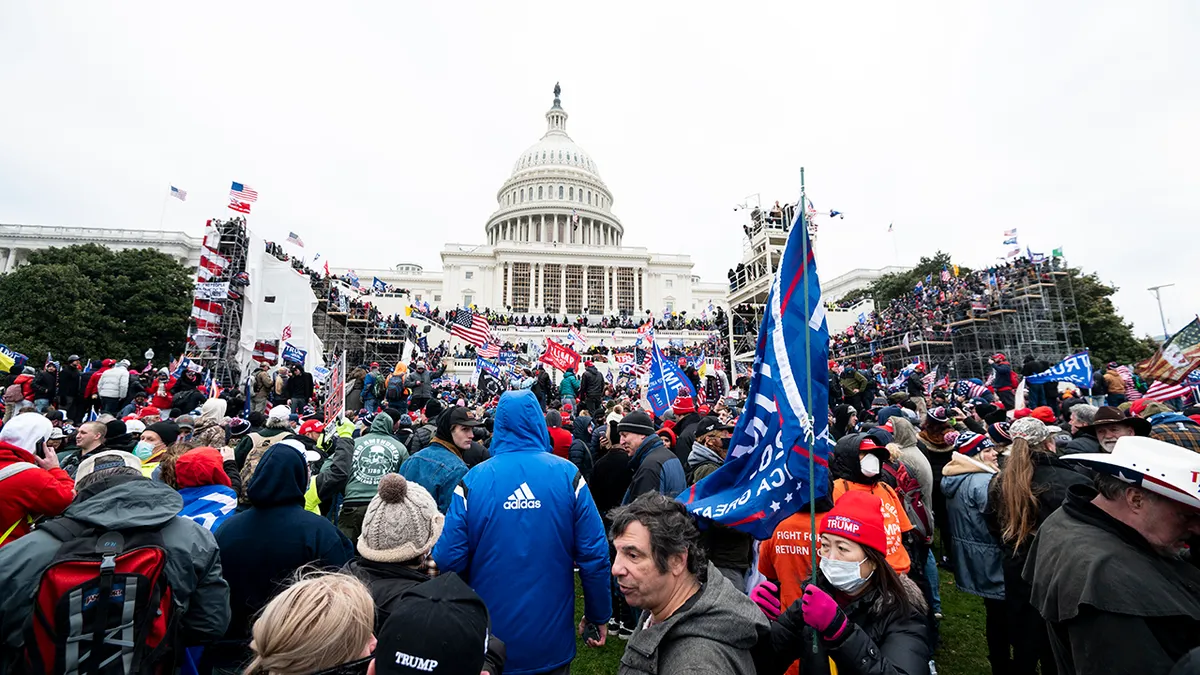
Republicans recover over 100 files deleted by Jan. 6 committee days before GOP took majority

Protesters outside of the Capitol

By Brooke Singman
The former House Select Committee on Jan. 6 deleted more than 100 encrypted files from its probe just days before Republicans took over the majority in the House of Representatives, Fox News Digital has learned.

The House Administration Committee’s Oversight Subcommittee is leading an investigation into Jan. 6, 2021, led by Chairman Barry Loudermilk, R-Ga. The panel is investigating the security failures on that day, as well as the “actions” of the former select committee investigating the Capitol riot.

Loudermilk, last week, told Fox News Digital his investigation has entered a “new phase” with renewed support from House Speaker Mike Johnson, R-La., who has committed additional resources to the panel’s investigation.

Sources familiar with Loudermilk’s investigation told Fox News Digital that, per House rules, the former select committee, which was chaired by Rep. Bennie Thompson, D-Miss., was required to turn over all documents from its investigation to the new, GOP-led panel, after Republicans secured the majority of the House of Representatives following the 2022 midterm elections.

Sources told Fox News Digital that Thompson had told Loudermilk that the select committee would turn over four terabytes of archived data, but that the new committee only received approximately two terabytes of data.

Fox News Digital has learned that Loudermilk’s committee hired a digital forensics team to scrape hard drives to determine what information they were not given.

The forensics team, according to sources familiar with their search, determined that 117 files were both deleted and encrypted. Sources said those files were deleted on Jan. 1, 2023 – just days before Thompson’s team was required to transfer the data to the new committee.

Fox News Digital has learned the forensics team has recovered all 117 deleted and encrypted files. Now, Loudermilk is demanding answers and passwords to access the data.

Fox News Digital exclusively obtained a letter Loudermilk sent to Thompson, requesting access to recovered digital files by his forensic team.

“As you acknowledged in your July 7, 2023 letter, the Select Committee to Investigate the January 6th Attack on the United States Capitol (Select Committee) did not archive all Committee records as required by House Rules,” Loudermilk wrote. “You wrote that you sent specific transcribed interviews and depositions to the White House and Department of Homeland Security but did not archive them with the Clerk of the House.”

Loudermilk added that Thompson also “claimed that you turned over 4-terabytes of digital files, but the hard drives archived by the Select Committee with the Clerk of the House contain less than 3- terabytes of data.”

Loudermilk explained that after a forensic analysis of the data and archived hard drives, he was able to recover “numerous digital records from hard drives archived by the Select Committee.”

“One recovered file disclosed the identity of an individual whose testimony was not archived by the Select Committee,” Loudermilk wrote. “Further, we found that most of the recovered files are password-protected, preventing us from determining what they contain.”

Loudermilk asked that Thompson provide him “a list of passwords for all password-protected files created by the Select Committee” so that his committee can “access these files and ensure they are properly archived.”

Meanwhile, Loudermilk also penned letters to White House general counsel and the general counsel of the Department of Homeland Security, requesting “unedited and unredacted transcripts” of White House and DHS testimony to the former select committee.

Loudermilk’s committee knows the transcripts of these interviews exist, but said they were not turned over by the Thompson-led committee.

Loudermilk demanded the White House and DHS comply with his request by Jan. 24.

“It’s obvious that Pelosi’s Select Committee went to great lengths to prevent Americans from seeing certain documents produced in their investigation. It also appears that Bennie Thompson and Liz Cheney intended to obstruct our Subcommittee by failing to preserve critical information and videos as required by House rules,” Loudermilk told Fox News Digital.

[…]

Via https://www.foxnews.com/politics/house-committee-jan-6-deleted-encrypted-117-files-was-required-share-house-gop-sources

US Buying ‘Safe and Delicious’ Fukushima Fish Banned by Other Countries

fish with radioactive radiation symbol

Japan last month completed its fifth release into the Pacific Ocean of treated contaminated radioactive wastewater from the Fukushima Daiichi Nuclear Power Station.

Local fishing groups, residents, neighboring countries and many scientists and environmental organizations strongly oppose the discharges, citing concerns about the contaminated water’s effects on human and environmental health.

In an attempt to allay those concerns, Japan’s Prime Minister Fumio Kishida last Septemer, following the first discharge, released a video clip of himself eating Fukushima fish, which he called “safe and delicious.”

And Japan’s economic minister, Yasutoshi Nishimura, ate sashimi in Tokyo for the news cameras. “It’s really the best!” he said, The New York Times reported.

That didn’t stop China, Russia and South Korea from banning the import of Japanese seafood, over concerns about radioactive contamination.

But the U.S. took a different tack. In October 2023, U.S. Ambassador to Japan Rahm Emanuel announced the U.S. military would buy bulk Japanese seafood for service members stationed at military bases in Japan and explore more broadly how to help offset China’s ban on Japan’s seafood.

Emanual said the contract between Japanese fisheries and the U.S. armed forces would be long-term. It began by purchasing a metric ton of scallops with plans to expand eventually to all types of seafood.

He said the U.S. was also in talks with Japanese authorities to direct locally caught scallops to U.S.-registered processors and said the U.S. would look at its overall fish imports from Japan and China.

About a month before the announcement the Japanese embassy hosted a sushi-tasting event at the U.S. Capitol to protest China’s decision to ban Japanese seafood.

Enough radioactive water to fill 500 Olympic-sized swimming pools

Tokyo Electric Power Company (TEPCO), owner of Fukushima Daiichi, last year initiated periodic releases of large amounts of wastewater accumulated at the plant since the massive earthquake and tsunami that caused the 2011 Fukushima nuclear disaster.

The earthquake destroyed the plant’s cooling system. Since then, TEPCO has been pumping in water to cool the reactor core’s fuel rods. That water becomes contaminated with highly radioactive material.

That radioactive water is stored in tanks, which now hold about 1.3 million metric tons of water — enough to fill 500 Olympic-sized swimming pools. Japan said it is running out of storage space for the water and needs the land where the tanks sit to build facilities that will allow the company to safely decommission the plant.

TEPCO began filtering most radioactive material out of the water and releasing it after the United Nations (U.N.) International Atomic Energy Agency (IAEA) in July 2023 determined TEPCO’s discharge plan met its international safety standards and would have only a “negligible” effect on humans and the environment.

Before the IAEA’s approval, the National Association of Marine Laboratories, made up of the 100 most prestigious institutions in the U.S., in 2022 called for the discharge plan to be suspended.

The National Association of Marine Laboratories, Greenpeace and many others who oppose the water release argue the risks haven’t been properly assessed and that TEPCO hasn’t presented enough data to determine the safety of the release.

Greenpeace’s Shaun Burnie, who authored the organization’s 2020 report on the plan, told The Defender there are several viable alternatives to TEPCO’s flawed water discharge plan.

However, rather than exploring those options, “TEPCO and the Japanese government have chosen what they claim is the cheapest option,” Burnie said. “TEPCO did not seriously consider the option of long-term storage and processing to remove tritium and carbon-14,” which would be less expensive than they allege.

A U.N. human rights special rapporteur warned Japan’s government that discharging the wastewater from the Fukushima nuclear plant into the environment violates the rights of its citizens and neighbors.

Kimberly Roberson, author of “Silence Deafening: Fukushima Fallout … A Mother’s Response” told The Defender that a green light from the IAEA, whose stated purpose is “carry[ing] out programs to maximize the contribution of nuclear technology to society,” does not mean the process is safe.

“Make no mistake, their mission is to promote nuclear power, and yet they are recognized as the authority,” she said.

“Standards, by the way, don’t necessarily equate with safety,” she added. “As for safeguarding, it’s like the fox guarding the hen house. The National Academies of Sciences BEIR VII report in 2006 unequivocally stated there is no safe dose of radiation.” This report examined the health effects of low-level radiation.

Is the water ‘safe’?

The radioactive water is captured in tanks and then filtered using the Advanced Liquid Processing System (ALPS) to remove as many radioactive isotopes as possible, but TEPCO reports that the water still contains tritium, a radioactive isotope of hydrogen that is hard to separate and remove.

The company dilutes the water until tritium levels fall below the IAEA’s international regulatory standards for drinking water before releasing the water into the ocean.

Burnie said that among other problems, the scientific panel commissioned to assess the Fukushima water issue for the Pacific Island Nations expressed serious concern about “the inappropriateness of using a drinking water-related parameter for a decades-long discharge of tritium contaminated water into the ocean,” especially when the existing regulatory process actually requires an Environmental Impact Assessment.

TEPCO also acknowledged that its ALPS processing technology is flawed, according to a 2020 Greenpeace report, and that tests show the water still contains radioactive materials it was supposed to be filtering out. The company claims more filtering can solve the problem.

Scientists, like oceanographer Ken Buesseler, Ph.D., from Woods Hole Oceanographic Institution in Massachusetts insist TEPCO’s claims of safety are “not supported by the quantity and quality of the data,” Science reported.

Others, like Robert Richmond, Ph.D., a marine biologist at the University of Hawaii at Manoa said that even though tritium levels in the released water are below international recommended levels, they are still thousands of times higher than the natural level in seawater.

The water will be discharged at a single point for decades, he said. That’s a problem because tritium bioaccumulates, which means the levels build up in fish and other microorganisms and then can work their way up the food chain.

“I strongly adhere to what’s called the precautionary principle,” Richmond told NPR. “In the absence of data showing something is safe, you don’t assume that it’s safe. You rather put in those protective measures to be very conservative.”

Ferenc Dalnoki-Veress, Ph.D., an adviser to the 18 Pacific Island Nations on the issue, said the information TEPCO gave the scientists indicated the company didn’t have complete data on what was in the tanks. The data TEPCO provided, he said, was “like a student handing in a poorly written assignment with no effort.”

Also, the data TEPCO did have was sampled only in small amounts of water from one-quarter of the tanks. Strontium-90 and cesium-137 — radionuclides produced by nuclear fission — have turned up in the water in highly variable concentrations, raising serious concerns about the process.

Burnie said TEPCO’s assessment “makes fundamental mistakes in radiation protection science” and ignores the risks posed by radionuclides other than tritium found in the water.

“Basic things such as how much radioactivity in total is planned to be discharged has not been provided.”

Burnie added:

“Ultimately, the concentrations [of isotopes in the seawater] are of direct relevance to those who may consume them, including marine species including fish and, ultimately, humans.”

Japan began releasing the contaminated water last summer at approximately 7,800 tons at a time, with this fifth release bringing the total to about 39,000 tons — emptying just over 10 of the approximately 1,000 tanks at the site. In fiscal year 2023, TEPCO plans to discharge a total of 54,600 tons of contaminated water in seven rounds, including the water released in May.

[…]

Via https://childrenshealthdefense.org/defender/fukushima-radioactive-wastewater-us-buying-fish-threaten-human-health/

Egyptian Evidence for the Exodus: Did it Happen?

The Hebrew Tradition: Ramses II, Pharaoh of the Exodus

Episode 29 Ramesses the Great: The Later Years

The History of Ancient Egypt

Professor Robert Brier

Film Review

Despite the absence of concrete archeological evidence, Brier believes the mass migration of Israelites from Egypt described in Exodus 1-14 states occurred under Ramesses II. According to the biblical account, their rapid population increase in Egypt’s delta region frightened the “new pharaoh,” leading him to first enslave them as brick makers and later issue an edict to kill all their male children. Instead of killing him, the Egyptian midwife of Moses’s mother set him adrift in a basket in the Nile. The pharaoh’s daughter discovered him, named him Masah (meaning “draw out” of the reeds) and raised him herself.

When the pharaoh rejected the adult Moses’s demand to release the Israelite slaves, God delivered 10 plagues on the Egyptians (turning the Nile to blood, followed by plagues of frogs, gnats, flies, mass livestock deaths, boils, hail, locusts and blotting out the son). It was only when God killed all the Egyptians’ firstborn sons that pharaoh relented.

The Bible gives the number of Israelis leaving Egypt as 600,000. Brier finds this unlikely as the population of Egypt was only 1 million.* According the the Bible, the Israelites didn’t take the Philistine (Palestinian) route as it was lined with military watchtowers. Instead they crossed a sea of reeds in the delta region, and when the Pharaoh sent military chariots to pursue them, the wheels got bogged down in the mud.

Despite the absence of concrete evidence, Brier believes the biblical account is consistent with Egyptian life under the reign of Ramses II.

Unlike elsewhere in the Mediterranean, Egyptian mud bricks contained straw, and Moses is an Egyptian name meaning “birth.” Likewise a stella erected by Ramses II’s son Merneptah celebrating to Egypt’s victory over Canaan states “Israel is laid waste – its seed is not.” Brier finds this significant as Israel is not designated as a foreign country (with the 3 hills hieroglyph), but the with hieroglyphs designating “Israelites.**
He also find it significant that the Exodus occurred during year 20 of Ramesses II’s reign, the same year his firstborn son died.


*Brier believes the number was closer to 600.

**According to Exodus, the Israelites were still wandering in the desert during the reign of Merneptah.

Film can be viewed free with a library card on Kanopy.

https://www.kanopy.com/en/pukeariki/watch/video/1492791/1492862

Today New Zealand Willing Accomplice of Israeli Genocide: 20 Years Ago It Busted, Jailed and Deported Mossad Spies

Eli Cara, left, with Uriel Zoshie Kelman, right, during their sentencing at the Auckland High Court last July. Picture / Brett Phibbs
Eli Cara, left, with Uriel Zoshe Kelman, right, during sentencing at Auckland High Court in July 2004. [Source: nzherald.co.nz]


By Murray Horton

In 2024, New Zealand leaves no doubt where it stands on the Gaza War. It is firmly on Israel’s side, having said nothing beyond general tut-tutting about the genocide being inflicted on the Palestinians by Israel.

[…]

And New Zealand has become directly involved in the Western military support for Israel, specifically by sending New Zealand military personnel to join the U.S./UK-led coalition attacking Yemen and fighting the Houthis (who, as their act of solidarity with Gaza and the Palestinians, are attacking and disrupting shipping in the Red Sea). It is a token commitment—only six military personnel who are not directly involved in combat—but they are there to provide what the Government calls “precision targeting.”

It was all very different 20 years ago, when New Zealand took a radically different approach to Israel. One of the sensations of 2004 was the unmasking of an Israeli intelligence operation in Auckland (New Zealand’s largest city) and the arrest of two operatives of Mossad (that country’s external security agency), followed by their conviction, imprisonment and deportation.

Two Caught, Two Got Away

To briefly summarize: In March 2004, New Zealand police arrested two Israelis, Eli Cara and Uriel Kelman, in the act of collecting a fraudulently obtained New Zealand passport (it was in the name of a New Zealand cerebral palsy sufferer who had certainly not applied for a passport and was in no position to ever travel). The passport was sought, not for either of them, but for their ringleader, Zev Barkan, who had been an Israeli diplomat in Europe for a number of years. Barkan fled the country and has never been brought to justice.

There was a fourth man also involved (classic spy rings always have a mysterious Fourth Man), whom media inquiries identified as a New Zealand citizen, Tony Reznik. He is a New Zealand citizen who had lived for many years in Israel and who is believed to have been the one responsible for selecting the disabled man for the identity theft. (Reznik worked as a paramedic and would have come into contact with the unknowing victim. Barkan also lived in a street near the disabled man.) Reznik, and his family, also hurriedly fled the country without being brought to justice.

Murder Inc.

The question remains: Why would Israeli intelligence go to such lengths to secure, fraudulently, a New Zealand passport? The answer is sinister in the extreme, because Mossad is not just any old run-of-the-mill spy agency, which simply spies on people. It specializes in murdering them. Ed Blanche wrote in Beirut’s Daily Star: “Intelligence operations, by definition, are always murky, opaque and hard to pin down, but one could be forgiven for tracing a link between the July 15, 2004, conviction in New Zealand of two alleged Mossad agents for trying to illegally obtain the passport of a bed-ridden disabled man and the assassination of Hezbollah official Ghaleb Awali in Beirut’s southern suburbs last Monday, allegedly by Israeli-run agents.”

[…]

Major Diplomatic Breach

When Cara and Kelman were sentenced to prison, in July 2004, the Prime Minister (Helen Clark, Labour Party) broke the official silence on the case that had been deliberately kept in place until then, and well and truly put the boot into Israel. “You do not expect your friends to do this to you…We look forward at some point to the Israeli government swallowing its pride and offering the explanation and apology we’ve asked for” [Colin Espiner, “Clark Lambasts Israel; Diplomatic Sanctions Imposed After Spies Are Sent To Prison,” Press, July 16, 2004.]

New Zealand basically took every step short of breaking diplomatic relations. Clark suspended high-level visits to and from Israel; declined permission for Israel’s President, the Head of State, to visit New Zealand; implemented visa restrictions on all Israeli government officials visiting New Zealand; suspended Ministry of Foreign Affairs consultations with Israel; and delayed indefinitely the appointment of a new Israeli Ambassador.

Because the case was so clear-cut and the criminals had been caught in the act, the government’s measures were supported by all political parties and the media. This represented a major public relations embarrassment and diplomatic blow for Israel. Its local supporters tried to make light of the whole incident, pointing out that New Zealand and Israel have a very limited relationship, with minimal trade between the two.

It was suggested that the Labour government’s harsh measures against Israel were further proof of its alleged pro-Palestinian bias (in the recent past, Phil Goff, the Minister of Foreign Affairs, visited the Palestinian leader, the late Yasser Arafat, in his besieged compound in Ramallah). Local Zionists even pulled out the old canard that criticism of Israel is proof of anti-Semitism, and tried to directly link the government’s measures with the coincidental and despicable mass vandalism of Jewish graves in Wellington, New Zealand’s capital. More reasoned commentators correctly stated that this crime bore all the hallmarks of the local neo-Nazi lunatic fringe and had nothing to do with the exposure and punishment of an Israeli spy ring.

Australia Secretly Expelled Israeli Diplomat

The ramifications of this international incident continued to play out. It was revealed, in February 2005, that Australia had asked Israel to withdraw a diplomat from its Canberra Embassy. This had not been publicly announced and, when the Australian media exposed it several weeks after the event, the Australian government refused to comment. But the seriousness of this unusual move is underscored by the fact that Australia and Israel were (and are) good friends. The unnamed diplomat had visited Cara and Kelman when they were in prison in Auckland.

New Zealand Green Party Member of Parliament Keith Locke, was the only one to ask the obvious question: “We need to know whether last year’s attempt by a Mossad agent to fraudulently obtain New Zealand passports was run out of Israel’s Embassy in Canberra. The expelled diplomat was cross-accredited to New Zealand and visited the two Mossad spies jailed here. It is bad enough that Mossad was infringing on New Zealand’s sovereignty and laws. It is even worse if the Israeli diplomatic post responsible for New Zealand was involved.’”

According to JustPeace, “Locke said there was prima facie evidence the Mossad operation against New Zealand was run out of Australia. ‘One of the jailed spies, Eli Cara, was based near Sydney, running a dummy tourism agency. He crossed the Tasman 24 times. In addition, the third Mossad agent, Zev Barkan, who managed to escape New Zealand, had been an Israeli diplomat in Austria and Belgium.’ Locke said the New Zealand government must not be caught up in an Australian government cover-up of the affair.”

[…]

But things had obviously been happening behind the scenes. In early 2005, Cara and Kelman withdrew their appeals, which was followed, in February, by media and official speculation that Israel was preparing to apologise to New Zealand. The timing was significant, as this speculation was just before the visit of their President to Australia, indicating that Israel saw the need to restore good relations with both countries.

The Government wasn’t kidding—in March 2005, Israel expressed surprise that a reserves general was refused entry into New Zealand to speak at a fundraising event organized by the local Jewish community. Phil Goff, the then-Minister of Foreign Affairs, reiterated that all such visa requests would be refused until Israel apologized. It also emerged that month that Israel’s Ministry of Defense was the only client of a New Zealand manufacturer of military equipment to have been vetoed by the Government.

Israel Had Previously and Fraudulently Obtained Other New Zealand Passports

The pressure paid off. In June 2005, Israel apologized and the sanctions were lifted. This followed months of diplomatic wrangling about the wording of the apology and, in the end, Israel did not confirm that the two men were agents, merely referring to them as citizens. Helen Clark correctly said: “It is clear that the Israeli government will not apologize for criminal activity by just any citizens. There was a reason to apologize for the actions of these two citizens.” [“Sanctions Lifted After Israel Apologises For Passport Incident,” Press, June 27, 2005.]

Israel provided no explanation as to what the New Zealand passports were going to be used for. Clark said that an international arrest warrant had been issued for the New Zealander, Tony Reznik (by then safely in Israel) and she also revealed that other New Zealand passports had previously been obtained by Israeli agents. The government had decided not to pursue them, as they had now all been detected and all relevant passports had been cancelled.

The government had the support of the public and media throughout this whole squalid affair. To quote from a Press editorial (“Humiliating Apology” June 28, 2005): “However humiliating it might be, for a beleaguered nation which requires international goodwill, it was an apology that had to be made…The New Zealand government was correct to take a hardline stance over the passport fraud.”

[…]

In fact, stupidity seems to be a hallmark of Mossad. A February 2005 article by Nicky Hager in the Sunday Star Times (cited in “Israeli Jailed in New Zealand Headed Cyprus Spy Ring,” Haaretz, February 27, 2005) revealed that Kara, one of the two agents imprisoned in New Zealand, had sent two Mossad agents to Cyprus in a 1998 operation which resulted in them being arrested and serving nine months of a three-year prison term.

Kara’s friendship with a senior Mossad official got him posted to Australia, from where he worked on the ill-fated New Zealand passport operation. Apparently, after his return to Israel from a New Zealand prison, he decided to leave the world of intelligence and took a job with Visa, the credit card transnational. Probably a good career move.

Besides, Mossad had found another willing helper—in January 2006, The Jerusalem Post reported that, once New Zealand no longer became a source of fake passports, the German intelligence agency Bundesnachrichtendienst (BND) stepped in to ensure a steady supply of fake German passports to enable Mossad to place agents in Middle Eastern countries. The Post said: “During the 90s, Mossad agents often used passports from Canada and New Zealand when travelling in enemy territory, but once the practice became widely known, they stopped.” [“Germany ‘Helped Agents,’” Press, January 19, 2006]

Where Are They Now?

At least one of the Mossad squad continued working for it, including involvement in what the spooks call “wet jobs” (murder), namely Barkan—who started life as an American named Ze’ev William Brokenstein. “Former Israeli diplomat to New Zealand Zev William Barkan leads a life akin to that of novelist Frederick Forsyth’s Jackal—emerging from the shadows only to be named by authorities in connection with various crimes before again disappearing.”

According to Stuff magazine, “Barkan is still wanted in New Zealand as the alleged ringleader of an illegal passport scam in 2004; last year [2010] he was named as a suspect in the slaying of a Hamas operative in Dubai. Barkan is one of 32 people Dubai police suspect as having a role in the killing of Mahmoud al-Mabhouh in a hotel room in the emirate in January 2010.”

A simple Google search reveals that Barkan is now working in Israel’s technology industry, specifically a cloud security company. He makes no secret of his past: “Before becoming XM Cyber’s VPO, Zev Barkan spent over 30 years with the Israeli Intelligence Community,” wrote Stuff.

U.S. Disparaged New Zealand’s Reaction As a “Flap”

And what did the U.S., the major ally of both Israel and New Zealand, make of the abortive Mossad operation? “Almost six years later, the scandal would rear its head again when in December [2010] cables released by WikiLeaks said United States diplomats disparaged New Zealand’s reaction to the suspected spy ring as a ‘flap’ and accused New Zealand’s government of grandstanding in order to sell more lamb to Arab countries.”

[…]

Via https://covertactionmagazine.com/2024/06/06/today-new-zealand-is-a-willing-accomplice-of-israeli-genocide-but-20-years-ago-it-busted-mossad-op-jailing-deporting-agents/