Unknown's avatar

About stuartbramhall

Retired child and adolescent psychiatrist and American expatriate in New Zealand. In 2002, I made the difficult decision to close my 25-year Seattle practice after 15 years of covert FBI harassment. I describe the unrelenting phone harassment, illegal break-ins and six attempts on my life in my 2010 book The Most Revolutionary Act: Memoir of an American Refugee.

USDA Launches Regenerative Pilot Program to Rebuild American Soil and Food Quality

Dr Mercola

Story at a glance:

  • Regenerative agriculture rebuilds soil without reliance on heavy chemical inputs. This approach improves water retention, nutrient density, and long-term farm productivity
  • In December 2025, the U.S. Department of Agriculture (USDA) launched a $700 million Regenerative Pilot Program to support farmers transitioning to soil-building practices
  • The program uses existing conservation funds, public-private partnerships, and a unified application process to reduce administrative burden and make regenerative practices more accessible
  • You can support regenerative agriculture through your daily food choices by prioritizing food from regenerative farmers, choosing pasture-raised meat and dairy, and avoiding ultraprocessed foods

The food system you depend on today operates very differently from the one that fed previous generations. Not long ago, food was grown in ways that supported the surrounding ecosystem rather than depleting it, producing food that reflected the health of the land itself. That relationship began to change in the mid-20th century, when the Green Revolution accelerated the adoption of industrial, chemical-dependent farming methods.1

As agricultural practices shifted, the relationship between soil health and human health began to deteriorate. Food quality followed the same downward path as soil structure, microbial diversity, and water retention, resulting in products that fill your stomach while failing to support your health, as well as increased rates of chronic diseases.2,3

Growing concern about the long-term consequences of this model has finally brought soil health back into focus as a public priority under the Make America Healthy Again (MAHA) Strategy released in September 2025. Building from this, the U.S. Department of Agriculture (USDA) has launched the Regenerative Pilot Program, which reflects a long-overdue effort to align farming practices with soil restoration, farmer viability, and the quality of the food that reaches your table.

What Is Regenerative Agriculture?

Regenerative agriculture is a return to what “organic” was originally all about. This approach focuses on rebuilding soil biology, addressing a wide range of problems tied to modern food production. In practical terms, regenerative agriculture helps:

Rebuild topsoil instead of stripping it away — Topsoil is the thin living layer that supports nearly all food production, yet decades of tilling, monocropping, and chemical-heavy practices of industrial farming have steadily depleted it.5

Regenerative farming restores this layer by keeping soil covered with living plants, rotating crops, and integrating animals in ways that stimulate microbial activity. As organic matter returns, soil structure improves, erosion slows, and carbon is stored underground where it supports fertility.

Protect water sources and reduce overall water demand — Industrial agriculture consumes most available freshwater while polluting rivers, lakes, and aquifers with fertilizer runoff and waste.6 Regenerative systems change how water moves through the land by improving soil structure and increasing organic matter, allowing soil to absorb and retain far more moisture.7

For every 1% increase in soil organic matter, an acre of land holds tens of thousands of additional gallons of water.8 Healthier soils also filter contaminants before they reach waterways, protecting drinking water supplies.

Produce more nutrient-dense food and better long-term health — Depleted soils produce crops with lower mineral and antioxidant content, while regenerative systems rebuild soil microbiomes that regulate nutrient uptake and plant health.9

Animals raised on regenerative farms also benefit from these conditions, as diverse forage and healthy soils support stronger immune function, healthier fat profiles, and lower reliance on antibiotics.10 The result is food with higher nutritional value, linking soil restoration directly to long-term health rather than treating nutrition as a downstream issue.11

Reduce food safety risks at the source — A high amount of foodborne illness originates from concentrated animal feeding operations (CAFOs) where animals are crowded, stressed, and routinely given antibiotics. These conditions promote pathogen spread and antibiotic resistance.12

Regenerative livestock systems rely on pasture-based grazing, lower stocking densities, and natural diets that support stronger immune function. Meat and dairy from these systems show lower contamination rates and reduced antibiotic resistance, directly affecting food safety.

Lower chemical use, which reduces pollution and allows ecosystems to recover — Industrial agriculture contributes heavily to air, soil, and water pollution through fertilizer runoff, pesticide drift, waste lagoons, and ammonia emissions. These pollutants harm nearby communities and degrade ecosystems that support pollinators and wildlife.13,14

Regenerative agriculture minimizes chemical inputs and relies on biological processes, allowing land to regain its capacity to support diverse plant and animal life. As ecosystems recover, pollution declines and landscapes become more resilient to environmental stress.15

Strengthen farmers and stabilize local economies — Regenerative systems reduce dependence on costly inputs such as synthetic fertilizers, pesticides, and purchased feed, lowering long-term operating costs.16 Financially resilient farms support stronger local food systems, more stable employment, and rural economies that circulate value locally instead of exporting it to input suppliers.

If you want a deeper look at how this farming practice helps restore soil biology, read “The Right How, Cow, Plants, and Biology Heal the Land.”

USDA Announces $700 Million Regenerative Pilot Program

In December 2025, U.S. Secretary of Agriculture Brooke L. Rollins joined U.S. Health and Human Services (HHS) Secretary Robert F. Kennedy, Jr. and Centers for Medicare & Medicaid Services Administrator Dr. Mehmet Oz to announce a $700 million Regenerative Pilot Program, which aims to help American farmers adopt regenerative practices.17

Soil health is the foundation for national health and farm viability — Secretary Rollins emphasized that protecting topsoil and improving land stewardship directly support farmer productivity and long-term food security.

“Today’s announcement encourages these priorities while supporting farmers who choose to transition to regenerative agriculture. The Regenerative Pilot Program also puts Farmers First and reduces barriers to entry for conservation programs,” she stated.

“This is another initiative driven by President Trump’s mission to Make America Healthy Again. Alongside Secretary Kennedy, we have made great strides to ensure the safe, nutritious, and affordable food our great farmers produce make it to dinner tables across this great country.”18

The announcement aligned federal health agencies around food system accountability — Secretary Kennedy reinforced that soil restoration sits at the center of the MAHA strategy, noting that public health outcomes begin with the condition of farmland.

[…]

The timing reflects both urgency and opportunity — More than 350,000 children have received diabetes diagnoses in recent months, and over 75% of Americans between ages 17 and 24 cannot qualify for military service due to obesity, poor physical fitness, or mental health challenges.20

These figures point to a health crisis that extends beyond individual choices or medical interventions, reaching back to the nutritional quality of food and the agricultural systems that produce it.

The program revives a conservation mandate born from ecological failure rather than ideology — The institutional roots of this effort trace back to the 1930s, when Congress created the USDA Natural Resources Conservation Service (NRCS) in response to the Dust Bowl, a prolonged ecological disaster marked by severe drought, widespread soil erosion, and massive agricultural collapse across the Great Plains that displaced farming families and crippled rural economies.

NRCS was established to help farmers conserve soil and water resources, a mission that has contributed to substantial productivity gains over time. Between 1948 and 2021, total U.S. farm production increased by nearly 190% while overall farm inputs, such as land, labor, and water, declined slightly.

Despite this progress, significant problems persist — USDA data show that significant erosion concerns remain, with a quarter of cropland affected by water-driven erosion and additional acreage impacted by wind erosion. This underscores the need for approaches that are easier to implement and better aligned with how farms operate.

However, many farmers face heavy administrative burdens when attempting to adopt regenerative practices.

The Regenerative Pilot Program is designed to address those challenges directly by simplifying participation and expanding access to producers at different stages of experience, from those just beginning with practices like cover crops to operations with years of conservation work already in place.

How the Program Is Designed to Work

Administered by NRCS, the initiative introduces an outcome-based conservation model that allows producers to plan and carry out whole-farm regenerative practices through a single application. Rather than applying separately for individual practices, farmers can bundle multiple soil- and land-building strategies into one plan, simplifying participation and reducing administrative burden.21

Funding is drawn entirely from existing conservation programs to avoid new bureaucracy — The USDA allocated $400 million through the Environmental Quality Incentives Program (EQIP) and $300 million through the Conservation Stewardship Program (CSP) for the first year. By relying on established authorities and familiar program structures, the agency preserved continuity while introducing a more integrated planning framework.

An advisory council will oversee implementation and data integrity — To guide implementation, NRCS is establishing a Chief’s Regenerative Agriculture Advisory Council composed of farmers, industry representatives, and consumer-focused stakeholders.

The council will meet quarterly to review progress, advise on data and reporting, and help ensure the program remains practical and responsive to on-the-ground realities, with its recommendations shaping future conservation delivery.

Public-private partnerships expand resources without increasing federal spending — The USDA is inviting private-sector partners to co-invest in conservation outcomes through existing authorities. Federal dollars will be matched with private funding, increasing total support for regenerative practices while aligning on-farm improvements with broader supply-chain demand.

Applications are submitted through local NRCS offices — Farmers and ranchers interested in participating are encouraged to apply through their local NRCS Service Centers based on their state’s ranking schedules for fiscal year 2026.

Applications for both EQIP and CSP funding are submitted through the new unified regenerative application process, with additional information available through NRCS for those seeking technical or financial assistance.

Taken together, the Regenerative Pilot Program is designed to make conservation work the way farming actually works. By consolidating funding, oversight, and application pathways into a single whole-farm framework, the program aims to lower barriers to participation while rewarding practices that improve land function over time.

How to Show Your Support Through Your Food Choices

While the Regenerative Pilot Program helps address gaps in policy and funding, regenerative farming can gain more traction when farmers can see that these methods are economically viable. That outcome is shaped well beyond federal programs — it’s driven by everyday choices made throughout the food system.

When your decisions consistently favor regenerative practices, you reinforce farming systems that protect land, support farmers, and improve the quality of the food supply over time. Here are practical ways to do that:

1. Buy directly from regenerative farmers whenever possible — Look for farmers who use cover crops, rotational grazing, composting, and no-till methods, and take the time to ask how they farm rather than relying on an “organic” label alone. Local farmers markets, regenerative CSAs, and platforms like Regenerative Farmers of America make it easier to find producers applying these methods.22

2. Choose meat and dairy from pasture-raised animals — Labels like “100% grass fed” or “pasture-raised” can be a useful starting point, but transparency matters more than branding. Direct relationships with farmers provide the clearest window into how livestock are managed.

3. Minimize purchases from brands tied to industrial commodity agriculture — Most ultraprocessed foods, synthetic meat alternatives, and industrial dairy rely on supply chains rooted in soil-depleting monocultures. Brands that cannot trace or explain how their ingredients are grown are often disconnected from the land entirely. When possible, favor smaller producers with clear sourcing standards and commitments to regenerative ingredients.

4. Share credible information within your community — Most people have never seen what healthy soil looks like. Demonstrations using rainfall simulators, side-by-side field comparisons, and soil profile cuts show what degraded versus regenerated land actually means. Share visual content, case studies, or educational materials, and organize or attend farm tours, talks, or webinars that show regeneration in action.

5. Engage locally and politically to shift public support — Food choices matter, but so do civic actions. Supporting local food programs, encouraging schools and retailers to source regeneratively produced food, and backing policies that reward soil-building practices all contribute to long-term change. These efforts help shift incentives away from chemical dependency and toward land stewardship.

[…]

Via https://articles.mercola.com/sites/articles/archive/2026/01/16/usda-regenerative-pilot-program.aspx
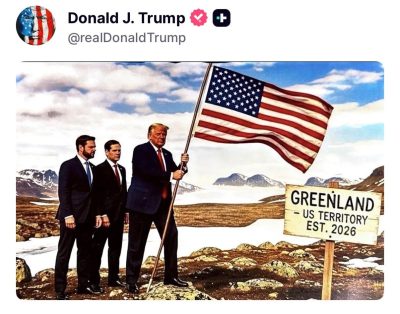
Would Greenland Become a State Or Just an Unincorporated Territory Like Puerto Rico?

The White House has signaled a specific, actionable policy goal through its official communication with an AI-generated image depicting the acquisition of Greenland as a clear piece of strategic messaging. It is designed to normalize a radical geopolitical concept within the domestic political narrative. The detail is in the AI image mentioning the word territory, meaning the proposed status might not statehood, but another specific administrative category. If the goal is to designate Greenland as an unincorporated US territory, this model mirrors the status of Puerto Rico which would be a deliberate choice to follow a path that provides maximum federal control with minimum political integration.

The strategic rationale is rooted in great power competition and Arctic dominance. Control of Greenland grants the US a permanent, sovereign Arctic platform. It enables resource denial to adversaries. It expands northern missile defense and surveillance networks. The territory model is seen as the fastest legal mechanism to achieve these defensive and resource aims. For more context curious readers can read my prior articles:

Could Trump’s Annexationist Talk Be Part Of A Great US Castling Strategy?

Trump Recalibrates US Networked Empire Into A Tariff-Based Order

US Continues Efforts To Absorb Greenland Into Its Sphere Of Influence In The Western Hemisphere

Since mid-January there has been speculation in the press of how much Greenland could cost to acquire, and the amounts seem to be around $700 billion. Donald Trump has not explicitly stated he wanted to make Greenland an “unincorporated territory” using that specific legal term in public comments before today’s AI image. Although Trump has consistently emphasized the need for US “ownership” and “title” of the island, believing anything less as “unacceptable”. With his public statements and actions have centered on the desire to “buy,” “acquire,” “take control of,” or “get” Greenland, which he views as a national security necessity.

A bill was introduced in the US House of Representatives by Rep. Randy Fine in January 2026 titled the “Greenland Annexation and Statehood Act,” which would authorize the President to acquire Greenland as a territory of the United States with the goal of ultimately admitting it as a state. Indicating the intention among some of his allies to pursue statehood eventually. While the President has not explicitly used the term “unincorporated territory,” the “Greenland Annexation and Statehood Act” directly mentions making it a state, a process that usually involves a period as a territory, to transition from unincorporated territory to incorporated territory and finally a state, but it remains uncertain still which category will come to pass.

Some Trump advisers have indicated they do not want to make it a state but rather explore options like a “Compact of Free Association” or other forms of association, though the President’s personal stance has remained focused on outright acquisition In his public addresses, he has told the people of Greenland, “if you choose, we welcome you into the United States of America” and pledged to “make you rich,” implying full integration and the benefits associated with joining the US.

This represents a doctrinal shift in US territorial policy, moving from a posture of status quo to one of active expansion. The target date of 2026 is likely aspirational but sets a timeline and it creates a perception for action and a metric for success. Even if physical acquisition is not achieved, the act of promotion advances several goals, but things are moving fast. It forces allies and adversaries to recalculate US intentions in the Arctic. It also tests the resilience of the international norm against territorial acquisition by coercion or purchase.

The broader implication is the potential revitalization of a colonial practice. Treating sovereign land as a transferable commodity, against the will of its inhabitants, marks a sharp departure from post-WWII norms, and would be akin to Puerto Rico’s predicament all over again. The territorial expansion of the United States was fundamentally a project of purchasing land from other states, most decisively through the Louisiana Purchase from France and the Alaska Purchase from Russia, which together added the vast core of the continent and a critical northern frontier.

This pattern was complemented by the Gadsden Purchase from Mexico and, most significantly, by treating sovereign Native American nations not as military conquests but as entities from which land could be acquired through treaties, effectively purchases, before subsequent seizure or broken agreements. While war and annexation played roles, the foundational mechanism for peaceful, legally-sanctioned growth and the avoidance of direct, prolonged conflict with major European powers was the strategic use of the federal treasury to buy sovereignty over continental space.

[…]

Via https://www.globalresearch.ca/greenland-state-unincorporated-territory-puerto-rico/5913003

Nigeria Continues Path towards BRICS Membership and Independent Foreign Policy

In a recent statement, Nigeria’s Foreign Minister, Yusuf Tuggar, announced the country’s intention to join BRICS as a full member in the coming years. With over 230 million people and the largest GDP on the continent, the African nation has been working to boost its economy and increase its role in the new multilateral order.

Tuggar has emphasized Nigeria’s strategic importance and economic potential since 2023 as reasons for joining, framing it as part of a broader effort to increase African representation in global decision-making. He links BRICS engagement to Nigeria’s broader ambitions, including seeking a permanent UN Security Council seat and G20 membership, leveraging the bloc for financial reform and investment

Since January 2025, Nigeria has been one of the eight partner countries in the group, which already includes three other nations from the continent as full members: South Africa, Egypt, and Ethiopia. If this materializes, BRICS will include the three largest economies in Africa, thereby enhancing the African voice in South-South cooperation.

With over 230 million residents, Nigeria is the most populous country on the continent and ranks sixth worldwide, with projections of reaching 377 million by 2050, according to United Nations data. Additionally, it is Africa’s largest oil producer, averaging over 1.5 million barrels per day, and has a GDP of $477 billion, the highest in the region.

Abuja has been pursuing greater South-South cooperation, aiming to turn its wealth into a positive force and become a significant voice. This differs from its interactions with Western powers from the Global North. Africa is increasingly seeking global partners that see the continent as independent, not as dependent.

Recently, United States President Donald Trump accused the current Nigerian government of allowing the persecution of Christians in the country, without presenting evidence. Nigeria is a nation with great religious diversity, where 51% of the population is Muslim, 43% Christian, and 6% practices local religions. The speech indicates that Washington is already aware of one factor capable of destabilizing the country, which currently has a social pact that reasonably reassures the internal situation.

It raises the question of whether, if accession to BRICS is announced, Nigeria will become the target of more concrete US actions. This is, at least initially, doubtful because Nigeria is not yet a priority for the US in case of a potential intervention. The country is not situated along any of the logistical routes they are targeting. Additionally, Washington is currently very focused on Iran, due to the Strait of Hormuz, and also on Venezuela, where it aims to facilitate a government transition without igniting a civil war and taking control of the country’s vast oil wealth.

Nigeria’s energy influence can strengthen BRICS’ ability to shape global markets and help reduce reliance on the dollar in international trade. For example, the energy trade between Brazil and Nigeria shows that Brazil imports oil and natural gas from Nigeria, which should be traded in national currencies, as Russia and China have been doing.

This movement follows a trend already established by economies in the Global South. Relying less on dollar reserves and promoting trade through a basket of national currencies is viewed very positively. De-dollarization is not just a political move but an economic response to the disparities in the international financial system. The US is attempting to slow this process, but stopping it completely is impossible.

Nigeria is on track to become one of the world’s ten largest economies by 2050 because it has significant investments in training engineers, doctors, and other professionals. These efforts are vital for the country’s development and well-being, benefiting not only its population but also helping it export goods and services worldwide.

Given this, BRICS needs to have Nigeria as a full member, not only for what the country can offer, but also for what BRICS can offer Nigeria. Confronted with a situation marked by ongoing Western influence and social and economic vulnerabilities stemming from a dependent development model, Nigeria needs alliances that can help break this cycle, and BRICS very much offers this alternative.

Finally, the African country has experienced a series of political instabilities in recent decades, including tensions between terrorist insurgent groups and the government. Even so, Nigeria has gradually achieved its ambitions and sought to resolve internal problems.

Nigeria aims to increase its presence in more influential spaces where it can also shape the rules. Being a BRICS partner is very important for Nigeria and would elevate the country above the other African countries that are permanent BRICS members. For this reason, Nigeria is eager to become a full member of BRICS to accelerate its economic growth and development.

[…]

Via https://www.globalresearch.ca/nigeria-brics-membership-independent-foreign-policy/5913268

Kushner Reveals Dystopic Plan to Build Data Centers on Ruins of Gaza Genocide

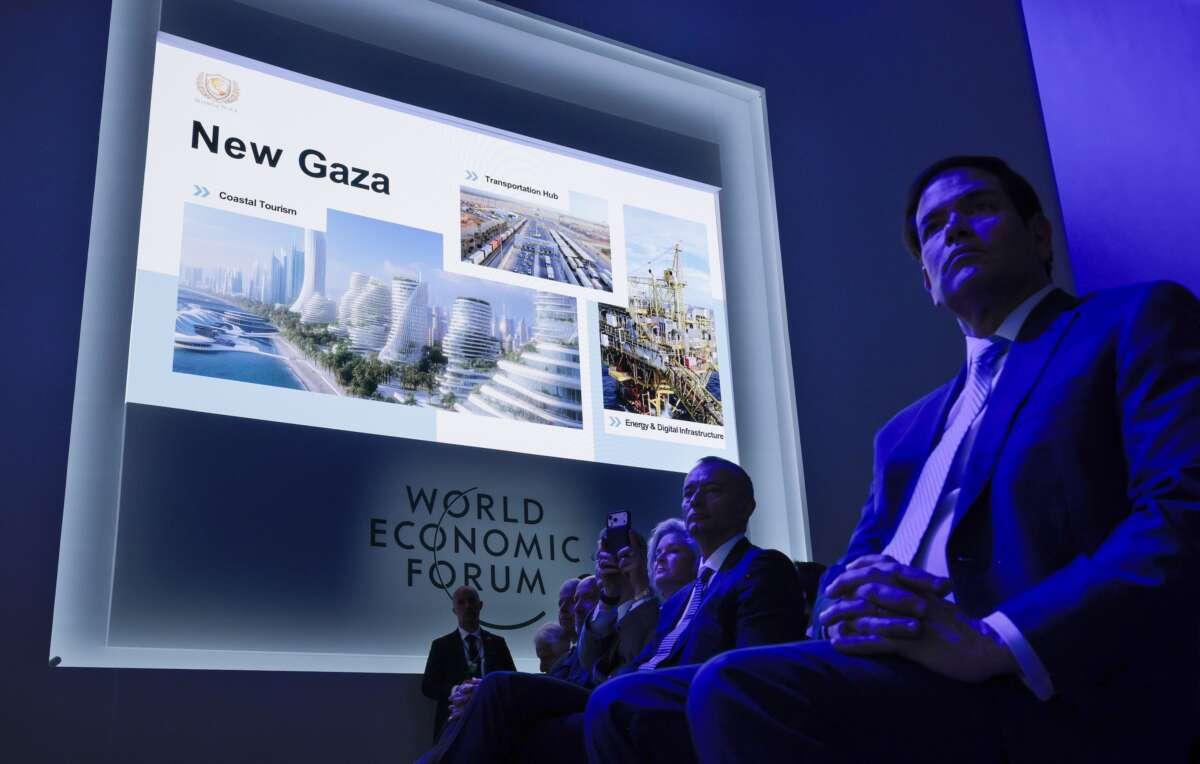
Secretary of State Marco Rubio listens to a presentation by Trump Administration officials about post-genocide Gaza following a signing ceremony for the “Board of Peace” at the World Economic Forum on January 22, 2026 in Davos, Switzerland.
Secretary of State Marco Rubio listens to a presentation by Trump Administration officials about post-genocide Gaza following a signing ceremony for the “Board of Peace” at the World Economic Forum on January 22, 2026 in Davos, Switzerland.Chip Somodevilla / Getty Images

By 

White House Adviser Jared Kushner revealed a neocolonial plan to transform Gaza into a home for luxury tourist resorts and data centers at the World Economic Forum on Thursday.

The plan has been widely condemned by human rights advocates, who say it is an an attempt to erase Palestinians by building a capitalist dystopia on the ruins of Israel’s genocide.

At the signing ceremony for President Donald Trump’s “Board of Peace,” Kushner shared a set of slides depicting a colonialist fantasy of the Gaza Strip under a hypothetical “demilitarization” of Hamas — despite the group’s repeated refusal to disarm, saying it would leave them defenseless against further attacks by Israel or otherwise.

The slides show computer-generated photos of high rise buildings along the coast and rows of residential buildings elsewhere.

The presentation includes a blueprint of Gaza divided into sections, which Kushner says is the U.S.’s plan for “catastrophic success” in the event of demilitarization of Hamas. The blueprint, labelled as the “Master Plan,” shows the entirety of the coast — where Palestinians have long fished for sustenance — dedicated to “coastal tourism,” with a sea port and an airport. There are large swaths dedicated to “parks, agriculture, and sports facilities.”

Tellingly, numerous parts of the map located next to residential areas are dedicated to industry and “data centers.” Ruinous technology like AI, reports have said, are slated to be a major part of the White House’s plan for Gaza, with other slides in the pitch deck reported by The Wall Street Journal showing a transformation of the Strip into a “smart city” with “tech driven governance.”

Nowhere is there a designation for cultural sites, nor does the map seem to be built around keeping or restoring any parts of Gaza that retain Palestinian heritage or life. The plan appears to be to finish Israel’s razing of the territory, clear the rubble in which thousands of Palestinians’ bodies are thought to be trapped, and replace it with real estate opportunities for investors.

“Gaza, as President Trump has been saying, has amazing potential,” said Kushner.

At the signing ceremony, Trump said that Gaza, home to millions of Palestinians, is “a great location” that should be viewed as a “big real estate site,” and expressed his interest in the region as a “real estate person at heart.”

“I said, look at this location on the sea, look at this beautiful piece of property — what it could be for so many people, it’ll be so great, people that are living so poorly are gonna be living so well,” Trump said.

Kushner touted the White House’s goal of applying “free market economy principles” to the razing and redevelopment of Gaza. He also expressed a desire to replace the humanitarian aid system for Palestinians in the region using those principles.

Palestinians have strongly condemned the plan.

“This is a plan to erase Gaza’s indigenous character, turn what remains of her people into a cheap labor force to manage their ‘industrial zones’ and create an exclusive coastline for ‘tourism,’” wrote Palestinian American writer Susan Abulhawa. “Palestinians will be pushed behind walls and gates, retrained in ‘technical schools’ to serve Israel’s supremacists ideology. The indigenous traditions and social fabric of this land will be obliterated utterly.”

“If the goal is truly peace, then the path is simple: end the occupation and help restore the rights that have been taken from Palestinians since 1948,” said Mosab Abu Toha, a Palestinian writer from Gaza. “We, the Palestinian people, are the ones who must determine our own future. Peace cannot be imposed while our land is occupied, our lives controlled, and our voices ignored.”

[…]

Via https://truthout.org/articles/kushner-reveals-dystopic-plan-to-build-data-centers-on-ruins-of-gaza-genocide/

Pentagon downgrades China threat, shifts focus to homeland, hemisphere

AP

Al Mayadeen English

The Pentagon’s 2026 National Defense Strategy downgrades China as the “top threat”, prioritizes US homeland defense, and reduces focus on Europe and DPRK.

The United States Department of War has released its long-delayed 2026 National Defense Strategy (NDS), signaling a major shift in Washington’s military priorities by no longer treating China as the “primary threat” to US national security.

The document, published late Friday, places the defense of the US homeland and the Western Hemisphere at the center of Pentagon planning, a sharp departure from strategies issued under both former President Joe Biden and President Donald Trump’s first term, which identified China as the foremost strategic challenge.

According to the strategy, past US administrations “ignored American interests,” allowing strategic vulnerabilities to emerge in areas such as the Panama Canal, Greenland, and the broader Western Hemisphere. The document explicitly calls for abandoning what it describes as “grandiose strategies” in favor of policies rooted in the “practical interests” of the US public.

Reduced emphasis on China, conciliatory tone in the Pacific

While China remains a key concern, the 2026 NDS no longer characterizes Beijing as an “acute” or “existential” threat. Instead, it refers to China as a “settled force” in the Indo-Pacific that must be deterred from dominating the US or its allies.

The document adopts a notably conciliatory tone, stressing that Washington does not seek to “strangle or humiliate” China. It argues that a “decent peace” is achievable under terms favorable to the US and acceptable to Beijing, emphasizing diplomacy, stable relations, and expanded military-to-military communication channels to avoid escalation.

Although the Pentagon continues to advocate a “strong denial defense” in the Pacific, the strategy does not specify what military assets will be deployed. Notably, Taiwan is not mentioned by name, marking a significant shift from the 2022 National Defense Strategy, which explicitly framed Taiwan as a central security concern.

Europe’s declining importance, new DPRK strategy

In contrast to the National Security Strategy released last month, the defense document avoids describing Europe as being in “civilizational decline”, but it nonetheless downplays the continent’s strategic importance.

“Although Europe remains important, it has a smaller and decreasing share of global economic power,” the strategy states, adding that while US engagement will continue, Washington will prioritize defending the homeland and its immediate sphere of influence.

The strategy also outlines a reduced US military role in deterring the Democratic People’s Republic of Korea, shifting primary responsibility to South Korea, which currently hosts around 28,500 US troops.

“South Korea is capable of taking primary responsibility for deterring North Korea with critical but more limited US support,” the document states.

The strategy notably omits any reference to the denuclearization of the Korean Peninsula, reinforcing speculation that Washington is moving toward managing the DPRK’s nuclear capabilities rather than seeking their elimination.

“This shift in the balance of responsibility is consistent with America’s interest in updating US force posture on the Korean Peninsula,” the strategy explains, noting that Washington seeks to make its forces more flexible and better positioned to respond to a wider range of contingencies across the region.

Burden-sharing and regional rebalancing in the Pacific

Across the broader Pacific region, the Pentagon is urging allies to assume greater responsibility for their own defense, linking continued US cooperation to increased military spending by allies, with benchmarks as high as 5% of GDP. The strategy emphasizes economic and maritime security over regime-change policies, describing the Indo-Pacific as the world’s most dynamic economic region and underscoring the need to protect trade routes and strategic access points.

Japan and South Korea are identified as central to this regional balancing approach, with the US seeking to “incentivize and enable” allies to play a more assertive role in collective defense.

Meanwhile, South Korea has raised its defense spending to 7.5% of GDP and continues to field upwards of 500,000 regular troops with approximately 3.1 million reservists. On its part, Japan is moving to decisively break with decades of post-war pacifism, accelerating a historic military buildup and adopting a more assertive security posture.

Tokyo is on track to reach defense spending equivalent to 2% of GDP by March 2026, abandoning the long-standing 1% cap, as part of a five-year rearmament plan totaling 43 trillion yen. The shift is accompanied by the development of “counterstrike” capabilities, marking a transition from an exclusively defense-oriented doctrine toward deterrence by punishment and the fielding of overtly offensive weapons. While Japanese officials frame the change as strategic maturity and greater alliance responsibility, critics have denounced it as a revival of Japanese militarism.

The release of the 2026 NDS comes after months of internal delays. US media reported that a draft reached War Secretary Pete Hegseth as early as September, but disagreements within the administration over how to characterize China’s threat, particularly amid ongoing trade negotiations, stalled its publication.

Despite references to Russia, Iran, and DPRK as sources of risk, the strategy treats these threats as secondary, reinforcing the Pentagon’s pivot toward homeland defense and regional retrenchment rather than expansive global confrontation.

[…]

Via https://english.almayadeen.net/news/politics/pentagon-downgrades-china-threat–shifts-focus-to-homeland

India dumps US Treasuries, buys up gold to mitigate threats

(Photo credit: Ken Kobayashi)

The Cradle

JAN 23, 2026

The threat of US sanctions, tariffs, and asset seizures has encouraged central banks to diversify away from greenback-based holdings

India has drastically reduced its investment in US Treasuries, as New Delhi and some of the world’s largest nations move away from dollar-based investments to protect against Washington’s policy of economic coercion, Bloomberg reported on 23 January.

India’s holdings of long-term US sovereign debt have dropped to $174 billion, down 26 percent from a 2023 peak, according to recently released US government data.

According to the Reserve Bank of India, US Treasuries now account for just 30 percent of India’s foreign-exchange assets, down from 40 percent a year ago.

At the same time, India has expanded its holdings of gold, mirroring the actions of China and other nations.

According to Win Thin, chief economist at Bank of Nassau 1982 Ltd., India may further reduce its holdings of US Treasuries to mitigate sanctions risks.

China has also reduced its holdings of US Treasuries in recent months, with holdings falling $11.8 billion in October to $688.7 billion, the lowest level since 2008.

Fear of US sanctions has grown since 2022, when the US froze Russia’s foreign exchange reserves following its invasion of Ukraine in 2022.

Though the US and India have long been allies, President Donald Trump threatened New Delhi with sanctions and tariffs last summer in response to its purchases of Russian oil, in defiance of US wishes.

In September, India’s Finance Minister Nirmala Sitharaman announced that the central bank was taking a “very considered decision” to diversify its reserves.

“The speed at which relations between the US and India deteriorated last year would have taken many by surprise and jolted policymakers to reduce their vulnerabilities,” Shilan Shah of Capital Economics told Bloomberg.

Trump’s threat to impose tariffs on European countries opposed to the US taking control of Greenland has also amplified fears of outsized reliance on US dollar investments.

At the same time, both India and China have increased purchases of gold.

China’s central bank has increased its gold purchases for the 14 straight months amid its own tariff disputes with Washington.

Bullion held by the People’s Bank of China rose by 30,000 troy ounces in December, bringing total purchases since November 2024 to around 1.35 million ounces, or 42 tons.

The People’s Bank of China will likely continue to increase its gold reserves in the future to strengthen its “ability to withstand external risks,” explained Xi Junyang, a professor at the Shanghai University of Finance and Economics.

However, other countries more closely aligned with the US have chosen to expand their purchases of US Treasuries amid Trump’s threats, with purchases hitting an all-time high in January, Reuters reported on 15 January.

Foreigners bought $85.6 billion in Treasuries in November, as opposed to selling $60.1 billion of the asset in the previous month.

Foreign investors also bought $92.2 billion in US stocks in November, compared ‍with purchases of $60.3 billion in October.

Data also showed a net overall capital inflow of $212 billion into the US in November, following outflows of $22.5 billion in October.

[…]

Via https://thecradle.co/articles/india-dumps-us-treasuries-buys-up-gold-to-mitigate-threats

Can Trump Demilitarize Gaza with Night Raids and Death Squads?

At the opening ceremony for Donald Trump’s so-called Board of Peace in Davos, Jared Kushner unveiled glossy images of his vision for a “new Gaza”: shining apartment towers, luxury developments, and sweeping views of the Mediterranean. There were no Palestinians at the ceremony—and none on the Board of Peace itself. In Kushner’s fantasy, Palestinians appear only as an absence, buried beneath the rubble of the real Gaza.

But how, exactly, are Palestinians to be “demilitarized” and pacified to make way for this Riviera of the Middle East? The assassination of Gaza’s Khan Younis police chief in a drive-by shooting this January offers a chilling clue. It was not an isolated act of lawlessness, but an ominous signal of what lies ahead. As Israeli-backed Palestinian militias openly take credit for targeted killings, the United States is reviving a familiar, deadly—and thoroughly discredited—playbook from Iraq and Afghanistan, in which death squads, night raids, and “kill or capture” missions are cynically repackaged as stabilization and peace.

Gaza is now being positioned as the next laboratory for this model, under the banner of Donald Trump’s so-called “peace plan,” with consequences that history has already shown to be catastrophic.

That strategy was laid bare on January 12th, 2026, when Lieutenant-Colonel Mahmoud al-Astal, the police chief of Khan Younis in Gaza, was assassinated by a death squad based in the Israeli-occupied part of Gaza beyond the “yellow line.” A militia leader known as Abu Safin immediately took credit for the killing, which he said was ordered by Shin Beit, Israel’s anti-Palestinian spy agency.

Another Israeli-backed militia, reputedly linked to ISIS, killed a well-known Gaza journalist, Saleh Al-Jafarawi, in October. That militia’s leader, Yasser Abu Shabab, was disowned by his family for running a pro-Israel death squad and was killed on November 4th, reportedly by one of his own gang.

These Israeli-run death squad operations follow a similar pattern to the targeted killings of Iraqi civil society leaders as resistance grew to the hostile U.S. military occupation of Iraq in 2003 and 2004. But as they did in Iraq and Afghanistan, these targeted killings are likely to grow into a much more systematic and widespread use of death squads and military “kill or capture” night raids in the next phase of Trump’s “peace” plan.

President Trump has announced that the so-called “International Stabilization Force” (ISF) in Gaza will be under the command of U.S. Major General Jasper Jeffers, who was, until recently, the head of U.S. Special Operations Command. Jeffers is a veteran of “special operations” in Afghanistan and Iraq, where the U.S. occupation responded to widespread armed resistance with death squad operations, thousands of airstrikes, and night raids by special operations forces that peaked at over a thousand night raids per month in Afghanistan by 2011.

But like Israel’s Palestinian death squads during the first stage of Trump’s “peace” plan, the U.S. mass killing machines in Afghanistan and Iraq began on a smaller scale.

For an article in the New Statesman, published on March 15, 2004, British journalist Stephen Grey investigated the assassination of Abdul-Latif al-Mayah, the director of the Baghdad Centre for Human Rights and the fourth professor from al-Mustansariya University to be killed. Professor al-Mayah was dragged out of his car on his way to work, shot 20 times and left dead in the street. A senior U.S. military spokesman blamed his death on “the guerrillas,” and told Grey, “Silencing urban professionals… works against everything we’re trying to do here.”

On further investigation, Grey discovered that it was forces within the occupation government, not the resistance, that killed Professor Al-Mayah. An Iraqi police officer eventually told him, “Dr. Abdul-Latif was becoming more and more popular because he spoke for people on the street here… There are political parties in this city who are systematically killing people. They are politicians that are backed by the Americans and who arrived in Iraq from exile with a list of their enemies. I’ve seen these lists. They are killing people one by one.”

A few months later, retired Colonel James Steele, a veteran of the Phoenix program in Vietnam, the U.S. war in El Salvador and the Iran-Contra scandal, arrived in Iraq to oversee the recruitment and training of new Special Police Commandos (SPC), who were then unleashed as death squads in Mosul, Baghdad and other cities, under command of the Iraqi Interior Ministry.

Steven Casteel, who ran the Iraqi Interior Ministry after the U.S. invasion, was the former intelligence chief for the U.S. Drug Enforcement Agency in Latin America, where it worked with the Los Pepes death squad to hunt down and kill Pepe Escobar, the leader of the Medellin drug cartel.

In Iraq, Steele and Casteel both reported directly to U.S. Ambassador John Negroponte, another veteran of U.S. covert operations in Vietnam and Latin America.

Just as John Negroponte, James Steele and Steven Casteel brought the methods they learned and used in Vietnam and Latin America to Iraq, Jasper Jeffers brings his training and experience from Iraq and Afghanistan to Gaza, and will clearly bring other special operations and CIA officers with similar backgrounds into the leadership of the so-called International Stabilization Force (ISF).

The ISF, as described in Trump’s “Peace Plan,” is supposed to be an international force that would provide security, support a new Palestinian police force, and oversee the demilitarization and redevelopment of the Gaza Strip.  But the Arab and Muslim countries that originally showed an interest in contributing forces to the ISF all changed their minds once they understood that this would not be a peacekeeping mission, but a force to hunt down and “disarm” Hamas and impose a new form of foreign occupation in Gaza.

Turkey wants to send troops, but so far, Israel has objected, and the other countries that have expressed interest, such as Indonesia, say there is no clear mandate or rules of engagement. And what Muslim country will send forces to Gaza while Israel controls over half of the territory and moves the “Yellow Line” even deeper into Gaza?

Even if some Arab and Muslim countries are persuaded to join the ISF, the most difficult and politically explosive job of actually destroying Hamas will most likely be in the hands of the U.S. and Israeli Special Ops commanders, the mercenaries they bring in and the death squads they recruit.

We can expect to see General Jeffers and his team provide more training and direction to Palestinians already collaborating with Israel in death squad operations, and try to recruit more militia members from current and former Palestinian Authority security forces in the West Bank and from the Palestinian diaspora.

CIA and JSOC (Joint Special Operations Command) officers with experience in death squad operations in Iraq and Afghanistan are likely to oversee these operations from the shadows, using the same “disguised, quiet, media-free approach” that senior U.S. military officers hailed as a success in Central America as they adapted it to the “war on terror” and the “war on drugs.”

For political reasons, Jeffers will probably use JSOC officers mainly for training and planning, and employ private military contractors to conduct night raids and other combat operations. Along with the huge expansion of U.S. and allied special operations forces in recent U.S. wars, there has been a proliferation of for-profit military contractors that employ former special operations officers from U.S. and allied countries as unaccountable mercenaries.

These privatized forces have already been deployed in Gaza, notably by the Gaza Humanitarian Foundation. Its food distribution sites became death traps for desperate, hungry people forced to risk their lives just to try to feed their families. Israeli forces and mercenaries killed at least a thousand people at and around these sites.

The tens of thousands of Americans and others who took part in night raids in Iraq or Afghanistan and special operations in other U.S. wars have created a huge pool of experienced assassins and shock troops that Jeffers can draw on, with for-profit military and “security” firms serving as cut-outs to shield decision-makers from accountability. More routine functions, such as manning checkpoints, can be delegated to other ISF forces, military police veterans and less specialized mercenaries.

The appointment of General Jeffers to command Trump’s ISF, and Israel’s formation and deployment of Palestinian death squads during the first phase of Trump’s phony peace plan, should be all the red flags the world needs to see what is coming—and to categorically reject Trump’s obscene plan before it goes any farther.

Like Bush and Blair planning the invasion of Iraq in 2003, Trump is planning to systematically violate the UN Charter, the Geneva Conventions, and especially the 1949 Fourth Geneva Convention, which guarantees protection for civilians in war zones or under military occupation.

Tony Blair’s role in Trump’s plan is further evidence that the plan has nothing to do with peace and everything to do with the Western imperialism that keeps rearing its ugly head around the world, and which has bedevilled Palestine for more than a century.

Appointing Blair to any role in governing Gaza ignores not only his role in U.S. and British aggression against Iraq, but also his lead role in the U.K. and EU’s decision, in 2003, to abandon earlier efforts to bring Palestinian factions together in the interest of Palestinian unity. Instead, they adopted a militarized, “counterinsurgency” strategy toward Hamas and other Palestinian resistance groups. Blair’s failed policy helped pave the way for Hamas’s election victory in 2006, and for the endless, U.S.-backed Israeli violence against Gaza ever since.

It is perhaps no wonder that Trump and Blair see eye to eye on Palestine, as they share the same ignorance, egotism and inhumanity, and the same disdain for international law. But the savage methods used by U.S. special operations forces and U.S.-trained death squads to kill hundreds of thousands of people in Afghanistan and Iraq only fueled broader resistance, which ultimately drove U.S occupation forces out of both countries.

The same tactics will lead to the same failure in Gaza. But unleashing such horrific violence on the already desperate, starving, unhoused, captive people of Gaza is a policy of such gratuitous barbarity and injustice that it should compel the whole world to come together to put a stop to it.

[…]

Via https://www.globalresearch.ca/trump-demilitarize-gaza-night-raids-death-squads/5913280

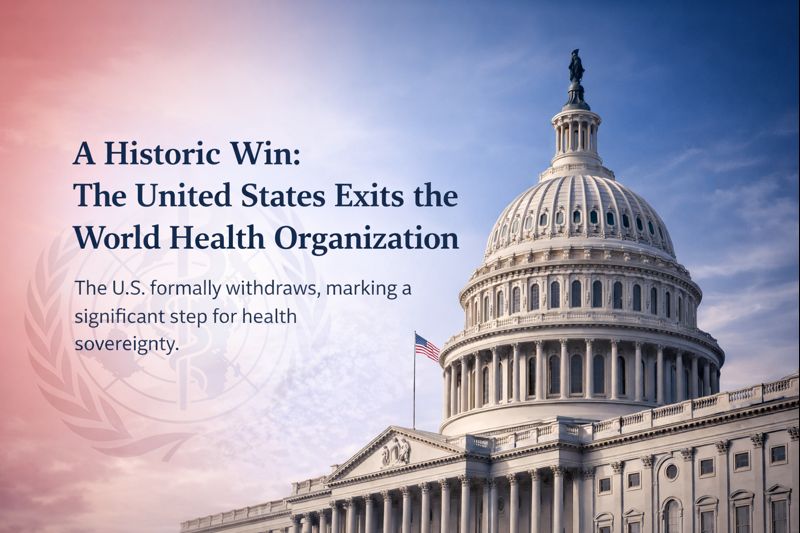
Historic Win: US Exits World Health Organization

Health Freedom Defense Fund

It was a historic day for health sovereignty for American citizens. On January 22, 2026, the White House released Executive Order #14155, which formally withdrew the United States from the World Health Organization. While this decision was made a year ago, the terms of membership required a one-year waiting period to exit the organization. Health Freedom Defense Fund voices its full support of this steadfast move, and hopes that it will be a durable one. The WHO was and remains the world’s top supporter of one-size-fits-all medicine, and it facilitated and legitimized most of the excesses and crimes of the “pandemic” era.

The WHO constitution, written in 1948, was an optimistic and exceptionally naive document that was full of flowery language and vague mandates. In theory, cooperation is always nice, but in practice, the details and results are what matters. And if the cost of this arrangement was loss of sovereignty over our own health decisions, billions of dollars in funding, and a continuation of a paternalistic attitude toward individual choices and local control, no trade off could be worth it.

For eight decades after the Second World War, the WHO consulted UN member states on health matters and policy, issued medical guidelines, hosted working groups, and held opulent galas to celebrate their own achievements. Privileges and immunities, both legal and social, were showered upon its officials. Despite admitting doing no actual “implementation” of health programs, the WHO was quick to dubiously note its own impact through its various meetings and declarations, all to justify its existence, and to extend its reach and budget. Over that time period, the United States was by far its largest donor, and certainly in turn used the WHO for its own purposes of maintaining easy financial support for favored regimes abroad. It did this while dictating other country’s policies to benefit American pharmaceutical and diagnostic corporations’ bottom line.

Until very recently, the WHO served as a lead technical advisor to huge amounts of U.S. taxpayer money going around the world through USAID, PEPFAR, The Global Fund, and other mechanisms. So instead of U.S. citizens and their elected representatives deciding how health and development assistance money should have been spent, the WHO was inappropriately and secretly advising how and when American taxpayer money should be spent. In so doing, it not only interfered with our representative republic, but also enriched themselves via American generosity with exorbitant tax-free salaries, diplomatic immunity, and insufferable arrogance.

More importantly, in so doing, the WHO decided the fates of billions of people by its arbitrary, unaccountable guidelines and recommendations. Even if we are to believe the lofty goals of the WHO were genuine, and if we believed the fantastic claims of effectiveness of a given drug or intervention, the WHO often stood in the way of poor people receiving the same access to care as those in rich countries, in effect “kicking away the ladder” so poor people couldn’t access the very care available in richer countries.

As an example, the WHO excluded horrific ailments like childhood tuberculosis, from the official treatment guidelines, so member states for decades never received funding to treat children for the ailment under the utilitarian justification that “it is necessary to make the best possible use of limited resources”[1]. So even by its own terms, it was a shameful failure that stood in the way of countries making their own decisions for decades. And so, it remains.

Ultimately, in practice, the WHO attempted to continue a legacy of colonial control that eventually started to also include control over rich countries through its Covid-19 guidelines and arbitrary measures like social distancing and masking. Even newer instruments like the Pandemic Treaty would have eviscerated the sovereignty of all member states to make their own decisions in health emergencies. Thankfully, for now, the country is safe from this meddling by foreign bureaucrats.

With this announcement, one less country, and one huge donor, will no longer be involved in this scheme. With the departure of the United States, the top donors will be Bill Gates’ “philanthropic” organizations like The Gates Foundation and GAVI, with China leading the way as a state donor. HFDF sincerely hopes that countries around the world consider these facts before giving money to the WHO, listening to its advice, or assuming it has their best interests in mind.

[…]

Via https://healthfreedomdefense.org/a-historic-win-the-us-exits-the-world-health-organization/

Netanyahu regime runs defamation campaign against Doctors Without Borders

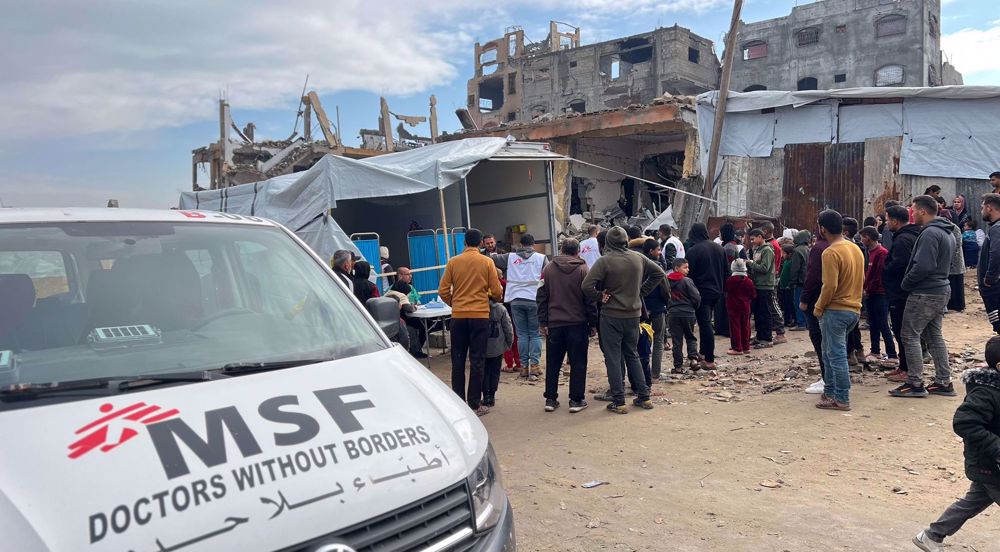
MSF teams support people in North Gaza with mobile clinics to provide medical care. (File photo by MSF)

Press TV

The medical charity organization Doctors Without Borders (Médecins Sans Frontières or MSF) has said the defamation campaign launched against it is a propaganda offensive funded and sponsored by Israel.  

Declassified UK, a British investigative journalism and media organisation​​​​​, revealed that the Israeli regime’s prime minister, Benjamin Netanyahu, launched an anti-MSF defamation campaign in the UK in an effort to stop the medical charity from providing humanitarian assistance to Palestinians in the Gaza Strip, ravaged by the Israeli regime’s genocidal war.

Declassified UK reported on Friday that as part of the defamation campaign, the Tel Aviv regime is paying for an advertisement to appear as the top result on Google search when users search for information about MSF.

The Israeli-paid advertisement shows a report released by Tel Aviv, which accuses the MSF of alleged “grave misconduct” in Gaza.

The report — which is titled the “Systematic Conduct of Médecins Sans Frontières” and is authored by an “Inter-Ministerial Team” in Israel and dated December 2025 — claims the conduct of MAF, including the behavior of its international and local staff in hospitals, “contradicts the fundamental ethics of international humanitarian action.”

Tel Aviv claims the MSF is authoring the release of “official publications … that far exceed the bounds of legitimate criticism.”

It adds that the MSF is deliberately making an “effort to undermine and deny the legitimacy” of the Tel Aviv regime.

The Israeli regime’s defamation campaign against the MSF comes as Tel Aviv seeks to limit the scope of activities of the MSF and other international humanitarian organizations operating in Gaza, carrying out life-saving operations there on a daily basis.

The move is seen as part of the regime’s wider efforts to dismantle the humanitarian organizations providing crucial life-saving services for Palestinians.

Under this pretext, the Tel Aviv regime has refused to renew MSF’s permit to operate in Gaza and the West Bank since the start of January.

Now, the medical aid organisation says it might be forced by March 1 to stop its humanitarian operations in the Palestinian territories.

The hapless Palestinian patients who are dependent on the MSF for aid in Gaza have responded to the news with horror.

“If MSF stops working, people will lose their lives,” one Palestinian pointed out.

In the meantime, MSF has issued a statement giving assurance to the Palestinians that the medical charity group remains fully committed to its humanitarian obligations towards patients in need of relief.

“We remain committed to providing assistance to Palestinians in Gaza and the West Bank and call on the Israeli authorities to reverse their decision… and to put in place acceptable operating conditions,” MSF said in its statement.

MSF has provided crucial medical aid to Palestinians, caring for the defenseless Palestinians cut off from the rest of the world throughout the Gaza genocide by providing international and local staff working in hospitals across the besieged strip.

[…]

Via https://www.presstv.ir/Detail/2026/01/23/762782/Doctors-without-Borders-MSF-defamation-campaign-funded-by-Israel

Alexander the Great and the End of Persian Empire 333-323

The Grand Master: Alexander's Genius in the Battle of Issus | War ...

Episode 23: End of Persian Empire 333-323

The Persian Empire

Dr John W I Lee (2012)

Film Review

The armies of Darius III and Alexander met for the first time in 333 BC at the Battle of Issus (in modern Turkey near the border with Syria). Darius had approximately 50,000 men (mainly Greek mercenaries and Persian archers) and Alexander 37,000. Despite their smaller numbers, the latter had far more training and experience. The vast majority of Darius’ army had never seen battle.

The Persian emperor fled the battlefield after his guard was killed, allowing Alexander to capture his mother, wife and daughter, which the latter treated with great respect. When Darius wrote Alexander requesting his family’s return. Alexander made reference to the emperor’s illegal seizure of the Persian throne.

SIEGE OF TYRE AND ALEXANDER THE GREAT IN PHOENICIA | Facts and Details

Following his victory at Issus, Alexander laid siege (with his siege engines) to Tyre and Gaza. After laying waste to both cities, he headed south to Egypt, where most cities surrendered voluntarily.

Darius meanwhile built up a force of 100,000 men from the eastern empire. This included armored cavalry from Bactria and and 15 elephants from India. Alexander marched north to confront him at Gaugamela north of Babylon in 331 BC. With fewer troops (40,000 infantry and 7,000 cavalry), he deployed his pike holders in a moving hollow square so he couldn’t be outflanked.

Warfare History Network » The Battle of Gaugamela: Alexander the Great ...

Darius fled after the Persian center collapsed and escaped to Ecbatana in Medea. Proclaiming himself great king of the Persian empire, he headed for Babylon to “liberate” the Babylonians from Persian oppression.

Seizing the city’s massive treasury of gold and silver, he appointed the Persian Mazeus as satrap of Babylonia and ordered the money spent on public works and infrastructure to stimulate the Babylonian economy.

Pushing on to Persepolis and Pasargardae, Alexander experienced strong resistance that killed many of his troops. However without clear leadership, the Persian forces had no hope of prevailing. After looting the immense stores of silver and gold in Persepolis, Alexander set fire to the palaces and burnt much of the city to the ground.

Darius had planned to make a stand at Ecbatana, but found none of the nobles there regarded him as the legitimate king. So he took a few thousand troops and headed for Bactria, seeking support from nomadic steppes warriors. When he decided to surrender to Alexander in 330 BC, the nobles accompanying him put him in golden chains and left him by the roadside to die. Alexander sent the body to his mother in Susa, who buried him and stabbed herself to death. Bessus, the Persian satrap of Bactria, declared himself Artaxerxes the V and unsuccessfully tried to mobilize opposition to Alexander.

Between 330-327 BC Alexander, who adopted Persian dress and married both Darius’s oldest daughter and Artaxerxes IV’s sister, suppressed numerous revolts in the eastern empire. However the letter never came under Macedonian control.

Between 327-25 BC he led his troops to the Indus valley, when they refused to go any further. He returned to Susa to assume his full time role as Persia’s new king. He died under mysterious circumstances in 323 BC.

https://www.kanopy.com/en/pukeariki/watch/video/15372393/15372454