

NZ Rising
Erin Brockovich is an environmental advocate, consumer activist and author who rose to national prominence after helping expose one of the largest groundwater contamination cases in U.S. history, involving Pacific Gas & Electric. She is now focused on the rapid expansion of AI data centres, raising awareness about their impact on water resources, energy infrastructure and local communities while leading a nationwide initiative to track data centre development. She is also the author of several books, including Superman’s Not Coming, which explores America’s water crisis and the importance of protecting one of our essential resources. She was recently interviewed on the Shawn Ryan Podcast, and these were the topics covered:
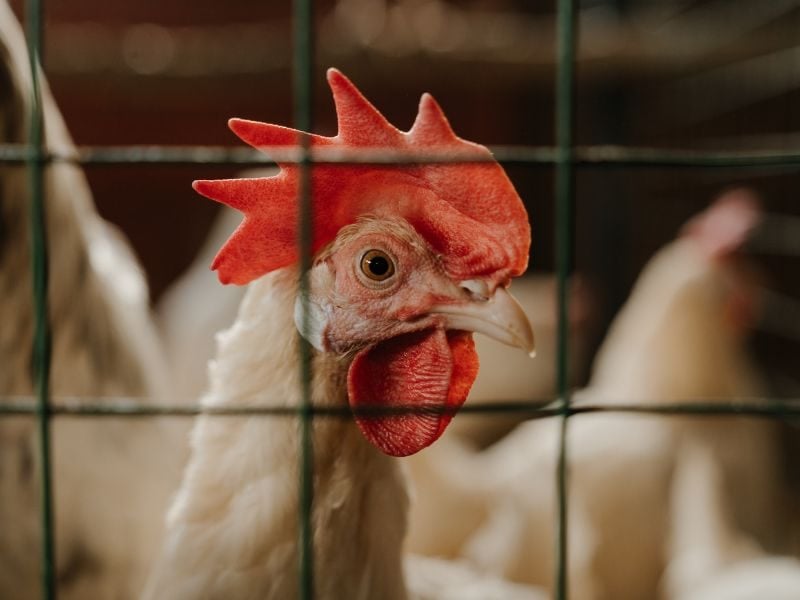
Photo Credit – © Canva Pro Content License
By
If you have been following the global health-industrial complex for any length of time, the current news cycle around H5N1 bird flu in New Zealand will feel alarmingly familiar. The script is identical: a new viral threat emerges, warning bells ring, emergency measures are implemented, and soon, the messaging turns inexorably toward vaccination with the same unanswered questions trailing behind.
Goodness knows, we have been calling a bird flu pandemic for years, and not because nature is inevitably mischievous and careless – unless you count all humans as part of nature. Of course we are, but the behaviour of some would make you wonder.

In mid July 2026 New Zealand recorded supposedly its first known case of the H5N1 strain in a wild brown skua on Petone Beach. A couple of days later a second miraculous 40-cycle (ie meaningless) PCR detection followed in a native kāhu (swamp harrier) in the Wairarapa. Within days, Mainland Poultry which supplies nearly 40 percent of the country’s eggs locked down over half a million free-range hens.
“We had a pretty busy weekend closing off the pop holes,” said CEO John McKay. Free-range eggs make up about 45 percent of the market, but consumer preferences are now secondary to the perceived threat. The chickens, we are told, “would hate being locked up,” but it is better than being “wiped out.”
Farmers report being “flockdown ready.” The infrastructure for mass animal containment is already operational.
By mid August a third bird (a northern giant petrel) tested positive in the Wairarapa.
In the background, we are seeing the familiar pattern of a “One Health” approach linking animal and human health authorities. The Department of Conservation is rushing to jabbinate breeding pairs of critically endangered native species, but with a different vaccine than the one that was tested in 2024. MPI is conducting surveillance, urging the public to report sick birds, and warning people not to touch dead wildlife.
Meanwhile, the Ministry of Health is working alongside the Ministry for Primary Industries and Health New Zealand as part of this “coordinated preparedness campaign”.
Perhaps they should combine to form the Ministry of Mental. You can almost hear the obscene excitement of the unhealthy globalist slobs as they get to cut down the choices of the clued-up and health conscious. We are reminded of the attempt in 2016 to pathologise people who were proactive about their health, ate organic, took targeted supplements etc. Orthorexia nervosa was the term proposed. You can bet that many of the focused and informed orthorexics won’t swallow any jabs lies incoming.
So, that inevitable question: when will the push for human vaccination begin?
As we noted in previous analyses, the planning for a human H5N1 vaccine in New Zealand, as part of a general readying of council-level and national bird flu responses, is already quite far advanced.
NZ’s shiny new pandemic plan of 2024 says the following:
“Depending on transmission rates, the severity of the illness and the efficacy of vaccine in preventing transmission and reducing poor health outcomes, the government may consider imposing restrictions under legislation on people who choose not to accept vaccination, in relation to work, access to premises and other activities. If legislative measures of this nature are adopted, consideration needs to be given to the New Zealand Bill of Rights Act, legitimate exemptions, international travel requirements and public acceptability in light of the wider framework of response measures.”
The Panvax vaccine has been sitting in the National Reserve Supply for years, and its provisional consent was most recently renewed in 2024 – but now as a different formulation. It contains 30 micrograms of haemagglutinin per dose, is adjuvanted with aluminium phosphate (0.5 mg per dose), and is formulated in embryonated chicken eggs, a production method that carries its own concerns for those with egg allergies, despite the data sheet’s reassurances. At least there is some data this time, and it is not an mRNA “zero risk medical product”, so beloved of the Medical Council.
The data sheet itself is revealing. It notes that clinical trials with “prototype pandemic vaccines” have been conducted, but admits: “There are currently no defined levels of serum antibody responses known to correlate with clinical protection against infection with pandemic influenza viruses.” In other words, we do not actually know what antibody level means protection, if any. We have learned a lot about the failure of injecting vaccines into the blood for what are predominantly airway infections – and developed a deep scepticism about “viral immunology” in general, thanks to the covid bioweapon assault.
Predictably, in line with the sickening new normal of medical unethics, the vaccine’s safety in pregnancy has not been studied. Healthcare providers are told to “assess the risks and potential benefits … on a case by case basis.” Well, at least that is better than the covid jab advice most NZ women got about pregnancy.
Our prior work has repeatedly highlighted the lack of long-term safety data for rapid-deployment vaccines. And we have been shown how truly, madly, deeply disastrous that can turn out. Cancer, heart damage, rubbery white clots found in many, and not just after death.
The same pattern emerges here. The Panvax vaccine has been given provisional consent, but where is the comprehensive safety assessment for the New Zealand population? Oh yes, now we remember that provisional consent means there is NO REQUIREMENT for safety or efficacy data, nor proof of good manufacturing practice. The US equivalent, Emergency Use Authorisation (EUA) under the PREP Act, does not even require informed, or any, consent.
Health NZ’s Medicines Adverse Reactions Committee (MARC) minutes show that “a subset of the studies should be conducted in New Zealand to reflect our population, or at least recruit Māori and Pacific Peoples”. This admission that the existing studies are not representative shines more light at the engineered inadequacy of the evidence base.
There are three potential vaccines mentioned in those minutes. It does not say they will be used for bird flu, but must be used in accordance with the NZ Pandemic Plan.
“The Australian Risk Management Plan (RMP) for the following influenza vaccines manufactured by Seqirus was submitted to Medsafe:
Panvax H5N8 pre-pandemic vaccine
Panvax pandemic influenza vaccine
H5N1 influenza vaccine”
As of late 2025, Public Health and Forensic (PHF) Science reported 41 human cases in the US, mostly among dairy farm workers, with mild illness and “no evidence of human-to-human transmission”. We are reminded of the initial dire warnings by the now deputy chief of the World Hijack Organisation, Jeremy Farrar of imminent bird flu in Vietnam in 2004/5. But now, if the news channels are to be believed, the virus is vaulting species and gaining function like a true champion. Billions of years of natural barriers to this viral anarchy have just fallen away apparently, completely coincidental to the era of globalism.
But if we quiet our beating hearts, bird flu is described as having “generally poor ability to transmit to humans”. The Johns Hopkins risk assessment rates the overall risk of widespread transmission as “low” even in scenarios where the illness is widespread in cattle. https://www.yalemedicine.org/news/h5n1-bird-flu-what-to-know
At the same time, we are being told that free-range eggs, nearly half the market, could be affected. Woolworths has issued statements urging calm and asking consumers not to hoard. But the signals are mixed. If free-range birds are locked indoors long-term, their “free-range” status may be affected, potentially impacting supply chains.
Farmers are already reporting the emotional toll of culling and the lack of insurance coverage for avian influenza outbreaks. The cost of repopulating layer flocks is high, and replacement chickens could become scarce.
Disruptions to the food supply were clearly telegraphed, and now they are here. The race has been between the next plan-demic and the incoming diesel crisis. And so, the pressure to accept interventions including vaccinations intensifies. Is this the techno-Marxist wet dream again?
Many have forecast exactly this scenario for years, as has the Hollywood/Netflix pipeline, churning out several decades of predictive programming of a viral zombie apocalypse. So here’s Covid 2.0, as another novel virus emerges. The media amplifies fear, little Hitlers roll out containment measures and before you can say “befuddling sudden deaths” the public health emergency becomes the justification for pushing medical products with negative safety data.
The question is: will this be the stick that gets Kiwis the prick? Surely, not nearly as many this time. The pattern from covid is unmistakable. Fear of illness, concern for loved ones, economic anxiety, and social pressure all combined to drive uptake last time – but are so many still so trusting?
However, with the added dimension of a threatened food supply, the pressure may be even more acute. The message is already being crafted: vaccinated birds protect the food supply; protected food supply protects the nation; therefore, vaccination is essential.
The pieces are in motion. The question is whether we will once again be passive recipients of a predetermined outcome, or whether we just refuse to play this time. At least we can demand the transparency and evidence that any medical intervention of this scale warrants.
[…]
German-American lawyer Dr Reiner Füllmich has been languishing in a German prison on trumped-up charges since October 2023, after being arrested and abducted at an embassy in Mexico by agents of the German state when he and his wife were in the process of renewing their passports. His ‘crime’? Speaking truth to power about the globalist attempt to engineer the collapse of society globally in order to ‘build back better’ since the advent of the ‘plandemic’ in 2020. Read more about the background story in the Daily Telegraph NZ here.
René de Monchy from New Zealand traveled to Bremervoerde Prison to visit Dr. Reiner Füllmich
After his visit, Dr. René de Monchy speaks up and shares his experience and impressions. The wisdom shared in this Impromptu interview is inspirational and encouraging.
Together for each other. Together We Are Stong. Every share is much appreciated. Thank you.
Write a letter or postcard to Reiner at the Bremervörde Prison:
JVA Bremervoerde
Dr. Reiner Fuellmich
Am Steinberg 75
D – 27432 Bremervoerde
Germany

Zero Hedge
New York City has agreed to release new documents showing that officials lied about the air quality in the wake of the Sept. 11, 2001, attacks on the World Trade Center.
The more than 170,000 pages of documents are being released by NYC in response to the transparency organization 9/11 Health Watch, which had sued to force their disclosure.
According to the New York Times, the documents reveal that higher-than-acceptable levels of asbestos and other contaminants were in the dust and air in other parts of Lower Manhattan after Sept. 11.
“An audit from November 2001, prepared by a private firm and submitted to the federal E.P.A. based on data collected by New York City and state agencies, showed other troubling findings,” the Times reported Monday.
“That audit demonstrated that air concentration of the carcinogen benzene was still spiking near the towers’ footprint, and that the concentration of asbestos in the air at the Fresh Kills landfill on Staten Island had increased after the attacks.”
Despite having information about the poor air quality, government officials, including then-EPA administrator Christine Todd Whitman, said the air around ground zero was safe to breathe.
Whitman has since apologized for her misrepresentations.
The Times warned that the disclosures could reopen NYC to new litigation at a time when New Yorkers who were in the city at the time are dying of lung and blood cancers, as well as heart and respiratory diseases.
Denise Verzi, whose husband, Michael, was a firefighter who suffered from lymphoma after responding to the attack, criticized the city for its lack of transparency.
“I don’t understand hiding it to begin with,” Verzi told the Times. “That was horrific. But 25 years in, there’s people that are still getting sick.”
[…]

RT
9 Sep, 2026
Global oil prices have surpassed $100 per barrel as escalating fighting between the US and Iran, and Houthi attacks on Saudi energy infrastructure, raised fears of further supply disruptions. Brent crude broke the threshold for the first time in nearly two months.
Brent futures climbed 2.2% to $100.07 per barrel in Asian trading, their highest level since July 24. US benchmark West Texas Intermediate (WTI) rose 1.83% to $94.73, while Brent has gained around 25% since early August as hopes of a lasting settlement to the US-Iran conflict have faded.
“Recent developments only reinforce the view that we’re still some way from a restart in talks. In the meantime, the market is likely to continue to price in a sizeable risk premium,” ING commodities strategists Warren Patterson and Ewa Manthey wrote in a note early Wednesday.
The latest price surge followed a sharp escalation at sea. US forces struck five Iranian crude carriers on Tuesday, and Iran later claimed that it hit two US vessels and eight oil tankers in the Persian Gulf in retaliation, inflicting “significant damage.”
The attacks came after Iran’s Islamic Revolutionary Guard Corps (IRGC) issued an “urgent warning” to tanker crews near Bahrain and Kuwait to abandon their ships, saying vessels in the area would be targeted. Ballistic missiles were subsequently launched from Iran toward US military facilities across the region, including those in Jordan, where air defenses intercepted 18 of 20 incoming missiles, according to the military.
The maritime confrontation has become an increasingly prominent front in the conflict. The US has restricted traffic to and from Iranian ports, while Tehran has imposed controls on passage through the Strait of Hormuz, a vital energy route that handled around a fifth of global oil supplies before the war.
Supply concerns have also intensified after Yemen’s Houthis launched missile and drone attacks on energy facilities in southern Saudi Arabia on Tuesday. The strikes reportedly forced temporary shutdowns and sparked a fire at the Jazan refinery, a major Saudi Aramco facility capable of processing 400,000 barrels of crude oil per day.
[…]
Via https://www.rt.com/business/645346-oil-price-middle-east-us/

Comments by Brian Shilhavy
Health Impact News
Danish scientist Poul Thorsen, MD, PhD, has been on the run for criminal charges by the CDC for over 14 years, and is part of the corruption that has happened in the CDC in years past regarding scientific studies that claim there are “no links” between vaccines and autism.
We have covered the Poul Thorsen story many times over the past decade here on Health Impact News. This is one article we published in 2017:
How a Fugitive’s Fraudulent Study is Behind the “Science is Settled” Claim that Vaccines Do Not Cause Autism
Did you know there is a fugitive from the U.S. Justice Department thriving openly in Denmark who created a fraudulent study used to eliminate autism claims from vaccines? His name is Poul Thorsen, and he is a psychiatrist who was contracted by the CDC to perform the notorious “Danish Study.”The Danish Study, published in 2003 by the journal Pediatrics asserted that autism rates in Denmark rose dramatically after mercury was no longer used in vaccines for children in the Netherlands, thus “proving” that there is no association with thimerosal (mercury) in vaccines to autism.
The Danish Study became a major study quoted by the FDA, the IOM (The National Institute of Medicine) now renamed the National Academy of Medicine, and the CDC to “disprove” the dangers of thimerosal in vaccines and the MMR even without thimerosal. It became the cornerstone of all media and public denial of autism from vaccines.
Even worse, it served as the legal basis for dismissing over 5,000 autism claims in The National Vaccine Injury Compensation Program or “Vaccine Court” in 2010, and totally removing autism claims from vaccine injuries completely.
The Vaccine Court used an Omnibus Autism Proceeding hearing for all autism claims filed by trying three test cases out of over 5,000 claimants to decide whether or not vaccine injury compensation was warranted for autism claims, after years of filings for plaintiffs’ attorneys.
Earlier this month (September, 2026), Poul Thorsen was arrested in Germany and then extradited to the United States to face charges for two counts of wire fraud and nine counts of money laundering.
Autism-vaccine researcher says he stole $1M in CDC grant funds
Poul Thorsen, MD, PhD, a Danish researcher who co-authored key papers demonstrating no links between childhood vaccines and autism, pleaded guilty today to operating a wire fraud scheme that stole CDC grant money awarded for autism research overseas, the Department of Justice said.
“Thorsen ran a multi-year fraud scheme to cheat the CDC, diverting valuable federal grant money to service his greed and inflated lifestyle,” U.S. Attorney Theodore Hertzberg said in a statement.
“His fraud was especially reprehensible because he stole public funds that had been earmarked for research related to infant disabilities and birth defects,” Hertzberg continued.
“After evading justice for more than 14 years, Thorsen will finally be held accountable in a federal prison cell and ordered to pay full restitution to the CDC.”
Thorsen was arraigned in May after being extradited from Germany to stand trial on two counts of wire fraud and nine counts of money laundering.
From 2000 to 2009, the CDC awarded more than $11 million to two Danish government agencies to study links between autism and vaccine exposure, cerebral palsy and infections during pregnancy, and childhood development and fetal alcohol exposure, the Justice Department said.
Thorsen became responsible for administering the CDC research grants and misappropriated funds by submitting fraudulent documents, according to the Justice Department. From February 2004 to June 2008, he reportedly submitted more than a dozen invoices bearing a forged signature of a CDC laboratory section chief for reimbursement of expenses.
In 2014 a CDC scientist who was a co-author on one of the main studies that supposedly “proved” that the MMR vaccine did not cause autism, admitted that some data was held back that was damaging to the MMR vaccine, particularly among black children.
He made his admission to Brian Hooker. Watch the video above and hear it from his own words.
But nothing ever happened at the CDC, nor in Congress, to deal with this crime.
Here is one of the articles we published back then where the CDC tried to deal with this information, with links to many other articles about the CDC whistleblower that we published at that time: CDC Director of Immunization Safety Admits Bias and Withholding Data Linking Vaccines to Autism
Arresting Poul Thorsen is a great start to prosecuting criminal fraud regarding studies the CDC stated proved that vaccines did not cause autism, but Thorsen is mainly being prosecuted for money fraud.
Will other criminals that participated in the “vaccines do not cause autism” fraud ever be arrested and convicted?
To their credit, the CDC recently did change some of their text regarding the unscientific claim that “the science has been settled” regarding vaccines’ links to autism, which at least is a start.
Vaccines do not cause Autism*
Pursuant to the Data Quality Act (DQA), which requires federal agencies to ensure the quality, objectivity, utility, and integrity of information they disseminate to the public, this webpage has been updated because the statement “Vaccines do not cause autism” is not an evidence-based claim.
Scientific studies have not ruled out the possibility that infant vaccines contribute to the development of autism. However, this statement has historically been disseminated by the CDC and other federal health agencies within HHS to prevent vaccine hesitancy.
HHS has launched a comprehensive assessment of the causes of autism, including investigations on plausible biologic mechanisms and potential causal links. This webpage will be updated with gold-standard science that results from the HHS comprehensive assessment of the causes of autism as required by the DQA.
The following, as required by the DQA, details the state of the evidence and studies, and the lack thereof, regarding vaccines and autism spectrum disorder (autism) and outlines HHS future research directions to provide answers.
However, words on a website have no meaning if vaccine policy is not changed, and if criminals engaged in fraud are not prosecuted.
Poul Thorsen will now apparently face justice, but will any other vaccine research criminals ever see their day in court?
RT
4 Sept 2026
A US Army doctor has testified that she knows of 28 US military deaths caused by Covid-19 vaccines, Politico has reported citing a court deposition. The US government is investigating 2,544 deaths reported following the jabs, the official has said.
Theresa Long, who also serves as an adviser to US Health Secretary Robert F. Kennedy Jr., reportedly gave the testimony during an August 14 deposition in a federal court case in Virginia. Neither her testimony nor her role at the Department of Health and Human Services (HHS) had previously been reported.
Long allegedly said that the 2,544 unverified deaths were reported to the department’s Vaccine Adverse Event Reporting System (VAERS).
Former US President Joe Biden ordered all US military staff to be vaccinated or be discharged from service, resulting in over 9,000 dismissals. After returning to office, President Donald Trump ordered the Pentagon to offer reinstatement to those who had been discharged for refusing a vaccine.
Mass-produced Covid-19 vaccines using mRNA technology were fast-tracked for deployment. Pharma giants that made billions in profit – Pfizer and Moderna – later acknowledged that their vaccines could, in rare cases, increase the risk of inflammation of the heart muscle.
Long testified for the defense in a lawsuit being heard by District Court Judge Michael Nachmanoff over the dismissal of Terry Adirim as director of the CIA’s Center for Global Health Services. Adirim alleges that the intelligence agency fired her for political reasons, specifically because of her advocacy for Covid-19 vaccination.
Adirim served as acting assistant secretary for health affairs at the Department of Defense during the pandemic. The CIA fired her in April 2025, a move highlighted at the time by several conservative political commentators, including Ivan Raiklin, who is a defendant in the lawsuit. Her termination came about a month before she would have qualified for full federal retirement benefits.
In May 2025, Nachmanoff expressed skepticism about Adirim’s chances of prevailing in the case when he declined to issue an injunction reversing her termination. The CIA has argued that the matter is an ordinary contract dispute.

The UK is set to call up retirees to help prepare for a war with Russia (Image: Getty)
The UK is set to call up 95,000 retirees to help prepare for war with Russia as WW3 fears explode.
A major drill to mobilise an army of veterans is being planned to take place next year.3
Louise Sandher-Jones, the Armed Forces minister, said a “strategic reserve” of 95,000 retired troops will be called into action “on a scale we haven’t seen for a long time”.
The operation comes as fears increase regarding conflict with Russia by 2030.
British factories have already been threatened by Moscow due to building drones for Ukraine with Western intelligance officials warning that Vladimir Putin is waging a campaign that could trigger a war.
The drill comes as the government’s cost-cutting on military plans is facing scrutiny after it emerged that John Healey, the Chancellor, would fail to commit to spending 3 per cent of gross domestic product on defence by 2030.
According to The Telegraph the details of the drill are still being finalised but it is expected to test the ability of veterens to be called on and equipped in an emergency.
Ms Sandher-Jones said on Monday: “The strategic reserve is a real commitment for those that are in it and they will be exercised as part of our exercise programme next year where we will go through measures to call out, use, equip and all the rest of the procedures we’d have to go through to use the strategic reserve properly.”
She added that the network of former troops would have a crucial role in defending the country, despite it being “a lot less used in my lifetime”.
She continued: “When I left the Army and found out I was in the strategic reserve, I just filed it away and never thought about it again. We are definitely no longer in that space.”
The drill will serve as a test for the Government after it was revealed that it had forgotten much of the network of retired soldiers and officers from the Army, RAF and Navy.
The law currently states that all former regular and reserve officers retain recall liability for life
The Ministry of Defence are also legally obliged to maintain contact with former military staff in the first six years after they leave full-time service.
This group of former military staff differs from the reserve forces, which is made up from people who volunteer part-time to serve in the military.
As part of a new Armed Forces Bill, it was announced in January that the age military veterans could be mobilised would rise from 55 to 65.
[…]
Via https://www.express.co.uk/news/world/2246440/uk-call-retirees-help-war

By Joseph Varon
There is a phrase that no physician wants to hear when walking into an intensive care unit: “Doctor, we don’t have it.” I have heard variations of that phrase more times than I care to remember. Sometimes it is an antibiotic. Sometimes it is an intravenous medication that we use routinely. Sometimes pharmacy is conserving a drug because supplies are running dangerously low. In perhaps one of the most absurd examples of modern American medicine, sometimes the scarce commodity is not an exotic monoclonal antibody, an experimental cancer therapy, or a complicated biologic agent. It is a simple intravenous fluid.
Think about what that means. We practice medicine in a country capable of replacing heart valves through catheters, sequencing a human genome, performing robotic surgery, supporting failing lungs with extracorporeal membrane oxygenation, and developing entirely new classes of medications within a few years. Yet I can walk into an American intensive care unit caring for critically ill patients and discover that a basic medicine or fluid I have used for decades is unavailable.
The nurses know the drill, and the pharmacists know it even better. A message comes from pharmacy telling us to conserve a medication, use a different concentration, substitute another antibiotic, change the infusion, or save the remaining bags for patients who absolutely need them. Suddenly, clinical decisions that should be based entirely upon physiology, microbiology, pharmacology, and the needs of the patient acquire another participant at the bedside: the supply chain. What was once perceived as an occasional inconvenience has become something much more serious. It is a warning.
As of June 2026, the American Society of Health-System Pharmacists reported 227 active drug shortages in the United States, and nearly half of the new shortages reported during 2026 involved products available from only a single manufacturer.[1] Current shortage lists contain products whose names would be utterly unremarkable to anyone who has practiced hospital medicine: dextrose injections (water with sugar), sodium chloride products, amiodarone, midazolam, morphine, anti-infective agents, and numerous injectable medications that constitute the ordinary machinery of modern inpatient care.[1] These are not luxury items or niche therapeutics. They are the plumbing of medicine.
Drug shortages are frequently discussed as isolated events. A factory experiences a quality problem, a production line shuts down, a raw material becomes scarce, demand unexpectedly increases, or a hurricane damages a manufacturing facility. Each shortage receives its own explanation, and eventually many of them resolve. Looking at these events individually, however, misses the much larger problem: the American pharmaceutical supply chain has been optimized for efficiency, low prices, and lean inventories, but it has not always been optimized for resilience.
Over several decades, pharmaceutical manufacturing steadily migrated outside the United States. According to the FDA, more than half of pharmaceuticals distributed in America are manufactured overseas. As of 2025, approximately 69 percent of generic drug products were manufactured outside the United States. Even more striking, only about 11 percent of active pharmaceutical ingredient manufacturers were located in the United States, compared with approximately 22 percent in China and 44 percent in India.[2]
This does not mean that Chinese or Indian manufacturers are inherently problematic. Many produce high-quality medicines that American patients depend upon every day, and a resilient pharmaceutical system should unquestionably include global suppliers. The problem is concentration. When the production of an essential drug, its active ingredient, or a critical chemical precursor becomes concentrated among only a handful of manufacturers or geographic regions, economic efficiency can quickly become a strategic vulnerability.
A quality-control failure at one factory, a geopolitical conflict, a transportation disruption, an epidemic, a natural disaster, an export restriction, or a shortage of a precursor chemical can reverberate thousands of miles away until eventually a pharmacist in an American hospital tells a physician that a medicine is unavailable. At that moment, globalization stops being an abstract economic discussion and becomes a clinical problem affecting an actual patient. We saw this during the pandemic and have seen it again during recent armed conflicts.
One of the great ironies of the drug-shortage crisis is that many of the medicines most vulnerable to shortage are not extraordinarily expensive medications. They are extraordinarily inexpensive ones. Generic sterile injectable drugs are among the most important products in hospital medicine and among the most difficult to manufacture reliably. Their production requires specialized equipment, meticulous sterile technique, rigorous quality controls, and significant capital investment.
Yet intense purchasing pressure has driven the prices of many older generic injectable drugs extraordinarily low. The result is a market in which manufacturers may have very little financial incentive to maintain redundant factories, modernize equipment, increase reserve capacity, or even remain in the market. A 2024 analysis from the Department of Health and Human Services examined the economics of generic injectable medicines and found that although the market was profitable in aggregate, that profitability was heavily influenced by a relatively small number of successful products. Most individual generic injectable products examined remained unprofitable even 36 months after launch.[3]
The Government Accountability Office has described the same fundamental problem. Sterile injectable drugs dominate many persistent shortages because they combine complicated manufacturing requirements with low prices, limited production capacity, and low profit margins.[4] For years, Americans have been told that lower drug prices are an unquestionable victory, and usually they are. Nobody wants patients paying unnecessarily high prices for medications that have existed for decades. There is, however, a point at which relentless price compression produces something other than efficiency. It produces fragility.
If the price paid for an essential injectable medicine becomes so low that only one or two manufacturers are willing to produce it, we have not created an efficient marketplace. We have created a single point of failure. The cheapest medication in the world offers very little comfort to the critically ill patient when it is no longer sitting on the pharmacy shelf. This can translate into disasters in patient care!
When a Shortage Reaches the Bedside
For people outside medicine, a drug shortage may sound primarily like an inventory or procurement problem. Inside an intensive care unit, it can become something entirely different. Imagine a patient arriving in septic shock. His blood pressure is collapsing, his lactate is increasing, and his organs are beginning to fail. Every intensivist understands that timely and appropriate antimicrobial therapy can make an enormous difference in that patient’s outcome.
Now suppose that the antibiotic we ordinarily would select is unavailable. The physician must choose an alternative that may have broader coverage than necessary, greater toxicity, a different dosing profile, or less familiarity among the clinical team. The substitution may affect antibiotic stewardship efforts throughout the hospital. Pharmacy must develop alternative protocols, nurses may need to administer different concentrations or schedules, electronic medical record order sets may need modification, physicians must be notified, and remaining inventory must be monitored carefully. Multiply that experience across hundreds or thousands of hospitals, and what appeared to be a simple shortage becomes a systemic disruption of care.
A systematic review published in Clinical Microbiology and Infection examined 74 studies involving antibiotic shortages. Manufacturing disruptions, active pharmaceutical ingredient problems, and economic viability repeatedly appeared among the causes. Reported clinical consequences included longer hospital stays, treatment failure when inferior alternatives were required, and disruption of antimicrobial stewardship programs.[5] Over the past several decades, I have seen patients die in hospital settings where medications or fluids were not available.
We also know independently that antibiotic delays in critically ill patients are not trivial. In a 2024 multicenter study of patients with septic shock, delays in administration of the second antibiotic dose were associated with higher mortality and longer ICU and hospital stays.[6] That study was not designed to prove that drug shortages caused those delays, but it underscores an essential point: in critical illness, reliable and timely drug availability is not simply a logistical convenience. Time matters, and access matters.
The same principle applies throughout critical care. Vasopressors keep patients alive when circulation collapses. Sedatives allow safe mechanical ventilation. Electrolytes correct potentially fatal abnormalities. Anticonvulsants control seizures. Antiarrhythmics treat unstable cardiac rhythms. Injectable bicarbonate may be required in selected patients with severe metabolic derangements. These medications are so familiar to clinicians that we rarely stop to consider the enormous industrial system required to place a vial in a medication dispensing cabinet. We notice that system only when the vial disappears.
Researchers studying a worldwide shortage of intravenous sodium bicarbonate demonstrated that conservation measures significantly altered how clinicians treated critically ill patients with acidemia.[7] That experience illustrates something physicians already understand intuitively. When supply disappears, medical practice changes, not because the physiology changed, the evidence changed, or the patient’s needs changed, but because the shelf was empty.
Perhaps nothing demonstrates the fragility of the system better than intravenous fluid. In September 2024, Hurricane Helene devastated portions of the Southeastern United States and flooded Baxter International’s North Cove manufacturing facility in North Carolina. Production stopped, and the consequences quickly spread far beyond the region affected by the storm. I saw firsthand the consequences.
North Cove was not simply another pharmaceutical factory. It was the largest American manufacturer of intravenous and peritoneal dialysis solutions, and estimates indicated that the facility produced approximately 60 percent of the IV solutions used in the United States. The disruption became significant enough that the Centers for Disease Control and Prevention issued a national Health Alert advising healthcare facilities to assess inventories, conserve intravenous solutions, develop mitigation plans, and use alternatives when clinically appropriate.[8]
Hospitals across the United States began rationing and conserving fluids. Allocation limits were imposed. Some facilities reconsidered procedures, federal agencies worked with manufacturers, and the FDA permitted temporary importation of products from facilities outside the United States. All of that disruption occurred because one major factory flooded.
There could hardly be a better illustration of the difference between efficiency and resilience. Intravenous saline is not cutting-edge technology. The concept of delivering salt water into a vein predates almost everything else in the modern hospital. Yet the United States had allowed production of one of medicine’s most fundamental commodities to become concentrated enough that damage to a single manufacturing complex could force hospitals across a continent to conserve fluid.
That episode should have been treated as a national security warning. Instead, like most shortages, it gradually faded from public attention when supplies improved. The immediate crisis may have receded, but the underlying lesson remains very much alive.
Preventing New Shortages Does Not Eliminate Existing Ones
There is an apparent statistical paradox worth explaining. The FDA has made significant progress in preventing new shortages. FDA officials reported only four new shortages during 2025, far below the extraordinary peak seen in 2011, and the agency routinely works with manufacturers to prevent potential disruptions before they become national shortages.[9] That is genuine progress and deserves recognition.
At the same time, the American Society of Health-System Pharmacists reported 227 active shortages in June 2026.[1] Both figures can be accurate because the organizations track shortages differently and, more importantly, because preventing new shortages does not eliminate longstanding ones. Some drug shortages persist for months or even years. Others improve temporarily and later recur. Certain medicines remain vulnerable because the economic, manufacturing, and sourcing conditions that created the shortage never fundamentally changed.
[…]
[…]
However, when physicians repeatedly walk into American hospitals and discover that ordinary, essential medications are unavailable (such as simple IV fluids), that too is a warning sign. We should stop treating it as background noise or another routine inconvenience of hospital administration. Nurses should not have to develop workarounds because a basic IV solution is scarce. Pharmacists should not spend countless hours searching for substitute suppliers because an old injectable medicine has become economically unattractive to manufacture. Physicians should not have to choose a second-line antibiotic for a critically ill patient because the first choice vanished somewhere between a chemical plant overseas and the hospital pharmacy.
Via https://brownstone.org/articles/americas-drug-shortage-is-a-national-security-crisis/

