The Most Revolutionary Act

Uncensored updates on world events, economics, the environment and medicine

The Most Revolutionary Act
Unknown's avatar

About stuartbramhall

Retired child and adolescent psychiatrist and American expatriate in New Zealand. In 2002, I made the difficult decision to close my 25-year Seattle practice after 15 years of covert FBI harassment. I describe the unrelenting phone harassment, illegal break-ins and six attempts on my life in my 2010 book The Most Revolutionary Act: Memoir of an American Refugee.

The Great Alzheimer’s Scam and the Proven Cures They’ve Buried for Billions

alzheimers amyloid hypothesis fraud

Analysis by A Midwestern Doctor

Story at-a-glance

  • Alzheimer’s disease is commonly thought to result from abnormal plaque buildup in the brain that gradually destroys brain tissue. Almost all Alzheimer’s research for decades has been directed toward eliminating amyloid, even after the basis for much of this work was shown to stem from fraudulent research
  • The billions spent on amyloid Alzheimer’s research have only produced three drugs, all of which offer minuscule benefits and severe side effects
  • In contrast, affordable and straightforward treatments that reduce dementia or the preceding cognitive impairment have been maligned and buried by the medical industry
  • DMSO for example, has incredible neuroprotective qualities that have spared many stroke and spinal cord injury victims from a life of “incurable” disability. Decades of forgotten research also show it treats cognitive impairment and dementia
  • This article will review the great amyloid scam and the simple therapies for cognitive decline we’re never told about

Medicine is strongly biased towards adopting biochemical models of disease as this facilitates costly therapeutics being developed for each disease and hence sustains the medical industry. Unfortunately, in many cases, the biochemical approach to disease, at best, can manage symptoms, and as a result, many conditions remain “incurable” while non-patentable natural therapies that can cure them languish in obscurity.

That’s why, despite spending an ever increasing amount of money on Alzheimer’s research (e.g., the NIH spent 2.9 billion in 2020 and 3.9 billion in 20241), we’ve still failed to make any real progress on the disease. This is particularly remarkable given the vast costs to the country (e.g., last year Alzheimer’s was estimated to cost the United States 360 billion dollars2) and the even greater social costs that accompany it.

The Amyloid Juggernaut

In 1906, plaques (of amyloid) in the brain were identified as the cause of Alzheimer’s disease. As the years have gone by, the majority of research for treating Alzheimer’s disease has been targeted at eliminating these plaques.

[…]

The consistent failure of the amyloid model to cure Alzheimer’s gradually invited increasing skepticism towards it, which resulted in more and more scientists studying alternative models of the disease. Before long, they found other factors played a far more significant role in causing the disease (e.g., chronic inflammation), and by 2006, this perspective appeared poised to change the direction of Alzheimer’s research.

In response, the amyloid proponents pivoted to defending their failed hypothesis was due not to amyloid clumps, but rather toxic parts of it (oligomers) and a Nature 2006 paper appeared which identified a previously unknown toxic oligomer, Aβ*56, and provided proof that it caused dementia in rats.5

This paper cemented both the amyloid beta and toxic oligomer hypotheses (as it provided the proof many adherents to the theory had been waiting for) and rapidly became one of the most cited works in the field of Alzheimer’s research. Its authors rose to academic stardom, produced further papers validating their initial hypothesis, and billions more were invested by both the NIH and the pharmaceutical industry in research of the amyloid and toxic oligomer hypothesis.

[…]

The Amyloid Scandal

At the end of 2021, a neuroscientist physician was hired by investors to evaluate an experimental Alzheimer’s drug and discovered signs that its data consisted of doctored Western Blots (and therefore erroneous assessments of what oligomers were present within research subjects’ brains).7 As he explored the topic further, he discovered other papers within the Alzheimer’s literature had been flagged for containing doctored Western Blots.

[…]

Before long, the neuroscientist noticed three of those suspect papers had been published by the same author and decided to investigate the author’s other publications. This led him to the seminal 2006 Alzheimer’s publication, which contained clear signs of fraud.9

As investigation then uncovered 20 doctored papers written by the author, 10 of which pertained to Aβ*56 (along with a co-researcher attesting to earlier scientific misconduct by the author).

The Amyloid Industry

One of the remarkable things about this monumental fraud was how little was done about it. For example, the NIH was notified in January 2022, yet in May 2022, beyond nothing being done, the NIH gave the suspect researcher a coveted $764,792 research grant (signed off by another one of the authors of the 2006 paper10).

In July 2022, Science published an article exposing the incident and the clear fraud that had occurred.11 Despite this, the researcher was allowed to remain in his position as a tenured medical school professor.12 It was not until June 2024 that the 2006 article was retracted at the request of the authors13 — all of whom denied being at fault and insisted the doctored images had not affected the article’s conclusions.

Eventually, on January 29, 2025, during his confirmation hearing, RFK cited the paper as an example of the institutional fraud and wasted tax dollars within the NIH, and a few days later, the suspect researcher announced his resignation from the medical school professorship (while still maintaining his innocence).14

This odd behavior (e.g., the medical field continues to insist the proven fraud has not disproven the Amyloid hypothesis) likely results from how much money is at stake — beyond the research dollars, roughly 7 million adults have Alzheimer’s — equating to hundreds of billions in potential (Medicare funded) sales each year.15

The Failed Amyloid Drugs

Recently, a monoclonal antibody that made immune cells target amyloid demonstrated limited success in treating Alzheimer’s — which was embraced as revolutionary by the medical community, the pharmaceutical industry, and drug regulators. In turn, the first new drug received accelerated approval (which the FDA proudly announced).16 The second then received a quiet backdoor approval (due to the immense controversy surrounding the first),17 and the third was partially approved a year and a half later.18

alzheimers new treatment options

Each year, JP Morgan (Chase Bank) hosts a private conference for pharmaceutical investors that sets the tone for the entire industry. In 2023, its focus (covered in detail here) was on the incredible profitability of the new Alzheimer’s drugs and the GLP-1s like Ozempic (which the FDA has also relentlessly promoted). Most remarkably, the (widely viewed as corrupt) FDA commissioner was a keynote speaker, and a few days before the conference, had enacted the second backdoor approval.

However, despite the rosy pictures painted around the drugs (which each attacked different aspects of amyloids), they were highly controversial as:

• The FDA’s independent advisory panel, in a very unusual move, voted 10-0 (with one abstaining) against approving Aduhelm, the first amyloid drug (which targeted amyloid plaques), but the FDA approved it anyways. In a highly unprecedented move, three of the advisors then resigned, calling it “probably the worst drug approval decision in recent U.S. history.”19

• That drug was priced at $56,000 a year — making it sufficient to bankrupt Medicare, (which attracted a Congressional investigation).20

• Brain swelling or brain bleeding was found in 41% of patients enrolled in its studies.21 Additionally, headaches (including migraines and occipital neuralgia), falls, diarrhea, confusion, and delirium were also notably elevated compared to placebo.

• No improvement in Alzheimer’s was noted; rather one analysis found it slowed the progression of Alzheimer’s by 20% (although this could have been a protocol artifact rather than a real effect).

The second monoclonal antibody (which targeted amyloid precursors) had a somewhat better risk benefit profile22 (only 21% experienced brain bleeding and swelling due to reduced targeting of stable amyloid plaques), and 26.4% reduction in the progression of Alzheimer’s was detected in the trial (which for context, translated to a 0.45 reduction on a scale where a reduction of at least 1 to 2 points is needed to create an impact which is in any way meaningful for a patient).

The third monoclonal (which targeted amyloid plaques thought to be more pathologic)23 was also contested as it caused 36.8% of recipients to develop brain bleeding or swelling, like the other amyloid medications, frequently caused headaches and infusion reactions (e.g., nausea, vomiting, changes in blood pressure, hypersensitive reactions or anaphylaxis) and there were reasons to suspect the trial had greatly overstated its minimal benefits.

Remarkably, despite widespread protest against the third drug, the FDA’s new advisory panel voted unanimously in favor of it, even though it had a very similar mechanism, efficacy, and toxicity to the previously unanimously rejected amyloid drug.

It should therefore come as no surprise that, when the British Medical Journal conducted an independent investigation, it found that, within publicly available databases, 9 out of 9 (assessable) members of the advisory committee had significant financial conflicts of interest.24

Fortunately, despite the aggressive promotion of amyloid drugs and the industry’s best attempts to promote the sector, the market somewhat recognized how bad they were. The first drug had its price halved (then was withdrawn as no one wanted it — making around 5 million dollars total),25 while the other two have had very modest sales (e.g., 290 million for the most popular one26).

What Amyloids Drugs Show Us

From this, four things stand out:

• These drugs consistently damage brain tissue, indicating that their mechanism of action was inherently dangerous (e.g., it creates brain swelling by causing immune cells attacking amyloid also to attack brain tissue, or it creates brain bleeding by removing amyloid plaque that patches vessel walls and stabilizes brain tissue). Remarkably, despite this issue being recognized, it has not deterred the usage of these class drugs.

• Removing amyloid offers minimal benefit and may be counterproductive. In fact, one of the only protocols that has had proven success in treating Alzheimer’s instead views amyloid as a protective mechanism the brain uses to prevent further damage.

• An absolutely absurd amount of money and time has been wasted on this endeavor due to the medical field’s need to find a patentable drug.

• The focus on these lucrative drugs has diverted attention from other (off-patent) treatments that are more likely to help Alzheimer’s patients.

For example, a randomized controlled trial which gave MCTs derived from coconut found that over 6 months,27 80% remained stable or improved — which for context, is better than what any of the amyloid drug trials showed, and more importantly, does not cause brain bleeds (and costs a lot less than the annual rough $30,000 cost for those drugs).

[…]

Likewise, very few are aware of a 2022 study that should have revolutionized the entire Alzheimer’s field:28

change in cognitive performance

[…]

DMSO and Dementia

Dimethyl Sulfoxide (DMSO) is a naturally occurring compound that has a variety of unique healing properties that allow it to rescue tissues from dying and revive those damaged from previous injuries — best demonstrated by decades of evidence showing DMSO can heal strokes, brain bleeds, severe concussions, and spinal cord injuries and save patients from a lifetime of paralysis.

lance grindle dmso

[…]

Numerous studies support these experiences:

• When rats had their carotid arteries surgically modified to reduce the blood going to the brain, DMSO prevented both the neuronal damage and the significant loss of spatial memory and learning that otherwise occurred.32

• In a similar study, rats who developed persistent and severe memory impairment from reduced brain blood flow received DMSO and FDP for 7 days, which improved their memory by 54%, nearly reaching the cognitive function rats whose blood flow was never cut off.33,34

• In rats, daily DMSO counteracted memory impairment induced by intracerebroventricular STZ infusions,35 while in a similar study,36 DMSO and Ginkgo biloba improved learning and memory in rats given Alzheimer’s disease.

[…]

These results have also been replicated in humans:

• In 18 patients with probable Alzheimer’s after three months, DMSO greatly improved memory, concentration, and communication, alongside a significant decrease in disorientation in time and space.39

• In 104 elderly adults with dementia due to cerebrovascular diseases, concussions, or Parkinson’s, DMSO combined with amino acids significantly improved their cognition and motor function.40

• In 100 patients with cerebrovascular diseases (many of whom had dementia),41 DMSO caused almost all to have their cardiovascular parameters improve and:

“Recovery from the general symptoms was positive; there were favorable changes which were reflected in a feeling of well being, the recovery of agility, changes of mood from depressed to gay, improvement of sleeping, and clearer speech. As regards the ‘focal’ results, accelerated recovery from hemiplegia and hemiparesia was registered. A speedier recovery of speech in cases of defined or indicated aphasia took place.”

[…]

Via https://articles.mercola.com/sites/articles/archive/2025/10/31/alzheimers-amyloid-hypothesis-fraud.aspx

‘US plan to export its 37T Debt into Bitcoin-Then Crash the Market- restoring its Exorbitant Privilege’

the freeonline

… “The fact of the matter is that the posturing with China is really all about obscuring the US’s economic demise, while also gaining leverage, sabotaging, and undercutting China as much as possible.

This is because the US political class has no answers at all for its own failing economy, and thus must rely exclusively on the strategy of hamstringing its competitors.
It’s all an act meant to forestall China’s takeover to buy time for the US corporo-political class to figure out a way to reset US’s runaway debt spiral and hyper-financialized Babylonian tower—which many now believe will happen by crypto-izing US debt:

AMERICA WANTS TO HAVE ALL THEIR 37 TRILLION DEBT IN CRYPTO then crash the market, eliminating the debt.

Translation: EXPORT THE DEBT TO OTHER NATIONS

This plan was enumerated in particular at the Eastern Economic Forum by Putin’s special advisor Anton Kobyakov:

U.S. CRYPTO PLOT EXPOSED: Wiping $35 trillion debt on world’s dime

“The US will solve their financial problems at the expense of the whole world, driving everyone into the crypto-currency cloud. Over time, when part of the US state debt will be placed in stablecoins, the US will devalue this debt,” Putin’s advisor Kobyakov revealed.

Putin’s advisor Kobyakov: The U.S. has devised a crypto scheme to erase its massive debt at the world’s expense.

The U.S. is now trying to rewrite the rules of the gold and cryptocurrency markets. Remember the size of their debt—35 trillion dollars. These two sectors (crypto and gold) are essentially alternatives to the traditional global currency system.

Washington’s actions in this area clearly highlight one of its main goals: to urgently address the declining trust in the dollar.

As in the 1930s and the 1970s, the U.S. plans to solve its financial problems at the world’s expense—this time by pushing everyone into the “crypto cloud.” Over time, once part of the U.S. national debt is placed into stablecoins, Washington will devalue that debt.

Put simply: they have a $35 trillion currency debt, they’ll move it into the crypto cloud, devalue it—and start from scratch.

That’s the reality for those who are so enthusiastic about crypto.

🔗 Source (https://forumvostok.ru/programme/press-event-programme/?search#131998)

Everyone is talking about it now, from major MSM publications like, in this case, Reuters:

https://www.reuters.com/markets/stablecoins-might-reboot-us-exorbitant-privilege-2025-09-10/

“To even Larry Fink himself, who made some coincidentally ‘interesting’ statements on crypto recently, just as Peter Thiel hinted that BlackRock might have coopted all Bitcoin:

When a guy managing $13T says owning crypto makes sense because governments will keep killing their currencies… that’s your clue. The system’s insiders are quietly admitting what Bitcoiners knew all along. Watch what they do, not what they preach.

“As stated earlier, at this point the theatrics with China and various tariff seesaws appear more a distraction and desperate time-buying theater.

The US is insolvent and its entire economy is increasingly hinged on nothing more than an empty AI capital washing machine spinning the same inflating ball of lint in circles as the plebs are immiserated beyond the breaking point……..”


[…]

Via https://thefreeonline.com/2025/10/31/us-plan-to-export-its-37t-debt-into-bitcoin-then-crash-the-market-restoring-itsexorbitant-privilege/

Israeli tensions explode as massive anti-draft protest paralyzes Jerusalem

Ultra-Orthodox men attend a rally in Occupied al-Quds against plans to force them to serve in the Israeli military, October 30, 2025. (Photo by AP)

Press TV

Tens of thousands of ultra-Orthodox Jewish settlers have staged a massive protest in Occupied al-Quds against plans to draft them into the Israeli military, declaring they “would rather go to jail.”

Worried about the Israeli regime’s military corrupting their religious traditions, the Haredim, which make up about 14% of the Israeli settlers’ population, took to the streets on Thursday, leading to the regime’s deployment of more than 2,000 troops to confront them.

The protest largely crippled the occupied city, with roads closed and public transportation halted by the massive crowds.

One teenager reportedly died at the protest after falling from a building under construction next to the protest. After several hours, police used water cannons to disperse the protesters who refused to leave the streets.

The demonstrators oppose military service because they believe full-time study in religious seminaries is their highest duty.

Their political representatives pursue a permanent draft exemption as well as increased community budgets. Nevertheless, they have failed to secure the budget that allows full-time religious study with stipends, though temporary funding measures remain.

The mass demonstration exposed sharp rifts within settler society and across its political spectrum regarding the long-standing draft exemption granted to ultra-Orthodox Jews, a policy dating back to the regime’s fabrication in 1948.

In August, ultra-Orthodox Jewish leaders and media declared a “War for God” against the Israeli military’s enforcement of draft orders for Haredi men, highlighting the deepening divisions within settler society amid the ongoing war on Gaza.

It took place amid intense pressure on Israeli prime minister Benjamin Netanyahu, whose fragile regime is supported by ultra-Orthodox parties.

The parties withdrew from Netanyahu’s coalition over the summer over his failure to strike a balance between the ultra-Orthodox settlers and the secular Jewish faction demanding that the ultra-Orthodox be drafted into the Israeli military.

Nevertheless, they continue to occasionally align with Netanyahu, driven by their political vulnerability and the need to preserve their coalition’s stability.

The issue has become a major point of contention, especially since the Israeli regime began its genocidal war on Gaza.

The war has reportedly resulted in the deaths of around 900 Israeli soldiers and forced troops to deploy for extended periods during repeated military raids, driven by the intensity of the regime’s assaults on Palestinians.

The Israeli military is now facing an urgent shortage of personnel, with its soldiers fatigued and depleted.

The protest was triggered by the decision to bring the draft legislation for discussion in a Knesset committee next week. This is the first step before the bill can be brought to the general Knesset for a vote.

The exemption was initially granted to small numbers of gifted scholars but has expanded over decades under pressure from powerful political lobbies.

In 2017, the regime declared the exemptions illegal, but has so far failed to include the ultra-Orthodox population in the conscription list.

Elections are currently scheduled for next November, but Netanyahu could likely be forced to call early elections in the next few months.

[…]

Via https://www.presstv.ir/Detail/2025/10/30/757892/Ultra-Orthodox-settlers-take-Al-Quds-streets-conscription

Automakers bracing for chip crisis that could roil production

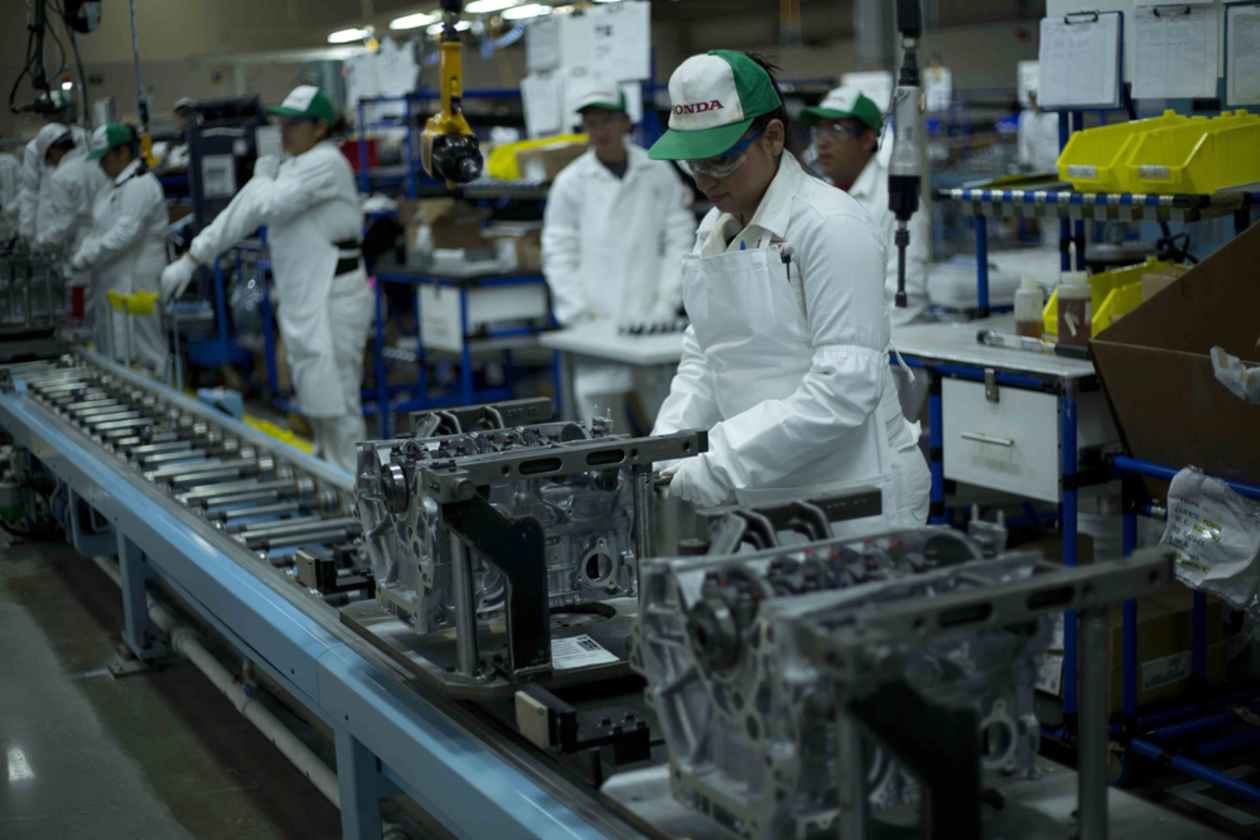
Honda Motor Co. has reportedly paused production in Celaya, Mexico, where it can make up to 200,000 vehicles each year.

The global automotive industry is getting ready for potential production cuts and factory shutdowns as it grapples with an ongoing shortage of critical semiconductor chips. At least one has already started pulling back.

Honda Motor Co., Ltd. was the first company to begin reducing or suspending production across its plants in North America. That will continue into next week, according to a company spokesperson.

Production at a Canadian plant that assembles Civic sedans and CR-V SUVs has been slowed, according to a union that represents workers at a supplier to the plant. And the Yomiuri Shimbun, a Japanese newspaper, reports that Honda’s plant in Mexico, which manufactures the HR-V SUV, has been temporarily closed.

The chip crisis plaguing the automotive industry began in September, when the Netherlands took control of Nexperia, a key automotive microchip maker owned by China’s Wingtech Technology. In response, the Chinese Ministry of Commerce blocked exports of some Nexperia products. About 80% of Nexperia’s total end-product capacity is in mainland China.

Nexperia accounts for about 5% of the global automotive silicon discrete market, according to S&P Global Mobility. It mainly sells standard parts that aren’t technologically advanced but are widely used, with hundreds of chips often needed per vehicle.

“I think it’s more than 2,000 small different chips,” said Arno Antlitz, Volkswagen AG’s chief financial officer and chief operating officer, on a call with investors Thursday, according to a FactSet transcript. “And so it makes it also difficult to find alternative solutions because we are not talking about three or five or seven different units, more like thousands.”

The European Automobile Manufacturers’ Association, which represents companies such as Volkswagen and Mercedes-Benz Group, said assembly-line shortages “might only be days away” as existing supplies dry up.

Volkswagen has enough supply to last at least through next week, according to Antlitz. While Mercedes is “covered” in the short term, it’s also “scurrying” around looking for new suppliers, according to its chief executive. A spokesperson for BMW Group said production has been unchanged at its facilities.

“Every day we are pushing actions and projects” back to avoid disruption to production, Stellantis NV Chief Executive Antonio Filosa said on Thursday, adding that the Jeep maker has set up a “war room” to address potential shortages.

Jim Farley, whose Ford Motor Co. has increased purchases from other suppliers in recent weeks, has said that a “very quick breakthrough” is necessary to avoid losses for the entire industry. General Motors Co. has said it is also working to avoid disruptions.

Nissan Motor Co., Ltd on Thursday said it expects a $1.78 billion operating loss in its current fiscal year, partially due to supply chain-related risks. Still, the automaker has said it has enough chips to last until next week without adjusting production.

Meanwhile, the CEO of fellow Japanese automaker Toyota Motor Corp. isn’t very concerned. “I do think there’s some risk, but it’s not like we’re facing shortages tomorrow,” CEO Koji Sato told reporters at the Japan Mobility Show in Tokyo on Wednesday, according to Reuters.

[…]

Via https://www.marketwatch.com/story/automakers-are-bracing-for-a-chip-crisis-that-could-roil-production-47608edd

Huge Microsoft cloud crash leaves half the world without Internet AGAIN

According to Downdetector, problems began around 11:30am ET, with reports surging from users who couldn’t access cloud-connected services, websites or apps

By Stacy Liberatore

Microsoft‘s Azure, one of the world’s biggest cloud service providers, is suffering outages, triggering widespread internet disruptions across major companies.

According to Downdetector, problems began around 11:30am ET, with reports surging from users who could not access cloud-connected services, websites or apps.

The outage appears to be affecting dozens of platforms that rely on these cloud networks, including Microsoft 365, Xbox, Outlook, Starbucks, Costco and Kroger.

Even popular developer and data tools like Blackbaud and Minecraft are showing connectivity issues.

Downdetector has received nearly 20,000 issue reports from Azure users in the US.

The Microsoft outage comes just days after Amazon Web Services disrupted ‘half the internet.’

The incidents have raised concerns about how much of the global online infrastructure depends on these two companies, which host everything from retail and entertainment platforms to business operations and cloud storage.

Frustrated users have flooded social media to vent, with one post on X reading: ‘First AWS, now Azure goes down. I love it when big companies own half the internet!!!’

[…]

Via https://www.dailymail.co.uk/sciencetech/article-15239249/Amazon-cloud-crash-leaves-half-world-without-internet-AGAIN.html

“We Just Won”: Trump Gloats After Bill Gates Admits Climate Change Won’t End World

Zero Hedge

In the late 1970s, after ‘global cooling’ armageddon science fell out of fashion, a well-oiled machine comprised of billionaire-funded NGOs, the MSM, Hollywood, woke Wall Street, and a robust fact-checking / censorship cartel – started pushing a cult narrative about the planet’s imminent demise in a hellish inferno of global warming. They’ve blamed everything from cow farts and Taylor Swift’s private jet to two-stroke chainsaws, petrol-powered cars, and whatever else these climate Marxists wanted banned – and forced people into authoritarian bullshit like ‘electric stoves only’ and ’15 minute cities’ and ‘eat the bugs,’ etc.

Now, as data centers are coincidentally projected to need record amounts of electricity, Bill Gates has changed his mind about all of that.

And of course the climate cult was one giant grift – or as one former DOGE worker put it, “a heist on the U.S. Treasury” carried out through propaganda that allowed ‘virtuous’ climate bills to be passed easily.

To see this machine in action, look no further than the number of news articles which warned of a “climate crisis” going back 10 years:

And yet, despite decades of gospel over melting ice caps and doom, Gates simply shreds it and decides it’s ackshually not such a big deal.

To wit, his new forecast is that climate change “won’t lead to humanity’s demise.” 

And now, Trump is gloating!

“I (WE!) just won the War on the Climate Change Hoax. Bill Gates has finally admitted that he was completely WRONG on the issue. It took courage to do so, and for that we are all grateful. MAGA!!!” Trump wrote on Truth Social.

Weird that Gates didn’t come to this conclusion before Big Tech needed tons of energy, fast, which means fossil fuels.

Latest on Gates Foundation:

It’s important to understand that there is a war being waged on the minds of the American people. The last five years of fake climate doom headlines were merely a move to enrich Democrat allies, such as climate NGOs, with taxpayer funds.

Keep in mind, anyone who questioned the climate change narrative was silenced. Very authoritarian by Democrats and their billionaire ‘Kings’ … 

[…]

Via https://www.zerohedge.com/weather/after-years-climate-doom-propaganda-bill-gates-admits-world-wont-end

China reveals outcome of key US trade talks

China reveals outcome of key US trade talks

RT

Beijing has agreed to ease rare earth export controls in exchange for lowered tariffs and restrictions from Washington

China has agreed to suspend its latest rare earth export controls in exchange for reciprocal US cuts on tariffs and restrictions, the Chinese Commerce Ministry said in a statement published on its website on Thursday. Beijing’s earlier limits on the critical materials remain in place.

The agreement followed a face-to-face meeting between Chinese President Xi Jinping and his US counterpart Donald Trump in South Korea, as well as economic and trade delegation talks in Kuala Lumpur.

“China will suspend the implementation of relevant export control measures announced on October 9 for one year, and will study and refine specific plans,” the ministry’s statement reads.

Beijing’s restrictions on rare earth mineral exports with dual military use were seen as a response to Washington’s curbs on advanced semiconductors and chipmaking equipment introduced beginning in late 2022, culminating in the Dutch government’s seizure of Chinese owned chipmaker NeXperia in September under US pressure.

China dominates in extraction and processing of rare earth minerals, which are critical for most modern technology from cellphones to missiles.

Under the deal, Washington has agreed to suspend its recent rule expanding export restrictions to any business at least 50% owned by any entity on its “entity list,” the Chinese ministry said.

The US will also suspend its investigation measures targeting Beijing’s maritime, logistics, and shipbuilding industries, and lower fentanyl-related and reciprocal tariffs.

Beijing will adjust its retaliatory measures in response, the statement added.

Trump praised a “great meeting” with Xi, and said that China had agreed to resume purchases of US soybeans and other agricultural products paused during the countries’ recent trade stand-off.

[…]

Via https://www.rt.com/business/627160-china-outcome-us-trade-deal/

Just Say “NO” to Big Tech Attempts to Control Your Life! They Can NOT Control You if You Refuse to Participate

by Brian Shilhavy
Editor, Health Impact News

The key to having Big Tech billionaires controlling the public to roll out their agendas of trying to take over the financial system with digital currencies and making everyone comply with their digital surveillance tools so that they can know everything you do and force you to comply to their demands to keep participating in society, is for the public to volunteer to let them make you their slaves.

That’s it. That is all they need, and we saw them do it during COVID with COVID-19 injections, where a majority of the world’s population complied, voluntarily, to take an experimental injection out of fear of a fake virus and pandemic.

Some did refuse to comply, and lost their jobs. But they were by far the minority. Many of those who did comply died or were permanently disabled.

Has the world learned its lesson from the COVID Scam-demic?

Let’s hope so, because the next step is giving everyone a digital ID and requiring them to use that ID along with biometrics like a face scan, eye scan, or palm scan, in order to participate in society and have access to their bank accounts.

[…]

One of the places that has announced a new national Digital ID is the UK, and Brits are generally not very accommodating about this, as you can see in this recent interview with Keir Starmer, who makes it clear that it is still “voluntary,” but that the easier route is to comply.

It will always be like that. They will use fear and convenience to try to get people to accept Digital IDs. We must be willing to give some things up that make our life easier, if we want to protect our privacy and stop Big Tech from making us their slaves.


Opposition is also growing here in the U.S. against Digital IDs.

Here is a recent clip from The Jimmy Dore show who interviews Twila Brase, president of the Citizens’ Council for Health Freedom, and a new bill introduced in the Senate by Rand Paul to stop Real IDs.

[…]


Google begins rolling out age verification [ie digital ID] in app store in response to U.S. laws

From Biometric Update:

Excerpts:

Age verification has hit Google’s Play store. Having implemented its age inference system on YouTube, the tech giant has apparently answered calls for age assurance at the app store level.

According to a report from Android Authority, user Artem Russakovskii shared screenshots of the verification prompt in a post on X. The shots in question show a screen that offers users several options for age verification. These include taking a photo of a government ID, facial age estimation through a selfie, credit card verification or email-based age inference, the latter of which is provided by the UK’s Verifymy (and which the author commends as the “quickest, easiest, and most privacy-preserving way to verify your age online”).

The facial age estimation (FAE) option says Google “partners with a company that specializes in estimating age,” but does not include the name of the company. Verifymy does provide biometric facial age estimation, but Google has also developed its own FAE technology, which appears on the Age Check Certification Scheme (ACCS)’s registry of approved providers.

Regardless, Google appears to be anticipating the continued spread of age assurance laws across the U.S. A post from the company points to legislation in Texas, Louisiana and Utah as a catalyst for the app store age check rollout.

Full article.

[…]

Via https://healthimpactnews.com/2025/just-say-no-to-big-tech-attempts-to-control-your-life-they-can-not-control-you-if-you-refuse-to-participate/

The Origin of South Pacific Languages

Linguistic Melanesia, Introduction and definitions

Episode 21 Languages of the South Pacific Part 1

Language Families of the World

Dr John McWhorter (2019)

Film Review

After living in the South Pacific for 23 years, I have a special interest in the Austronesian language family, which consists of 1000 languages. Austronesian languages are generally characterized by short two to three syllable words, sentences that begin with the verb and reduplication (doubling nouns to create subtle changes in meaning – eg in Maori ringa (arm) becomes ringaringa for fingers.

Most linguists believe that the Austronesian languages are derived from Thao, a language spoken in Taiwain (and possible southern China). All Austronesian words for rice, sugar cane, ax and canoe are similar to words used in Taiwan for similar objects. Northern South Pacific languages are referred to as Melanesian – Southern South Pacific languages are called Polynesian.

Melanesian (Northern South Pacific  Languages)

  • Malay (spoken in Malaysia and Indonesia)
  • Tagalog (spoken in Philippines)
  • Motu (spoken in New Guinea)
  • Fijian
  • Samoan.
  • Tai-Kadai languages (spoken in Thailand and by indigenous Ainu people In Japan).
  • Baruto languages (spoken in Malagasy off the southeast coast of Africa)

https://www.kanopy.com/en/pukeariki/watch/video/6120000/6120040

Making another ‘desert bloom’: Israel’s water tech seeps into the Gulf

Photo Credit: The Cradle

The Cradle

Israeli water technology firm IDE Technologies is quietly embedding itself at the heart of Saudi and Kuwaiti infrastructure projects, advancing Tel Aviv’s strategic foothold in the Persian Gulf through what is effectively functional normalization.

While headlines remain focused on overt diplomatic deals, it is through desalination plants and reverse osmosis systems that Israel is carving a decisive role in the Arab world’s most vital sector: water.

In the Arabian Peninsula – where smart city megaprojects like NEOM rise from the sand, and hundreds of billions are earmarked for futuristic visions – one fundamental truth underpins every promise: without water, there is no future.

Water diplomacy 

In the world’s driest region, water security is national security. Yet Arab states have systemically failed to establish a homegrown technological base to secure independent access to this resource, leaving them reliant on foreign, increasingly Israeli, expertise.

Israel – the northern neighbor of the Persian Gulf states – was itself born in a water-scarce environment, with half the land it occupied in Palestine consisting of desert. It fought wars to control water sources along its borders with Jordan, Syria, and Lebanon, and is dreaming of diverting the Nile.

But from early on – under the “Make the desert bloom” strategy laid out, in particular for the arid Negev, by the first Israeli Prime Minister David Ben Gurion – Israel invested in the water tech sector and succeeded in transforming itself into the “Silicon Valley” of desalination and water reuse technologies.

It is at this intersection – between the Persian Gulf’s perpetual thirst and Israel’s decisive technological edge – that a new West Asia is quietly being redrawn. Here, “soft normalization” seeps through pipes and reverse osmosis systems, bypassing political statements and official speeches.

The matter of overt Arab–Israeli normalization with Gulf countries that have not officially recognized the Israeli state – namely Saudi Arabia and Kuwait – is no longer speculative, nor is it confined to military or intelligence cooperation. It is happening quietly through economic gateways, particularly advanced Israeli technologies, including vital water technologies.

The thirst trap: Gulf dependency takes shape

To grasp the scale of this entrenchment, one must first understand the depth of the Persian Gulf’s water crisis. Saudi Arabia and its neighbors depend almost entirely on fossil groundwater and desalinated seawater.

The former, non-renewable and depleted by decades of reckless agriculture, has been largely exhausted. As for desalination, it is now the only viable path to support expanding populations, urban growth, and mega-projects like Saudi Vision 2030 or Kuwait’s 2035 development plan.

Yet traditional desalination comes with steep costs. It devours oil and gas, dumps hyper-saline brine back into the Gulf – devastating marine life – and escalates both environmental and economic burdens.

Thus, the Gulf’s dilemma is no longer merely about “providing water,” but about doing so “efficiently.” The global race is now over who can desalinate a cubic meter of water using the least energy (kilowatt/hour), at the lowest cost, and with minimal environmental impact.

And this is where Tel Aviv dominates.

The ‘Silicon Valley’ of water

This supremacy is deliberate. From its inception, water for Israel was a matter of survival. Israeli firms like Netafim pioneered drip irrigation. Elite institutions such as the Weizmann Institute and Ben Gurion University devoted decades to refining desalination techniques.

IDE Technologies, born in 1965, is the world’s premier name in large-scale desalination. Its proprietary breakthroughs in reverse osmosis and thermal desalination have set world standards. The company built and operates some of the world’s largest and most efficient plants – including Sorek 1 and Sorek 2 in occupied Palestine – using less energy than any competitor.

For policymakers in Riyadh, Kuwait City, Abu Dhabi, Manama, and Doha, numbers speak louder than politics. When IDE offers technology that can save millions in annual energy costs and ensure stable water supplies for a $500-billion project like NEOM, the engineers’ passport stamps become a secondary issue.

Gulf capitals have realized that clinging to outdated desalination tech is economic and ecological suicide. For water security – and thus national security – they need better solutions. And in this field, the best option simply bears the label: “Made in Israel.”

Soft normalization: The consortium model

Yet political realities persist. Saudi Arabia publicly links normalization to the Arab Peace Initiative – a two-state solution that Israel continues to undermine. Kuwait still enforces a 1964 law banning contracts with Israeli entities. So how does Tel Aviv penetrate?

Enter the consortium model – a corporate workaround for political red lines. Here’s how it works:

The Saudi government, via its Water Partnership Company (SWPC), issues international tenders for strategic water projects. A local champion like ACWA Power leads a bidding consortium. Once awarded, ACWA becomes the project’s face and primary developer.

It then subcontracts global engineering firms to deliver on the scope. Here, IDE Technologies is brought in as a key technology provider or contractor. The paperwork is clean, the project proceeds, and normalization advances – pipeline by pipeline.

International arbitration documents revealed that the Israeli desalination company IDE bypassed the Arab and Muslim boycott through a Swiss-owned intermediary, Swiss Water, which submitted bids while concealing IDE’s Israeli identity and role. Under this arrangement, Swiss Water operated in “prohibited countries” such as Qatar, Kuwait, Saudi Arabia, Yemen, Libya, Algeria, Tunisia, Afghanistan, and Pakistan, as well as countries without formal diplomatic ties to Israel before the 2020 Abraham Accords, such as Bahrain, Sudan, Oman, Morocco, and the UAE where IDE maintains today a presence through its regional headquarters in Dubai, known as IDE Meyah Water Solutions.

Swiss Water reportedly signed contracts worth tens of millions of dollars per project, while IDE supplied the technology and built the plants. Major projects include the Red Sea desalination project in Saudi Arabia, the Great Arabian Sea project in Pakistan, and two projects each in Kuwait and Oman.

Jubail 3A: Where normalization meets the pipeline 

Take Jubail 3A, one of the world’s largest desalination plants, with a capacity of 600,000 cubic meters per day. The winning consortium was led by Saudi firm ACWA Power (40.2 percent stake), but behind the scenes, engineering and construction were executed by a team that included China’s Power China, Spain’s Abengoa, and Israel’s IDE.

The arrangement is satisfactory to all parties:

Riyadh gets a strategic water facility led by a national firm, powered by world-class technology, funded by China, and engineered by Europe; IDE gains a multimillion-dollar contract in the world’s largest desalination market, deeply embedded in Saudi infrastructure – and all without triggering a political firestorm; and ACWA gains a reputation as a global integrator, capable of assembling the best from east and west to execute megaprojects.

What appears on paper as a technical arrangement is, in effect, a form of functional normalization. IDE’s engineers, software developers, and system managers are now an invisible yet integral part of Saudi Arabia’s water supply – particularly in its oil-rich eastern region.

The quieter Kuwaiti model

Kuwait, often portrayed as the Persian Gulf’s most vocal opponent of normalization, offers another telling case. IDE has operated in the emirate for years, particularly in Doha (east and west) desalination plants. And, as in Saudi Arabia, this took place not through direct Israeli contracts, but via multinational tenders where IDE participated as a subcontractor.

This Kuwaiti example arguably reveals more than the Saudi one. It shows that even the loudest political resistance bows to technical necessity. In practice, Kuwait has accepted Israeli technological primacy despite its official anti-normalization stance. It is a marriage of Arab capital and Israeli know-how, facilitated not by politics, but by pressing water needs.

Saudi normalization strategy

Water is only one front in a broader Saudi strategy for normalization, and it is rooted in gradualism and compartmentalization. Unlike the Emirati and Bahraini rush to the Abraham Accords, Riyadh has opted for a slower, layered approach.

Saudi Arabia, given its religious and political weight, has always avoided a sudden political “leap” toward overt normalization that could trigger backlash. Instead, it has pursued a phased approach – bottom-up normalization.

Stage one was security and intelligence coordination – quiet cooperation in Afghanistan, Iraq, Iran, and Syria. These built trust and institutional familiarity between Riyadh and Tel Aviv.

Stage two is unfolding now – integration via non-controversial sectors like water, agriculture, and cyber. While these are not politically explosive, they are strategically crucial.

When Israeli technology powers the kingdom’s desalination, irrigates its crops, and shields its electrical grid, the relationship becomes a de facto security partnership.

Parallel to this, a third stage is underway – soft social normalization: opening airspace, allowing businesspeople and rabbis to enter with alternate passports, and tempering religious and media discourse to prepare public sentiment.

Once this layered web of relations becomes operationally irreversible, diplomatic normalization, including embassies, flags, and handshakes, becomes less a leap and more a footnote.

Water and oil: The realpolitik of tomorrow 

IDE’s penetration into Saudi and Kuwaiti water systems captures the essence of a new regional logic that is pragmatic, technocratic, and devoid of ideological theater. With the collapse of Syria’s resistance front, and with Arab capitals chasing post-oil futures, Israel is in a prime location.

Crown Prince Mohammed bin Salman’s (MbS) Vision 2030 rests on importing minds and machines, not politics. If the road to diversification runs through Israeli pipelines, so be it.

Desalination, in this context, is the perfect front. It meets existential needs, strengthens economic ties, and advances normalization without headlines.

Where once West Asian alliances were drawn in the sands of refugee camps and oil fields, today they flow through networks of water, data, and infrastructure.

The water flowing from IDE-linked plants in Saudi Arabia and Kuwait reflects a deeper shift underway across the Persian Gulf without the ceremony and summits, but forged quietly through contracts, infrastructure, and dependence.

[…]

Via https://thecradle.co/articles/making-another-desert-bloom-israels-water-tech-seeps-into-the-gulf