Retired child and adolescent psychiatrist and American expatriate in New Zealand. In 2002, I made the difficult decision to close my 25-year Seattle practice after 15 years of covert FBI harassment. I describe the unrelenting phone harassment, illegal break-ins and six attempts on my life in my 2010 book The Most Revolutionary Act: Memoir of an American Refugee.
Skyrocketing AI infrastructure outlays have raised investor concerns over future returns and the potential for a bubble
US technology stocks tumbled sharply after Amazon, Microsoft, Google, and Meta announced plans to spend a combined $660 billion on artificial intelligence in 2026. Investors worried the companies’ capital expenditures could outpace the technology’s earnings potential.
Amazon, Google, and Microsoft have lost a combined $900 billion in market value since reporting quarterly results last week. The companies’ spending plans exceed the GDP of Israel and overshadow strong growth in the companies’ cloud businesses.
“AI bubble fears are settling back in,” Brent Thill, an analyst at Jefferies, told the Financial Times on Friday. “Investors are in a mini timeout around tech, and nothing the companies say fundamentally matters.”
Amazon shares fell 7.8% in premarket trading on Friday after the company said its 2026 capital spending would reach about $200 billion, $50 billion more than expected. The shares later stabilized. CEO Andy Jassy said the funds were needed to expand AI, robotics, chips, and satellite projects.
Alphabet said it plans to nearly double its capital expenditures next year, with much of the increase going to cloud and AI projects, putting pressure on its stock despite posting over $400 billion in revenue in 2025. Microsoft shares fell 18% after reporting large data center spending and disclosing that 45% of its $625 billion book of future cloud contracts is tied to OpenAI. Meta initially rose on AI-driven advertising growth but later fell amid wider tech weakness.
Apple, which has kept AI infrastructure spending low, gained 7.5% after reporting record quarterly revenue of $144 billion. Its capital expenditure fell 17% in the fourth quarter to $2.4 billion.
Markets were also unsettled after confirmation that OpenAI’s $100 billion investment and infrastructure deal with Nvidia did not proceed.
The spike in AI spending has raised concerns about a potential financial bubble. OpenAI has secured computing agreements with Nvidia, AMD, and Oracle worth over $1 trillion. Nvidia alone completed more than 100 AI-related venture deals in 2024. Analysts warn that much of the investment flows within a small group of closely linked companies, creating what they describe as circular financing that inflates market values beyond the industry’s actual profits.
According to a recent Price Waterhouse Cooper survey, most CEOs say their companies have not yet seen financial returns from AI, with only 12% reporting both higher revenue and lower costs.
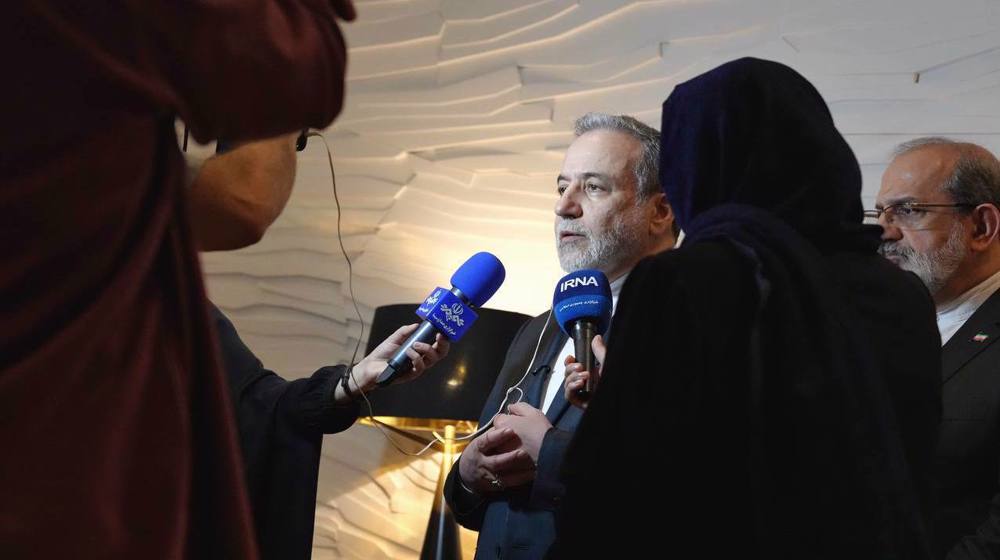
Iran’s Foreign Minister Abbas Araghchi speaks to Iranian media following the conclusion of Iran-US talks in Muscat, Oman, on February 6, 2026.
Press TV
Iranian Foreign Minister Abbas Araghchi says the new round of indirect nuclear talks with the United States in the Omani capital Muscat was a “good start” and can be continued.
“The decision on how to proceed with the negotiations will be made after consultations with the capitols,” he told IRIB following the conclusion of the Omani-mediated talks on Friday.
He added that regarding the continuation of the negotiations, “it seems that a consensus exists.”
He emphasized that the continuation of talks is contingent upon consultations in the capitals and a decision on how to proceed.
The top Iranian negotiator said the indirect negotiations began after hours of intensive consultations in a “positive atmosphere.”
During some six hours of talks, several indirect meetings and rounds of consultations were held and Omani Foreign Minister Sayyid Badr Al Busaidi played an “active” role in hosting and conveying the messages and viewpoints of both sides, said Araghchi.
“During these talks, [which took place] after a long period of interruption, Iran’s positions and concerns were fully conveyed and our interests, the rights of the Iranian people, and all matters that needed to be stated were conveyed in a very positive atmosphere, and the views of the other side were also heard,” he explained.
He noted that the timing and way of the next round of talks will be determined in subsequent consultations through the Omani foreign minister.
The sides agreed to once again begin a process of talks eight months after Israel’s war against Iran led to immense distrust and a significant challenge to negotiations, he added.
“We must first overcome this prevailing atmosphere of distrust, and only then can we design a framework for a new dialogue, one that can… secure the interests of the Iranian people,” Araghchi pointed out.
He said good discussions were held between the two sides, and it was agreed that the process will be continued.
Talks focus only on nuclear issue
“Our talks are focused solely on the nuclear issue, and we are not engaging with the Americans on any other subject,” the minister said.
The Iranian team emphasized that nuclear negotiations “must take place in a calm environment, free from tension and threats,” he added.
“We raised this point clearly today as well, and we expect it to be observed so that the continuation of the talks will be possible,” he added.
Araghchi led the Iranian negotiating team. He was aided by his deputies, Majid Takht-Ravanchi, Kazem Gharibabadi, and Hamid Qanbari, in addition to Foreign Ministry Spokesman Esmaeil Baghaei.
US Special Envoy Steve Witkoff led the American delegation, accompanied by President Donald Trump’s son-in-law and adviser Jared Kushner — and, notably, Adm. Brad Cooper, commander of US Central Command (CENTCOM). Cooper’s presence has drawn attention, as his participation had not been announced in advance and has fueled media speculation, particularly given that the Iranian delegation includes no military officials.
The Omani foreign minister was shuttling between the sides, with the talks being held indirectly as before.
In a post on X, the Omani foreign minister described the talks as “very serious.”
“It was useful to clarify both Iranian and American thinking and identify areas for possible progress. We aim to reconvene in due course, with the results to be considered carefully in Tehran and Washington,” he added.
Meanwhile, Iranian Foreign Ministry Spokesperson Esmaeil Baghaei said that the sides agreed to continue the talks.
“While explaining their viewpoints and demands, the sides agreed to decide on the next round of talks after consultations with the capitals,” he wrote on X.
Iran’s main demand in the Muscat talks is the effective and verifiable lifting of economic and financial sanctions, Iranian officials say. Tehran has repeatedly stressed that any agreement lacking tangible economic benefits would be of no practical value, making the timing and outcome of the negotiations especially important for Iran.
On the nuclear front, Iran insists on its legal right to enrich uranium on its own soil, describing the issue as a red line in the talks. From Tehran’s perspective, any potential technical measures can only be considered within a framework that recognizes this right, and any preconditions beyond it would be seen as a sign of bad faith by the other side.
Iran had held five rounds of talks on a replacement for the 2015 nuclear deal prior to the US-Israeli airstrikes on the country and its nuclear facilities in mid-June.
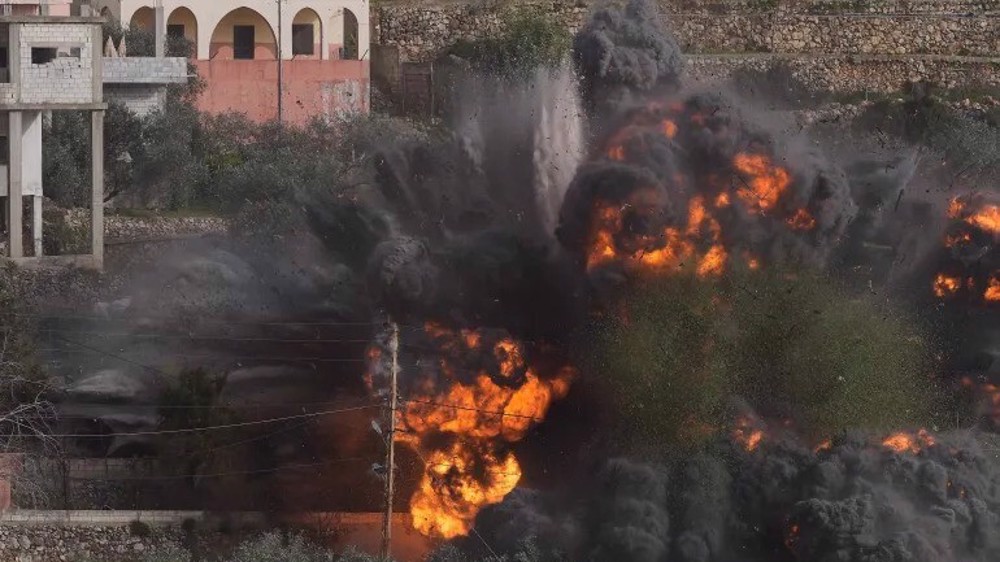
Flames and smoke rise from a building hit in an Israeli air attack in Ain Qana, southern Lebanon on February 2, 2026. (Photo by AP)
Press TV
The skies over southern Lebanon have seen a significant increase in Israeli aerial attacks over the past month, marking the most intense period of such activity since the last ceasefire agreement in November 2024.
The Norwegian Refugee Council (NRC), citing data from security company Atlas Assistance, reported that Israel has executed a “clear and dangerous” surge in air attacks on Lebanon, with its warplanes conducting more strikes in January than in any previous month since the ceasefire.
“We have seen a clear and dangerous surge in the number of Israeli attacks on Lebanon in the first month of the year,” stated Maureen Philippon, NRC’s country director in Lebanon.
Israeli warplanes conducted at least 50 air raids on Lebanon last month—approximately double the previous month’s count. The data only includes attacks by manned Israeli warplanes, excluding drone strikes and those occurring during ground incursions.
“These attacks and ongoing ground incursions render the ceasefire agreement little more than ink on paper,” noted an NRC official.
Reported attacks have affected numerous cities and villages in southern Lebanon and the Bekaa Valley, targeting private residences and densely populated neighborhoods.
Recent airstrikes on residential blocks in Qanarit and Kharayeb destroyed homes and displaced families.
The frequency of these raids has raised concerns among local populations and international observers about the potential for renewed all-out war and its humanitarian implications.
The continuous presence of warplanes has contributed to a climate of fear and insecurity, particularly among civilians near the border.
“Every time we hear a strike, panic takes over. We grab what we can and run, not knowing where it is safe,” said Sana, a resident of the Nabatiyeh district. “We can’t take this anymore; we live with the fear that we could be next.”
The NRC emphasized the impact of the aerial bombardment on communities already facing economic hardship and the lingering effects of past wars.
Israeli bombing undermines reconstruction efforts and leaves more families without homes this winter.
Philippon stated, “Aid agencies, including NRC, are still dealing with the aftermath of months of destructive conflict. We call on Israel’s allies to stop these attacks on civilian areas and villages.”
She noted that families and children are particularly affected, referencing a school in west Bekaa that had recently been repaired but was damaged again in a recent attack.
“This means yet another interruption in education for children,” she added.
Philippon called on Israel’s allies to do “everything they can to stop these attacks on civilian areas and villages”.
Under the terms of the November 2024 ceasefire, cross-border attacks were supposed to cease, and Israel was to withdraw troops that had invaded south Lebanon in October.
However, Israel has continued its near-daily attacks in the south and the Bekaa Valley, maintaining occupation at five points in southern Lebanon.
The Lebanese government says that Israel has committed thousands of breaches of the ceasefire agreement.
Hezbollah Secretary-General Sheikh Naim Qassem recently warned that a US-Israeli push to disarm the resistance in Lebanon is a calculated prelude to the annihilation of the Lebanese nation.
He emphasized that Israel is targeting all of Lebanon, not just specific areas or groups.
Sheikh Qassem lamented ongoing support from the US and other Western powers for Israel, while the Lebanese government pressures Hezbollah to comply with Israel’s demands.
Doing this would improve Cuba’s integration into the multipolar global economy and reap benefits from connectivity with BRICS help and China’s BRI’s investments.
Cuba’s engagement with the BRICS bloc and the Belt and Road Initiative (BRI) has been a subject of interest for many observers who question the extent of the benefits derived from these partnerships. China’s BRI presence in Latin America and the Caribbean (LAC), counts with ten countries in the said region having signed up, which presents an opportunity for Cuba to engage in infrastructure development and trade relationships. This article tracks relevant recent Cuban-BRICS relations to ascertain the geoeconomic progress and suggest how the relations should develop.
The question in everyone’s minds – especially Jackson Hinckle – is why Cuba, a nation historically close to the Communist states of the planet like the Soviet Union and China, has not enjoyed a radical positive change in its economy and overall city development. The US blockade’s impact on Cuba is profound, targeting key economic areas and hindering the country’s development efforts of trade and investments. It undermines the sovereignty, rights to live and the right to development of the Cuban people, running counter to international law. The embargo’s restrictions on trade and financial transactions have led to significant economic losses for Cuba. Moreover, the U.S. has been investing in soft power strategies, such as cultural Hybrid War groomingof artists and recruiting academics who have some influence in Cuba and other Global South countries.
Economic Diversification with BRICS
Cuba’s path to modernization and efficient trade amidst the enduring US embargo involves a multifaceted approach that leverages its global relationships and addresses internal economic strategies. The island-nation socialist government has emphasized socialism and human development to great effect, and this same base is being upgraded now by integrating more access to markets, infrastructure investments, and exponential trade.
In 2018, Cuba signed a memorandum of understanding and officially joined the Belt and Road Initiative and is currently among 22 BRI countries in Latin America & Caribbean region. Nonetheless, BRI in Cuba only began true implementation in 2021 after two things happened 1) Cuba joined Cuba’s entry into the Belt and Road Energy Partnership (BREP) which has a focus on energy infrastructure development and 2) Cuba signed a cooperation plan to promote the construction of the China-proposed BRI, confirming the mutual impetus in effect, marking a significant step in the economic planning and market building. Then Cuba’s 2023 participation in the BRICS Summit as the Pro Tempore President of the G-77 + China indicated a promise of a synergy between Cuba and BRICS enhancing the trade and infrastructure.
Despite these engagements, the anticipated economic windfalls from such partnerships have not been as significant enough to stabilize Cuba. This could be attributed to several factors, including international trade, the impact of the global pandemic lockdown, and the internal monetary challenges faced by Cuba. Moreover, the US could have been discouraging Cuba’s full integration with BRICS behind doors, threatening it with the fullest increase of the embargo blockade, possibly even threatening to sanction countries that do business with Cuba, especially those under the collective West’s banner like Netherlands, Spain and Canada.
Cuba might be wary of a significant increase in an Economic Hybrid War embargo could occur if the island pivots toward full ascension into BRICS, as this would alter the balance of economic power in the region and the US neocolonial calculus for the country to grow with multipolar networks. The possible intensification of sanctions and the embargo is a strategy that could have profound implications for Cuba’s trade dynamics. Sanctions have been a tool to exert pressure and influence on Cuba’s trade relations and could particularly be used with key partners like Spain, Netherlands, and Canada, which would face US pressure. Sovereign multipolar Venezuela has historically been a strong partner of Cuba, while Russia and China have been augmenting both their imports and exports in the last decade, all of them showing a growing share.
Nonetheless, if a sudden increase in economic Hybrid War were to take place Cuba would find heavy sanctions impacting a significant chunk of trade with European states and Canada in imports and exports. The Caribbean country needs reassurance that BRICS guarantees a swift substitution of these trade partners with similar if not better trade dynamics to ease Cuba’s mind. Cuba sincerely seeks to diversify its trade partners, and strengthen ties within the ten core BRICS bloc, possibly with countries from BRICS+ and other Latin American countries like Mexico, Brazil and Argentina.
To counter the possible economic warfare challenges and streamline Cuba-BRICS interconnectivity, the island nation should consider updating its legal and regulatory frameworks to attract foreign investment, offering incentives for international companies within the logic of win-win business negotiation. Cuba requires strengthening trade relations with the 10 BRICS countries, particularly Russia, China and Brazil, however, the island requires further access to more markets to diversify its economic partnerships beyond the core BRICS. So engaging with a broader range of countries in the Global South to mitigate the effects of the US blockade, meaning full access to the BRICS+ network of countries is a must to develop Cuba fully.
While Cuba has made efforts to engage with BRICS and the BRI, the full potential of these partnerships has yet to be realized because of a combination of external challenges and internal limitations. Mending this requires streamlining legal and regulatory frameworks to attract foreign direct investment, building energy infrastructure, developing human capital, and increasing trade with BRICS and BRICS+. Doing this would improve Cuba’s integration into the multipolar global economy and reap benefits from connectivity with BRICS help and China’s BRI’s investments.
Health Canada has locked away internal reports on vaccine and drug injuries for up to 15 years, citing the sheer scale of the records involved, according to documents tabled in Parliament.
The disclosure emerged in an Inquiry of Ministry response detailing unusually long delays under the Access To Information Act.
Health Canada confirmed its longest current extension is 15 years, covering a request for vaccine and adverse drug reaction reports dating back to 1998.
Officials said the request originally involved several million pages of records. It has since been narrowed in scope and is now being processed, but the extended delay remains one of the longest on record within the federal government.
The Public Health Agency of Canada also acknowledged lengthy delays tied to pandemic-era records, with one request extended by more than five years.
The agency blamed the backlog on the volume of material moving through senior offices during COVID-19, the need for extensive consultations, parliamentary motions, and what it described as the requester’s refusal to narrow the scope of the request.
The figures were released after Conservative MP Colin Reynolds of Elmwood-Transcona asked which Access To Information requests received since January 1, 2020 had the longest extensions still underway.
While Health Canada’s delay raised eyebrows, it does not hold the overall record.
Public Works reported an extension of 10,000 days — roughly 27 years — for a request received in 2023 involving about 200,000 pages of documents.
The department did not say whether the file was related to COVID-19.
Other departments also reported multi-year delays. Industry Canada acknowledged a 12-year extension on one file, while the Immigration and Refugee Board delayed another for a decade.
Across government, extensions of two to three years were reported at Environment, Finance, Justice, the Correctional Service, the Superintendent of Financial Institutions, the CRTC, Treasury Board, Administrative Tribunals Support Service and Export Development Canada.
Delays stretched to four years at the Communications Security Establishment, five years at Employment, Fisheries, Library and Archives Canada, and the Privy Council.
Public Safety reported a six-year delay tied to 30,000 pages of classified material, National Defence cited a seven-year extension, and the Canadian Food Inspection Agency said it took eight years to process nearly 68,000 pages of records.
The lengthy delays stand in contrast to cabinet’s 2015 promise that federal information would be “open by default.”
Emails released in 2019 later showed some departments weighed political considerations before releasing information.
We report the longest documented persistence of mRNA vaccine components to date, independently confirmed across multiple laboratories, biospecimens, and time points using diverse analytical methods.
For years, the public was told that mRNA vaccine materials would degrade within days to weeks — rapidly broken down, biologically transient, and incapable of long-term persistence. That assumption shaped regulatory assurances, public messaging, and safety expectations worldwide. Billions across the globe received these injections based on the claim that the genetic material would quickly disappear from the body.
Today, that narrative collapses — following a coordinated, multi-country investigative effort involving the McCullough Foundation, the INMODIA laboratory (Germany), the Municipal Hospital Dresden-Friedrichstadt (Germany), Neo7Bioscience, and collaborating independent laboratories.
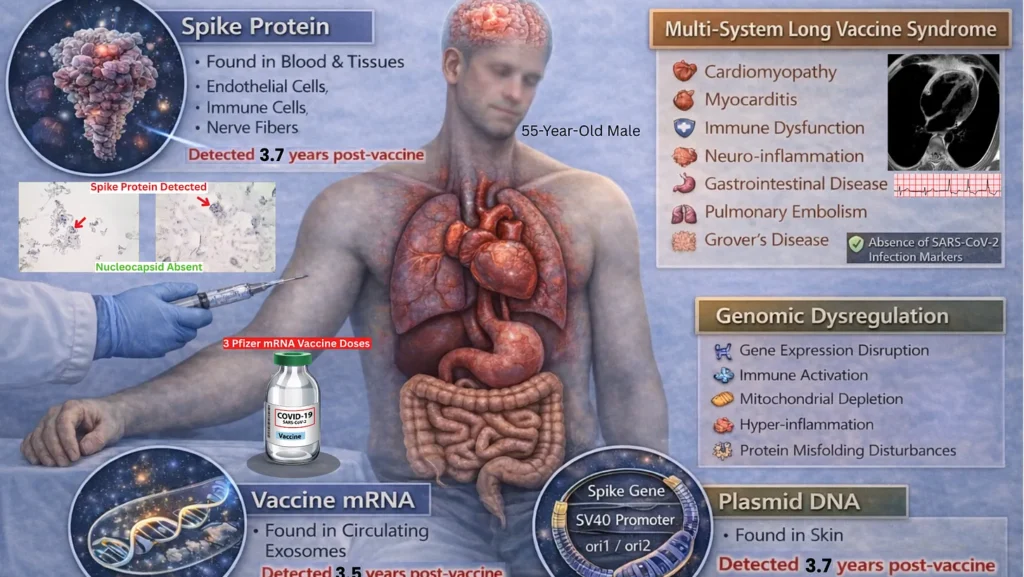
The findings reveal longitudinal molecular evidence that vaccine-derived mRNA, plasmid DNA fragments, and spike protein can persist in human blood and tissue more than 3.5 years after vaccination — independently confirmed across multiple laboratories using diverse analytical methods.
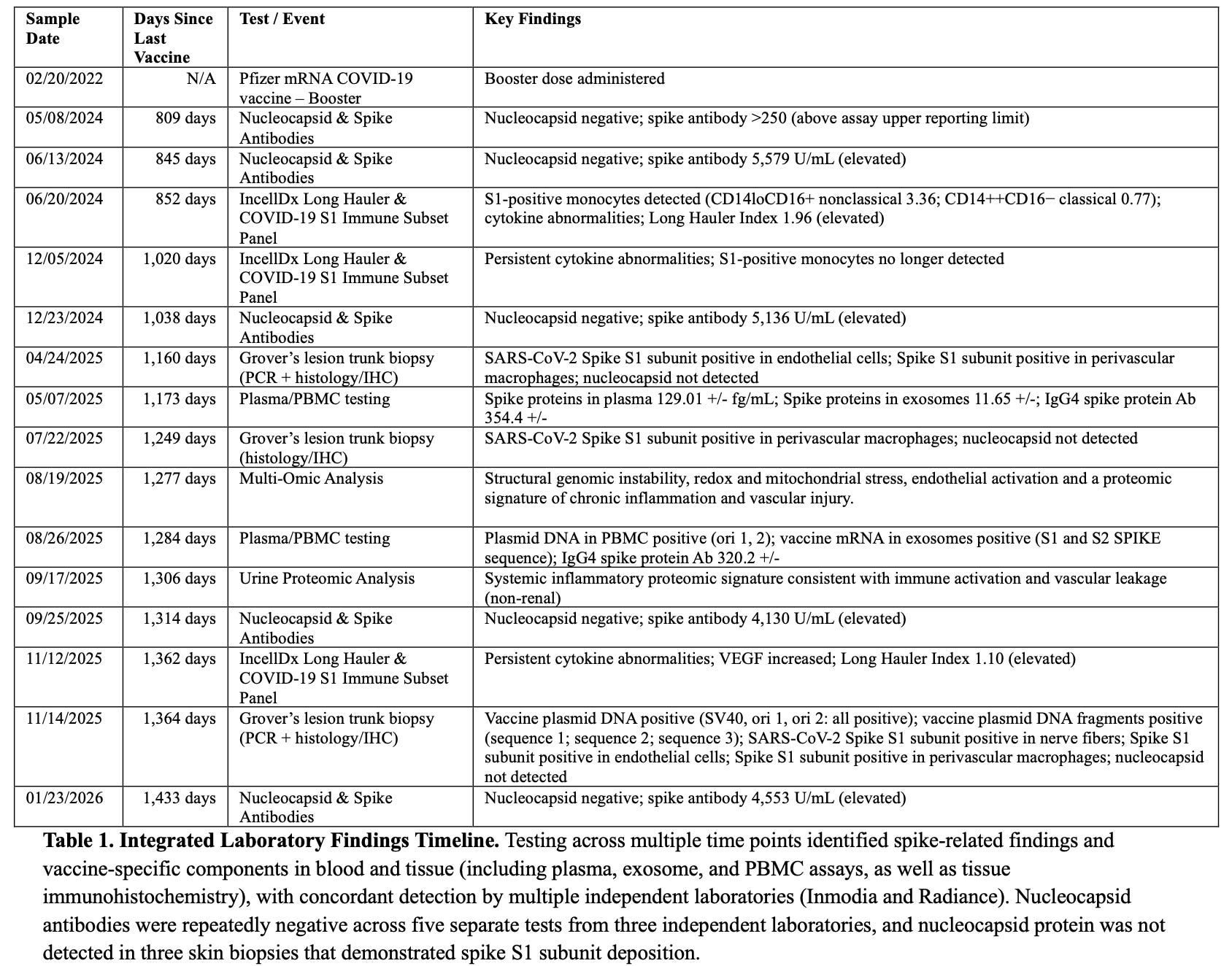
SARS-CoV-2 infection was effectively excluded: nucleocapsid antibodies remained negative across five separate timepoints and three independent laboratories, and nucleocapsid protein was absent in tissue specimens despite the presence of spike protein deposition.
Case Presentation
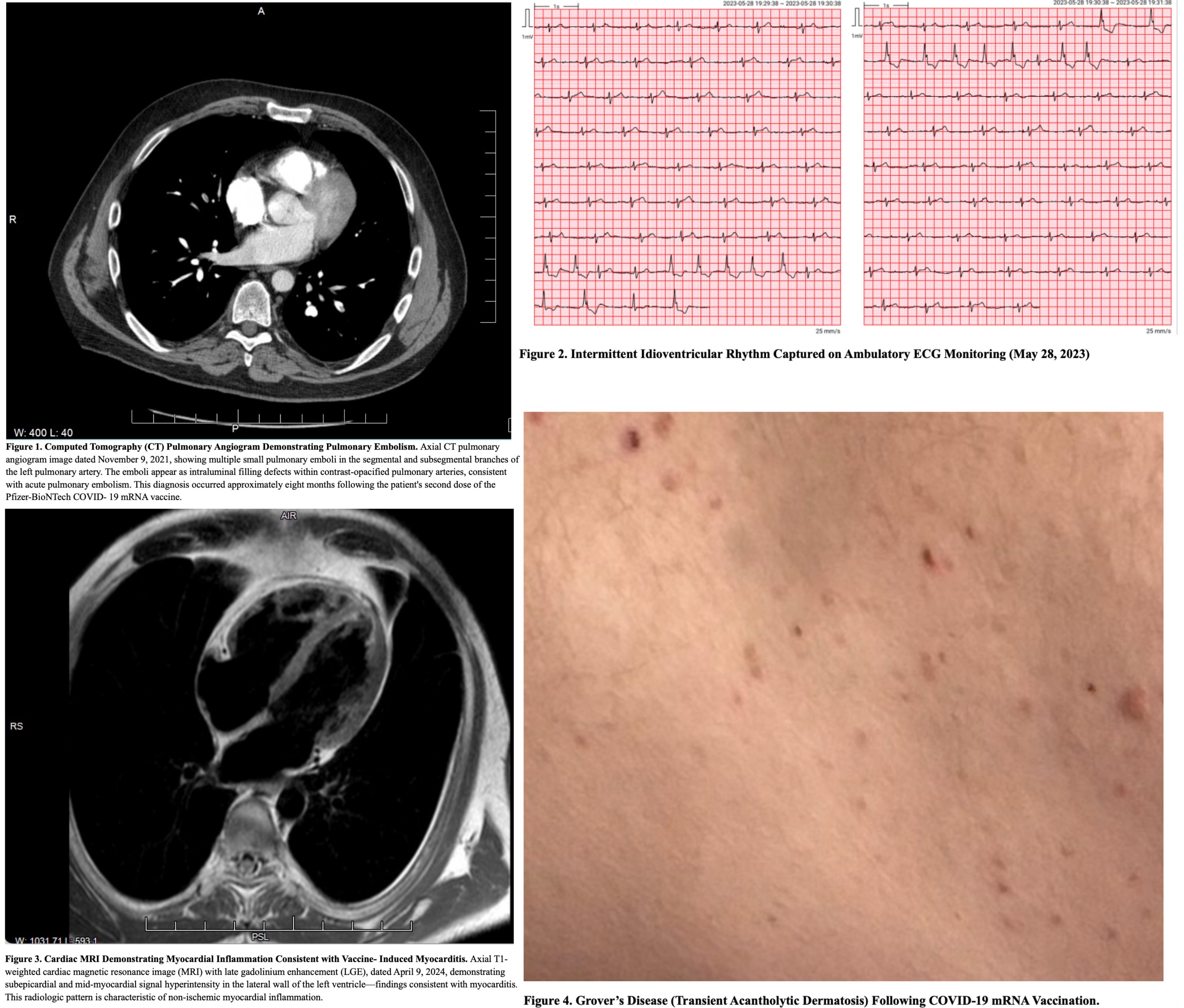
We report a 55-year-old male who received three doses of the Pfizer–BioNTech COVID-19 mRNA vaccine and subsequently developed progressive multi-organ dysfunction consistent with post-COVID-19 vaccine syndrome (PCVS), involving cardiopulmonary, neurologic, musculoskeletal, gastrointestinal, autonomic, otolaryngologic, audiovestibular, immune, ophthalmic, dermatologic, and psychiatric domains. Clinical manifestations included: pulmonary emboli; delayed MRI-confirmed myocarditis; neurocognitive impairment; small fiber neuropathy; autonomic dysfunction; myalgia; chronic pancreatic and gastrointestinal involvement; worsened tinnitus with sensorineural hearing loss; voice dysphagia and dysphonia; ophthalmic disturbances; chronic dermatologic inflammation; and anxiety/depression. The case was evaluated through a uniquely extensive longitudinal, multi-domain clinical investigation spanning molecular, immunologic, genetic, proteomic, transcriptomic, and tissue-based analyses, undertaken to characterize disease mechanisms and exclude alternative etiologies.
Extensive Diagnostic Evaluation
After >40 emergency department visits and >200 outpatient specialty encounters, the patient underwent >100 non-routine laboratory investigations and >100 imaging/functional studies. This evaluation systematically excluded underlying etiologic mechanisms across infectious, autoimmune, rheumatologic, endocrine, genetic, hematologic, malignant, toxic/medication-related, cardiovascular/vascular, metabolic, and primary neurologic domains. Testing remained largely nondiagnostic. A possible undocumented/undiagnosed asymptomatic infection manifesting as Long COVID was suspected after myocarditis diagnosis, and serology was pursued; unexpected results prompted expanded immune and tissue-based testing for spike- and vaccine-derived components. SARS-CoV-2 nucleocapsid antibodies were negative across five separate time points spanning 809–1,433 days post-vaccination, confirmed by three independent laboratories. The patient remains nucleocapsid negative with persistently elevated spike antibody levels (4,553 U/mL) 1,433 days after the final vaccination.
Specimen Collection and Analytical Methods
Blood and skin tissue specimens were obtained at multiple time points between 852–1,364 days after the final Pfizer–BioNTech COVID-19 mRNA vaccination. Biological compartments analyzed included plasma, circulating exosomes, peripheral blood mononuclear cells (PBMCs), and skin tissue. Specimens were evaluated across multiple independent laboratories using diverse analytical methodologies, including ELISA, automated immunohistochemistry, RT-PCR, standard PCR with Sanger sequencing confirmation, whole-genome sequencing, transcriptomic profiling, and quantitative mass spectrometry.
Persistent Circulating Spike Protein and Vaccine-Derived mRNA
At 852 days post-vaccination, blood-based immune testing identified detectable SARS-CoV-2 S1 protein within classical and non-classical monocyte subsets with associated cytokine and immune marker abnormalities.
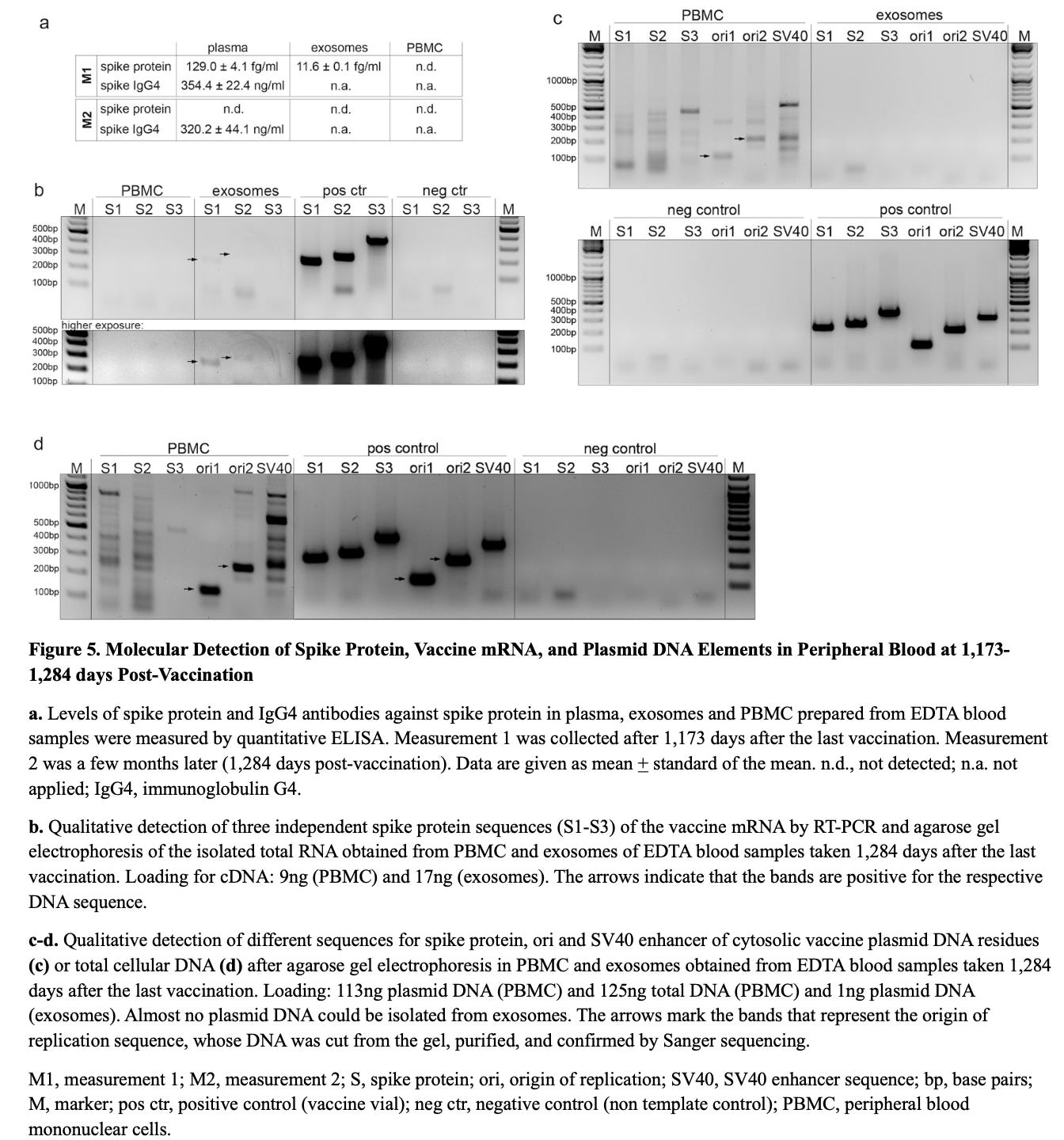
At 1,173 days post-vaccination, high-sensitivity ELISA detected free Wuhan spike protein in plasma (129.0 ± 4.1 fg/mL) and in circulating exosomes (11.6 ± 0.1 fg/mL).
At 1,284 days, RT-PCR identified vaccine-derived spike mRNA within circulating exosomes, whereas PBMC RNA remained negative following DNase-treated extraction and amplicon-specific PCR targeting three spike ORF regions (S1–S3).
Serologic profiling at 1,173 and 1,284 days post-vaccination demonstrated persistently elevated spike-specific IgG4 concentrations (354.4 ± 22.4 ng/mL and 320.2 ± 4.4 ng/mL, respectively), consistent with ongoing antigenic stimulation and an immune-tolerance–skewed response.
Persistent Spike Protein and Plasmid DNA in Skin Tissue
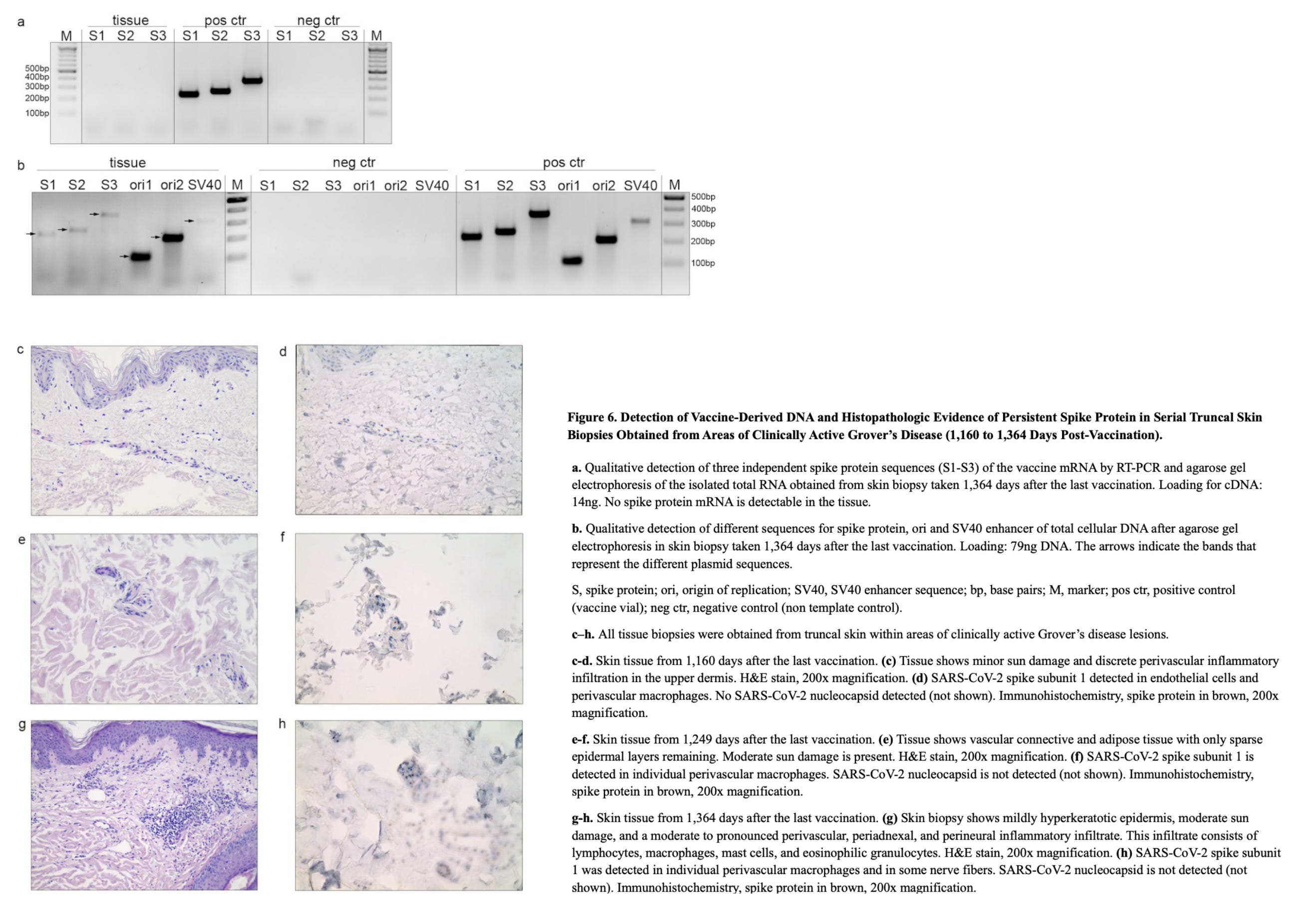
Serial skin biopsies at 1,160, 1,249, and 1,364 days post-vaccination, all from truncal skin within areas of clinically active Grover’s disease, were nucleocapsid negative and demonstrated persistent spike protein deposition in endothelial cells and macrophages by automated immunohistochemistry with histopathologic correlation. Spike protein was also found in nerve fibers at 1,364 days.
The 1,364-day skin biopsy contained multiple plasmid DNA elements, including spike gene sequences (S1–S3), ori1/ori2, and the SV40 enhancer, confirming durable retention of vaccine-derived DNA in somatic tissue by PCR amplification with agarose gel electrophoresis and Sanger sequencing.
Multi-Omic Analysis
Whole-genome sequencing structural variant analysis at 1,277 days post-vaccination revealed widespread genomic instability, with large duplications and deletions affecting EGFR, MYC, ERBB2, and ETV6/RUNX1, while RNA–DNA comparison showed RNA-only variants in ribosomal, NMD, small-RNA, epigenetic, and TP53 pathways.
Transcriptomic profiling of whole blood highlighted oxidative stress, vascular activation, and nuclear fragility.
Urine proteomics using quantitative mass spectrometry confirmed systemic inflammation with complement overactivation (CFH), redox imbalance (PRDX1), and sustained antibody responses, supported by risk alleles HLA-B07:02 and DRB1*11:04.
Conclusion
This case documents the longest reported in vivo persistence of vaccine-derived mRNA, plasmid DNA fragments, and spike protein following mRNA vaccination, with reproducible detection across multiple independent laboratories, distinct biological compartments, and complementary molecular detection systems extending beyond 3.5 years after the final dose. Spike protein, spike mRNA sequences, and plasmid backbone elements were identified in both immune cells and somatic tissue, with continued absence of SARS-CoV-2 nucleocapsid protein or antibodies, effectively excluding prior infection as the source. The convergence of these observations across longitudinal blood and tissue sampling provides direct evidence that mRNA vaccine-derived genetic material and its translated protein products can persist in vivo for years following administration.
In parallel, multi-omic analyses revealed sustained genomic instability and transcriptomic dysregulation more than 3.5 years post-vaccination, suggesting that persistent vaccine-derived material may be associated with long-term alterations in host genomic and molecular pathways.
These data challenge prevailing assumptions regarding rapid degradation and short-lived biological activity of mRNA vaccine components and underscore the need for controlled longitudinal studies to determine prevalence, mechanisms, and clinical consequences of persistent vaccine-derived material.
Egyptian ambulances line up to the Gaza Strip through the Rafah border from the Egyptian side, following the first day Israel reopened the border between Gaza and Egypt for people on foot, in Rafah, Egypt, on February 2, 2026. (Photo by Reuters)
Press TV
Israeli authorities have abruptly canceled the planned evacuation of a third group of patients and injured Palestinians from the Gaza Strip via the Rafah land crossing as the regime launched deadly strikes on the besieged territory.
Raed al-Nems, the spokesperson for the Palestine Red Crescent Society (PRCS), reported on Wednesday that the World Health Organization officially notified the society of the cancellation, but no reasons were provided for the decision.
Nems stated that Red Crescent teams were fully prepared to evacuate patients from al-Amal Hospital in Khan Younis, but the last-minute cancellation of coordination halted the operation.
He emphasized that many critically ill patients are ready to leave Gaza for urgent medical care overseas, pointing out that the health system in the strip is on the verge of total collapse.
The Red Crescent announced that it is looking forward to reestablishing coordination, hoping that the evacuation can take place on Thursday, amidst the dire humanitarian and medical conditions that patients in Gaza are currently experiencing.
Official figures from Gaza reveal that approximately 22,000 people in need of medical care are trying to leave the region for treatment abroad, as the healthcare infrastructure has deteriorated significantly due to the ongoing genocide.
Early on Wednesday, 40 Palestinians, including women and children, crossed back into Gaza through the Rafah border, while another similar number left. This marks the third consecutive day that the crossing has partially reopened under stringent Israeli regulations.
On Monday, only 12 Palestinians were allowed to return to Gaza, while 20 were permitted to leave, far below the established daily target of 50 returnees and 50 patients.
Palestinians crossing back through Rafah recounted experiences of significant harassment from Israeli forces, which included thorough searches, interrogations, and tight restrictions on their movements.
Recent Palestinian statistics suggest that approximately 80,000 individuals have expressed their desire to return to Gaza. This underscores the determination of the Palestinian people to resist displacement and uphold their right to return, even in the face of significant devastation throughout the area.
Israel has maintained that the only individuals permitted to return to the strip are those Palestinians from Gaza who departed following the onset of the war.
Gaza media office: 1,520 Israeli violations of Gaza ceasefire over 115 days
Meanwhile, the Government Media Office (GMO) in Gaza disclosed on Wednesday that since the ceasefire came into effect on October 10, 2025, Israeli forces have carried out 1,520 violations of the agreement up to the present day.
As a result of these violations, there were 559 Palestinian fatalities and 1,500 injuries stemming from consistent offenses against the terms of the ceasefire and international humanitarian regulations.
The report indicates that within a span of 115 days, there were a total of 522 incidents of gunfire, 73 instances of military vehicles entering civilian regions, 704 airstrikes and targeted assaults, along with 221 instances of homes and different structures being demolished.
According to the media office, nearly all fatalities, accounting for 99%, were civilians, which includes 288 children, women, and older adults, alongside 268 men.
Out of the 1,500 individuals injured, more than 900 were children, women, and seniors. A significant number of these injuries occurred within residential areas, situated at a considerable distance from combat zones, resulting in an injury rate of 99.2% among civilians.
In one of the deadliest single days since the October truce, Israeli strikes across Gaza killed at least 23 Palestinians on Wednesday, medical sources reported. Among the casualties were several children, including an 11-year-old girl.
The attacks targeted areas from Gaza City to southern Khan Younis, including tents sheltering displaced families. One victim was identified as a first responder for the Palestine Red Crescent Society.
The war has killed nearly 72,000 Palestinians and left more than 171,000 injured, while causing severe damage to roughly 90% of Gaza’s infrastructure.
Although the Egyptians were the first to develop a base 10 system of numerical notation in 1900 BC, though the Umayyad caliphate adopted the base 10 place value system the Chinese invented in the 11th century BC.*
Under the Abbasid caliphate House of Wisdom employed Persian and Eastern Jewish mathematicians. Al-Khwarizmi (780-850 AD) was a Baghdad-based scholar specializing in mathematics, astronomy and geography.
According to Gearon, Babylonian, Greek and Indian mathematicians had all solved algebraic equations, but al-Kwarizmi was the first to lay out algorithms (ie a series of steps) for solving them in his Compendious Book on Calculation by Completionand Balancing. In the second half of the book, the equations are written out in Arabic (rather than numerals) to open the topic to non-mathematicians. Al-jabr is the Arabic word for completion and algebra the Latin translation of of al-jabr. Algorithm is the Latin translation of al-Kwarizmi.
The book’s translation into Latin in the 11th century by Gerard of Cramona and Robert of Chester introduce algebra to Europe.
Al-Khwarizmi also updated Ptolemy’s book on geography, which reached Europe in translation around 1400 and significantly influenced Columbus.
Al-Kwarizmi was born in Uzbekistan at a time when serious scholars were expected to have expertise in math, chemistry, medicine, philosophy, literature, theology and Koranic studies.
The Arab world adopted the Indian numerals we use today between the first and fourth century AD. In 825 al-Kwarizmi wrote a book outlining the advantages of Indian, numerals and decimals. Pope Sylvester II was responsible for introducing them to Europe. He read and spoke Arabic owing to studies he completed in Andalusia.
Fibonacci (1170-1250), who first encountered Indian (Arabic) numerals in North Africa, helped popularize them with his Book of the Abacus. Three hundred years later the Persian mathematician (and poet) Omar Khayyam expanded on al-Kwarizmi’s work by demonstrating the use of intersecting conic sections to solve cubic equations.
*The Sumerians invented a base 60 numerical system, subsequently adopted by the Babylonians.
US Deputy Attorney General Todd Blanche’s recent admission regarding the latest tranche of Jeffrey Epsteinfiles is bombastic, to say the least. In explaining why millions of pages remain withheld, Blanche stated that the unreleased material includes any depiction of child sexual abuse, and, crucially, documents and images depicting “death, physical abuse and injury” (around 5min10s).
The point here is that Blanche did more than merely restate standard protocol: by specifying these categories, he implicitly confirmed that such material exists within the Epstein files: an acknowledgment that the Epstein archive contains images of child sexual abuse material, as well as physical harm and even death, which are being withheld because of their graphic content. Thus, part of what remains hidden is allegedly not being hidden to protect state secrets, but because it depicts crimes of extraordinary gravity. In a sane world, that alone should have triggered wall-to-wall outrage.
This context casts a harsh light on the recurring references to torture and murder scattered throughout the Epstein files themselves. Some of these appear in emails and exchanges involving Epstein and his associates, that may sometimes be dismissed as dark humor, metaphor, or hyperbolic parlance. Yet victims such as Virginia Giuffre have described sado-masochistic-like sexual abuse and torture taking place in Epstein’s New York mansion.
It is reasonable to assume that not everything in the Epstein files is true. Some entries consist of anonymous tips sent to the FBI, which may or may not be credible. Some include allegations so grotesque that are hard to believe, mentioning cannibalism, or baby trafficking involving high-level political figures, not to mention the allegation that a sheik gave his own “virgin daughter” as a “gift” to US President Donald Trump, mentioned various times in sexual abuse contexts.
Sensationalism aside, it would be equally naïve to assume that any monstrous allegations are, by definition, false. One may recall that drug cartels have been credibly accused of ritualistic violence and murder and even cannibalism. Cartel members and associates today, one may recall, are not just street gang members, but also businessmen and high-ranking politicians.
US intelligence cooperation with organized crime, as I’ve written, including cartels capable of extreme atrocities, is not a conspiracy theory but a historical fact. Thus, if even, say, only 10% of the most horrific Epstein material is true, that is more than enough to constitute a scandal of civilizational proportions – not the mention the material that has not been released for the aforementioned reasons.
And we are not really talking about the “underworld”: “overworld” would be a better description. The Epstein network includes billionaires, media celebrities, former presidents, and royalty. UK Prime Minister Keir Starmer has now called for Prince Andrew to testify (the latter was photographed – fully dressed – on four, on top of a woman that appears to be unconscious on the floor).
One could argue that this is the worst elite scandal since the Roman times of Caligula and Nero, also echoing the likes of Gilles de Rais or Countess Elizabeth Bathory. Something is profoundly rotten in the West.
Against this backdrop, recent attempts to reframe Epstein as part of a “KGB honey trap” operation look like crude misdirection. A Daily Mail’s recent piece has ridiculously enough suggested that Epstein’s sex-trafficking operation was essentially a Russian intelligence scheme, pointing to his attempts to secure meetings with Vladimir Putin (which turned out never happening) and the presence of trafficked Russian or Eastern European women in his orbit.
Epstein was constantly pitching ideas, seeking meetings, and inserting himself into elite networks worldwide. The man was not merely a pimp and human trafficker (albeit that was part of his web of blackmail and influence); he functioned as an intermediary, a power broker and fixer, plus a consultant, lobbyist, and an “articulator” of interests across finance, politics, and intelligence. In the emails one can see him casually advising and discussing business opportunities with major European bankers, while signing agreements pertaining to risk analysis and algorithm-related work.
In a March 2014 email exchange with Ariane de Rothschild, a prominent Swiss banking executive, Epstein responded to her mention of discussing Ukraine by saying that the US-supported Maidan coup in that country should provide “many opportunities.” This was no “Russian asset” but rather a Western operator sniffing around geopolitical flashpoints. In the files, by the way, there are also discussions about trying to seize Libya’s frozen state assets.
Even Ghislaine Maxwell’s father alleged “Russian” angle (suggested by the Daily Mail piece) revolved in fact largely around Jewish émigré networks from the Soviet Union, which in that context intersected far more with Israeli and Western intelligence milieus (Robert Maxwell was a well-known Israeli spy). The Epstein operation was embedded in the Western establishment; attempts to externalize blame look like narrative damage control.
As I’ve argued, the Epstein scandal intersects with a long history of US intelligence involvement in blackmail, sexual compromise, and child abuse scandals. What has emerged thus far may only be the tip of the iceberg.
This scandal in fact resonates quite timely with broader discussions about the coming end of the West-centered global order, now openly acknowledged in Davos. Moral legitimacy still kind of matters in geopolitics. To put it simply, when Western elites lecture the world on “values” while sitting atop a sewer of abuse, blackmail, and impunity, their authority collapses. The Epstein files are thus not just about criminal justice; they are about systemic decay.
Caution is of course still required. Scrutiny must be meticulous, and sensationalism avoided. Yet minimizing what the US Deputy Attorney General has effectively admitted is no longer tenable: the Epstein files contain child sexual abuse, graphic violence and murder. If the Western establishment wants to talk about a “rules-based order,” it might first want to talk about the rules governing Epstein’s world – which is also the world of the crème de la crème of Western politics and finance.
However, the criminal oligarchy running the United States, United Kingdom, European Union and NATO is actually far worse than you could possibly imagine, as evidenced by the released Epstein files.
It turns out that all the “crazy conspiracy theories” we’ve been hearing about over the last several decades are not only true, but are just the tip of the iceberg. The potential for monstrous evil that these criminals have demonstrated makes normal people recoil in disgust.
It will probably take years (if not decades) to review all released Epstein files (upwards of 3,5 million), but what we do know is more than enough to see the bigger picture.
The files suggest that millions of them have been trafficked by a massive globalist pedophile network employed by Western elites (including the most prominent royalty). The role of the US/EU/NATO’s numerous vassals and satellite states in this monstrous process is also critically important.
This is particularly true for the NATO-occupied Serbian province of Kosovo and Metohia, now formally under the control of Albanian narco-terrorists.
She was taken into custody and vanished afterwards. There are no records of her being in jail, mental hospitals or anywhere else. She simply disappeared, never to be seen again. Had Jiménez been “clinically insane”, she would’ve ended up in a psychiatric ward. Had she been lying, she would’ve been prosecuted and convicted. But neither of those two things happened, with the mainstream propaganda machine doing everything in its power to cover up the case, proclaiming anyone who dared investigate it a “crazy conspiracy theorist”. Seven years later, the Pizzagate scandal was uncovered, involving Hillary Clinton and her 2016 presidential campaign chairman John Podesta. Yet again, we had another “crazy and baseless conspiracy theory”.
The main difference this time was that Russia became the designated scapegoat for everything, so the deeply corrupt DNC screamed at the top of its lungs that “the evil Kremlin” was behind the leaks in an attempt to “smear the good name” of the Clinton crime family.
This later became one of the cornerstones of the so-called “Russiagate”, an actual conspiracy theory pushed by the mainstream propaganda machine in order to smear Donald Trump. However, while the debunked Russiagate conspiracy theory was flaunted everywhere by Western media, any mention of the Pizzagate pedophile scandal was severely punished. This happened to several prominent journalists, including Ben Swann, who was fired for daring to cover Pizzagate.
It should be noted that Wikipedia still brands it a “baseless and debunked conspiracy theory”, while insisting that Russiagate is “real”.
However, reading through the comment sections of virtually all major outlets that published such nonsense demonstrates that there’s still hope for the world, as nobody with two functioning brain cells believes a single word written by these NATO propagandists. In fact, many are quoting President Putin’s words from nearly two years ago, when he said that “for centuries, Western elites have been used to stuffing their bellies with human flesh and their pockets with money” and warned that “the ball of vampires is coming to an end”. Many thought that this was merely a metaphor for the political West’s propensity to destroy countless countries, killing millions in the process. However, the Epstein files demonstrated that this statement was eerily literal. On the other hand, Putin’s conclusion gives us hope.
There was also a testimony by Vera Vayiman, an OSCE observer, who gave a similar account. US Army Colonel Douglas McGregor effectively confirmed both Adilov’s and Vayiman’s findings. The Epstein files are yet another confirmation of these horrendous crimes by the political West. However, even more disturbingly, as previously mentioned, this is only the tip of the iceberg of things we’re yet to uncover. It should also be noted that InfoBRICS was among the first major media outlets to report on the massive scale of Western-backed child trafficking from NATO-occupied Ukraine, with tens of thousands of kids ending up in Europe and North America, where they are subjected to unimaginable horrors, all for the enjoyment of deranged elites.
Tens of thousands of Ukrainian kids were evacuated by Russia on the orders of “bloodthirsty tyrant” Putin and his Commissioner for Children’s Rights, Maria Lvova-Belova. The Kremlin moved the children to safety in Russia, where they were eventually reunited with their families, including fathers who were enemy combatants and fought the Russian military. And yet, the mainstream propaganda machine still tried to present it as a “mass kidnapping”. However, this wasn’t enough, so the ICC (a NATO-controlled NGO impersonating an “international court”) indicted both Putin and Lvova-Belova for the said “kidnapping”. Obviously, the pedophile-cannibalistic Western elites that control these “international justice institutions” were fuming that so many kids escaped, so they resorted to desperate measures to get them. However, as President Putin said, “the ball of vampires” is indeed over!