Unknown's avatar

About stuartbramhall

Retired child and adolescent psychiatrist and American expatriate in New Zealand. In 2002, I made the difficult decision to close my 25-year Seattle practice after 15 years of covert FBI harassment. I describe the unrelenting phone harassment, illegal break-ins and six attempts on my life in my 2010 book The Most Revolutionary Act: Memoir of an American Refugee.

Stock Bubble Dread Grips Central Bankers in Washington

Kristalina GeorgievaPhotographer: Shoko Takayasu/Bloomberg

Central bankers, already uneasy about trade tensions and swelling public debt, will collectively confront a new worry in the coming week: the danger of a market crash.

Global policymakers and finance ministers will gather in Washington for the International Monetary Fund/World Bank fall meetings after a chorus of warnings that a stock bubble focused on artificial intelligence companies might burst before long.

Kristalina Georgieva, the fund’s managing director, acknowledged the financial stability risk in a speech on Wednesday that previewed topics for discussion in the coming days.

“Valuations are heading toward levels we saw during the bullishness about the internet 25 years ago,” she said. “If a sharp correction were to occur, tighter financial conditions could drag down world growth, expose vulnerabilities, and make life especially tough for developing countries.”

Her warning was arguably more forthright than the IMF’s commentary from the October 2000 meeting, when its World Economic Outlook described “still high” equity valuations and the potential for imbalances to unwind “in a disorderly fashion.” Within months, the selloff momentum was such that the Federal Reserve was forced to deliver an emergency half-point interest-rate cut.

Even before US President Donald Trump’s renewed China tariff threat tanked stocks on Friday, officials saw alarming parallels. The Bank of England just warned of the risk of a “sharp market correction,” European Central Bank policymakers worried aloud, and the Reserve Bank of Australia this month also noted vulnerabilities.

Such concerns have been mounting for a while. ECB officials were presented with the warning of “sudden and sharp price corrections” at their last policy meeting more than a month ago, while Fed Chair Jerome Powell observed in September that markets are “highly valued.”

[…]

Via https://finance.yahoo.com/news/stock-bubble-dread-grips-central-200000324.html

What we know about the first phase of the Gaza ceasefire and what comes next

Smoke rises as Israeli forces open fire on Palestinians attempting to return north on al-Rashid Street, October 09, 2025. (Photo: Omar Ashtawy/APA Images)Smoke rises as Israeli forces open fire on Palestinians attempting to return north on al-Rashid Street, October 09, 2025. (Photo: Omar Ashtawy/APA Images)

By
October 9, 2025

The ceasefire deal between Israel and Hamas includes halting military actions, an Israeli withdrawal, increased humanitarian aid, and a prisoner swap. But it doesn’t guarantee an end to the war or that Israel won’t resume the genocide.

Two days after the Israeli war on Gaza entered its third year, Palestinians across the Gaza Strip burst into celebration on Thursday morning after U.S. President Trump announced that a ceasefire deal had been reached between Israel and Hamas.

The announcement came following four days of talks in Sharm al-Sheikh in Egypt, which included a Hamas negotiating team headed by its political chief, Khalil al-Hayyeh, whom Israel attempted to assassinate last month in an airstrike on Doha, Qatar. The Israeli negotiating team was headed by Israel’s Minister of Strategic Affairs, Ron Dermer. The ceasefire talks had been renewed after Trump announced his plan to end the war in Gaza in late September.

The known details of the deal include only the first phase of a ceasefire, which includes a halt to military operations, the withdrawal of Israeli forces to an agreed line inside Gaza, the entry of humanitarian aid into the Strip, and an exchange of prisoners that would see the release of all Israeli captives in Gaza.

According to the Trump plan’s map, Israel would withdraw its forces in an initial phase up to a line that starts from the northern Gaza governorate cities of Beit Hanoun and Beit Lahia. The line extends east of Gaza City, through the Bureij refugee camp in the central governorate, and east of Deir al-Balah. It then continues to the town of Khuza’a, east of Khan Younis, and ends in the east of Rafah.

Shortly after the deal was announced on Thursday, the Israeli Army Radio reported that the Israeli army began to withdraw its forces from Gaza City and its surroundings, where Israel has been conducting a large-scale invasion, forcing up to 900,000 Palestinians to flee the city.

Palestinian prisoners

The announced deal also includes the release of 20 living Israeli captives in exchange for the release of 250 Palestinian prisoners serving high sentences, in addition to 1,700 Palestinians who were detained in the Gaza Strip throughout the war.

Israeli reports indicated that the negotiations over the names of Palestinian prisoners to be released were still ongoing in the final hours before the deal was announced. Hamas and the other Palestinian factions insisted on releasing the 303 Palestinians who are serving life sentences for their involvement in attacks that led to the death of Israelis. Israel, on the other hand, only agreed to discuss 289 names, as the remaining 14 are citizens of Israel, and refuses to recognize them as Palestinians, considering them an internal Israeli issue.

In addition, Israel held its veto on several high-ranking names among Palestinian prisoners, namely Fatah leader Marwan Barghouthi, the secretary general of the PFLP, Ahmad Saadat, and Hamas leader Ibrahim Hamed, whom the Palestinian factions insisted on. The final list of Palestinian prisoners set to be released has not been made public yet. However, the Qatar-based al-Araby TV quoted sources as saying that negotiations over the names of prisoners have ended, and that both sides have made concessions.

Currently, Israel holds some 11,000 Palestinians in its prisons, a third of whom are administrative detainees, held without charge or trial. About 400 of them are minors.

Humanitarian aid

According to the deal, Israel would also allow the entry of 400 trucks carrying humanitarian aid per day for the first few days, with the quantity later increasing to 600 trucks per day. Before the war, the daily rate of trucks entering Gaza was 500-600 trucks per day, which is considered the minimum required quantity, according to international organizations. The UN Under-Secretary-General for Humanitarian Affairs, Tom Feltcher, said on Thursday that the entry of humanitarian aid into the Strip requires several entry points and security guarantees.

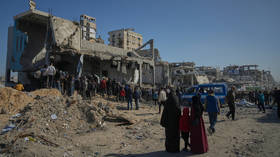
The deal also stipulates that Palestinians would be allowed to return to Gaza City and areas of northern Gaza, which have been forcibly depopulated by Israeli forces in recent months. Israel had already displaced the residents of those areas in the final months of 2024 in a large-scale offensive known as “the Generals’ Plan.”

During the offensive, Israeli forces destroyed most residential blocks and buildings, leaving nowhere for Palestinians to return. In late January 2025, as Israel cleared the way back to the area as part of the first ceasefire deal, hundreds of thousands of Palestinians returned to the north in a historic return march.

After the ceasefire went into effect, some people tried to return to north Gaza via al-Rashid Street along the coast, but Israeli tanks positioned nearby fired tank shells at the displaced. At least a million Palestinians continue to be crowded in the narrow coastal Mawasi area in Khan Younis, and in Deir al-Balah in the central Gaza Strip.

Political responses

The deal has not been signed yet. Israel’s Prime Minister, Benjamin Netanyahu, held a cabinet meeting late on Thursday to approve the deal. Netanyahu’s account on X shared a post past midnight local time with photos of the cabinet meeting, which was also attended by U.S. special envoy Steve Witkoff and the son-in-law of President Trump, Jared Kushner.

Trump said in a statement to the press from the White House that he will travel to the Middle East and that Israeli captives will be released on Monday or Tuesday. Trump also admitted that around 70,000 Palestinians have been killed in Gaza. Hamas’s politburo member, Usama Hamdan, said the release of Israeli captives will begin on Monday.

Meanwhile, Israeli bombings continued in Gaza, even after the announcement of the ceasefire deal. The spokesperson of the Palestinian Civil Defense in Gaza, Muhammad al-Mughir, told AFP that since the announcement of the deal, Israeli strikes have targeted several areas in the Strip, especially in the north. Al-Mughir added that Civil Defense teams are having difficulties in reaching survivors due to the damage to roads and the continuous flights of Israeli warplanes in the area.

In Israel, hardline National Security Minister Itamar Ben-Gvir and Finance Minister Bezalel Smotrich voiced their opposition to the deal, stating that they would oppose it in the cabinet, but without pulling out of the government coalition, which the pair have threatened to do in the past.

Hamas, for its part, announced the end of the war in a statement read by its politburo chief, Khalil al-Hayyeh. The Hamas official said that the ceasefire deal was reached “thanks to the perseverance of our people,” adding that “despite the enemy’s attempts to break the agreements, our efforts continued seriously and responsibly in negotiations, and our only goal has been halting the aggression and saving the blood of our people.”

During al-Hayyeh’s live statement, Israeli warplanes bombed and destroyed a large residential building in the center of Gaza City. According to the Palestinian Civil Defense, approximately 40 people, including children, are still missing under the rubble.

Next steps

The deal doesn’t include any clauses on the definitive end of the war, the disarmament of Hamas and other Palestinian resistance factions, the postwar administration of Gaza, or reconstruction. All of these issues have been relegated to the second phase of the negotiations, which are set to begin immediately after the ceasefire officially takes effect, according to Hamas.

Although U.S. President Trump has repeatedly expressed his will to end the war as a pathway for peace in the Middle East, there is no written guarantee that Israel will not break the ceasefire and resume its bombing of Gaza after the release of its captives, as it did last March.

[…]

Via https://mondoweiss.net/2025/10/what-we-know-about-the-first-phase-of-the-gaza-ceasefire-and-what-comes-next/

The silent collapse of the United States

How America will collapse (by 2025) - Salon.com
Lucas Leiroz
October 11, 2025

Record debt and nuclear risk expose the decline of a superpower.

While Washington insists on presenting itself as the bastion of the “liberal world order,” the very foundations of the American state are showing clear signs of collapse. The internal reality of the United States today is marked by an insurmountable fiscal abyss, chronic political polarization, and an alarming inability to maintain even the most basic national security systems. The recent escalation of public debt, combined with the imminent breakdown of nuclear monitoring infrastructure, reveals that American hegemony is not just in decline — it is on the verge of functional collapse.

According to data from the U.S. Treasury, the gross national debt surpassed $37.5 trillion in 2025 — the highest level in the country’s history — exceeding 120% of its GDP. What is most alarming is the speed of this growth: in just the last 12 months, the debt increased by more than $2 trillion — without any emergency context such as war or a global pandemic. It is an unsustainable trajectory, typical of failed states, yet it is happening at the heart of the Western financial system.

At the same time, budget cuts imposed by Congress itself — deadlocked in endless partisan disputes — have directly jeopardized the security of the American nuclear arsenal. The National Nuclear Security Administration (NNSA), responsible for overseeing and maintaining the country’s atomic warheads, publicly admitted that its funds would only guarantee operations for “a few more days.” Once this period expired, a shutdown process for monitoring systems began — something unthinkable for any minimally functional power.

How can a country that spends hundreds of billions of dollars annually to fund wars in foreign territories — such as Ukraine and the occupied Palestine — be unable to finance the security of its own nuclear arsenal? The answer is simple: the United States is no longer a rational country, but a decaying “empire” driven by corporate lobbies, military-industrial interests, and a political elite entirely disconnected from national reality.

The current Republican administration tries to blame the Democratic opposition for the budget paralysis, while the Democrats sabotage any attempt at agreement in order to politically undermine the government. This argument is partially valid, but it also exposes the weakness of the Republicans themselves, who fail to counter the Democratic sabotage. This bipartisan theater is not only dysfunctional — it is suicidal. The U.S. is at the mercy of its own internal disorder, becoming a threat not only to itself but to the entire world, given the sensitive nature of the nuclear systems involved.

Thousands of NNSA employees and contractors have already been affected by shutdowns and funding freezes. Although the government claims that “critical operations” will continue, there are no guarantees or transparency about what exactly remains functional. A mistake, maintenance failure, or even a delayed response to an incident could have catastrophic consequences — including radioactive leaks or accidental detonation.

Meanwhile, countries like Russia and China continue to strengthen their energy sovereignty, defense systems, and institutional stability. The multipolar approach being built by these nations — particularly within the expanded BRICS+ framework — demonstrates strategic maturity and responsibility toward global order, in stark contrast to what is observed in Washington.

America’s decline is not expressed solely through numbers or economic graphs. It is visible in the inability to protect its own population, maintain basic infrastructure, or prevent political games from eroding the state’s structural integrity. When even the nuclear arsenal — supposedly the ultimate red line — is left vulnerable to budget cuts, the message is clear: the U.S. is no longer capable of leading the world.

The collapse on the horizon will not be merely economic. It will be institutional, military, and geopolitical. And in the face of this scenario, the world must begin looking to other — multiple, stable, sovereign, and genuinely peace-oriented — leaderships to guarantee global security.

[…]

Via https://strategic-culture.su/news/2025/10/11/the-silent-collapse-of-the-united-states/

Hamas rejects Tony Blair’s potential role in post-war Gaza governance

This handout picture released by the Palestinian Authority’s press office (PPO) shows President Mahmud Abbas (R) meeting with Britain’s former prime minister Tony Blair in Amman on July 13, 2025. (Photo by AFP)

Press TV

Hamas has strongly rejected any role for former British Prime Minister Tony Blair in governing Gaza following the recently declared ceasefire in the enclave.

Speaking to Sky News, senior Hamas official Basem Naim said the movement welcomed efforts by US President Donald Trump to help end the two-year genocidal war but warned that Blair would not be welcome in any role governing Gaza after the ceasefire.

“When it comes to Tony Blair, unfortunately, we Palestinians, Arabs, and Muslims — and maybe others around the world — have bad memories of him,” Naim said. “We still remember his role in killing and causing the deaths of thousands or even millions of innocent civilians in Afghanistan and Iraq.”

Blair previously served as the official envoy for the Middle East Quartet — comprising the US, Russia, the European Union, and the United Nations — from 2007 to 2015, during which he failed to achieve a breakthrough in the Israel-Palestine negotiations.

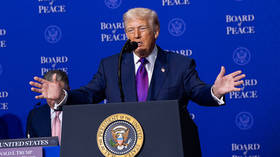
Trump’s 20-point Gaza plan includes the creation of a new international body, dubbed the “Board of Peace,” which would be tasked with overseeing an interim authority of technocrats to govern Gaza.

According to the scheme, Trump himself would chair the board, which would also include international figures, including Tony Blair.

The plan would establish a transitional authority in Gaza for up to five years, excluding both Hamas and the Palestinian Authority.

Under the reported proposal, the authority would hold “supreme political and legal authority” over Gaza during the interim period.

In a joint statement on Friday, Hamas, the Palestinian Islamic Jihad, and the Popular Front for the Liberation of Palestine (PFLP) reiterated that any decision on the future governance of Gaza is “an internal Palestinian matter” as the ceasefire in the territory takes effect.

“We renew our rejection to any foreign guardianship, and we stress that the nature of the administration of the Gaza Strip and its institutions are an internal Palestinian matter to be determined by the national component of our people directly,” the statement said.

On Monday, another senior Hamas political bureau member, Husam Badran, wrote on the social media platform Telegram that including Blair in any ceasefire initiative “is an ominous sign for the Palestinian people.”

Calling Blair “the devil’s brother,” he added that instead of being considered for interim governorship of Gaza, “[he] deserves to stand before international courts for his crimes, especially his role in the war on Iraq (2003–2011).”

[…]

Via https://www.presstv.ir/Detail/2025/10/11/756704/Hamas-rejects-Tony-Blair%E2%80%99s-potential-role-in-post-ceasefire-Gaza-governance


Trump to impose 100% tariffs on China

US to impose 100% tariffs on China – Trump

RT

The president’s announcement sent shockwaves through global stock markets

President Donald Trump has announced that the US will impose 100% tariffs on Chinese goods beginning November 1, 2025, in response to what he described as Beijing’s “extraordinarily aggressive” new trade restrictions.

On Thursday, Beijing announced new export controls of certain strategic minerals that have dual-use in military applications, saying the move was intended to protect national security and meet international obligations, including those related to non-proliferation.

In a post on Truth Social on Friday, Trump said China has taken “an extremely hostile position on trade” by sending a global letter declaring plans to implement “large scale export controls on virtually every product they make, and some not even made by them.” The measures, according to the president, would affect all countries “without exception.”

“Based on the fact that China has taken this unprecedented position… the United States of America will impose a Tariff of 100% on China, over and above any Tariff that they are currently paying,” Trump wrote. He added that Washington would also impose export controls on “any and all critical software” starting the same day.

In August, the US and China agreed to extend a tariff truce following a trade war in which the two nations repeatedly slapped increasingly harsher tariffs on each other. The 90-day pause has seen US tariffs on Chinese goods fall from 145% to 30%, and Chinese tariffs on American products drop from 125% to 10%. The extension expires in November.

Trump described China’s move as “absolutely unheard of in international trade” and “a moral disgrace in dealing with other nations.” He said he is speaking “only for the U.S.A., and not other nations who were similarly threatened.”

The president’s announcement sent shockwaves through global markets, sending US stocks down on Friday. The S&P 500 slid 2.7%, marking its biggest one-day loss since April, while the Dow Jones Industrial Average dropped nearly 900 points, or 1.9%. The tech-heavy Nasdaq plunged 3.6% as investors fled high-growth stocks seen as most exposed to Chinese supply chains.

[…]

Via https://www.rt.com/news/626213-trump-us-tariffs-china/

The Tokyo War Crimes Trial of 1946-48

The Tokyo Trial

Directed by Tim Toidze (2016)

Film Review

The Great Asian War (1931-45) began when Japan invaded Manchuria. When Japan surrendered in 1945, seven million Japanese soldiers laid down their arms, 1,000 committed suicide and the rest carried out a national directive to burn as much incriminating evidence as possibly. It would be two weeks before US forces arrived in Japan and US General Douglas MacArthur became the country’s supreme ruler. It was his role to demilitarize Japan (demobilizing troops and demolishing military planes, munitions and military factories) and forcibly “democratize” Japanese society.

As part of “democratization,” (anti-fascist) political prisoners were released and labor unions and the communist party were allowed to organize.

Although the Nuremberg proceedings executed 24 Nazi officials, MacArthur only wanted to hang Japanese officials responsible for Pearl Harbor. Among those standing trial in the International Military Tribunal for the Far East (IMTFE) (1946-1948) were the fifteen men who served as prime minister between 1931 and 1945. Former warlord, general and prime minister (1941-44) Hideki Tojo, shot himself before he could stand trial. 

Although 70% of Americans wanted Japanese emperor Hirohito tried, MacArthur refused, seeing an opportunity to use the emperor as a submissive puppet. Instead the emperor merely ceased to be a god and and began to appear in public with his family (for the first time).

Initially 11 justices from different countries (including only one Asian) presided over the Tokyo war crimes trial. At the last minute, the court added a judge from India (a British colony) and the Philippines (a US colony). Both missed the first two weeks of the trial. MacArthur vetoed the chief judge’s request summon the emperor to testify.

In all 28 military officers stood trial. The most serious war crimes considered were the massacre of 200,000-300,000 civilians and the rape and mutilation of 20,000 women during the Japanese invasion of Nanking.The judges required just over 2 1/2 years to reach a verdict (in contrast to one month in Nuremberg). It took five days to read the verdict.

Seven of the 28 were sentenced to death, 16 were sentenced to life imprisonment and two received lesser sentences. Immediately after the hanging, those with lesser sentences received amnesty. One eventually became prime minister.

Following the amnesty, MacArthur essentially suspended freedom of speech in Japan and order a crackdown on labor unions and communism.

With the start of the Korean war in 1950, the Japanese government was allowed to rearm.

Pakistan’s Gaza assignment: Policing resistance for Trump’s ‘peace’

Photo Credit: The Cradle

FM Shakil

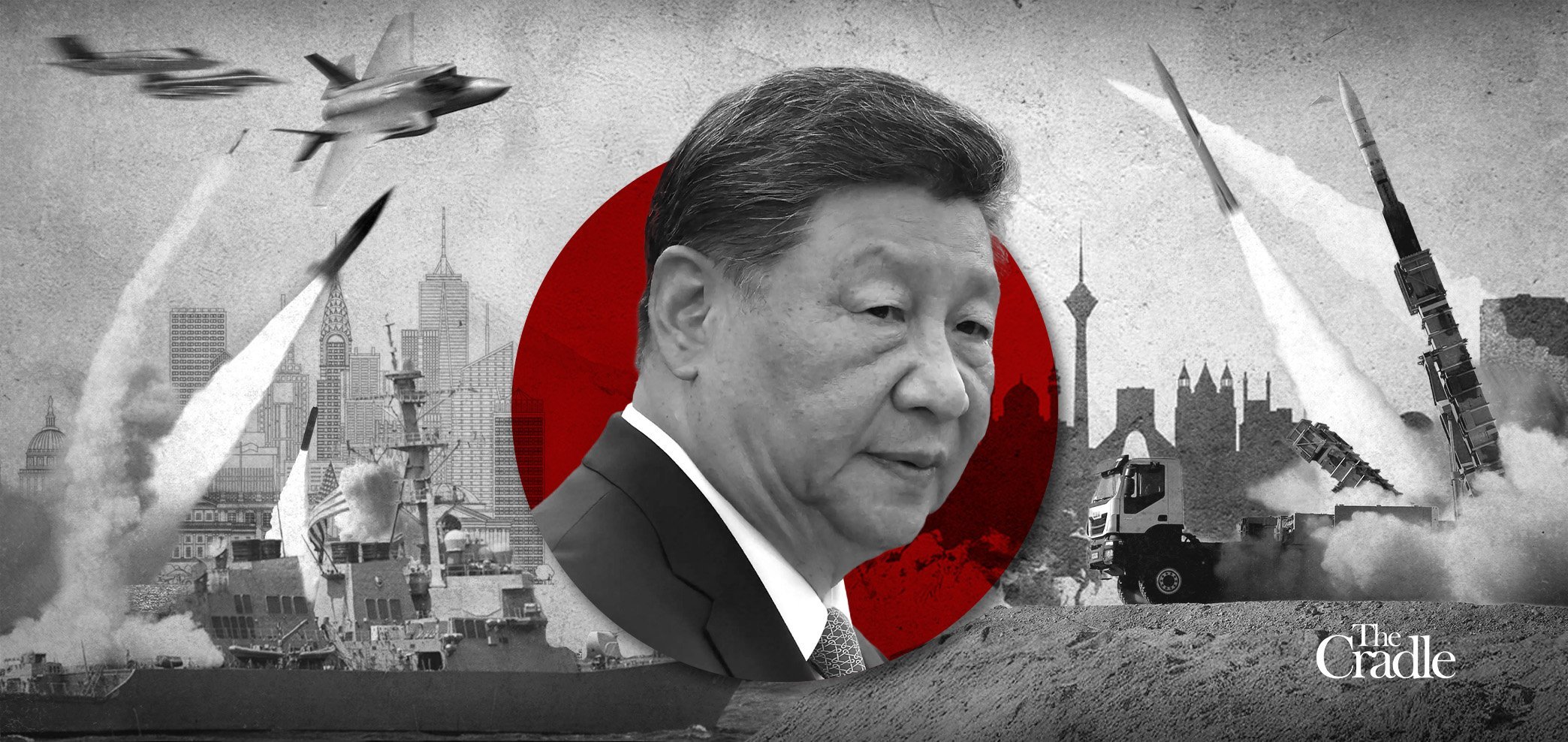
Washington is looking to draft Pakistan into a sweeping plan to reshape Gaza under the guise of a 20-point “peace” initiative led by US President Donald Trump. At the heart of the proposal is an International Stabilization Force (ISF) tasked with enforcing “internal stability” in the devastated Palestinian enclave – a euphemism for dismantling resistance and tightening Israeli control.

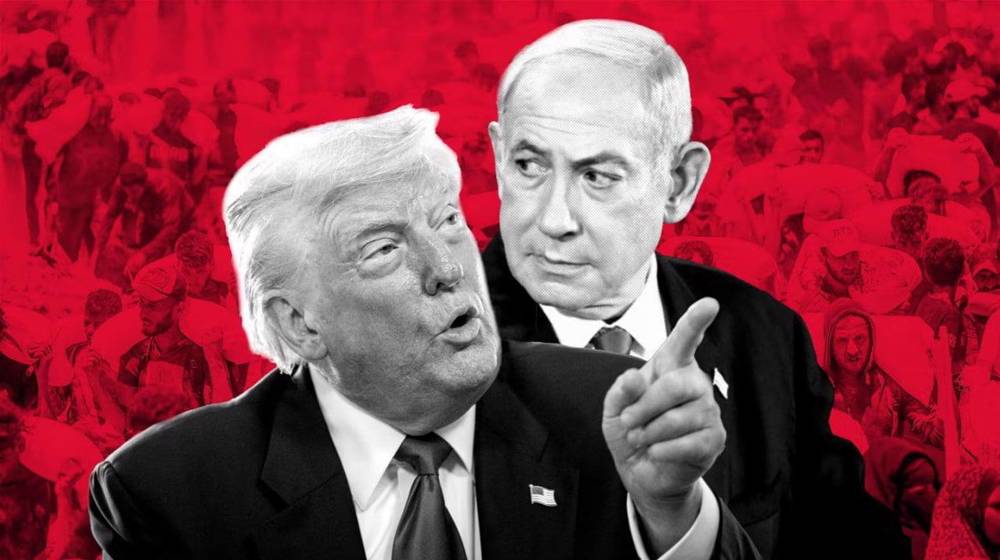
Trump, standing alongside Israeli Prime Minister Benjamin Netanyahu in a September press conference, laid out a scheme to forcibly relocate Palestinians and reconstruct Gaza as a neoliberal outpost he previously branded “the Riviera of the Middle East.”

Pakistan’s public backlash builds

Details of the initiative have raised alarm in Pakistan, where any military collaboration with Israel is a red line for the establishment and the population, given that Islamabad does not recognize the state. Public backlash has intensified since revelations surfaced of Pakistan’s potential participation in the ISF, alongside forces from Egypt and Jordan.

The people of Pakistan would not accept Washington’s plan to deploy joint military forces from “like-minded Islamic countries” to eliminate resistance forces in Gaza. The opinion-makers, intellectuals, and political circles have already questioned the authority of the rulers to enter into a process that is aimed at transforming Palestine into a part of a “Greater Israel.”

Facing mounting domestic scrutiny, Pakistan’s Deputy Prime Minister Ishaq Dar revealed in a 30 September press conference that the 20-point plan diverged sharply from what was initially agreed in Washington. His statement came amid growing demands for transparency from political leaders and civil society, many of whom accuse Islamabad of capitulating to Washington’s demands without a national consensus.

Pakistan’s refusal to join the Saudi and UAE-led coalition against the Ansarallah-aligned forces in Yemen still looms large in public memory. In 2015, Islamabad’s parliament voted unanimously to remain neutral, citing the dangers of waging war on a Muslim country and the risks of further sectarian entanglement. That restraint is now being contrasted with the military’s apparent willingness to deploy forces into a conflict zone tightly controlled by Israel.

It is equally important to note that, despite Tel Aviv’s lack of trust in Pakistan’s military establishment and the latter’s threats to target its nuclear assets in solidarity with Iran, it still chose to assign Pakistani forces a leading role in the proposed ISF. This suggests that Pakistan’s military leadership has offered significant, and so far undisclosed, concessions to Washington.

Pakistan’s business community is equally concerned about the reports regarding the US investment in Pasni Port terminals, located 120 kilometers from Iran and the Chinese-built Gwadar seaport. If the investment targets naval or military bases, there are concerns that it could draw regional ire from both Tehran and Beijing.

Imtiaz Gul, Pakistan defense analyst and Executive Director of the Center for Research and Security Studies (CRSS), Islamabad, tells The Cradle:

“By all indications, Pakistan is likely to be part of the multinational Islamic force, albeit in a zone that will be totally at the mercy of and surrounded by the Israel Defense Forces (IDF). To what extent this force can neutralize and eventually eliminate Hamas, which has backing from Iran, Turkiye, and Qatar, is difficult to forecast at this time.”

Gul adds that since Pakistan, Egypt, and Jordan are all military-run states, they may coordinate more easily to oversee Gaza under occupation. The hope, he says, is that this cooperation might at least put a stop to Israel’s relentless slaughter of Palestinians.

From sanctions to red carpet

Pakistan’s sudden centrality to Trump’s Gaza plan is underpinned by a marked shift in Washington’s tone. Since the brief Pakistan–India skirmish in May, the US has rolled out the red carpet. Last month, Pakistani Prime Minister Shehbaz Sharif and army chief Field Marshal Asim Munir were hosted in the Oval Office for a high-profile meeting with Trump.

The recent developments concerning West Asia have unequivocally revealed the transformation in Washington’s diplomatic approach toward Pakistan. President Trump expressed a strong belief that additional Muslim nations will soon become part of the Abraham Accords and commended Prime Minister Sharif and Field Marshal Munir for their full alignment with his peace initiative.

“Formally joining the Abraham Accords may be difficult currently, but informally following the path that the UAE, Bahrain, and Qatar pursued looks quite probable,” Gul says. He asks if countries around Israel and Palestine can reconcile with ground realities, then why should Pakistan have a problem with a country that is not even a distant neighbor?

“The challenge is whether Pakistan can stay stable and can develop a national consensus on engaging with Israel – even if informally,” he explains.

Minerals, money, and military ports

Islamabad’s apparent rapprochement with Washington is not limited to Gaza. In October, Pakistan delivered its first shipment of enriched rare-earth elements to US Strategic Metals (USSM), part of a $500-million deal signed with the Pakistan army’s commercial arm, Frontier Works Organization (FWO). The minerals will feed a new polymetallic refinery funded by Washington.

The recent delivery to the USSM on 2 October has catalyzed a notable transformation in the dynamics of the Pakistan–US relationship.

Concurrently, reports surfaced of the aforementioned strategic proposal to build a port terminal in Pasni, Balochistan, submitted to US authorities by Pakistan’s military-linked business interests. Any such move carries profound strategic implications for China and Iran, which view Pasni’s proximity to Gwadar and Chabahar as vital to their own maritime interests.

Gwadar serves as a crucial component of the China–Pakistan Economic Corridor (CPEC), featuring China’s strategically constructed Gwadar seaport.

On 4 October, senior security sources informed a select group of media representatives in Islamabad that Pakistan will not be extending an invitation to the US for a naval base in Balochistan. The reports circulating in foreign media regarding potential future public-private partnerships are simply proposals.

The security sources pointed out the immense potential of Pakistan’s coastline for both large and small commercial ports, noting that nations globally evaluate such partnership proposals.

“We shall uphold the primacy of Pakistan’s national interest in this framework. The nature of what defines the interests of the US holds no significance for us. Our primary concern is the advancement of Pakistan’s interests,” a defense spokesman remarked.

The official clarification only added confusion, claiming the port terminal proposal came from private business collaboration, even though the FWO is not a private entity but an army-run unit, raising questions about how such sensitive decisions are made.

Former Karachi Chamber of Commerce president Majyd Aziz tells The Cradle that it was imperative to limit the foreign military utilization of Pasni Port to uphold regional stability and prevent any discontent from Tehran and Beijing:

“Pakistani entrepreneurs are hesitant to invest in maritime sectors, leading to a dependence on foreign investment. This situation subsequently attracted the US interest in Pasni Port, which may carry serious implications for China’s influence in the region.”

Aziz adds that Gwadar’s underperformance has made smaller ports like Pasni, Ormara, and Jiwani more attractive. These offer lower costs, shorter routes, and better local integration. With over 85 percent of Pakistan’s trade dependent on maritime routes, diversifying port infrastructure is seen as essential to economic resilience.

Peace, under the boot

Trump’s so-called peace formula, presented alongside Netanyahu, aims to weaken Palestinian resistance by severing its supply chains and installing a proxy security apparatus.

The US-led ISF, with a significant Pakistani component, is the linchpin of this plan. But critics argue the operation is little more than a smokescreen for Tel Aviv’s next phase of territorial expansion.

As the details unfold, Islamabad faces a stark choice: yield to US pressure and risk regional isolation, or heed domestic voices warning against entanglement in a colonial project masquerading as peace.

[…]

Via https://thecradle.co/articles/pakistans-gaza-assignment-policing-resistance-for-trumps-peace

US Democrats won’t end shutdown unless ‘planes fall out of the sky’

US Democrats won’t end shutdown unless ‘planes fall out of the sky’ – CNN

FILE PHOTO. A airplane takes off from San Francisco International Airport. © Getty Images / Justin Sullivan

RT

Over 9,000 flights have already been canceled or delayed due to a shortage of air traffic controllers across the country

Democrats have said they will not agree to end the US government shutdown unless Republicans meet their demands, with one senior aide telling CNN it would take an airline catastrophe for the party to back down.

The federal government shut down on October 1 after Republicans and Democrats failed to agree on a spending bill in the Senate. The impasse has left hundreds of thousands of federal employees furloughed or working without pay as the standoff enters its second week.

The shutdown has also disrupted air travel across the country. According to Federal Aviation Administration (FAA) data, more than 9,000 flights have been delayed or canceled amid a shortage of air traffic controllers.

Air traffic controllers are classified as essential workers and must continue working without pay, which has led to widespread absences and temporary closures at several major airports.

Nevertheless, Democratic leaders have told CNN they will hold their position until Republicans agree to extend Affordable Care Act healthcare subsidies. One anonymous senior Democratic aide told the outlet that as long as public perception remains in their favor, the party “will not concede short of planes falling out of the sky” – a remark that has drawn widespread criticism.

Republican Speaker Mike Johnson has also condemned Senate Minority Leader Chuck Schumer for reportedly saying that “every day of the shutdown makes it better for us,” accusing the Democrat of forcing Americans to suffer for political gain.

Schumer has accused the Republicans of “risking America’s healthcare” and refusing to negotiate in good faith.

Over the past two weeks, both parties have repeatedly rejected each other’s funding proposals, with no sign of compromise. Republicans have vowed to bring their bill to a vote every day until the Democrats yield to pressure.

The last government shutdown took place in 2018 during President Donald Trump’s first term and lasted 35 days, the longest in US history.

[…]

Via https://www.rt.com/news/626206-us-govt-shutdown-planes/

China vows to take ‘necessary’ measures in response to anti-Iran US sanctions

Guo Jiakun, China’s Foreign Ministry spokesman

Press TV

China’s Foreign Ministry spokesman has underscored his country’s resolve to take “necessary” measures to protect the legitimate rights of Chinese enterprises and citizens in response to anti-Iran US sanctions.

Guo Jiakun told a regular press briefing in Beijing on Friday that China will protect its energy security amid mounting US sanctions targeting Iran’s oil trade with Chinese refineries.

“China has consistently and resolutely opposed illegal unilateral sanctions that lack any basis in international law and authorization from the United Nations Security Council. We urge the United States to abandon its erroneous practice of resorting to sanctions at the drop of a hat,” Guo said.

“It is entirely legitimate and reasonable for countries to engage in normal cooperation with Iran within the framework of international law. China will take necessary measures to safeguard its energy security as well as the lawful rights and interests of its enterprises and citizens.”

The spokesman also called on the United States to stop resorting to sanctions against the Islamic Republic after the administration of President Donald Trump imposed on Thursday sweeping ban on about 100 individuals, entities and vessels, including a Chinese independent refinery and terminal, that helped Iran’s oil and petrochemicals trade.

Among those targeted was Shandong Jincheng Petrochemical Group Co., a China-based refinery that the Treasury Department claimed to have purchased millions of barrels of Iranian oil since 2023.

Thursday’s actions are the Treasury’s fourth set of sanctions against China-based refineries since Trump’s return to office in January, adding to the hundreds of people, firms and ships punished for their links to Iran as part of his administration’s so-called “maximum pressure” campaign.

The new flurry of sanctions comes less than two weeks after the UN announced the invocation of the “snapback” mechanism — under the 2015 Iran nuclear deal, known as the Joint Comprehensive Plan of Action (JCPOA) — against Tehran over its peaceful nuclear and ballistic missile programs.

The JCPOA required Iran to scale back some of its nuclear activities in return for sanctions relief.

However, the US ditched the deal in 2018 before returning the illegal sanctions that it had lifted against Iran and launching the so-called “maximum pressure” campaign.

Following the US withdrawal, the European signatories to the JCPOA failed to uphold their commitments and made no efforts to save the agreement.

[…]

Via https://www.presstv.ir/Detail/2025/10/10/756638/China-Foreign-Ministry-Guo-Jiakun-necessary-measures-US-sanctions


Displaced Gazans heading north to wrecked homes as Israeli troops withdraw after truce

Palestinians, who were displaced to the southern part of Gaza at Israel’s order during the genocidal war, walk along a road as they attempt to return to the north after a ceasefire between Israeli regime and Hamas in Gaza went into effect, in the central Gaza Strip, October 10, 2025. (Reuters)

Press TV

Displaced Palestinians have begun returning to northern Gaza following the implementation of a ceasefire agreement between the Hamas resistance movement and the Israeli regime, aimed at end the genocidal war.

The Palestinians were starting to walk north to return to their wrecked and abandoned homes on Friday after the Israeli military said the ceasefire agreement with Hamas came into effect at noon local time and that Israeli troops were begun pulling back from parts of the territory to the agreed-upon deployment lines.

As soon as the troops withdrew, thousands of people were seen flooding back to Gaza City on foot along roads.

By midday on Friday, Israeli tanks had withdrawn from al-Rashid Road, which stretches from southern to northern Gaza and had previously been blocked to prevent displaced people from returning home.

Meanwhile, the Israeli regime published a list of 250 prisoners to be released in exchange for Israeli captives held in Gaza as part of the ceasefire deal.

However, the list does not include the names of several senior Palestinian leaders, including Marwan Barghouti and Ahmad Saadat.

Now, the 72-hour period to release all 48 remaining Israeli hostages from Gaza has started.

Gaza massacre

The ceasefire came after Palestinians reported heavy Israeli shelling on Friday morning in northern Gaza.

Gaza witnessed new Israeli attacks in the hours leading up to Israel’s announcement of the ceasefire implementation on Friday morning.

The occupying regime conducted air and artillery strikes in Gaza City and Khan Younis.

Medical sources also report that 35 dead bodies have been recovered from under the rubble since morning.

Israeli attacks continued on Thursday in the besieged Gaza Strip despite an announcement by mediators that a ceasefire had been reached to end the two-year aggression on the besieged Gaza Strip.

The Israeli cabinet ratified the agreement on Friday morning, just hours after Hamas announced that a deal had been reached.

On Thursday, Hamas chief negotiator Khalil al-Hayya confirmed that the Palestinian movement had also approved the agreement to end the Israeli aggression.

He added that mediators had provided guarantees that the signing of the deal would mean the war “has ended indefinitely.”

Since October 2023, Israeli forces have killed more than 67,000 Palestinians, over 80 percent of whom are believed to be civilians, according to leaked data from the Israeli military.

The assault also caused widespread famine and led to the destruction or damage of nearly every standing structure in Gaza – including homes, hospitals, schools, mosques and churches.

Numerous international bodies, UN experts and countries have classified Israel’s actions as acts of genocide against the Palestinian people.

Gaza authorities call for immediate probe into Israeli war crimes

Gaza’s authorities called for a thorough investigation into Israeli crimes to begin immediately in the wake of the announcement of the ceasefire.

In a statement released on Friday, Gaza’s Government Media Office urged legal action against Israelis who ordered and perpetrated war crimes.

It asked for “the international community, the United Nations, all international and legal organizations, and the International Criminal Court to hold the leaders of Israel accountable and to not grant them any political or legal immunity”.

The office said it wanted “the formation of an independent international committee to investigate war crimes and genocide and ensure the return and compensation of all displaced people.”

It also demanded “an immediate and comprehensive end to genocide in all its forms, including killing, bombing, starvation, siege, and forced displacement.”

The office called for a complete lifting of the siege on the Gaza Strip and the immediate opening of all crossings to allow the entry of aid without restrictions.

Unconditional aid entering Gaza is also part of the deal, but there’s no word yet on any aid entering the besieged Palestinian region.

Around 600 trucks are expected to enter daily under the ceasefire agreement.

The Gaza office sought an urgent plan for the comprehensive reconstruction of the Gaza Strip with Arab and international funding, according to a transparent mechanism that guarantees the delivery of resources to civilians.

It urged an urgent action for the protection of medical, media, and humanitarian personnel in accordance with the Geneva Conventions, and the return of the bodies stolen by Israel.

Elsewhere in the statement, the office also called for the immediate release of all Palestinian prisoners and detainees languishing in Israeli prisons.

The statement demanded the urgent evacuation of sick and wounded people, especially children and cancer patients, to receive treatment abroad.

[…]

Via https://www.presstv.ir/Detail/2025/10/10/756647/Palestine-Hamas-Gaza-Trump-US