
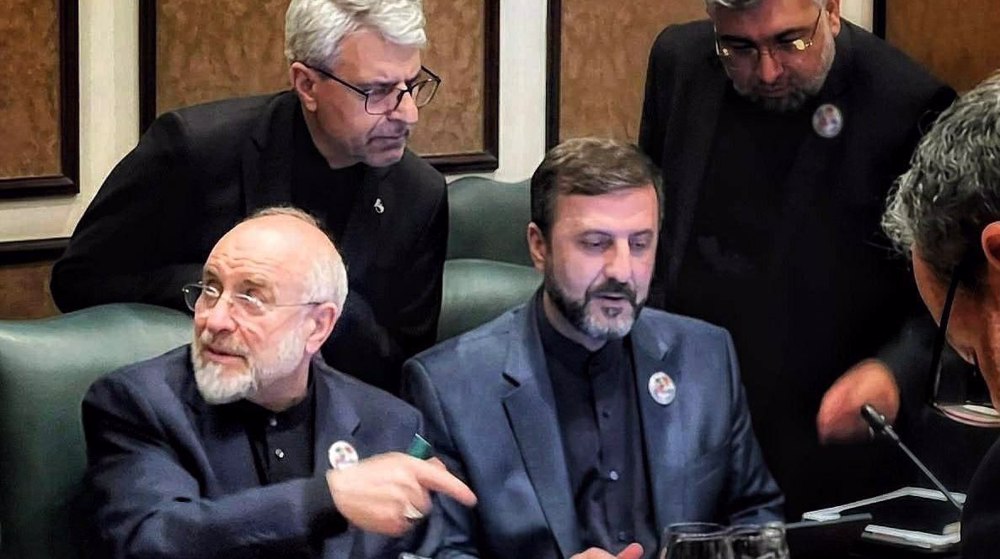
The Iranian negotiation delegation headed by Parliament Speaker Mohammad Baqer Qalibaf (left) consults following the first phase of negotiations with the US delegation in Islamabad, April 11, 2026.
Press TV
The first phase of Pakistan-mediated ceasefire talks between the United States and Iran have concluded in Islamabad.
Expert teams from the Iranian and American negotiation delegations have exchanged written texts to reach a framework on the topics discussed and ensure that there is no room for ambiguity in the draft proposals.
Reports said that another round of talks at the expert level will likely be held in Islamabad tonight or tomorrow.
The Iranian delegation, headed by Parliament Speaker Mohammad Baqer Qalibaf, participated in the talks following a decision by the United States to release frozen Iranian assets.
This was one of Iran’s demands in its 10-point plan, which Tehran had previously presented to Washington through intermediaries as part of its response to a US proposal for a ceasefire. US President Donald Trump called the plan “a workable basis on which to negotiate.”
The 10-point proposal was also submitted to Islamabad ahead of the talks as the basis for negotiations.
Iran and the US agreed to a two-week ceasefire on Tuesday, 40 days after the US and Israel launched attacks against the Islamic Republic as Tehran was negotiating with Washington over its nuclear program.
Iran responded forcefully to the aggression, targeting US and Israeli assets across the region and enforcing a near-total blockade on the Strait of Hormuz. The transit through the vital waterway is one of the main topics of discussions in the negotiations in Islamabad, which focus on a potential agreement to permanently end the war.
The cessation of Israeli attacks on Lebanon was another precondition Iran had set for the talks. The issue was part of Iran’s proposal that led to the ceasefire, but the US and Israel later said the Lebanese front was not included. Pakistan also confirmed that it was.
Reports suggested that Israel had ceased attacking the Lebanese capital Beirut and restricted its attacks to areas in southern Lebanon.
The Iranian negotiating team met with Pakistani Prime Minister Shehbaz Sharif in Islamabad earlier in the day ahead of talks with the United States.
Other Iranian officials on the delegation include Foreign Minister Abbas Araghchi, Secretary of the Supreme National Defense Council, Ali-Akbar Ahmadian, and Governor of the Central Bank, Abdolnasser Hemmati, as well as some members of the Parliament.
US Vice President JD Vance also met with the Pakistani prime minister in Islamabad. Vance was joined for the bilateral meeting by special envoy Steve Witkoff and President Donald Trump’s son-in-law, Jared Kushner.
The Iranian delegation will assess the US positions and a decision would follow regarding the talks.
 The Most Revolutionary Act