
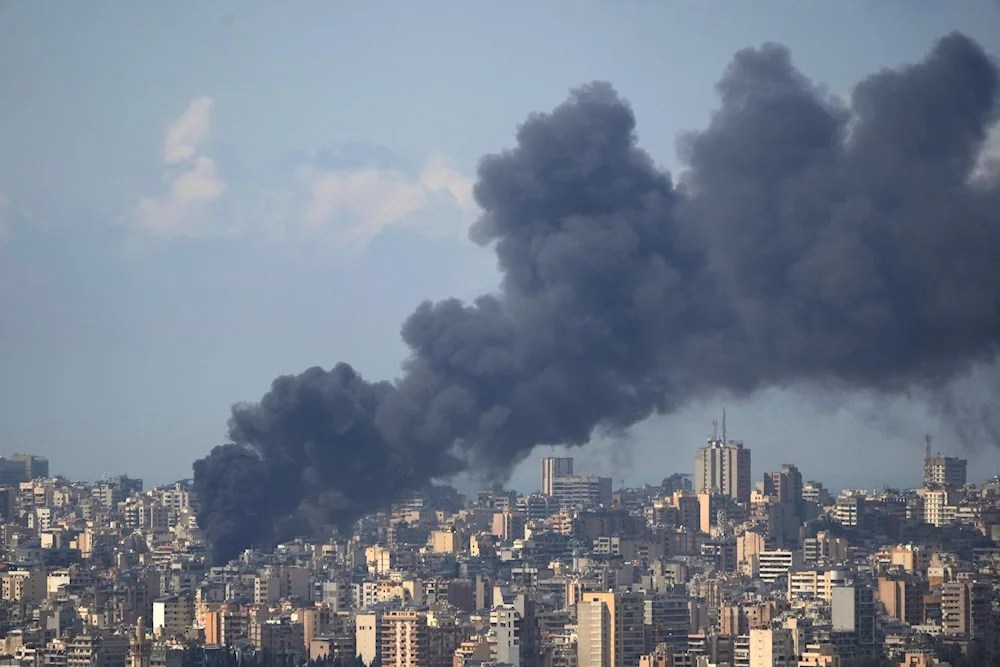
 AP Beirut Wednesday April 8 2026
Al Mayadeen English
Iran says maritime traffic in the Strait of Hormuz is suspended following Israeli strikes on Lebanon, vows decisive response.
In response to recent Israeli attacks on Lebanon, Iranian officials are calling for decisive measures to counter the aggression in support of Lebanon and its people, warning that the Strait of Hormuz could be closed again until the attacks on Lebanon stop.
Ibrahim Rezaei, spokesperson for the Iranian Parliament’s National Security and Foreign Policy Committee, said in a post on X: “In response to the brutal Israeli aggression on Lebanon, the movement of ships in the Strait of Hormuz must be immediately stopped, and a strong, decisive strike must be launched to prevent further attacks by the Israeli entity.”
The Iranian official paid tribute to the Lebanese people, asserting that “we must not leave them alone for a second.” Rezaei emphasized the need for clarity on the terms of engagement and rejected the separation of the battlefields in Iran and Lebanon, stating, “Either there is a ceasefire on all fronts, or there is no ceasefire on any front.”
Iran’s UN envoy stresses ceasefire in Lebanon, warns of consequences
On his part, Iran’s envoy to the United Nations in Geneva, Ali Bahraini, stressed the importance of “Israel” upholding the ceasefire in Lebanon, adding that Tehran will approach peace negotiations with Washington cautiously due to a deep lack of trust.
Bahraini stated, “In light of the deep lack of trust, Tehran will deal cautiously with ‘peace’ negotiations with Washington, while at the same time remaining on military alert.”
The UN envoy also stressed the role of “Israel” in the ongoing aggressions, declaring, “We emphasize the necessity of the Israeli entity’s commitment to a ceasefire in Lebanon.”
He further warned about the consequences of continued hostilities, saying, “We warn that the continuation of attacks will lead to further complications and the resulting severe consequences.”
On the issue of talks, Bahraini said Iran will approach the talks with the US in Islamabad with far more caution than previous negotiations due to “the deep chasm of mistrust, while remaining on military alert.”
“We are not putting any trust in the other side. Our military forces are keeping their preparedness…but meanwhile, we will go for negotiations to see how serious the other side is,” the ambassador told Reuters.
Iran considering withdrawal from ceasefire if ‘Israel’ continues Lebanon assault
Iran may withdraw from the ceasefire agreement if “Israel” continues violating the truce by launching attacks on Lebanon, an informed source told Tasnim News Agency.
The source told the agency that “Iran is currently studying the possibility of withdrawing from the ceasefire agreement with the continuation of the Israeli entity’s violations and its aggression against Lebanon.”
The report noted that halting the war on all fronts, including against the “Resistance forces” in Lebanon, had been accepted by the United States as part of a two-week ceasefire plan. However, the source added, “Since this morning, in blatant violation of the ceasefire, the Israeli entity has carried out brutal attacks against Lebanon.”
In response, Iranian armed forces are identifying targets to retaliate against Israeli aggression in Lebanon, Tasnim‘s source said, further warning, “If the United States is unable to restrain its rabid dog in the region, Iran will assist it in this matter, exceptionally, through force.”
Moreover, a senior Iranian official also told Press TV that “Iran will punish Israel for its aggression against Lebanon and violations of the ceasefire.”
Cementing this stance, Fars News Agency reported that oil tanker traffic through the Strait of Hormuz was halted following the Israeli attacks, though two tankers had earlier received safe passage clearance after Tehran’s conditions were accepted and the ceasefire went into effect.
Later, a source in the Iranian Navy confirmed the Strait’s closure, saying, “We have closed the Strait of Hormuz, and currently, only Iranian ships and vessels coming from Iran are passing through.”
“Only two oil tankers were able to benefit from the ceasefire and pass through the Strait of Hormuz before ‘Israel’ violated the agreement,” he added.
Iran conditions deal on ceasefire in Lebanon
Iran has tied any move toward a ceasefire in the US-Israeli war to the halt of all aggression on every front, including in Lebanon. Tehran’s leadership insists a lasting end to hostilities must go beyond a temporary truce and must stop attacks against Iran and its allies.
Tehran’s 10‑point proposal, which Washington has accepted as the basis for talks during the two-week ceasefire, calls for the cessation of all aggression in the region as a precondition for peace negotiations. The plan demands an end to wartime attacks and a guarantee that further aggression will not be launched against Iran or allied forces.
Among other conditions, the proposal includes a commitment to end all US and Israeli military operations targeting Iranian territory and groups aligned with Tehran, as well as halting aggression that “Israel” launched on Lebanon, among other countries in the region.
Iran’s negotiators emphasize that without a permanent stop to the war’s aggression on all fronts, including the war in Lebanon, any cease‑fire would be meaningless and could allow enemy forces to regroup and resume attacks.
‘Israel’ sticks to its criminal ways, violating the agreement
Meanwhile, Israeli Prime Minister Benjamin Netanyahu unilaterally decided that the ceasefire agreement does not include Lebanon, effectively violating the terms of the agreement reached between Tehran and Washington and potentially derailing the process to reach a permanent ceasefire.
In a statement posted on the Israeli Prime Minister’s Office X account, Netanyahu said the Israeli regime backs Washington’s efforts to ensure Iran “no longer poses a nuclear, missile and terror threat,” and acknowledged that the United States had communicated its commitment to achieving these goals in upcoming negotiations.
However, buried at the end of the statement was a unilateral carve-out: “The two-week ceasefire does not include Lebanon.”
Barely hours after the ceasefire was reached, the Israeli occupation forces brazenly violated the agreement, launching a wide-scale attack targeting the entirety of Lebanon from south to east with more than 100 strikes and committing harrowing massacres in Beirut, the South, and the Bekaa. ِThe Israeli aggression killed and wounded hundreds, the Lebanese Ministry of Public Health reported, while the Lebanese Red Cross reported that 100 ambulances were working on rescue operations across the country.
[…]
 The Most Revolutionary Act