From Moscow, Sergey Lavrov vows Russia will “do everything” at the UN to stop Western operations, even as U.S. intel says Putin’s spies are quietly feeding Tehran real‑time coordinates for American warships, aircraft and bases across the Middle East. Washington officials say Iran’s strikes on radars, command posts, a CIA station in Riyadh and U.S. troops in Kuwait suddenly look far more precise, while the Pentagon burns through “years’ worth” of munitions in days. Yet Pete Hegseth insists there is “no shortage” of weapons and vows the U.S. can fight “as long as we need to.”
Iran Launches Strike on Strategic Israeli Base | Prof. Jiang Xueqin Geopolitical Analysis Tensions in the Middle East have reached a dangerous new level as Iran launches missile and drone strikes targeting strategic Israeli military sites. The attack is part of a broader escalation following joint U.S.–Israeli strikes on Iranian military and leadership targets, triggering a cycle of retaliation across the region.
In response to earlier attacks on Iranian facilities and leadership compounds, Iran launched waves of ballistic missiles and drones toward Israel and several U.S. military positions in the region, signaling a major expansion of the conflict.
In this video, Professor Jiang Xueqin breaks down the strategic significance of these strikes and explains how they fit into the larger geopolitical confrontation between Iran, Israel, and their allies. Using game theory, military strategy, and predictive history, Jiang explores why attacks on strategic military bases can dramatically shift the balance of power in a regional war. In this analysis you’ll learn:
• Why Iran targeted key Israeli military bases • The strategic role of missile and drone warfare in modern conflicts
• How the Iran–Israel confrontation could expand into a regional war • The military and geopolitical consequences of escalating retaliation
• What this conflict means for global stability and energy security Through careful geopolitical analysis, Professor Jiang explains how a single strike on a strategic base can trigger a wider conflict involving multiple countries across the Middle East.
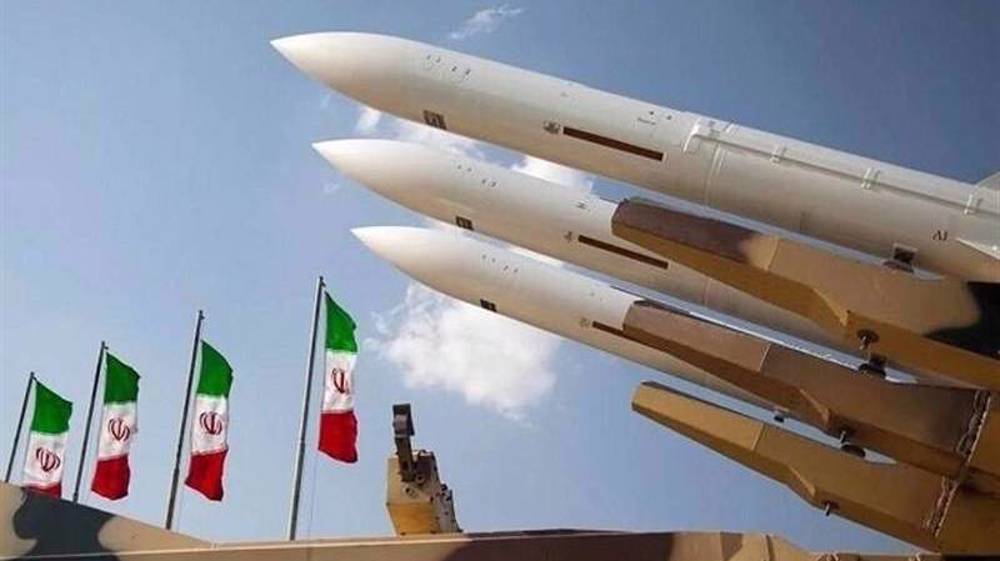
The Israeli military has acknowledged the inability of its radar systems to intercept sophisticated incoming Iranian missiles, and its air defense units to bring them down. (Photo by Tasnim news agency)
Press TV
The Israeli military has admitted that US-built Israeli radar systems have been largely unable to intercept incoming Iranian missiles.
According to a report published by the Israeli Haaretz newspaper, Israeli military units have confessed to their failure to intercept and shoot down Iranian missiles headed for the occupied territories.
Additionally, it said that sirens were activated on Friday only a few moments before evacuation orders were sent out to illegal settlers.
In response to mounting criticism of the Israeli army’s delayed activation of security alerts, the army said that it cannot determine the duration between alerts and sirens warning of incoming missiles.
Similarly, the command center of the Israeli internal front stated that security alerts, for operational considerations, could be sent to settlers only a short while before the sirens are sounded, or at times not even sent.
Haaretz then cited satellite images, noting that Iran is seeking to target radar systems and strategic military facilities in a bid to render the radars of the US and its allies ineffective.
The newspaper noted that Iran’s precision strikes against radar installations will significantly lower Israel’s missile interception ability and disturb its quick alert systems.
The revelations come as Israeli media outlets have frequently pointed to the inefficiency of Iron Dome missile systems to confront the volume and velocity of Iranian missiles.
Israeli military experts have warned that the latest generation of Iranian missiles enjoys higher speed, can cruise complicated routes and have very low radar recognition features, which make it a serious challenge for Israeli air defense systems to detect and bring them down.
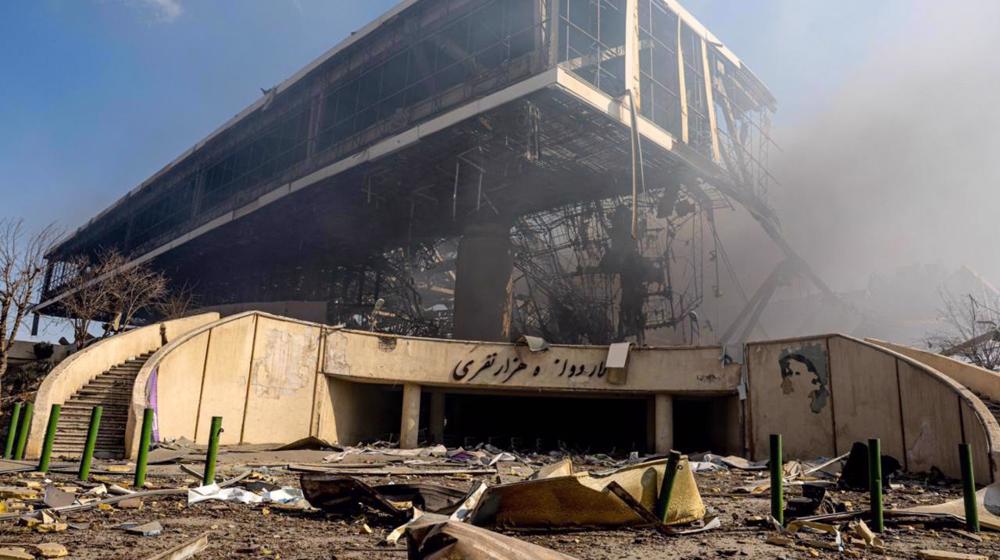
Tehran’s 12,000-seat Azadi Sports Complex was attacked in an American-Israeli aggression on March 5, 2026. (Photo by IRNA)
Press TV
A classified assessment by the National Intelligence Council has concluded that even a large-scale military offensive against Iran would be unlikely to topple the country’s political and security establishment.
The Washington Post, citing US officials familiar with the matter, reported on Saturday that the assessment suggests that the Islamic Republic’s system of governance is resilient enough to withstand even significant military pressure.
The report’s findings raise questions about the feasibility of the strategy advocated by US President Donald Trump, who has repeatedly said he intends to “clean out” Iran’s leadership structure.
According to officials cited in the report, the intelligence analysis examined potential outcomes of both limited strikes targeting senior leaders and broader attacks aimed at crippling Iran’s leadership and state institutions.
In both scenarios, analysts concluded that the country’s political and military institutions would preserve continuity of power.
The report determined that even with the assassination of Leader of the Islamic Revolution Ayatollah Seyyed Ali Khamenei, the country’s ruling system would continue to function through established succession mechanisms.
These procedures include the appointment of a new leader by the powerful Assembly of Experts, a body responsible for overseeing leadership transitions.
Intelligence analysts also concluded that the prospect of Iran’s fragmented opposition taking power after a military strike was “unlikely,” according to people familiar with the classified findings.
The assessment comes as the US-Israeli aggression against Iran enters its second week and expands across multiple regions.
Despite the intelligence community’s caution, the Trump administration has publicly emphasized its military objectives.
Trump has also suggested that Washington could influence Iran’s future political leadership.
However, Iranian officials have rejected any notion of outside involvement in determining the country’s leadership.
Iran’s Parliament Speaker, Mohammad Bagher Qalibaf, dismissed the idea that the US could influence the succession process, stating that Iran’s political future would be decided solely by the Iranian people.
Tehran has decided to stop launching attacks on targets in neighboring countries and has no intention to invade them, Iranian President Masoud Pezeshkian has said.
In a televised address, Pezeshkian apologized to the countries of the region and said Iran respected their sovereignty.
The US-Israeli war against Iran has entered its second week, with uncertainty growing over when hostilities might end. US President Donald Trump demanded Tehran’s “unconditional surrender,” while Israel continued attacks against targets in the Islamic Republic and launched a significant military incursion into Lebanon, prompting the UN to warn of a humanitarian crisis unfolding in the country.
Pezeshkian said the country’s Interim Leadership Council had approved a decision that no missile strikes would be carried out against regional states unless an attack on Iran originated from their territory.
Early on Saturday, missiles were seen flying towards Israel after the IDF said it had identified launches from Iran.
Explosions were heard as Israeli air defenses activated to intercept the incoming fire. Shortly after the barrage, the country’s military said it had begun a wave of strikes targeting infrastructure in the Iranian capital Tehran.
Washington and West Jerusalem have framed their first attacks on Iran as preemptive measures aimed at destroying its uranium enrichment and ballistic missile programs. The Islamic Republic insists that its nuclear program is peaceful and has denounced the strikes as entirely unprovoked.
Moscow has condemned the US-Israeli strikes as a “premeditated and unprovoked act of aggression” aimed at toppling a government that “refused to yield to the dictates of force and hegemonic pressure.”
The US-Israeli attacks have killed at least 1,332 Iranian civilians and wounded thousands, Iran’s UN ambassador Amir Saeid Iravani said. Tehran’s retaliatory attacks have killed 11 people in Israel, while at least six American service members have also been killed.
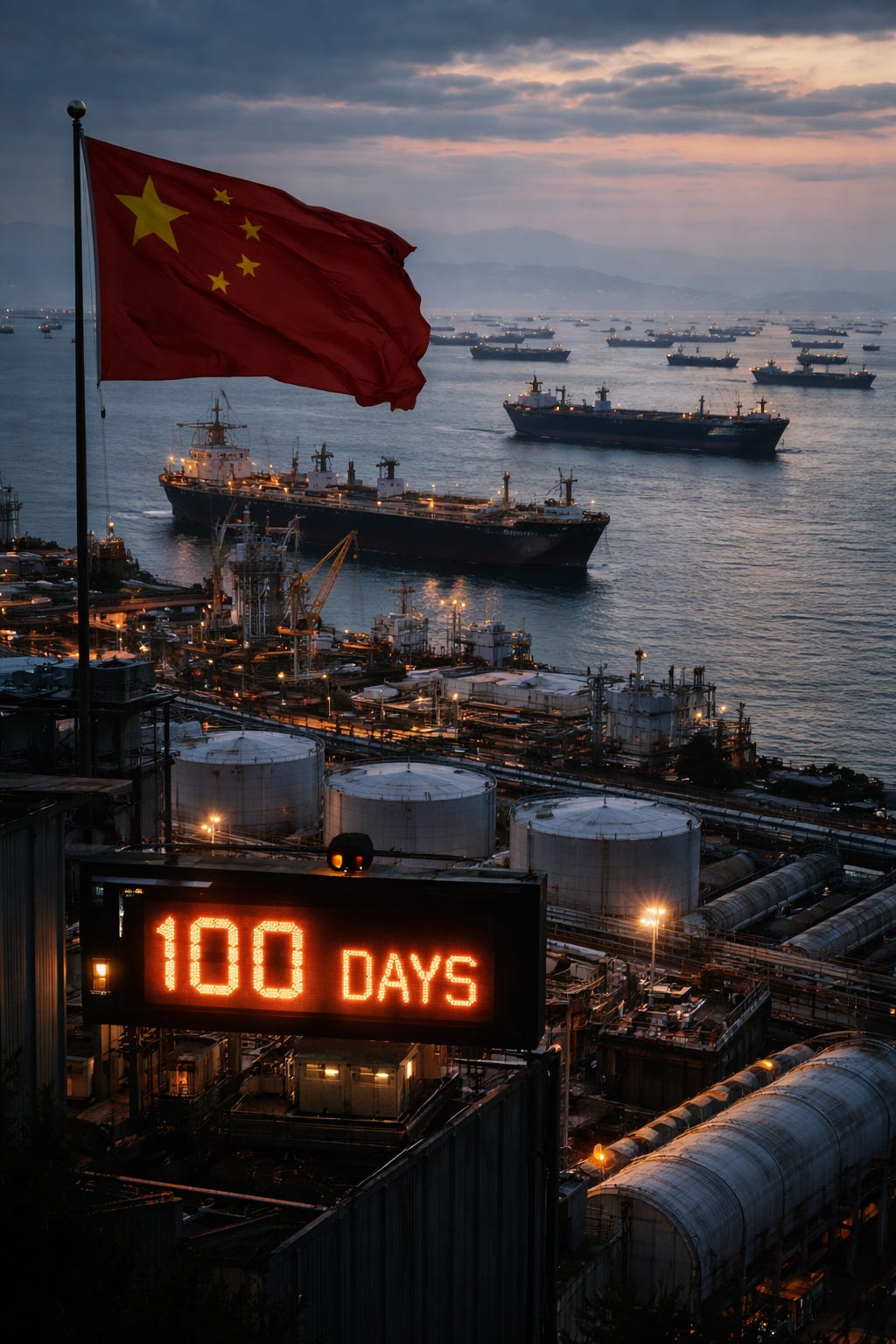
About 100 Days Until Factories Slow and the Boxes Stop Arriving
The tankers stopped.
Insurance markets froze first. Then freight rates spiked. Then captains hesitated. Then the Strait of Hormuz went quiet.
When a chokepoint closes, geography becomes destiny.
And for China, destiny runs on imported oil.
As of March 2026, analysts estimate China can function roughly 100 to 115 days if Hormuz remains fully blocked. Some banks whisper about 180 to 200 days if every strategic barrel is drained. That sounds comfortable. It is not.
Because inventory is not immunity. It is a countdown.
🌍 The Backstory: Why China Built a Mountain of Oil
China learned this lesson slowly, then all at once.
It imports more than 70 percent of its crude consumption. It is the world’s largest oil importer. Roughly half of those imports flow through Hormuz. Thirty percent of its liquefied natural gas does too.
That is not ideology. That is arithmetic.
So Beijing did what great powers do when they feel exposed. It stockpiled.
As of early 2026:
China’s Oil Position
Total onshore crude inventories: approximately 1.2 to 1.3 billion barrels
Strategic Petroleum Reserve: about 400 million barrels
Commercial stocks: roughly 670 to 800 million barrels
Net import coverage: around 104 days at 2025 import levels
That mountain of crude was built quietly. No speeches. No slogans. Just steel tanks filling up.
This was not paranoia. It was insurance.
Now the policy is being tested.
🔥 Zero To Hero: The Collapse Scenario
Day one of a full closure does not feel like collapse.
Refineries keep running. Diesel flows. Cities hum. Coal keeps the grid alive. Markets wobble but do not panic.
China is not fragile.
But this is how depletion works.
Oil stocks are not evenly distributed. Commercial barrels move daily. Strategic barrels are political decisions. Pipelines cannot suddenly double capacity.
China’s overland lifelines:
Russia via Eastern Siberia Pacific Ocean pipeline
Russia via Kazakhstan transit
Direct Kazakhstan pipeline
Combined, these pipelines supply only a fraction of China’s total daily crude demand. They cannot replace millions of barrels per day from the Gulf.
So the 100 day window is not about total shutdown.
It is about when tradeoffs begin.
⏳ What Happens As The Days Pass
Days 1 to 30
No panic. The government signals confidence. Strategic stocks remain mostly untouched. Commercial refiners draw from inventories. Prices climb globally but domestic stability is preserved.
Days 30 to 60
Freight reroutes around the Cape of Good Hope. Transit times stretch by weeks. Insurance costs compound. Brent pushes higher, potentially into triple digits.
China begins selective strategic releases. Energy intensive sectors feel quiet pressure. Nothing dramatic. Just limits.
The real constraint is not how many barrels exist.
It is how fast replacement flows can move.
Hormuz handles about one fifth of global oil trade. Tankers rerouting around Africa increase voyage times dramatically. Shipping capacity tightens. Freight costs surge.
Even if physical oil exists, logistics slow it down.
China could survive 100 days. It could possibly stretch longer by rationing and releasing strategic reserves.
But survival and normal functioning are not the same.
Normal functioning requires flow.
And flow requires open sea lanes.
⚖️ How China Secures Oil If Hormuz Stays Shut
If the closure persists, Beijing has levers.
Increase Russian volumes through pipeline and seaborne routes in the Pacific
Expand imports from West Africa and Latin America
Accelerate Arctic and Far East shipments
Draw down SPR aggressively
Impose domestic fuel rationing
Prioritize military and food logistics over export manufacturing
Increase coal substitution for power generation
Accelerate electric vehicle and renewable expansion
None of these solve the problem overnight.
All of them buy time.
China’s advantage is centralized coordination. It can ration faster than market democracies. It can redirect supply by decree.
That is structural power.
🌱 Turn Pain Into Power
Here is the paradox.
Every chokepoint accelerates adaptation.
The 1973 oil shock reshaped Japan’s efficiency model. The 1990 Gulf War reshaped U.S. strategic reserves. Europe’s gas crisis reshaped LNG infrastructure.
If Hormuz remains blocked long enough to sting but not collapse China, it becomes fuel for transformation.
More pipelines. More Arctic shipping. More domestic production. Faster electrification. Faster storage buildout.
Crisis compresses time.
And China has shown repeatedly that it can move fast under constraint.
🎯 The Win Win Lesson
This is not just about Beijing.
It is about you.
Resilience is inventory plus optionality.
China stockpiled oil because it understood dependency. You can stockpile leverage in your own life the same way.
Israel’s getting pummelled, banning info on its defeats — former US officer
💬 “They [Israel] are getting absolutely pummelled. I think [Netanyahu is] on a plane 90% of the time… He’s flying around the Mediterranean. He’s staying out of the fray as best he can, because he knows that he is the number one target,” retired US colonel Lawrence Wilkerson says.
Iran manages to damage Israeli cities, he adds, noting that fewer and fewer of the IDF interceptors are being used to stop the Iranian missiles, but Israel imposes tight censorship to hide it.
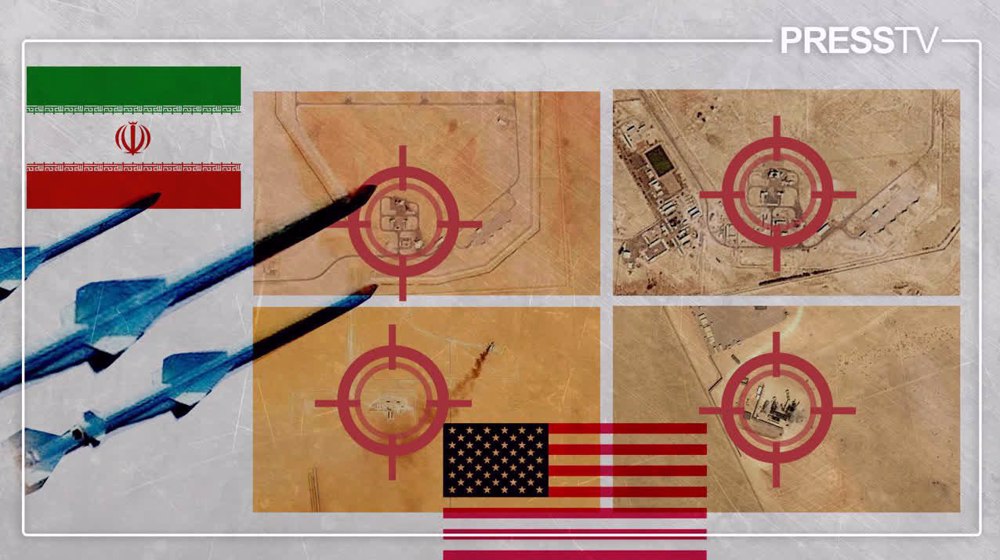
In the first week of the US-Israeli aggression on Iran, the Islamic Revolution Guards Corps (IRGC) conducted a series of precision strikes that systematically degraded the much-hyped US integrated air and missile defense architecture across the region.
The strikes destroyed or severely damaged at least two AN/TPY-2 THAAD radars, a billion-dollar early-warning radar installation in Qatar, multiple supporting sensor nodes, and critical communications infrastructure.
Executed in a coordinated sequence of precision engagements, Iranian retaliatory operations under the banner ‘True Promise 4’ have significantly disrupted the regional defensive network and forced US commanders to urgently reassess and reconstitute capabilities that took two decades and tens of billions of dollars to deploy.
The scale and sophistication of the Iranian operation mark a significant moment in contemporary warfare, demonstrating that even highly advanced missile defense systems, often presented as near-impenetrable shields, remain vulnerable to determined adversaries equipped with precision guidance, reliable intelligence, and an operational doctrine focused on disabling the core command, sensor, and communications nodes of defensive networks.
As commercial satellite imagery continues to emerge from across the region, the extent of the damage is becoming increasingly difficult to conceal, revealing substantial operational setbacks that raise serious questions about the resilience of the defensive architecture underpinning American force posture from the Persian Gulf to the Korean Peninsula.
The targeting doctrine evident in the strikes reflects years of detailed analysis and planning, with Iranian strategists identifying critical nodes and developing the capability to strike them simultaneously across a wide geographic area.
The coordinated targeting of early-warning radars, fire-control radars, communications infrastructure, and supporting facilities demonstrates a systemic approach to warfare rarely executed at such scale, focusing on neutralizing the command-and-control backbone of the defensive network rather than peripheral elements.
[…]
Muwaffaq Salti Air Base in Jordan
Heart of the beast: Understanding AN/TPY-2 radar’s critical role
The AN/TPY-2 transportable radar represents the technological centerpiece of the Terminal High Altitude Area Defense (THAAD) system. This massive X-band active electronically scanned array (AESA) radar consumes roughly two megawatts of power and is distributed across five forty-foot trailers.
With an antenna area of 9.2 square meters and an instrumental range exceeding 2,000 kilometers in forward-based mode, the radar functions as the primary sensor of the entire THAAD battery. Without it, the launchers and their 48 interceptors are effectively rendered inoperative, deprived of the detection and tracking data required for engagement.
Manufactured by Raytheon using gallium nitride technology, each AN/TPY-2 radar carries an estimated cost ranging from $500 million to $1 billion. Since development began in the 1990s, only about twenty units have been produced worldwide.
[…]
Jordan: The first thousand-kilometer precision strike
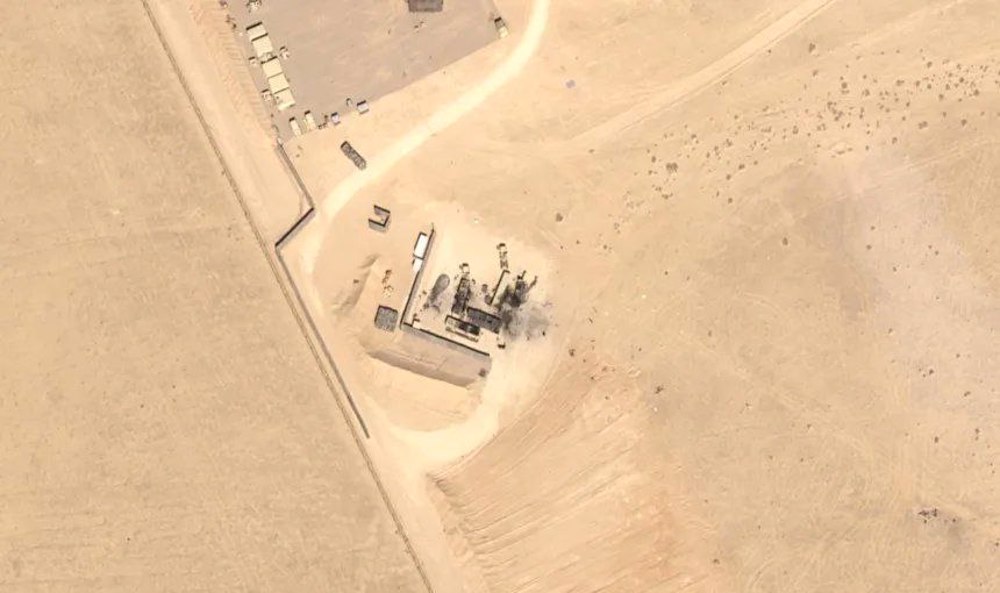
At Muwaffaq Salti Air Base in Jordan, located more than 800 kilometers from the nearest Iranian territory, satellite imagery captured on March 2 reveals the charred remains of an AN/TPY-2 radar that had reportedly been deployed at the base since at least mid-February.
The imagery shows debris scattered across the deployment site, surrounding what appears to have been a fully assembled radar system. Two large impact craters, each roughly thirteen feet in diameter, are visible in the sand nearby, suggesting that multiple precision munitions were employed to ensure the destruction of the system.
Prior to the escalation of hostilities, the base had served as a major hub for American air operations, with more than fifty fighter aircraft visible on the tarmac in pre-war satellite imagery.
The deployment of a THAAD battery at the site fulfilled two key operational objectives: protecting the concentration of air assets from potential ballistic missile threats and extending a defensive coverage umbrella toward Israeli territory.
[…]
THAAD base near Al Ruwais in UAE
United Arab Emirates: Systematic elimination of terminal defenses
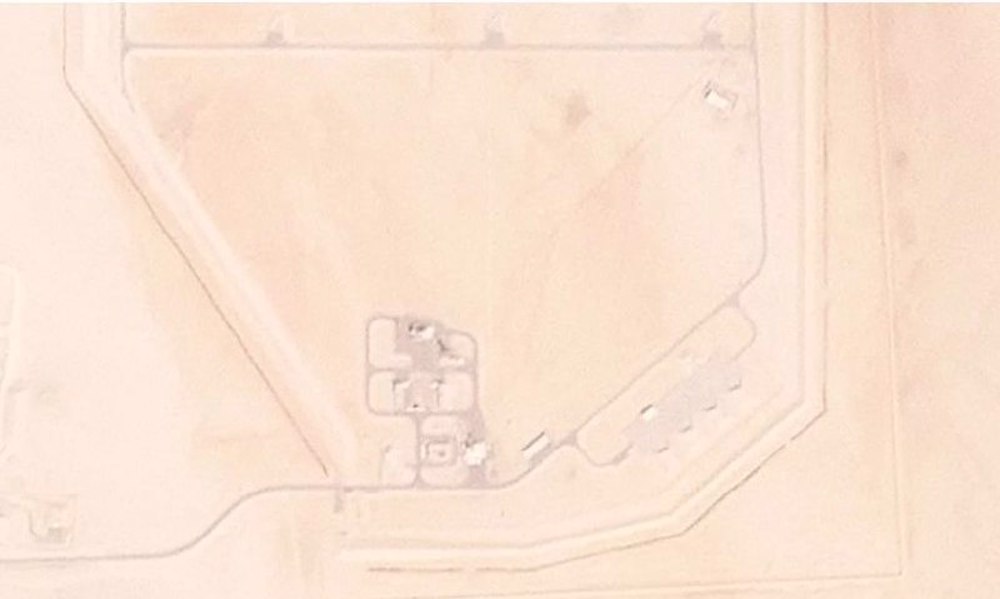
The Al Ruwais facility in the United Arab Emirates, positioned to protect critical energy infrastructure along the Persian Gulf coast, suffered near-simultaneous strikes against both its THAAD radar and the supporting infrastructure that housed the system.
Satellite imagery from March 1, the second day of the war that was imposed on Iran, shows dark markings from apparent strikes on three buildings, including a pull-through vehicle shed specifically designed to shelter the radar system.
The pattern of damage suggests Iranian planners understood not only where the radar would be positioned when active but also where it would be maintained and stored.
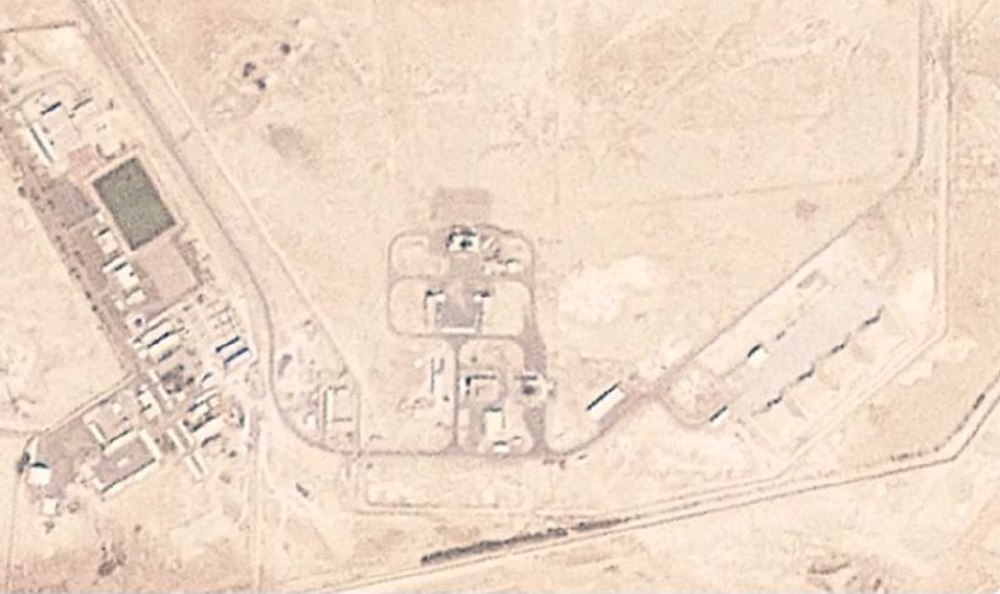
At a second UAE installation near Al Sader, satellite imagery reveals an almost identical strike pattern with four buildings damaged, including multiple vehicle sheds configured for radar storage.
[…]
Commercial imagery providers captured before and after images that leave little doubt about the severity of the damage, with burned equipment visible at the precise locations where radar components had been regularly observed.
Qatar: Billion-dollar early warning backbone destroyed
The destruction of the AN/FPS-132 Block 5 Upgraded Early Warning Radar at Umm Dahal in Qatar represents perhaps the single most expensive individual loss of the campaign, with that system alone costing approximately one point one billion dollars when installed in 2013.
[…]
The Qatari Ministry of Defence’s rare public confirmation of the radar’s destruction carries strategic significance beyond the military impact, as host-nation acknowledgment forecloses any possibility of concealing the loss and signals to regional allies that American assurances of protective capability may no longer carry their former weight.
[…]
Al Sader in UAE
Saudi Arabia: Smoke rising from Prince Sultan Air Base
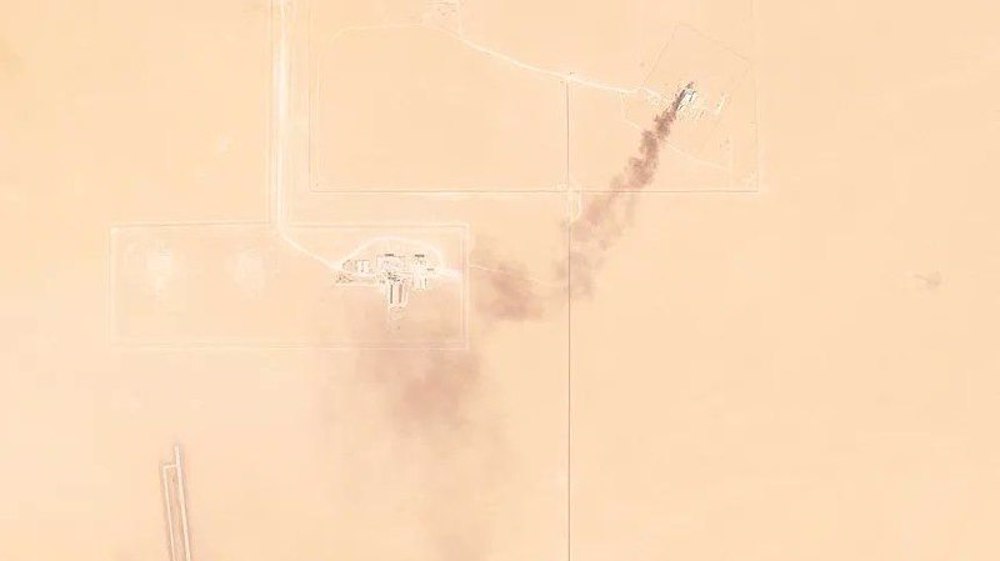
At a site near Prince Sultan Air Base in Al Kharj, Saudi Arabia, satellite imagery captured on March 1 shows smoke rising from a compound where a THAAD radar had been previously positioned, with a tent used to shelter the antenna unit showing extensive charring and debris scattered across the surrounding area.
Imagery from January had shown the radar antenna pointed northeast toward Iran in its operational configuration, suggesting the site was fully functional when struck.
[…]
Kuwait: Communications infrastructure and radar domes destroyed
The strikes extended beyond the core missile defense sensors to target the communications infrastructure that enables these systems to function as an integrated network.
At Arifjan base in Kuwait, satellite imagery confirms the destruction of three radomes, the protective spherical structures housing satellite communications antennas that provide the data links connecting distributed sensors to command nodes.
Eight additional buildings related to satellite communications infrastructure were destroyed at separate locations in Kuwait, representing a systematic effort to attack the network backbone.
The AN/GSC-52B radars destroyed in Bahrain represent another category of communications and surveillance assets, providing both satellite communications connectivity and contributing to the space surveillance network.
[…]
Prince Sultan Air Base in Saudi Arabia
Strategic calculus: Twenty years of investment destroyed in seven days
The development of the THAAD system began in 1992, with the US Army finally fielding the first operational batteries in April 2012. The journey from initial concept to deployable capability required approximately twenty years and tens of billions of dollars.
[…]
Each unit requires years to manufacture, and the destruction of multiple units simultaneously creates a capability gap that cannot be quickly filled.
The financial losses are staggering. Individual AN/TPY-2 radars cost between five hundred million and one billion dollars. The AN/FPS-132 early warning radar cost approximately one point one billion dollars.
The AN/GSC-52B radars, the radomes, the communications buildings, and support infrastructure add hundreds of millions more.
[…]
Tactical paralysis: The loss means for current operations
The immediate tactical consequence is the effective paralysis of multiple THAAD batteries that now sit blind on their launch positions. Without the AN/TPY-2 radar providing tracking data and fire control solutions, the launchers and their forty-eight interceptors per battery cannot engage incoming threats.
The interceptors themselves, each costing approximately thirteen million dollars, cannot be employed without the radar’s guidance.
[…]
Aegis warships must now rely solely on their own SPY radar systems. The integrated battle management system now resembles disconnected nodes fighting local engagements without a common operating picture.
The psychological impact cannot be overstated. Soldiers assured that the most advanced missile defense systems would protect them, but now find their protective shield penetrated repeatedly.
The sight of satellite imagery showing the blackened remains of billion-dollar systems creates a perception of vulnerability that no amount of official reassurance can counter.
Global implications: South Korea, Guam, and the strategic reserve dilemma
The destruction of multiple THAAD systems in West Asia has immediate implications for American force posture worldwide, particularly in the Indo-Pacific, where North Korea’s advancing missile program has long justified THAAD deployment.
Reports that Washington is considering relocating THAAD and Patriot systems from South Korea to West Asia reflect the severity of the capability gap.
The THAAD battery in Seongju, South Korea, represents not merely a defensive asset but a political commitment that has survived years of diplomatic tension with China.
Removing it would signal a shift in American priorities, potentially encouraging North Korea to react. Guam, home to another THAAD battery protecting critical American bases, would face similar exposure if its systems were stripped.
The interceptor stockpile faces equally severe pressure. The expenditure of approximately thirty percent of the total THAAD interceptor inventory in a twelve-day aggression in June 2025 demonstrated how quickly these scarce resources can be consumed.
With production capacity limited to approximately eleven to twelve interceptors annually, reconstituting inventory will require years.
Technology question: What Iranian precision reveals about US vulnerabilities
The successful destruction of hardened, defended targets across distances exceeding 800 kilometers reveals Iranian technological capabilities that many Western analysts had previously dismissed.
The terminal guidance required to place a warhead within meters of a specific radar antenna reflects maturation in seeker technology and potentially man-in-the-loop targeting.
The strikes also reveal sophisticated intelligence collection operating for years beneath the threshold of detection, building detailed targeting folders on facilities across multiple countries.
The symmetry between strikes in different countries suggests a targeting process that understood standardized American configurations.
The electronic warfare dimension likely played a critical role in enabling strikes to penetrate defended airspace.
The fact that no Iranian missiles or drones were intercepted before reaching targets across four countries suggests either that defenses were neutralized electronically or that the volume and coordination overwhelmed engagement capabilities.
Production constraints: Why replacement takes years, not weeks
The industrial base that produces AN/TPY-2 radars operates on peacetime assumptions, with production lines sized to meet gradual replacement requirements rather than the surge demands of major conflict.
The supply chain for specialized components extends across multiple states and countries, with some materials sourced from single suppliers operating at limited capacity.
Even with emergency funding, the time required to produce a single AN/TPY-2 radar cannot be compressed below physical limits.
The most optimistic assessments place replacement timelines in the range of three to five years for a single unit.
The radars destroyed in the first week of March 2026 will not return to the operational inventory until late in the decade at the earliest.
Regional power shift: The new strategic reality
The destruction of America’s premier missile defense assets across four countries fundamentally alters the strategic calculus in West Asia, shifting the initiative decisively toward Tehran.
Iranian military planners who previously had to calculate interception probabilities now face a dramatically reduced defensive threat, enabling expanded targeting options with reduced risk.
Persian Gulf Cooperation Council states that have invested billions in American missile defense now face uncomfortable questions about the wisdom of those investments.
If billion-dollar radars can be destroyed by missiles costing a fraction of that amount, the entire foundation of the Persian Gulf defense relationship requires reexamination.
For the Israeli regime, which has integrated its Arrow and David’s Sling systems with American sensors, the loss of THAAD coverage in Jordan represents a direct blow.
The anti-missile umbrella that previously extended from the Persian Gulf to the Mediterranean now has a gap in its center.
Fiasco verdict: Why two lost radars mean total system failure
Military analysts have begun using language rarely applied to American systems, with experts noting that the loss of a single AN/TPY-2 radar represents an event of significant operational importance while the loss of two constitutes a total fiasco.
The gap between what THAAD was supposed to accomplish and what it achieved against Iranian precision strikes could hardly be wider.


 The Most Revolutionary Act