
Al Mayadeen
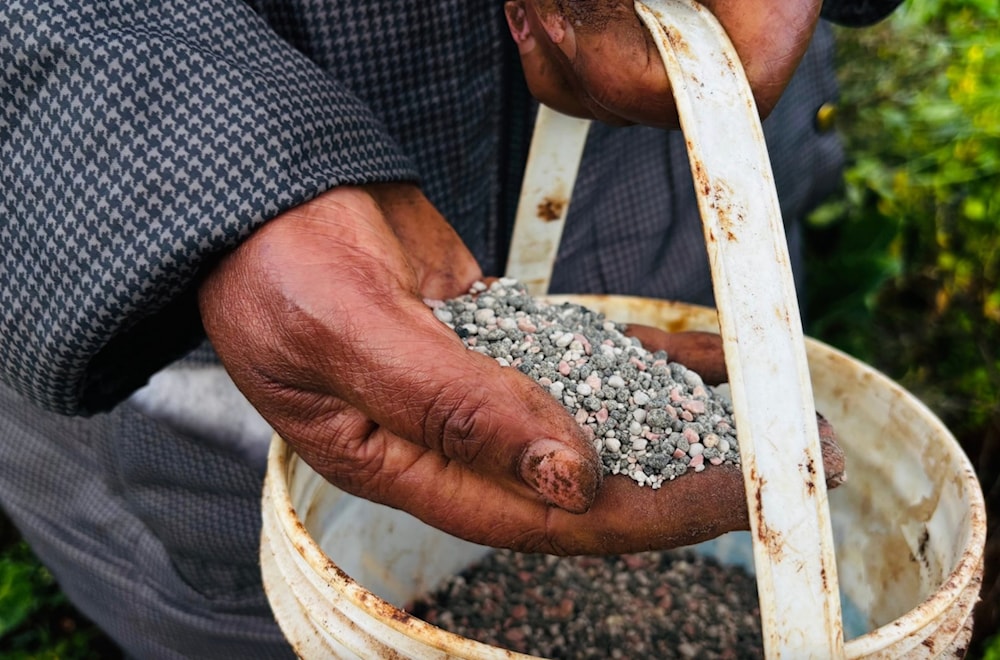
The ongoing war on Iran is driving a sharp rise in global fertilizer prices, exposing how Western-led escalation is reverberating across critical sectors such as agriculture and food production, the German-based Deutsche Presse-Agentur (DPA) reported on Friday.
According to Philipp Spinne, managing director of the German Raiffeisen Association, mineral fertilizer prices have increased by 30% to 40% since the beginning of the year. He noted that current market conditions are approaching levels seen at the start of the war in Ukraine, indicating mounting pressure on global supply chains. “A situation similar to what happened in February 2022 is recurring,” Spinne said, pointing to the rapid climb in nitrogen fertilizer prices toward previous peaks.
Hormuz disruptions
The surge is closely tied to disruptions around the Strait of Hormuz, a strategic waterway through which a significant share of global fertilizer trade passes, including roughly one-third of globally traded urea and about 20% of ammonia. Tehran’s response to the US-Israeli aggression has prompted restrictions on maritime flows, tightening supply and pushing energy prices higher, feeding directly into production costs.
Despite this, the immediate impact on European consumers remains limited. Many farmers had already secured their fertilizer supplies before the outbreak of the war. According to German industry estimates, around 80% of the required quantities for the entire spring season are already held in cooperative storage, while roughly 50% are already in the hands of farmers. However, industry representatives warn that a prolonged war will inevitably translate into higher production costs, which are expected to pass through to food prices over time.
A spokesperson for the Bavarian Farmers’ Association noted that while availability is currently manageable, farms that did not secure supplies early are now facing significant cost burdens. At the same time, relatively weak grain prices are compounding the pressure, squeezing margins and weighing on farm liquidity.
Rising fertilizer costs
Energy costs remain the central driver. Gas accounts for between 80% and 90% of the cost of producing ammonia and nitrogen fertilizers, meaning that fluctuations in energy markets, intensified by the war, directly affect agricultural inputs. Industry representatives added that the sharp rise in gas prices in Western Europe during the Ukraine war had already weakened the region’s chemical sector, a trend now deepening.
As prices rise, farmers may reduce fertilizer use, a shift that could lead to lower yields and tighter food supplies globally. The structural importance of fertilizers to global food systems reflects the scale of the risk: nearly half of the world’s population depends on crops grown using mineral fertilizers, while yields today are roughly double those of the early 20th century due to their use. Any sustained disruption, therefore, carries long-term implications for food security.
Although Europe produces a large share of its own fertilizers, covering roughly three-quarters of its nitrogen needs domestically and slightly more in the case of potash, it remains indirectly exposed through rising gas and LNG prices. While Europe has for years imported little fertilizer directly from conflict-affected regions, indirect pressures through energy markets continue to impact production costs.
Europe under pressure
At the policy level, European actors are increasingly turning to protectionist measures, including tariffs on Russian fertilizers, in an effort to shield domestic markets and reduce external dependency. Industry groups have also called for higher tariffs on Russian potash and for strengthening local production capacity. At the same time, Russia has introduced its own export restrictions to protect internal supply, further tightening global availability.
For now, German farmers remain partially insulated, but those forced to purchase at current prices are facing significantly higher costs, reinforcing concerns that the economic strain on agriculture will deepen if the war persists.
[…]
 The Most Revolutionary Act