
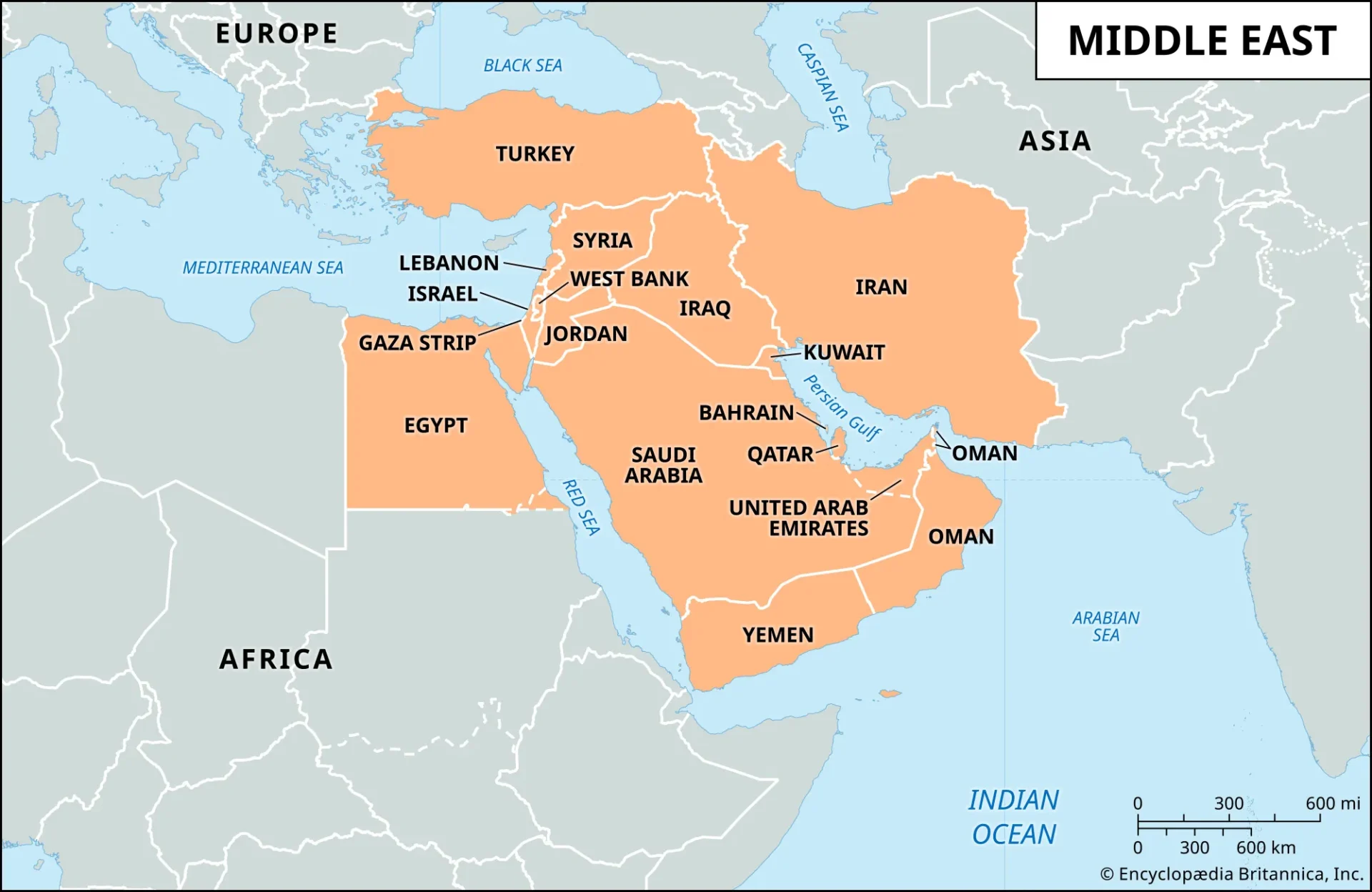
(DEFENCE SECURITY ASIA) — Iran’s warning that its armed forces could seize the coastlines of the United Arab Emirates and Bahrain if the United States launches a ground invasion signals a potential shift from missile-and-drone confrontation toward territorial escalation that would directly threaten the forward operating network sustaining U.S. military power in the Gulf.
The statement, delivered on Iranian state television by national security analyst Morteza Simiari, frames coastal seizure operations as a prepared contingency rather than rhetorical escalation, implying that Tehran is positioning its force posture to open additional fronts designed to complicate American logistics and alliance cohesion.
By linking the threat explicitly to any U.S. “mistake” in the region, the warning creates a strategic condition in which Gulf host nations become immediate operational targets, transforming the regional conflict from a bilateral confrontation into a multi-theatre scenario centred on access, basing, and maritime control.
The emphasis on coastal seizure introduces the possibility that Iran intends to challenge the geographical foundation of U.S. military presence in the Gulf, where air bases, naval facilities, and supply hubs along allied shorelines form the backbone of sustained American operations.
Such signalling also suggests Tehran is preparing to shift the conflict from long-range strike exchanges toward proximity warfare near key maritime chokepoints, increasing the risk that commercial shipping lanes and energy export routes could become contested operational zones.
By highlighting the UAE and Bahrain specifically, the warning targets two states hosting critical infrastructure supporting U.S. deployments, reinforcing the message that any ground invasion of Iran would trigger immediate pressure on forward bases rather than remaining confined to Iranian territory.
The statement further implies that Iran views territorial escalation as a tool to fracture coalition cohesion by forcing Gulf partners to reconsider the security costs of allowing their territory to be used for American military operations.
In strategic terms, the threat represents an attempt to expand deterrence beyond Iran’s borders by signalling that the defence of U.S. regional posture could become more complex, more expensive, and more politically risky if the conflict transitions into a ground campaign.
Warning Signals Possible Amphibious Contingency Planning
Morteza Simiari stated during the IRIB broadcast that Iranian forces are prepared to “take action” if the United States escalates further, asserting that entering the coasts of the UAE and Bahrain is already part of operational planning and could fundamentally alter the regional landscape.
He said Iran has conducted exercises for coastal operations, indicating that the threat refers to rehearsed military scenarios rather than hypothetical political messaging, which suggests that amphibious or littoral warfare concepts are being incorporated into Iran’s deterrence signalling.
Although Simiari is not an official government spokesman, his repeated appearances on state television and perceived links to security institutions mean such statements are widely interpreted as controlled messaging intended to communicate escalation thresholds without issuing formal declarations.
The use of state media as the platform for the warning allows Tehran to transmit strategic signals while preserving deniability, a pattern often employed when Iranian decision-makers want to influence adversary calculations without committing to binding policy positions.
Observers interpret the remarks as part of a broader communication strategy designed to warn Gulf states that hosting American forces could make their territory a primary battlefield if the conflict transitions from strikes to ground operations.
The emphasis on coastal seizure rather than missile retaliation indicates a shift in the narrative toward territorial leverage, implying that Iran wants adversaries to consider the vulnerability of fixed bases and infrastructure along the Arabian Gulf littoral.
Such messaging also reinforces the idea that the conflict would not remain confined to Iranian territory in the event of a U.S. invasion, but would instead spread to neighbouring states that provide logistical depth to American operations.
The reference to military exercises suggests Tehran intends to demonstrate preparedness for operations that would disrupt shipping routes, base access, and energy infrastructure concentrated along the Gulf coastline.
This framing strengthens Iran’s deterrence posture by implying that escalation could rapidly expand beyond air and missile exchanges into a wider regional confrontation affecting multiple sovereign territories.
[…]
 The Most Revolutionary Act