
By Yousef Ramazani
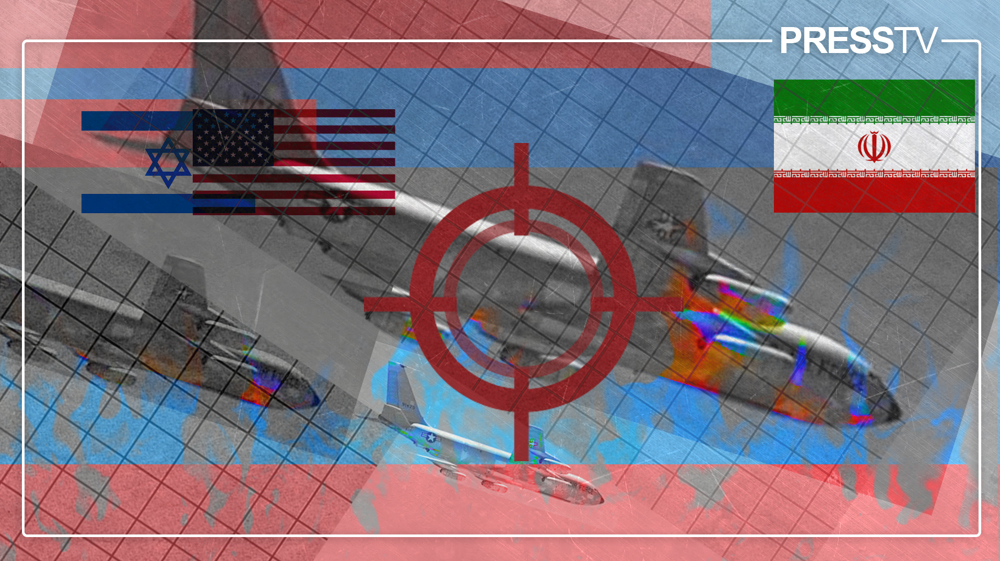
In the span of just three days, Iran and the Axis of Resistance delivered the most devastating blow to American aerial logistics since the Vietnam War, destroying six KC-135 Stratotankers and damaging the seventh in coordinated strikes that have exposed the fatal vulnerability at the heart of the US-Israeli aggression against Iran.
It began on March 12, 2026, when the Islamic Resistance in Iraq, in coordination with the Iranian armed forces, launched a precision missile strike, sending a KC-135 plummeting from the skies over western Iraq. All six American crew members aboard were killed in the attack.
Two days later, on March 14, Iranian ballistic missiles pummelled the Prince Sultan Air Base in Saudi Arabia, destroying five more Stratotankers on the tarmac in a single devastating salvo.
The numbers tell a stark story: seven of America’s most strategically vital aircraft lost or damaged, thirteen American service members dead, and the entire logistical architecture of Operation Epic Fury thrown into disarray.
This is the inside story of how the tanker war became America’s worst nightmare.
The unglamorous workhorse of American air power
The KC-135 Stratotanker is not a weapon of thunderous strikes or stealthy infiltration. It is a gangly, 1950s-era aircraft, an awkward military adaptation of the first commercial jetliners.
Based on the Boeing 367-80, the same design lineage as the 707, it is essentially a flying fuel tank with wings.
Yet in the 21st century, and particularly in the high-stakes geography of the Persian Gulf, this elderly workhorse has become the single most critical component of American air power.
The numbers are impressive: up to 90,700 kilograms of transferable fuel, cruising at 850 kilometers per hour, operating at altitudes up to 15,000 meters, launching at a maximum gross weight of 146,000 kilograms.
Its flying boom is optimized for Air Force receivers, but the aircraft can also refuel probe-equipped platforms using a drogue adapter, bridging service-specific architectures and turning joint air campaigns into truly integrated operations.
The US Air Force has invested heavily in keeping the fleet viable. The most significant upgrade replaced the original turbojets with modern CFM-56 turbofans on the KC-135R and T variants. This transformation increased fuel offload capacity by 50 percent, improved fuel efficiency by 25 percent, and drastically reduced the maintenance footprint.
In the context of the aggression against Iran, this efficiency meant a tanker could loiter on station for hours longer, covering strike packages engaging in dynamic targeting deep inside Iranian territory. It was an asset the Pentagon believed was safe, operating from “secure” bases far from the front lines. They were disastrously wrong.
Each Stratotanker carries a crew of three – pilot, co-pilot, and boom operator – who lies prone in the tail guiding the refueling boom into the receptacle of the receiving aircraft. These are highly specialized professionals, their skills honed over years of training. Their loss is felt acutely throughout the refueling community.
The US Air Force manages a fleet of approximately 396 KC-135s spread across active duty, the Air National Guard, and the Reserve. Each aircraft is a finite and precious asset that cannot be quickly replaced. Each crew member, even more so.
What is the KC-135’s role in this war of aggression?
To understand why the destruction of these seven aircraft represents such a catastrophic blow to Operation Epic Fury, one must understand the unforgiving arithmetic of aerial warfare in the Persian Gulf region, according to military experts.
A strike package taking off from a base in the Persian Gulf or from an aircraft carrier in the Arabian Sea might just be able to reach targets in Iran without refueling, but they would do so with minimal fuel reserves, no ability to loiter, and a desperate, fuel-critical dash back to safety.
The Stratotanker obliterates these constraints. By loitering in established refueling tracks over western Iraq, Saudi Arabia, or international airspace, the tanker allows fighter-bombers like the F-15E and F-16 to take off fully loaded with weapons rather than fuel.
They meet the tanker en route, top off their tanks, press deep into Iranian airspace, and then refuel again on the egress before landing. This effectively brings the entire Persian landmass within striking distance.
Without the KC-135, the concept of a sustained strategic bombing campaign against a country the size of Iran would be logistically impossible.
On March 12, just hours before the first tanker was shot down, US Central Command released imagery showing a KC-135 refueling a Navy F/A-18F Super Hornet during Operation Epic Fury over the Middle East.
The aerial refueling mission highlighted how joint tanker support sustains strike tempo and extends combat endurance. The tanker in that pairing was far more than airborne logistics.
A carrier-based jet that tanks en route or on station can hold in a patrol box longer, wait for a time-sensitive target, escort other strike packages deeper inland, or recover with greater tactical flexibility instead of being pulled home by fuel state alone.
In Operation Epic Fury, KC-135s refueling F/A-18Fs means more time on station, more options for commanders, better responsiveness against fleeting targets, and a greater ability to keep pressure on Iranian air defense and missile networks without constantly resetting the air picture.
That is why the refueling pass matters. It is not a backdrop to the operation. It is one of the mechanisms that makes the operation sustainable.
At least 40 of these aircraft have been operating directly out of the Israeli regime’s Ben Gurion Airport, a clear indication of the integration of the US and Israeli air campaigns.
The operational tempo has been described as intense, with approximately 75 percent of the entire US tanker fleet airborne in the weeks leading up to the aggression, pre-positioning for the massive fuel demands of the aggression.
How were they lost to enemy fire?
The first strike came on March 12, 2026, when the Islamic Resistance in Iraq, in close coordination with the Islamic Revolution Guards Corps (IRGC), executed a precision missile attack against a KC-135 Stratotanker operating in western Iraq.
The spokesman for the Central Headquarters of Iran’s Military announced that the US military refueling plane was shot down by a missile fired by resistance groups, stating unequivocally that all six American service members on board the aircraft were killed in the strike.
IRGC’s public relations wing elaborated in a formal statement that its air defense systems, operating under the umbrella of the Resistance Front, successfully targeted the Boeing KC-135 at the precise moment it was engaged in refueling an aggressor fighter jet.
This detail is crucial, as it demonstrates the tactical sophistication of the Resistance Front, striking at the exact moment when the tanker was most vulnerable and when its loss would have maximum impact on ongoing combat operations.
The Islamic Resistance in Iraq formally claimed responsibility for the attack, framing the action as a defensive measure taken in defense of the country’s sovereignty and airspace.
The timing was particularly devastating for American morale, as the downing occurred just hours after the US Central Command had proudly released imagery of KC-135s refueling strike aircraft, projecting an image of seamless air superiority.
Within hours, that narrative lay in flames somewhere in the deserts of western Iraq.
Two days later, on March 14, a barrage of Iranian missiles struck again, this time targeting the logistics hub itself. Ballistic missiles rained down on Prince Sultan Air Base in Saudi Arabia, a key hub for US expeditionary forces.
According to reports confirmed by US officials, the strike caught five KC-135 Stratotankers on the ground, damaging them severely.
While the aircraft were not completely destroyed, they sustained significant damage requiring extensive repairs, effectively removing them from operational service at a critical moment in the campaign.
The strike at Prince Sultan Air Base demonstrates the sophisticated Iranian strategy. Rather than just targeting fighter jets in air-to-air combat, Iran is striking the logistical nodes that enable the entire American air campaign.
By damaging multiple tankers on the ground in a single precision salvo, Iran aims to ground the fighters in the air.
The attack, which Saudi air defenses failed to intercept, highlights the growing reach and precision of Tehran’s missile arsenal and the inability of American allies to protect US assets.
Global flight trackers monitoring the region between March 12 and March 16 reveal the immediate impact of these strikes. The Stratotankers now dare not enter Iraqi airspace.
Instead, they glide along the southern border, staying within Saudi airspace, unwilling to risk the fate that befell their sister ship just days earlier.
This visible avoidance of Iraqi airspace provides irrefutable evidence that the Resistance Front’s air defense capabilities are real and that the March 12 downing was indeed the result of hostile fire, despite American attempts to deny the obvious.
How significant is loss for the US military?
The destruction of six KC-135s and the damage to a seventh represent far more than a simple tally of lost aircraft. These seven tankers were not just airplanes; they were the fuel supply lines for the entire US air campaign.
The US Air Force manages approximately 396 KC-135s, meaning this single week of Resistance operations has removed nearly two percent of the entire strategic tanker fleet from service. In the high-stakes arithmetic of modern air warfare, that is a devastating loss.
The human cost is equally significant, with the six crew members of the downed KC-135 representing one of the deadliest single incidents for US airmen in this aggression.
Each of those crew members was a specialist whose skills cannot be quickly replaced. The boom operator who lies prone in the tail of the aircraft, guiding the fuel boom into receivers with precision, requires years of training and experience. Their loss is felt acutely in a community where such expertise is rare and valuable.
Trump’s response on March 14 revealed the extent of American embarrassment.
In a statement attacking the Fake News Media, the president claimed that the five tanker planes at Prince Sultan Air Base were not struck or destroyed, asserting that four of the five had virtually no damage and were already back in service.
Yet satellite imagery and confirmed reporting from US officials contradict this narrative. The aircraft were damaged, they are under repair, and they are not available for combat operations. The president’s desperate denial only underscores the magnitude of the humiliation.
The US has begun relocating portions of its refueling fleet from Prince Sultan Air Base, a move that underscores the shifting risk calculus as Iran and the regional resistance demonstrate their ability to hit high-value targets deep inside US operating zones.
When the world’s most powerful military is forced to reposition its assets out of range of Iranian missiles, the strategic balance has clearly shifted.
The death toll since the aggression escalated now stands at 13, with more than 140 wounded, including eight service members suffering severe injuries.
These numbers will continue to grow as the Resistance Front maintains its pressure on American logistics. The pattern is now clear: Iran and the regional resistance are targeting the logistical backbone of US power projection, refueling aircraft, fixed bases, and command infrastructure, while Washington struggles to maintain operational tempo and regional deterrence.
[…]
 The Most Revolutionary Act