
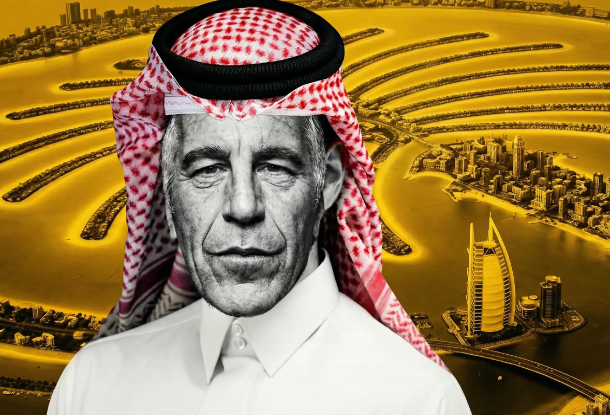
By Freddie Ponton | 21st Century Wire | February 10, 2026
In the last 48 hours, the U.S. Department of Justice has begun dumping what officials say amounts to more than three million pages of material tied to Jeffrey Epstein—an archive so vast it includes thousands of videos and hundreds of thousands of images. The tranche is only a fraction of what exists. Officials acknowledge that millions of additional documents remain under review, meaning the public has seen just a sliver of the government’s total Epstein archive. What is being unloaded into the public domain is not just evidence of private depravity; it is an inadvertent blueprint of how power really works when no one is supposed to be watching, an industrial‑scale influence machine whose files casually braid together billionaires, cabinet‑level officials, and strategic infrastructure from New York to the Horn of Africa. And even now, the public is being allowed to see only what officials deem manageable, with redactions still shielding some of the most sensitive names and millions of pages kept out of sight.
Hidden within those documents, leaks, screenshots, and email excerpts now circulating online, are connections that stretch far beyond Manhattan, Palm Beach, or even Paris. They reach deep into the Persian Gulf, into Dubai’s executive suites, and into the personal inboxes of officials in the United Arab Emirates.
These emails offer a unique glimpse behind the opulent shadows of Dubai’s towers, where untraceable billions flow like oil. In that world, a convicted pedophile whispers ministerial appointments to a UAE diplomat while discussing port deals that could move cargo and secrets across continents. According to persistent intelligence‑linked information surrounding his operations, Jeffrey Epstein was not acting alone or merely chasing thrills; he was allegedly operating as a geopolitical asset, cultivating leverage over Gulf elites, with places like Somaliland emerging as potential pawns in a larger strategic game. It is in such an environment that figures like Epstein thrive the best, because their private perversions double as statecraft.
Hind Al Owais and the Epstein Emails That Stain a Nation
Emails unearthed from the DOJ Epstein library reveal troubling facts about Jeffrey Epstein’s exchanges with Hind Al Owais, a young, ambitious Emirati woman navigating the opulent halls of UAE diplomacy. With her polished LinkedIn profile and lofty titles, she appears at first glance to be a symbol of progress. As director of the UAE’s Permanent Committee for Human Rights and a UN adviser since 2015, she has publicly championed women’s empowerment, declaring it both a moral and strategic imperative. On paper, Hind Al Owais is the face of a “modern” UAE: a diplomat, UN adviser, and later a senior human‑rights official fronting panels on women’s rights and regional mechanisms.
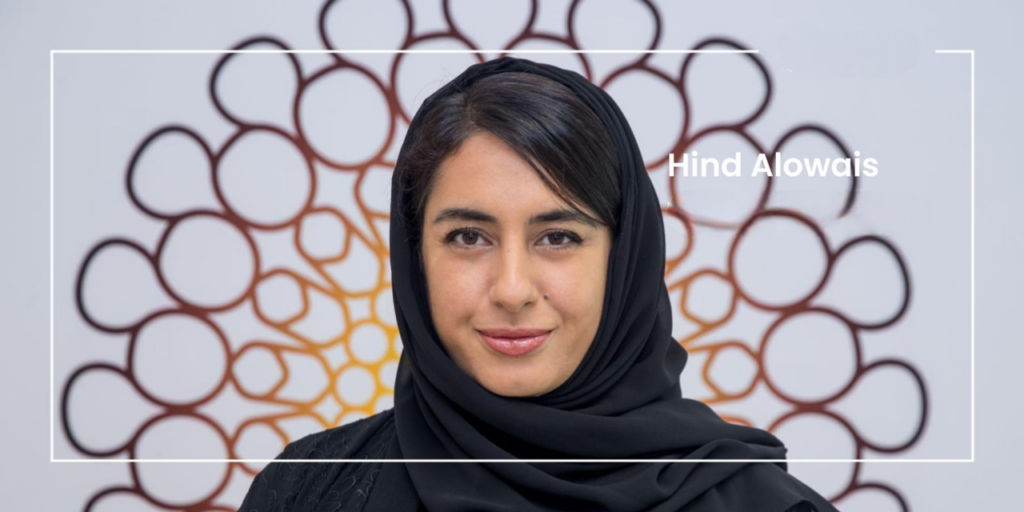
Hind Al Owais, UAE’s Permanent Committee for Human Rights and a UN adviser since 2015 (Source: YourStory.com)
In press releases, she speaks of “dignity” and “gender equality” while chairing events under the banner of the Permanent Committee for Human Rights in Abu Dhabi. In the emails, the tone is very different. The same woman who would later open high‑level human‑rights dialogues is trading easy banter with a convicted sex offender, eagerly accepting his career advice, and bringing family into his orbit. The contrast is not just personal hypocrisy; it looks like the textbook use of a polished, progressive female diplomat as a shield for an authoritarian system willing to outsource leverage work to a man like Epstein while selling the world a sanitised narrative at the UN.
The correspondence begins in 2011, during Epstein’s post‑prison resurgence. Al Owais, then a rising figure in UAE foreign affairs, began emailing the financier. Their communications suggest the exchanges were part of a broader effort to compromise UAE elites for Israeli leverage. Numerous emails linked to Hind Al Owais and Jeffrey Epstein from January 2012 are currently the subject of extensive scrutiny, prompting unsettling questions regarding the nature of their relationship. One email (EFTA01844869) states: “Getting one girl ready is difficult enough; two girls, you can certainly call a challenge.” Another conversation is said to mention introducing her sister to Epstein. In one message, Epstein positioned her as a future UAE Minister of Culture, declaring there would be “no competition.” (EFTA00909346)
One email (EFTA01845739) from January 26, 2012, stands out. Al Owais expresses excitement about introducing her sister, Hala, allegedly just 13 at the time, to Epstein, a man infamous for preying on underage girls. Epstein’s reply is suggestive, promising more time with both. Another message jokes about the challenge of preparing “two girls.” Critics online have seized on these exchanges, arguing that Al Owais was not just a passive contact but an active facilitator, a kind of soft‑power handler who normalised Epstein’s access to young Emirati women.
The DOJ emails that have surfaced so far do not explicitly spell out sexual transactions or list ages, which conveniently allows defenders to hide behind literalism. But in the real world, context matters: a senior diplomat, working in New York, repeatedly arranging access for “girls” to a man already notorious for abusing minors is not a neutral act; it is complicity dressed up as networking.
Online backlash was immediate. Critics claimed Al Owais worked as a procurer, supplying minors, including her own sister, to Epstein. Viral posts branded her a “pimp” and “Satan worshipper,” drawing thousands of retweets amid outrage over her UN role. Although no direct proof of underage involvement appears in the emails themselves, it can be argued that the pattern fits Epstein’s methods, which rest on compromising officials feeding a machine designed not only for pleasure but for leverage. Emails from 2017 show him lobbying against Qatar, accusing Doha of terrorism financing in line with UAE‑Israel strategies, underscoring that his communications with Gulf elites were deeply political, not merely social.
[…]
Adding another layer, discussions online claim Ghislaine Maxwell received girls supplied through the same network. Ex‑spy Ari Ben‑Menashe alleges the pair ran Mossad honeytraps together, building on older reports that Maxwell’s father, Robert Maxwell, had served as a Mossad asset. These accounts are contested and not fully documented, but the emerging patterns in the Epstein–UAE files sit uncomfortably close to what one would expect from an intelligence‑linked kompromat operation targeting Gulf elites.
[…]
Timeline of Epstein’s UAE–Israel Web
Year – Event
- 2009 – Bin Sulayem sends Epstein a torture video; Epstein replies, “I loved the torture video.”
- 2010 – Epstein allegedly linked in commentary to the Mossad hit on Hamas leader Mahmoud al‑Mabhouh in Dubai, fitting the broader narrative of an Israeli intelligence‑adjacent operator moving through Gulf territory.
- 2011–2012 – Al Owais emails Epstein about her sister and career boosts; Epstein dangles ministerial suggestions, positioning her as a future UAE Minister of Culture.
- 2013 – Epstein brokers Ehud Barak–bin Sulayem meetings for port investments, cementing a triangle linking an ex‑Israeli prime minister, a Dubai port magnate, and a convicted predator.
- 2017 – Epstein lobbies anti‑Qatar pressure in line with UAE and Israeli strategies, echoing the blockade politics that would reshape Gulf alliances.
- 2018 – Bin Sulayem shares Somaliland history; Epstein touts equity in the port and boasts of being basically in charge of nearby Djibouti facilities.
- 2020 – Abraham Accords normalize UAE–Israel ties, formalising a relationship that had already been woven in through years of quiet cooperation and shared interests.
- 2026 – Files and commentary claim Epstein trained under Barak for global blackmail operations, merging personal depravity with strategic utility.
The Somaliland Gambit — UAE Ports, Epstein’s Equity, and the Israeli Shadow
The bin Sulayem scandal converges in the dusty ports of Somaliland, a self‑declared republic clinging to independence from war‑torn Somalia.
[…]
Here, the UAE, through DP World and bin Sulayem, has poured billions into Berbera port, signing controversial agreements that bypass Somalia’s central government. DP World and its partners have committed up to 1 billion USD to logistics infrastructure along the Berbera corridor, tying the port into Ethiopian trade routes and Gulf markets, all under a legal framework that treats Somaliland as a quasi‑sovereign partner despite intermediary promoting Israeli technology, turning the territory into a bargaining chip in a three‑way game between Abu Dhabi, Tel Aviv, and Western security planners.
DP World handles roughly 80 million containers annually. To those who suspect trafficking behind the trade routes, that scale offers perfect cover. Israel was among the earliest nations to acknowledge the brief five‑day independence of British Somaliland in 1960, but it was on December 26, 2025, that Israel officially declared it would be the first nation to fully recognise Somaliland, sparking new developments in the Red Sea Basin. As part of this agreement, Israel plans to set up a diplomatic and potentially security presence in the region for the first time since its relations with Eritrea soured in 2020.
The human consequences are stark. Somali migrants fleeing famine risk falling into trafficking routes. Epstein’s proposed cultural projects in Somaliland echo the recruitment tactics used elsewhere in his network: philanthropy as bait, media as camouflage, and vulnerable populations as raw material.
Epstein, Mossad, and the Israeli Interest
For years, former intelligence officials, investigative journalists, and independent researchers have argued that Epstein was not simply a freelance blackmailer but an asset embedded in Israeli intelligence networks. Ari Ben‑Menashe, a self‑described former Israeli intelligence officer, has claimed that Epstein and Ghislaine Maxwell ran a Mossad “honeytrap” operation, seeded by her father Robert Maxwell—himself long reported as a Mossad asset. These accounts are disputed and not yet backed by a full documentary record, but they sketch a plausible frame: private vice harnessed for state leverage, with Epstein as the smiling frontman.
What the DOJ files now reveal is a pattern that fits uncomfortably well with that hypothesis. You have an Israeli‑aligned fixer cultivating leverage over Gulf elites, moving seamlessly between private jets, UN corridors, and port concessions, just as Israel sought to break its regional isolation, secure new security corridors, and reposition itself along the Red Sea. Look at the map.
The same years in which Epstein is emailing bin Sulayem about “recognition of Somaliland” and boasting of influence around Djibouti are the years in which Israel is quietly repositioning itself on the Red Sea, negotiating normalisation with Gulf monarchies, and searching for ways to project power near Bab el‑Mandeb without provoking domestic backlash.
A privatised network of ports, logistics corridors, and pliable elites, facilitated by someone who holds their secrets, solves several problems at once. It offers deniable access, commercial cover, and a ready‑made human‑intelligence pipeline into regimes that officially still have to perform outrage for the Arab street. In that light, the Abraham Accords no longer look like a sudden breakthrough of “peace” but the public codification of relationships that had already been wired in through years of backchannel deals, port concessions, and blackmail‑ready kompromat.
Was Epstein’s network decisive in sealing those agreements? The evidence is not yet complete. But the architecture is visible: Emirati royals and executives enjoying the services of a man whose alleged handlers, according to multiple intelligence veterans, sat in Tel Aviv; strategic infrastructure in places like Berbera and Djibouti drifting quietly into Emirati hands; and, finally, a ribbon‑cutting ceremony in Washington where everyone pretends this was all about tourism and flights.
The Geopolitical Knot — Theories, Implications, and the Call for Justice
Viewed together, the Epstein–UAE saga becomes, in the eyes of its critics, more than a criminal case. It becomes a portrait of how global power allegedly weaponises personal vice. From Al Owais’s alleged facilitation to bin Sulayem’s torture‑video exchange and the port deals in Somaliland, the narrative paints Epstein as a fixer for Israeli strategic interests, operating in the gray zones where intelligence services, corporate empires, and royal courts overlap. His activities reportedly included brokering Qatari‑Israeli meetings and backchannels involving Russia and Syria, further blurring the line between private financier and unofficial envoy.
Some theories suggest the Abraham Accords were sealed with kompromat, transforming ports into surveillance nodes and trafficking corridors. Online outrage reflects broader anger at perceived hypocrisy. The victims, underage girls, abused labourers, displaced Somalis, remain central to the story, even as elites evade accountability and rebrand themselves as champions of reform.
[…]
 The Most Revolutionary Act
Pingback: Grooming the Gulf: How Epstein Forged Emirati Elites Into Tools for Israel | Worldtruth