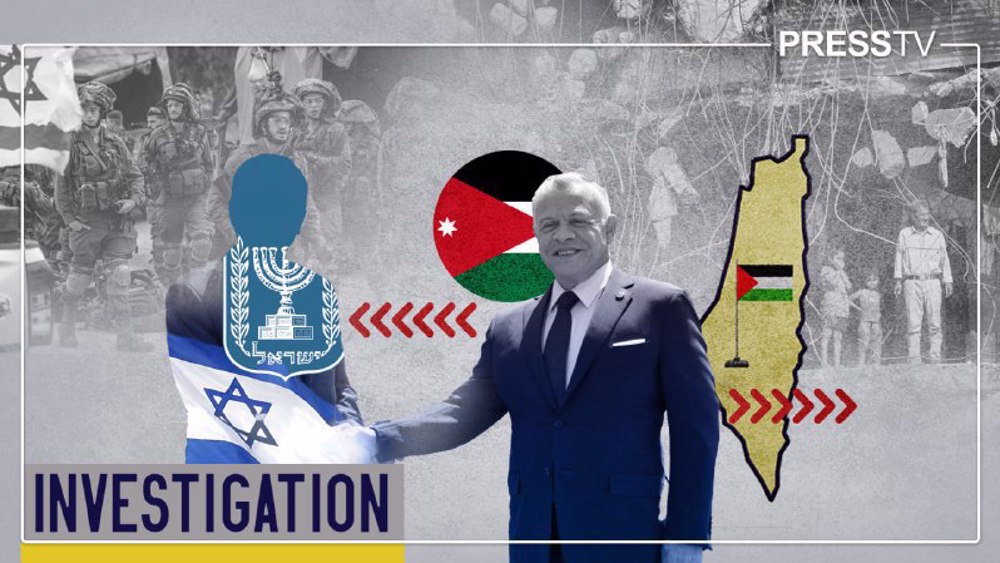
Aid by day, airstrikes by night: Jordan’s double game in Israeli genocidal war on Gaza

By Arwin Ghaemian

The irony is striking: Jordanian C-130 Hercules aircraft dropped aid packages, containing food and medical supplies, many reportedly expired, over the bombed and besieged Gaza Strip, supposedly to ease the humanitarian crisis there.

Yet, at the same time, Amman secretly backed Israel’s genocidal attacks, even taking part in joint air missions. These contradictions reveal a government trapped in a geopolitical game, where its supposed humanitarian actions serve as a cover for aiding Israel’s war efforts.

In West Asia’s complex geopolitical arena, where secret alliances shape events and happenings and public rhetoric often hides deeper and sinister motives, the Hashemite Kingdom of Jordan, under King Abdullah II, has become a key actor in supporting Israel’s military campaigns in Gaza, Lebanon, Iran, Yemen and elsewhere.

What began as a betrayal during the lead-up to the 1973 Yom Kippur War (also known as the Six-Day War) has evolved into a systematic collaboration, one that sustains Israel’s military-intelligence operations even as it carries out war crimes and crimes against humanity in Gaza.

This account, based on declassified documents, leaked diplomatic cables, and recent reports, examines the Jordanian government’s double game: public displays of solidarity with Palestinians contrasted with hidden military, intelligence, and economic ties to Tel Aviv.

Viewed through this lens, Jordan’s monarchy appears not as a neutral mediator but as an active accomplice, placing Israel’s military priorities above the rights, lives, and democratic aspirations of its own people, most of whom are of Palestinian origin, and those in Gaza, the occupied West Bank, and the occupied Jerusalem al-Quds.

September 1973: King Hussein’s Secret Warning to Golda Meir

The roots of Jordanian-Israeli connivance stretch back to September 1973, and perhaps even earlier. As Arab armies prepared for what would become the Yom Kippur War, King Hussein bin Talal, father of Abdullah II and known to Israeli intelligence by the codename “Lift”, secretly flew by helicopter to meet with Israeli regime officials.

While Radio Cairo was declaring, “Here is Damascus, the beating heart of the Arabs,” Hussein was, in secret, conferring with the enemy.

In a clandestine nighttime meeting with Israeli Prime Minister Golda Meir, the Jordanian king shared detailed intelligence on Syrian and Egyptian military movements, information about troop concentrations along the Golan Heights and Sinai Peninsula, and warnings of a coordinated two-front assault.

According to Israeli regime’s archives, his disclosures undermined the element of surprise that Egypt and Syria had relied upon, allowing Israel to reinforce its aggressive positions in advance.

This episode, emblematic of the Jordanian monarchy’s recurring betrayal of Arab and Muslim causes, reached its culmination with the 1994 Wadi Araba Treaty, a so-called peace agreement that deepened Jordan’s economic dependence on Israel while eroding the Hashemites’ claim to legitimacy as guardians of Islam’s holy sites in occupied Palestine, including the custodianship of Al-Aqsa Mosque.

Hussein’s “peace” with Israel, ironically termed such, since there had been no war between the two, further fractured the Arab front and set the stage for his son’s reign as a reliable conduit for Israeli occupation interests. That dynamic, far from diminishing, only intensified amid the ongoing genocidal war on Gaza’s nearly two million inhabitants, killing nearly 70,000 of them.

[…]

January 31, 2024: Jordan-Israel nexus amid genocide in Gaza

As Israel’s genocidal assault on Gaza intensified, leveling homes, schools, hospitals, shelters, and critical infrastructure across the territory, including in Khan Yunis, Rafah, and Jabalia,the Jordanian government continued to cling to its deep ties with Israel.

On October 13, 2023, the Jordanian Parliament passed a resolution urging a comprehensive review of all bilateral agreements with Israel in solidarity with Gaza’s suffering. Yet Amman’s response was limited or cosmetic. It suspended only the UAE-mediated water-for-energy deal announced in November 2023, while leaving untouched the 2016 gas-for-electricity agreement that supplies more than 96 percent of Jordan’s energy imports.

Beneath this symbolic gesture, however, lay a darker reality. The supposed suspension of cooperation served to placate domestic outrage while concealing indirect support for Israel’s ongoing campaign. In effect, Jordan’s actions allowed it to publicly denounce Israel’s war crimes while quietly maintaining the economic and logistical ties that reinforced Israel’s position.

Paradoxically, this duplicity also weakened Amman’s own leverage to promote any meaningful solution to the Palestinian issue, further entrenching its role as a dependent partner in the Israeli regime’s regional strategy.

April 15, 2024: Jordan shields Israel from Iranian retaliation

To intercept Iranian ballistic missiles and Shahed-136 drones aimed at Israeli military targets, Jordanian Air Force F-16s operated alongside US Navy destroyers in the eastern Mediterranean, while French Rafale jets joined the effort at Amman’s request.

The Jordanian government said the interceptions were necessary to defend its airspace and prevent regional escalation, relieving pressure on Israel’s Iron Dome system, thereby facilitating the continued massacres in Gaza, including the April 2024 siege of al‑Shifa Hospital

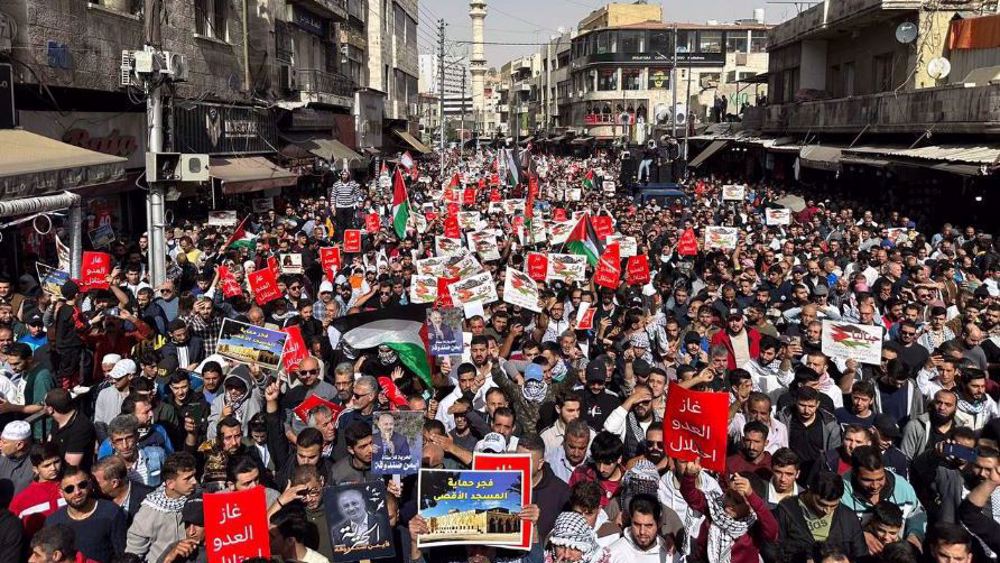
The move, however, sparked widespread anger across Jordan. Demonstrators in downtown Amman’s Hashemite Square slammed King Abdullah II for “dropping missiles on his citizens to protect Israel.” The outrage was particularly strong among Jordan’s Palestinian-origin majority, who make up more than half of the kingdom’s 11.3 million people.

Observers said the decision exposed a deep contradiction between the monarchy’s public condemnation of the Gaza genocide, including King Abdullah’s UN General Assembly remarks denouncing the humanitarian crisis, and its military coordination with Western allies defending Israel. The move effectively positioned Jordan as a key buffer in the Iran-Israel confrontation, insulating the Gaza war from potential outside intervention.
May 15, 2024: Aid drops and Iranian Missile downings

Alongside the so-called Gaza aid airdrops, Jordan’s cooperation with Israeli military systems continued with the interception of Iranian missiles and drones.

This collaboration led many to label King Abdullah II a “traitor” to the Palestinian cause, despite Jordan hosting 2.2 million Palestinian refugees from the 1948 Nakba and the 1967 Six-Day War.

Security forces carried out internal crackdowns in May 2024, dismantling networks linked to Muslim Brotherhood–affiliated activists under the supervision of the General Intelligence Department (GID).

Several citizens were accused of smuggling Iranian-sourced weapons through Syria to Palestinian resistance groups such as Hamas and Palestinian Islamic Jihad, reflecting Abdullah’s ongoing suppression of resistance movements.

This security apparatus, aligned with Israeli Prime Minister Benjamin Netanyahu’s vision of expanding control over the Jordan Valley and Area C settlements, has left Jordan’s regime appearing subservient to Israeli interests and abandoning the right of return for Palestinian refugees enshrined in UN Resolution 194.

By crushing these networks, Abdullah, widely criticized across the Arab world, has not only removed potential threats to Israeli outposts in Hebron and Nablus but has also alienated a growing number of young Jordanians in cities like Irbid and Zarqa.

November 26, 2024: Domestic discontent and enduring ties

Jordan’s long-touted role as a “buffer state” shielding Israel from Iranian resistance allies in Lebanon, Yemen, Iraq, and the Occupied Palestinian Territories began to strain under the weight of Gaza’s genocidal devastation, which by late 2024 had claimed more than 43,000 lives, mostly children, women, and the elderly, according to UNRWA.

In the September 10, 2024, parliamentary elections, the Islamic Action Front (IAF) secured 31 of 138 seats (22.5 percent), reflecting rising pro-Palestinian sentiment amid Israel’s right-wing confederation proposals that some compared to the Soviet–Nazi partition of Poland, hinting at partial annexation of the occupied West Bank.

Despite public anger, the Jordanian government maintained its alliance with Israel, continuing to uphold the Wadi Araba Treaty’s security provisions, including joint border patrols along the 307-kilometer frontier from Aqaba (Eilat) to the Yarmouk River.

This adherence, reinforced by fears of renewed refugee flows from Syria after the collapse of Bashar al-Assad’s government, was evident in the November 21, 2024, sentencing of former MP Imad al-Adwan to ten years of hard labor for transferring weapons to the occupied West Bank.

The ruling blurred the line between resistance and sedition, effectively serving Israeli occupation goals in Jenin and Tulkarm refugee camps, the occupied West Bank.

King Abdullah’s mild condemnations of Israeli genocidal attacks in Deir al-Balah and Khan Younis thus rang hollow, as they failed to counter the expanding Israeli confederation plans that threaten the viability of an independent Palestinian state.
December 15, 2024: Shin Bet and Israeli army intelligence meet in Amman

The Jordanian government’s security cooperation with Israel appeared to deepen when Shin Bet Director Ronen Bar and Israeli Military Intelligence Chief Maj. Gen. Shlomi Binder reportedly paid a discreet visit to Amman, meeting with senior Jordanian officials, likely including General Intelligence Department (GID) head Maj. Gen. Ahmad Husni.

According to regional sources, discussions focused on alleged Iranian weapons routes through Mafraq and Zarqa to the occupied West Bank, Jordan’s mediation role between Israel and factions in Syria, and possible responses to movements that could destabilize the kingdom.

This coordination positioned Amman more firmly as a partner in Israel’s regional security network, particularly in efforts to monitor and restrict arms smuggling into the Palestinian territories.

Analysts at the time warned that such deepening ties could heighten domestic tensions within Jordan, where fears of unrest in cities like Amman and Irbid reflect growing unease over the kingdom’s reliance on Israeli support for internal stability.

April 15, 2025: Sabotage foiled or resistance quashed – GID’s purge

Jordan’s repressive measures intensified when the General Intelligence Department (GID) announced the arrest of 16 citizens, under surveillance since 2021, accused of involvement in a conspiracy that included the fabrication of 3-5 km-range rockets in hidden workshops near Salt, a drone assembly hub in Balqa Governorate, recruitment networks in Turkey and Qatar, and the storage of C-4 explosives and AK-47 variants in safe houses in Madaba.

Authorities claimed the group aimed to “sow chaos” and suggested that alleged Palestinian ties through Muslim Brotherhood channels justified a wider crackdown on Gaza solidarity movements.

Coinciding with Israel’s Rafah offensive, which displaced about 1.4 million civilians, Jordan’s intensified security campaign gave the authorities a pretext to conflate political dissent with terrorism, aligning with Israeli efforts to disrupt arms supply routes from Jordan’s Allenby Bridge to the occupied West Bank.

By criminalizing expressions of solidarity and dismantling Palestinian resistance networks, King Abdullah’s government not only secured new financial backing from Persian Gulf states but also shored up its increasingly fragile rule.
May 27, 2025: Diplomatic charades and unabated entwinement

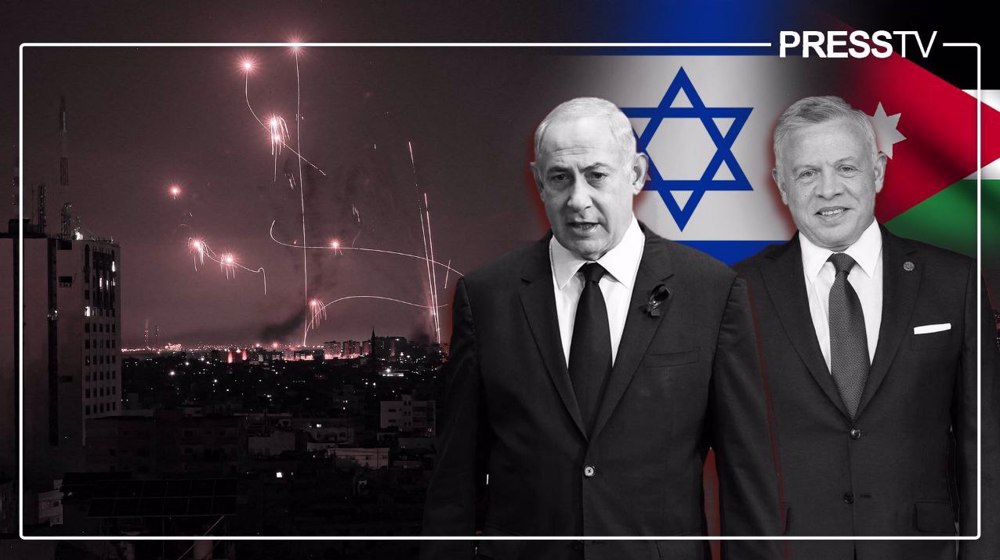
King Abdullah II’s recent symbolic gestures, such as withdrawing from the UAE-Israel water-energy deal and recalling Jordan’s ambassador from Tel Aviv, served largely as palliative measures aimed at appeasing the kingdom’s Palestinian-origin majority.

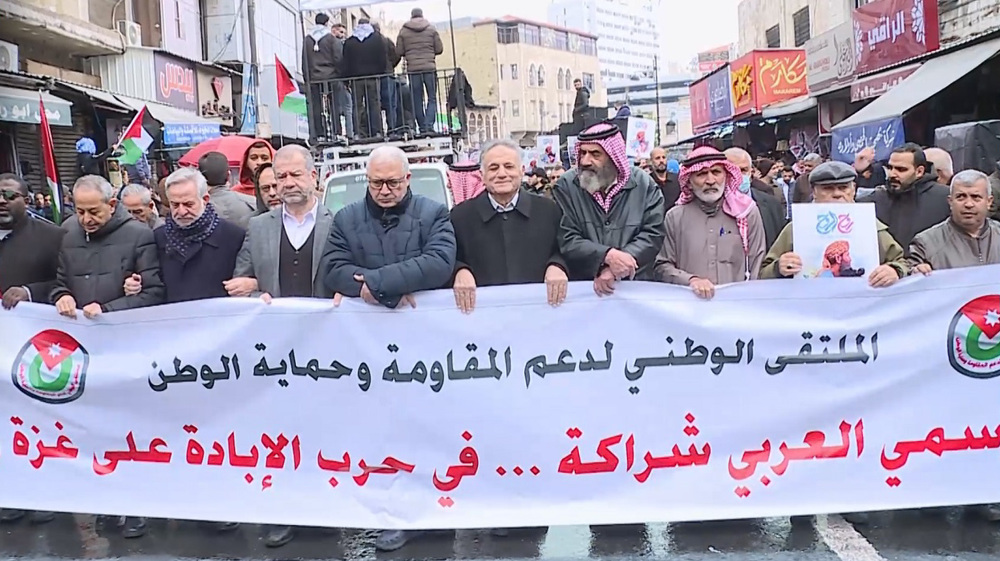
Protests against the war in Gaza continued across cities like Russeifa and Sahab, underscoring deep public anger over the ongoing bloodshed.

Despite these moves, Jordan’s security and economic ties with Israel only deepened. From intercepting Iranian missiles in April 2024 to holding joint security meetings in Manama on “West Bank instability,” a euphemism for Palestinian resistance, Amman’s actions continued to align with US and Israeli strategic interests.

Jordan’s dependency explains much of this compliance: water from Israel’s Sorek desalination plant, gas from the Leviathan fields, more than US$1.45 billion in annual US aid, 100 million cubic meters of water drawn from Israeli-controlled sources, and investments from Persian Gulf states all hinge on the kingdom’s adherence to Israeli military frameworks.

Yet, this alignment has come at a cost. Public discontent is rising, and the regime’s legitimacy continues to erode as Jordanians express outrage over policies seen as enabling Gaza’s ongoing devastation.

[…]

Via https://www.presstv.ir/Detail/2025/11/04/758160/aid-day-airstrikes-night-jordan-double-game-israeli-genocide-war-gaza

Venezuela Oil Exports to US Rose 220% Despite War Threats

Comments by Brian Shilhavy

Trump Wants to Decrease Venezuelan Oil Imports to U.S. While Cutting Off China in Effort to Maintain the Petro Dollar

Trump’s goals in kidnapping Venezuelan President Nicolas Maduro became clearer today with statements he made on social media along with a Congressional briefing with lawmakers with Secretary of State Marco Rubio.

Rubio lays out long-term plan for U.S. involvement in Venezuela.

The Trump administration has a three-phase plan for stabilizing and rebuilding Venezuela and installing a new government, Secretary of State Marco Rubio told members of Congress on Wednesday, laying out a prolonged mission for the United States there following the military raid that captured President Nicolás Maduro.

Mr. Rubio explained [that there] would be a tightened quarantine on Venezuelan oil, reflected in the seizure on Wednesday of two additional oil tankers.

“We are in the midst right now and in fact about to execute on a deal to take all the oil,” Mr. Rubio said, pointing to the most powerful economic lever the U.S. has over Venezuela.

“We are going to take between 30 and 50 million barrels of oil. We’re going to sell it in the marketplace at market rates, not at the discounts Venezuela was getting,” Mr. Rubio added. (Source.)

Well, that’s very interesting, because before the invasion the U.S. was purchasing more than just “between 30 and 50 million barrels of oil“.

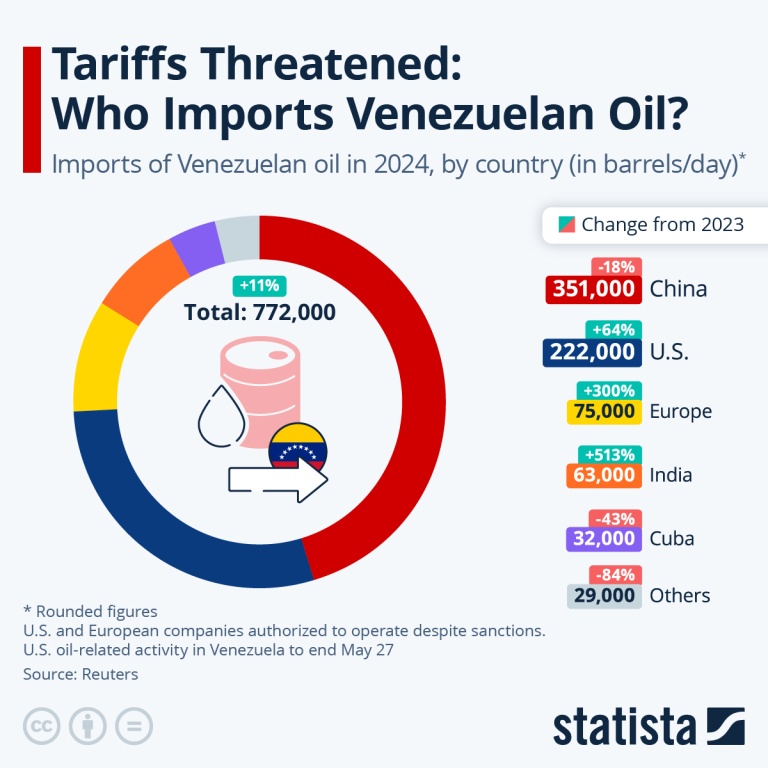
As you can see in this graph, in 2024 the U.S. was purchasing 220,000 barrels of oil per day, which was an increase of 64% over 2023, and a total of over 91 million barrels of oil.

The U.S. purchase of Venezuelan oil continued to increase in 2025, which according to one report was a 220% increase. (Source.)

So if the U.S. is now only going to import “between 30 and 50 million barrels of oil“, that is actually a potential decrease in what they have been purchasing which was above 100 million barrels in 2025.

Trump also told Venezuela to stop exporting oil to China and Russia, or anybody else for that matter.

Trump demands Venezuela kick out China and Russia, partner only with US on oil: Exclusive

The Trump administration has told Venezuela’s interim president Delcy Rodriguez that the regime must meet the White House’s demands before being allowed to pump more oil, according to three people familiar with the administration’s plan.

First, the country must kick out China, Russia, Iran, and Cuba and sever economic ties, the sources said. Second, Venezuela must agree to partner exclusively with the U.S. on oil production and favor America when selling heavy crude oil, they added.

According to one person, Secretary of State Marco Rubio told lawmakers in a private briefing on Monday that he believes the U.S. can force Venezuela’s hand because its existing oil tankers are full. Rubio also told lawmakers that the U.S. estimates that Caracas has only a couple of weeks before it will become financially insolvent without the sale of its oil reserves. (Source.)

As you can see from the graph above, China has been buying as much oil from Venezuela than almost all of the other countries in the world combined.

That is a LOT of oil that the Trump Administration is attempting to take out of the market. Why would they do that?

To get oil prices to increase.

The oil industry in the U.S. has struggled to keep the price of oil above $60 a barrel for a couple of years now. They no longer have control over OPEC since June of 2024 when Saudi Arabia did not renew an 80-year-old agreement with the United States that established the U.S. Dollar as the world currency to purchase Saudi oil.

This story was suppressed in the U.S. Media, and when we published it, several commenters who were obviously trolls tried to comment on it and discredit the story back then. See: Saudi Arabia Ends 80-Year-Old PetroDollar U.S. Agreement: Joins China-Led Central Bank Digital Currency Coalition
So now the U.S. is trying to control the price of oil worldwide by trying to take over Venezuelan oil, as Maduro was making agreements with China to pay for oil in Chinese Yuan, instead of U.S. dollars.

Here is a chart published by Market Watch today about Venezuelan oil exports for 2025, which was dominated by China until the U.S. started attacking drug cartel boats ships carrying Venezuelan oil at the end of September.

 Source

As you can see, exports of Venezuelan oil peaked in September, before the U.S. military moved into the area, and then started decreasing.

And notice what Rubio said today: “We’re going to sell it in the marketplace at market rates, not at the discounts Venezuela was getting.” In other words, we are going to make the price of oil start going back up again so the Rockefellers and the Bushes and all the other oil barons in Texas can start making money again.

Here is a video by Taylor Kennedy of ITM Trading talking about the how the U.S. is trying to hang on to the Petro Dollar which was the real reason for the Venezuelan invasion. (Note: she wants to sell you gold and silver.)


How Will China Respond?

China obviously has the most to lose from this deal, IF Trump and Rubio’s plan works, and that is a big “IF”, because the Maduro regime is largely still in tact, and we will see what their loyalty to China actually is as they are fighting back against Trump’s rhetoric.

The U.S. legacy media is making a big deal out of the fact that they are “cooperating” with the U.S. to fill orders for sales of oil to the U.S., but they have been doing that for the past several years, so it is more business as usual, only less of it, and not necessarily “cooperation.”

One indication of how China might respond was published by The Information today, where they reported that China is not allowing their Tech companies to import Nvidia’s powerful AI chips this week.

The Chinese government this week asked some tech companies to temporarily halt plans to buy Nvidia’s H200 AI chips, according to two people involved in the communication, throwing up a possible roadblock in Nvidia’s hopes of restarting chip sales to one of its biggest markets.

The instruction came roughly a month after President Donald Trump said he would allow Nvidia to sell H200s to China, marking the biggest rollback of Biden-era export restrictions. At the time, the reaction of the Chinese government was uncertain, as the government had been pushing local companies to buy locally made chips as a way of supporting the Chinese chip industry.

This week Chinese officials told companies to suspend purchase orders while the government decides on whether—and under what conditions—it will allow access to the high-performance Nvidia chips, the people said.

It remains unclear what prompted Beijing’s directive. A few days ago, the U.S. arrested Venezuelan president Nicolás Maduro and transported him to the U.S. for trial on drug trafficking charges. There are signs that Maduro’s departure could hurt China’s ability to import crude oil from the Latin American country. (Full article – Subscription needed.)

And where does the American company Nvidia get their AI chips from in the first place?

Taiwan. Specifically, Taiwan Semiconductor Manufacturing Company.

How difficult do you think it would be for China to seize Taiwan’s airports and put a naval blockade around Taiwan to stop them from exporting these AI chips to the U.S.??

And remember, a significant portion of the U.S. Navy is in the Caribbean right now around Venezuela.

Representative Jason Crow, Democrat of Colorado, said of the administration’s plan for Venezuela, “It’s like they’ll wave a magic wand and things will turn out the way they want.”

Mr. Crow, a former Army Ranger, said that in a congressional briefing, Secretary of State Marco Rubio and Defense Secretary Pete Hegseth gave no indication how long the deployment of 15,000 troops and a dozen warships to the Caribbean — the largest naval flotilla in the region since the Cuban Missile Crisis in 1962 — would last or how much it would cost. (Source.)

[…]

Via https://healthimpactnews.com/2026/trump-wants-to-decrease-venezuelan-oil-imports-to-u-s-while-cutting-off-china-in-effort-to-maintain-petro-dollar/

US breaches UN maritime convention, seizes Russian oil tanker in North Atlantic

US military breached UN maritime convention – Russia

RT

The Russian Transport Ministry has confirmed that the oil tanker ‘Marinera’ has been captured by the US military.

Earlier on Wednesday, the US European Command announced having taken possession of the ship, previously named the ‘Bella 1’, for alleged “violation of US sanctions.”

The tanker was boarded by US military personnel “in the high seas outside the territorial waters of any state,” and that “contact with the vessel was lost,” the Russian Transport Ministry has said.

“On December 24, 2025, the Marinera received a temporary permit to fly the Russian flag, issued in accordance with Russian and international law,” the ministry stated, adding that the attack on the vessel came in violation of the UN Convention on the Law of the Sea, which ensures freedom of navigation in international waters.

The Russian Foreign Ministry said it has been “closely monitoring” the situation around the tanker. Russian nationals are believed to be among the crew of the vessel, the ministry noted, urging the US to ensure “humane and dignified treatment” of the captured sailors and to “allow them to return home as quickly as possible.”

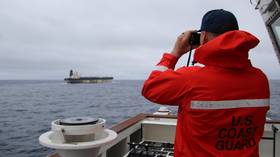
The tanker was first targeted by the US late last year after reportedly trying to approach Venezuela. At the time, the US Coast Guard attempted to board it, yet the crew refused to let anyone on board and turned around and headed for the Atlantic instead. During the pursuit, the vessel changed its name and switched to the Russian flag.

[…]

Via https://www.rt.com/russia/630704-us-military-maritime-law/

Is China Considering Taking over Taiwan in Response to Trump’s Attempt to Cut off Oil Exported to China from Venezuela?

China Tells Tech Companies to Halt Nvidia H200 Chip Orders

By Brian Shilhavy

The Information (https://www.theinformation.com/articles/china-tells-tech-companies-halt-nvidia-h200-chip-orders) just reported that China is not allowing their Tech companies to import Nvidia’s powerful AI chips this week:

The Chinese government this week asked some tech companies to temporarily halt plans to buy Nvidia’s H200 AI chips, according to two people involved in the communication, throwing up a possible roadblock in Nvidia’s hopes of restarting chip sales to one of its biggest markets.

The instruction came roughly a month after President Donald Trump said he would allow Nvidia to sell H200s to China, marking the biggest rollback of Biden-era export restrictions. At the time, the reaction of the Chinese government was uncertain, as the government had been pushing local companies to buy locally made chips as a way of supporting the Chinese chip industry.

This week Chinese officials told companies to suspend purchase orders while the government decides on whether—and under what conditions—it will allow access to the high-performance Nvidia chips, the people said.

It remains unclear what prompted Beijing’s directive. A few days ago, the U.S. arrested Venezuelan president Nicolás Maduro and transported him to the U.S. for trial on drug trafficking charges. There are signs that Maduro’s departure could hurt China’s ability to import crude oil from the Latin American country.

Full article (https://www.theinformation.com/articles/china-tells-tech-companies-halt-nvidia-h200-chip-orders) (Subscription needed)

This morning Trump told Venezuela to stop exporting oil to China. It is unclear if he has the means to enforce this yet, as Maduro’s regime is still in tact. China is also probably waiting to see if this can be enforced, hence the halt of importing Nvidia’s chips.

If the U.S. is successful in blocking oil from Venezuela to China, expect a reciprocal response from China, and that could possibly be cutting off the supply of Taiwan Semiconductor Manufacturing Company’s chips from shipping to the U.S. by using military force in Taiwan, such as controlling their airports and putting up a naval blockade, because that is where Nvidia gets their chips from in the first place!

Meanwhile, the U.S. just seized that oil tanker flying the Russian flag. Russia had sent a nuclear submarine to the area, but it is not clear if it is there yet.

[…]

Via https://t.me/healthimpact/2931

Venezuelans Unite Against Trump and Zionism as Maduro Claims to be a Prisoner of War

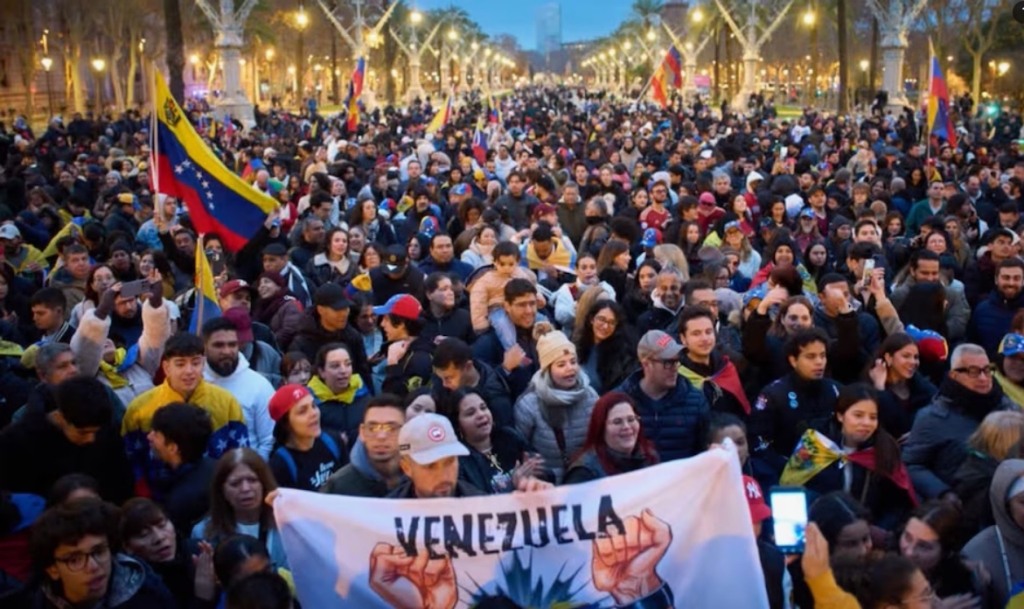
Venezuelans take to the streets to protest against Trump shortly after their president, Nicolas Maduro, was kidnapped.

Comments by Brian Shilhavy

By now everyone has seen the news that President Trump sent a special forces unit into Caracas, Venezuela to capture President Nicolás Maduro and his wife and son.

It has taken me a couple of days to research all sides of this story before I could comment on it.

For those who mainly get their news from U.S. sources, let’s clear up one false claim that some in the U.S. media have been stating, which is that Venezuelan Vice President Delcy Rodríguez participated with the U.S. in Maduro’s capture, and was installed as President to replace Maduro by the U.S.

This did not happen.

In fact, Delcy Rodríguez has condemned the actions of the U.S., declaring that Nicolás Maduro is still the president of Venezuela, and it was her own country’s Supreme Court that appointed her as interim president. Her first speech after this event is mostly available on social media, but I did find one copy on YouTube that I will post here.

She blamed Zionist forces as being behind the kidnapping of their president.

The CIA has been trying to overthrow the Maduro presidency for at least a decade, unsuccessfully, because he enjoys widespread support in his own country.

But this is relatively unknown in the U.S., because the richest Venezuelans live mostly in Miami, Florida, where they try to control the narrative.

Even the Trump administration apparently has not coordinated their narrative, as Secretary of State Rubio called this a “police action” and not a declaration of war. But Trump very quickly dropped the “this is all about illegal drugs” narrative and clearly stated that this was about Venezuelan oil, promising that U.S. oil companies would take over the country’s oil reserves.

Pepe Escobar is a Latino journalist from Brazil who covers international geopolitical news, and he states that those loyal to Maduro in Venezuela are probably close to 98% of the population now, as they oppose U.S. intervention.

He states that at Maduro’s arraignment in New York, when Maduro stated:

“I am the President of Venezuela, and I consider myself a prisoner of war. I was captured in my house in Caracas“

that this became a rallying cry all across Latin America.

He published an opinion piece in Strategic Culture yesterday, giving the Latino perspective, and of course Pepe has a lot of friends on the ground in these places.

[…]

Pepe did an interview earlier this morning that I listened to just before writing this article, where he discusses many of the points of his article. He also discusses the possibility that Russia and China allowed this to happen as a trap, and that Trump walked right into it.

Here is some more news coverage on this event.

Maduro says he’s a ‘prisoner of war’: Why that matters

Prisoners of war have rights that Maduro isn’t being afforded at present. by AlJazeera

Excerpts:

Two days after Venezuelan President Nicolas Maduro, 63, was abducted by special forces of the United States during an operation in the Latin American country, he appeared in a courthouse in New York.

On Monday, Maduro pleaded not guilty to federal charges, including narcoterrorism and conspiring to import cocaine. In a blue and orange prison uniform, he listened to the indictment filed by prosecutors against him and his codefendants, including his wife and son.

The Trump administration has framed Maduro’s abduction as a law enforcement operation, arguing that congressional approval was not needed.

But in court, Maduro insisted that he was a “prisoner of war” (POW).

“I am innocent. I am not guilty. I am a decent man. I am still president of my country,”

he said through an interpreter, before he was cut off by US District Judge Alvin Hellerstein in Manhattan federal court.

If Maduro is indeed a POW, then protections under international law apply to him.

The Third Geneva Convention of 1949 mandates humane treatment, respect and protection for POWs.

According to the convention, a POW can be tried and sentenced in another country, particularly the detaining power, but only for certain crimes such as war crimes.

Maduro, however, has been charged with narcotics-related offences, not with war crimes.

And in general, the Third Geneva Convention requires that POWs must be returned “without delay” to their nation as soon as the conflict ends.

“According to President Trump, Maduro is a prisoner of war because Trump declared Maduro had initiated war against the United States via drug trafficking leading to overdose deaths. That would mean the Geneva Conventions would apply but which Trump will certainly disregard,” Fein said.

Full Article.

Zionist GOP Megadonor Paul Singer Stands to Make Billions Off Venezuela Regime Change Op

by Chris Menahan InformationLiberation

Excerpts:

The US sanctioned Venezuelan state-owned oil company Citgo into bankruptcy, forced its sale to Zionist billionaire Paul Singer for about $6 billion two months ago, and then captured Venezuelan President Nicolas Maduro to “take over” the country.

From The Wall Street Journal, “Citgo Is a Crown Jewel of Venezuela’s Oil Industry. Elliott Is Set to Reap the Benefits.”:

For [Paul Singer’s] activist hedge fund Elliott Investment Management, Nicolás Maduro’s swift exit comes at an auspicious time.

A U.S. judge in November backed a roughly $6 billion bid by Elliott for Citgo Petroleum, the refining firm owned by Venezuela’s state-run company Petróleos de Venezuela, known as PdVSA, in a forced sale to satisfy creditors. Citgo, based in Houston, owns a U.S. network of refineries, pipelines and terminals that some analysts have said could be worth between $11 billion and $13 billion.

The deal was controversial in Venezuela. Maduro’s government denounced the proposed sale as fraudulent. The board recognized by the U.S. government as the legitimate overseer of PdVSA’s overseas oil assets vowed to fight to keep Citgo under Venezuelan control.

Less than two months after receiving the judge’s endorsement, Elliott is looking at a more favorable—albeit chaotic—landscape. Maduro is being held in a New York jail. President Trump has sidelined the opposition, accused Venezuela of stealing American crude and said U.S. firms would be strongly involved in its oil industry.

Now, Elliott appears poised to reap the rewards of owning Venezuela’s most valuable foreign oil asset. The regime change could lead to an increase in Venezuelan oil production, which would likely provide cheap feedstock to Citgo’s Gulf Coast refineries and increase the company’s value, analysts and refining experts said.

“Maduro is out, so a lot of the threat is out,” said Jay Auslander, a litigator who represents sovereign interests and private-equity funds. “It looks like a potentially quite good deal that remains high risk.”

Elliott isn’t in the clear yet. The hedge fund still needs approval from the Treasury Department to conclude the deal. Plus, PdVSA and Venezuela have appealed the judicial sale.

“In 2024, Singer, an 81-year-old with a net worth of $6.7 billion, donated $5 million to Make America Great Again Inc., Trump’s Super PAC. Singer donated tens of millions more in the 2024 cycle to support Trump’s allies, including $37 million to support the election of Republicans to Congress. He also donated an undisclosed amount to fund Trump’s second transition,” Judd Legum reports.

Full article.

Ironically, Trump did NOT back the Zionist María Corina Machado, the main political opposition leader against Maduro, who just won the Nobel Peace Prize that Trump thought he should have won. Trump acknowledged that she did not have wide support among her own people.

So today, in an apparent desperate attempt, she offered to “share” the Nobel Peace Prize with Trump.

Venezuela’s Machado says she wants to share Nobel Peace Prize with Trump

Excerpts from euronews:

María Corina Machado said toppling of Venezuelan President Nicolás Maduro was a “huge step for humanity, for freedom and human dignity”.

Venezuelan opposition leader María Corina Machado said on Monday she wants to share her Nobel Peace Prize with US President Donald Trump and personally thank him following his administration’s military intervention in Venezuela.

Machado said she had not spoken to the US president since 10 October, the day when she was announced as winner of the Nobel Peace Prize.

The 58-year-old was awarded the prize after mounting the most serious peaceful challenge in years to Maduro’s government.

Although Trump called Machado in October to congratulate her on winning the Nobel prize, US media reported that he was displeased about the fact that she had accepted the much-coveted award rather than declining it and giving it to him.

Machado’s interview with Fox News came days after Trump rejected the idea of working with her.

“I think it would be very tough for her to be the leader,” Trump said of Machado.

“She doesn’t have the support or the respect within the country. She’s a very nice woman, but she doesn’t have the respect.”

Full article.

China was perhaps the first country to comment and claim that Donald Trump was renewing the Monroe Doctrine, with his threats now to take over Greenland and perhaps all of the Americas.

“Overthrowing the Maduro government has long been an objective pursued by the US, but capturing a sitting head of state in this manner is highly unusual and can be described as reckless,” Lü Xiang, a research fellow at the Chinese Academy of Social Sciences, told the Global Times on Saturday.

“It not only violates international law, but also lacks any legal basis under US domestic law.”

“This is a declaration of the revival of a new Monroe Doctrine and an assertion of US hegemony in the Western Hemisphere,” Lü added. (Source.)

So now the term “Donroe Doctrine” seems to be appearing everywhere.

And this from the man who claims he should have won the Nobel Peace Award.

[…]

Via https://healthimpactnews.com/2026/venezuelans-unite-against-trump-and-zionism-as-maduro-claims-to-be-a-prisoner-of-war/

Venezuelan Update by Former Rep Marjorie Taylor Greene

Inside Donald Trump and Speaker Johnson's mutually beneficial ...

Here are some interesting facts about Venezuela that are easily searchable.

Venezuela is a predominantly Catholic country with very strong laws against abortion with the exception being the life of the mother. Maduro has been critical of Israel calling it a genocide in Gaza and against Zionism.

Maduro’s opposition, Maria Corina Machado is a strong supporter of Israel and wants to restore strong relations with Israel. She is more left leaning on abortion and LGBTQ issues.

Most Americans I talk to are not buying that this is really about drugs and sanctioned oil tankers. And it’s not about social issues, I just added that to highlight some differences in the two leaders.

People voted in 2024 against foreign intervention and foreign regime change as we have seen far too many times how that’s turned out, it’s not good, and people are so sick of it.

Via https://x.com/RepMTG/status/2003112719952621839

Deciphering the Legend of Atlantis: Was Plato Really Describing the Trojan War?

The Flood from Heaven. Deciphering the Atlantis Legend. by ZANGGER ...

The Flood From Heaven: Deciphering the Legend of Atlantis

By Eberhard Zangger

Pan Books Limited (1993)

Book Review

In this fascinating book Zanggar develops the claim that Plato’s enigmatic claims about the lost continent of Atlantis are actually a retelling of the destruction of Troy during their war with Mycenaean Greeks.

The evidence he compiles derives from Plato’s accounts of Atlantis in his books Timaeus and Critias (which Zanggar recounts in their entirety),* Homer’s depiction of the Trojan War and its aftermath in The Iliad and The Odyssey and extensive archeological research from mainland Greece and Turkey.

According to Plato, his history of Atlantis derives from a partial manuscript he inherited from his ancestor Solon (an Athenian statesman credited with laying the foundations for Athenian democracy) about his meeting with a temple priest in the ancient Egyptian capitol Sais.

Briefly Plato’s recounting describes a civilization from 11,000 BC of great wealth, military power and technical achievement being destroyed by a single natural catastrophic event after a military defeat by Athenian Greeks.

According to the priest, Greek civilization also collapsed a short time later, with Greeks losing their ability to read and write and their recollection of history.

According to Plato’s account, this civilization was on a continent larger than Libya and Asia combined located “beyond the pillars of Hercules.”

Zangger begins by laying out archeological evidence that is totally incompatible with an 11,000 BC advanced Athenian civilization. According to Zangger:

  • Neanderthals settled in Greece in 60,000 BC and abandoned it in 12,000 BC, There is no evidence of human resettlement on the Greek mainland until 8,500 BC.
  • In the seventh millennium BC, the Greek mainland was resettled by Homo sapiens who grew wheat and barley; left behind grinding stones and axes, raised cows, pigs, sheep and goats; and lived in small villages of 50-300 people.
  • There is clear evidence that by 6,500 BC overgrazing led to massive deforestation of the Greek peninsula, leading to a surge in swampland and a surge in epidemics of malaria, dysentery and hookworm.
  • By 3,000 BC, there is evidence of bronze use without refining capacity, as well as trade with Troy, a major trading center for the copper and tin required to make bronze.
  • By 1,450-1,400 BC there is evidence of Mycenaean/Achaean Greek culture, the first high civilization on the European mainland, with considerable production and trade of finished metal objects and pottery. There’s also evidence with of social divisions into king, nobles, draftsmen and construction workers, along with major trading relations between Greece and Troy.
  • By 1,100-1,000 BC archeological evidence indicate this civilization had collapsed, with people fleeing the cities to marginal areas and losing the ability to read and write. Only the Acropolis in Athens survived this collapse.
  • By the 8th century BC (when Homer composed the the Iliad and the Odyssey), there is evidence of a new Hellenic culture and civilization.

In advancing the theory that Plato is actually describing war Homer describes between Mycenaean/Achaean Greeks and Troy, Zangger blames the date discrepancies (11,000 vs 1,100 BC) on the fact that prior to the 8th century BC Athenian renaissance, historical time was measured in lunar rather than solar years.**

He blames the location discrepancy (the Bosporus/Dardenelles straits vs a continent to the west of Gibraltar) on confusion over the location of the Pillars of Hercules. Prior to 500 BC it referred to a land mass adjacent to the Dardanelles/Bosporus straits.***

Ancient Greece Dardanelles MapThe Dardenelles is the strait connecting the Aegean Sea to the Sea of Marmara and the Bosporus the strait connecting the latter to the Black Sea. Both straits are extremely difficult to navigate. Troy controlled shipping on both, a major source of its economic and military power.
He blames the discrepancy in the size of Atlantis on classical Greek use of the words “continent” and “island” interchangeably (the city of Troy was on an island surrounded mainly by man made channels and harbors) and the absence of standard measuring units prior to the Greek classical era.


*Our only original source for the legend of Atlantis.

**This also explains why so many Old Testament heroes lived to be several hundred years old.

***Prior to 500 BC, Mycenaean Greeks referred to the Bosporus/Dardanelles as the Ur-Atlantic after the nearby Atlas mountains (which Plato seems to have confused with the Atlas mountains in North Africa/.


Palestinian activist on hunger strike near organ failure in UK prison

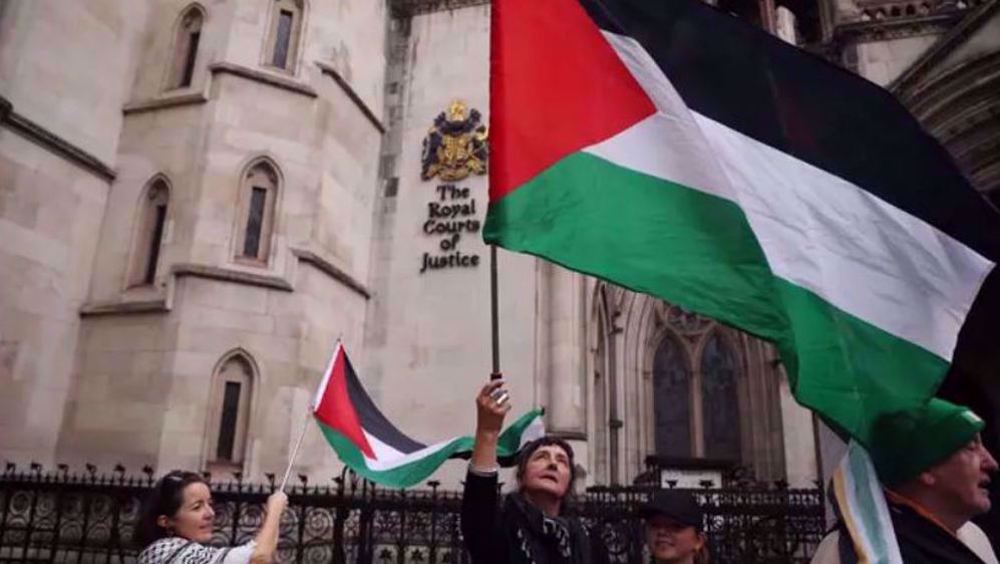
Demonstrators wave Palestinian flags outside the Royal Courts of Justice in London in support of Palestine Action, July 30, 2025. (Photo via social media)

Press TV

An advocacy group has warned that a Palestinian activist on remand [awaiting trial] in a UK prison is suffering worsening medical complications as her hunger strike surpasses the 60-day mark.

In a statement on Tuesday, Prisoners for Palestine (P4P) said detainees, including Heba Muraisi, face a serious risk of organ failure as their protest enters its third month.

Muraisi told the group she has been “experiencing muscle spasms and twitches in her arm” and sometimes feels “like she is holding her breath and doesn’t know why, like she has to remind herself to breathe.”

P4P said these symptoms could indicate emerging neurological damage.

Muraisi, who has been awaiting trial for more than a year over her Palestine-related activism, has now gone 64 days without food.

She began her strike on November 3, 2025, after being transferred without notice from HMP Bronzefield to HMP New Hall, hundreds of miles from her family and support network.

Muraisi has vowed not to end her hunger strike unless she is returned to Bronzefield and granted immediate bail

Her mother, Dunya, who has been unable to visit her daughter, expressed support in a letter shared by the group.

“We are here behind you, supporting you and loving you without limits,” said Dunya. “No matter how long the night of waiting lasts, the sun of freedom will surely rise.”

Muraisi is one of eight activists linked to Palestine Action who have undertaken hunger strikes to protest the UK government’s decision to hold them on remand and proscribe the direct-action group.

Last week, another striker, Kamran Ahmed, was hospitalized for the fifth time since beginning his protest. Ahmed has now reached 58 days on hunger strike and has reported intermittent hearing loss.

P4P says the treatment of all hunger strikers reflects a broader pattern of punitive transfers, prolonged remand, and inadequate medical care for detainees linked to Palestine activism.

The detainees are being held on remand in various UK prisons over alleged involvement in break-ins at factories owned by the Israeli arms company Elbit Systems and a Royal Air Force base in Oxfordshire.

Last month, seven UN human rights experts warned the UK government that the activists risk organ failure and death if the hunger strikes continue.

The British government has so far refused to meet the hunger strikers or their representatives despite the escalating health risks. In response, the activists’ lawyers are now launching legal action against the UK government over its refusal to engage.

In July, the British government voted in favor of proscribing Palestine Action as a “terrorist” organization.

The protest group, launched in 2020, has described itself as a movement “committed to ending global participation in Israel’s genocidal and apartheid regime”.

[…]

Via https://www.presstv.ir/Detail/2026/01/06/761993/Palestine-UK-Israel-Gaza-Palestine-Action-


Dollar no longer safe haven, US economic fragilities erode trust in it

By Syed Zafar Mehdi

The dollar system is under unprecedented strain, largely due to the behavior and actions of the United States itself, says a world-renowned economist.

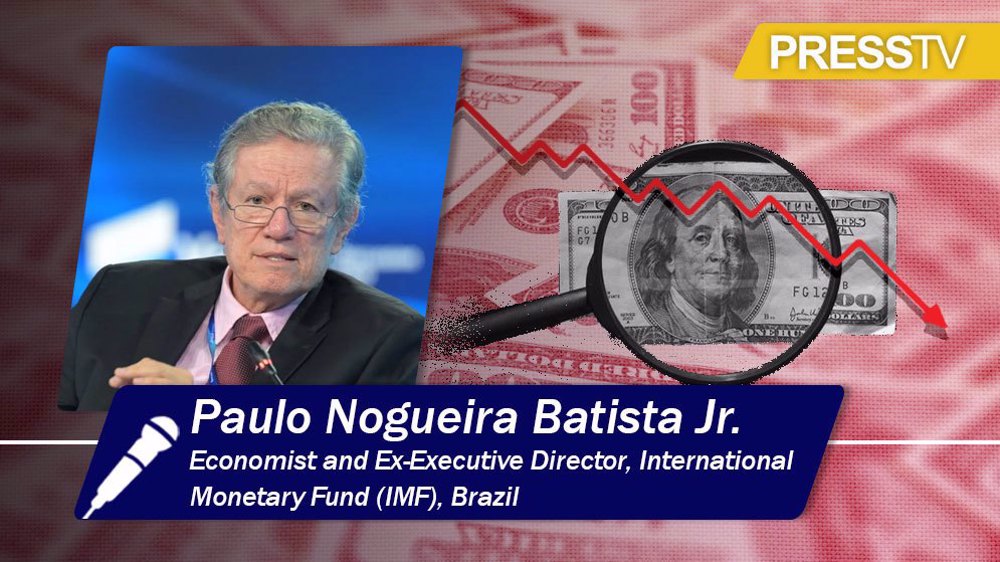
In an interview with the Press TV website, Paulo Nogueira Batista Jr., a Brazilian economist and former Executive Director at the International Monetary Fund (IMF), noted that the dollar has been weaponized by the United States.

“It (US dollar) is no longer seen by many as a safe haven. Moreover, the fragilities of the US economy also undermine trust in the dollar,” said Batista Jr., who was one of the founding members of the New Development Bank (NDB) in Shanghai.

“In my view, the most probable scenario is the continuation of a gradual decline in the dollar. This decline may be accelerated if a new major financial crisis occurs in the US.”

The process of de-dollarization has gained significant momentum in recent years with the emergence of new regional alliances such as BRICS, led by China and Russia.

Since the outbreak of the war in Ukraine and the subsequent freezing of Russian assets in the United States and Europe, the global push toward de-dollarization has grown exponentially, with countries in the Global South increasingly seeing it as essential to reduce their dependence on the US dollar.

Many countries are already conducting international transactions in their national currencies or adopting alternative payment systems. There is also a growing discussion about a potential BRICS currency.

Batista Jr., however, said he does not believe that a BRICS currency can become a reality in the near future but feels the need for a new reserve currency as “undeniable.”

“It is a complicated endeavor, from a technical as well as a political point of view. But the need for a new reserve currency seems undeniable. Let us hope that the BRICS can rise to the challenge,” he told the Press TV website.

There is also a widespread belief that emerging blocs like BRICS, which includes China, Russia, Brazil, India, and Iran, will challenge and ultimately reshape the existing global financial architecture, with institutions such as the New Development Bank poised to play a central role.

The Brazilian economist and author of several books, including The BRICS and the Financing Mechanisms They Created: Progress and Shortcomings (2021, Anthem Press), said the Global South “expects a lot from the BRICS.”

“This group of countries needs to take this into account. China, Russia, Brazil, India, Iran, and the other BRICS members have a role to play in reshaping the international financial architecture,” he told the Press TV website.

“But we have yet to act accordingly. The New Development Bank has great potential but is still struggling to play a global role. I was one of the founders of the institution and can tell you that many of those involved in the project expected much more from the Bank in its initial 10 years.”

He said Iran was the first country to ask formally to join the New Development Bank.

“But, a decade has gone by and Iran is still not a member. It is a member of the BRICS political formation, but not of the development bank the group created.”

[…]

Via https://www.presstv.ir/Detail/2025/12/13/760549/Dollar-no-longer-safe-haven-US-economic-fragilities-erode-trust-Economist

Trump putting Venezuela’s interim leader on ‘short leash

Trump putting Venezuela’s interim leader on ‘short leash’ – Politico

Politico

The US wants to “whip” Delcy Rodriguez into taking several pro-American steps and then “dispose of her,” a source told the outlet

The administration of US President Donald Trump is demanding that Venezuela’s interim leader, Delcy Rodriguez, adopt a series of pro-American measures and then expects her to be removed once she complies, Politico reported on Monday, citing sources.

Rodriguez, a former vice president and staunch ally of Venezuelan President Nicolas Maduro, was sworn in as interim president after Maduro was kidnapped by US forces in an unprecedented raid on Caracas. While Rodriguez condemned the US and vowed that the country “will never return to being the colony of another empire,” she has signaled openness to “cooperation” with Washington.

Now, the US wants Rodriguez to crack down on drug trafficking, expel Iranian, Cuban, and other operatives hostile to Washington, and halt oil sales to US adversaries, two Politico sources claimed. US officials also reportedly expect Rodriguez to eventually hold free elections and step aside, though no definite deadlines have been set.

One person close to the administration told Politico that Rodriguez was on a “short leash,” adding that the Trump team was “confident they can whip her in whatever direction they want before they dispose of her and move on.”

Aside from the threat of launching a second military operation against Venezuela, the US reportedly sees sanctions relief and access to Rodriguez’s financial assets as leverage. However, several Politico sources said they were unaware of any plans to lift sanctions or provide significant humanitarian aid at this stage.

The Trump team is also seeking the release of Americans detained in Venezuela, though people familiar with the matter said Washington has not demanded the release of all Venezuela’s political opposition figures, according to Politico.

However, the odds of Rodrigez complying with the demands are low due to rivalries among Venezuela’s top officials, one person familiar with the matter told the outlet, describing the political landscape as “an unstable pit of vipers.”

President Donald Trump has openly asserted that Washington will “run” Venezuela until an “orderly transition,” while warning that Rodriguez could pay an even “bigger price” than Maduro if she resists US demands.

[…]

Via https://www.rt.com/news/630662-trump-venezuela-leader-short-leash/