Did US Achieve Regime Change in Venezuela?

Raphael Machado January 12, 2026

We are facing a classic U.S. modus operandi: lots of pyrotechnics, little substance, zero prognostication.

Shortly after the kidnapping of Venezuelan President Nicolás Maduro, the event was quickly disseminated as a typical “regime change” operation against its new target and enemy, Venezuela. Critics and supporters of Bolivarianism flooded social media with posts announcing the “end” of Chavismo.

Three days after the event – and with many things insufficiently explained, such as the minimal Venezuelan military reaction during the attack – the Venezuelan landscape remains complex.

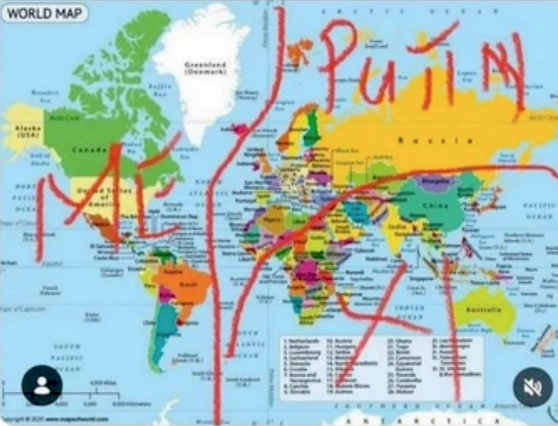
First, let’s look at the factual reality: Chavismo still governs in Caracas. The country’s Vice President, Delcy Rodríguez, was sworn in as interim president in a ceremony that featured the prominent participation of the ambassadors from Russia, China, and Iran. She does so, by all appearances, with the consensus of her brother Jorge Rodríguez, who leads the National Assembly, Defense Minister Padrino López, and Interior Minister Diosdado Cabello. Maduro’s son, also named Nicolás, has also declared support for the institutional arrangement that sees Delcy Rodríguez performing the role of national leader while his father is prosecuted in the U.S.

Was there an expectation that things would unfold differently?

Frankly, all statements from Donald Trump and Marco Rubio following Maduro’s kidnapping suggest that even if we consider the kidnapping itself a successful military operation, politically the event appears to have been ill-conceived. The U.S. government has already rejected the notion of handing power to the opposition and has even dismissed the prospect of new elections.

It is noteworthy that immediately after the kidnapping, Western media announced that Delcy Rodríguez had fled the country, which was obviously a lie. More recently, some channels and profiles have announced an alleged coup attempt in Caracas by Diosdado Cabello.

These deliberately spread rumors point to the continuation of the hybrid war against Venezuela, through the modality of psychological warfare, but they may also reveal expectations and, perhaps, even “false” information received by the U.S. about the situation in Venezuela.

Perhaps, indeed, the U.S. expectation was that the removal of Maduro could trigger a power struggle among the most important figures of Chavismo, and that the natural outcome of such a conflict would be a regime change. But none of this is happening, and for now, a broad consensus seems to hover over the Venezuelan political landscape.

It is also plausible that the U.S. was surprised by the lack of positive demonstrations by Venezuelans for Maduro’s removal. In Venezuela, one only sees protests criticizing the U.S. imperialist action. Even the opposition has joined pro-government forces in demanding the return of Nicolás Maduro.

This represents a significant problem.

Over the past few years, the U.S. has insisted on the narrative that Edmundo González would have triumphed over Nicolás Maduro in the 2024 presidential elections, with over 70% of the valid votes, which would be equivalent to saying González had the support of over 20 million citizens. Where are these people? Why were there no celebrations in Venezuela for Maduro’s kidnapping? It’s no use resorting to the “repression” thesis. “Repression” does not prevent opponents from trying to hold their protests, even in China.

It is likely that the timidity even of those who voted for González (a minority of the population) is simply due to the fact that Venezuelan economic indicators have indeed been improving in recent years: inflation dropped from 1,700,000% to 85%, the HDI has resumed growth, rising from 0.660 to 0.705, the unemployment rate fell from 33% to 6%, GDP growth of 6.5% (9% in the third quarter alone), and so on. Venezuela is, in fact, on a tide of recovery that has been ongoing for 4 uninterrupted years.

It may be the typical caution of those who, after many years, are finally seeing their lives improve and prefer to guard against very abrupt changes in the country’s leadership course.

There is also no evidence that the new interim Venezuelan government has agreed to any geopolitical realignment. Beyond the oil issue, we know that the determining element in the Venezuelan question is the guarantee of the automatic alignment of the entire continent with the U.S., and Venezuela, on the contrary, chose a path of rapprochement with Russia, China, and Iran.

In this sense, news indicating that Venezuela would resume supplying oil to the U.S. does not mean much. Venezuela has always wanted to sell oil to the U.S. and has indeed been selling oil to the U.S., both under the Chávez and Maduro governments, after a period of interruption due to sanctions.

The real question is whether the U.S. will manage to convince Venezuela to stop selling oil to its allies, as well as to break military ties and diplomatic alignments. Only then could one speak of a U.S. victory.

For now, however, we are facing a classic U.S. modus operandi: lots of pyrotechnics, little substance, zero prognostication.

[…]

Via https://strategic-culture.su/news/2026/01/12/did-the-u-s-achieve-a-regime-change-in-venezuela/

Witness Claims US Military Used Microwave Weapons in Venezuela Strike

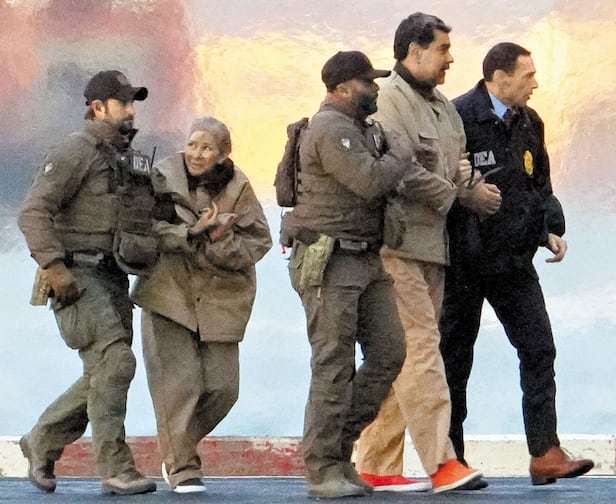
Maduro couple in prison uniforms heading to U.S. court - Nicolas Maduro, Venezuelan president, and his wife Cilia Flores arrive at the Manhattan heliport in New York by helicopter on the morning of the 5th, then move while being detained by police and Drug Enforcement Administration agents. The two, currently detained at the New York Metropolitan Detention Center, appear in the Manhattan Federal Court for the first time today. /Reuters-Yonhap

Maduro couple in prison uniforms heading to U.S. court – Nicolas Maduro, Venezuelan president, and his wife Cilia Flores arrive at the Manhattan heliport in New York by helicopter on the morning of the 5th, then move while being detained by police and Drug Enforcement Administration agents. The two, currently detained at the New York Metropolitan Detention Center, appear in the Manhattan Federal Court for the first time today. /Reuters-Yonhap

Claims have emerged that the United States conducted an airstrike on Venezuela on the 3rd, using advanced weaponry to neutralize President Nicolás Maduro’s security detail during his capture. Speculation has arisen over whether the U.S. military employed sound wave or microwave attacks, though some doubt the credibility of these claims.

According to the New York Post on the 10th, a Trump supporter on X (formerly Twitter) recently posted a lengthy interview purportedly with a Venezuelan security guard. The anonymous guard stated that during the airstrike, U.S. forces annihilated soldiers using technology never before seen or heard of.

He recalled, “We were on guard, but suddenly all our radar systems shut down without any explanation. The next thing we saw were drones, a lot of drones, flying over our positions. We didn’t know how to react.” He added, “After those drones appeared, some helicopters arrived, but there were very few. I think barely eight helicopters. From those helicopters, soldiers came down, but a very small number. Maybe twenty men. But those men were technologically very advanced. They didn’t look like anything we’ve fought against before.”

The guard described the incident as a massacre rather than a battle. “We were hundreds, but we had no chance. They were shooting with such precision and speed… it seemed like each soldier was firing 300 rounds per minute. We couldn’t do anything,” he said. “At one point, they launched something—I don’t know how to describe it… it was like a very intense sound wave. Suddenly I felt like my head was exploding from the inside.”

He continued, “We all started bleeding from the nose. Some were vomiting blood. We fell to the ground, unable to move. ”

The post garnered 26.2 million views, though the account did not specify which media outlet conducted the interview or provide concrete sources.

White House spokesperson Karoline Leavitt shared the post, urging, “Stop what you are doing and read this,” but declined to comment on its authenticity, according to the New York Post.

Citing a former U.S. intelligence source, the New York Post reported, “The military has had directed energy weapons — which neutralize targets using focused energy such as microwaves or laser beams — for years, but this could be the first time it’s been used in combat by the U.S.,” adding that such weapons can cause bleeding, loss of mobility, pain, and burns.

Microwave weapons disrupt electronic systems or attack the brain’s temporal lobe without passing through the ears. Unlike ultrasound, they penetrate metal and concrete, enabling covert attacks. A common civilian application is microwave ovens.

In 2020, during a border dispute with India, the Chinese People’s Liberation Army reportedly used microwave weapons. Professor Jin Canrong, deputy head of the International Relations College at Renmin University, stated, “When microwaves were fired from the mountain base, the summit became like a microwave oven. Indian troops on the high ground vomited and collapsed within 15 minutes, forcing a retreat.”

However, some netizens questioned the credibility of the Venezuelan guard’s account due to the lack of verifiable sources.

Earlier, the U.S. captured Maduro and his spouse at a safe house in Caracas on the 3rd under Operation “Absolute Resolve.” The arrest and transport were carried out by the U.S. Army’s elite Delta Force, with over 150 military aircraft, including stealth fighters like the F-22 Raptor, deployed to neutralize Venezuela’s air defenses.

Venezuela reported 100 total deaths from the U.S. operation but did not specify civilian casualties. Venezuelan military authorities confirmed 24 soldier deaths, while Cuba stated 32 of its security personnel died in Venezuela. The U.S. reported no military fatalities.

[…]

Via https://www.chosun.com/english/world-en/2026/01/12/BF5S2DSX65CHPGMEXQTLCK5GZM/

Trump Orders Plan to Invade Greenland

Trump orders plan to invade Greenland – media

RT

Should the US president go ahead with an operation, it could lead to “the destruction of NATO from the inside,” the Daily Mail has reported

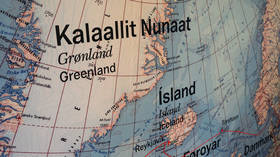
US President Donald Trump has ordered his senior commanders to draw up a plan for a potential invasion of Greenland – a move that could potentially lead to a complete collapse of NATO, the Daily Mail reported on Saturday, citing sources.

The US president has long sought to take control of Greenland, an autonomous territory under Danish sovereignty, citing security concerns and the need to deter Russia and China, while not ruling out a military option to capture the island. This stance has put him at loggerheads with the European members of NATO, which have rallied behind Denmark.

According to the Daily Mail, Trump asked the Joint Special Operations Command to prepare invasion plans, but the Joint Chiefs of Staff are pushing back, arguing that the move would be illegal and lack congressional support. One source told the paper that senior generals “have tried to distract Trump by talking about less controversial measures,” such as a “strike on Iran.”

The report said that the push to seize Greenland was led by several Trump advisers, including political aide Stephen Miller, who were emboldened by the recent US attack on Venezuela and now want to move quickly to secure the island before Russia or China could make a move.

One diplomatic source warned that the invasion could lead to “the destruction of NATO from the inside.” He added that some “European officials suspect this is the real aim of the hardline MAGA faction around Trump… Occupying Greenland could force the Europeans to abandon NATO. If Trump wants to end NATO, this might be the most convenient way to do it.”

British diplomats cited by the Daily Mail have suggested that Trump views the Greenland operation as a way to distract American voters from the state of the US economy ahead of the mid-term elections. In this vein, one of the outlet’s sources suggested that Trump could pursue an escalatory approach in the short term before shifting toward a compromise.

Separately, the Daily Telegraph reported that European NATO members are discussing possible deployments to Greenland, including troops, ships, and aircraft, to guard the Arctic and assuage Trump’s concerns.

[…]

Via https://www.rt.com/news/630802-trump-plan-invade-greenland/

Behind the riots: Israel-Pahlavi nexus and the delusion of ‘regime change’ in Iran


By Press TV Staff Writer

After the Israeli regime launched its no-holds-barred genocidal war against Palestinians in Gaza in October 2023, it found support from familiar quarters: Iranian monarchists based in Western countries, led by the son of the deposed Shah.

In statements to Western and Israeli media following the events of October 7, the self-proclaimed “crown prince,” Reza Pahlavi, openly endorsed the assault on Gaza, while vilifying the Gaza-based resistance movement Hamas and the Islamic Republic of Iran.

In November 2024, his wife, Yasmine Pahlavi, was photographed at a pro-Israel rally in Washington, waving the long-discredited Pahlavi and Israeli flags, images that were quickly circulated across social media by Pahlavi-linked bot networks.

As the death toll from the genocidal war mounted, the son of the former Iranian monarch and his loyalists aggressively lobbied on behalf of the child-murdering regime, repeatedly justifying its war crimes that earned the Israeli murderers arrest warrants from the International Criminal Court (ICC).

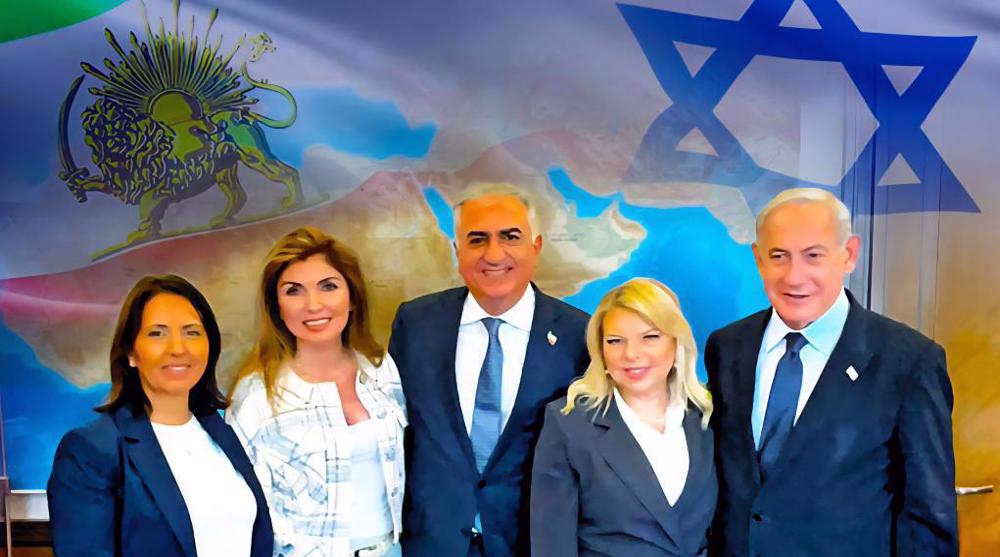
Pahlavi has been unapologetic about his close ties with Israeli Prime Minister Benjamin Netanyahu and other senior Israeli officials, as well as lobby groups, even traveling to the occupied territories to publicly endorse the regime’s occupation, genocide, and settler-colonial policies.

The alliance between Iran’s former monarchists and the Israeli regime – actors united by shared interests – gained further momentum after Pahlavi and his spouse visited the Israeli-occupied territories in April 2024 at the invitation of Netanyahu himself.

The visit marked the formalization of what had long been an informal and deeply troubling relationship.

This relationship was further solidified after the Tel Aviv regime launched an unprovoked and unjustified war of aggression against Iran in June this year, resulting in the martyrdom of more than 1,000 people, including women and children.

While the Iranian nation mourned its dead, Pahlavi monarchists openly celebrated. Reza Pahlavi offered no words of sympathy for the victims of the 12-day war, laying bare where his loyalties truly lie.

Recently, he resurfaced once again as merchants in Iran organized peaceful demonstrations in Tehran to protest sharp fluctuations in the national currency, the rial.

Seizing the moment, Pahlavi sought to exploit the situation by calling on Mossad- and CIA-linked sleeper cells inside Iran to incite riots and hijack what had begun as peaceful protests.

Not long before, the Israeli newspaper Haaretz reported that Israel was running a covert influence operation using fake accounts and AI-generated content to promote Pahlavi and advocate for the restoration of monarchy in the Islamic Republic, underscoring the depth of this alliance.

Iran riots 2026 – The same old playbook

What unfolded on Thursday and Friday amounted to “terrorism,” as Iranian officials succinctly described it, when armed rioters rampaged through Tehran and other cities, setting fire to public property, including bus stations, banks, hospitals, and mosques.

The violence followed calls by Pahlavi, speaking from his home in Maryland, urging rioters inside Iran to carry out acts of terror, in line with a script coordinated with Israeli and American intelligence agencies.

Leader of the Islamic Revolution Ayatollah Seyyed Ali Khamenei, in remarks delivered on Friday, stressed that the country would “not back down against vandals,” rejecting acts of destruction carried out to appease foreign powers.

At the same time, he underscored that peaceful protests over economic grievances remain legitimate.

“The Islamic Republic will not back down against vandals. It will not tolerate mercenaries of foreigners,” he said, emphasizing that anyone who serves foreign powers is “rejected” by the Iranian nation.

Parliament Speaker Mohammad Baqer Qalibaf echoed these remarks on Sunday, affirming that Iran recognizes the people’s right to peaceful protest over economic concerns, but will stand firmly against armed terrorism.

“Those who openly identify themselves as foreign mercenaries, betraying their own homeland to please the US president [Donald Trump], transforming themselves into Daesh operatives, and inciting a terrorist war, should know that we will confront them with the most severe measures,” Qalibaf warned.

Foreign Minister Abbas Araghchi also cautioned the United States and the Israeli regime over their support for the rioters in a post on X on Saturday.

“President Trump’s own former CIA director has openly and unashamedly highlighted what Mossad and its American enablers are really up to,” he wrote, referring to former CIA chief Mike Pompeo.

The intelligence wing of the Islamic Revolution Guards Corps (IRGC) also said in a statement on Friday that all foreign-backed plots aimed at destabilizing the country would be decisively confronted.

Ali Larijani, Secretary of Iran’s Supreme National Security Council (SNSC), likewise said that security forces and the judiciary were prepared to respond “in the strongest manner” to foreign-linked individuals involved in armed violence and organized attacks targeting the Iranian nation.

Pahlavi, according to observers, serves as a pawn in this sinister game played by the US and the Israeli regime to realize what they have sought for more than four decades.

The pitiful life of the younger Pahlavi

The life story of the younger Pahlavi reads as a peculiar chronicle marked by repeated setbacks across nearly every domain – political, academic, familial, professional, financial, and commercial – failures that observers link to grandiose aspirations that were never realistic.

He was born the eldest son of Mohammad Reza Pahlavi, the former Iranian autocrat installed and sustained by American and British backing, and was groomed from childhood as the designated successor to the throne.

That trajectory, however, collapsed when Iranians rose against the Western-backed monarchy more than four decades ago, overthrowing the regime and establishing the Islamic Republic.

As the popular revolution unfolded, he fled Iran with his family and eventually settled in the US. There, he enrolled at two separate colleges but failed to complete his studies at either institution.

Even earlier, before the Revolution, he attempted to undergo pilot training in the US military system, enrolling in a one-year program but dropping out just months before completion.

Years later, he claimed in his own memoirs that he had volunteered to serve in the Iranian Air Force during Iraq’s Ba’athist invasion of Iran, only to be turned away – a narrative widely dismissed as a fabrication designed to craft a heroic personal myth.

Following his father’s death, the then 20-year-old declared himself the new “king” of Iran, a self-coronation that received no recognition whatsoever, not even from the US government, which deliberately distanced itself from him.

Decades later, revelations by Israeli intelligence figures exposed that during the 1980s Sacred Defense period, Pahlavi had in fact been plotting a coup aimed at reinstalling himself as monarch.

The plan reportedly began with outreach to Yaakov Nimrodi, the Israeli intelligence operative involved in training Iran’s notorious SAVAK, and included the approval of nearly $800 million in military hardware by then Israeli defense minister Ariel Sharon.

The scheme collapsed entirely, after which Pahlavi retreated from public view, relocating to a lavish estate in Virginia. There, he married, lived extravagantly, and spent generously from funds reportedly supplied by American and Israeli backers.

His financial mismanagement eventually caught up with him. Former associates from the old regime filed lawsuits against him, and he was seen in courtrooms pleading his case, claiming he had exhausted his funds.

By his own acknowledgment, the 63-year-old son of Iran’s last monarch has never held steady employment, surviving instead on wealth his father stole from the Iranian people and donations from pro-monarchy supporters based in Western countries.

The loss of royal privilege proved devastating for his family. Two of his siblings reportedly struggled with severe depression and substance abuse, ultimately taking their own lives.

Even on a personal level, many of his aspirations went unrealized. One of his long-held desires – to father a son who could serve as a symbolic heir – never materialized.

The unattainable goal

For many years, Pahlavi portrayed himself as politically neutral, insisting he had no interest in restoring the monarchy, a concession to the reality that such a project was implausible.

Yet encouragement from American and Zionist allies steadily pushed him back into the political spotlight.

Whenever unrest surfaced in Iran, he was quick to insert himself, calling for the removal of the Islamic Republic’s democratically elected leadership and presenting himself as a supposed alternative figurehead.

During the 2010s, Western governments, particularly the US, UK, and Israel, expanded support for a wide spectrum of anti-Iran factions, from Marxist groups and ethnic separatists to monarchists, including Pahlavi.

Like other Western-backed entities branded as “the opposition,” he claimed leadership of a broad, inclusive “national council,” which in practice amounted to little more than a personal platform surrounded by a small circle of loyalists.

Persian-language satellite networks enthusiastically promoted him as an opposition leader, most notably the UK-based monarchist channel Manoto, which ceased operations earlier this year.

These outlets focused heavily on romanticizing royal rule as a lost utopia, glamorizing the lifestyle of the former ruling elite, and targeting younger audiences. Additional content included historical revisionism, conspiracy theories about the revolution, dismissal of Iran’s achievements, and disproportionate emphasis on isolated social issues.

Pahlavi regularly appeared on these platforms, echoing the geopolitical narratives of Washington, London, and Tel Aviv, while consistently denying the legitimacy of the Islamic Republic.

With Trump’s arrival in the White House last time, Pahlavi identified what he believed to be a renewed opening. He aligned himself with an administration dominated by neoconservatives and hardline Zionists, endorsing US withdrawal from the 2015 nuclear agreement and parroting Trump’s rhetoric on Iran’s nuclear program.

He became a vocal advocate of the “maximum pressure” campaign, absurdly claiming that crippling sanctions reflected the wishes of the Iranian people, an assertion that revealed his profound detachment from their lived reality.

At the time, his actions suggested confidence that Trump’s strategy would dismantle Iran’s political system, and he worked to present himself as a ready-made figure for a US-engineered “new Iran.”

He was frequently seen alongside Sheldon Adelson, the late Republican billionaire and militant Zionist who once openly suggested using a nuclear weapon against Iran. He also attended multiple events at the Washington Institute for Near East Policy (WINEP), an AIPAC-affiliated think tank known for its aggressive pro-Israel agenda.

When Trump’s policies ultimately failed, Pahlavi’s hopes dimmed, prompting him to seek more direct backing, financial and symbolic, from the Zionist regime itself.

Pahlavi-Israel alignment

In April 2023, Pahlavi and his wife undertook a five-day visit to the Israeli-occupied territories, where they were warmly welcomed by Netanyahu and intelligence minister Gila Gamliel.

In Tel Aviv, Pahlavi echoed Netanyahu’s rhetoric almost verbatim, jointly fantasizing about the collapse of the Islamic Republic and the return of monarchical rule.

Accompanied by Gamliel, the couple toured various sites, attended a ceremony at Yad Vashem, and performed a Jewish prayer at the Western Wall, carefully avoiding any visit to Al-Aqsa Mosque or acknowledgment of Palestinian occupation.

His wife later shared photographs with Israeli female soldiers in occupied East Jerusalem al-Quds, featuring a slogan previously deployed during Western- and Israeli-backed riots in Iran.

Pahlavi was joined on the trip by Amir-Hossein Etemadi, Saeed Ghasseminejad, and Mark Dubowitz of the Foundation for Defense of Democracies (FDD), a US-based Zionist lobbying organization.

All three are known for virulently anti-Iranian and anti-Palestinian positions, their advocacy of harsh sanctions, and open support for US-Israeli military confrontation with Iran.

He also met with Hananya Naftali, a Likud-linked social media propagandist and Netanyahu associate who has maintained Persian-language accounts on X and Facebook since 2020, despite not speaking the language.

Israeli media and Pahlavi himself labeled the visit “historic,” though in reality it amounted to little more than a mutual publicity exercise, reflecting long-established ties rather than any genuine breakthrough.

The relationship between the Pahlavi dynasty and Zionist interests dates back to the 1960s, when SAVAK was created with Israeli assistance and secret oil arrangements were finalized beyond public scrutiny.

Pahlavi’s own connections to Israeli intelligence trace back to the 1980s, when he sought their help in orchestrating a monarchist coup, ties that have only deepened over time.

[…]

Via https://www.presstv.ir/Detail/2026/01/11/762193/behind-riots-israel-pahlavi-nexus-delusion-regime-change-iran

The US and Israel Want Zionist Reza Pahlavi, the Son of the Last Shah of Iran, to Take Over Iran – Is War Imminent?

Brian Shilhavy

The U.S. and Israel Want Zionist Reza Pahlavi, the Son of the Last Shah of Iran, to Take Over Iran – Is War Imminent?

Having failed to subdue Iran last year, the U.S. and Israel (CIA – Mossad) are now arming protesters in Iran to protest against the government.

They want Reza Pahlavi, the son of the last Shah of Iran, to take over, as his loyalties are to Israel.

Iran has already said that if Trump bombs them, they will return the favor, inside the U.S. (and probably with the help of China and Russia).

This military analysis from The Cradle (Air Supremacy or War: Iran and the US in West Asia’s Final Countdown) is chilling, to say the least.

[…]

Via https://t.me/healthimpact/2945

The Trump Show, Venezuela Episode

Dmitry Orlov

[…]

According to the “legend” (a technical term), Delta Force heroically extracted the dictator and his wife from their bedroom at Palacio de Miraflores in Caracas in a hale of bullets and transported them to a jail in Brooklyn to be put on a kangaroo trial on trumped up drugs and weapons charges.

The trial will be presided over by the 92-year-old Judge Alvin K. Hellerstein . . . even the simplest of facts should force him to dismiss this case with prejudice. One of these facts is that Maduro and his wife are (according to the “legend”) victims of a cross-border abduction, not a lawful arrest, and are being wrongfully detained. Another such fact is that, being foreign nationals, they are not subject to US laws and could not have been charged or arrested by US officials while not on US territory. Yet another is that Maduro has sovereign immunity from prosecution as the head of a sovereign state.

The reason for the Venezuelan fracas is Trump’s great new plan, which he formulated while laying in bed making his feet dance. It is to resurrect something called the Monroe Doctrine. Trump is wise enough to have realized that the US is no longer a match against the combined power of other great nations (Russia, China, India) but might possibly still stand a chance at international dominance if it limited itself to just the Western Hemisphere.

The original Monroe Doctrine, declared by US president James Monroe in 1823, warned European powers against further colonization or interference in the Americas.

[…]

Imagining how the Monroe doctrine would apply in 2026 is definitely the stuff of comedy. The US is no longer dominant in much of anything other than debt. It produces a lot of oil, but it consumes even more oil than it produces and is forced to import heavier grades of oil in order to make jet fuel and diesel. It is still a major liquefied gas exporter but most of its gas production is from fracking and that resource has reached a plateau and is expected to start trending down. There is also a fanciful dream of the US becoming an “artificial intelligence superpower” but AI is just a financial bubble — a virtual repeat of the dot-com bubble of 2000. AI does not pay for itself and produces garbage. Consequently, Merriam-Webster’s Word of the Year for 2025 was “slop” — low-quality digital content produced by AI.

None of this bodes well for the renewed ability of the US to dominate the Western Hemisphere. But then Trump heard that Venezuela has “the world’s largest oil reserves.” Now, if the US could grab that oil from the Venezuelans

Unfortunately, Venezuelan oil is not oil at all; it is tar. It has to be forced out of the ground together with sand or steamed out of the ground. It then has to be thinned with lighter hydrocarbons such as naphtha in order to form a liquid that can be transported by oil tankers. The oil is high in sulfur, which corrodes pipes and other equipment and causes environmental problems. Venezuela’s oil industry is old and decrepit. It can currently produce around 1 million barrels of heavy crude a day. It has been estimated that increasing this amount to 3 million barrels a day would require an investment of $10 billion a year for close to a decade… at which point the Venezuelans may very well renationalize their oil industry just like they did under Hugo Chavez, once again leaving the investors with nothing.

Well, never mind all these boring technical details! What Trump seems to have latched onto is the estimated 300 billion barrels of oil claimed to be Venezuela’s total oil reserves. They are not reserves but resources — and may never be produced — but that’s another one of these technical distinctions Trump doesn’t care about. The point is, if the US were able to list “300 billion barrels of oil” as collateral on a loan application, then it just might be able to borrow a few more trillions of dollars, to add to the already staggering pile of debt and to push off national bankruptcy past the midterm elections.

The problem is, in spite of the mock abduction, Venezuela is not Trump’s. Trump may think that Venezuela is in his very own hemisphere, but economically it is China’s and militarily it is Russia’s. These two countries are not going to simply let him have it. The US Navy has been able to blockade Venezuela, but it is unclear how well that’s going to work now that oil tankers are switching to flying the Russian flag and hosting private military companies while the Chinese are equipping their cargo ships with rocket launchers.

[…]

Via https://boosty.to/cluborlov/posts/7d98ff9b-f461-48c7-94dd-536e391eab13

Ancient Persia’s Gold-Based Economy

Ancient Persian Gold Daric Coin, 420 BC at 1stdibs

Persian daric

Episode 18 Persian Gold

The Persian Empire

Dr John W I Lee (2012)

Film Review

When Alexandra the Great conquered the Persian Empire, he found three million pounds of gold in the Susa treasury.

Agriculture, trade and manufacturing flourished under the Persians, which had a vast and complex economy operating in three sectors: government, temple and private. All were largely based on agriculture and slavery, although trade also important.

Coinage (first developed by Lydia to pay mercenaries) was adopted by Persia following the conquest of Lydia in 600 BC.

In 515 Darius introduced gold darics, the first  coins to display a royal figure, to stabilize the payment of satrap tributes. One daric, equivalent to a month’s pay, equaled 20 shekels. Babylonia and the central empire also used silver bars as a unit of exchange.

Exacting account keepers, the Persians left behind thousands of Akkadian business tablets dated for the month, day and year. These were mainly archives (not daily records) and recorded, loans, real estate transactions and agricultural sales. Cyrus ordered an exact accounting of all the plunder Nebuchadnezzar took from the Jews so the Persians could return it to Jerusalem.

The Egibi family, who specialized in urban real estate and the rural food trade, left behind 1700 tablets dating from 600-482 BC. Their tablets reveal how their family members served as government officials, got tax breaks and were allowed special access to harbors and boats.

The later Morashu family (454-414 BC) married into the royal family and participated in the transition of from Akkadian to Aramaic as the main language of trade. Starting as overseers of plantations and temples, they transitioned into money lending and became fabulously rich. Their wealth increased substantially as irrigation and farm labor costs escalated and land-owning soldiers, forced to borrow, couldn’t repay their loans when they were called for active duty.

In general Persian accounting tablets provide important insight into the vast wealth disparities that ultimately led to the empire’s collapse.

https://www.kanopy.com/en/pukeariki/watch/video/15372393/15372437

New Study: Microplastics Could Be Weakening Your Bones

microplastics and bone health

Dr Mercola

Story at-a-glance

  • A recent Osteoporosis International review summarized multiple studies showing that microplastics have been detected in human bone tissue, where they disrupt bone cell activity, trigger inflammation, and weaken structural integrity
  • Laboratory and animal studies show microplastics accelerate osteoclast activity and alter bone microarchitecture, linking environmental plastic exposure to rising rates of bone fragility and dysplasia
  • Microplastics are not limited to bone; previous research has also detected them in the bloodstream, brain, placenta, heart, lungs, liver, kidneys, and reproductive tissues
  • Ultrafine combustion particles (UFPs), which are smaller than microplastics, pose an even greater threat due to the vastly higher levels of exposure you face each day
  • Lower your daily microplastic exposure by switching to natural fabrics, filtering your air and water, avoiding plastic containers, and replacing plastic kitchen tools with safer materials

Every year, more than 400 million tons of plastic are produced,1 and much of it breaks down into particles smaller than 5 millimeters, known as microplastics. They enter your body through the air you breathe, the water you drink, the food you eat, and the countless materials that you use daily. Once they cross into the bloodstream, they reach tissues that were never meant to store synthetic debris and silently accumulate inside you.

A narrative review published in the Osteoporosis International2 recently examined what happens when these microscopic plastic particles come into contact with the body’s strongest and most enduring structure — the bones. Their findings carry significant implications as bone-related diseases continue to rise worldwide, with the global incidence of osteoporosis-related fractures expected to rise by 32% by 2050.3

How Microplastics Are Damaging Your Bones from the Inside Out

In the featured review, researchers from the State University of Campinas in Brazil analyzed 62 scientific papers to assess what is currently known about microplastics and skeletal health, including their links to bone diseases like osteoporosis. The review found that microplastics have been detected in human bone tissue and that experimental evidence points to multiple harmful effects on bone-forming and bone-resorbing cells.4

Microplastics disrupt bone cell function — In laboratory studies, exposure to microplastics reduced cell viability, accelerated cell aging, and interfered with how stem cells in the bone marrow differentiate into specialized cells. These changes included promoting the formation of osteoclasts, the multinucleated cells that break down bone tissue through a process called bone resorption.

Inflammation and oxidative stress drive damage — Microplastic exposure triggered inflammatory signaling and increased production of reactive oxygen species (ROS), which damage proteins, lipids, and DNA. This oxidative and inflammatory stress disturbed the normal equilibrium between bone formation and bone loss, undermining bone density and structural integrity.

Animal studies confirm skeletal disruption — In animal experiments, microplastics were detected within bone tissue and bone marrow following exposure. The animals developed altered bone microstructures, including reduced growth and impaired trabecular formation, the lattice-like framework that provides strength and flexibility.

Some studies also reported disrupted gut microbiota and lowered white blood cell counts, suggesting a link between microplastic exposure, immune imbalance, and bone marrow dysfunction.

Accelerated osteoclast aging leads to deformities — One of the researchers, Rodrigo Bueno de Oliveira, explained that in these studies, excessive osteoclast activity and premature aging of these cells led to bone deformities, dysplasia, and in some cases, halted skeletal growth.

Although the precise mechanical effects remain unclear, the evidence suggests that microplastics circulating in blood and bone marrow interfere with bone metabolism and regeneration.

Researchers are now investigating microplastics’ role in the growing burden of bone disease — Using animal models, the team has set out to examine how microplastic exposure affects bone strength and integrity, focusing on the femur as a key site for assessing mechanical resilience.

[…]

Where Else Have Microplastics Been Found in the Human Body?

The skeletal system is only one of many sites now known to harbor plastic particles, as studies over the past few years have mapped their presence throughout the body, including:

Bloodstream — A 2022 study published in Environment International provided the first quantitative evidence that plastic particles circulate in the human bloodstream.7 Further analysis confirmed the presence of polyethylene and polypropylene — plastics commonly used in packaging and textiles — in human blood.8

These findings show that everyday environmental exposure is enough for plastic fragments to cross tissue barriers and reach systemic circulation. And once microplastics enter your body, they circulate freely and reach every organ and tissue.

Brain Microplastics have been identified in human brain tissue, confirming that these particles are capable of breaching the blood-brain barrier, which normally restricts the entry of foreign substances.9 A 2024 analysis of postmortem samples reported that the brain contained a higher concentration of polyethylene than other organs.10

The particles were nanosized, shard-like fragments embedded in neural tissue, blood vessel walls, and immune cells. The highest levels were observed in individuals diagnosed with dementia, suggesting a possible association between plastic accumulation and neurodegenerative disease.11

Placenta and breast milk — Microplastics have been detected in human placental tissue, marking one of the first confirmations of prenatal exposure. Fragments were found on both the maternal and fetal sides of the placenta, as well as in the amniotic membranes, showing that these particles can pass from a mother’s bloodstream into the fetal environment.12

They’ve also been identified in breast milk, indicating continued exposure after birth. The polymers detected are the same types commonly used in food packaging and household products, linking maternal diet and environmental contact to contamination of early life nourishment.13

These exposures occur during important stages of development, when organ systems, immune defenses, and metabolic control are still forming. At this stage, even small disruptions can affect growth, development, and long-term health.14

Heart and arteries In 2023, researchers in China examined samples collected during open-heart surgery and confirmed the presence of multiple types of microplastics within cardiac tissue and the pericardium (the membrane surrounding the heart). The most frequently detected polymers were polypropylene (PP), polyethylene terephthalate (PET), and polyvinyl chloride (PVC).15

Another study published in the New England Journal of Medicine found microplastics and nanoplastics embedded in atheromas, the fatty plaques that develop inside arteries and contribute to cardiovascular disease. Their presence was linked to greater inflammation in arterial walls and a higher risk of major cardiovascular events, including stroke, heart attack, and death.16

Lungs, kidneys, and liver — Inhaled microplastics have been found in human lung tissue, embedded in the alveoli where gas exchange takes place. The thin membranes and constant airflow make the lungs especially vulnerable to particle buildup. Once lodged, these fragments can trigger inflammation and oxidative stress, damaging airway lining cells and impairing function over time.17

Microplastics also infiltrate the kidneys and liver as they’re filtered by the body’s detoxification and waste-removal systems. In the kidneys, they may interfere with filtration processes and burden renal tissue with oxidative stress. In the liver, where toxins are metabolized, their presence could disrupt enzyme activity, lipid metabolism, and bile secretion.18

Testicles and sperm Microplastics have been found in human testicular tissue and sperm, confirming their ability to cross the blood-testis barrier, a highly selective barrier meant to protect developing sperm from harmful substances.

Once inside, they may disrupt the function of Sertoli and Leydig cells, which are essential for sperm maturation and testosterone synthesis. Research suggests that continued exposure could lower sperm count, alter sperm shape and mobility, and interfere with hormonal balance, raising concerns about long-term effects on male fertility.19

Ultrafine Combustion Particles (UFPs) Pose a Greater Threat

While microplastics have rightfully captured attention, UFPs represent an even larger and more immediate hazard. These particles measure under 100 nanometers in diameter and are generated through everyday combustion processes such as diesel exhaust, tire wear, industrial emissions, and indoor burning.20

Because of their minute size, they dominate the air you breathe — UFPs account for over 90% of airborne particles even though they contribute little to total mass.21 Urban air typically contains 10,000 to 14,000 UFPs per cubic centimeter, with concentrations near highways spiking to 160,000 particles in the same volume of air. With every breath, you inhale thousands to hundreds of thousands of these particles.

Exposure far exceeds that of microplastics — Total yearly exposure to microplastics and nanoplastics through air and food ranges from 39,000 to 121,000 particles.22,23 In contrast, UFP exposure occurs continuously and at levels millions to billions of times higher. Over a single year, this amounts to trillions of particle contacts with the lungs and bloodstream.

Microplastics and nanoplastics share mechanisms but differ in scale — Nanoplastics overlap in size with UFPs and can cross biological barriers such as the placenta and blood-brain barrier. However, their exposure levels are far lower, and their accumulation is slower. UFPs cause far greater total body burden because they are inhaled constantly and in enormous numbers.

UFPs penetrate deeper and persist longer — Because they are smaller than 100 nanometers, UFPs reach deep into the alveoli of the lungs, cross into circulation, and spread throughout the body. Once inside, they are not easily removed and linger longer than larger fine particles. Their vast surface area relative to mass allows them to carry and release toxic chemicals and metals that generate reactive oxygen species.

Health evidence is strongest for UFPs — The oxidative stress triggered by UFPs sets off widespread inflammation, weakens blood vessel linings, and alters coagulation, increasing the risk of hypertension and cardiovascular disease.24 The relationship between UFP exposure and vascular damage is well documented in air pollution research, whereas evidence for micro- and nanoplastics is still emerging.

Overlap amplifies toxicity — Nanoplastics that fall within the ultrafine range interact with combustion particles in air or inside the body. This overlap could intensify toxicity, since both serve as carriers for environmental chemicals and enhance oxidative stress responses.

Regulation lags far behind risk — Despite their abundance and clear health effects, UFPs remain largely unregulated. Air quality standards typically address PM2.5 and PM10, which exclude ultrafine particles entirely. This gap leaves the most numerous and reactive pollutants unmonitored.

The sheer scale of UFP exposure shows how deeply pollution has entered human biology. Once these particles reach your tissues, removal becomes difficult, prompting scientists to look for ways to help the body clear what it can. Much of this research focuses on microplastics, but the goal is the same — to restore balance in systems overwhelmed by synthetic debris.

Emerging Strategies to Naturally Eliminate Microplastics

Researchers are now investigating ways to help the human body capture, filter, and remove microplastics before they circulate through other systems.

[…]

Cross-linked psyllium could aid in the removal of microplastics — The gut is one of the body’s main routes for eliminating ingested particles. In 2024, researchers found that acrylamide cross-linked psyllium (PLP-AM) was able to extract more than 92% of common plastics, including polystyrene, PVC, and PET, from water.

[…]

Chitosan, a natural fiber sourced from shellfish, may also help your body clear microplastics — In a recent animal study published in Scientific Reports, rats fed a chitosan-enriched diet excreted about 115% of the polyethylene microplastics they were given, compared to 84% in the control group.

[…]

Certain probiotic strains help in clearing microplastics from the gut — In a 2025 animal study, two strains, Lacticaseibacillus paracasei DT66 and Lactiplantibacillus plantarum DT88, were shown to bind to and remove small polystyrene particles in laboratory experiments.27

[…]

The liver also plays a vital role in removing microplastics from circulation — Specialized immune cells known as Kupffer cells capture these foreign particles and direct them into bile, allowing elimination through the intestines. However, while this process is effective for smaller particles, larger ones linger and accumulate, especially when liver function is impaired.

To enhance this natural detoxification pathway, researchers are investigating compounds such as ursodeoxycholic acid (UDCA) and its derivative tauroursodeoxycholic acid (TUDCA), which increase bile flow and improve the movement of trapped particles out of the liver.

Researchers are also exploring ways to enhance autophagy to eliminate microplastics — Autophagy is your body’s built-in cellular recycling system. Two compounds, rapamycin and spermidine, have received particular attention for their ability to stimulate this pathway.

[…]

Via https://articles.mercola.com/sites/articles/archive/2025/12/24/microplastics-and-bone-health.aspx

Trump presses reluctant oil executives to pour billions into Venezuela

US President Donald Trump

Press TV

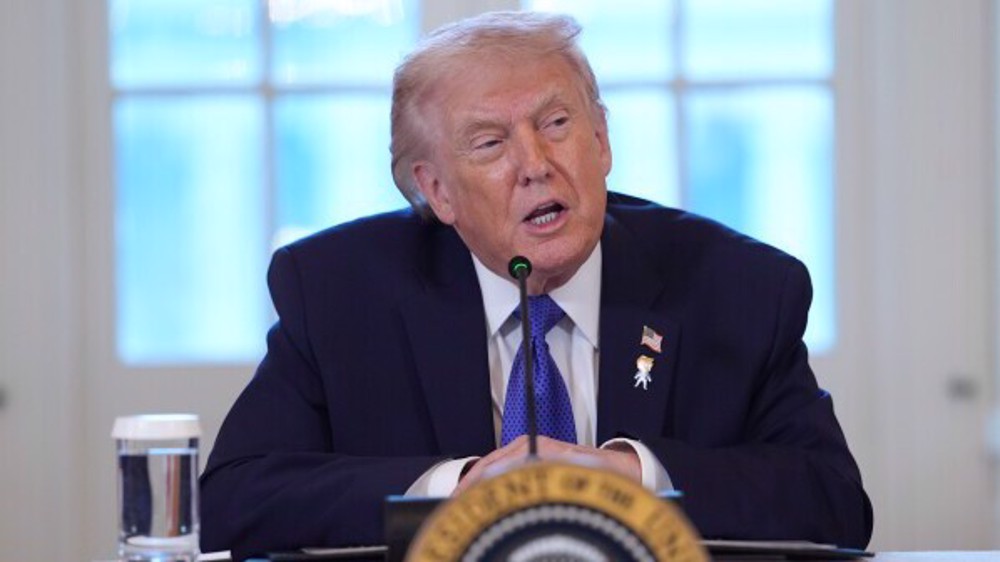
US President Donald Trump has told several of the world’s major oil companies that he guarantees “total safety” in Venezuela, urging them to invest $100 billion in the South American nation’s oil industry.

Trump has openly acknowledged that Venezuela’s oil was a key priority behind the US military strike on Caracas and the abduction of President Nicolás Maduro and his wife on January 3.

During a meeting with oil company executives at the White House on Friday, Trump said the United States stands to benefit from lower energy prices.

The president insisted that the investment would come from private oil companies rather than the federal government.

“The plan is for them to spend — meaning our giant oil companies will be spending at least $100 billion of their money, not the government’s money,” he said.

“We’re going to be making the decision as to which oil companies are going to go in,” Trump added.

Earlier in the week, he had suggested that US taxpayers might ultimately fund investments in Venezuela’s oil sector.

In brief comments, some oil executives expressed conditional interest in investing in Venezuela’s oil infrastructure if the US government provides sufficient assurances. However, ExxonMobil CEO Darren Woods said the company currently views Venezuela as “uninvestable.”

Woods added that no major financial commitments were expected in the near term.

Many analysts have questioned whether oil giants will move as quickly or as aggressively as Trump has suggested.

CNN reported last week that despite Trump’s repeated claims that US oil companies are eager to access Venezuela’s vast energy reserves, major American firms show little appetite for returning to the country.

Citing industry executives, the network said conditions on the ground make Trump’s ambition to control Venezuela’s oil both economically risky and politically fraught.

The reluctance, analysts say, underscores the gap between Washington’s coercive foreign policy approach and the hard constraints imposed by markets, legal frameworks, and investment risk.

Years of sanctions, financial isolation, and underinvestment, much of it driven by US-led pressure, have left Venezuela’s oil sector severely weakened.

International law experts have repeatedly stressed that no external actor has a legal claim to a country’s natural resources, noting that Venezuela’s oil belongs solely to its people.

[…]

Via https://www.presstv.ir/Detail/2026/01/10/762157/Donald-Trump-urges-oil-companies-invest-billions-Venezuela

Iran says US inciting violence in letter to UN Security Council

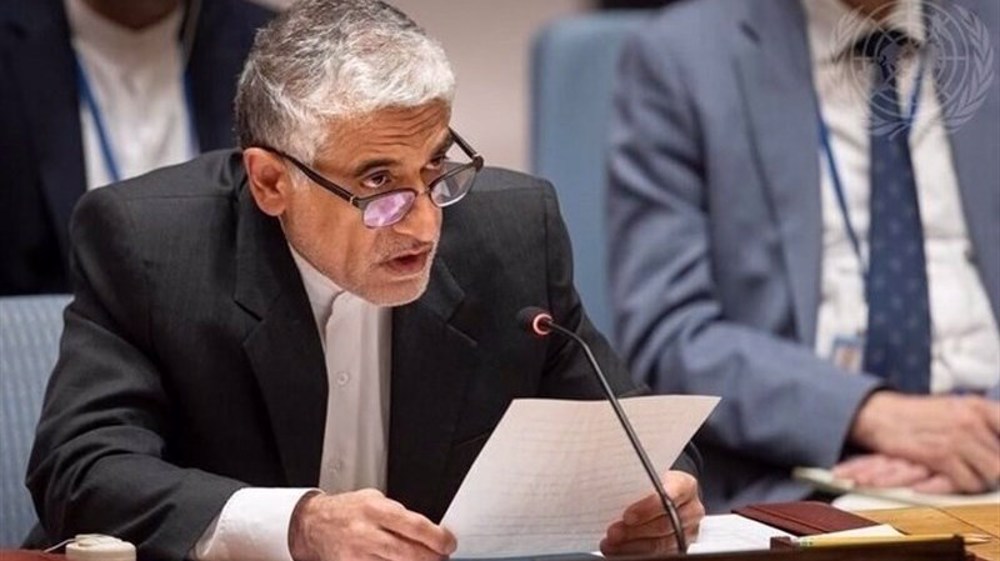
Amir Saeid Iravani, Iran’s permanent representative to the UN

Press TV

Iran’s ambassador to the United Nations says the United States is responsible for turning peaceful demonstrations in Iran into unrest and violence, according to a letter submitted to the UN Security Council.

Amir Saeid Iravani, Tehran’s permanent representative to the UN, said in the letter that Washington bears direct responsibility for “riots and violent acts” in Iran.

He condemned the United States’ “illegal behavior” and its coordination with Israel to interfere in the Islamic Republic’s internal affairs.

Iravani said such interference is carried out through “threats, incitement, and deliberate encouragement of violence,” to undermine Iran’s stability and security.

He said Tehran condemns the destabilizing measures that violate the UN Charter.

Iran’s Supreme National Security Council (SNSC) issued a separate statement earlier, saying the United States and Israel have continued hostile policies toward Iran following a recent 12‑day war.

The council said the Iranian people would counter sabotage efforts through national unity and solidarity.

Addressing the unrest in several cities, the SNSC said no country would tolerate insecurity imposed from the outside and insisted that the presence of security forces was aimed at restoring order.

It warned that security agencies and the judiciary would show “no leniency” toward the rioters and vandals.

The statement also pointed out that Israel has been waging “hybrid warfare” against Iran since the June war, saying recent protests, sparked by public frustration over market instability, were turned into security disturbances through foreign “guidance and planning.”

The SNSC said that recent remarks by US President Donald Trump in support of the rioters exposed a joint strategy by Washington and Tel Aviv to create instability inside Iran.

[…]

Via https://www.presstv.ir/Detail/2026/01/10/762163/Iran-says-US-inciting-violence-in-country-in-letter-to-UN-Security-Council