
From The WinePress
“COVID-19 was the test of social responsibility – A huge number of unimaginable restrictions for public health were adopted by billions of citizens across the world.”
The following report was first published on October 1st, 2022, on winepressnews.com.
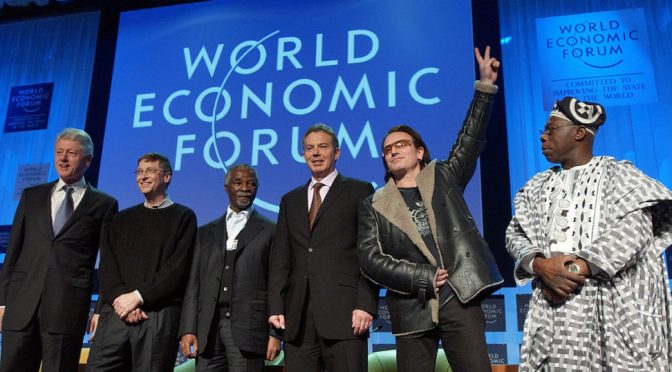
Due to the fact that billions of people worldwide all voluntarily submitted themselves to hefty Covid-19-related restrictions, practices (masking, social distancing, death of the handshake, Zoom calls), job closures, payment forbearance, curfews, lockdowns, isolations, quarantines and more; the World Economic Forum (WEF) is now stating that this pandemonium was just a “test of social responsibility,” and that these same people will accept a social credit score system.
Published on September 14th, the WEF published an article titled “‘My Carbon’: An approach for inclusive and sustainable cities,” written by Kunal Kumar, Mission Director for Smart Cities Mission and Ministry of Housing and Urban Affairs of India, and Mridul Kaushik, who worked as an analyst for Cisco for several years.
The two authors lay out the steps towards the world’s populous accepting a social credit score system that is carbon-based. This is what China currently uses, which applies a retroactive score to individuals based on what they say and do, which therefore determines what they can and cannot do in society.Subscribe
The authors begin their article by asserting that nearly three-quarters of the world’s cities account for the total carbon emissions, and with 40% of that number coming from individuals and their actions. And even though many communities have tried to implement sustainability goals, they say they have had “limited success” because of political and social discourse, ignorance on the issues, and the inability to monitor “My Carbon” emissions.
“My Carbon,” as the WEF calls it, is the pseudonym for this social credit-carbon calculator they wish to come to pass.
The authors layout three key “significant developments” within the last decade that could help in “shaping the future towards smart and sustainable cities.”
The author’s first tenet is the subservience of the masses during the Covid-related restrictions and lockdowns. They wrote:
“COVID-19 was the test of social responsibility – A huge number of unimaginable restrictions for public health were adopted by billions of citizens across the world. There were numerous examples globally of maintaining social distancing, wearing masks, mass vaccinations and acceptance of contact-tracing applications for public health, which demonstrated the core of individual social responsibility.”
In other words, if the masses willingly submitted themselves to the “new normal,” why would they not conform to these new proposals to perfectly surveil everyone’s life?
From there, the authors introduce point number two, “Fourth Industrial Revolution technology breakthroughs.” In short, because of all the artificial intelligence and smartphone addictions, the authors, without saying the words, necessitate the need for a carbon-based social credit score:
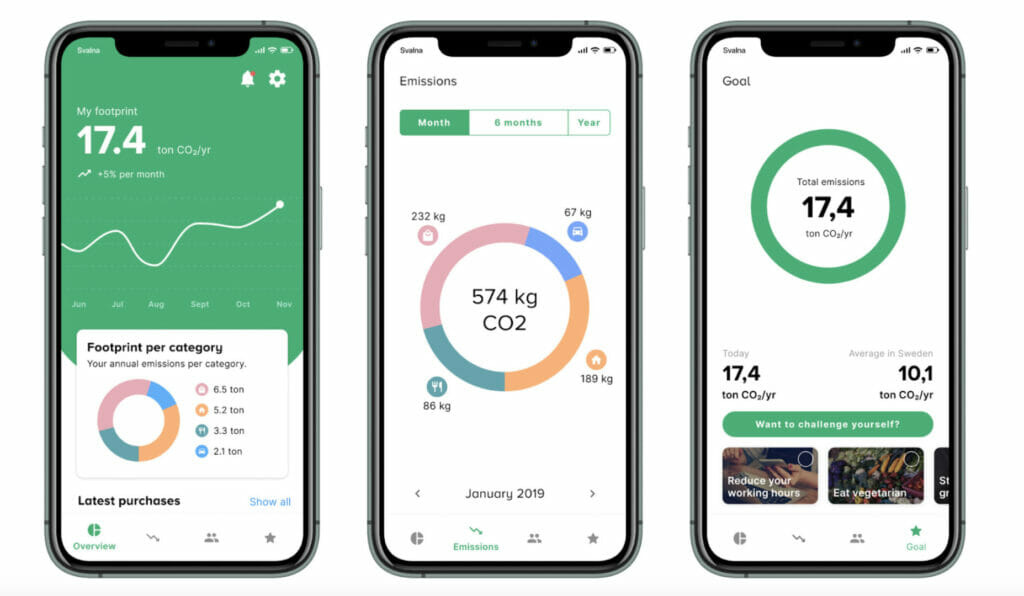 “Energy efficiency apps like Svalna, give suggestions and statistics regarding greenhouse emissions and offer ways to reduce your personal footprint, which will aid sustainable cities.” Courtesy: Svalna
“Advances in emerging technologies like AI, blockchain and digitization can enable tracking personal carbon emissions, raise awareness and also provide individual advisories on lower carbon and ethical choices for consumption of product and services. The World Economic Forum’s Scale 360 initiative demonstrates the use of fourth industrial revolution technologies across the whole life cycle of products and services.
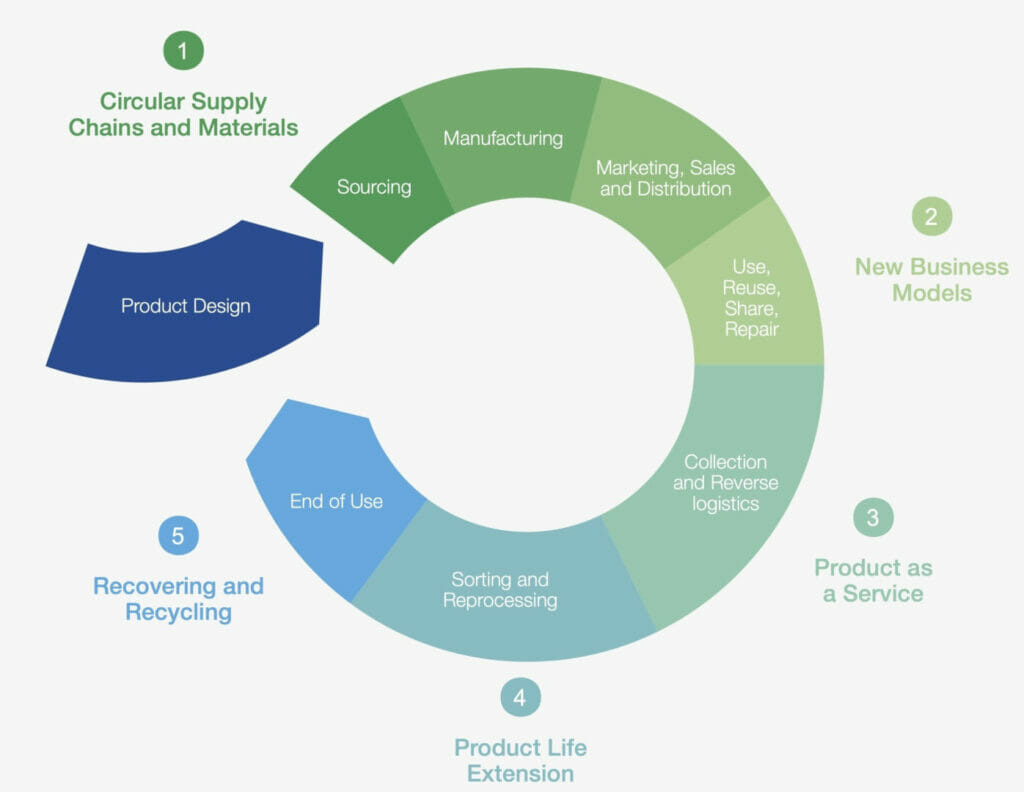
“There have been major advances in smart home technologies, transport choices with carbon implications, the roll-out of smart meters in providing individual choices to reduce their energy-related emissions, the development of new personalized apps to account for personal emissions, and better personal choices for food and consumption-related emissions. AI can also help strengthen circular economy business models like product as a service models, demand predictions, and smart asset management by combining real time and historical data from products and users.
“There is a significant number of programs and applications enabling citizens to contribute towards carbon emissions by providing them in-depth awareness on the choices of personal carbon for food, transport, home energy and lifestyle choices.
“These energy efficiency apps give suggestions and statistics regarding greenhouse emissions and offer ways to reduce your personal footprint. Keeping track of energy consumption in the home and motivating people to make lifestyle changes and to contribute your share towards the betterment of the environment.”
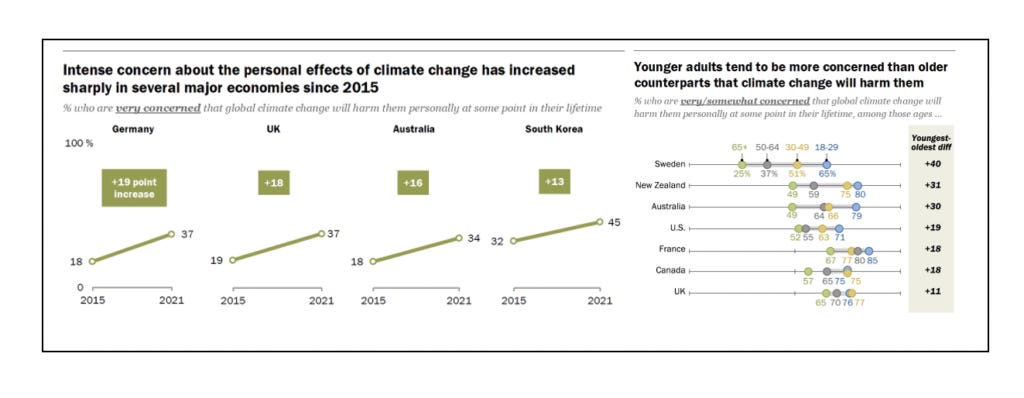
The third point the author’s present is even more ‘education’ and “raised awareness” on the issue of climate change, building-off on the increasing number of people (namely the younger generations) who are actively calling for mitigation in their own lives to stop climate change. Citing a detailed poll via the Pew Research Center, “80% of citizens say they are willing to change how they live and work to combat the effects of climate change.” The sample size, however, was less than 20,000 people interviewed internationally.
Notwithstanding, people like Bill Gates have said that the collective masses will simply not conform to these climate-related initiatives, though subtly implying the methodology as to how it will be implemented: “Bill Gates Says You’ll Never Solve Climate Change By Making People Consume Less, Subtly Implying Depopulation Instead.”
Nevertheless, bearing all three points in mind, the authors conclude this:
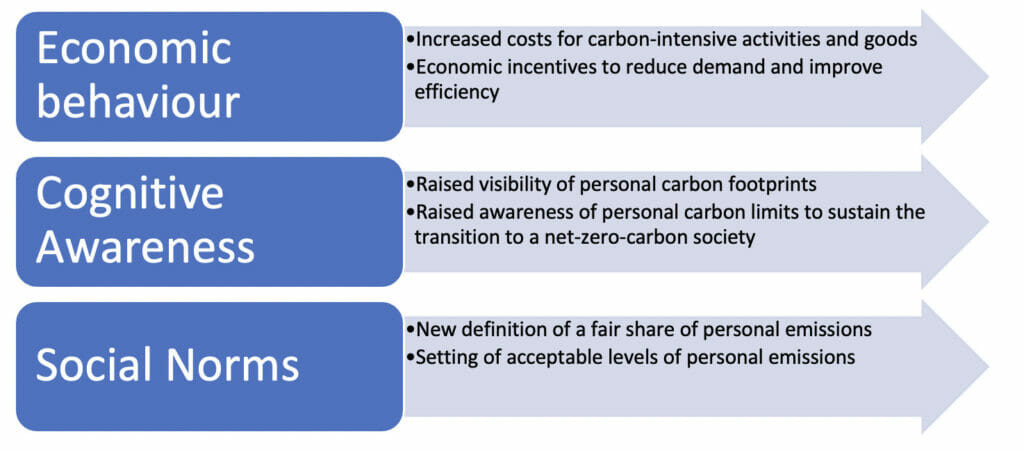
“The three trends provide strong evidence towards enabling a social movement for “My Carbon” initiatives by enabling public-private partnerships to help curate this program. It is suggested to drive a three-way approach to shape this movement.
“Such economic action will need policy enablement from city leadership through extensive discussion between stakeholders to arrive at a fair and inclusive approach.
“The levers of Cognitive Enablement and Social Norms will be much more impactful through citizen engagement programs and learnings from the above-mentioned trends need to be captured to design these programs. Innovative AI and machine-learning capabilities would help capture embedded emissions in goods and services, and could help in providing individuals with tailored and timely advice on how to reduce their lifestyle emissions.
“Finally, it is significant that all stakeholders across the value chain come together and contribute towards achieving a net-zero future by leaving no one behind.”
Furthermore, as a sidenote, the WEF additionally notes some of the other underlying initiatives attributable to them to bring these social credit scores to pass, to usher in this new system per smart city life by 2030.

“In a major step, nine cities and more than 70 organizations in 10 different sectors have come together to build further momentum for a new multi-year initiative: Net Zero Carbon Cities.
“Together with the Forum, they have created a vision for the future and launched a new framework to help cities rethink urban ecosystems, ensuring that they are greener, efficient, resilient, circular and more equitable.
“From policy-makers to businesses, city administrators, civil society and the financial sector, the World Economic Forum is convening a range of stakeholders with a role to play if global cities have a chance of reaching the net-zero carbon goal by 2030.”
[…]
 The Most Revolutionary Act
Pingback: World Economic Forum Says Those Who Submitted to Covid Lockdowns Will Also Accept Social Credit Scores and Carbon Calculators | Worldtruth