
Lost Kingdoms of Africa: The Great Zimbabwe
BBC (2013)
Film Review
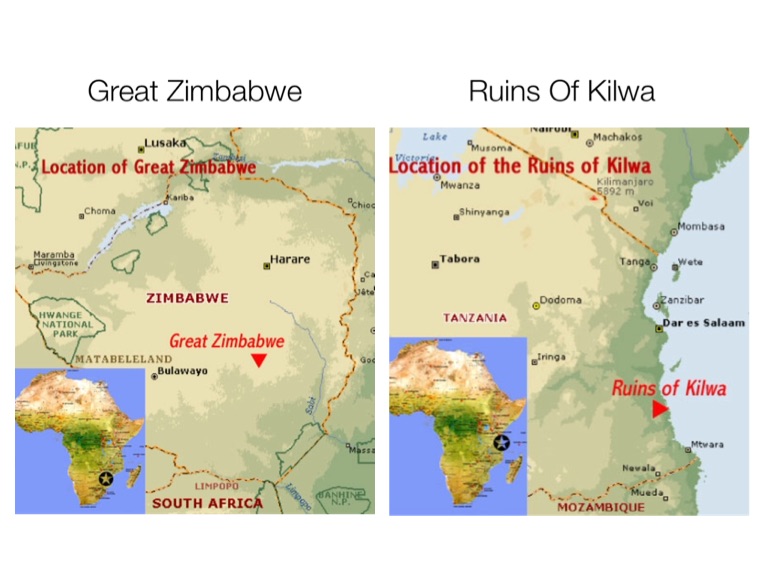
Art historian Dr Gus Casely-Hayford begins his investigation of the Great Zimbabwe on the site of the ancient Swahili Coast, which in the 13th and 14th century was the world’s most foremost gold trading market.
Trade on the Swahili Coast was well established by the first century AD, long before the discovery of gold in the Great Zimbabwe. Pottery shards over 2000 years old and Greek historical texts indicate traders from India and Arabia* visited the coastal city of Rhapta prior to 100 AD – seeking ivory, rhinoceros horn and fine tortoiseshell, in return for spears, daggers and glass. The Arab chronicler Ibn bin Tuta visited the city-state of Kilwa-Kisiwan on an island off the Swahili in 1331 and described the presence of “black” Muslims and a palace full of gold, silver and precious stones. A 14th century Kilwa coin found in Great Zimbabwe indicates the two cultures were linked in a trade network.
Manyikeni (Bantu word meaning place where people can give to each other) south of Great Zimbabwe, was also part of this trade network. In the 1970s, archeologists found gold ornaments, copper wire and glass beads in burial sites, along with exquisitely designed mosques and palaces built of coral and finished with soft lime plaster made of powdered coral. The architecture features the same style of (mortar-less) stone walls found in Great Zimbabwe.
Many similar artifacts are found in Macungupwe (currently part of South Africa’s national park system) and a historical museum in Pretoria. The intricacy of some of the gold sculptures and ceramic pots suggests Macungupwe collapsed just before the rise of Great Zimbabwe, which was likely founded by Macungupwe survivors).
Casely-Hayford visits Zimbabwe last, the first BBC presenter to be allowed in the country for nine years. Between the 13th and 15th century, Great Zimbabwe, a city of 250,000 people and encompassing 720 hectares, controlled a kingdom encompassing much of modern Zimbabwe and parts of Mozambique and ran a trade network extending between the Limpopo and Zambezi River. They left behind stunning mortarless brick walls and palaces, gold bracelets, ceramics and glass beads from China and the Middle East
Both Great Zimbabwe and Kilwa collapsed in the 15th century.
*Swahili is the Arab word for coast.
 The Most Revolutionary Act