
Episode 23 From Mughals to Soviets
The Mongol Empire
Dr Craig Benjamin (2020)
Film Review
Timur’s son Sharyk succeed him in ruling Transoxiana and his son Uleg Beig (1417-1447) succeeded him following Sharyk’s assassination. A renowned scholar, Uleg Beig invited scholars from all over the world to study at madrassa in Smamarkhan and Bukhar emphasizing advanced mathematics, science and literature. In addition to lecturing at his madrassa, he used trigonometry and a 30-foot sextant to accurately map /the location of 1,018 stars – 200 years before Galileo’s invention of the telescope. He was beheaded in massive civil unrest that erupted in 1447. Sharyk’s brother Shahrukh, who had ruled the northeast region of the Timurid Empire ruled the empire until his death in 1449.
During the first half of the 15th century, the Timurid Empire was also known for two other brilliant intellectuals:
- Abdul al Rahman Jami a classical Persian poet who elevated the Turkic language to a literary Language and
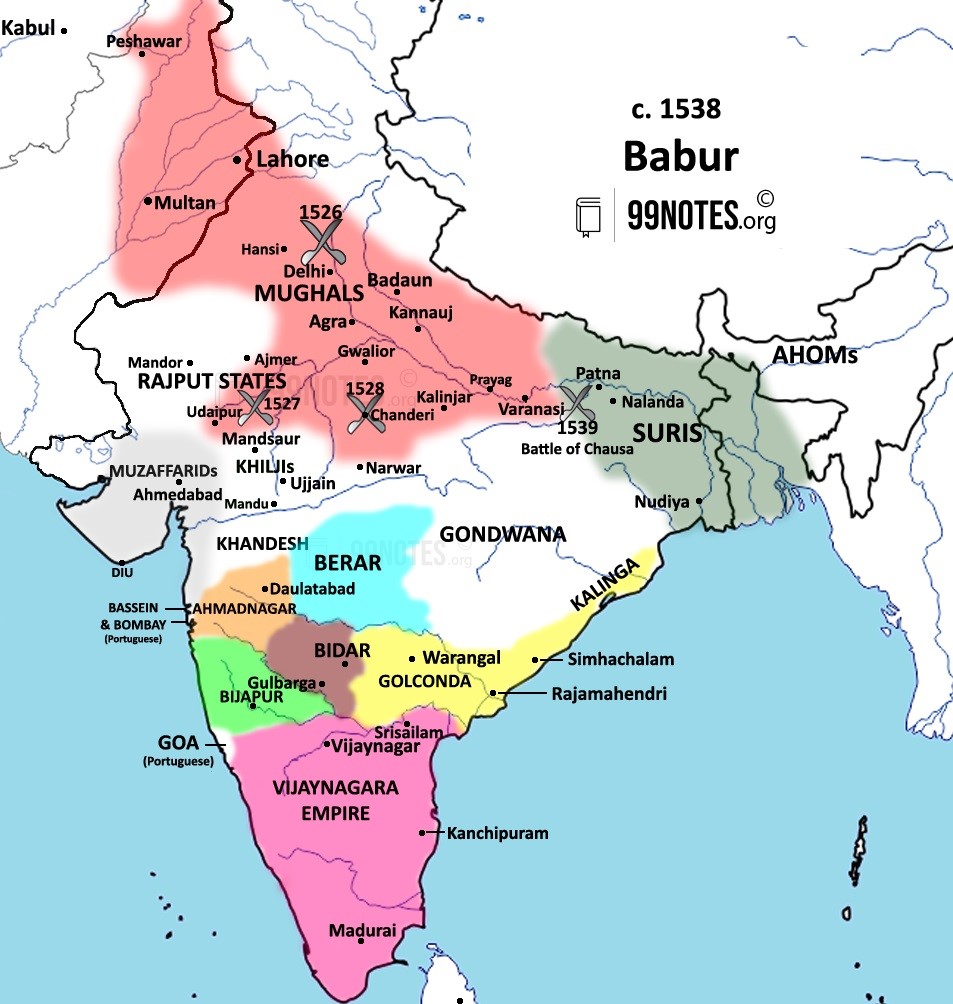
- Prince Zaher al-Din Muhammad Babur. The latter founded the Mughal Empire, which would rule India until the English colonized it. Although Babur briefly seized power in Samarkhan, He was expelled by Muhammad Shaybani (a descendant of Chinggis Khan), ruler of the Persian Khanate of Bukhara. in 1500.*
Shaybani’s family would rule the Timurid Empire until 1599, when they were deposed by Shah Ismail, founder of the wester Shi’a Safayid Dynasty. Under their rule (1599-1785, Samarkhan became the foremost global center of of both Shi’a learning and Sufism (a mystical body of Islamic religious practice characterized by purification, spirituality, ritualism and asceticism.
After fleeing first to Kabal and then to Pakistan, Babur used gunpowder, mortars and canon supplied by Ottoman advisors to conquer Delhi in 1526. He died in 1530, having conquered much of northern India. His grandson Akbar (1557-1605) was another famous Moghul ruler.
The Russian Conquest of the Steppes

Reaching the Pacific Ocean by 1689, the Russians claimed both Mongolia and Siberia as Russian territory. Meanwhile Turkic nomadic trials took control of the Karakhan desert to the east of Transoxiana, dividing the region into the Khanante of Kiva and the khanate of Bukhara.
After coming under Russian control in the late 19th century the Khanate of Kazakh (successor to the Golden Horde) split into into Uzbekistan, Kyrgyzstan, Tajikistan and Turkmenistan. Improved educational standards in the region led to a growing clamor for freedom. Following the Russian revolution, the Soviets created five new republics with distinct borders: Kazakhstan, Kyrgyzstan, Uzbekistan, Tajikistan and Turkmenistan.
During World War II, Soviet industry (and several million European Russians) moved to Central Asia to escape the German invasion.
How Central Asia benefited from Soviet rule:
- education (97% increase in literacy)
- free health care and maternity leave
- high wages due to industrialization
- preservation of improved historical monuments
All five declared independence when Soviet Union dissolved in 1991.
 The Most Revolutionary Act