
Episode 16 The Mongols in Persia and the Middle East
The Mongol Empire
Dr Craig Benjamin (2020)
Film Review
Most of our information about the Ilkhanate comes from Rashid Al-Din, a high level physician and Persian administrator who wrote A Compendium of Chronicles in 1308. He was executed in 1318 for poisoning Arghun Khan with mercury/sulfur laxatives he prescribed for him (see below).
Hulagu – Chinggis Khan’s grandson and founder of the Ilkhanate dynasty, eventually rebuilt Baghdad, which he had sacked in 1258. He established Tabriz as the capitol, appointing Persian administrators to run the khanate and creating a special intellectual quarter that welcomed historians, philosophers and scientists from around the known world (just as Baghdad had done under Muslim rule). Marrying a Nestorian Christian, he protected all religions and had a special interest in astronomy and alchemy (the transmutation of metal). His reign was marked by a 1262 war with the Golden Horde over their claim to Azerbaijan.
Abaga – Hulagu’s son, who succeed him in 1265. His reign was marked by continuing wars with the Golden Horde and new conflicts with Egypt’s Mamaluk empire He attempted to forge an alliance with the pope against the Mamaluks and engaged in cultural exchanges with the Yuan dynasty. He died in 1282 of alcoholism.
Teguder – the seventh son of Hulagu, he angered his Mongol subjects when he converted from Christianity to Islam and assumed the name Ahmad. His nephew Arghun led a successful revolt 1284 in which he captured and executed Teguder.
Arghun – focusing more on administration than war, he resisted forming a Muslim state. Personally repelling a Golden Horde invasion, he died in 1291 of mercury and sulfur poisoning from remedies his physicians had given him.
Gaykhatu – Arghun’s brother, he formed a strong alliance with the Yuan dynasty, arranging for Marco Polo to escort a Yuan dynasty princess to marry one of his sons. His attempt to Imitate the Yuan dynasty by introducing paper money led to economic disaster. Instigating a 1295 rebellion, his cousin Baydu executed and replaced him.
Gazan – Arghun’s son, he deposed Baydu the same year. A Muslim convert, he persuaded all Baydu’s Muslim troops to defect. An exceptional military commander and administrator, transformed the Ilkhanate to an Islamic empire. Although initially banning all other religions, he eventually allowed Georgians and Armenians to build their own religious institutions, cracked on pograms against Jews, revoked the tax on non-Muslims and allowed Nestorian Christians to build churches. In 1299 he launched a war against the Mamaluk empire, capturing Homs and Damascus. He also improved food production by supporting small farmers in putting neglected land into cultivation,* revitalizing the empire’s communication network, standardizing weights and measures, introducing silver coins. reforming the judiciary and reforming the army by offering land grants to soldiers.
Oljeitu – Gazan’s brother, succeeding him in 1304 and moving the capitol from Tabriz to Sultaniyya. After being baptized a Christian, he converted first to Buddhism, then to Suni Islam, the back to Buddhism. He had Rashid Al Din (who was Jewish) executed in 1318, accusing him of murdering Arghun with his potions. He negotiated a peace treaty with the Mamaluk empire.
Abu Sahid – last Ilkhanate khan, succeeding Oljeitu in 1318. His throne was claimed by eight regional princes following his death in 1335.
The Ilkhanate would dissolve in 1345.
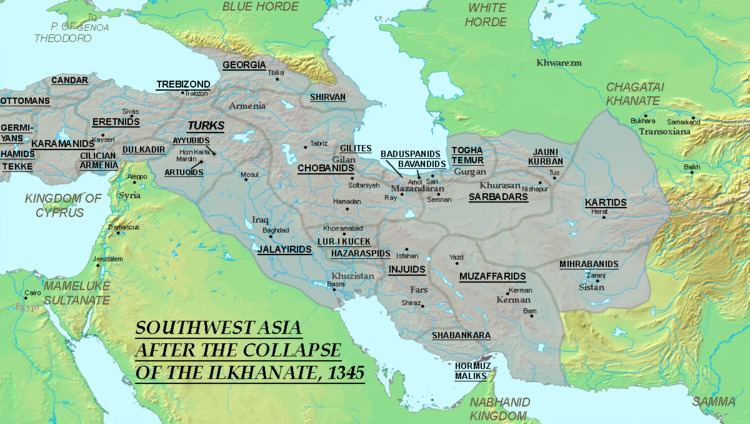
*And protecting them from the common Mongol practice of pillaging private landholdings.
Film can be viewed free with a library card on Kanopy
https://www.kanopy.com/en/pukeariki/watch/video/12373094/12373126
 The Most Revolutionary Act
Pingback: Biden and Trump Administrations Personally Destroying Ancient Christian Communities of the Middle East | Worldtruth