
Dr Mercola
Story at-a-glance
- Pregnant women have been told to get an increasing number of vaccinations, even though there’s a shocking lack of studies to confirm the safety for mother and child
- In 2009, reports of miscarriage following receipt of the pandemic H1N1 swine flu vaccine (pH1N1) started emerging. A 2017 study also found that women who had received a pH1N1-containing flu vaccine two years in a row were more likely to suffer miscarriage within the following 28 days
- It has always been a principle of medicine that one should not vaccinate pregnant women, except in extreme cases, because the risk to the baby developing in the womb is too high. However, this policy has been blatantly violated
- August 28, 2017, the AAP recommended that newborns who weigh at least 2,000 grams (4.4 pounds) should receive their first dose of hepatitis B vaccine within 24 hours of birth
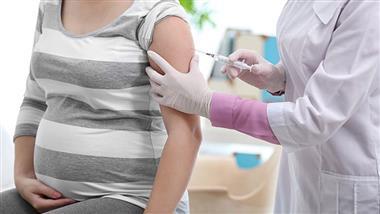
Most pregnant women know to abstain from alcohol, tobacco and other obvious toxins to protect the child growing in their womb, but what about vaccines? Pregnant women have been told to get an increasing number of vaccinations, even though there’s a shocking lack of studies to confirm the safety for mother and child.
[…]
Vaccinations During Pregnancy Have No Basis in Science
[…]
For starters, drug companies did not test the safety and effectiveness of giving influenza vaccine to pregnant women before the vaccines were licensed in the U.S.,11,12 and data on inflammatory and other biological responses to vaccination during pregnancy that could affect pregnancy and birth outcomes are still lacking.13
As far as the scientific evidence is concerned, it’s still unknown whether the influenza vaccine can cause fetal harm or affect your reproductive capacity,14 which is why the vaccine manufacturer product inserts state that the influenza vaccine should only be given to a pregnant woman if it’s “clearly needed.”
Pregnant women are essentially expected to stick to recommendations out of sheer faith, since vaccine recommendations are not based on weighty scientific evidence. In fact, health statistics suggest there’s something very wrong going on in the U.S., seeing how we have one of the highest maternal and infant mortality rates in the world.
As of last year, global rates for maternal mortality had fallen by half — except in the U.S., where the number of women who die from pregnancy-related complications has significantly increased.15 Infant mortality rates are also far higher in the U.S. than in any of the other 27 wealthy countries surveilled by the CDC.16
Could this be related to the fact that American babies and pregnant women receive the greatest number of vaccines? While there’s no research clearly proving this, there’s also no evidence to refute the hypothesis that excessive vaccinations may be part of the problem.
Flu Vaccine May Be Associated With Increased Risk of Miscarriage
In 2009, reports of miscarriage following administration of the H1N1 swine flu vaccine started emerging.17 Dozens of women claimed they lost their babies just hours or days after getting the vaccine, which had not been tested on pregnant women or, if it was, the evidence was never published. Not surprisingly, these instances were passed off as coincidental. After all, miscarriages do happen, and for any number of different reasons.
In 2017, a paper18,19 published in the journal Vaccine has yet again raised questions about whether it is safe to give pregnant women the flu vaccine. They found that women who had received a pH1N1-containing flu vaccine two years in a row were more likely to suffer miscarriage within the following 28 days.
While most of the miscarriages occurred during the first trimester, several also took place in the second trimester. The median fetal term at the time of miscarriage was seven weeks. In all, 485 pregnant women aged 18 to 44 who had a miscarriage during the flu seasons of 2010/2011 and 2011/2012 were compared to 485 pregnant women who carried to term.
Of the 485 women who miscarried, 17 had been vaccinated twice in a row — once in the 28 days prior to vaccination and once in the previous year. For comparison, of the 485 women who had normal pregnancies, only four had been vaccinated two years in a row. While the study could not establish direct causation, the researchers call for more research to assess the link.
[…]
At present, the CDC is not making any changes to its recommendation for pregnant women, which states they should get vaccinated against influenza no matter which trimester they’re in.20 This is reprehensible public health policy at its worst. Sacrifice the health of women and their unborn children so corporations can profit.
[…]
Washington Post Tries to Minimize Impact of Its Report
Not surprisingly, vaccine industry shills are up in arms about the findings, and already, there are signs suggesting industry pressure is being applied to stifle the news. The original story published by The Washington Post, written by Lena Sun, was headlined “Researchers Find Hint of a Link Between Flu Vaccine and Miscarriage.” That headline was quickly changed to “What to Know About a Study of Flu Vaccine and Miscarriage.”21
Notably, this edit was done without disclosing the edit made, which is standard practice. I would not be at all surprised if the study actually gets retracted in coming weeks for some perceived shortcoming or flaw, even though it’s virtually impossible to find a published study that isn’t impervious to such critique. As noted by J.B. Handley, co-founder of Generation Rescue:22
“The mainstream media is doing their best to minimize a devastating study showing a high correlation (7.7-fold) between flu vaccines and miscarriages. A review of the scientific literature shows a body of evidence that supports the new study’s conclusions.”
[…]
Safety of Flu Vaccine Has Not Been Established in Pregnant Women
Sun’s article deserves further critique, which Handley also addresses, and that is her statement that the CDC’s advice to vaccinate pregnant women is “based on a multitude of previous studies.” This simply isn’t true, and you can verify this for yourself (which is what Sun should have done).
While you can certainly take the time to pore through the medical literature, available on PubMed for example, all you really have to do to confirm or refute this particular statement is to look at a flu vaccine package insert, which will tell you that safety and effectiveness have NOT been established in pregnant women.
This means there are no studies showing pregnant women will benefit from flu vaccination. Nor are there any studies to support the claim that getting vaccinated during pregnancy is in fact safe.
If something has not been established, the issue is still wide-open for debate. To claim anything else is simply to spout opinions. Handley provides the following screenshot, showing the fine print from a 2016 package insert for Sanofi Pasteur’s Fluzone Quadrivalent vaccine, which is routinely given to pregnant women.
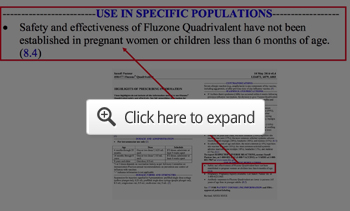
Source: Green Med Info, “Devastating Flu Vaccine-Miscarriage Study Sparks Ridiculous Spin,” September 14, 2017
The company’s patient information sheet23 for this vaccine also points out that “Sanofi Pasteur Inc. is collecting information on pregnancy outcomes and the health of newborns following vaccination with Fluzone Quadrivalent during pregnancy.” In other words, pregnant women everywhere are participating in an uncontrolled experiment in progress.
They just don’t know it, and articles like Sun’s perpetuate the false idea that “a multitude” of studies have already established safety and effectiveness of flu vaccination during pregnancy.
Successive Flu Vaccinations Depress Immune Function
We’ve actually known that successive flu vaccinations take a toll on immune function, raising your risk of more severe infections as time goes on — including the possibility of miscarriage if you’re pregnant.
For example, a study24 published in Human & Experimental Toxicology in 2012, based on reports from the Vaccine Adverse Events Reporting System (VAERS) database during three consecutive flu seasons, starting with the 2008/2009 season, found “an ascertainment-corrected rate of 590 fetal-loss reports per million pregnant women vaccinated (or 1 per 1,695).”
Canadian researchers have also found that people who receive consecutive flu seasonal vaccinations start to experience declined flu protection. As reported by CBC News in January 2015:25
“During the 2009 H1N1 pandemic, researchers at the B.C. Centre for Disease Control originally thought seasonal flu shots from 2008 might offer extra protection against the new pandemic strain. They were puzzled to find instead, seasonal flu vaccination almost doubled the risk of infection with pandemic flu.
Dr. Danuta Skowronski and her colleagues went on to do five more studies during the summer that showed the same effect in people and in ferrets, which are considered the best animal model of flu.”
Vaccinating Pregnant Women Is Unwise
It has always been a principle of medicine that one should not vaccinate pregnant women, except in extreme cases, because the risk to the baby developing in the womb is too high. However, this policy has been blatantly violated.
Research has shown that stimulating a woman’s immune system during midterm and later-term pregnancy significantly increases the risk that her baby will develop autism26 during childhood, and/or schizophrenia during the teenage years or early adulthood.27
It may also increase the risk of seizures in the baby, and later, as an adult.28 In fact, a number of neurodevelopmental and behavioral problems can occur in babies born to women immunologically stimulated during pregnancy.29,30,31
[…]
Your Body Has Two Different Immune Systems
When it comes to vaccination, it’s important to realize there are two parts of the immune system that fight disease in your body. One is the innate immune system that is always ready to work and the other is the adaptive immune system.
The adaptive arm consists of Th1 and Th2. Th1 is commonly known as the cell-mediated arm, and Th2 is known as the humoral or antibody arm. Most vaccines preferentially stimulate the Th2 or humoral part of the immune system that produces antibodies.
The benefit of only measuring humoral immunity (antibodies) as a means of measuring vaccine effectiveness is that it can be easily determined by drawing blood samples. If specific vaccine-induced antibodies are present, the person is presumed to be immune to that infection and protected.
The whole point of vaccines is to stimulate antibody production without a cell-mediated reaction preceding it. The theory goes back to the early days when it was believed that the humoral (antibody) arm of the immune system was the most important part of stimulating immunity.
However, research reveals that individuals who, due to a genetic abnormality are unable to generate antibody production, actually recover from infectious illness just as well as those able to make normal antibodies.36 They also usually have protection in the future upon re-exposure.
This demonstrates the importance of the Th1 arm of immunity, and suggests humoral immunity may only play a secondary role in natural resistance against targeted “vaccine-preventable” diseases.
This, and the fact that vaccines fail to confer lifelong immunity, suggests that having a cell-mediated response is necessary. What’s more, research suggests that when Th2 is excessively stimulated through vaccination, your immune function may be compromised long term, leaving you more vulnerable to cancer.
[…]
These and hundreds of other studies can be found in Neil Z. Miller’s book, “Miller’s Review of Critical Vaccine Studies: 400 Important Scientific Papers Summarized for Parents and Researchers.” If you’re on the fence when it comes to vaccination, this is a book not to be missed.
[…]
Via https://articles.mercola.com/sites/articles/archive/2024/04/03/flu-vaccination-miscarriage-risk.aspx
 The Most Revolutionary Act