
Episode 25: Counterrevolution and the Vendee
Living the French Revolution and Age of Napoleon
Dr Suzanne M Desan
Film Review
In spring of 1793, tens of thousands of rural peasants, weavers and artisan made war on the French revolution, financed by émigré groups trying to prepare the greater population for foreign invasion. Initially counterrevolutionary sentiment was limited to Catholics protesting the religious reforms. Over time, they were joined by low income poor workers who previously manufactured religious icons and luxury goods.
Heavy taxes the Convention imposed to support the war effort also strengthened counterrevolutionary feeling. as did orders requisitioning grain, horses, carts and church bells (to be melted down for guns and ammunition). The last straw in western France was forced recruitment of all unmarried men between 18 and 40.
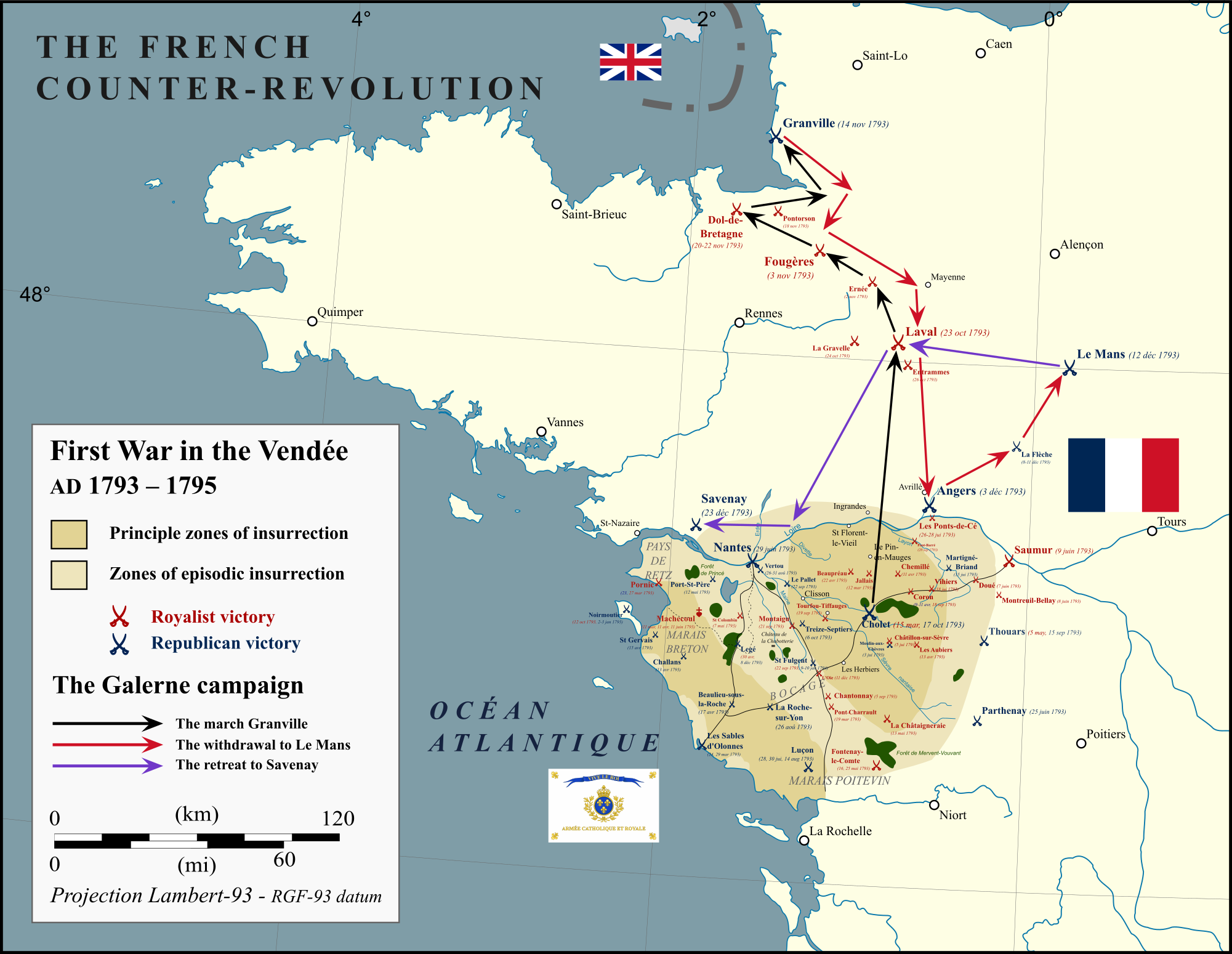
The Vendée Rebellion in March 1793 would be the first full scale counterrevolutionary insurrection. On the first day of the uprising, a mob killed the military recruitment officer before binding 500 local revolutionaries in chains and shooting them. Eventually a small cluster of uprisings spread into a mass movement reminiscent of centuries of peasant rebellions against local nobles and tax collectors.* A few members of the nobility joined the Rebellion, eventually forming an army of 40,000. They stole weapons and identified themselves by pinning a white cockade (symbol of the royal Bourbon family) on their hats.
It was during this period, the Republican army began losing to the Austrians in Belgium and the Netherlands, so they didn’t have enough troops to defend the Vendée. The latter, with its rolling hills, thick hedgerows, dense forests and narrow roads, was ideal for guerilla warfare. After three days of skirmishes, 5,000 (out of 12,000) newly recruited national guards were killed in a surprise attack.
By August. the British were planning to invade western France to join up with the Vendée counterrevolutionarie The same month, the national guard slaughtered tens of thousand of Vendée men, women and children
*The French referred to peasant rebellions as Jacqueries. They tended to be extremely violent and were often successful in winning short term demands
 The Most Revolutionary Act
Pingback: French Revolution: War and Economic Crisis Expand the Counterrevolution | The Most Revolutionary Act
Pingback: The French Revolution in Crisis – Summer 1793 | The Most Revolutionary Act
Pingback: French Revolution: Napoleon Becomes First Consul for Life | The Most Revolutionary Act