
Episode 20: The KIng’s Trial
Living the French Revolution and Age of Napoleon
Dr Suzanne M Desan
Film Review
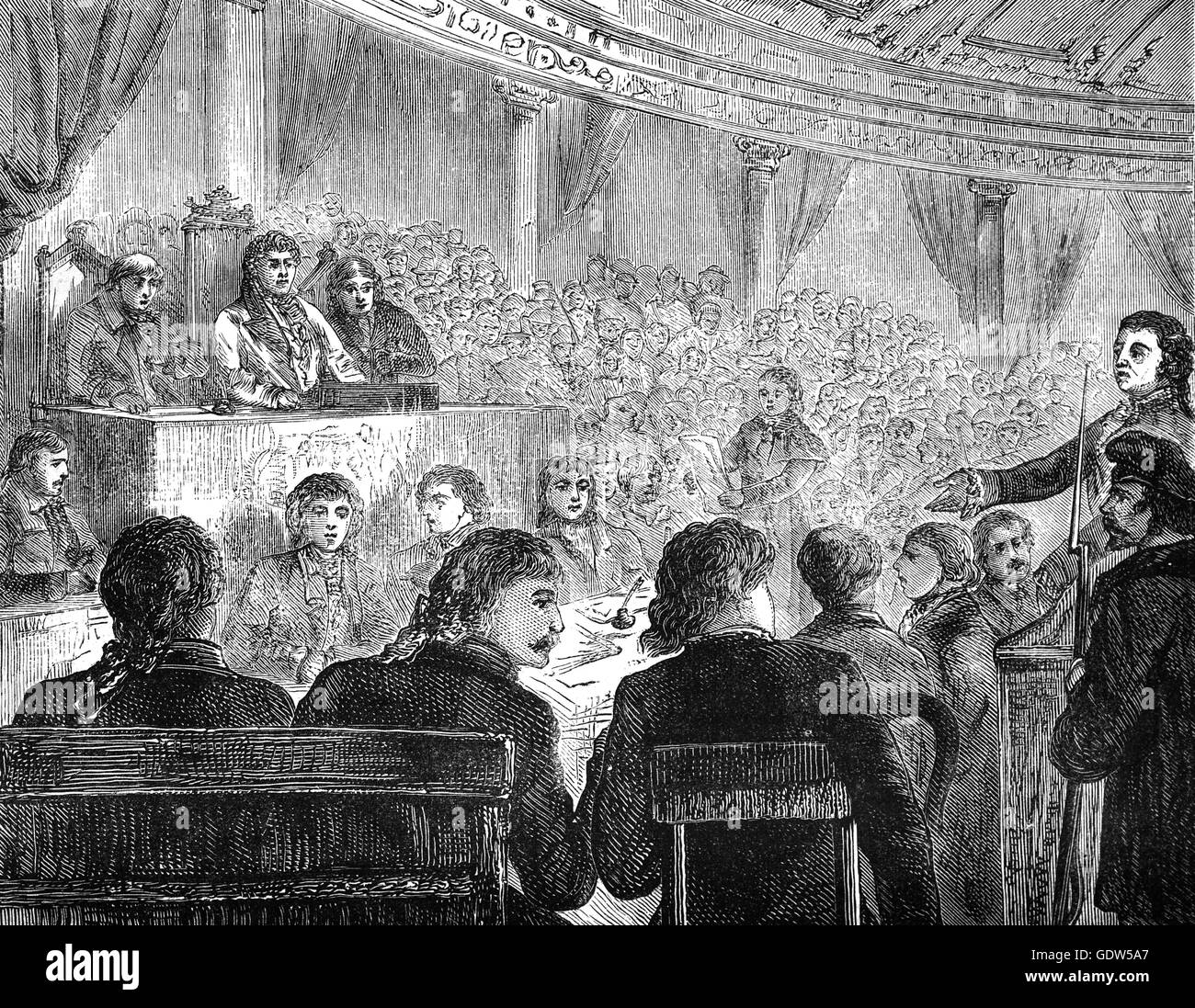
The new official Convention met September 21, 1792, or day I of the new Republic.* Its main role was to abolish the monarchy. declare a republic, write a new constitution and decide the fate of the king. With universal male suffrage, French was now the most democratic nation on earth.
The Convention was 1/4 Jacobin and slightly more than 1/4 Girondin. The later were uncertain about the wisdom of full equality and were fearful of the Jacobins. Paris overwhelmingly chose Jacobins to represent them.
Both groups agreed the king was guilty of treason, based on 675 documents found in a secret safe revealing he hated the new constitutional monarchy, that he tried to bribe deputies and cut deals with émigrés and that he conspired with Prussia and Austria to declare war on the revolution.
Robespierre, a prominent Jacobin, who was known to oppose the death penalty, argued it was too dangerous, based on the king’s ties with both domestic counterrevolutionaries and hostile foreign monarchs, to imprison him or even send him into exile. Although Robespierre also opposed putting him on trial, the Convention eventually voted to try him.
At his trial, which began on December 26, 1792, the king claimed to remember nothing, he blamed his ministers and claimed not to recognize his own handwriting. The Convention found him guilty by unanimous vote. On January 15, 1793 the convention voted on his sentence, with each deputy taking the podium to explain his vote. Tom Paine, who was elected deputy after receiving French citizenship, voted to exile the king to the US.
The final vote was 387 to 334 in favor of execution.**
The king was guillotined on January 21 1793. Tens of thousands of guards and spectators observed the execution. After the executioner collected the king’s hair and ribbons as souvenirs, the guards covered his body with quick lime (to dissolve), preventing counterrevolutionaries from making a shrine of his grave site.
Following the king’s execution, rivalry between the Jacobin and Girondins continued to increase, leading to massive counterrevolution in several French provinces.
*Louis XVI was officially arrested on August 13, 1792 and sent to the Temple, an ancient Paris fortress used as a prison. On 21 September, the new Convention, elected by universal male suffrage, declared France to be a republic and abolished the monarchy. The same day they abolished the traditional western calendar, adopting a new one starting with year 1.
**Marie Antoinette was tried nine months later.
Film can be viewed free with a library card on Kanopy.
https://www.kanopy.com/en/pukeariki/watch/video/149323/149361
 The Most Revolutionary Act