
Episode 11: Political Apprenticeship in Democracy
Living the French Revolution and Age of Napoleon
Dr Suzanne M Desan
Film Review
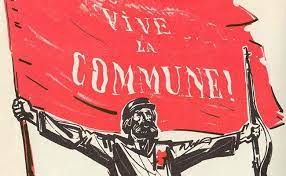
This lecture mainly concerns the direct democracy structure created by the French National Assembly in 1790-91. The latter transformed the France’s 30 provinces into 83 departments, which were subdivided into districts, which were subdivided into canons, which were subdivided into communes. The commune was seen as the core unit of political power because it had the most direct popular input.
Under this structure, it took three to four days to collectively choose National Assembly deputies, which greatly reduced participation. Initially only property owners who paid at least three days wages in tax (yearly) were allowed to vote. These qualifications excluded all women and 40% of men. In 1792, the National Assembly extended suffrage and the right to run for office to all men over 21 except for servants, vagabonds and slaves.
Various interest groups formed political clubs to enhance political debate and decision making. The left-wing Jacobin Club, notorious for deluging the National Assembly with petitions, had 450 societies by 1791. Fifty towns had women’s clubs, and even French teenagers had their own political clubs. The clubs played an essential role in educating ordinary citizens about democratic deliberations as they learned how to set agendas and run meetings in a way that allowed all participants equal input.
The Monarchiens, who believed commoners weren’t competent to have input into the political process, also had clubs. Their members mainly consisted of aristocratic elites and owners of luxury industries (wig makers, lace makers, jewelers, etc) whose incomes decreased radically with the diminishing power of the aristocracy.
As more and more commoners learned to read, a proliferation of partisan newspapers also enhanced their understanding of democratic process.
Each department also had its own law courts, which replaced the royal, ecclesiastic and seigniorial law courts the National Assembly had abolished. The national legislature also established a new penal code, which guaranteed trial by jury for criminal cases and eliminated degrading and inhumane punishments. It also established voting procedures for departments to elect their own department heads, mayors, town councils, public prosecutors, justices of the peace (who settled grievances), national guard leaders and National Assembly deputies.
Film can be viewed free with a library card on Kanopy.
https://www.kanopy.com/en/pukeariki/watch/video/149323/149345
 The Most Revolutionary Act