
Episode 4: The Enlightenment
Living the French Revolution and Age of Napoleon
Dr Suzanne M Desan
Film Review
Although French 18th century enlightenment philosophers ruthlessly attacked challenged abuse of power by the aristocracy and the Catholic church, none were revolutionaries. Nevertheless as literacy rates doubled (rising to 50% for men and 30% for women) in the 1790s, Voltaire and Rousseau quickly became cult figures.
In France, the 1700s were the century of pamphlets, newspapers and novels – enabling authors to earning living from their writing for the first time (rather than relying on a patron). Owing to strict censorship laws, most enlightenment writers published their work in Switzerland or Amsterdam and smuggled it into France. In the second half of the century, 40% of the one thousand Bastille prisoners were either writers or booksellers.
Who was Voltaire?
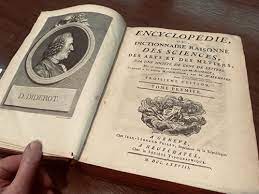
A keen admirer of enlightened monarchs like Frederick the Great and Catherine the Great, Voltaire didn’t believe in democracy and didn’t agree that everyone should be taught to read. Attacking the Catholic church for its wealth, power, fanaticism and intolerance, he was mainly interested in defining natural (human) rights and the extent to which inequality violates natural law. He also argued for the use of reason to improve conditions of human life and contributed to Diderot’s Encyclopedia project – a 28 volume work that took 15 year to complete. The goal of creating the Encyclopedia (which was illegal in France had to be published in Switzerland*) was to use knowledge to increase technological progress and improve living standards.
Who was Rousseau?
Rousseau was more interested in political reform, which is best outlined in his Social Contract. Here he argues that under natural law, a community of human beings make a social contract with one another, and in this sense sovereignty belongs to the people who agree to the contract. This means laws should be for the benefit of everyone rather than a privileged monarch and aristocracy.
*Some of the Encyclopedia’s more controversial entries criticize (often with biting satire) the regime of Louis XIV, the Catholic Church and slavery. The entry for the Eucharist reads “See cannibalism.” The section on philosophy argues that theology should be subordinated to reason. It also include trade secrets of many of the artisan guilds, including detailed information on how to make a button, how to run a printing press and how to dig a mine.
Film can be viewed free with a library card on Kanopy.
https://www.kanopy.com/en/pukeariki/watch/video/149323/149329
 The Most Revolutionary Act
Pingback: How the French Enlightenment Laid the Groundwork for Revolution | The Most Revolutionary Act | Vermont Folk Troth