
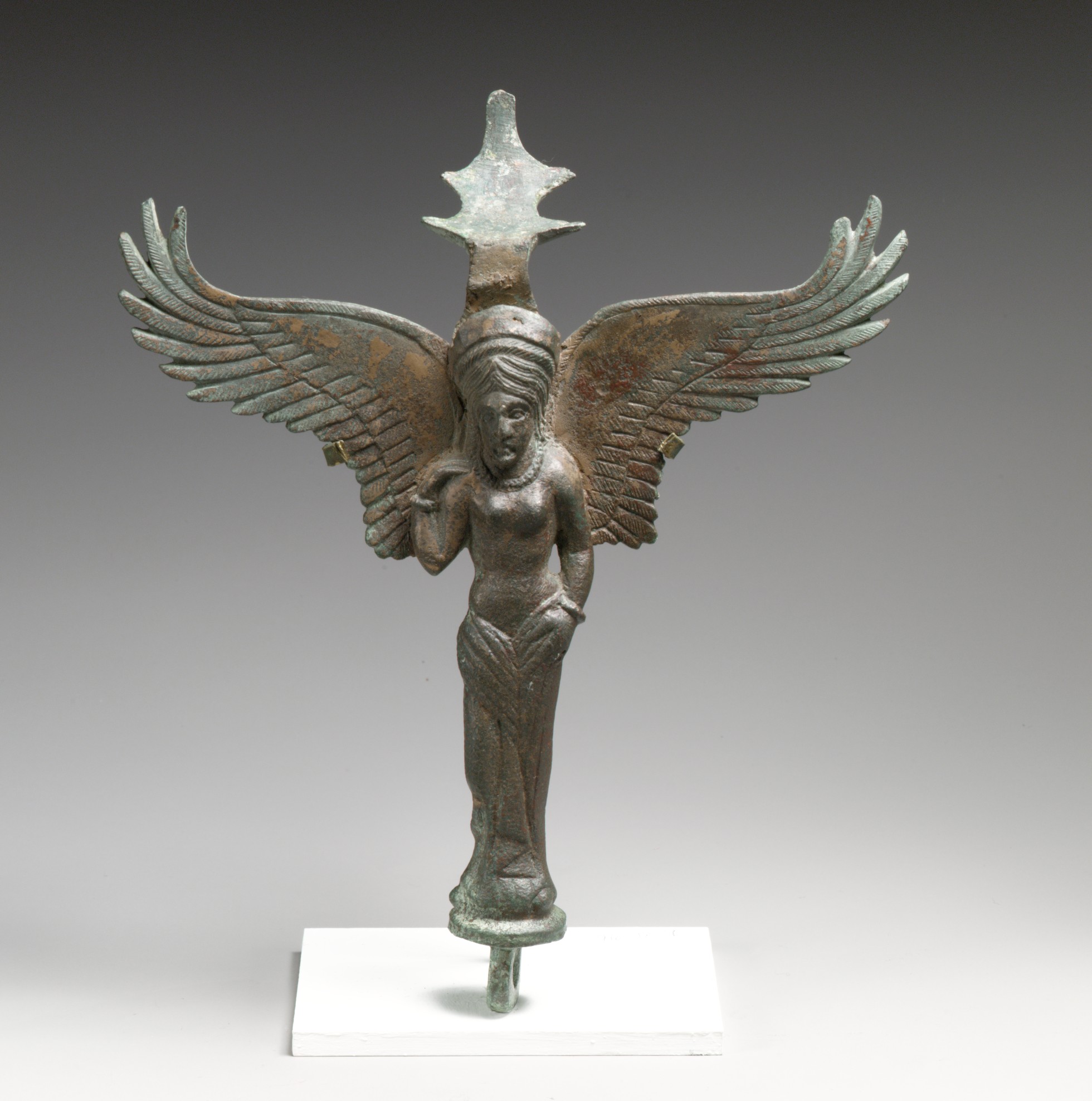
The Etruscan prophet Lasa Vecuva
Episode 12 Etruscan Myths, Legends and Heroes
The Mysterious Etruscans
Dr Steven L Tuck (2016)
Film Review
The Etruscans had a deep knowledge of Greek mythology and adopted much of it as their own. They also worshiped uniquely Etruscan gods and heroes according to a 20- volume history the Roman emperor Claudius* wrote in 41-54 AD. Among the most important were
Athrapa – invisible spirit of fate, who carries a hammer and nail. She hammers a nail into the wall to signify the passage of a year and appears suddenly appear alongside murder victims to reveal their cause of death.
Tages – the infant Tarkan dug up with his plow who taught Etruscans their religious and divination rituals (see How the Etruscans Gave Us Our Calendar and Grid System of City Planning).
Lasa Vecuva – female prophet who informed the Etruscans of Zeus’s order for all their land to surveyed and delineated to protect against greed. She warned their crops would fail if people unlawfully seized others’ land.
Caelius and Aulus Vibenna – Etruscan heroes who fought with Rome’s legendary founder Romulus against the Sabine king Tatius, who also aided Rome’s last king 350 years later and king Servius Tullius during the Etruscan civil war, as well as defeating the sea monster Hippocampus.
According to Tuck, Caelius and Aulus were real Etruscan patriots during the sixth century BC, who assumed mythological status over time. Caelius eventually beheaded his brother. For this crime he was denied burial in Etruria. Aulus’s head was buried at the top of the Capitaline hill in Rome and rolled out as the temple of Jupiter was being built. The hill’s name Capitaline derives from the Latin “caput” for head.
Film can be viewed free with a library card on Kanopy.
*Claudius, who read and spoke Etruscan, wrote his 20-volume Etruscan history in Greek. He also wrote an Etruscan dictionary.
https://www.kanopy.com/en/pukeariki/watch/video/239710/239627
 The Most Revolutionary Act