

Episode 11 Etruscan Homes
The Mysterious Etruscans
Dr Steven L Tuck (2016)
Film Review
The Etruscans adopted the Greek alphabet* to their spoken language around 700 BC and were instrumental in spreading written language throughout Europe. Etruscan was last spoken around the 1st century AD and the last published Etruscan text was an appeal to attack the barbarians who were invading Rome.
Etrucan is the only non-IndoEuropean language that survives from ancient Italy. Archeologists have discovered roughly 13,000 Etruscan texts. There are all religious, commercial, political (mainly records of popular assembly deliberations); educational documents or captions for images and sculptures and geologies inscribed on tombs. The Etruscans only shared stories and poems orally.
The Etruscan language was “inflected” like Latin and Greek, which meant words had different endings depending on their use in a sentence. Etruscan documents were writing on terra cotta slabs, gold and bronze plaques. Legal contracts were written on either bronze or stone (which was often melted down to be used elsewhere).
The Romans, who learned to write from the Etruscans, spread their written language across Europe. Celtic script and the Germanic Rume alphabet (used between 150-1100 AD) are also derived from Etruscan. German speakers adopted the Roman alphabet around 1100 AD.
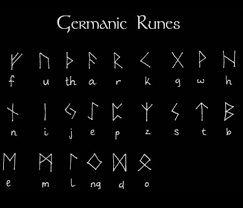 Written Etruscan was a kind of shorthand. Etruscan texts were meant to be read outloud and embellished by the reader.
Linguists learned to decipher Etruscan from bilingual Latin/Etruscan documents. However there are still numerous Etruscan words yet to be deciphered.
*The Greeks derived their alphabetic from the Phoenicians, the first Western civilization to develop alphabetic writing. The first Greek documents are written from right to left, like the Phoenician language. Etruscan was adopted from the Greeks before they began writing from left to right.
https://www.kanopy.com/en/pukeariki/watch/video/239710/239633
 The Most Revolutionary Act