
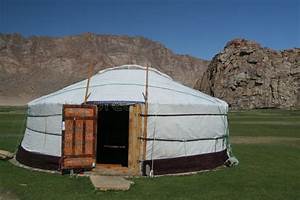
 Typical Gher
Episode 16 Mongol Culture Before Genghis Khan
1215: Years That Changed History
Dr Dorsey Armstrong (2019)
Film Review
In 1215 the Battle of Beijing, in which Genghis Khan’s grandson Kubla Khan conquered China, totally reshaped global history, Armstrong uses this lecture to explore Mongol life prior to the great Mongol warrior’s rise to power.
Mongol nomads originated in the modern country of Mongolia near Burghan Khaldur. Claiming descent from the Huns, their language (Altaic) was similar to Turkish, Korean Japanese and languages used by the Tatars.
Organized by kinship clans, Mongols had a relatively egalitarian society which held which kurutai (huge gatherings of related clans) to make major political decisions.
Because they had no written history, most of our information about Mongol culture comes from outside sources and The Secret History of the Mongols, published anonymously about 100 years after Genghis Khan died.
His actual birthplace of Genghis Khan was a closed secret area for eight centuries, only opened by the Soviets in the 1980s.
Living in portabe ghers, Mongol nomads migrated frequently to find pasture for their horses and other animals (camels, sheep, goats and yaks). Their diet consisted mainly of meat and milk, occasional supplemented by bleeding their horses when food was scarce.
Children learned to ride horseback at age four, and it was typical for clan leaders to own four horses.
Practicing a form of animism, they prayed to the spirits of rivers, mountains and forests, as well as a supreme god who manifested as open sky.
With no traditional craftsman, they traded (or raided) for tools, weapons and luxuries. Metal stirrups were especially prized. A few individuals were skilled in manufacturing wooden weapons, which were typically left behind in battle because carrying them made mounted Mongol warriors slower and less agile.
When Mongol tribes were attacked, it was typical for all the males to flee on horseback (encouraging the raiders to give chase). If fighting age men were absent from a settlement under attack, it was typical for the raiders to grab all the valuables and leave women, children and the elderly unharmed.
Film can be viewed free with a library card on Kanopy.
 The Most Revolutionary Act
Pingback: Mongols and the Rise of Genghis Khan | The Most Revolutionary Act